Tag Archives: Bioluminescence

Nature Undusted: The Phenomena of Ghost Lights

Pixar’s “Brave”, showing will-o’-the-wisps.

Back in January, I wrote about the phenomenon of the Hum, something that occurs around the world.

Another global phenomenon is that of “ghost lights,” also known as fata morgana, mirages (both inferior and superior), will-o’-the-wisps, fairy fires, or ignis fatuus (“foolish flame”).

I grew up in a climate zone with hot, dry summers and wide, flat highways that stretched to the horizon. On a hot summer day, you could see the cab of a semi-truck floating mid-air for some distance before you actually saw the truck finally touch the ground. Sometimes the highway would look flooded – this kind of water mirage is also a danger in desert regions. Death Valley is dangerous, not only because of the heat but also because of disorienting mirages.

Ghost Lights can have a variety of natural causes: methane gas combustion or other organic decay which can cause photon emissions (these lights often appear over swamp or boggy areas); light refraction in certain atmospheric conditions that cause the lights of cars on distant roads or firelights from campfires to “float” midair (like the semi-truck cab above); it may also be caused by the bioluminescence of various micro-organisms and insects.

Here are a few well-known lights:

Marfa Lights

Hornet Spooklight

Gurdon Light

Brown Mountain Lights

Hessdalen Lights

Min Min Light

Naga Fireballs (Thailand)

Palatine Light

Paulding Light

Chir Batti

St. Louis Ghost Train (Canada)

 plus many more!

For a fun dive into these phenomena, the Why Files has a video covering the topic (the actual content starts at 4:15); I enjoy his videos because the author in me likes the way he sets stories up as real – as if reporting facts – before he debunks them or offers probable explanations. While he knows that many people likely believe in the stories he eventually debunks, he goes about it in a respectful, tongue-in-cheek way.

For a shorter video on the topic, Joe Scott has an interesting one.

Have you ever seen any of these lights, or experienced mirages? If so, please tell us about it in the comments below!
Leave a comment

Filed under Articles, History, Links to External Articles, Lists, Nature, Psychology Undusted, Science & Technology, Space, Astronomy, YouTube Link

Virtual Tours 2: Electric Ladyland Fluorescent Museum, Amsterdam

Come along with me on this next tour, as we explore the world of florescence. Today’s featured museum is the only one of its kind in the world: The Electric Ladyland Fluorescent Museum, in Amsterdam, Netherlands, is an interactive “participatory art” museum; visitors can get creatively involved in the artwork, see fluorescent minerals light up, and can have their eyes opened to just how many common objects around us fluoresce. When was the last time you looked through your vegetable drawer with a UV light? Tomatoes, lettuce, cucumbers, bell peppers, coconuts… they all emit UV light waves.

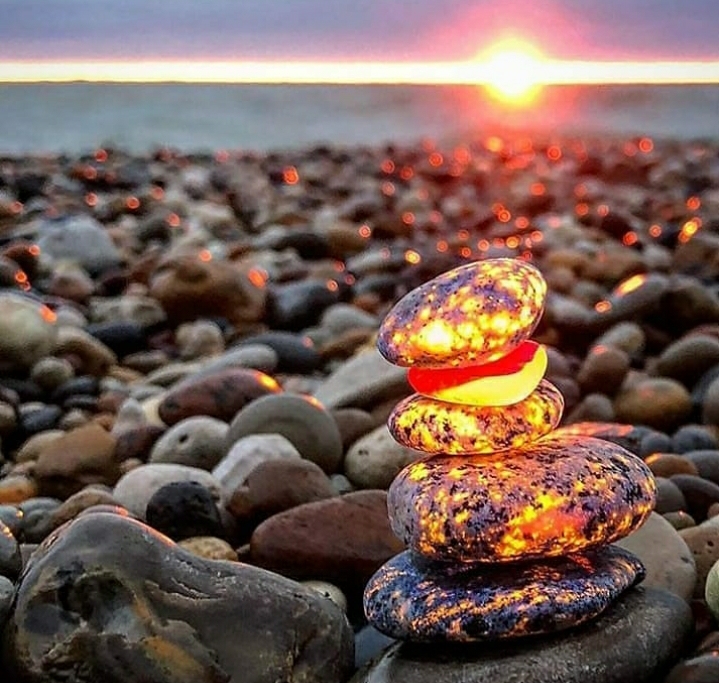
First, what is fluorescence? It is also known as “black-light” glow; in other words, it shows up under UV (ultraviolet) wavelengths. Man-made fluorescence differs from nature’s spectacles of bioluminescence in that the latter doesn’t require external light – it is generated by an internal chemical energy in the organism. There are also examples of fluorescence occurring in nature: Syenite, also known as yooperlite or sodalite-syenite, is not a common rock, but does appear all over the world in pockets; in fact, about 15% of all minerals fluoresce. Check out this link to see where syenite can be found near you. Take a UV torch (flash light), and hunt for them at night. They look like plain rocks under normal lighting conditions, but glow under UV. There are also animals that don’t have bioluminescence, but do glow under UV lights, such as scorpions. To watch a short video about hunting along Lake Michigan for yooperlites (these start at 8:00), and see a glowing spider (19:23), click here. At 18:43, you can also see an example of phosphorescence.

Yooperlite – Credit: Reddit, uRyunysus

Phosphorescence is what we also know as “glow-in-the-dark” when it comes in a paint form. The emission of visible light persists after this substance has been exposed to a light source; it fades over time, but the light “charges” the phosphorescent material, such as stars on a child’s ceiling, and glows for a time. This is the paint you also see marking airplane’s escape routes (I hope you never need them!).

Radioluminescence is, as its ominous name implies, a result of the decaying of radioactive isotopes; when mixed with a radioluminescent phosphorous chemical, the decaying radiation particles agitate the phosphor into emitting visible light. Believe it or not, Radium paint was used for over 40 years on the faces of watches, compasses, and aircraft instruments; if you are in possession of your great-grandfather’s or grandfather’s glowing watch, you might want to reconsider that. Radium emits gamma rays… think “Incredible Hulk”. Joking aside, the reality was far grimmer: The episode of history that became known as the “Radium Girls” and the impact it had on industrial safety standards deserves an article all of its own. Shockingly, radioluminescent paint may still be used in specialised applications, such as diving watches.

Radium clock. Credit: Wikimedia Commons

I hope you enjoyed this short tour through all things glowing. What do you have around your house that either glows in the dark, or emits light under a UV light? If you don’t already have a UV torch (flash light), you can buy one fairly easily online. If you’re brave enough, take a tour of your home in the dark – UV is known to show up things that have perhaps been missed in your cleaning routine; they will show you what foods you eat that fluoresce; and you’ll most likely learn a few things along the way! Have fun!

4 Comments

Filed under Links to External Articles, Nature, Science & Technology, Snapshots in History, Virtual Tours

Wordless Wednesday no. 23: Alien Inspirations from the Deep

This slideshow requires JavaScript.

Leave a comment

May 24, 2017 · 4:15 AM