Tag Archives: Hawaii

History Undusted: MacGyver and Blue Peter

This week’s topic arose from a conversation with my husband; we were discussing a temporary fix we had made at his mother’s home to make something usable until we could find a permanent solution. I said that we had “MacGyvered” it, and he had never heard the word before. That led me down a rabbit hole to naval flags, a card game, and British tele.

First, MacGyver: Though I knew the term, I had no idea what its origin was. The name comes from the eponymous character in a US television series that ran from 1985 to 1992; Angus MacGyver was a non-violent, resourceful genius, and his favourite tool was, of course, a Swiss Army knife. Though I was living in the States at that time, its running years explain why I didn’t know of the origin: In 1985, I was in college, having finished high school a year early (I took my final two years in one); I was too busy to watch television. In 1986, I moved to Hawaii to do a Discipleship Training School (DTS) with Youth With A Mission (YWAM), and went from there to the Philippines, where we worked in the red-light district of Olongapo. 1987 was a year of multiple jobs, earning money and hanging out with college friends – again, TV was not a priority. In 1988, I emigrated to Scotland.

The traits mentioned above made MacGyver a verb; when something is “MacGyvered“, a simple yet elegant solution to a problem is employed by using existing resources. At my mother-in-law’s home, we needed to level a new microwave that was sitting tilted atop the welded inserts that fit the original one. Our solution was to use an actual leveller, removing the end caps to make it fit inside the metal frame.

Now, down the rabbit hole: In the time of British ships of sail, when a blue flag with a white square or rectangle in the centre flew alone, it served as the sign for imminent departure (signifying P, leaving port); any passengers and crew in port would then return to the ship. The flag came into use in 1777, and by the turn of the century had become known as the blue peter. I have my suspicions that the term may have come from the card game of whist, in which a strategic manoeuvre known as the “blue peter” calls for trumps by throwing away a higher card of a suit while holding a lower one. No one can say for sure which came first, the ship or the card, so to speak, but the connection is likely.

The British children’s television programme, Blue Peter, first aired on 16 October 1958; the name was inspired when Owen Reed, the producer, was inspired by a radio programme for children (produced by Trevor Hill) that began airing on television once a month; it was launched aboard the MV Royal Iris ferry on the River Mersey, Liverpool, with presenter Judith Chalmers standing at the bottom of the gangplank to welcome everyone aboard. Reed was so captivated by the idea, and with the blue peter flag, that he asked to rename the programme (then called the Children’s Television Club) and take it to London.

Blue Peter, catering to younger children, is the longest-running children’s TV programme in the world; over the years it has changed with the times, and its content is wide-ranging, but they still give a nod and a wink to that original blue peter flag by giving out badges in the shape of a shield with a blue ship of sail on a wave. It is awarded to viewers for achievements, efforts, or creative work. There are different levels of badges, with the gold badge being the most prestigious; this is usually given to presenters upon their retirement or to people who have accomplished something extraordinary.

Among other things, the show is famous for its segments of “makes” – demonstrations of how to make useful objects, or how to make something to eat. This is the element that linked the term Blue Peter to MacGyver in my mind, so now ya know!

What is something that you have MacGyvered? And do any of my British followers know if “Blue Peter” is used as a verb in a similar fashion? Please comment below!
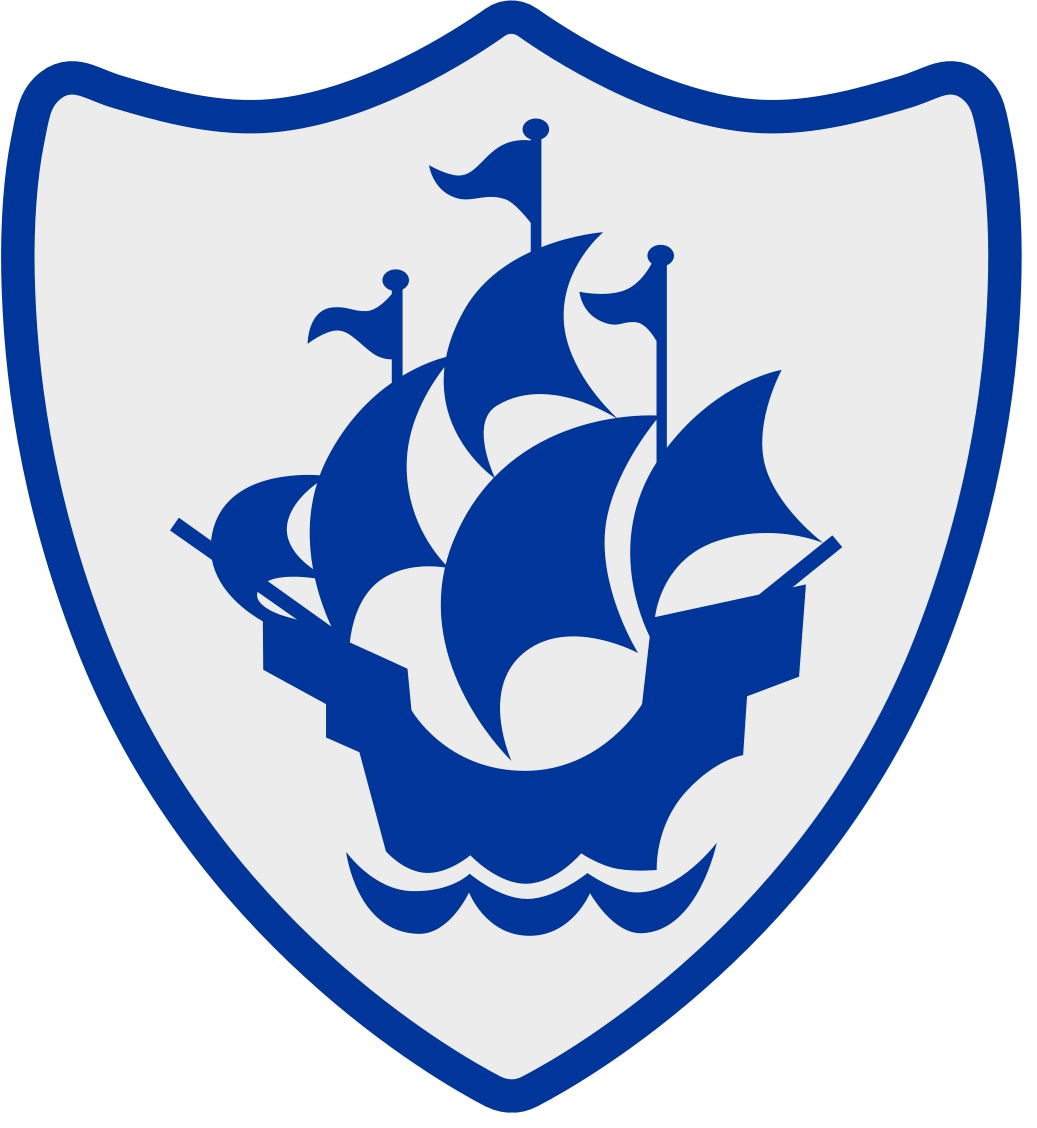
Blue Peter Badge

1 Comment

Filed under Etymology, Family History, History, History Undusted, How It's Made, Liguistics, Military History

What Rubber Ducks Tell Us about the World

Before we dive into today’s topic, let’s talk about two of my favourite words: Flotsam and Jetsam. I just love the way they sound! The way I understand them, the difference between the two is intention: Flotsam are things unintentionally donated to the sea – things washed overboard from a ship, or things blown off land by a storm. Jetsam is rather something intentionally jettisoned – if a ship needs to lighten its load to avoid sinking, for instance; in the case of the great garbage patches, it is a mixture of both: Without proper disposal systems in place, such as municipal garbage disposal, or education in ecological footprints, social debris is simply tossed and forgotten. But it ends up somewhere, often finding its way to the ocean through rivers and streams. And this leads us to the topic of ocean currents.

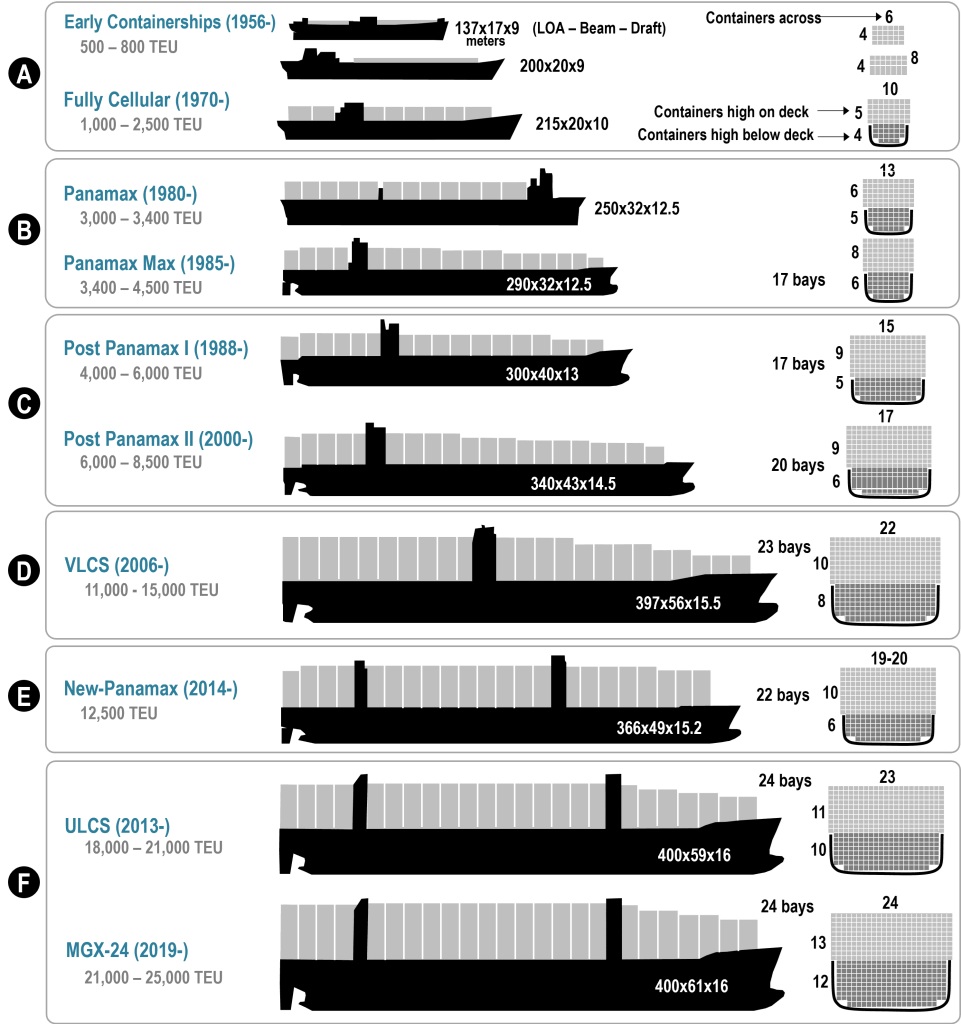
Today’s topic is a fascinating dive into a world of global trade; research has shown that around 90% of international trade is carried by shipping containers, and the World Bank statistics show that in 2019, nearly 800 million were shipped annually; given the increase over the past few years in online shopping, I can imagine that figure is by now significantly higher. The unit used for measuring how much a ship can carry is TEU (Twenty-foot Equivalent Unit); the chart below shows the adaptation of ship sizes over the years, driven by global trade:

Now, imagine a shipping container stacked at the top of a pile that’s the height of the actual ship; add to that ocean swells and waves. I’ve been on ships in the Atlantic facing waves so high, I could count fish through my window. I’ve been on ships in the “Sailor’s Nightmare” – the Pentland Firth passage between Scotland and the Orkney Islands – which is characterised by rough bathymetry (the underwater equivalent to topography) and extremely high currents (which also ricochet and collide off of the coasts of the islands and Scottish cliffs), tossing anything on the surface like a leaf in the wind. The World Shipping Council estimates that, over the past 16 years, an average of 1,500 containers have been lost at sea annually. Every year, the contents of those containers are carried along until the container is breached by either corrosion or impact. Then the contents are carried by ocean currents; where they finally make landfall depends on where they entered the ocean. If you were marooned on an island and tossed out an SOS in a bottle, it could make landfall anywhere between two and one hundred years – or never, if it’s caught in a gyre (more on that later). A message in a bottle was found on a beach in Norway that had been sent off 101 years earlier.

So what does that have to do with rubber ducks? In 1992, a shipping container with a consignment of what has been dubbed Friendly Floatees – 28,800 yellow rubber ducks, red beavers, blue turtles and green frogs – was washed overboard (along with 11 other containers) into the Atlantic. Because they are designed to float on water, they have survived at sea for an amazingly long time. Seattle oceanographers Curtis Ebbesmeyer and James Ingraham, who were working on an ocean current model, OSCUR (Ocean Surface Currents Simulation), began to track their progress; and those wee toys went on all kinds of adventures: Ten months after they broke free, some began showing up along the Alaskan coast; some showed up in Hawaii; some went to see the site of the Titanic sinking before getting frozen into ice, eventually emerging again and travelling to the US eastern coast, Britain and Ireland, making landfall around 2007. The researchers contacted coastal regions, asking beachcombers to report their finds; they recorded findings and began to accurately predict where landfall would occur. Over the years, the ducks and beavers had faded to white, but the blues and greens had retained their colours.

Flotsam and Jetsam have played key roles in helping researchers understand not only how ocean currents travel, but also how the areas known as garbage patches, oceanic gyres, are formed and retained by the swirl of ocean currents. Currently, five patches are known; many of the rubber ducks are likely caught in such currents, so we may hear about more white ducks finding their way to beaches in the coming years.

So the next time you see a rubber duck, think of all the adventures its siblings have been on!

If you’d like to see for yourself how ocean currents work, click here for an interactive map; just click on any area of the map to see how and where the currents carry debris from that point.

6 Comments

Filed under Articles, Etymology, History Undusted, Images, Nature, Research, Science & Technology, Snapshots in History

History Undusted: Memories of Hawaii

It’s hard to imagine, but the Hawaiian islands a generation ago were not a hotspot of tourism and a bustling modern culture; most people lived simple lives with few amenities. It’s also hard to imagine a time when exotic fruits were not found in your local store year round – exotic being bananas, kiwi fruit, avocadoes or papayas. My Swiss mother-in-law remembers when bananas came to Switzerland, and they were exotic and expensive; in her house, they were only bought for her brother, who was very sick at the time, as a source of energy; that was during World War 2.  Once, she confessed to stealing some money from her brother’s piggy bank to buy herself a banana.

By clicking here, you can watch a ~10-minute video of a series of short video clips from the 1920’s of Hawaii, interspersed with silent-film-era title cards.  Not only is it an interesting glimpse into a simpler time on the islands, but it’s also an insight into what the rest of America “knew” about the islands, foods and customs.   Back then, the world in general also knew very little about strange activities such as “surf riding” (surfing), and the footage of surfers is utterly tame compared to the monster wave-riding considered “for surfers” today!  Volcanic activity also seems to have been a fascination; such footage may well have been the first time anyone had seen such a thing outside of volcanic regions; it still had to be described in colours, however, such as “cherry red” for the lava, as the footage was, obviously, in black and white.

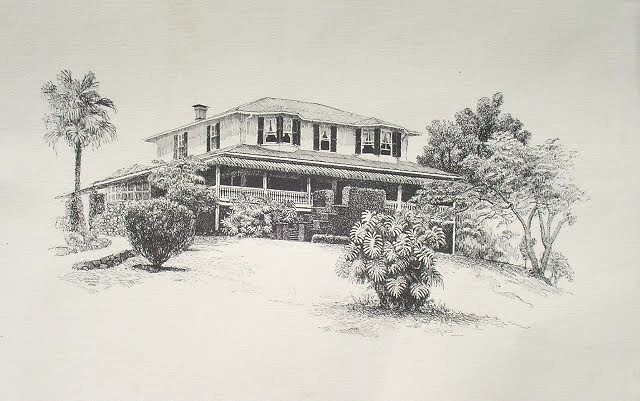
The image below is of King’s Mansion, in Kealakekua, Hawaii, on the Big Island.  As a student, I lived there in 1986 (my dorm window was the left bay window at the front).  We had avocado trees in the back garden, and our neighbour’s horses, across a stone wall, would come trotting to the wall when they saw us in the garden, hoping for an avocado; we’d feed them, entertained as they carefully chewed away the flesh around the pit (reminding me of an old man chewing tobacco!), and then skillfully spit the seed out.  At the bottom of our front garden stood a huge banyan tree [if you were standing on the covered lanai (porch) at the front of the house, it would be to your left – not shown]; it was a favourite tree to climb. At the bottom of our terraced garden was a volleyball court; it was popular, though we could also hike up the next hill over to the local school, where we could use their tennis courts. If you hit the ball over the high fence, you’d be hiking through the jungle to bring the ball back! Maybe the local students got tired of the same problem, as the jungle eventually gave way to a baseball diamond.

On 8 July, we were asleep in our dorm bunk beds; at around 2:30 a.m., I was awakened by what I first thought was my restless bunkmate – but which turned out to be an earthquake. The San Andreas Fault had slipped, and what had taken me 9 hours to fly took the earthquake 9 minutes to travel, hitting the Big Island. It kicked off a chain event of volcanic eruptions, aftershocks, and strange weather conditions: The heat of the volcanic air and the cool ocean created thick, milky white clouds at the level of our house (at the top of a hill) that rolled over our lanai and into the open classroom – soaking our books and the carpet the first time; after that, we got smart and put our books on our laps whenever the thick cloud rolled in. It also made gorgeous “sunsets” mid-day, as the volcanic ash dimmed the sun. I don’t know if they were connected, but soon after the volcanic eruption, Hurricane Estelle hit the islands; as King’s Mansion is up in the hills, we mainly felt the tropical storms, wind and rain, though it was creating 15 to 20-foot waves at one point, which we could see from our vantage point. I grew up in the heart of Tornado Alley and chased tornadoes for the fun of it as a teenager, so I took the earthquakes and storms in my stride.

One person deserves a special place in such memories: Gran’pa Joe Cho. He was a retired Hawaiian neighbour who enjoyed spoiling us rotten. He’d bring us treats and take us girls out on the town. He would admonish the boys to treat women right and then show them how to do it! One memorable evening, Joe Cho had taken a group of us girls out to get Kona Mud Pie, then to Manta Ray Point (aka the Kona Surf Hotel’s surf zone – the rays would swim around the underwater lights near the shore, catching the plankton attracted by the lights), and then we stretched out on a green of the Kona Country Club golf course, right on the edge of a rocky cliff, to watch the stars; we saw a meteor shoot so brightly that its reflection could be seen on the ocean waves.

It was a lifetime ago, but they will always be grand memories…

6 Comments

Filed under Articles, History Undusted, Links to External Articles, Musings, Snapshots in History, Videos