
A phrase I use often is to “batten down the hatches” – meaning “put things away in preparation for (leaving on holidays, guests arriving, or the next project)”. I know that it originates from ship jargon, where it means preparing for rough seas or as a precaution to some other danger. That set me thinking about how many other phrases and idioms we use regularly in English that have their roots in nautical history. I’ve written on this topic before, highlighting the phrases of cathead, to swing a cat, down the hatch or break the ice, and even toe the line vs tow the line. Here are 10 more to get you thinking, with more to come!
Long Shot: A situation needing a good deal of luck. The guns aboard ships of sail were often inaccurate, or the decks would be too high for close-range accuracy. If a cannon successfully struck its target from a “long shot”, it was considered extraordinarily good luck.
Flotsam and Jetsam: A collection of miscellaneous items of little importance; odds bods, odds and ends. Flotsam refers to items unintentionally cast adrift or washed ashore, while Jetsam describes items intentionally cast overboard, such as when lightening the load for buoyancy. They are almost always a paired idiom.
Taken Aback: Suddenly or unexpectedly checked or disappointed; startled or surprised. It comes from the situation when a ship’s square sails were flattened against the masts by a sudden change of wind, stopping the forward motion.
In the Doldrums: Listless, depressed. Doldrums, aka the Intertropical Convergence Zone (ITCZ), is an area of the ocean near the equator where calms, squalls, and light, baffling winds are common. Sailing ships would often hit the Doldrums and be stranded until the wind could pick up their sails and empower the ship to move on. Large ships of sail had the disadvantage of having no ability to be oared forward.
The Cut of One’s Jib: One’s general appearance. The jib was the large, triangular foresail of a ship. When someone on the watch spotted a vessel on the horizon, they would look at the cut of the sails to determine whether they were friend or foe. A modern equivalent would be plane spotters, who can determine the make of an airplane by the shape of its hull and wings.
Show One’s True Colours: Being honest, open. Though the cut of the jib would determine a ship’s origin, it became more complicated as ships were captured by an enemy and repurposed for their own use. Because of that, ships of sail would hoist their colours – flags – to proclaim their current nationality. To show one’s true colours meant being honest, because enemy vessels might fly false colours until within firing range and then switch flags, declaring their true intentions at the last minute.
Pipe Down: Imperative – be quiet. Aboard a ship, the bo’sun’s pipe whistle would signal various activities. To “pipe down” was the signal given to dismiss the crew from duty.
Landlubber: This word has a long history, though it eventually became known as a derogatory nautical term for people who struggle with being at sea or who get seasick and therefore dislike boats, or what the sailor considered a lazy person preferring life ashore. The term lubber goes much further back: In the mid-fourteenth century, it meant a clumsy, stupid person who lives in idleness. An earlier form, Lobi, meaning lazy lout, may have Scandinavian roots; it may also derive from the Old French term lobeor, meaning swindler, parasite. Any way you slice it, being called a Landlubber was basically an insult – or an accurate description of your character, depending on whether you were on the receiving or giving end of the word…
Bottoms Up: Known today as a drinking cheer to encourage people to finish off their drink, it has a much darker past. During the days of sail, the British navy would press men into service. If you volunteered, you were given “the King’s shilling” as first payment. Scrupulous press gangs would slip a shilling into a man’s drink, and if he finished off the drink, he was considered as having accepted the payment and was hauled off to sea. Innkeepers became wise to their tactics and began serving drinks in glass beer mugs rather than earthenware mugs, encouraging their patrons to check “bottoms up” to make sure there wasn’t a coin in the glass.
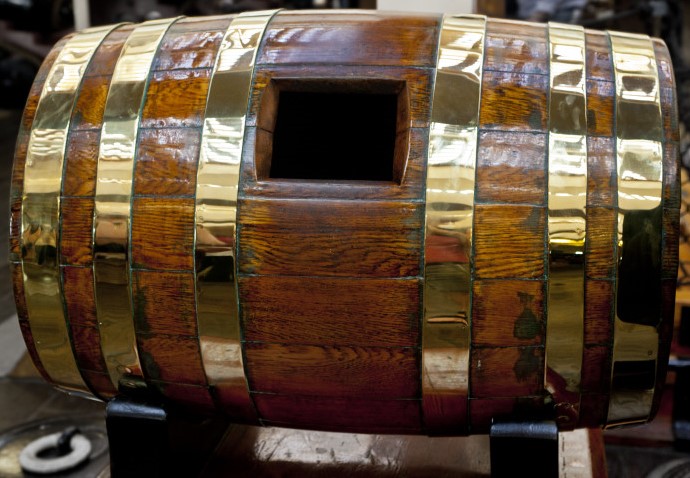
Scuttlebutt: The Butt was a cask with a capacity of between 110 to 140 imperial gallons of liquid (see my article about it here). Scuttle was an opening in the ship’s deck, and as a verb, it meant to intentionally sink a ship by either putting a hole in it or leaving the portholes open with the intention of making a vessel unusable by an enemy. The barrels aboard ships were usually laid on their sides within braces, and a scuttle was a hole in the side for a cup or scoop to be inserted. The drinking hole became a popular gathering place, and the term “drinking hole” also became synonymous with the office drinking fountain or the local pub – a place to gather and have a drink together. To scuttlebutt means to idly chatter, start rumours, or gossip.
Which of these phrases are new to you? How many do you use, and if you use them, how frequently? I’d love to hear about it in the comments!





 Stephanie Huesler