
This week’s topic arose from a conversation with my husband; we were discussing a temporary fix we had made at his mother’s home to make something usable until we could find a permanent solution. I said that we had “MacGyvered” it, and he had never heard the word before. That led me down a rabbit hole to naval flags, a card game, and British tele.
First, MacGyver: Though I knew the term, I had no idea what its origin was. The name comes from the eponymous character in a US television series that ran from 1985 to 1992; Angus MacGyver was a non-violent, resourceful genius, and his favourite tool was, of course, a Swiss Army knife. Though I was living in the States at that time, its running years explain why I didn’t know of the origin: In 1985, I was in college, having finished high school a year early (I took my final two years in one); I was too busy to watch television. In 1986, I moved to Hawaii to do a Discipleship Training School (DTS) with Youth With A Mission (YWAM), and went from there to the Philippines, where we worked in the red-light district of Olongapo. 1987 was a year of multiple jobs, earning money and hanging out with college friends – again, TV was not a priority. In 1988, I emigrated to Scotland.
The traits mentioned above made MacGyver a verb; when something is “MacGyvered“, a simple yet elegant solution to a problem is employed by using existing resources. At my mother-in-law’s home, we needed to level a new microwave that was sitting tilted atop the welded inserts that fit the original one. Our solution was to use an actual leveller, removing the end caps to make it fit inside the metal frame.
Now, down the rabbit hole: In the time of British ships of sail, when a blue flag with a white square or rectangle in the centre flew alone, it served as the sign for imminent departure (signifying P, leaving port); any passengers and crew in port would then return to the ship. The flag came into use in 1777, and by the turn of the century had become known as the blue peter. I have my suspicions that the term may have come from the card game of whist, in which a strategic manoeuvre known as the “blue peter” calls for trumps by throwing away a higher card of a suit while holding a lower one. No one can say for sure which came first, the ship or the card, so to speak, but the connection is likely.
The British children’s television programme, Blue Peter, first aired on 16 October 1958; the name was inspired when Owen Reed, the producer, was inspired by a radio programme for children (produced by Trevor Hill) that began airing on television once a month; it was launched aboard the MV Royal Iris ferry on the River Mersey, Liverpool, with presenter Judith Chalmers standing at the bottom of the gangplank to welcome everyone aboard. Reed was so captivated by the idea, and with the blue peter flag, that he asked to rename the programme (then called the Children’s Television Club) and take it to London.
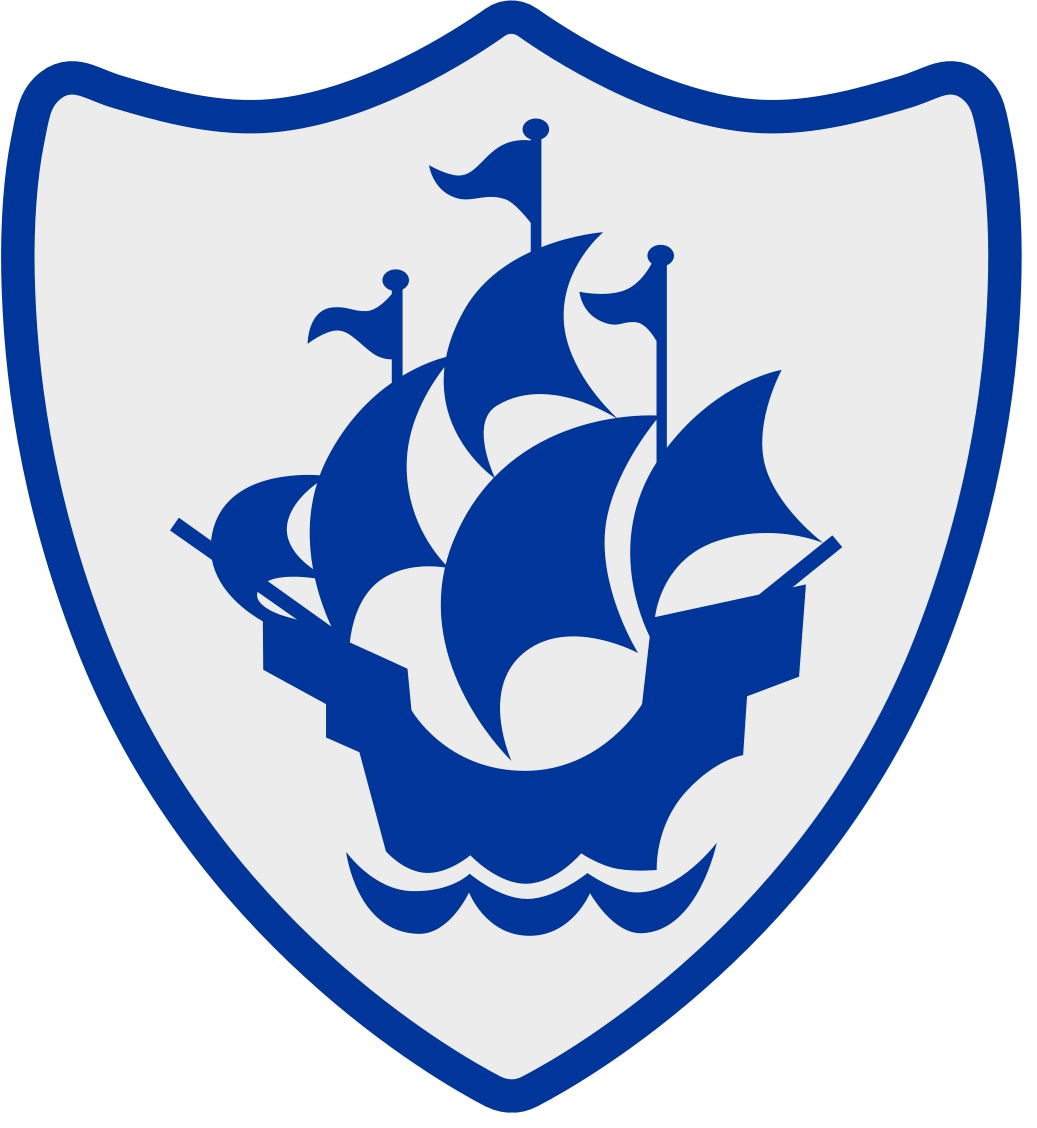
Blue Peter, catering to younger children, is the longest-running children’s TV programme in the world; over the years it has changed with the times, and its content is wide-ranging, but they still give a nod and a wink to that original blue peter flag by giving out badges in the shape of a shield with a blue ship of sail on a wave. It is awarded to viewers for achievements, efforts, or creative work. There are different levels of badges, with the gold badge being the most prestigious; this is usually given to presenters upon their retirement or to people who have accomplished something extraordinary.
Among other things, the show is famous for its segments of “makes” – demonstrations of how to make useful objects, or how to make something to eat. This is the element that linked the term Blue Peter to MacGyver in my mind, so now ya know!
What is something that you have MacGyvered? And do any of my British followers know if “Blue Peter” is used as a verb in a similar fashion? Please comment below!




 Stephanie Huesler