
For the past fortnight, I’ve been moving; same home, new craft room – we’ve swapped our larger office for my smaller craft room. I’ve been taking the opportunity to sort out and clear out extras – downsizing e.g. yarns, materials, and things I no longer need/use, bagging them up for either charity, friends I know will appreciate something, or for upcycling or recycling. While moving, I realised how many scissors I have for various purposes, and I started thinking about what people used before pivoting scissors became most common today.
Knives, as we know, are defined as single-blade implements, while scissors are two-bladed, used with a shearing action to cut everything from paper to sheep’s wool. The first scissors were made from a single piece of bronze curved into a U, with sharpened ends tapering to points; these oldest examples appear in archaeological finds from ancient Egypt around 1500 BC.
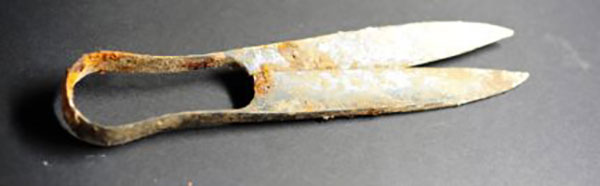
In Germany, near Münich, archaeologists found a Celtic pair of spring scissors dating to the 3rd or 2nd century BC. The pair was so finely crafted that they’re still sharp and shiny, as if they could be used today. In fact, very similar spring scissors are still used in Japan in sewing.
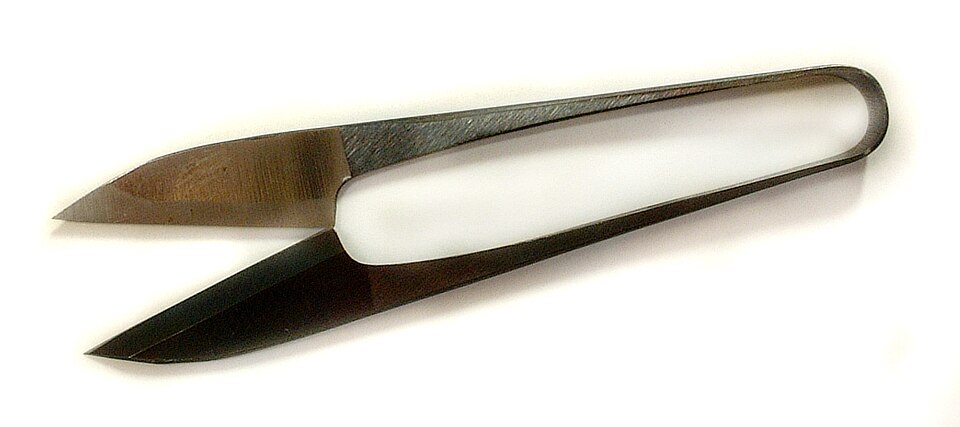
The Romans first invented pivoting scissors around AD 100, connecting two bronze or iron blades joined by a pin or rivet, similar to modern versions.
Today, scissors come from two main production regions: Solingen, Germany, is known as the “City of Blades,” producing around 7% of the world’s market of quality scissors, along with fine swords, knives, and razors. Archaeological excavations around Solingen have found blacksmiths’ smelters dating back over 2,000 years, and the region has been manufacturing and exporting blades since medieval times. In the 18oos, there were as many as 300 smiths involved in the production there; today, around 300 companies manufacture scissors, which are stamped “Made in Solingen” only if the entire process takes place locally.
By far, most inexpensive scissors come from China, which produces around 64% of the world market. Founded in 1663, the Hangzhou Zhang Xiaoquan Company is one of the oldest continuously operating manufacturers today.
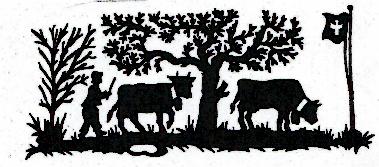
In English, scissors and shears differ in that the latter tend to be larger and used for more robust tasks, such as cutting metal or shearing sheep. In German, however, the term is die Schere – this refers to any kind of scissors (sheep-shearing shears are simply Schafschur-Schere). A word perhaps familiar to English speakers who do crafts might be the term Scherenschnitte, the German word for the art of paper-cutting.
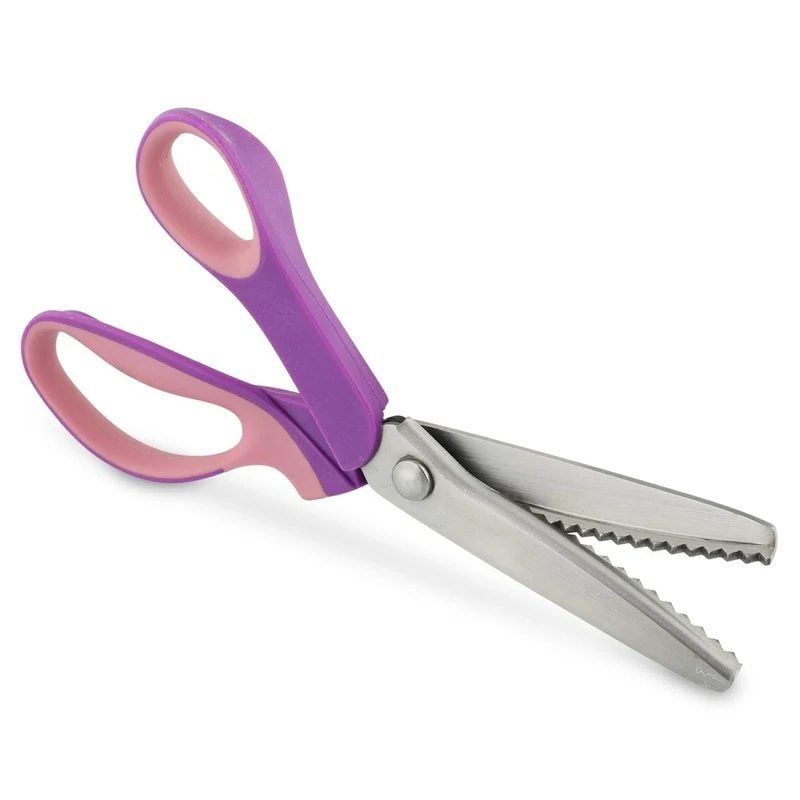
As scissors developed, they’ve become more specialized. Among those available today are hedge trimmers, pruning shears, blade shears (quite similar to the original U-shaped design!), kitchen/poultry shears, cigar cutters, hair-cutting/thinning shears, fingernail scissors, metal snippers, pipe snips, trauma shears (medical), ceremonial scissors (oversized, for cutting ceremonial ribbons), various-bladed crafting scissors (from pinking- to ragged- to wavy-bladed), and safety scissors for children.
So the next time you pick up a pair of scissors, give a wink of thanks to all those who’ve gone before you in inventing, improving, and refining the object you’re holding.






You might also mention Fiskars (Finland): Globally famous for its iconic orange-handled multi-purpose and fabric scissors, representing one of the largest consumer cutting-tool brands in the world.