Tag Archives: Obscurities

Obscurities: Mondegreen

The word Mondegreen is an example of what it means: Misheard lyrics in songs. The word was coined by the journalist Sylvia Wright in 1954, when she misheard the lyrics in a Scottish ballad; instead of hearing They have slain the Earl o’ Moray, / And laid him on the green, she heard Lady Mondegreen.

Examples of this happen frequently; when I was a child, I misheard the lyrics from Dashing through the snow in a one-horse open sleigh as a one-hose hope and slay – I had no idea what that was supposed to mean, but I sang it with gusto! A famous mondegreen is Bob Dylan’s The answer, my friend, is blowing in the wind misheard as The ants are my friends. All the whiskey in the sea can be heard in Club Tropica, by Wham!; the actual line is All that’s missing is the sea. From Toto’s song Africa, instead of the line bless the rains down in Africa, some people hear left my brains down in Africa. In Abba’s Dancing Queen, they sing feel the beat from the tambourine, but I hear tangerine. There are likely as many mondegreens as there are songs, as garbled communication, Chinese whispers, accents and the mix of words and music can all lead to different conclusions than those intended by the singers or songwriters.

Have you ever misheard lyrics? Share your mondegreens below!

5 Comments

Filed under Cartoon, Etymology, Liguistics, Linguistics, Mistranslations, Obscurities

Obscurities: Whilom

This word is doubly obscure, at least for me: Whilom (c. 1200), means having once been; former; once upon a time, erewhile, or at times past. It comes from the Old English hwilum, meaning at times, and is related to today’s while. It is doubly obscure for me because it has a similar formation to an equally obscure German word, weiland, meaning formerly, of yore. This German word is related to the modern weil, which is a false friend to the English word; the German word means because. The relation between the two is not a far stretch, as because implies that something happened in times past, once upon a time.

What do you think? Should we bring back whilom? I think, at any rate, we should start using of yore every chance we get!

3 Comments

Filed under Etymology, Grammar, History, Nuts & Bolts, Obscurities

Obscurities: Anthropause

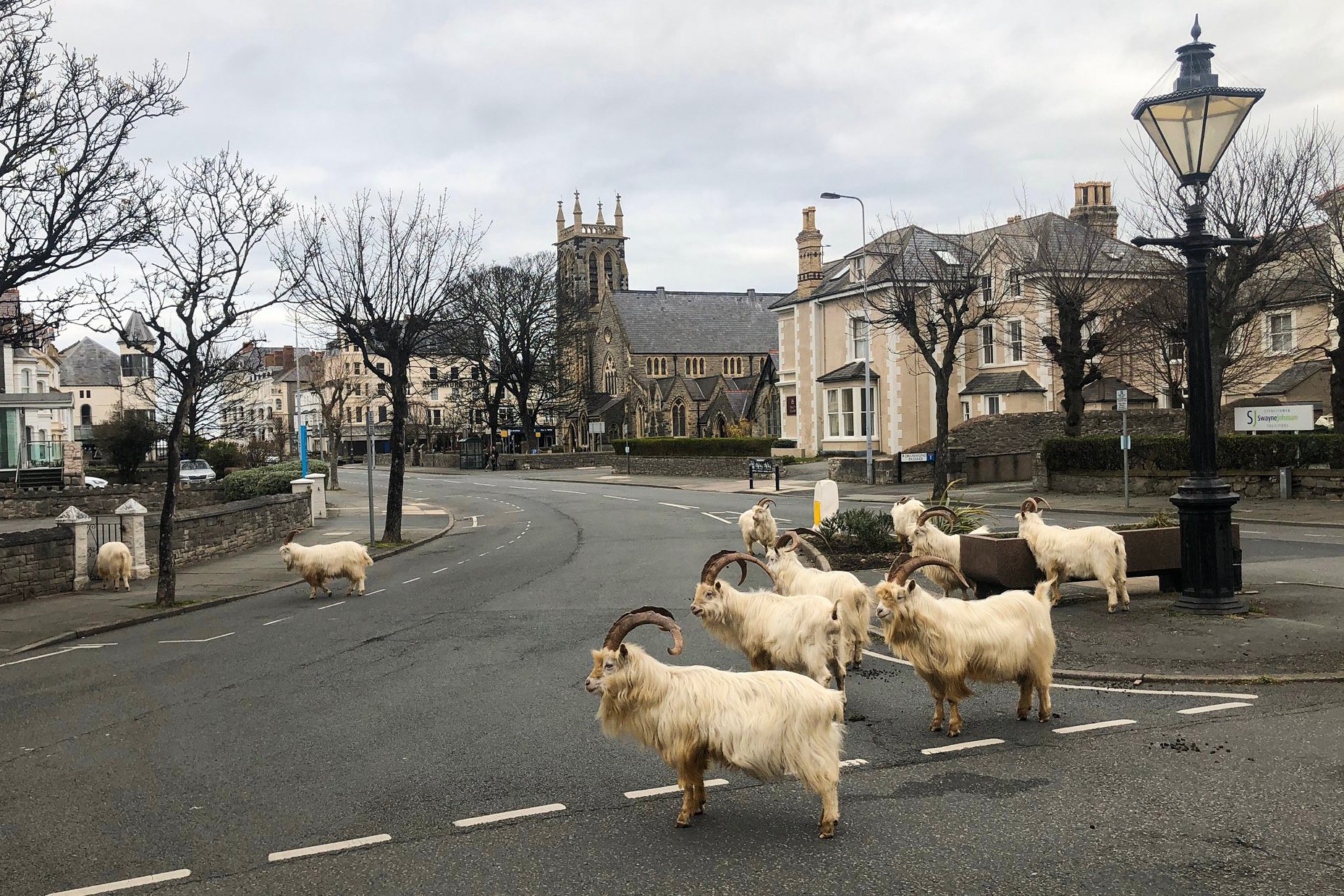
I came across this word today, and knew I had to find out more: Coined by scientific researchers in 2020, it refers to the impact on wildlife that Covid-19 has had; specifically, the pause of mankind on a global scale through lockdowns and travel restrictions.

Whales have changed their conversations – it’s quieter out there, with fewer cruise ships (those massive floating cities can drown out every other sound in underwater monitors for an hour as they pass by); Pumas have been spotted roaming through Santiago, Chile, and flocks of Flamingos have landed in the waterways of Mumbai, India. The wild animals that live in cities, coming out only at nights in normal times, have started coming out to play in broad daylight. Birds, who have had to learn to call louder to attract mates in areas with traffic, can suddenly be heard loud and clear.

Not all changes have been positive, however; we live in a complex world, and in a world where some people will take advantage of the situation: Poaching has risen, as has Amazon deforestation. But on the whole, wildlife has benefited from the absence or reduction of human activity and presence. Roadkill has been reduced, and in those areas near nesting sites, such as beaches, birds have been laying more eggs than in previous years, possibly because they feel safer and are less disturbed by human noise pollution. Studies are beginning to emerge about just how the withdrawal of humans on a mass scale is impacting the environment and wildlife, and I hope that one of the results of such research is a plan for making our lives on a global scale become more compatible with, and supportive of, nature and natural rhythms.

In the meantime, with lockdowns continuing in many parts of the world (and because one never knows when and how travel restrictions will return, and no one wants to get stuck paying for a hotel in a foreign country for weeks on end of quarantine, travel is largely self-restricted), mankind is safely behind closed doors, and wildlife will come out to play.

Photo credit: NY Times, Andrew Stuart

Leave a comment

Filed under Articles, Etymology, Nature, Obscurities, Science & Technology