
The adage “Murphy’s Law” refers to the idea that anything that can go wrong will go wrong. You forget your umbrella and it will be sure to rain; your computer crashes at the worst possible moment; your worst itch is always where you can least reach it, and so on.
Similar sentiments are centuries old: E.g. Augustus D. Morgan, a British mathematician, wrote in 1866: “Whatever can happen, will happen”; Alfred Holt, an engineer, wrote in 1877: “It is found that anything that can go wrong at sea generally does go wrong sooner or later.” British stage magician Nevil Maskelyne wrote in 1908, “Everything that can go wrong will go wrong.”
But who was Murphy? And why is it his law? I’d always assumed that Murphy was either a fictional black sheep created to blame everything on, or someone from a century or more ago, much like Hobson of the “Hobson’s Choice” idiom; but Murphy’s Law comes from the 1940s aerospace era.
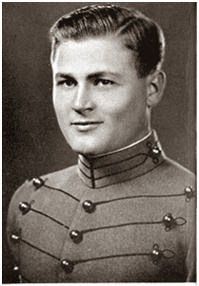
The “law” was coined by and named after Edward A. Murphy Jr. (b.11 January 1918; d.17 July 1990): Born in the Panama Canal Zone in 1918, he finished high school in New Jersey and eventually graduated from West Point in 1940, joining the Army Air Corps, serving in the Pacific Theatre of World War 2, and in the Korean War, reaching the rank of major. According to his obituary on findagrave.com, he is credited with design work on crew escape systems for some of the most famous experimental aircraft of the 20th century, including the F-4 Phantom, the SR-71 Blackbird, the X-15 rocket plane, and later the Apache helicopter. He also worked on safety and life support systems for NASA’s Apollo space missions. Although he was apparently chagrined by the namesake, he believed in the concept as a key to good defensive design – that one must always assume worst-case scenarios and work to counter them in thorough planning, engineering and execution of mechanical designs.
Around 1948, Murphy and his team were testing rocket sleds, which were used to test the acceleration of equipment deemed too hazardous to test in a piloted aircraft and also to test missile components without risking actual (more expensive) missiles in the testing. The saying arose when training his engineers to avoid designing missile components that could be confused one for another; he said, “If a part can be installed in more than one position, it will be incorrectly installed in the field.” Perhaps Murphy was familiar with the sentiment of those past engineers, given his background in engineering, but wherever it came from, his name was attached and, as they say, the rest is history.






 Stephanie Huesler