
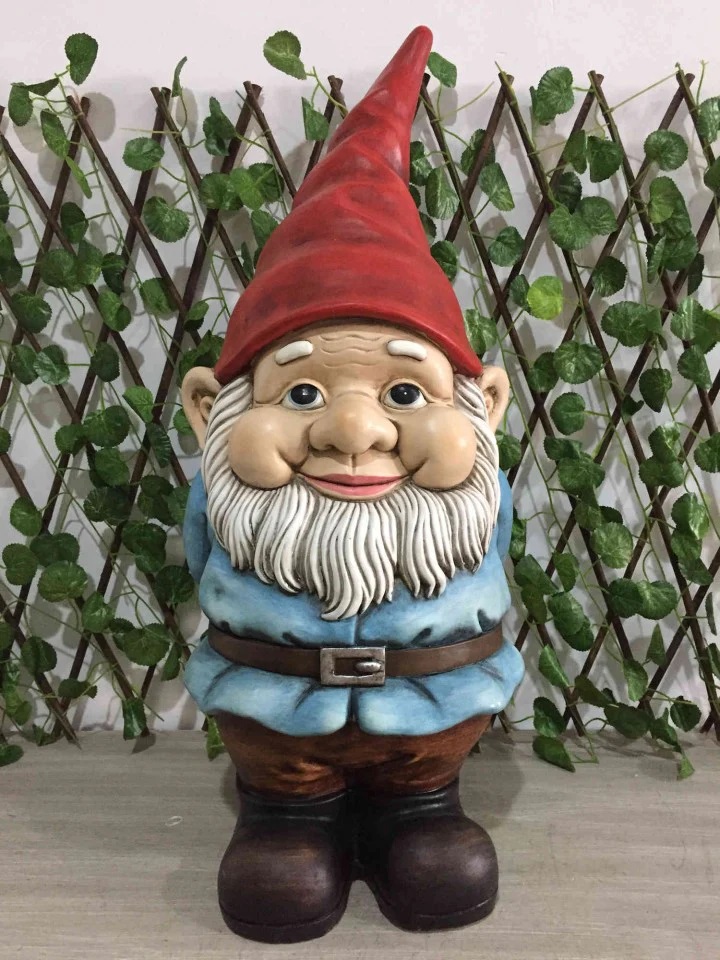
This past weekend I had a craft stand at our church’s annual advent market. Ten hours a day. I sold (as you might guess by the title), among other things, gnomes. It got me thinking about the history of these little creatures. I don’t know about where you live, but here in Switzerland, they’re popping up everywhere this season! Statues, cookie tins, ornaments, wrapping paper, socks and anything else you can think of.
You might think of garden gnomes; but the gnomes I’m referring to simply have a bushy beard, a nose, and a body with a hat on top; sometimes arms, but no eyes, though I added artisan sunglasses to some of mine, and those sold out relatively quickly. The image below is a typical Wichtel here in Switzerland.
I’d always vaguely assumed that gnomes were Scandinavian in origin, but it turns out that they are actually Swiss! First introduced in the 16th century by Paracelsus, born Theophrastus von Hohenheim, who was a Swiss physician, alchemist, lay theologian, and philosopher of the German Renaissance. The term “gnome” might have even been his own invention, based on the Latin genomos, meaning earth-dweller. Paracelsus may have been the first to describe them, but there are examples of similar myths in other cultures, too.
Perhaps the reason I’d thought of gnomes as Scandanavian is that, in the early 19th century Romantic writings, gnomes became entangled in the fairy tales which led them to becoming synonymous with goblins, leprechauns, and brownies, which are in turn similar in character to the Nordic troll. Trolls are said to live in isolated mountains, rocks or caves, and as such, are “earth-dwellers”. While the gnomes were thought to be helpful, trolls were rather unhelpful. Scandinavia does have a gnome-type character as well, known as the Danish and Norwegian nisse, the Swedish tomte, or Finnish tonttu, as well as many dialectical names throughout Scandinavia. In German, they are known as Gartenzwerg or Wichtel.
In folklore, gnomes were thought to be short, stout guardians of mines, treasures, and precious stones, and were the antithesis of the tall and slender elves. JRR Tolkien was likely influenced by these legends when creating his races of dwarves and elves.
The practice of garden statues goes back to ancient Rome, where they set up idols thought to help plants thrive and protect animals. by the 18th century, however, such garden statues were simply seen as a status symbol of wealthier families. The statuary as we think of it today is visually based on the Disney dwarves of Snow White; before that, their look was less homogeneous. Over time, they fell into disfavour among serious gardeners; at the Chelsea Garden Show in the UK, they were banned for several years; the powers that be were accused of snobbery, as garden gnomes were popular among the working class; they were eventually allowed in the show’s garden designs once again.
Garden gnomes in particular are something that you either find adorable or tacky. Like any display piece, if it’s done well, they can add a touch of whimsy to your garden or home.
The topic is one of those rabbit holes you could easily dive into; the traditions of the gnome, after all, go back thousands of years.






 Stephanie Huesler