Tag Archives: Heimskringla

Insatiable Fascination

Throughout history, people have always been fascinated by thinking beyond their own known world; before widespread writing and reading, ancient cultures thought about their own mortality (which, in some ages, wasn’t that far off) and the afterlife. Various cultures prepared for the afterlife in their own ways: The Egyptians removed organs and embalmed the rest, making sure to send on the heart & co. in separate jars (except the brain – who’d need that in the next world?), then sent them on their way with an army of servants (killed for the occasion); the Vikings buried their most honoured dead within a ship with their favourite animals and servants (ditto). Other cultures built pyres to send their loved ones up in smoke.

When writing came along, at first it was used to capture the past and the natural world, ala Pliny the Elder; poems, sagas, verbal tales and folklore began to be recorded; we have such writings still with us today: The Greek Epic Cycle, the Orkneyinga Sagas, the Heimskringla, the Poetic Edda.
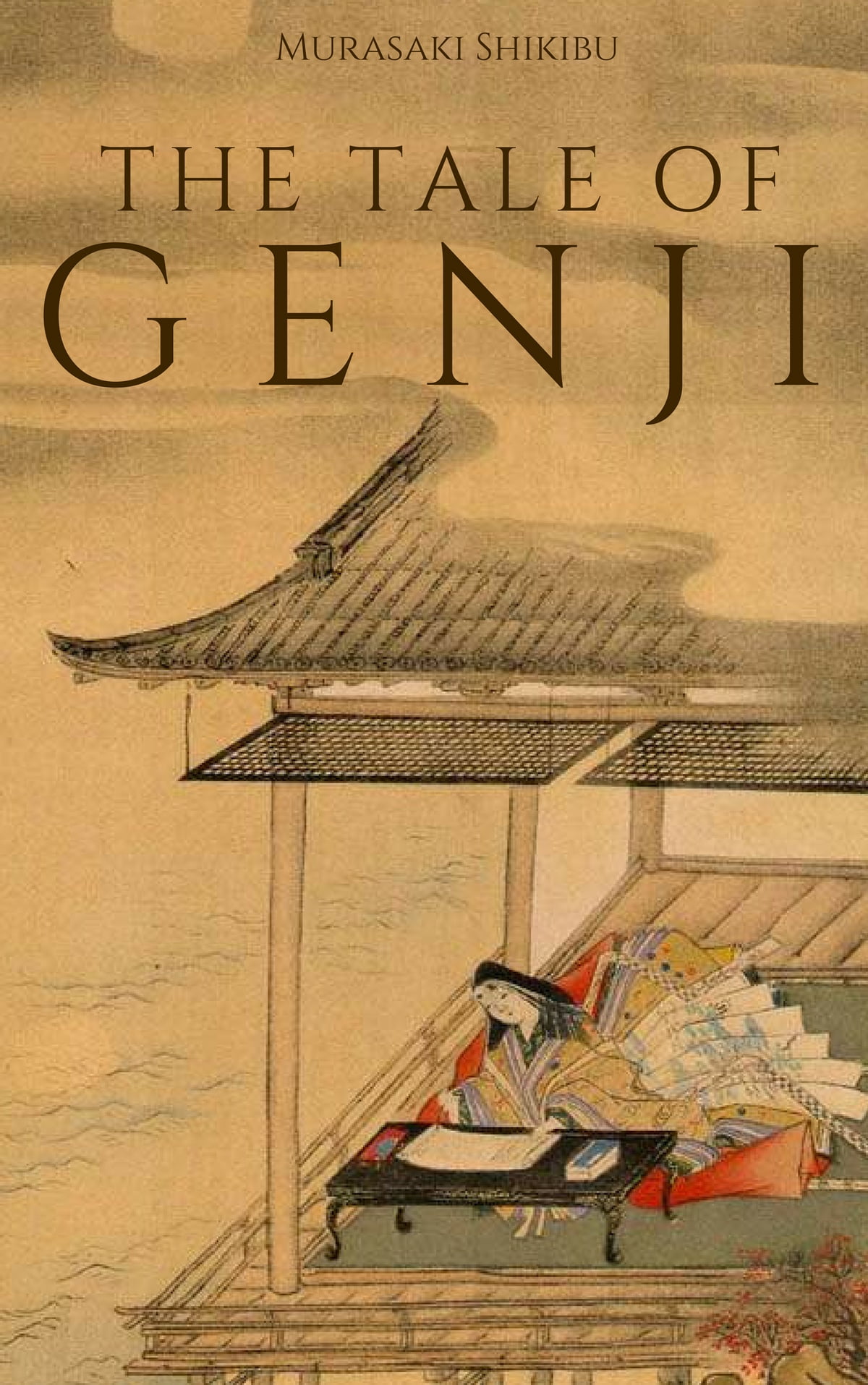
The first novel came along only 1,000 years ago: The Japanese epic The Tale of Genji was written by a woman, Murasaki Shikibu; novels were, for several centuries more, considered on the bottom rung of the literary hierarchy ladder, far behind “serious works” like history. Ironically, Mark Twain referred to history as “fluid prejudice”; it was nearly always recorded by powerful (white) men – hardly ever by a commoner, a member of an ethnic minority, or a woman. The interpretation of events was firmly in the hands of the conquerors. Because of that fact, for instance, we know more about Rome’s version of ancient Britons (Picts, Celts) than we do from their own artefacts; most Celtic and Pictish art is found outside of the UK – many carried off by the Vikings, but that’s another tale. Hollywood has helped perpetuate some of those ancient Roman notions (think of a blue-faced Mel Gibson in Braveheart).

In fact, we don’t even know what the Picts called themselves – the term derives from the Latin Picti, first seen in the writings of Eumenius in AD 297. It can be interpreted (dangerous words) as “to paint” – but there is no evidence that any people groups in northern Britannia painted themselves. Picts is simply a generic term for any people living north of the Forth-Clyde isthmus who fought the Roman Empire’s advancements into their territories. Again, the ink of history flowed from a Roman stylus.

Even Jane Austen herself didn’t begin publishing her novels under her own name. She was a single young woman – for shame that she would dare stain the male-hallowed ground of literature. The saga of how she got published speaks to her tenacity and the support of her family. But she got the last laugh, becoming famous within her (short) lifetime, and she is far better known today than any of the stuffy old men who wrote “proper” books of her day.

The insatiable fascination with other perspectives than our own explains why novels are so popular today. They take us into another time, place and situation, leading us through a story that, if written well, we can relate to and perhaps learn something from. In 1726, Jonathan Swift gave us Gulliver’s Travels. Though he originally wrote it as political satire, to “vex the world rather than divert it”, we know it still today. The fascination with someone being a giant in one land and a miniature in the next grabs our imagination; he travels to floating kingdoms, to an island of immortals, a la Death Becomes Her, and a land of talking horses.

Book Nook (Instagram repeat)

In the age of internet, visual arts have expanded as far as the global imagination can span: Not only paintings or drawings, but even crafts take us into another perspective. I recently saw a series of images in which people have taken the humble walnut shell and turned them into tiny worlds with bookshelves, ladders, lamps, beds and creatures. Book nooks are popular, too: A tiny village, street, or room within the space of a book on a shelf. Science fiction art takes us off-planet.

Films are visual perspectives that take us into other worlds, times and places: When George Lucas showed us a “commonplace” bar scene on Tatooine in the Mos Eisley Cantina in Star Wars, he blew our minds and kicked off a new era of visual storytelling. Avatar took us to another planet and another perception of reality, all the while being an allegorical tale of ecological care vs. abuse. Somewhere along the way, sometime in your life, I’ll bet you’ve been fascinated by a different perspective, whether presented to you through a book, a documentary, a sermon, a play, a film or a conversation.  What did you learn from that encounter? How did it change you, or help shape your perspective? And what is your favourite “escape”: Films, books, visual arts, or music? Please comment below!

8 Comments

Filed under Articles, History Undusted, Humanity Highlights, Images, Psychology Undusted

History Undusted: Rolf Ganger, Viking Outlaw and Founder of Normandy

How does a rabble-rousing Viking end up causing a war centuries after his death (as if stirring up trouble during his lifetime wasn’t enough fun and gigs)? Read on… this is going to be a quick, deep dive into history, so buckle up!

Firstly, let’s start with Rolf Ganger, aka Rollo, Rolloun, Rollon, or Hrôlfr – depending on which language you read. On his tomb, the Latin version of his name is Rollonis (see image).

Tomb of Rollonis (Rolf) Ganger, the first ruler of Normandy, in Rouen Cathedral (He’d probably roll in his grave to find himself so simperingly portrayed…!)

The Heimskringla is a collection of ancient Norwegian sagas about Norwegian kings and rulers, written by Snorri Sturluson (great name, by the way) around AD 1230. It tells us that Rolf was the oldest legitimate son of Earl Ragnvald, best friend of King Harald Harfager (“Fair Hair” – a nickname given to him by the Earl due to Harald’s thick, fair hair), who was the first king of Norway, reigning from ca. AD 872 to 930. It tells us that Rolf was so hefty that no horse could carry his weight; thus, he had no choice but to walk everywhere, from which Ganger, his second name derives (I cannot find a direct translation of the meaning of the name, but Germanic languages have similar words: In German, “gehen” means go or walk; “gangart” means gait, or way of walking).

Harald Harfagre, First King of Norway – Statue in Haugusund, Norway

He was rowdy, even by Viking standards. Heimskringla records that he plundered most of the East Sea (likely referring to what is now the region around the Baltic Sea). Then, “One summer, as he was coming from the east on a Viking’s expedition to the coast of Viken*, he landed there and made a cattle foray. As King Harald happened, just at that time, to be in Viken, he heard of it, and was in a great rage; for he had forbid, by the greatest punishment, the plundering within the bounds of the country. The king assembled a Thing**, and had Rolf declared an outlaw over all Norway.”

*Viken was a region that lay over the modern border between Norway and Sweden.

**To assemble a Thing means to gather a council or general assembly. These still take place in some parts of Switzerland, as well as on the Isle of Man and in Scotland; the Icelandic Althing is considered the oldest active, surviving parliament in the world, dating back to the AD 900s. The first detailed description of such a Thing was made by Tacitus, a Roman historian and senator, in AD 98; the oldest reference to a Thing is inscribed on a stone near Hadrian’s Wall, dated as early as AD 43.

According to the Heimskringla, Rolf, now banished from Norway, headed toward the Hebrides, and from there to “Valland” [In Norse legend, Valland is the name of the part of Europe which is inhabited by Celtic and Romance peoples, and Snorri Sturluson mentions it several times as the Old Norse name for Gaul, which was a region of Western Europe first clearly described by the Romans, encompassing present-day France, Belgium, Luxembourg, and parts of Switzerland, the Netherlands, Germany, and Northern Italy, and covering an area of around 494,000 km2.].

Arriving in Gaul, he did what he did best – went a-Viking, plundering and pillaging and “subduing for himself a great earldom”. He populated it with his own best rabble of Norsemen, which the French called Normanz, literally “north men” which quickly led to the Anglicized term Normans (similar to the word for the people group and language, Norse).

One of the places known to have been invaded by the Vikings in AD 841 is the Jumièges Abbey, which is along the Seine River on its way to Rouen, which they also ransacked. At some point (around AD 885), Rolf also raided Bayeux, carrying off a woman, Popa (whose lineage is unverified – later historians for the duke may have sanitized her parentage to legitimize their son’s noble lineage, as she was married “more danico”). She gave birth to his heir, William Longsword. When Rolf and his gang were all done hacking their way through towns and villages along the Seine, they eventually made their way back to Rouen, where he established the Duchy of Normandy in AD 912.

So, how did Rolf cause a war centuries later? Well, his son, William Longsword, fathered a son, Richard the Fearless (who became ruler of Normandy at the age of 10 when his father died). Richard’s son was called Richard the Good, and he became the father of Robert the Magnificent and grandfather to the illegitimate William the Bastard, who became known as William the Conqueror (a sword seems to have cleared up his illegitimacy quite neatly) – from whom all the subsequent English kings descended. Now to the crux of the matter: William, descendent of Rolf Ganger, fathered English kings, who thus claimed their right to the Norman throne by connection, birth, rank… in short, any excuse for raiding was still in their blood. Rouen was one of the largest and most prosperous cities of medieval Europe, and (as mentioned in my last post) was made wealthy through textiles and trade along the Seine River and beyond. Rouen became the focal point of the Hundred Years’ War (1337-1453) because of that pesky connection. So now ya know!

5 Comments

Filed under Articles, Etymology, History, History Undusted, Links to External Articles, Quotes