Tag Archives: Medical History

History of Everyday Objects Undusted: Sponges

Today, let’s dive into the topic of sponges.

Natural sponges are sessile (immobile) marine invertebrates of the animal phylum Porifera (pore-bearing). They lack complex nervous, digestive, and circulatory systems but rely on constant water flow through their bodies to take in nutrients and oxygen, and to remove waste. There are nearly ten thousand known species; some feed on planktonic bacteria; others host symbiotic organisms to thrive, and some have even developed predatory survival strategies in nutrient-poor environments.

Natural sponges have been used by humans for thousands of years; archaeological excavations have found evidence of sponges used to plaster and paint the queen’s walls at Knossos (the Minoan culture of Crete, c. 1700 to 1400 BC). They have been found on Greek pottery from around 760 BC in depictions of thermal scenes or as status symbols. Oppianus Cilicius (2nd C BC) was the first to write about those fishing for sponges, including details about the spongers’ lifestyles and diets, and the dangers they faced from shark attacks (for an interesting video on the topic of modern spongers, click here). Aristotle (384–322 BC) described the “elephant nose-like tube” used by the sponge divers to breathe. In the Iliad and Odyssey, Homer makes reference to sponges as hygienic utensils. Pliny the Elder (AD 23-79), among others, described the uses of sponges in agriculture and cooking. Cicero (106-43 BC) referred to their use in washing or cleaning. Roman legionaries were supplied with sponges to stuff into their helmets, for personal hygiene, and for drinking (their ancient solution to a water bottle); let’s hope that those were three different sponges allotted. This explains the presence of a sponge at the cross in Matthew 27:48/Mark 15:36/John 19:29.

The first use of a sponge with inhaled surgical anaesthesia is recorded in AD 1025 by the Persian physician Ibn Sina, who used a concoction of potent (=poisonous) sedatives of opium, mandrake and hemlock. Medieval European physicians sometimes used crude herbal mixtures or opium sponges to administer a type of anaesthetic, but it was a far cry from what we know today; at best, it got the patient drunk or high enough not to scream as loudly.  Ether vapour as an anaesthetic didn’t make its way into use in Europe until 1846, at the London University College’s theatre.

By the mid-twentieth century, overfishing brought both the sponges and the industry close to extinction. Overharvesting strained the sponge populations around the Mediterranean and the Caribbean; other stresses include storms (which can suffocate them with sand and debris, or rip them loose from their anchors) and climate change (disease outbreaks occur more frequently in warming ocean temperatures). The depleted population also puts stress on the entire environmental chain: Sponge feeders, such as parrotfish or angelfish, move on; without their presence, rapid-growing sponge species smother reef-building corals, which in turn reduces breeding, hiding, and feeding places for other marine species. Changes in harvesting policies and practices in some regions may mitigate these issues: By cutting the sponges loose rather than ripping them out, sponges have a chance to regenerate. But as more people in the First World become concerned with using natural products, marine sponges will continue to be (over-)harvested.

Sponges today are usually synthetic, invented in 1937 by the German scientist Otto Bayer, who (in the good ol’ fashioned way a lot of discoveries have been made) accidentally created polyurethane foam. By the 1940s, the DuPont company had begun mass-producing sponges made from wood pulp, hemp fibres, and sodium sulphate. By the late 1950s, dual-purpose sponges were introduced.
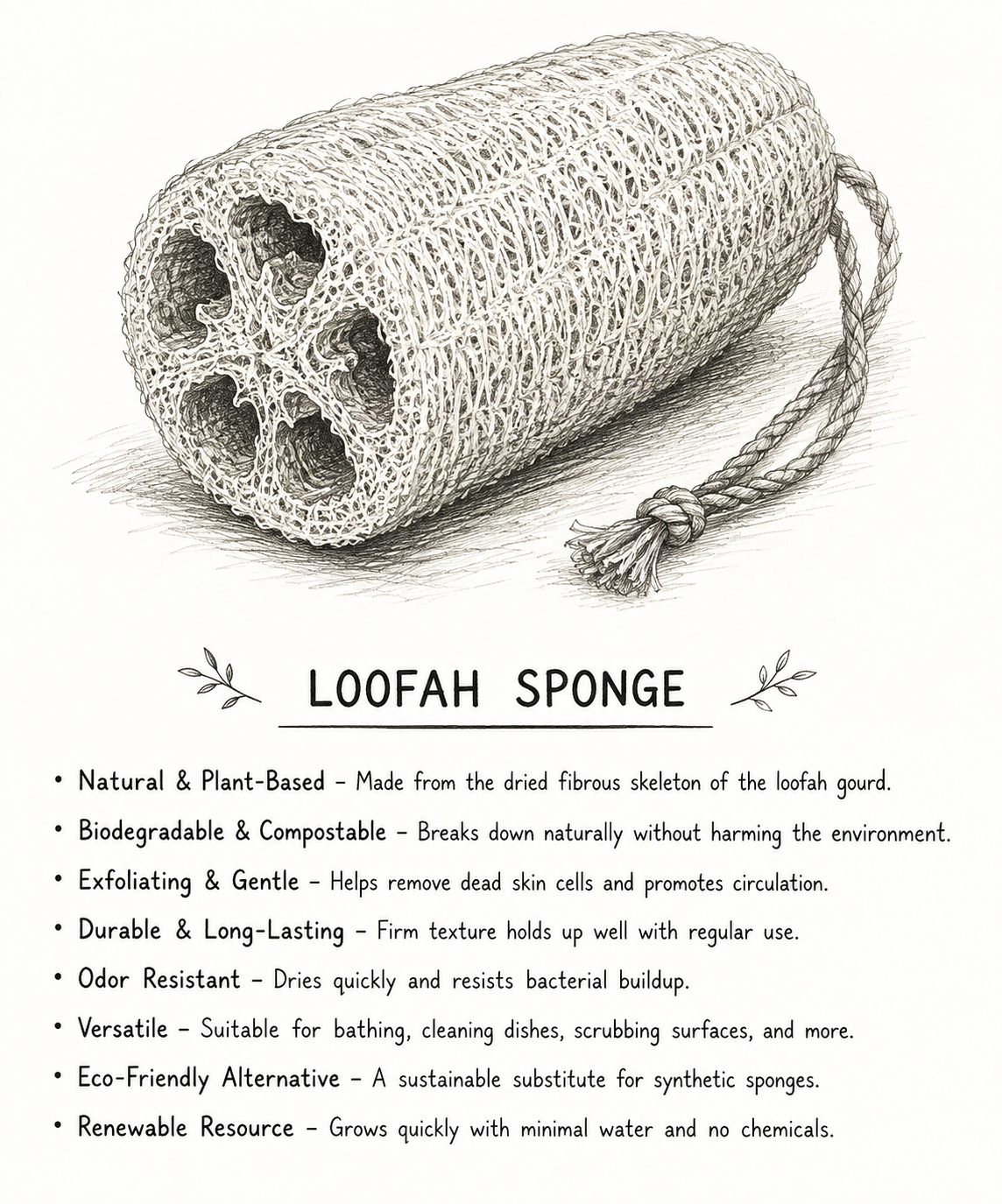
An alternative to both the marine- and synthetic sponges is the Loofah (Luffa) gourd: Besides being a food in the earlier stages of its cycle, when these gourds are left on the vine to dry out, they become a fibrous, natural sponge. For a short video on how to harvest and use a luffa gourd sponge, just click here. If I had a garden, I would certainly try to grow these!

What kinds of sponges do you have in your home? I hope this helps you appreciate the humble sponge, whichever form you use.

7 Comments

Filed under History Undusted, How It's Made, Humanity Highlights, Images, Links to External Articles, Military History, Nature, Research, Science & Technology, YouTube Link

History Undusted: Mary Seacole

Have you ever heard of Mary Seacole? Probably not – I hadn’t, and I’m a history fan. Have you ever heard of Florence Nightingale? You probably had something taught to you in school about her.  In reading about the two, the most striking difference, and perhaps the one that made all the difference in the paths their lives took, was that Florence was born into a rich, upper-class and well-connected English family; Mary was the daughter of a Scottish soldier and a Jamaican woman, who first taught her about medicine.

mary seacole


Mary Seacole. Source: Wikipedia


While Florence was famous for training nurses during the Crimean War, the English authorities refused Mary’s request to be sent there, too, even though it was known that the nursing care was far too inadequate; so she scraped the money together herself, travelled to the front lines on her own, and established a hotel in order to provide meals, a place of rest, and medical treatment for the wounded. She would often go out to the battles to bring in the wounded, and as mortars flew past, a soldier would shout, “Down, mother!” and she would hit the dirt, then pick herself back up and continue on. To tell her whole story would be a lengthy one here, but she has told it in her own words by writing a book: The Wonderful Adventures of Mrs Seacole in Many Lands, available for free as a Kindle or other formats here. You can also read more about Mary herself in the following links:


Wikipedia

BBC

YouTube

Her story is well worth reading, because it truly was an adventure, and it neither started nor stopped in Crimea. Kudos to the woman who overcame a triple-prejudice (being a woman of mixed race from a poor background) to achieve her calling and change the lives of the men she helped. It’s a history gem worth undusting!

Leave a comment

Filed under History, History Undusted, Links to External Articles, Military History

History Undusted: The Immortal Life of Henrietta Lacks

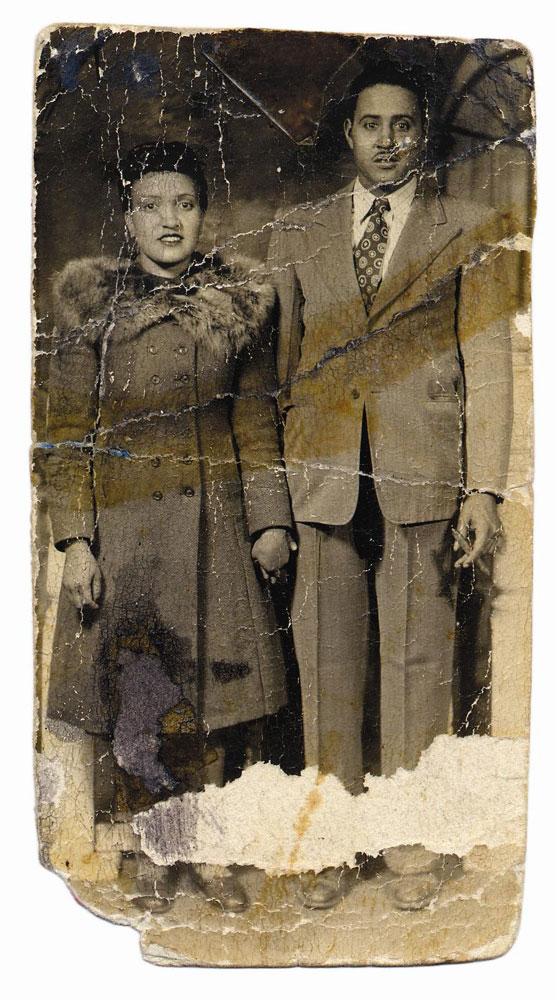
Henrietta Lacks, Immortal HeLa CellsIf you’ve ever taken any medication stronger than an aspirin and benefited from it, chances are that you owe your thanks to an African American woman who never lived to hear your tale.

Born in 1920 as Loretta Pleasant, when her mother died giving birth to her 10th child and the father could not support the family, the children were divided among relatives to be raised.  Loretta, who became known as Henrietta, was sent to live with her grandfather, Tommy Lacks, who lived in a two-storey log cabin (former slave quarters) on the tobacco plantation of her white great-grandfather.  After having five children with her first cousin, whom she married after their first two children were born, she died at the age of 31 of cervix cancer.

What is most remarkable about her life is something she never knew:  During the diagnosis of her cancer, done at Johns Hopkins (the only hospital near her home that would treat black patients), her doctor, George Gey, was given samples of her cervix for biopsies. Before this time, any cells cultured from other cells would die within days.  Dr Gey discovered that her cells were remarkably durable and prolific.  A selection of her cells was isolated and cultured (without her knowledge – back then, permission wasn’t necessary for what was considered tissue waste) into the immortal cell line that became known as HeLa Cells; they are still in use today worldwide, being the first human cells to be cloned successfully, in 1955.

HeLa cells are so prolific that if they land in a petri dish, they will take over; they have been used to create the vaccine against Polio, in research for AIDS, gene mapping, cancers and countless other projects; to date, scientists have grown over 50 million metric tonnes of her cells*, and there are nearly 11,000 patents involving these cells.  Her name should be known, and as the godmother of biotechnology, her history deserves to be undusted!

For a fascinating book on this topic, see The Immortal Life of Henrietta Lacks, by Rebecca Skloot. I’ve read it, and had trouble putting it down!

*For a more detailed article in the New York Times, click here.

10 Comments

Filed under Articles, History, History Undusted, Links to External Articles, Science & Technology

A Little Light Reading… Not

I will admit that I have quite odd tastes in reading, especially for a woman; I tend toward history, nautical, and obscure or long-forgotten books.  In writing my current manuscript, which is Asunder, the third book in the Northing Trilogy, I’ve read more than a fair share of military history books, specifically covering the 18th century of the Royal Navy.  Once, on a research trip to London, I searched out a bookstore that specializes in military and transport books, even reputed to have remainders; I don’t think they’d seen a woman in the shop in years (who’d entered intentionally) by the looks I got; one of the men even said, “The beauty shop’s two doors down, love.”  When I asked if they had the out-of-print autobiography by William Spavens, a unique lower deck view of the 18th century navy, they froze as if they hadn’t heard me correctly.  The question must have been laced with catnip, because after that I had the entire shop of men eating out of my hand, and I spent nearly two hours in there being helped to the finest pick of naval history books (including the autobiography I was after!).  Sadly, the last time I was there the shop was gone, but I’ve since found the largest used book shop in London, Skoob, which is highly dangerous for a bibliophile with a private library…!

A few of the books I’ve read in the course of research for Asunder are fairly gory, like Medicine Under Sail (I’d bet my bottom dollar that the screen writers for “Master and Commander“, with Russell Crowe, read that book as they wrote the script) and “Poxed & Scurvied” – the story of sickness and health at sea, while others have been like reading a thriller, such as “The Seven Years War” by Rupert Furneaux  or “A Sailor of King George” by Captain Frederick Hoffman.

I devour history books like other people devour pulp fiction; but especially during the first draft of the book, I had to continually keep in mind that I was writing historical fiction, not a history book; the details that I included had to serve the plot and character development, and not visa versa.  Only a fraction of what I learned has gone into the book; but those rich details give salt to the waves, creaks to the ship, and whip to the rope (I’ve also spent hours aboard the Cutty Sark “filling in the blanks” of a docked ship, so to speak, but that’s another story).  I could have peppered the dialogue with so much naval slang you wouldn’t have been able to swing a cat (naval slang, by the way), but if readers were to get ripped out of the story trying to figure things out, then I would have missed the mark.

So, the next time you sit down for a little light reading, you might want to consider one of the books linked above; then again, if you don’t want gory dreams, rather go with “The Price of Freedom“, or “Redemption“, or “The Cardinal, Part One or Part Two“…  and enjoy!

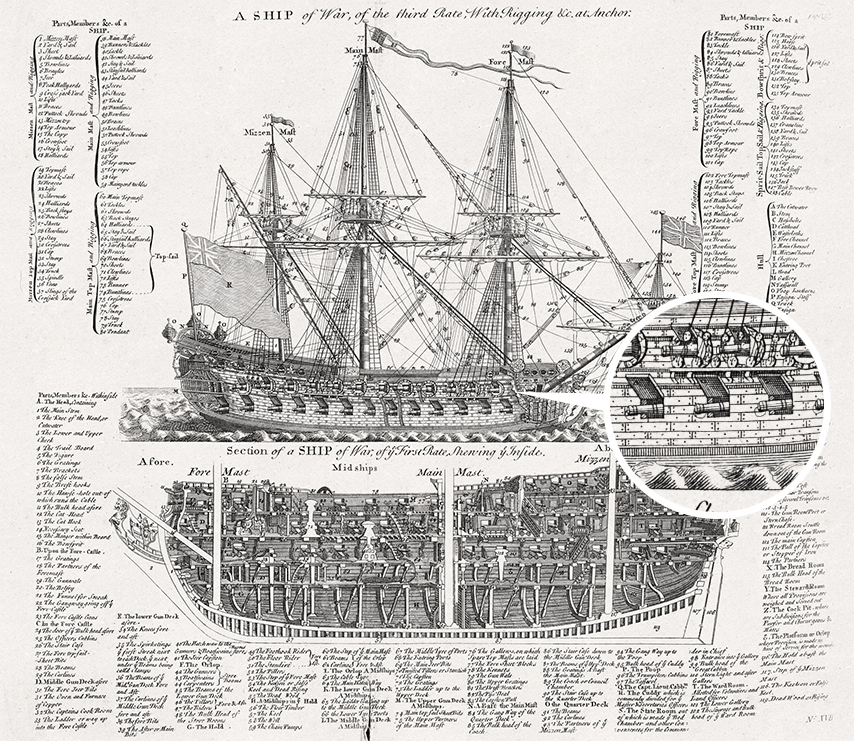
third-rate-ship-of-the-line-diagram

One of my library posters

8 Comments

Filed under Articles, History, Military History, Musings, Nuts & Bolts, Research