History Undusted: The 1867 Sailor’s Word-Book

Sea Captians Logfixed(web)

As part of my research for my upcoming novel, Asunder, I came across the 1867 “The Sailor’s Word-Book:  An Alphabetical Digest of Nautical Terms, including some more especially military and scientific, but useful to seamen; as well as archaisms of early voyagers, etc. by the late ADMIRAL W. H. SMYTH, K.S.F., D.C.L., &c.”  It’s a massive document, but below is a small gleaning; if you want more, check out my original posts on History Undusted here.  It’s a fascinating insight into life and demands at sea in the 18th & 19th centuries, and gives a glimpse of just how many of our common idioms originated at sea; how dull our language might have been otherwise!  I’ve also included a few odd ones that I think deserve revival!

ACCOMPANY, to. To sail together; to sail in convoy.

AVAST. The order to stop, hold, cease, or stay, in any operation: its derivation from the Italian basta is more plausible than have fast.

BADGER, to. To tease or confound by frivolous orders.

BALLARAG, to. To abuse or bully. Thus Warton of the French king— “You surely thought to ballarag us with your fine squadron off Cape Lagos.”

BAMBOOZLE, to. To decoy the enemy by hoisting false colours.

BEAT TO QUARTERS. The order for the drummer to summon everyone to his respective station.

BLOAT, to. To dry by smoke; a method latterly applied almost exclusively to cure herrings or bloaters.—Bloated is also applied to any half-dried fish.

BONE, to. To seize, take, or apprehend. A ship is said to carry a bone in her mouth and cut a feather, when she makes the water foam before her.

BOTCH, to. To make bungling work.

BULLYRAG, to. To reproach contemptuously, and in a hectoring manner; to bluster, to abuse, and to insult noisily. Shakspeare makes mine host of the Garter dub Falstaff a bully-rook.

BUNGLE, to. To perform a duty in a slovenly manner.

CLINCH A BUSINESS, to. To finish it; to settle it beyond further dispute, as the recruit taking the shilling (those who were impressed into the Royal Navy, if they took the pre-payment of one shilling, were forthwith considered volunteers).

COBBLE, to. To mend or repair hastily. Also, the coggle or cog.—Cobble or coggle stones, pebbly shingle, ballast-stones rounded by attrition, boulders, &c.

CORN, to. A remainder of the Anglo-Saxon ge-cyrned, salted. To preserve meat for a time by salting it slightly.

CUT AND RUN, to. To cut the cable for an escape. Also, to move off quickly; to quit occupation; to be gone.

EGG, to. To instigate, incite, provoke, to urge on: from the Anglo-Saxon eggion.

FLEATE, to. To skim fresh water off the sea, as practised at the mouths of the Rhone, the Nile, &c. The word is derived from the Dutch vlieten, to skim milk; it also means to float.

GEE, to. To suit or fit; as, “that will just gee.”

GUDDLE, to. To catch fish with the hands by groping along a stream’s bank.

HARASS, to. To torment and fatigue men with needless work.

HOLD-FAST. A rope; also the order to the people aloft, when shaking out reefs, &c., to suspend the operation. In ship-building, it means a bolt going down through the rough tree rail, and the fore or after part of each stanchion.

JIRK, to. To cut or score the flesh of the wild hog on the inner surface, as practised by the Maroons. It is then smoked and otherwise prepared in a manner that gives the meat a fine flavour.

KEEP YOUR LUFF. An order to the helmsman to keep the ship close to the wind, i.e. sailing with a course as near as possible to the direction from which the wind is coming.  LUFF, or Loofe. The order to the helmsman, so as to bring the ship’s head up more to windward. Sometimes called springing a luff. Also, the air or wind. Also, an old familiar term for lieutenant. Also, the fullest or roundest part of a ship’s bows. Also, the weather-leech of a sail.

MAKE IT SO. The order of a commander to confirm the time, sunrise, noon, or sunset, reported to him by the officer of the watch.

PIPE DOWN! The order to dismiss the men from the deck when a duty has been performed on board ship.

STAND FROM UNDER! A notice given to those below to keep out of the way of anything being lowered down, or let fall from above.

TOE A LINE! The order to stand in a row.

KICK THE BUCKET, to. To expire; an inconsiderate phrase for dying.

KICK UP A DUST, to. To create a row or disturbance.

LET FLY, to. To let go a rope at once, suddenly.

MAN-HANDLE, to. To move by force of men, without levers or tackles.

MARINATE, to. To salt fish, and afterwards preserve it in oil or vinegar.

NAIL, to. Is colloquially used for binding a person to a bargain. In weighing articles of food, a nail is 8 lbs.

OVERSHOOT, to. To give a ship too much way.

PITCH IN, to. To set to work earnestly; to beat a person violently. (A colloquialism.)

RANSACK, to. To pillage; but to ransack the hold is merely to overhaul its contents.

SKEDADDLE, to. To stray wilfully from a watering or a working party. An archaism retained by the Americans.

SPIN A TWIST OR A YARN, to. To tell a long story; much prized in a dreary watch, if not tedious.

SUCK THE MONKEY, to. To rob the grog-can.

TOP THE GLIM, to. To snuff the candle.

TROUNCE, to. To beat or punish. Used as far back as the 1550s.

TURN A TURTLE, to. To take the animal by seizing a flipper, and throwing him on his back, which renders him quite helpless. Also applied to a vessel capsizing; or throwing a person suddenly out of his hammock.

TWIG, to. To pull upon a bowline. Also, in familiar phrase, to understand or observe.

WADE, to. An Anglo-Saxon word, meaning to pass through water without swimming. In the north, the sun was said to wade when covered by a dense atmosphere.

WALK SPANISH, to. To quit duty without leave; to desert.

WEATHER ONE’S DIFFICULTIES, to. A colloquial phrase meaning to contend with and surmount troubles.

WHISTLE FOR THE WIND, to. A superstitious practice among old seamen, who are equally scrupulous to avoid whistling during a heavy gale.—To wet one’s whistle. To take a drink. Thus Chaucer tells us that the miller of Trumpington’s lady had “Hir joly whistle wel ywette.”

WORK DOUBLE-TIDES, to. Implying that the work of three days is done in two, or at least two tides’ work in twenty-four hours.


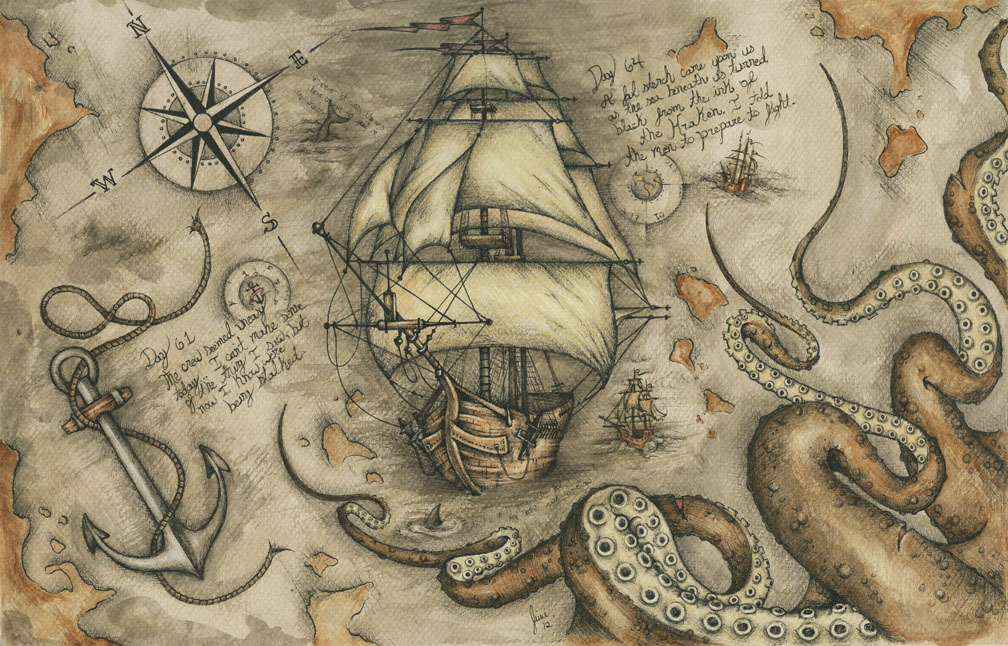
Image Source: Unknown.  Please let me know if it’s yours – I’ll gladly credit the artist!


4 Comments

Filed under Etymology, History, History Undusted, Links to External Articles, Lists, Military History, Nuts & Bolts, Research

The Kintsugi of Life

I’m back!  My “loop” was successful, and I’m now back at home recovering, sans thyroid.  At the moment (due to the wound, bandage & internal bits & bobs), it feels like something’s strangling me constantly, but I try to ignore it…!  The hospital stay was mercifully short with a nice roommate and great care by the hospital personnel.  Now, I’m living on soup, testing the waters with vocal exercises, and resting my throat when it needs it – but need to challenge it as soon as the swelling goes down so that I don’t lose my vocal range.

When I let my friends and family on Facebook know what’s been happening, someone made a comment about the scar (hoping that it wouldn’t be visible long, for my sake); but I must confess that that aspect of the whole procedure was and is my least concern.  For me, scars mean that I’m alive; they mean that my body is healing itself.  They are a part of my history and have been instrumental in making me who I am.

The Japanese have a wonderful philosophy about the topic of scars:  Kintsukuroi (meaning “golden repair”) is the Japanese art of mending broken pottery using lacquer resin mixed with gold or silver.  They believe that when an object has been broken or suffered damage, it carries great meaning and history; its brokenness, when mended, makes it more beautiful.  The cracks represent events that took place in the history of the pottery and make it more unique by their very existence.  (Click here for a short but poignant video on the topic.)

In the western world, there is a shameful abundance of waste; if something gets broken, most people just throw it away.  But what if we were to adopt the Japanese mentality?  Chances are, we’d begin to look at the world around us through different lenses.  We would then begin to see the people around us from a different perspective.  Our modern media culture has become fixated on perfection (what they deem perfect changes over time; at the moment that standard tends toward the inane, the plastic, the uniform, and the anorexic, to put it bluntly); but this perspective can often blind people to the beauty of the unique and the diverse.

We should never be ashamed of our uniqueness; never be ashamed of grey hair, scars, or unique body features that make you who you are.  Eating right, exercising and treating ourselves with TLC are all that’s wanted; beyond that, we are what we are, warts and all.  We are all pieces of Kintsugi in the making, fearfully and wonderfully made.  Cracks just let your light shine through…

This slideshow requires JavaScript.


9 Comments

Filed under Articles, History, Musings

Wordless Wednesday no. 35: Life

Life

3 Comments

October 4, 2017 · 10:00 AM

Loops of Life

Roller Coaster Loops

Everyone’s got them; no one necessarily wants them:  Those moments in life when things go topsy-turvy and send us into tailspins.  I call them “loops of life” – like a loop on a roller coaster… they come up fast; you may dread the thought of it more than the actual experience warrants; and it’s over before you know it.

Life has thrown me a loop lately, and as it has affected, and will likely affect, my rhythm of posting blogs here for the next couple weeks, I’d like to thank you in advance for a bit of patience.

In the summer, I found a growth in my neck; I knew it was the thyroid gland, as I’d had one in the same spot 30 years ago; by the time life got back into swing here after the summer holidays, it had grown further; long story short, they found three large, benign masses which have completely consumed my thyroid gland – miraculously, however, they seem to have taken over its function and are working perfectly fine.  But it’s getting harder to speak, swallow, breathe, etc.  So, in 10 days I’ll get to check into a luxury hotel, aka the hospital, and undergo a 4-hour surgery; the surgeon will take her time, especially as I’m a singer and the vocal cords / nerves are extremely important to me, as you can imagine!

Since beginning this process, I’ve heard from so many people who are having (or have had) the same problem; it’s comforting to know I’m by no means alone in this, and others have come through it well and whole.  I may not post regularly for the next fortnight or so – but keep your eyes open!

Before the surgery, we’re going away for a much needed week’s holiday in Lugano, and are looking forward to it!  Our cats are looking forward to being spoilt by a live-in flat sitter, too, so it’s a win-win!

15 Comments

Filed under Articles, Musings

Feeding the Right Wolf

Two Wolves

There’s an old Native American proverb about two wolves:  One is a black wolf, and the other, white.  The black wolf is everything that is bad, and the white one is everything that is good.  These wolves are constantly at battle inside each one of us:  Which wolf wins?  The one you feed.

This story has truth at its core, and we can apply this principle to any area of our lives:  Thoughts; diet; exercise; writing; speech; relationships; habits, and anything else you can think of.  Another adage comes to mind:  “Garbage in, garbage out” – what we feed ourselves (any part of our trinity, whether mind, body or spirit) is what will come out of us.  There are all kinds of sayings around this truth – roots and fruits, and all that.

Each one of us has a daily routine; it may vary greatly from person to person, but it’s there.  We all probably have habits we’d like to break; they could be things that are time- or energy-wasters, or habits like smoking or overeating.  I’d like to focus on the habits of writers.

Creativity, like caffeine, is a legal addictive substance; an addiction is formed from repeated applications (i.e. habit).  If we feed the right wolves, we will reach our goals, whatever they are, but if we feed the wrong wolves, we won’t – it’s that simple.  For some, it’s finishing the first chapter; for others, it’s publishing; for others, it might be collecting enough poems, artwork, or other creative forms until there’s enough for release (art show, cookbook, anthology, etc.).

Each creative expression has its own unique pair of wolves.  One common black wolf is what I would name “NEDs” – Negative Energy Drains.  It can be expressed through negative talk about yourself or your writing (whether its source is internal from a lack of self-confidence, or external from unsupportive environments or relationships), or a pressure placed on yourself (again, internal or external) to complete a goal based on unrealistic expectations.  Another common black wolf is “Ambiguity”:  As long as we don’t know what concrete steps to take to reach a goal, it’s difficult to move forward; as long as we allow ambiguity to feed, it will paralyze us.

In this scenario, the white wolves would be named PEFs (Positive Energy Feeds) and Preciseness.  Those might simply manifest themselves as speaking positively to yourself every time NED tries to speak or putting up positive post-its of where you’re going with your goals.  For the second wolf, define the steps needed – set yourself an appointment for the purpose of researching the steps, and finding concrete resources to help you reach your goals, then take one step at a time.  Keep that appointment.

Which wolf do you feed?

TwoWolves-black-white

2 Comments

Filed under Articles, Musings, Writing Exercise

Wordless Wednesday no. 34: Parenting

Kangaroo - Don't make me come in there

Leave a comment

September 20, 2017 · 5:52 AM

History Undusted: Eidsborg Stave Church & the Vest-Telemark Museum

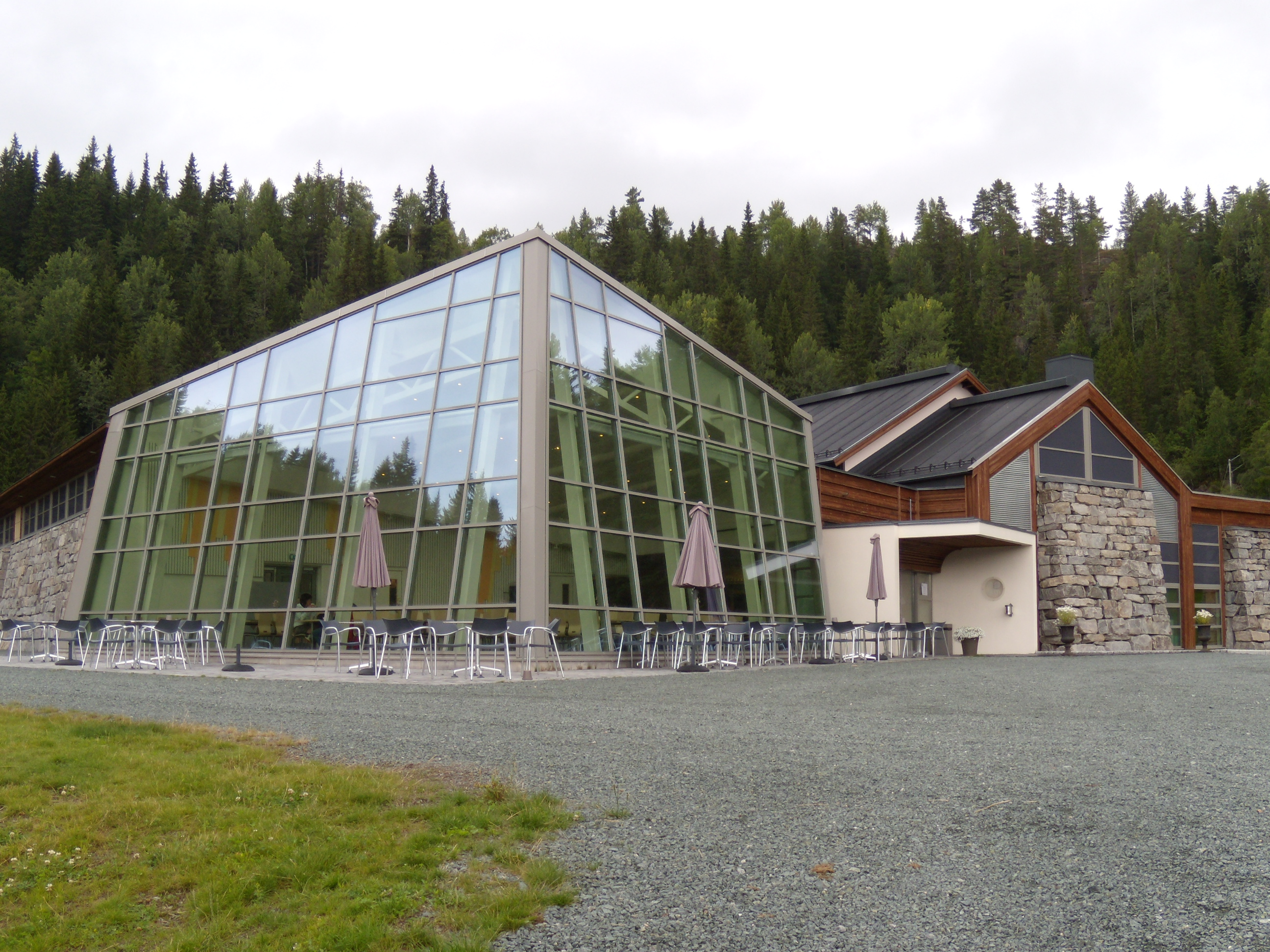
Back in August of 2013, my husband and I went on a holiday/research trip (for “The Cardinal“) through parts of Norway, and we came across an amazing site:  Eidsborg Stave Church and the Vest-Telemark Museum.  We went to Eidsborg with the intention of seeing the outside of the Stavskyrkje (stave church) there on our way to the Heddal Stave Church; instead, we spent swift hours there!  It started off with a private guided tour from a local guy (“local” meaning his family has lived in the area since the 1300s), who was both understandably proud of the local history and knowledgeable, as well as enthusiastic.

5 August 2013 - Eidsborg Stavskyrkje Museum 68

Vest-Telemark Museum, Eidsborg

The museum itself is modern, beautiful, excellently staffed and convenient, with free wireless connection, a cafe and a gift shop, but most importantly, an extensive exhibit of the history of Vest-Telemark.  The rural life from the late 1700s to 1900s is colourfully laid out, with printed information sheets at each station in Norwegian, English and German.  There’s a strong sense of pride in local culture, and you can breathe in the history of the place.  Literally.  The buildings on the property, some of which you can enter, live and breathe the lives of those who lived there; the musty smells of old leather, damp earth, mildew in the wooden and thatched walls and roofs, the smell of pine wood, the turfy aroma of the blackened pitch-coated walls of the Stave church itself, and the sight of dusty sunlight streaking in through wallboards into the barn, the smithy, a cottage, storehouse, stable, or the mill.  There was even a sauna, built around 1895 (saunas weren’t used back then as they are now; they were places to dry grains for storage or to steam out fleas and lice from fur rugs and coats).

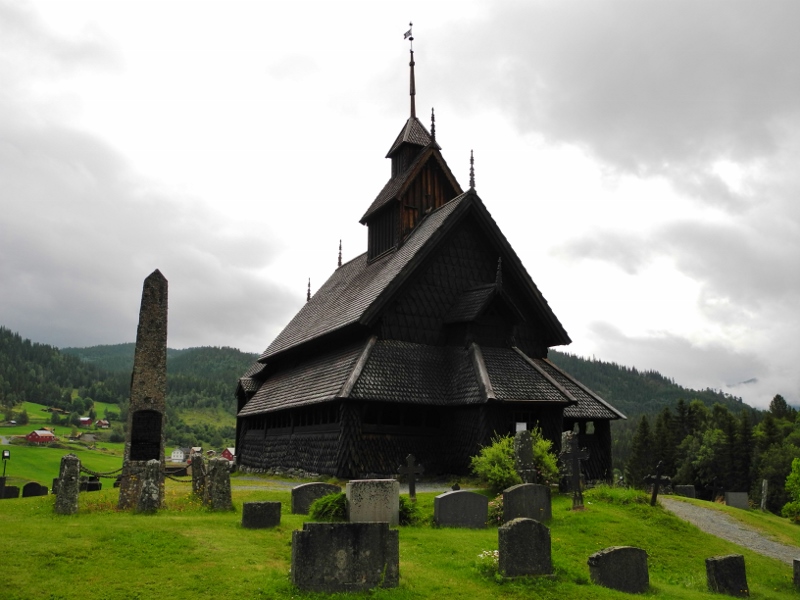
5-august-2013-eidsborg-stavskyrkje-12-800x600

The Eidsborg Stave Church

The church is typical stave construction:  The staves are corner pillars used to support the edifice, and the interior of the roof uses the same skeletal structure as the Viking longboats – if it works (and those ships worked better than anything on water for centuries), why change it?  The inside of the church is rich in history:  Carvings from the 1200s, intricately painted walls from the 1600s, a statue of the patron saint of travellers (St. Nicholas of Bari) watching from the corner (as an antique replica – the original is in an Oslo museum), and the dusty light of sunlight peering through small holes near the upper beams. The latter mainly served to provide a bit of light as well as fresh air:  Candles could only be afforded for the clergy, so it would have been extremely dark without those holes; sermons went on for hours back in olden days and there were no seats until the middle ages.  Everyone in the parish was required to come, punishment or humiliation being the course of the day if they failed to appear for service, and in the tiny space allowed inside the original church, it would have been standing room only, packed in like sardines.  If someone fainted from lack of fresh air, it probably wouldn’t have been noticed until everyone filed out.  Today there are pews, and it is used weekly as the parish church through the summer and autumn; it is closed for service during the colder months as heating it would cause decay of the paintings and interior woodwork.

5-august-2013-eidsborg-stavskyrkje-60-600x800

Details in the gallery

Wooden-shingle clad from the ground up, it gives the building the appearance of dragon’s scales, and having been coated with thick pitch for centuries, it looks quite as if it has been charred; it smells wonderfully peaty, like a strong dark whiskey, and on a sunny day you can smell the aroma a good distance away.  The gallery along three sides of the church reveals many interesting details, from the wooden spikes used to nail the shingles to the roof to the outer curve of the stave pillars jutting out into the gallery.  It’s living, breathing history, and a pleasure to have been there.

Originally Posted on

8 Comments

Filed under Articles, History, History Undusted, Links to External Articles, Research

Quintus Quotes: Favourites

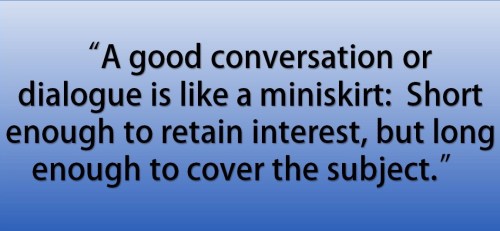
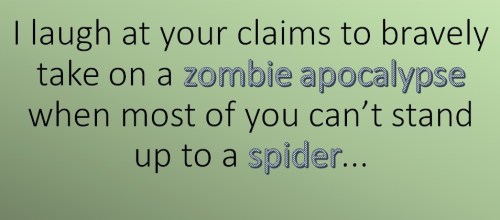
I love quotes – they often sum up an entire concept, attitude or reality in one simple sentence.  On my desk, I have a flip pad of quotes I’ve put together with notebook rings, and the first quote below is the one I’ve got it turned to now (this meme is my own variation on a quote by Celeste Headlee‘s sister); the others are poignant or pithy, but they’re among my favourites (depending on my mood).  As to the last meme, it’s close to my heart – I love spiders, and I find people’s fear of them a bit amusing… Enjoy!

Variation of Quote by Celeste Headlee's Sister - Miniskirt Dialogue, ConversationAnna White - Brokenness, WoundednessJD Houston - Something New, VisionBlessed are the MisfitsZombie vs Spider

Leave a comment

Filed under Quotes

2o Things Creative People Understand

Chances are, if you’re following along with my musings, you’re like me – a creative type.  We’re an eccentric bunch, some more than others.  Personally, I’m also a pragmatist; the motto of my current book, and one that makes a lot of sense, is “it is what it is” – it’s what we make out of our circumstances that sets us apart or makes us a success or a failure.

But the creative side of me doesn’t know how to slow down; I’ve constantly got a dozen projects on the go, whether a book manuscript, a craft project, or a to-do list a mile long.  I’m constantly asking “why” (which used to drive my mother up the wall, I’m sure), and, like the Bereans (Acts 17:11), I don’t take things at face-value, but want to know for myself if it’s true or not – an invaluable trait, as far as I’m concerned, with so much crap and pseudo-news floating around cyberspace.  I create in bursts, with times of “percolation” in between – shifting gears to another creative outlet.  I need a place I feel comfortable in, to create; when I’m focused on a task, I can ignore the door, the phone, and any other interruption for hours on end.  The downside of that is that I need to force myself to get up, move around, and get some exercise occasionally!  That’s where my time management apps come in.

I came across an article recently about the things creative people do; I could relate to many of the points, but not all of them; after all, there’s no box that can contain everyone from any particular group; one introvert is not like another, and all that.  I’d like to invite you to click on the image below, and take a look at the article – see if you can recognize yourself in some of the points!  I’d love to hear what you think in the comments below.

creative-people

19 Comments

Filed under Articles, Links to External Articles, Musings, Research

Wordless Wednesday #33: Funny Headlines 1

This slideshow requires JavaScript.

1 Comment

September 6, 2017 · 3:01 PM