
As we’ve seen over the past few blogs, English is quite a magpie language, snabbling any loose vocabulary it comes across.
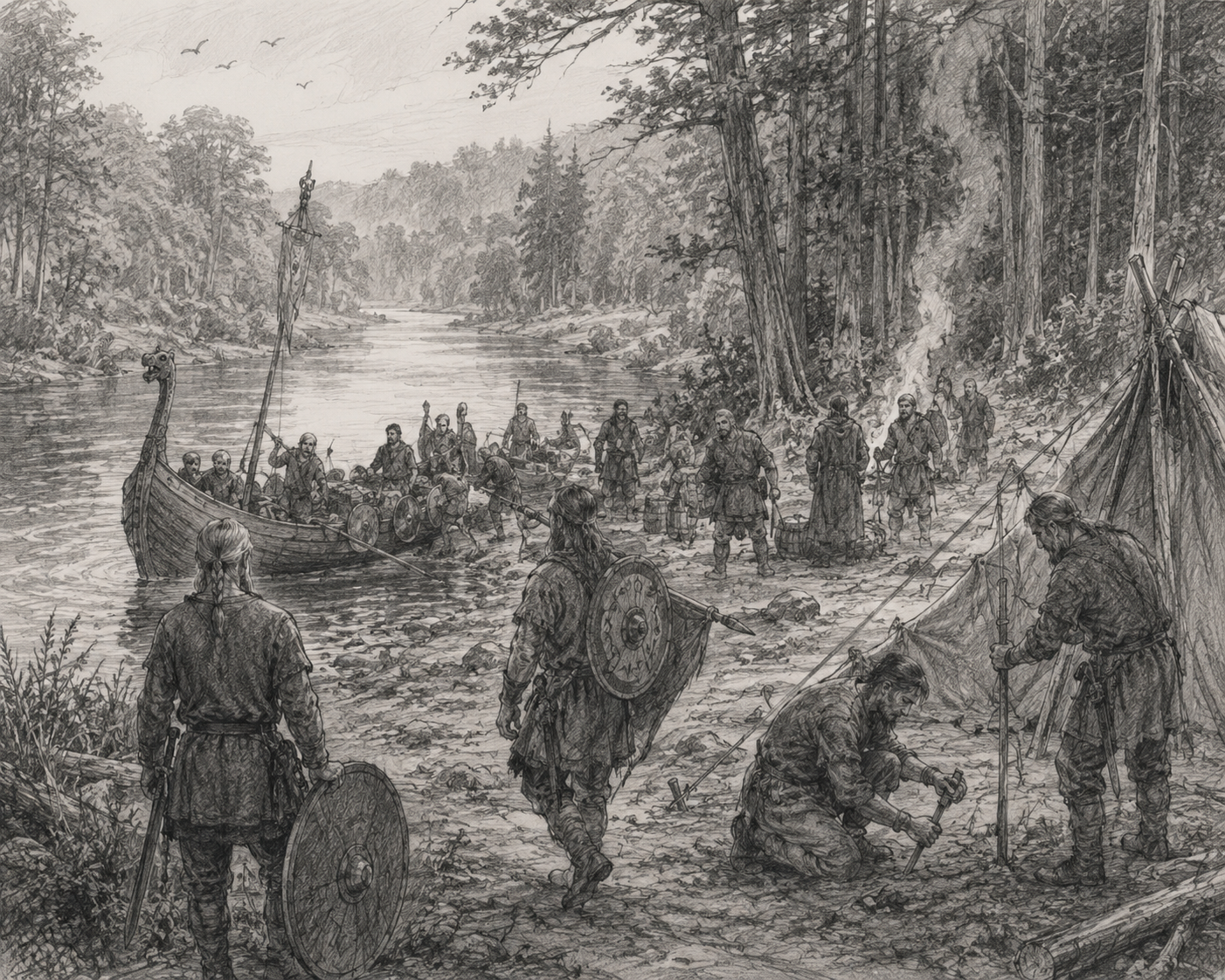
What is known as the Viking Age began in Britain with the raid on the coastal community of Lindisfarne in AD 793. It eventually went from raiding easy targets to Norse colonisation, trade, and cultural assimilation. That’s the simplified version; I could write forever about the age and its impact on the languages, cultures and mentalities of both the raided and the raiders (who came from Norway, Sweden, and Denmark). Instead, I’ll focus on the linguistic impact of Old Norse (ON) on Old English (OE).
[Note: The Norse did not refer to themselves as Vikings; that word came into English through “The History of the Anglo-Saxons” by English historian Sharon H. Turner, 1801, meaning Scandinavian pirate. The Norse had the term vikingr, which referred only to Norsemen when they were out raiding (whether on neighbouring shores or fjords, or further afield). Perhaps in that sense, it was similar in use to our gerund noun form.]
During the Viking Age and the subsequent Danelaw period of British history, the Norse introduced more than a thousand words into the English language. The biggest question that arises in my mind when I think of some of the words is, “What did we use before that?”
The Norse introduced third-person pronouns – þeir, þeira, from which we get they, them, and their. We can be thankful for these words, as the Anglo-Saxon terms used before their introduction were hi, hie, heira, and hem. These changes are unusual in that it is rare for additions to a language to replace such fundamental identity markers within the collective speech of a people group.
Some words were a merging of OE and ON terms, such as are (OE had earun/earon, and ON had er). Another merging is awkward – from ON ǫfugr (meaning turned backwards) and OE weard. Other such hybrid words are axle, gawk, and snipe/sniper.
A caveat to Norse influence on English is that many more words than those from the time periods mentioned above flowed into English through Normandy. The term “Norman” itself is a term that arose from an etymological shift: Scandinavian raiders who settled in that region of what would become France were known locally as the Normanz or Normant, meaning Northmen (men of the north). It was eventually Latinized to Normanni. Their influence on the French language eventually made its way into the magpie language across the Channel.
Here are a few more words we can thank Norse raiders for: Window (vindauge – literally wind-eye); wing (vængr); whisk (viska); want (vanta, to lack); waive (veifa); until (und + til); ugly (uggligr); tryst (from French, probably ON treysta – to trust, or to make firm); stumble (stumla); squall (skvala); sprint (spretta); and trash (tros). Many of our th- words come from ON, aside from those already mentioned, such as: Thrall, though, thrift, thrive, thrust, and thwart.
Aside from individual words, the Norse left evidence of their influence through placenames: The suffix -by means farmstead or village, seen in Whitby and Derby; -ness meant promontory or headland, and is found in Stenness, Durness, Muness, and Snarraness – all of which are in Orkney, Shetland, and northern Scotland – all places frequented by or lived in by the Norse. –Thorpe and –thwaite are more examples of the -th heritage, shown in places like Scunthorpe, Copmanthorpe, Bassenthwaite, and Rosthwaite.
These few examples are just the tip of the isbjerg which we can thank those pirates, who our European ancestors might well have preferred never to have been forced into acquaintance with…




 Stephanie Huesler