As far back as humans have needed to bind materials together, they’ve found ways to do it. The oldest sewing needle dates back 60,000 years and was found in Sibudu Cave, South Africa (made from a bone, most likely a bird). Needles have also been found in Russia, dating back 50,000 years, and in China (from stone), dating back 9,000 years. These and other archaeological finds show that people around the world developed similar solutions. The material used depended on availability in their region, including boar bristles, bones (including antlers and tusks), cactus needles or other thorns, stones, and various metals (the first copper needles were found in Armenia, dating to around 7,000 BC; the first bronze needles appeared during the Bronze Age, around 1200 BC). Earlier needles had grooves on the side for holding threads of sinew or strips of bark or other fibre. They were not only used for making clothing or shoes, but also for weaving fishing nets or heavier materials like tents or ships’ sails.
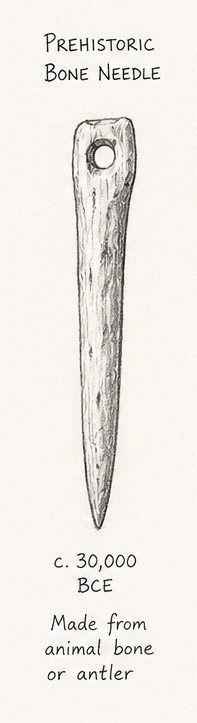
Boar bristles are still used today in some leatherworking: The bristles are attached to a tapered linen thread with a sticky wax, giving the thread a stiff leader to get through awled stitch holes. This technique would have been used regardless of the needle material until the eye came along. Eyeless needles are still used, for example, as modern medical suturing tools for both external wounds and surgical procedures.
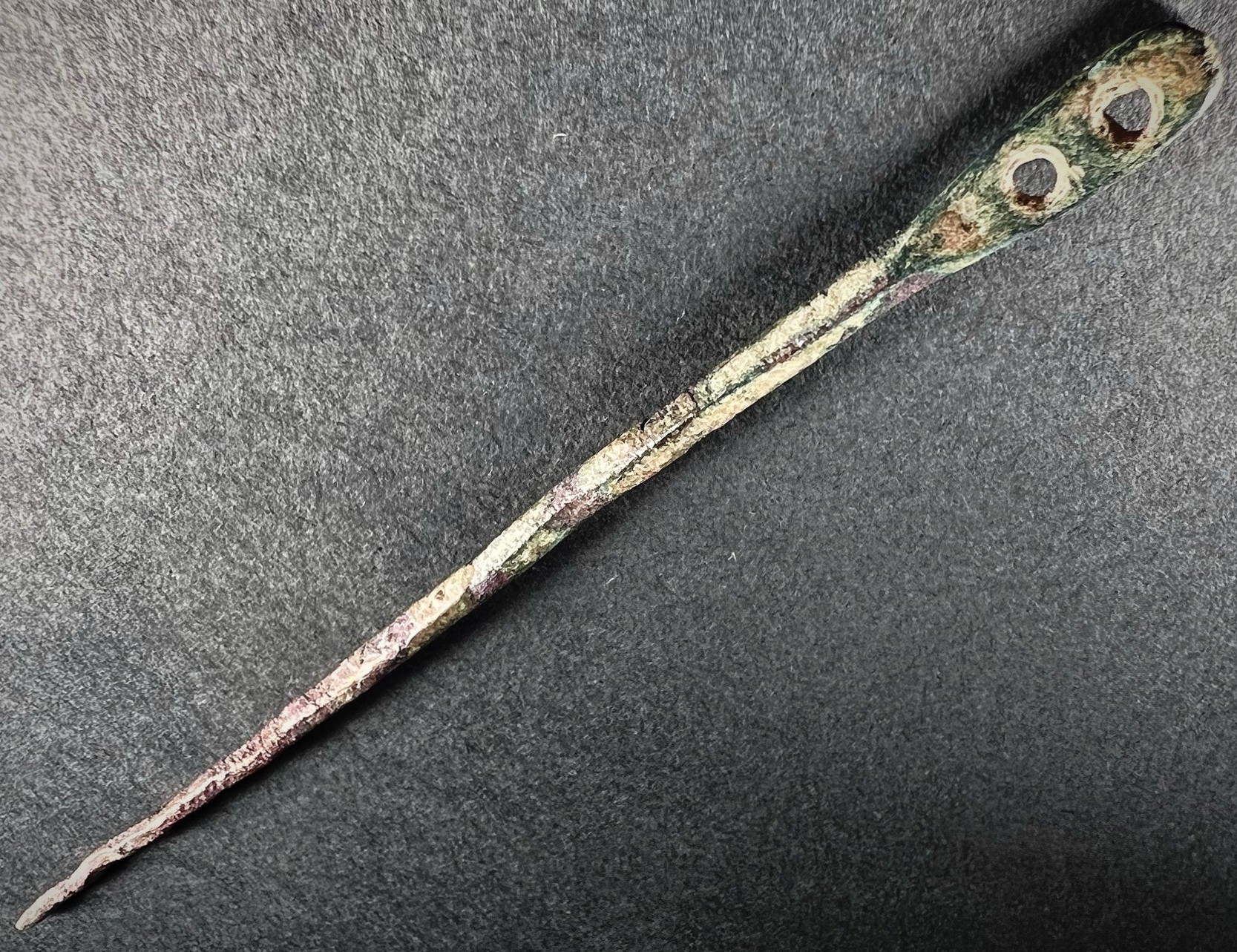
The first needle with an eye is dated to around 25,000 years ago, during the Upper Palaeolithic Period. Some ancient Roman needles have been found with two or even three eyes toward one end; one paper suggests that the multi-eyed needle may indicate their use in making fabrics with the nålbinding technique, which would make them stretchy. Some ancient Roman needles have also been found with the eye around mid-length; this might have been used to push and pull threads through tougher materials; some modern nålbinding needles also have this feature. I wondered if the multi-eyed needles might have been used to combine several colours, and this video confirms that. Incidentally, this technique was the ancestor of the two-needle technique we know as knitting today.
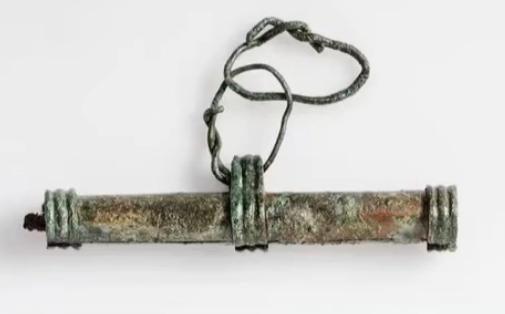
As you can imagine, the work that went into creating a tapered piece of bone or stone made these items valuable; as soon as they were created, a casing to protect them likely soon followed. Cases have been discovered the world over, ranging from simple hollowed-out sticks to hides to elaborate gilt and jewelled cases; the oldest known needle case that I could find information about is from early Iron Age Russia, approximately 37,000 years old; it was made from bone, found in a cave in the Caucasus Mountains. Another was found in Siberia, made of Rhinoceros bone, and dates to around 33,000 years ago. Think about that a moment: Rhinoceros… in Siberia. Climate change is nothing new.
Personally, I have several kinds of needle holders, for various-sized, -shaped, and -purpose needles: I have wooden cases with a wooden cork (bought many years ago at a Native American trading post); I have an empty lipstick tube (the base is blocked with a piece of sponge to keep the needles from falling through the holes in the corkscrew section) – this makes accessing the needles easy, as I wind them up to select one; other cases I have are more conventional. I have metal needles, but I also have plastic ones; the latter make it easier to get, e.g., elastic or a cloth cord through a seam.
The next time you have a threaded needle in your hand, take a second to think about its long history, and bless the day when needle eyes, smooth threads, and the self-threading needle for sewing machines came along!