I’ll bet that you have a few glues in your house right now – whether that’s white “school” glue (= PVA, or polyvinyl alcohol), glue sticks, or wood glue. It’s basically ubiquitous in first-world homes, but it has a long history.
In prehistoric times, plant resins and tars were used to “glue” stone tools to wooden handles, sometimes secured additionally with sinew or strips of bark. By the time of the ancient Egyptians, they were using animal-based glues extracted from the collagen found in bones, fish, and hides; these were used, e.g., in the construction of chariots and furniture, as well as for repairing small household items much like we do today.
The Romans and Greeks further refined glue once they’d discovered the adhesive properties of casein, a protein found in milk. This improved glue was used to paint and gild objects, be used in the construction of buildings, and to make papyrus scrolls; these scrolls were made by slicing thin strips from the inner pith of papyrus reeds, gluing them together, and pressing them into crisscross patterns. I think the fact that thousands of Roman constructions still stand today attests to their skills and the materials they chose or developed to accomplish such longevity.
Their glue was so well made that the formula remained largely unchanged up through the Middle Ages; it was widely used in bookbinding, carpentry, and in luxury items such as musical instruments. Attempts were made to improve glue formulas using things like egg whites and even blood, but these had a limited shelf life, as you can imagine.
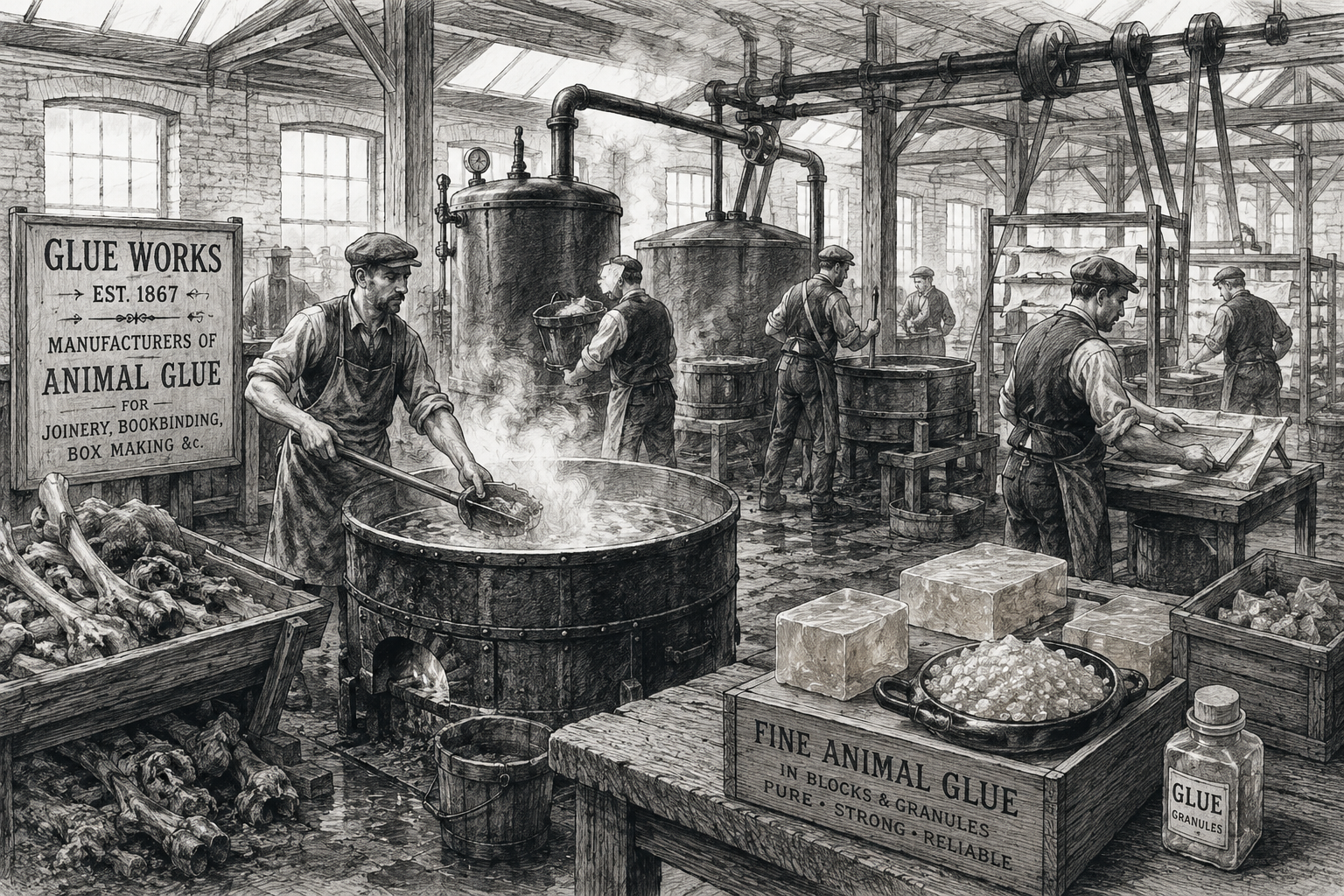
The Industrial Revolution raised the need for reliable and durable glue compounds to meet the demands of machinery and rapid production. During this time, glue was made mainly with slaughterhouse waste, by boiling it down to collect the collagen, which, as it boiled down, became gelatine. When this cooled, it was dried into hard sheets, cakes or granules that could be shipped, then reconstituted with water into glue.
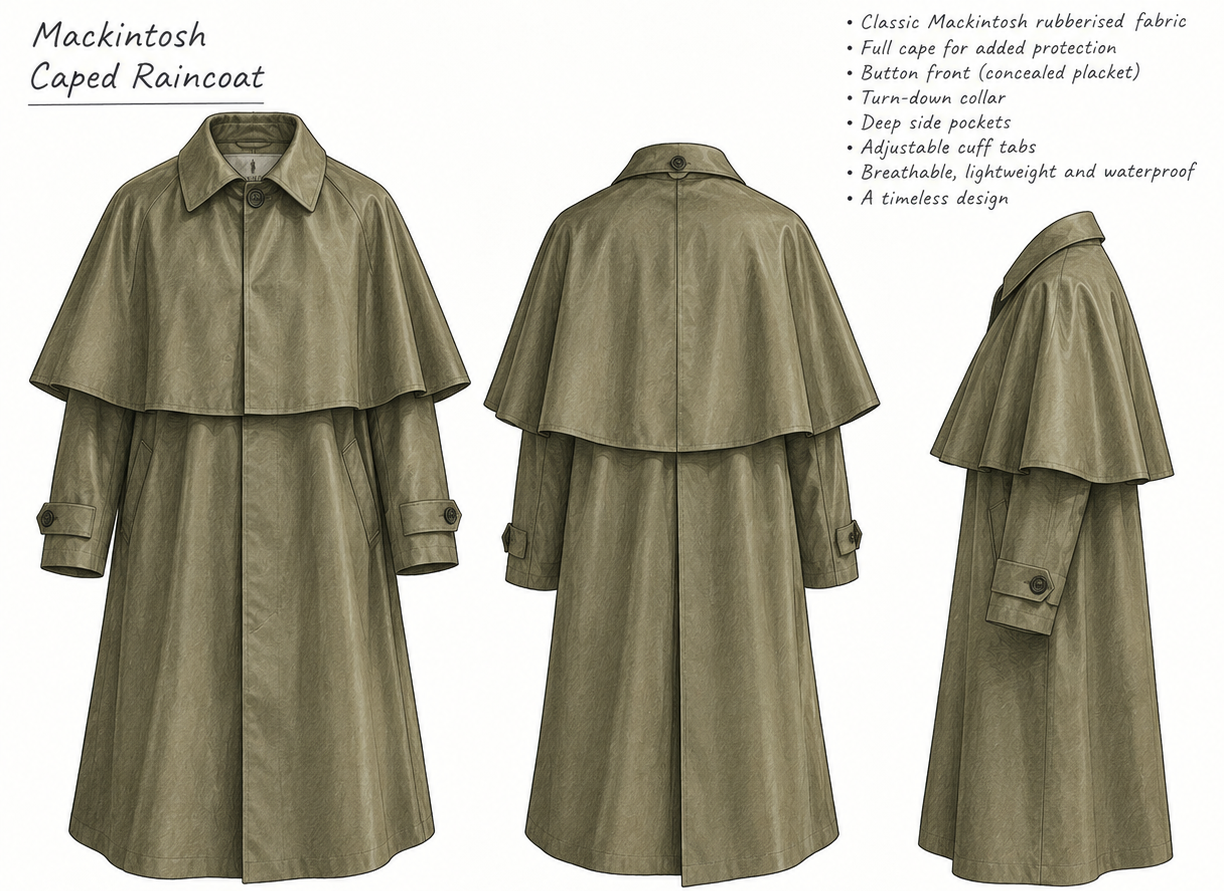
In 1824, the Scottish chemist and inventor Charles Macintosh developed the eponymous Mackintosh raincoat (the variant in his family name’s spelling is a standard spelling when applied to the raincoat) by dissolving natural rubber in coal naphtha (which is benzene, a natural element derived from the refining of petroleum – it’s the sweet smell that gives gasoline its characteristic aroma) to create a waterproof adhesive, which was then sandwiched between two layers of cloth to make an impermeable coat (in a country that has over 500 words for water or snow, and winds that rip umbrellas into tulips faster than you can blink, raincoats are a matter of survival!). The path from the first raincoat to what we know today as a Mackintosh is a roundabout one, with many improvements made over time, but the history of its development shows how far we’ve come.
One of the glues I mentioned, PVA, was invented in 1912 by German chemist Fritz Klatte; he was looking for a way to use acetylene, a colourless gas that is unstable in its pure form and thus needs to be handled in a solution. PVA glue is used to make standard white glues (“school” glue), strong wood glues, and the dissolvable films around some dishwasher detergent pods; it helps to coat and strengthen paper products during the manufacturing process, and it’s even used in biomedical products such as eye drops, wound dressings, and contact lenses. It is controversial, as PVA is one of the most common plastics and, as such, does not break down organically in the environment. Hopefully we are on the cusp of another leap forward in the development of stable, environmentally-friendly glues.
In my craft room, I have no less than twenty different glues that immediately come to mind. They all have different properties, drying times, adhesive qualities, and durability. Some, I may need only as a placeholder before something is sewn, or as a less-adhesive inner glue to be strengthened by a different glue around the edge of a project. Some can be diluted in water, while others would clump. From glue sticks to hot glue, from diamond glaze to mat medium, they all have their uses.
We’ve come a long way since tar and the slaughterhouse – thank goodness!
What kinds of glues do you have in or around your home right now? Let us know in the comments!