Tag Archives: JRR Tolkien

Etymology Undusted: Zarf

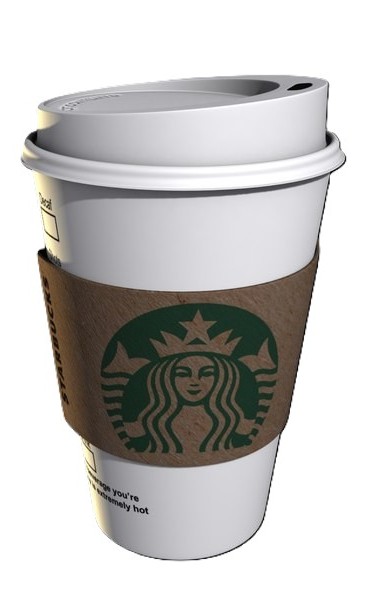
To me, the word Zarf sounds like a sci-fi comedy name for an inept villain. But, in fact, it’s a word that entered English in 1836, and is the Arabic word for “vessel”. It describes an object that you’ve seen or have likely had in your hand at some point. I will freely admit that the zarfs we know today have fallen a long way from their original forms: A zarf is the holder of a coffee cup. That sounds fairly straightforward. You may have instantly pictured a highly decorative, precious metal jewelled… no? Are those crickets I hear chirping in the vast silence of confusion? Or maybe you pictured the cardboard contraption around a hot cup of Starbucks coffee. Fallen a long way, indeed. (Camps are divided on whether the latter constitutes a zarf… for good reason: I think they would be better referred to as sleeves, as to put them on par with the bejewelled masterpieces would be an insult to the artisans of bygone days.)

Zarfs arose out of the necessity of protecting one’s hands from a hot cup; before the monster of plastic reared its ugly head, cups were made from metal or glass, often without handles. Further back, they might have been made from plant products such as coconut shells. The oldest known cups were found in Gough’s Cave in Cheddar Gorge, Somerset, England, and dated to 14,700 years ago; they were made of cannibalised human skulls.

During the 16th century, coffee gained popularity throughout the Ottoman Empire. It led to the popularity of coffee paraphernalia and coffee houses, which eventually spread worldwide and remain popular to this day. In Britain, for instance, a coffee-house culture arose in the 17th century; by the end of the century, there were over 3,000. Such venues became known as penny universities, because, for the price of a cup of coffee, men could join in the hubs of intellectual exchange and debate. Artists, journalists, poets and writers gathered to discuss God and the world; the Inklings, a literary group including C.S. Lewis and JRR Tolkien, met regularly at the Eagle and Child in St Giles’, Oxford.

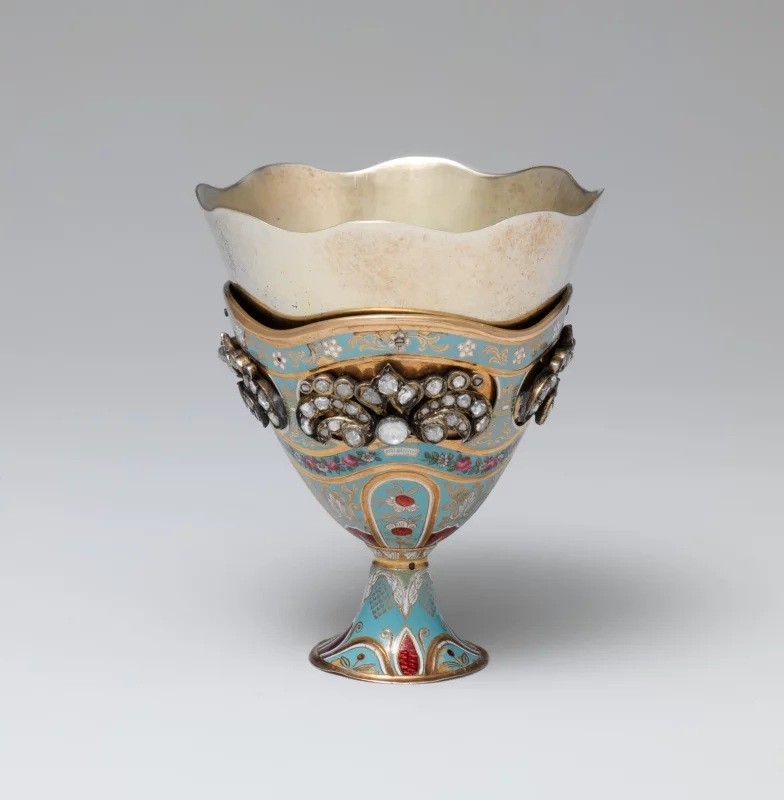
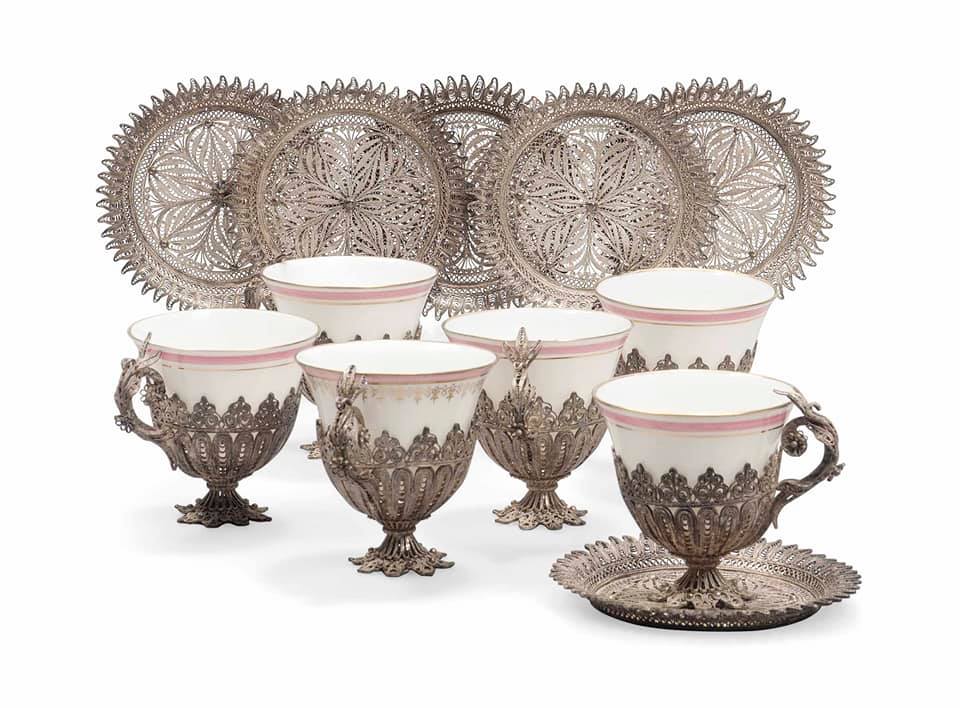
By the 19th century, the goldsmiths of Switzerland had become leaders in the production and export of ornate zarfs, made of precious metals and inlaid with precious stones or small hand-painted medallions. They were often made in fine filigree, with a smaller cup, known as a fincan, made of ceramic or glass, slipped inside to hold the coffee. A modern version of this is still widely used, called a demitasse (French for half cup), in which espresso is often served.

Without further ado, here are a few examples of zarfs and fincans, along with demitasses:

Source: Sothebys.com
A Swiss musical box zarf, ca. 1840 – Metropolitan Museum of Art
Fincans within zarfs
Demitasse set. Source, Wikipedia
Starbucks “zarf”, or sleeve

2 Comments

Filed under Etymology, Food History, History, Liguistics, Linguistics

Oh, Gnome, it’s almost Christmas!

Image Credit: Familyflowers.ca

This past weekend I had a craft stand at our church’s annual advent market. Ten hours a day. I sold (as you might guess by the title), among other things, gnomes. It got me thinking about the history of these little creatures. I don’t know about where you live, but here in Switzerland, they’re popping up everywhere this season! Statues, cookie tins, ornaments, wrapping paper, socks and anything else you can think of.

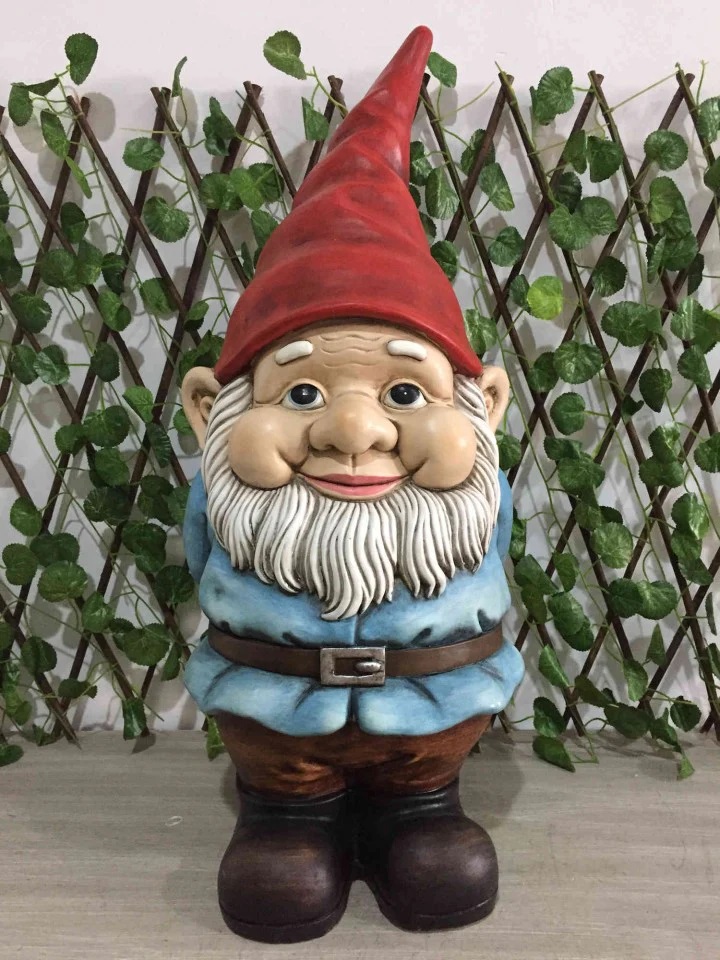
You might think of garden gnomes; but the gnomes I’m referring to simply have a bushy beard, a nose, and a body with a hat on top; sometimes arms, but no eyes, though I added artisan sunglasses to some of mine, and those sold out relatively quickly. The image below is a typical Wichtel here in Switzerland.

I’d always vaguely assumed that gnomes were Scandinavian in origin, but it turns out that they are actually Swiss! First introduced in the 16th century by Paracelsus, born Theophrastus von Hohenheim, who was a Swiss physician, alchemist, lay theologian, and philosopher of the German Renaissance. The term “gnome” might have even been his own invention, based on the Latin genomos, meaning earth-dweller. Paracelsus may have been the first to describe them, but there are examples of similar myths in other cultures, too.

Perhaps the reason I’d thought of gnomes as Scandanavian is that, in the early 19th century Romantic writings, gnomes became entangled in the fairy tales which led them to becoming synonymous with goblins, leprechauns, and brownies, which are in turn similar in character to the Nordic troll. Trolls are said to live in isolated mountains, rocks or caves, and as such, are “earth-dwellers”. While the gnomes were thought to be helpful, trolls were rather unhelpful. Scandinavia does have a gnome-type character as well, known as the Danish and Norwegian nisse, the Swedish tomte, or Finnish tonttu, as well as many dialectical names throughout Scandinavia. In German, they are known as Gartenzwerg or Wichtel.

In folklore, gnomes were thought to be short, stout guardians of mines, treasures, and precious stones, and were the antithesis of the tall and slender elves. JRR Tolkien was likely influenced by these legends when creating his races of dwarves and elves.

The practice of garden statues goes back to ancient Rome, where they set up idols thought to help plants thrive and protect animals. by the 18th century, however, such garden statues were simply seen as a status symbol of wealthier families. The statuary as we think of it today is visually based on the Disney dwarves of Snow White; before that, their look was less homogeneous. Over time, they fell into disfavour among serious gardeners; at the Chelsea Garden Show in the UK, they were banned for several years; the powers that be were accused of snobbery, as garden gnomes were popular among the working class; they were eventually allowed in the show’s garden designs once again.

Garden gnomes in particular are something that you either find adorable or tacky. Like any display piece, if it’s done well, they can add a touch of whimsy to your garden or home.

The topic is one of those rabbit holes you could easily dive into; the traditions of the gnome, after all, go back thousands of years.

A Scandanavian Tomte, or German Wichtel

1 Comment

Filed under Articles, Etymology, History

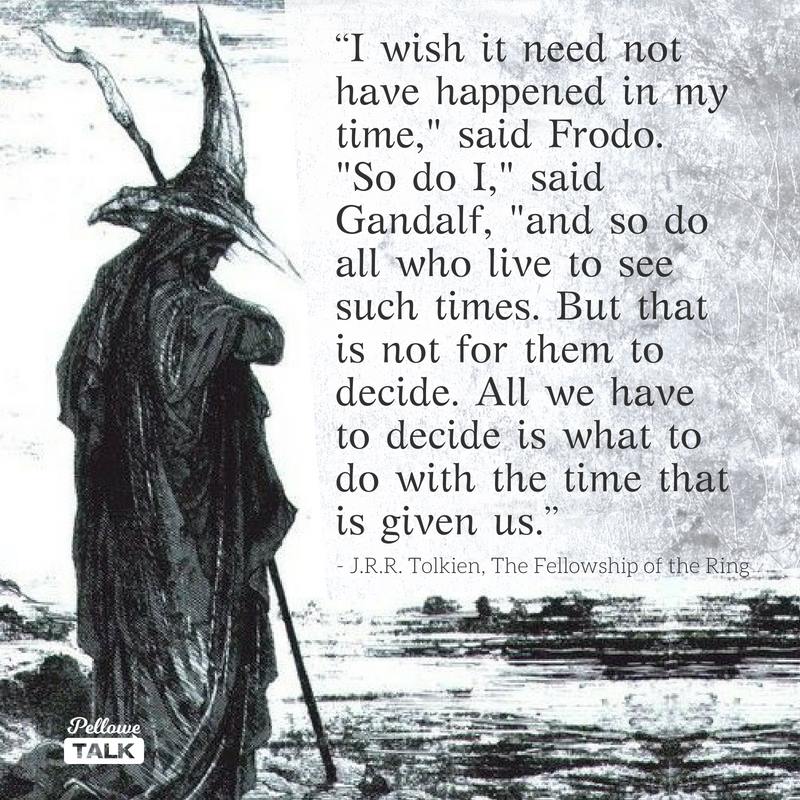
The Time We’ve Been Given

Gandalf

2 Comments

March 18, 2020 · 10:00 AM

History Undusted: Lammas Day

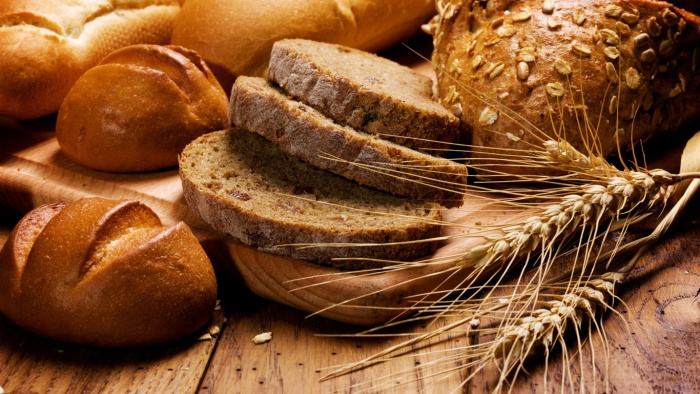
Did any of you celebrate Lammas Day this past Thursday, 1 August?  The original Thanksgiving day, Lammas has a centuries-old tradition in some English-speaking countries.  “Lammas” comes from the Old English hlafmæsse, meaning “loaf mass”, and was a celebration to give thanks for the harvest.  Everyone would bring a loaf of bread to the church on that day, made from freshly-harvested wheat; it would then be blessed by the minister as a symbol of giving thanks for the entire harvest.  Perhaps this is the Eucharistic overtone admitted by J.R.R. Tolkien* in a private letter concerning the Lembas Bread of the Elves; this bread might have been based on Hardtack texture-wise, but the name itself is a  clear nod to Lammas. 

In the Anglo-Saxon Chronicles, it’s mentioned several times, where it is referred to as the feast of the first fruits. To read more about this celebration, click on the image below.

And before I close, I will also say, “Happy Birthday, Switzerland!”  Thursday was also our Founding Day, the first being in 1291.  It was perfect weather for fireworks, and we enjoyed the displays of towns and villages from our flat!

Breads, Harvest, Lammas Day

*Carpenter, Humphrey, ed. (1981), The Letters of J. R. R. Tolkien, Boston: Houghton Mifflin, ISBN 0-395-31555-7


Originally posted on 1

12 Comments

Filed under Articles, Etymology, History, History Undusted

What’s in a Name?

The topic of names could cover quite a wide variety of areas, such as naming babies, place names, collective names of animal groups, or translations of names into languages such as Elvish or Runes; but I’d like to focus on the naming of characters for fiction writers.

Choosing character names can be fairly straightforward if you’re writing contemporary fiction; having said that, be sure to choose names that are not too similar from one character to the next. Unless there is a reason for close names, such as Sandy and Brandi for twins, the names need to stand apart to help readers keep straight who’s who, especially if there are multiple characters in a scene.  In Lord of the Rings, however, JRR Tolkien uses names to comical effect when naming the dwarves: Bifur, Bofur & Bombur; Dori, Nori & Ori; Kili & Fili; Balin & Dwalin; Gloin & Oin; only Thorin stands out as leader and king with a unique name.

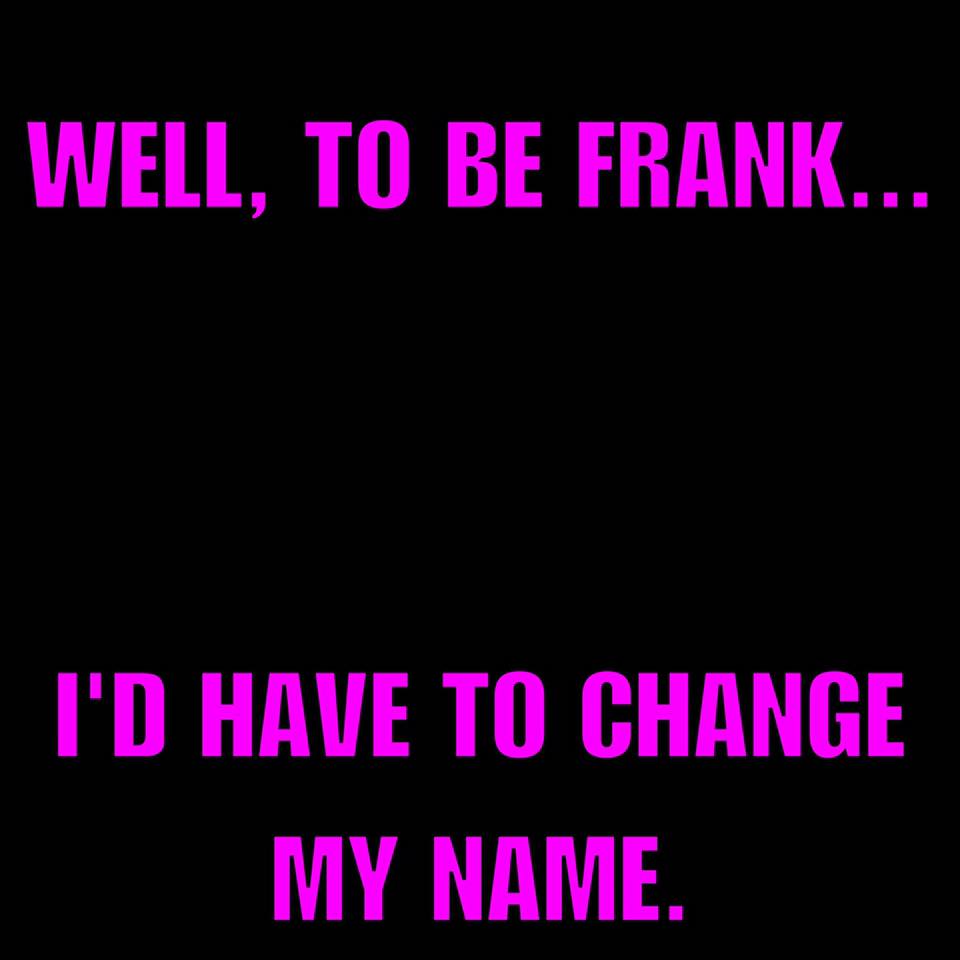
When choosing names for modern characters, consider their place, time and age:  If you’re writing a grandfatherly character, he can have a name that was popular in the ‘30s or ‘40s; but if your character is in their 20s, then don’t name them Mildred or Frank.  If you are writing children’s fiction, keep the names modern and simple to pronounce when reading aloud.

If you’re writing historical fiction, consider the era and country in which you’ve set your characters.  For my 18th century trilogy, I compiled a list of names from parish records in southern England from the early-to-mid 18th century, and then condensed it down according to frequency; that gave me a list of the top 20 male names and top 20 females names from which to choose.  Back then, children could only be christened with Christian names approved of by the church; names of kings and queens were popular, such as James, William, Charles, Anne, Charlotte, or Elizabeth.  Biblical names from the New Testament such as Timothy or Mary were also popular, but Old Testament names, such as Jacob or Rachel, were only given to Jewish children.  If you’re setting your story in the ancient Middle East, then find out what names were common then and there; just make sure that whatever you name your characters, they’re easy to read.  Combinations of consonants that are difficult to read will be skipped over – a pity, if your main character is saddled with a forgettable name, such as Cthulhu (Lovecraft), or Tylwyth or Tleilax (Dune).  In my 18th century trilogy, I also had a few characters’ names which emphasized their general character:  Mrs Stacklesprat was a prickly, withered, gossiping, sour woman, while Mrs Huddlepoke was a cuddly, motherly, soft & jolly woman.

For Science Fiction and Fantasy genres, names can be drawn from sources such as planets, galaxies or stars (Andromeda, Galaxus, Draco), or objects such as trees or flowers, or natural occurrences (Vortex, Sparkle, Wave, etc.)

There are so many resources available for choosing names these days:  Online you’ll find dozens of sites for baby names and what they mean; a great place to find names is in film credits – I watch those with pen in hand, and when I find an interesting first or last name, I jot them down; you can combine them randomly and come up with some great fictional names.

Things to consider when choosing your names:

  • Culture: Don’t assume a name is Japanese when it might be Chinese – research!
  • Era: Don’t choose a modern name for a character set in the 1920’s, and vice versa.
  • Age of character: Give age-appropriate names to each character, especially for modern fiction.
  • Combinations with other characters’ names: Unless you’re going for the comical effect of JRR Tolkien and have the language chops to carry it off, choose names that differ from the others in your story.
  • Occupation: Don’t name your murderer Fluffy…
  • Ensure it’s fictional: Don’t name a character and publish your book, only to find out it’s a real name (unless it’s John Doe – then I’d say, go back to the drawing board with choosing a good name)! Google it to see if it exists…
  • Be cautious: If a character is closely based on someone you know, choose a name unrelated to your (soon-to-be-ex) friend or relative…!  Also, there are certain names that are taboo due to historical events; I’d never recommend naming your character Adolf, or Hitler, or Stalin.
  • Personality: If your character is a sturdy, reliable, powerful personality, don’t give them a wimpy name!  And if a character is a wimp by nature, don’t give them a powerful-sounding name – unless they’re going to grow into the name over the arc of the story.
  • Meaning: A name’s meaning might have bearing on your character; it could also add a double meaning.  In the story I’m currently writing, a character is called Janus; this was the name of a Roman god who was two-faced – one looking to the past and the other to the future; it is also the name of one of Saturn’s moons.  As the story is Science Fiction, either meaning applies to my character.

I hope these thoughts help you on your way to choosing memorable character names for your own projects.  Whatever you do, keep writing!

Names 1Names 2Names 3Names 4Frank

8 Comments

Filed under Articles, Cartoon, Etymology, Humor, Lists, Nuts & Bolts, Research, Space, Astronomy