Tag Archives: Lists

History Undusted: The CB Radio

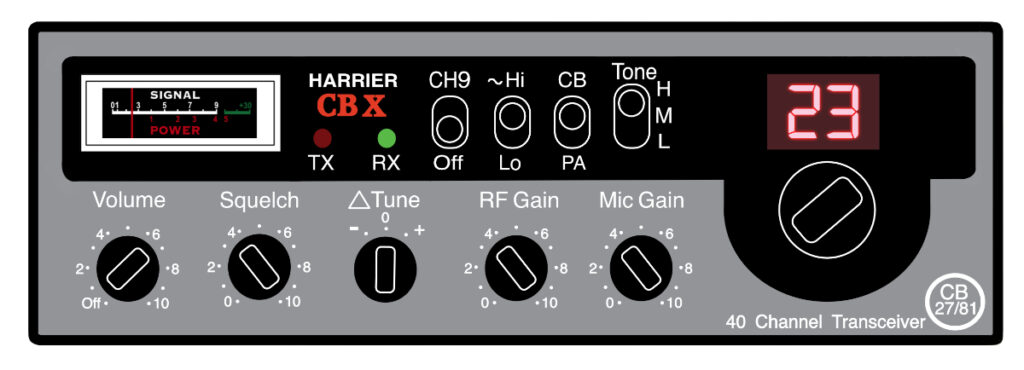
You know how your brain fires off random thoughts as you fall to sleep, or combines odds-bods into dreams forgotten as soon as you wake up? For some reason, 10-4 popped into my head in those moments last night. It sent me down the rabbit hole I now present: The history of the CB radio.

The often-forgotten or overlooked inventor of the Citizen’s Band (CB) radio system, along with inventions such as a patented version of the walkie-talkie (originally invented by the Englishman Donald Hings), the telephone pager, and the cordless telephone – all precursors to today’s cell phones, was Al Gross (1918-2000): Born in Toronto, Canada, he grew up in Cleveland, Ohio. The son of Romanian-Jewish immigrants, his love for electronics was sparked when, at the age of nine, he was travelling by steamboat on Lake Erie; he explored the ship and ended up in the radio transmissions room, where the operator let him listen in. Eventually, he turned the family’s basement into a radio station built from scraps. During his higher studies, he experimented with ways to use radio frequencies.

During World War 2, he had some involvement with developing a two-way VHF air-to-ground communications system for the U.S. Office of Strategic Services, known as the Joan-Eleanor system, and after the war, the Federal Communications Commission (FCC) allocated a few frequencies for the Citizens’ Radio Service Frequency Band, in 1946. Gross saw the potential and founded the Gross Electronics Co. to produce two-way communications systems to make use of these frequencies; his firm was the first to receive FCC approval in 1948. For more about his other inventions, just follow the link on his name above. For now, let’s focus on the CB:

The CB radio became an international hit back before cell phones and computers became a thing (despite the prevalence of cell phones, CBs are still around; truckers still communicate about road conditions, etc. Its usage was also revived by the Covid lockdown, when people began reaching out to meet and talk to others outside of their own four walls). It was, and is, a way to communicate with others long-distance from home or on the go.

My dad was always interested in the latest technological gadgets; in the mid-70s, we got a laserdisc player, the precursor of CDs, and DVD/Blu-Ray players. I remember watching films like Logan’s Run and Heaven Can Wait on that format. Laserdiscs never really took off, and only about 2% of US households had one (it became more popular in Japan at the time). Around that time, we also got a CB radio in our VW van. My dad had a chart with all of the CB slang words and codes, and I memorised it, fascinated by the lingo. On long road trips, I would get on the CB and chat with truck drivers. My handle (nickname) was Spider-Fingers, as I liked spiders and had long fingers (long fingers has the connotation of thief, so I didn’t want to use that!). Here is just the tip of the iceberg, a smattering of the codes and slangs used by CB radio enthusiasts, truckers and handymen:

There were dozens of slang terms for law enforcement officers: Bear (police officer); bear trap (speed trap, radar trap) taking pictures, also called a Kojak With A Kodak; bear bait (an erratic or speeding driver); bear with ears (listening to CB traffic); bear in the air/flying doughnut/Spy in the sky (helicopter radar traps), baby bear (rookie), fox in the henhouse/Smokey in a plain wrapper (policemen in unmarked vehicles); honey bear, mamma bear or Miss Piggy (slangs for female police officers); Brush Your Teeth And Comb Your Hair (a law enforcement vehicle is radaring vehicles – as if preparing for an official photo). A Driving Award was a speeding ticket. To wish someone Shiny side up meant that you wished them safe travels (keeping the vehicle upright).

There were slang terms for objects or events, such as Bambi, meaning that there was wildlife near the road and to take precautions; a crotch rocket was a fast motorcycle; double-nickels was a 55-mph speed limit area; a fighter pilot was an erratic driver who switched lanes frequently, while a gear jammer was someone who sped up and slowed down frequently; Alabama chrome was duct tape; an alligator/gator was a piece of blown tire on the highway, as it looked in the distance like a gator sunbathing. Convoys had front doors and back doors – the front or back truck in the group that would keep an eye open for bear traps. Motion lotion was fuel; the hammer lane was the fast lane (hammer was the gas pedal, and to hammer down was to drive full-speed). Break/breaker: Informing other CB users that one wanted to start transmission on a channel; a handle might be introduced, or requested if someone was looking for a CB friend. “Breaker, this is Spider-Fingers, over.” Asking for a comeback meant that you couldn’t hear the last transmission or wanted the other driver to talk. Break check meant traffic congestion ahead, slow down. A Bumper Sticker/hitchhiker is a vehicle that is tailgating another vehicle.

Aside from hundreds of slang terms, there was a whole list of codes (I guess you could say that the codes were the precursors of emojis!):

10-4: Agreed, understood, acknowledged

4-10: The opposite – asking for agreement or if a transmission was received.

10-6: Busy, stand by

10-7: Signing off

10-10: Transmission completed, standing by (you’ll be listening)

10-20: Location – What’s your (10-)20? Home-20 was asking for a driver’s home location/base.

10-33: Emergency traffic, clear the channel. CB code for Mayday for trucks and police cars.

10-42: Accident on the road

3s and 8s: Well wishes to a fellow driver. Borrowed from amateur ham radio codes “73” (best regards) and “88” (hugs and kisses).

The lists go on and on! I love the dry sense of humour reflected in the slang, and I think our everyday language could be a bit livelier if we included a few phrases that looked at things from a different perspective. Everyone could do with more 3s and 8s, 4-10?

1 Comment

Filed under Articles, Etymology, Family History, History, History Undusted, Humanity Highlights, Humor, Liguistics, Linguistics, Links to External Articles, Military History, Science & Technology

Similes Galore

Have you ever wanted to compare two people, places or things in a pithy way, but couldn’t remember a particular saying, or think of a way to put it?  For starters, what you’re looking for is called a “simile”, and they abound in English!   A simile is a figure of speech used to compare one thing to another, usually using “like” or “as”.  Some are obvious, some are quirky, and some must have a fascinating history.  Here is a small selection using “as…as”; if you know of any others, please add them in the comments below!  Have a great weekend, and keep writing!

blind as a bat & drunk as a skunk - by jellogiant, Deviantart

As likely as not

As long as your arm

As loud as thunder

As mad as a hatter / a March hare

As mad as a wet hen / a hornet

As mean as a snake

As meek as a lamb

As merry as a cricket

As mild as a dove / a lamb / milk / May

As much use as a handbrake on a canoe

As mute as a fish / an oyster / a statue / a stone

As naked as a jaybird / the day they were born

As nervous as a cat (in a room full of rocking chairs) / pig in a packing plant

As nutty as a fruitcake

As obstinate as a mule

As often as not

As old as the hills / Adam / Methuselah

As pale as a ghost / death / ashes

As patient as Job / an ox

As plain as a pikestaff / day / the sun / the nose on your face

As playful as a kitten

As pleased as punch / a dog with two tails

As plump as a partridge

As poor as a church mouse / a rat / Job / Lazarus / dirt

As pretty as a picture

As proud as Lucifer

As proud / pleased as punch

As proud / vain as a peacock

As pure as a lily / (the driven) snow

As quick as a dog can lick a dish / a wink / lightning / a flash

As quiet / still as a mouse / whisper

As red as a rose / a cherry / beetroot / a lobster / a turkey-cock / blood / fire

As regular as clockwork

As rich as Crassus / a Jew

As right as rain / nails / a trivet

As round as a barrel / a ball / an apple / a globe

As safe as houses / the Bank of England

As scarce as hen’s teeth / ice water in hell

As scared as a rabbit

As sharp as a tack / a needle / a razor

As sick as a dog / a parrot

As silent as the dead / the grave / the stars

As silly as a goose / a sheep

As slim as a willow

As slippery as an eel / ice

As slow as a snail / a wet week / molasses in winter / molasses in January

As sly as a fox

As smooth as butter / oil / silk / glass

As snug as a bug in a rug

As sober as a judge

As soft as butter / down / silk / velvet / clay / wax

As sound as a bell

As sour as vinegar

As straight as an arrow / a ramrod

As steady as a rock / the Rock of Gibraltar

As sticky as jam

As stiff as a poker / a ramrod / a board / pikestaff

As still as a mouse / death / the grave

As straight as a die / an arrow / a poker / a ramrod

As strong as an ox / a horse / a bull

As stubborn as a mule / a goat

As sure as death and taxes / death / taxes / a gun / eggs are eggs

As sweet as honey / sugar

As tall as a steeple / maypole / a skyscraper

As thick as thieves / blackberries / pea soup

As thick as two (short) planks

As thin as a rail / paper / thread / a stick

As timid as a deer / hare / rabbit / mouse

As tired as a dog

As tough as old boots / nails / leather

As tricky as a monkey

As true as steel / flint

As ugly as sin / a scarecrow / a toad

As useful as a chocolate teapot

As vain / proud as a peacock

As warm as toast

As watchful as a hawk

As weak as a kitten / a baby / water

As wet as a drowned rat

As white as a ghost / a sheet

As white as snow / chalk / milk

As wide as the poles are apart

As wise as Solomon / an owl

As yielding as wax

9 Comments

May 27, 2017 · 12:23 PM

The Ultimate Final Exam

DIGITAL CAMERAAfter 11 months with an exchange student here with us, our life is now beginning to revert to its previous “business as usual” state.  That means that I can schedule my time, my days, and even weeks, and actually see those goals come within reach and grasp them.  It means that I can sit down at my computer, and write 10 hours straight if I’m on a roll!  It’s suspiciously quiet here now, but that does not mean something’s afoot this time… unless the cats are up to something.  With all of her exams through the school year, I was reminded of a list I’d seen years ago; when I shared a similar list in my previous post, I decided to track this one down and share it with you.

This ought to keep you entertained and out of trouble, while I dive into my fifth novel’s manuscript with a fresh eye (since I haven’t really seen hide or hair of it since April…!).  Enjoy, and have a great week!

Warning:  I take no responsibility for snorted drinks or explosions of anything out of your north or south ends

The Ultimate Final Exam

  Read each question carefully.  Answer all questions.    Time Limit: Four hours. 

 HISTORY:

Describe the history of the papacy from its origins to the present day, concentrating especially but not exclusively, on its social, political, economic, religious and philosophical impact on Europe, Asia, America and Africa.  Be brief, concise and specific.

  GEOGRAPHY:

Predict the position of the tectonic plates as they will appear two billion years from now. Be prepared to prove your results.

  MEDICINE:

You have been provided with a razor blade, a piece of gauze and a bottle of Scotch.  Remove your appendix.  Do not suture until your work has been inspected.  You have fifteen minutes.

  BIOLOGY:

Create life.  Estimate the differences in subsequent human culture if this form of life had developed 500 million years earlier with special attention to its probable effect on the English parliamentary system.  Prove your thesis.

  PUBLIC SPEAKING:

2500 riot-crazed aborigines are storming the classroom.  Calm them.  You may use any ancient language except Latin or Greek.

  ART:

Give an objective analysis of the relative significance and quality of the works of the major artists of the past three millennia. Be specific, and prove your analysis with detailed examples.

  MUSIC:

Write a piano concerto.  Orchestrate and perform it with flute and drum.  You will find a piano under your seat.

  PSYCHOLOGY:

Based on your knowledge of their works, evaluate the emotional stability, degree of adjustment and repressed frustrations of each of the following:

  • Alexander of Aphrodisias
  • Ramses II
  • Gregory of Nicea
  • Hammurabi

Support your evaluation with quotations from each man’s work, making appropriate references.  It is not necessary to translate.

  SOCIOLOGY:

Estimate the sociological problems which might accompany the end of the world.  Construct an experiment to test your theory.

  COMPUTER SCIENCE:

Write a program that will end world hunger and homelessness. You may use the computer console next to you, however use of a modem or any other communications device is prohibited, as is the use of electricity.

  ENGINEERING:

The disassembled parts of a high-powered rifle have been placed in a box on your desk.  You will also find an instruction manual, printed in Swahili. In ten minutes a hungry Bengal tiger will be admitted to the room.  Take whatever action you feel appropriate. Be prepared to justify your decision.

  PHYSICS:

Explain the nature of matter.  Include in your answer an evaluation of the impact of the development of mathematics on science.

  ASTRONOMY:

Create a miniature stellar fusion reaction, and describe in detail the effects of close-range stellar radiation on human flesh.

  POLITICAL SCIENCE:

There is a red telephone on the desk beside you.  Start World War III; report at length on its socio-political effects, if any.

  EPISTEMOLOGY:

Take a position for or against truth. Prove the validity of your position.

  RELIGIOUS STUDIES:

Prove or disprove the existence of God, without the use of religious texts over a century old. Be specific, and include a discussion on the possible true meanings and uses for the Tetragrammaton. Also be prepared show how your proof relates to the national debt and the Watergate scandal.

  ECONOMICS

Develop a realistic plan for refinancing the national debt.  Trace the possible effects of your plan in the following areas:

  • Cubism
  • The Donatist controversy
  • The wave theory of light

Outline a method for preventing these effects.  Criticize this method from all possible points of view.  Point out the deficiencies in your point of view, as demonstrated in your answer to the last question.

  PHILOSOPHY:

Sketch the development of human thought; estimate its significance.  Compare with the development of any other kind of thought.

  GENERAL KNOWLEDGE:

Describe in detail.  Be objective and specific.

  EXTRA CREDIT:

Define the Universe; give three examples.

Save

23 Comments

Filed under Lists, Writing Prompt

Odd Jobs #12: Rodeo Clowns to Soil Conservationists

Hi everyone!  I’m back with this week’s lineup of weird and wonderful jobs.  While each of these jobs is here for its own reasons, seamstress may seem like the least odd job – at least it’s one that we all know (if we are in the habit of wearing clothes) must exist out there in the world somewhere.  The last job on this list, soil conservationist, is actually quite important here in Switzerland; there are many villages in the Alps that owe their continued existence to being able to use the steep alpine pastures wisely.  Planting trees is integral to avoiding soil erosion, which helps prevent landslides, mudslides, and avalanches; another key component is placing barriers such as snow guards to help keep the soil, snow and debris where it should be.

Once again, I have personal experience with one of the jobs:  Silk tree designer.  If I had to find another job, that would be one I’d love to do again.  Enjoy perusing the list!

odd-job-silk-tree-designer

  • Rodeo Clown
  • Rubbish Detective
  • Safe Cracker: When combinations are lost or forgotten, safe crackers use their ears and fingers to open the safe.
  • Seamstress
  • Sewer Inspector
  • Silk Tree Designer: This is one I can give you the low-down on personally:  I was a tree designer back in the 80’s, making everything from bonsai trees for private homes to 30-foot trees for shopping malls.  Our storage warehouse had a few permanent silk trees, as birds had built nests in them, coming and going as if they owned the place… they’d found a sweet gig, with a weather-proof forest.  Tools of my trade were drill guns, glue guns, moss, paint, unformed branches of plastic-coated wire and silk leaves (which I had to shape into realistic branches), and the base:  A thick branch of a tree which had been treated and planted into a plaster-filled base pot.  I found out the hard way that Manzanita leaves can give off a narcotic-like aroma when heated, as with the friction caused by stripping off the leaves from a branch:  I was straddled atop a ladder working on stripping the leaves from a tall branch-base, when I got so dizzy that I had to grab hold of the ceiling’s piping and call for help.  My mother looked it up in her medical journals, and the result was that the leaves were in future removed by the plastering department.  It was one of my all-time favourite creative jobs, next to being a Pizza Hut lab assistant.
  • Snake Milkers: Extract venom from some of the world’s most dangerous snakes, like rattlesnakes and cobras. The extracted venom is often used to create anti-venom for hospital or laboratory use, and can be sold for up to $1,000 per gram.
  • Snowmaker
  • Snowmobile Guide
  • Soil Conservationist: Their main job is to come up with plans to prevent erosion and develop practices for sustainable land use, mostly by performing land-use surveys.

Save

Save

6 Comments

Filed under Articles, Lists, Research