Tag Archives: Punctuation

20 Common Grammar Errors

For writers and bloggers, being reminded of the basic grammar rules from time to time is a good thing; they can help to improve our communication and efficiency.  If you’re like me, you may be writing along when a question pops up like, “Does this sentence need a comma here or not?”  The more familiar we become with the rules (and keep in mind that there are some differences between nationally-accepted rules, e.g. between the British standard and the American standard), the faster such decisions will become and the less time will be lost on such mundanely important details.  Click on the image below for a link to the 20 most common grammar errors and how to solve them.

AA Mistakes

Leave a comment

Filed under Nuts & Bolts, Research, Writing Exercise

Stop Apostrophe Abuse

Okay, grammar pet peeve time:  Apostrophe abuse.  It needs to stop.  Now.apostrophe Puppy

There are only two instances in the English language in which apostrophes are used:

1) Contractions, as in:  you are = you’re, or have not = haven’t, or I am = I’m.  Just keep in mind that the apostrophe takes the place of the missing letter(s); if you take a letter out to combine (contract) two words together, place the apostrophe where the missing letter would have been written.

2) Possessives, as in:  Steve’s hat (the hat belongs to Steve), or today’s specials (specials on for today)

Apostrophe Tombstone

Alway’s there for us. Who is Alway?

Never, I repeat NEVER should an apostrophe be used to indicate a plural!!  Never, EVER.  If you see it used as a plural, it’s wrong – even if it’s on a tombstone (see the image below). Apostrophe Tombstone 2

In the illustration on the right, “Alway’s there for us,” it obviously means “Alway is there for us.”  But who is Alway?  I thought Mary was trying to rest in peace here…  It’s just wrong on so many levels, because it’s not even a plural (which they were aiming for), but an adverb.

Let’s (as in “let us”) look at another very common mistake:  1) it vs. 2) it’s vs. 3) its:

1) “It” is fairly straightforward; it is the third person singular pronoun (used in place of a noun) for objects or gender-neutral references; e.g. The chair is red = It is red.

2) “It’s” is the contracted form of “it is”, as in It’s raining or “it has”, as in It’s been a long time since we saw each other last.

3) “Its” is the possessive form of the third person singular pronoun:  “the dog’s paws” = “its paws”  REMEMBER:  You would never spell “his shirt” as “hi’s shirt”, or “her skirt” as “he’r skirt”; in the same way you should never use the contracted form as the possessive form of it.

It’s not “CD’s” or “DVD’s” as the plural form; this is actually the possessive (which therefore requires an object for that subject’s possessive form, as in the CD’s case), and I find myself asking, “CD’s what?”

If you want more examples, from tombstones to shop signs to tattoos that are embarrassingly wrong, take a look at  www.apostropheabuse.com.  Okay, pet peeve appeased.  Glad to get that off my chest.

5 Comments

Filed under Articles, Cartoon, Grammar, Nuts & Bolts, Writing Exercise

That Low-Down Word

That Word CloudI run a forum on a British writers’ website for grammatical problems, and answer questions that come up in the course of their writing projects.  This week the question came up about that little word, “that” – when to use it and when to lose it.  When do you use that?  When do you use a comma instead?  And when is neither one necessary?  Ah, what a tangled web we weave, when first we practice proper grammar.  Hey, just kidding – it’s not that complicated!  Sometimes it doesn’t matter, and sometimes it can be confusing without it.  So, here’s the low-down:

1) Remember Rhythm:  How does your sentence flow?  Read your sentence aloud; does it have a better rhythm with or without that?  When in doubt and rhythm / comprehension is fine with or without, use it – inclusion may benefit the understanding of the sentence as a whole, and omission may cause misunderstandings.  Sometimes using that is a matter of personal taste.  Here’s a sentence that could be understood with or without:  “Fiona thinks (that) Alistair works too hard.

If you’ve already got a that in the sentence elsewhere, consider how your sentence can be reworded to avoid an overload. A double that is usually unnecessary.  In the sentence, “I realised that that would not be a good idea” the first that (acting as a conjunction, whereas the second acts as a pronoun) could be eliminated, aiding the flow but not impeding the comprehension.  Sometimes that is required in one part of a sentence, and when a second that comes up a choice needs to be made:  Take this sentence, from an AP report:  “Ford Motor Co. warned that it no longer expects to return to profitability by next year and that it is trimming North American production of pickups and SUVs for the rest of this year because of high gas prices and a shaky economy.”  The second instance could be eliminated thus:  “…next year; it is trimming…”

2) Comprehension:  Sometimes a sentence can be unintentionally misleading, and using that can help clarify.  For example,  “Fiona maintains Alistair works too hard.”  Does Fiona maintain Alistair and he works too hard? If you insert a that after maintains, it becomes clear that maintains refers to an opinion, and not maintenance of Alistair.

Sometimes in our writing, however, we want to intentionally lead the reader or a character down the garden path toward the wrong conclusion.  It’s a fine art, and understanding how another person interprets what you’ve written or could interpret it goes a long way toward walking that fine line between misdirection and deception; the first will leave a “gotcha” smile, and the latter might leave your next book unread….  As a plot element, it has its uses; but as a badly written sentence, it only results in confusing and frustrating the reader, who has to find the beginning of the sentence and read it again to understand it properly.

3) Commas:  Commas can sometimes replace the word that.  In this example, “Peter Coveney writes that ‘[t]he purpose and strength of . . .’” it would never be “Peter Coveney writes that,” or “Peter Coveney writes, that…” though it could be, “Peter Coveney writes, “…”

I hope that helps some of you dealing with similar issues in writing!

Leave a comment

Filed under Articles, Nuts & Bolts, Research

Thoughts on Writing from a Reader’s Perspective

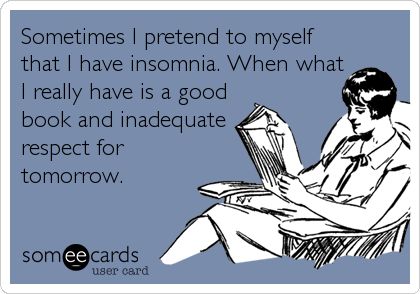
Card - InsomniaFor me, reading a book is about escaping to a new world, diving into that world through the medium of the senses that are stimulated by well-chosen words, precision instruments that play a symphony of emotions, smells, sights, sounds, touches, tastes, balance and harmony.  I’ve never really appreciated books that are written with gratuitous scenes of violence or sex; sometimes it seems to me (as a reader) that writers throw in scenes willy-nilly to spice things up or to patch over the fact that they haven’t researched and developed their characters thoroughly, or because they run out of plot ideas and just spin their wheels.  Such scenes grate against my senses just as much as random punctuation or bad spelling does.  If such elements are not organic, logical, and a natural development of the plot, they do not belong there.  Period.  It’s an insult to my intelligence and a brazen demand on my “believability credits” that is frankly not the author’s to demand… those credits are something that I as a reader give gladly to a good writer, but a writer has to earn them, and has no right to demand that I suspend disbelief to dive into their story when they haven’t bothered to make it believable.  The writer’s job is to earn those credits through good writing, good writing, and good writing, i.e. plot, character development, grammar, syntax, orthography, and structure.

Don’t misunderstand me:  There are times when the darker scenes are organic; they are necessary to portray the character, or are a natural outflow of the character’s flaws or decision process, or lack of positive input earlier on in life.  Sexual scenes can be sexy without being vulgar, sensual without being slutty.  Sometimes I read books that deal with such issues, but more as a writer than a reader, to see how they are structured.  I read part of a book recently (I gave up quite early, which not a good sign for the writer) where the author had seemingly tried to cram as many vulgar terms as they could into one chapter, or one page, or one dialogue.  It got so ridiculous that I started reading as an editor, slicing out entire passages to improve the script.  As far as I’m concerned, there’s not really a point in publishing something that will likely offend half your demographic sector away from buying a second book.

Give me something to read that’s intelligent, entertaining, witty, smart, deep, and that I can come away from the experience wanting more – not just another book with those characters, but that I come away having learned something about myself or the world around me, having been positively changed, encouraged, enlightened or satisfied.

2 Comments

Filed under Articles, Cartoon

Coherency: Just sayin’…

gibberish-cartoonIs it just my imagination, or is written English slipping in quality, even among writers?  Is it that less attention is paid to the end results than to the actual “getting it out there to be read by others”?  I just returned to my blog after taking a jaunt around WordPress Land; the blogs I visited, I went to with good will, interested to see what others are thinking and writing about.  But I have to admit I couldn’t understand half of what was written.  Half.  Now, I’m an English teacher and writer and all that, and yes, I’ve been living in a non-English speaking environment for a quarter of a century.  But has it really deteriorated to the point of not only miscommunication, but of downright gibberish at times?  I’m not looking down my nose at those who are trying to communicate (something); I am simply throwing out this question into the cosmos and asking if I’m the only one who’s noticed this?

Where is the satisfaction of a job well done in a sentence that looks like it was fed through BabbleFish a few dozen times?  Where is the pride in having written something well, communicated the heart of the matter, and allowed others a glimpse into the mind of the writer without confusing them with poor spelling, syntax and punctuation?  I find myself editing more than reading sometimes, and that does not bode well for the writer.  As a writer I take my job seriously, in all its aspects, from research, to presentation.  If we as writers don’t set a good example to follow, how will the next generation know right from wrong, or rite from wong?

A few simple rules I follow:

1) Read your text aloud before you hit that “post” button.

2) Have a good dictionary available (such as onelook.com), and check those words you’re unsure of.

3) Do NOT trust a spell-checker!  Learn the basic rules of spelling, punctuation and syntax, and if you’re still not sure, double-check online with reliable sources.

Let’s swim against the tide of laziness and stagnation in writing; let’s expand our vocabulary instead of relying on the same ol’ same ol’; let’s set an example of good writing, even though it may not be perfect every time.


2 Comments

Filed under Articles, Cartoon, Nuts & Bolts, Writing Exercise

Common “Spell-Offs”

FunnyYes, Spell-offs. Not as in, “let’s have a spelling bee,” but as in “the spellings that throw people off” – and yes, the latter is my own definition. But what better describes the mistakes that so often throw people off? As a teacher of English, and as a writer and editor, I see common problems pop up again and again in people’s written communication. I’ve put together the following list to help you sort out problems you might share with others. It’s all about choices between two or more spellings, and understanding what those spellings represent. Remember to pay special attention to which version of the word you’re using; learning the definitions of each spelling goes a long way in guarding against these mistakes.

NOTE: Apostrophes are NEVER, EVER used to create plurals of words. They are strictly for denoting possession (Sarah’s shoes) or contraction (That’s the point.).

If there are any other words you struggle with, please add in a comment below, with either a mnemonic of how to remember something easier, or a question that I’ll try to answer.

  • Affect and Effect: “Affect” is a verb meaning “to influence” (She was affected by the film.). “Effect” refers to a result (noun) (The effect on the carpet is apparent.)REMEMBER: Try what I call the “replacement principle”: If you can replace another word which you know to be the same part of speech as the one in question, then it is the correct form: E.g.: “The stain on the carpet is apparent.” (Stain is a noun, so effect would be used.) “She was moved by the film.” (Moved is a verb, so affect would be correct.)
  • A lot: A lot is two words. Every time. “There’s a lot of space between ‘a’ and ‘lot’.” REMEMBER: You would never write “abedroom”, “abunch” or “acat”.
  • All ready and Already: “All ready” means “prepared” (The cookie dough was all ready to make cookies the following morning.). “Already” is an adverb meaning “prior to a specified or implied time” (I can’t believe you already ate the cookie dough!).
  • All right and Alright: These two forms are controversial: Some grammar nerds will swear that “alright” is never all right. But the two forms have emerged with distinct definitions, and I’ll give a sentence example where the choice makes all the difference in understanding the sentence correctly: “The figures are all right” means that the figures are all accurate. But when you write “The figures are alright,” it means that the figures are acceptable, or satisfactory (they may also be accurate, but that is not the emphasis of this sentence and therefore a moot point). Language is constantly expanding, and though “alright” is considered wrong by many linguists and grammarians, it is gaining foothold with the nuance of difference in definition to its more formidable partner.
  • All together and Altogether: “All together”means “collectively”, and can be separated in a sentence (Let’s sing the song all together at the count of three. We all sang the song together.). “Altogether” means “entirely” (We were altogether too tired to go dancing this evening.). If you’re uncertain which one to use, replace the word in your sentence with the definition word given here; the one that makes sense is the one you want to use.  
  • Altar and Alter: “Altar” is a noun meaning “a special table in religious ceremonies” (The wedding was performed at the altar.), while “Alter” is a verb meaning “to change, to make something or someone different” (Jane had to have her wedding dress altered before she could wear it.).
  • Assure, Insure and Ensure: “Assure” is a verb meaning “to make a promise / commitment, or inform with certainty” (The politician assured his voters that he wouldn’t raise their taxes; he lied.). Insure is a verb meaning “to take out insurance for something” (I’m glad I insured my car; a tree was blown down on it in the storm.). Ensure is verb meaning “to make certain that something happens or is done” (I want to ensure that I’ve packed everything – I’ll check one more time.). REMEMBER: Insure is insurance; Ensure is making sure the “end” result happens.  NOTE: “Sure” is closely related to ensure; the sentence structure would be slightly different: I want to make sure I’ve packed everything…
  • Breath and Breathe: “Breath” is the noun meaning “the inhalation and exhaling of air” (She took a deep breath before diving.), while “Breathe” is the verb meaning “to inhale and exhale, or to impart as if by breathing” (My breath is short; I need to breathe in my asthma medication. The new coat of paint breathed life into the old house.).
  • Complement and Compliment:“Complement” is a verb meaning “to combine well with something, often something that has different qualities” (The colour of her dress complemented her eyes.). “Compliment” is a verb meaning “to say something nice to or about someone”(I complimented her on her good choice of colours.). REMEMBER: Compl-E-ment makes something more Elegant; Compl-I-ment means that I say something nice.
  • Counsel and Council: “Counsel” is a verb meaning “to give someone advice about what to do in a particular situation” or a noun referring to such a person (I counselled my friend to wait.). “Council” is a noun meaning “an official group of people who have been chosen to make decisions or provide advice.” (The council met to discuss the items from their last meeting.)
  • Dryer and Drier: “Dryer” (noun) is a machine that dries things like clothes or hair. (As soon as the dryer is finished I can switch loads of laundry.) “Drier” is the comparative form of the adjective “dry” (dry, drier, driest/dryest). (It’s drier now – shall we go for a walk?)
  • Emigrate and Immigrate:Emigrate” is a verb meaning “to Exit your country in order to live in another country” (I emigrated from America to live in Scotland.), while Immigrate is just the opposite – a verb meaning “to come Into a country because you want to live there” (He immigrated to France from England, and now lives in Paris.).
  • Except and Accept: “Except” means “to exclude” (verb) (Too many cooks spoil the broth – present company excepted, of course.); or “with the exception of, but” (preposition) (Everyone except Edward went to the beach.); or “with the exception that” (conjunction) (You look like my brother, except you have shorter hair.). “Accept” means to receive an offer, an idea, a person’s suggestion, etc. (I accepted his advice / invitation / proposal.).
  • Here and Hear: “Here” refers to place. “Hear” refers to the act of listening (ears) (Even from here, behind a closed door on the fifth floor, I can hear the music.).
  • Its and It’s: “Its” is a possessive pronoun. (The cat licks its fur to clean itself.) “It’s” is a contraction of it and is, or it and has. (It’s going to be a beautiful day. It’s been a long time since I saw him.) REMEMBER: You would never write “hi’s shirt” or “he’r jeans”, so it should NEVER be “it’s shirt”, but rather “its shirt”. If you’re not sure which one to use, use the replacement principle: Try using “it is” or “it has” in the sentence, and if it makes sense it’s “it’s”; if not, it is “its”. And keep the note about apostrophes above in mind!
  • Lead and Led: “Lead” is both verb and noun: (V): “to guide or conduct in a certain course” (He leads the choir on Thursday evenings.); (N): “A heavy, pliable, inelastic metal element” (The lead pencil left a mark on the wooden table.). “Led” is the simple past tense and past participle (always comes with have or has) of the verb lead. (Clifton led the choir on Thursdays until his wife had a baby. Since then, James has led the choir.)
  • Lose and Loose: “Lose” is a verb. “Loose” is an adjective. (You’ll lose your keys if you try to hold up your loose trousers.)
  • Moot and Mute: “Moot” is an adjective meaning “no longer important because a particular situation has changed or no longer exists” (Now that the train has left the station without us, it’s a moot point as to whether or not we’ll arrive on time.). “Mute” is a verb meaning “to make something less strong or extreme” or a noun meaning “not willing (or able) to speak” (Could you please mute the volume – I’m on the phone and I can’t hear the other person speaking. The deaf man was also mute.)
  • Past and Passed: “Past” is an adverb or proposition meaning “going near someone or something while you are on your way to another place” or “after a particular time” (I drove past his house on my way to work. We used to fight as kids, but that’s all in the past; we’re friends now.). “Passed” is the simple past tense and past participle (always with either have or has) of the verb “pass” (I passed his house on my way to work. I have passed the exams, and now I can go on holidays.)
  • Principal and Principle: “Principal” is an adjective meaning “primary; most important,” (The principal cause of failure was poor management.); a noun meaning “money initially invested,” (A portion of your mortgage payment goes to reduce the principal); or “head administrator of a school” (The principal of our school is retiring next year.) “Principle” is a noun meaning “a fundamental assumption or moral rule” (Principles are the basis of sound reason. She would not work on Sunday because of her personal principles.) REMEMBER: The principal alphabetic principle places A before E.
  • Rain, Reign, Rein: “Rain” is a noun referring to atmospheric moisture that falls (It’s raining.); Reign is both noun and verb, meaning “the exercise of sovereign power” or “to rule as a monarch” (Queen Elizabeth has reigned for sixty years. Her reign has been a long and peaceful one.). “Rein” is a noun referring to the strap or rope attached to the bridle bit of an animal, and also a verb referring to the action of using the reins to stop or direct the action of said animal. (He reined the horse to a stop with a tight grip on the reins.)
  • Shudder and Shutter: “Shudder” is a noun, “shivering tremor”, or verb, “to shake nervously” as from fear (There was a shudder in the ground as the nearby building was detonated. She shuddered at the thought.). “Shutter” is a noun, “protective panels placed over windows to block out the light” or verb referring to those panels. (I pulled the shutters closed to take a nap. Shutter the windows – a storm is coming.)
  • Then and Than: “Then” is used to show the order of events. (We went to lunch, then to the library.) “Than” is used to show comparison. (In the northern hemisphere, the summer is warmer than the winter.)
  • There, Their and They’re: “There” refers to a place or idea. “Their” is the possessive of “they.” “They’re” is a contraction of “they” and “are.” (There are seven apartments in our building; their doors all open onto the same entrance hall, and we all get along well; they’re friendly and helpful.)
  • Too, To and Two: “Too” means in addition / as well. “To” is a preposition that indicates motion in the direction of a place or thing. “Two” is the written version of the number 2. (I’m going to the cinema; Jim is coming too as I was able to buy two tickets.)
  • Weather and Whether: “Weather” is a noun to do with sunshine, wind, etc. (The weather is forecasted to become drier this week.). “Whether” is a conjunction expressing a doubt or a choice between alternatives (I haven’t decided whether I should go or not.).
  • Your and You’re: “Your” is a possessive preposition. “You’re” is a contraction of “you” and “are”: (You’re going to remember to bring your coat, aren’t you? It’s cold outside.)

Feel free to use this, but please give credit where credit is due for the work involved.  Text credit: Stephanie Huesler, © May 2013

1 Comment

Filed under Cartoon, Grammar, Nuts & Bolts, Writing Exercise

The Trouble with Commas

CommaCommas are important. Placing them wrongly in a letter or a manuscript can be confusing, or just downright wrong. It could even cost you a contract or a job, given the right circumstances. Below is an example of how the simple placement of commas can transform the message. Both texts are written in the exact same wording:

Dear John, I want a man who knows what love is all about. You are generous, kind, thoughtful. People who are not like you admit to being useless and inferior. You have ruined me for other men. I yearn for you. I have no feelings whatsoever when we’re apart. I can be forever happy–will you let me be yours? Jane

Dear John, I want a man who knows what love is. All about you are generous, kind, thoughtful people, who are not like you. Admit to being useless and inferior. You have ruined me. For other men, I yearn. For you, I have no feelings whatsoever. When we’re apart, I can be forever happy. Will you let me be? Yours

Jane

For the low-down on the little blighters, check out the following website for a list of rules:

http://grammar.ccc.commnet.edu/grammar/commas.htm

Leave a comment

Filed under Nuts & Bolts