The word Mondegreen is an example of what it means: Misheard lyrics in songs. The word was coined by the journalist Sylvia Wright in 1954, when she misheard the lyrics in a Scottish ballad; instead of hearing They have slain the Earl o’ Moray, / And laid him on the green, she heard Lady Mondegreen.
Examples of this happen frequently; when I was a child, I misheard the lyrics from Dashing through the snow in a one-horse open sleigh as a one-hose hope and slay – I had no idea what that was supposed to mean, but I sang it with gusto! A famous mondegreen is Bob Dylan’s The answer, my friend, is blowing in the wind misheard as The ants are my friends. All the whiskey in the sea can be heard in Club Tropica, by Wham!; the actual line is All that’s missing is the sea. From Toto’s song Africa, instead of the line bless the rains down in Africa, some people hear left my brains down in Africa. In Abba’s Dancing Queen, they sing feel the beat from the tambourine, but Ihear tangerine. There are likely as many mondegreens as there are songs, as garbled communication, Chinese whispers, accents and the mix of words and music can all lead to different conclusions than those intended by the singers or songwriters.
Have you ever misheard lyrics? Share your mondegreens below!
English is relatively young, as languages go. Like a sponge, it absorbs words and meanings from other languages, then squeezes them out in a similar (or widely different) form. In other words, English is a survivor; it has survived the attempts to destroy it by the Danish Vikings, the French (Normans, aka Vikings disguised as French), and the Germans. These historical encounters give me high hopes that it will survive the age of the Cell Phone. With each skirmish, it has come out stronger, more versatile and more flexible. When the Pilgrims packed up English and crated it off to the New World, it was locked, as it were, in a time capsule. British English absorbed a few bad habits from the French before they thought better of it and distanced themselves during the French Revolution, but in the meantime, contentious pronunciation differences to that time-capsule relative over the Pond had crept in and persist to this day. One example: The American pronunciation of schedule (/skedju(e)l/) is from the original Greek pronunciation, which was used in Britain for onk-years until they took on the fancier French-ified pronunciation of /shedju(e)l/. For a fascinating glimpse into how Modern English was formed, William Caxton (~1422-~1491) is your man.
While English pilled through the pockets of invaders stealing loose grammar, we also lost a few words along the way: Some words are known to us in one form but not the other, while other words have been lost altogether due to a more convenient absorption or form arising. You know of disgruntled (adj.), but what about gruntle (v.) or disgruntle (v.)? And dis– in this particular case is not used to form the antonym of gruntle, but means exceedingly gruntled. And I don’t know about you, but conject as a verb makes more sense than “conjecture” to me. And shall we vote to bring back “Oliphant,” as J.R.R. Tolkien saved it from extinction through his use of it in Lord of the Rings? What about pash (n.), contex (v.), or spelunk (n.)? We know of fiddle-faddle, but what about plain ol’ “faddle” (to trifle)? Some, admittedly, are not missed; toforan is better served with heretofore, in my humble opinion (IMHO). Needsways is a Scottish word, obsolete in England and America perhaps, but alive and well north of the Border. There are some deliciously eccentric words which deserve resuscitation, such as loblolly, bric-a-brac, sulter, pill (v., to plunder, pillage – ought to come in handy, that), quib, bugbear, uptake (as a verb), wist (intent), or sluggy. If Sir Walter Scott can save words such as doff and don from extinction, so can we.
Oh, and if you’re wondering about the word archaism, it means “retention of what is old and obsolete.” So twinge your language to include these mobile words and their meanings, and revelate your intelligence! And if you’re curious, yes, Grammarly and spellcheck were going batship crazy with this post!😎
(Comic from xkcd used under a Creative Commons license)
Here’s another gem from my recently re-discovered “bits & bobs”: These are actual maintenance complaints submitted by USAF pilots and replies from maintenance crews:
Problem: Left inside main tire almost needs replacement.
Solution: Almost replaced left inside main tire.
Problem: Test flight OK, except autoland very rough.
Solution: Autoland not installed on this aircraft.
Problem: Something loose in cockpit.
Solution: Something tightened in cockpit.
Problem: Evidence of hydraulic leak on right main landing gear.
Solution: Evidence removed.
Problem: Friction locks cause throttle levers to stick.
Solution: That’s what they’re there for.
Problem: Number three engine missing.
Solution: Engine found on right wing after brief search.
Although it’s already summer, we have only had one day over 30°C. Don’t get me wrong – I’m perfectly happy with cooler days; you can layer clothes, but when it’s hot, you can only take off so much and still be socially acceptable.
But when the weather begins to warm up, thoughts turn to spring cleaning. The practice goes back centuries: For climates that experience cold winter months, spring cleaning usually takes place when the weather begins to be warm enough to open windows but not warm enough yet for swarms of bugs coming in as a side effect. Also, back when wood was the main source of heat, if it was warm enough not to need the wood-burning stove, it was the ideal time to clean out the soot and to dust the house, letting the breeze help carry it away. In modern times, where most houses no longer depend on wood or fireplaces as the main heat source and windows can be opened year-round (with the heater returning indoors to comfortable temperatures), spring cleaning is still a tradition.
Most people have those areas in their homes where things can stand around for months or even years before they put them in their proper places; sometimes those things that don’t have a proper place stand around even longer. Spring cleaning is the ideal occasion to look around, notice those stand-arounds, and put them away properly or eliminate them altogether.
“Mis en place” is a French culinary term meaning “putting in place”, or “gathering” (as in gathering ingredients in preparation for cooking). Outside of the kitchen, it can be used as a description for putting everything in its place. Spring cleaning and mis en place is a great opportunity to de-clutter.
Here are 10 tips for de-cluttering:
Once-in-the-hand principle: Firstly, get yourself a basket to carry from room to room to gather things that need putting in their places; once the basket is full, put the items where they go. Don’t lay things down somewhere else “for now”!
Two-Year Gauge: If you haven’t touched, missed, or used an item in the past two years, chances are you won’t miss it – give it away, donate it to a second-hand shop, or recycle it.
Clothes: Do you have clothes you’ve kept but never wear, or they’re the wrong size, or they’re worn out? Keep one worn-out outfit for dirty work, but bag up the other items to donate, scrap, or give away.
Kitchen: Go through your food cupboards: Toss out anything past its expiry date (this is at your discretion; foods today rather more honestly call it a “best before date”, as canned goods are often good for a while past that…); rotate the older cans of food to the front, the newest toward the back (also best practice when putting away new shopping); toss out any spices that have gone off or are stale.
Storage: Do you have plastic containers without matching lids or lids without containers? Get rid of them. Do you have duplicate utensils that you don’t need? Donate them. Do you have pots or pans that are worn out? Replace them if need be.
Linens (towels, bedding, etc.): Toss or recycle any threadbare, ripped, or worn-out items. Fold the keepers and store them neatly (stacks tend to get lazy over time, don’t they?).
Electronic Gadgets: Go through your electronic items and match cables to each piece of (working) equipment, and recycle the rest. Along the same line, clean out your inbox of superfluous emails.
Toiletries: Toss anything that has gone off – hand cream, makeup, nail polish and medicines included.
Paperwork: Get rid of any guarantees that have expired, old paperwork, or manuals for items you no longer own; file and organize what you keep. While you’re there, check those pens to see which ones still work and chuck the rest.
Sentimentality: Don’t hold on to something out of guilt (someone gave you X…) or obligation (they might notice I’ve tossed it). If it brings you no joy, is not practical, or isn’t in keeping with your aesthetic, don’t keep it.
Have you already started spring cleaning this year? Tackling one point at a time (in a day, or a week) will make it possible, and you’ll be done before the cat can lick its ear!
I’m curious to know if any of these tips inspire you to de-clutter a specific area – please comment below!
Picking up from where I left off in February, here are a few more everyday phrases that have been gleaned from the times when ships at sail were the most influential source of importing new ideas, foreign words and catchy tunes (such as shanties). The first of these phrases might be recognized by Star Trek fans, as the captain usually used this term or something similar to hand over the authority of the ship whenever he left the bridge.
Take the Conn: A term used to take over navigational duties on the bridge of a ship (this comes from the mid-1800s, during the age of iron-clad warships). Idiomatically, it means to take control of a situation. The word conn is either a noun or a verb and comes from conning tower – a raised platform from which the entire deck and surrounding environment can be observed.
Sailing Close to the Wind: Strong winds can be just as problematic at sea as no wind; strong winds can unexpectedly shift and take control of a boat’s direction, and many sailors will lower their sails until more favourable conditions exist. To use strong winds for sailing is risky and unpredictable but sometimes necessary; the modern term refers to taking risks that may be unreasonable, being close to breaking the law or going too far.
All Hands on Deck: A call to action – everyone must assist in resolving a problem or addressing a situation. During inspection or trouble, all hands were called to the deck; everyone needed to be present or accounted for, and working as directed.
On the Right Tack/Track: The correct course while sailing requires you to tack or move the sail to catch the wind to keep you on course. To take the wrong tack means to be off course, heading in the wrong direction. Tack has changed to track in a more modern language. Today it refers to Taking the line/course of action that leads to the correct conclusion.
Overboard: If cargo or people went overboard when sailing, the call “overboard” would be yelled out to draw attention to the event. With luck, the items or people could be recovered, but unfortunately, this was not often the case.
Abandon Ship: When a ship was sinking or being overrun by an enemy ship, sailors would need to abandon their posts and escape. The call to abandon the ship was considered a last resort.
As the Crow Flies: After crossing the oceans, sailors would watch for birds to detect nearby land. Following the direction of birds, such as a crow or seagulls, got them closer to shore to follow it to a port. Crows fly straight, and so it refers to the shortest distance between two points.
Tide Over: When a ship could not get under sail due to poor winds, they would ride the tide until the winds returned. If something tides one over, it will last until new provisions can be obtained or until conditions change.
High and Dry: If a ship was caught in low tide or ran up on the shoals, it might end up being stranded with no hope of recovery. The term was to be caught high and dry, as in up out of the water. It’s used today to describe the feeling of being abandoned, stranded, or helpless.
Sink or Swim: Tossing a person overboard resulted either in them sinking or swimming. The term was made popular in swashbuckling movies featuring pirates deciding on whether they should spare their captives or not. Today, it refers to either failing (sinking) or succeeding (swimming) in a task or an endeavour.
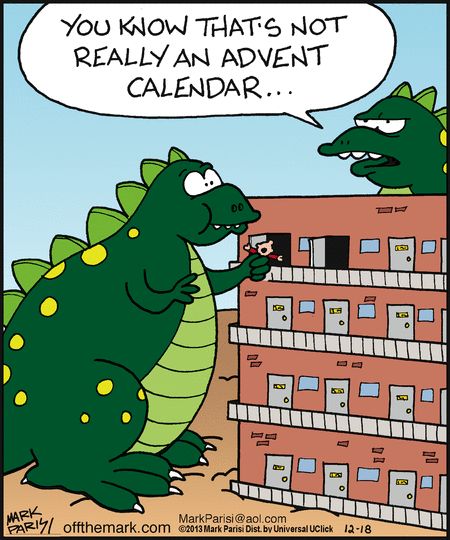
Life and all that jazz have been happening at a full stop here this past month: My husband, whose immune system is weakened by chemotherapy at the moment, caught the flu at work, and was down for nearly 2 weeks; though I managed to avoid it a week, it finally caught up with me and within a few days had dropped into my lungs (it’s not Covid-19 – I already know what that feels like!). So this month, I’ve been out of action except for coughing and sleepless nights. Ergo, no blogging. I haven’t had enough brainpower to think about any topic for more than a few minutes. I’m now on the mend, with a vaccination cure for bronchitis on the go. Now that I slowly have more energy returning, I’ve come out of that “zone” – that tunnel vision that focuses only on the most elemental priorities, like health – and realized that October is nearly over. Advent is on the way! [I know that, for Americans at least, Thanksgiving is in focus before Advent, though we don’t have that as a traditional festive day here.]
The last few days have been Indian summer here, so we’ve been getting ready for winter and seasonal changes. I’m taking advantage of the sunny balcony to spray paint crafts. I’m starting to think about advent calendars, stocking stuffers, and Samichlaussäckli. I’ve gone through my crafts inventory for the annual Christmas market, where I sell things, and I’ve planned the annual baking day with a friend to make things for our families as well as for selling at the market.
I’ve talked about how minimalistic most Swiss households are decorated, so I won’t have much preparation where that’s concerned. But one thing I do begin to prepare now is the advent calendar. Our advent calendar the past few years has been a decorative ribbon strung along a wall, with small Christmas stockings hung with numbered wooden clothes pegs. I’ve made the stockings (pictured below), and they can double as silverware holders on a decorative table at Christmas – that’s assuming we can have guests around that time, Covid notwithstanding. I’ve also made matching wine slip-coasters (shown) and matching wine charms to go with each glass’s stocking.
It’s getting harder to find good advent gifts; we have everything we need. Larger gifts go under the tree or in a larger stocking, but what are small gifts – about the size of a lip balm? Somehow, every year, I manage to find 12 each that are practical or fun: mini toiletry items, erasers, pens, fun magnets or post-its, small liqueurs for my husband (though this year, that’s a no-go due to chemo), rings or earrings, sampler perfumes or aftershaves and, of course, one individually-wrapped chocolate in each (something like Ferrero Rocher or Raffaello– something that won’t leak, like Mon Cheri).
In the midst of all that, as my energy returns, I’ve been sculpting the ending of my current manuscript (science fiction). That takes a level of mental focus that has been fleeting this month, so I try to catch it when I can and have the grace with my health situation not to stress when I can’t. When I can’t write, I at least have the energy to do something crafty.
While writing this, my curiosity has been building, so now come the questions to you!
Do you have an Advent calendar? If so, what’s it like? Do you have gifts, or simply opening doors with an image hiding behind them? If you have one with gifts, did you make it yourself or buy a store-bought themed calendar? Did you grow up with a culture of Advent calendars where you live/lived as a child? I did not, so I’ve thoroughly embraced the Swiss tradition, adding my own twist of stockings (which are not common here, though the idea is catching on slowly).
I’d love to read your answers in the comments below!











 Stephanie Huesler
Wordless: Followers
2 Comments
May 4, 2022 · 2:58 PM