Tag Archives: William Caxton

Etymology Undusted: Brittonic Remnants

While many English words can be traced back to an event, such as the French absorbed into the language after 1066, some words we use today can be traced much further back to the formation of the language.

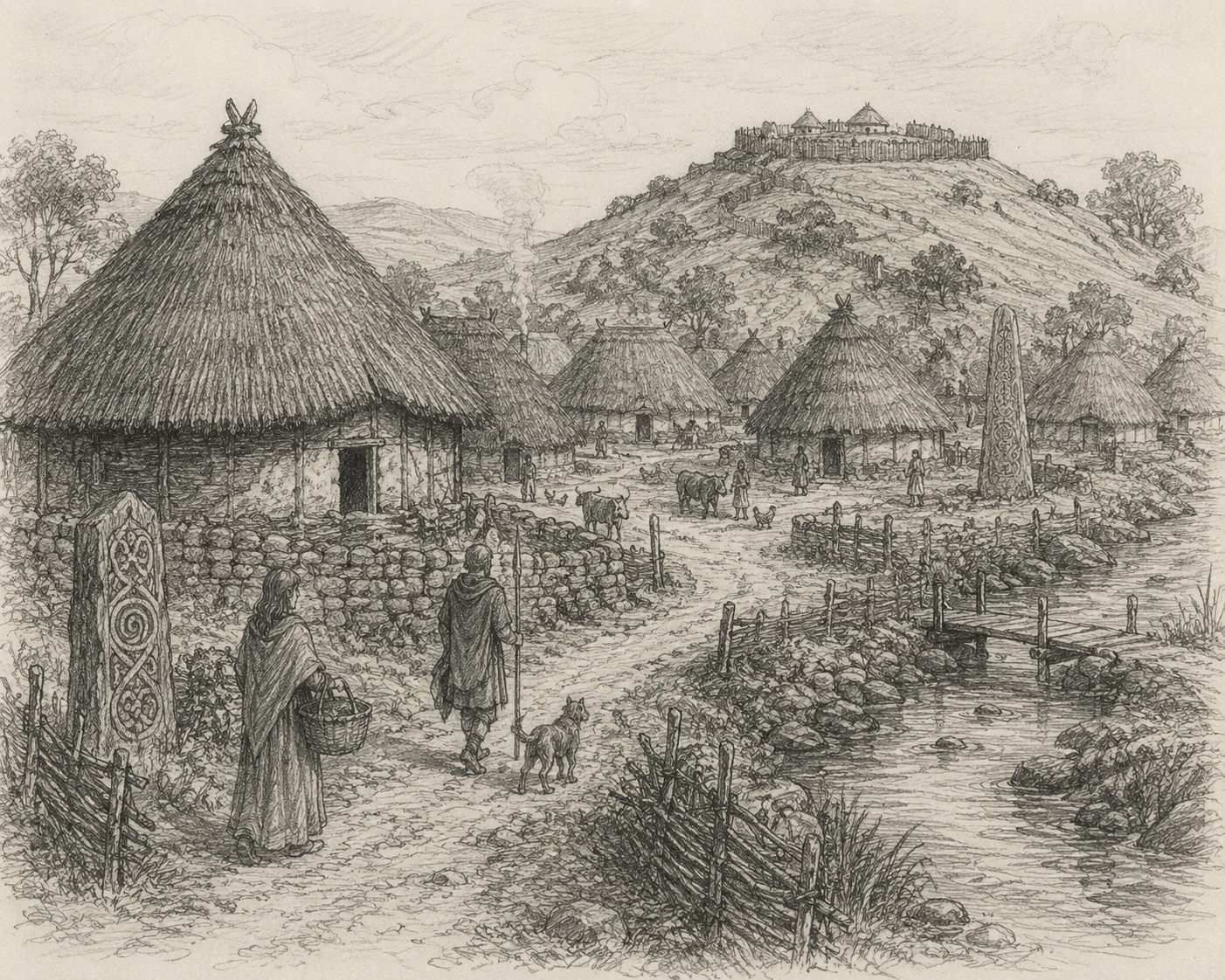
English itself is a West Germanic language of the Indo-European language family. During the period of Roman Britain (AD 43 to AD 410), what we know as Britain today spoke Brittonic dialects and languages, influenced by the Celtic migration from the Continent around 1300-800 BC; during the Roman occupation, many words from Latin were assimilated, and English as a language began to emerge around 450 AD. Old English would be unintelligible to most English speakers today; I won’t go into the history of the Great Vowel Shift again, which fundamentally changed the sound of the language, but suffice to say, we still use many Old English words today. Famously, Winston Churchill used many Old English words in his “We shall never surrender” speech, delivered just after the evacuation from Dunkirk was successfully completed. Old English words tend to be short, giving the speech more emphasis; click on this link for a clip from the film Darkest Hour, portraying the speech. As one man in the clip says, he mobilised the English language and sent it into battle.

Even though English as a language has adapted, evolved and adopted words from around the globe since its inception, there are ancient words from Brittonic which we still use today. Here are a few:

Ass, crag, doe, wan, combe (valley), peat, hog, gull, brock, bin, coracle, flannel, and bannock. Possible words (etymology is unclear, but these are suspected to be Celtic British) include basket, sark (a shirt or smock in Scotland and northern England), wan, and dun.

Among the place names from Brittonic are Avon, Derwent, York, Leeds, and London. The elements of Aber-, Caer-, Pen-, and Dun– are typical Brittonic place-name derivatives; these include: Aberdeen, Aberfeldy, Cardiff, Carlisle, Penzance, Dumbarton, Dundee, and Dumfries.

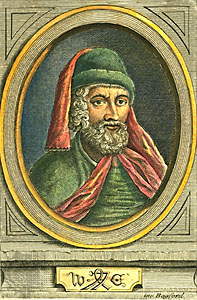
Some of these words are more common, for instance, in Scotland than in America, but they are still words used today. As you can imagine, the farther back we go in history, the more we’ll realise that earlier words have been usurped by “modern” ones – even if “modern” refers to a thousand years ago. What we know today only as “eggs” once had a variety of spellings: æg, ei, ey, eai, egge, eyern, eyeren, eggys, eggja. All of these were in use until William Caxton (c. 1422 – c. 1491) decided on eggs (thank you!). Only because of him do we spell it thus, and not æg or anything else.

I realise that all of this is an over-simplification, but it would be impossible to do justice to a language that has been developing for well over a thousand years, no matter how many books have been written on the subject. Hopefully, this little insight gives you a deeper appreciation for the fact that your spouse can write “eggs” on the shopping list and that you understand the term!
(AI Gen Image)

5 Comments

Filed under Articles, Etymology, History, Liguistics, Linguistics, Lists, Military History, Videos, YouTube Link

Obsoletusvocabularium…  Up with Archaism!

English is relatively young, as languages go. Like a sponge, it absorbs words and meanings from other languages, then squeezes them out in a similar (or widely different) form.  In other words, English is a survivor; it has survived the attempts to destroy it by the Danish Vikings, the French (Normans, aka Vikings disguised as French), and the Germans. These historical encounters give me high hopes that it will survive the age of the Cell Phone.  With each skirmish, it has come out stronger, more versatile and more flexible.  When the Pilgrims packed up English and crated it off to the New World, it was locked, as it were, in a time capsule. British English absorbed a few bad habits from the French before they thought better of it and distanced themselves during the French Revolution, but in the meantime, contentious pronunciation differences to that time-capsule relative over the Pond had crept in and persist to this day. One example: The American pronunciation of schedule (/skedju(e)l/) is from the original Greek pronunciation, which was used in Britain for onk-years until they took on the fancier French-ified pronunciation of /shedju(e)l/.  For a fascinating glimpse into how Modern English was formed, William Caxton (~1422-~1491) is your man.

While English pilled through the pockets of invaders stealing loose grammar, we also lost a few words along the way:  Some words are known to us in one form but not the other, while other words have been lost altogether due to a more convenient absorption or form arising.  You know of disgruntled (adj.), but what about gruntle (v.) or disgruntle (v.)?  And dis– in this particular case is not used to form the antonym of gruntle, but means exceedingly gruntled.  And I don’t know about you, but conject as a verb makes more sense than “conjecture” to me.  And shall we vote to bring back “Oliphant,” as J.R.R. Tolkien saved it from extinction through his use of it in Lord of the Rings?  What about pash (n.), contex (v.), or spelunk (n.)?  We know of fiddle-faddle, but what about plain ol’ “faddle” (to trifle)?  Some, admittedly, are not missed; toforan is better served with heretofore, in my humble opinion (IMHO).  Needsways is a Scottish word, obsolete in England and America perhaps, but alive and well north of the Border.  There are some deliciously eccentric words which deserve resuscitation, such as loblolly, bric-a-brac, sulter, pill (v., to plunder, pillage – ought to come in handy, that), quib, bugbear, uptake (as a verb), wist (intent), or sluggy.  If Sir Walter Scott can save words such as doff and don from extinction, so can we.

Oh, and if you’re wondering about the word archaism, it means “retention of what is old and obsolete.”  So twinge your language to include these mobile words and their meanings, and revelate your intelligence! And if you’re curious, yes, Grammarly and spellcheck were going batship crazy with this post!😎

(Comic from xkcd used under a Creative Commons license)

1 Comment

Filed under Cartoon, Etymology, Grammar, History, History Undusted, Humanity Highlights, Liguistics, Linguistics, Snapshots in History

History Undusted: William Caxton (the father of English as we know it today)

I’ve been trying to blog the last few weeks, but to do so, it helps to be logged in to WordPress – and it kept logging me out every time I switched to my site. I finally found the solution this morning, so here I am!

One thing I’ve been ruminating about is the etymology of everyday words; words come from somewhere, and I’ve always wondered what word(s) were used before a word came along. There are famous examples of invented words that never stuck, such as Lewis Carol’s “Jabberwocky“, but what I’m referring to are common words. What did they use before the word “egg” came along? The word itself comes from Old Norse, eggys, eggja, or egge, but before the common spelling was decided on, every English dialect in Britain had at least a couple of different spellings of the word!

William Shakespeare (1564-1616) is sometimes credited with having created upwards of 1,700 words, but many of those were likely already in circulation – he simply wrote them down in his plays. Some words accredited to him are: dishearten; dislocate; auspicious; obscene; monumental; majestic; accommodation; amazement; dwindle; exposure; bloody; countless; courtship; impartial; gnarled; gloomy; generous; reliance; pious; inauspicious; bump; frugal; submerge; critic; lapse; laughable; lonely, suspicious, and many, many more.

But long before William Shakespeare drew breath, there was another William who influenced English in profound ways, and yet his name is little known today: William Caxton. Born around 1420, he was a merchant, printer and the first English retailer of books; he introduced the printing press to England, set up in Westminster, 1476. Though he published many books, the first book he is known to have published is The Canterbury Tales, by Geoffrey Chaucer (1340s – 1400); that work alone is credited with influencing both the English language and literature, as it shows a clear correspondence between the rhythm of written English poetry and the cadence of spoken English. Chaucer is also known for having looted the French language, bringing into English such words as governance, paramour, difficult, dishonest, edifice, and ignorant, to name a few. Chaucer was aware of the wide variety of English dialects, which we would never recognize as English today, and he was anxious about the confusion of languages in Britain and that his work would be able to be comprehended in the future. In his poem, Troilus and Criseyde, he bids it a poignant but troubled farewell: “Go, litel bok . . . And for ther is so gret diversite In Englissh and in writyng of oure tonge, So prey I God that non miswryte the [thee]. . . . That thow be understonde, God I biseche!”

However, because William Caxton chose to publish Chaucer’s work, we still have it to this day. Caxton was also the first to translate Aesop’s Fables into English (1484). Although he was not a great translator and sometimes simply used the French word “Englishified”, his translations were popular; because of that, he inadvertently helped promote Chancery* English as the standard English dialect throughout England. (*Chancery refers to the dialect used by the officials of Henry V’s government). Thanks to men like William Caxton and those who followed, refining and shaping the language we know today, we are able to enjoy a standard English spelling and grammar structure that is understood around the world; there are still regional and national dialect differences, but we can be understood wherever in the world English is used.

If you’d like to learn more about this topic, one book I can highly recommend is Melvyn Bragg’s The Adventure of English (The Biography of a Language); it’s available in physical form, e-book, and audiobook.

William Caxton

9 Comments

Filed under Etymology, Grammar, History, History Undusted, Links to External Articles, Lists, Poetry