Category Archives: History

History Undusted: Decisions, Decisions

In May 2013, I began blogging here on WordPress; at the time, I had several topics of interest that I wanted to pursue, and to that end I began several blogs.  As time has marched on sometimes other priorities took over, or focus changed, and now I have three active blogs.  This eponymous blog is my home-base, but one of my favourite blogs to write besides this one is History Undusted.  I love finding the dusty bits of history and “undusting” them for the unsuspecting public.  But sadly, it has never really seemed to find notice by WordPress, and many of the posts have gone unseen.

Because history and the research thereof is a big part of my writing process, whether it be Viking history, archaeology, Scottish history, 18th century England, science, technology, advertisement, historical characters, or any of a dozen other topics, I have decided to combine the two blogs into this one.  If history isn’t your thing, don’t worry – I will still enjoy posting articles regularly about the writing process and the nuts and bolts involved!  I will begin “importing” (and, if necessary, augmenting) those blogs gradually, until they’re all safely here.

So without further ado, here is the first offering:

Decisions, Decisions

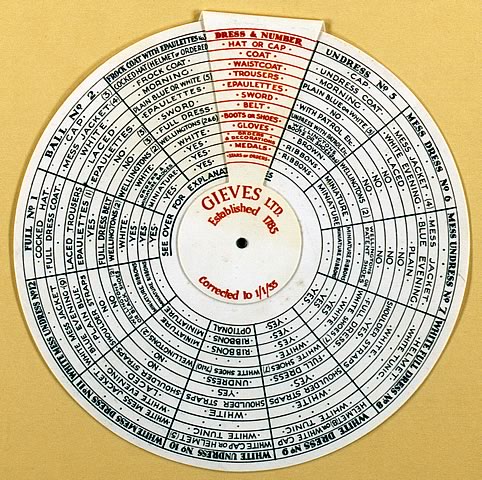
gieves-dress-wheelHave you ever heard of a butler (or male servant, in general) referred to as “Gieves” or “Jeeves”?  This might just be where it all started:  The Gieves Gentlemen’s Tailor Company was founded in 1771, and became a limited company in 1785; their dress wheel aided naval officers in choosing what to wear at any particular occasion, for any part of the world they might have found themselves in at the time.  Dressing, even for men, was an extremely complex social signal in bygone eras.  By 1935 there were twelve styles of dress, including tropical options.  By turning the wheel, an officer could see just what to wear on any occasion.  A handy little marketing device, it gained Gieves loyal royal naval customers, and the company has thrived ever since, with loyal customers including members of the British royal family today. For an interesting history of the company, click here.

Sir P.G. Wodehouse, an English author and one of the most widely-read humorists of the 20th century, named the comical fictional character of his shrewd valet “Jeeves”; the name was taken from Percy Jeeves, who was a cricketer killed during the First World War. Both the wheel and the fictional character served to cement the name in the collective conscience of the western world as a reliable servant.

Originally posted 27 May 2013 on History Undusted

10 Comments

Filed under Articles, Etymology, History, Images, Military History, Research

Quintus Quotes: Groucho Marx

Julius Henry Marx (1890-1977) is best known as Groucho Marx, a member of the Marx Brothers comedy group (along with three of his brothers, Harpo,and Chico and Zeppo).  He was known for his rapid-fire wit and snappy comebacks.

He also once said, “I get credit all the time for things I never said.”  A case in point is a quote that is famously attributed to him, though he denied ever having said:  When Marx was hosting a television show called You Bet Your Life, he asked a contestant why she had chosen to raise such a large family (19 children), to which she is said to have replied, “I love my husband”.  Marx supposedly retorted, “I love my cigar, but I take it out of my mouth once in awhile.” Though the show was pre-recorded for editing purposes (he was known for innuendo-laced remarks), there was never any footage that contained such a remark.

Groucho’s career spanned seven decades, and his famous grease-paint eyebrows and moustache are still recognizable today, imitated and homaged in the arts in various expressions (just google “groucho marx caricature”!).  So without further ado, here are five of my favourite quotes:

groucho-marx-1groucho-marx-2groucho-marx-3groucho-marx-7groucho-marx-6

7 Comments

Filed under History, Humor, Images, Lists, Quotes

A Blast from the Past: 1906

Living in the Cyber Age, it’s easy to forget that personal computers only came into existence for the mass market in 1981 (and even then, didn’t become common household items until the early 1990s), with the launch of the IBM Personal Computer (they coined that term, and the shortened “PC”).  We got our first personal computer in 1993, and it had the astounding RAM of 256 MB!

As far as telephones went, I grew up with several:  My grandparents’ farm had a box phone on the wall, with the separate ear piece; then they modernized to a heavy black beast of a rotary phone – the kind you could really slam down if the need arose; in fact, you had to be careful how you set it down when you weren’t upset, because it was so heavy that it might sound like a slam in the receiver!  My family had wireless land-line phones, but the signal was poor if you moved much farther away than a long cable would have allowed.   Remember the impatience of dialling a number on the rotary dial, especially if it contained nines or zeros?  And remember that curly cable that got tangled on itself from being over-stretched?  Cell phones didn’t really come into their own until the late 1990s as a mass-market item; kids today would find that hard to imagine, as they seem to think they’ll fall off the edge of the known universe and die if they leave the house without their cells.

Before Spotify, iTunes or MP3s, and even before CDs were common, cassette tapes and LP (long-play) records were all the rage.  Remember winding cassettes with a pencil?  Now that films like “Guardians of the Galaxy” have highlighted cassettes, this generation thinks they’re a novel gadget, and history begins to repeat itself with the labels of “retro” or “vintage” attached to make “old” sound “cool”!  We had an 8-track player in our car, with a cumbersome disc the size of an old Beta movie cassette case.  My father was always at the cutting edge of technology, and in the late 70s we had a laser disc player; the DVDs were the size of LP records (yet looked just like a CD or DVD of today), and we had films like “Logan’s Run” and “Heaven Can Wait”.  The technology didn’t catch on, so I’ve never known anyone else who had that contraption (an image below shows the size comparison to a modern DVD).  Another gadget we had was a set of picture frames hanging on our living room wall; they were filled with psychedelic lights that reacted to sounds, changing colours as you talked, sang, or watched television.  The topic of TVs is a whole other kettle of fish!  As the way of dinosaurs, cassettes and 8-tracks, CDs are nearly a thing of the past now, with digital clouds; even television stations will struggle to survive in the changing technology with on-demand digital providers becoming more popular.  Here are a few images to stir your nostalgia for stone-age technology:

This slideshow requires JavaScript.

With so many changes happening just within a few decades, it’s easy to imagine that a century ago, things were even more different.  I wish I had statistics for Europe, but here are a few US stats for the year 1906 – 110 years ago.  Some of these items came in the form of a chain e-mail several years ago, and I didn’t forward it; even so, I’ve made new friends, I haven’t been hit by a meteorite, and I’ve been perfectly happy, despite the threats that come from breaking such a chain…

  • 18% of households in the US had at least one full-time servant or domestic help.
  • 2 out of every 10 adults were illiterate; only 6% of all Americans had graduated from high school.
  • 90% of all doctors had NO college education; they rather attended “medical schools,” many of which were condemned by the press and the government as sub-standard.
  • A 3-minute call from Denver to New York City cost 11 dollars.
  • A competent accountant could expect to earn $2,000 per year, a dentist $2,500, a veterinarian between $1,500 and $4,000, and a mechanical engineer about $5,000 per year.
  • Alabama, Mississippi, Iowa, and Tennessee were each more heavily populated than California.
  • Canada passed a law that prohibited poor people from entering into their country for any reason.
  • Crossword puzzles, canned beer, and ice tea hadn’t been invented yet.
  • Marijuana, heroin and morphine were all available over the counter at corner drugstores; pharmacists claimed that, “Heroin clears complexion, gives buoyancy to the mind, regulates the stomach and bowels, and is, in fact, a perfect guardian of health.”
  • More than 95% of all births in the US took place at home.
  • Most women only washed their hair once a month, and used borax or egg yolks for shampoo.
  • Sugar cost 4 cents per pound; eggs were 14 cents for a dozen; coffee was 15 cents a pound.
  • The American flag had 45 stars: Arizona, Oklahoma, New Mexico, Hawaii and Alaska had not yet been admitted into the Union.
  • The population of Las Vegas, Nevada was 30.
  • The average life expectancy was 47.
  • The average US worker made between $200 and $400 per year.
  • The average wage in the US was 22 cents per hour.
  • The maximum speed limit for most cities was 10 mph.
  • The tallest structure in the world was the Eiffel Tower.
  • There was no official Mother’s Day or Father’s Day.
  • There were about 230 reported murders in the entire US.
  • There were only 8,000 cars in the US, and only 144 miles of paved roads.
  • With a mere 1.4 million people, California was only the 21st-most populous state.
  • The five leading causes of death in the US:
    1. Pneumonia and influenza
    2. Tuberculosis
    3. Diarrhea
    4. Heart Disease
    5. Stroke
  • The top news articles of the time:
    1. Roald Amundsen, Norwegian explorer, located the Magnetic North Pole.
    2. Ethiopia declared independent in a tripartite pact; the country was divided into British, French, and Italian spheres of influence.
    3. Finland was the first European country to give women the vote.
    4. President Roosevelt sailed to the Panama Canal Zone. It was the first time a U.S. president travelled outside the country while in office.
    5. Reginald Fessenden invented wireless telephony, a means for radio waves to carry signals a significant distance. On December 24, he made the first radio broadcast: a poetry reading, a violin solo, and a speech.
    6. In Economy, federal spending was $0.57 billion; unemployment was 1.7%, and the cost of a first-class stamp was 2 cents.
    7. On 18 April, a magnitude 7.8 earthquake hit San Francisco, California, killing over 3,000. Though many have heard of the famous quake, a less-publicized 8.8 magnitude earthquake hit Ecuador and Columbia earlier in the year, on 31 January, causing a tsunami.  On 16 August, a magnitude 8.2 earthquake in Valparaíso, Chile left approximately 20,000 dead, while on 18 September, a typhoon and tsunami killed an estimated 10,000 in Hong Kong.  The media all but ignored such events, making the San Fran earthquake the best-known, though it was the least of all these events in the loss of lives. [Note the warning about shooting looters, from the San Fran mayor, in the images below.]
    8. A few famous births in 1906: Dietrich Bonhoeffer (4 Feb.); Hans Asperger (18 Feb.); Lou Costello (6 March).

Below are a few ads and gadgets from 1906 (gleaned around Pinterest), for your amusement:

This slideshow requires JavaScript.

5 Comments

Filed under Articles, History, Images, Musings

Musings about Advent

For those of you in highly commercialized countries (I won’t name names, but the initials are USA, for one…), before Thanksgiving is past, Christmas decorations have hit the shop shelves.  Before Christmas is really digested, Valentine’s ads appear.  I hope that you’ll bear with me, as I contemplate a holiday between your Thanksgiving, and Christmas:  Advent.

In today’s global village, people around the world are aware of holidays such as Christmas and Easter, though it might not be a part of their indigenous culture or religion; they may even celebrate them, though that be more of a marketing incentive rather than a religious one.  I grew up in Kansas, and though we were aware of Advent as an event leading up to Christmas, we never celebrated it – we rarely, if ever, had an advent calendar, or advent wreath of candles.  Here in Switzerland, Advent is like an extended Christmas; our personal advent calendar contains small gifts, and of course chocolate; this year, with a teenager in the house, I also included gag gifts. Our particular form is the Tischibo bags, hung from a rustic red metal heart frame with hooks.

What is the history behind Advent?  What is its true meaning?  Advent, which comes from the Latin Adventus (which is actually a translation from the Greek word parousia), had two meanings:   In relation to Christmas, it is the inner preparation for remembering the first coming of Jesus as a babe into the world as a human, so that he could fulfil God’s plan for salvation for all.  For Christians, the second meaning is a time to reflect on, and prepare for, the Second Coming of Christ, which will be the end of time for Earth (no one knows the day or hour, and so the Bible tells us to be prepared – like someone on call needs to be ready to go when the call comes).  As an event, it begins on the fourth Sunday prior to Christmas; this year that would be the 27th of November, as Christmas itself falls on a Sunday.

There are several expressions of celebrating Advent:  The calendar, the wreath, and  devotions.

The calendar was first used by German Lutherans in the 19th century, and usually begins on the 1st of December.  They can take on any form imaginable, from a simple paper calendar, to gift boxes, or gift bags labelled 1 – 24.  Consecutive numbers are opened one per day from the 1st to Christmas Eve.  Sometimes the calendar includes a Bible verse and a prayer or Christian devotion for that day of the Advent.  There are even some towns that become living Advent calendars; this tradition began in Stockholm, Sweden.

The wreath, usually a horizontal decoration placed on a table, is made of evergreen boughs (real or synthetic) with four or five candles, representing the four Sundays prior, and Christmas day.  The four are usually red, with the white Christmas candle centred.  One candle is lit on the first Advent Sunday, with an additional candle lit each week.  The concept originated with German Lutherans in the 16th century, though the modern form didn’t catch on until the 19th century, likely in conjunction with the calendar.  For a detailed history of the wreath, click here.

The devotions are readings from the Bible accompanied by a prayer, to prepare the heart and mind for the Reason for the Season – the coming of Jesus as a man to Earth.

If you’ve never made an Advent calendar or wreath before (there is still time to prepare one!), or you want to try something new, below are a few examples I’ve collected from Pinterest.  Please share in the comments below what kind you use, or what your traditions around this time of the year are!

This slideshow requires JavaScript.

This slideshow requires JavaScript.

9 Comments

Filed under Articles, History, Images, Musings, Research

Rock, Snake or Spock?

Almost everyone in the world has at one time or other played “Rock, Paper, Scissors”, or a variation of the game.  My husband and I use it to decide who goes first whenever we play a dice or card game together, which is nearly every evening.  If you scratch beneath the surface, you’ll find that there are a lot of variations; some make sense intuitively, some need to be explained to make sense, and others, you just need to accept as the way the game works.  In looking into this topic online, I came across several forums that discussed in length whether the rock sharpened the scissors, thus making them allies against paper, or why the paper wouldn’t be defeated by the rock because it holds it down; but the fact is that in this widespread variation, the rock is wrapped (defeated) by the paper, the scissors cut the paper, and the rock smashes (or dulls) the scissors.  Sometimes the game is accompanied by a preparatory chant, such as, “eeny, meeny, miny, moe”, “one, two, three” (in whichever language it’s being played in), or something like “ickety, ackerty, ock”.

Other Variations of the Game:

Rock, Scissors, Paper, Dynamite:  Dynamite (palm out, fingers spread wide like an explosion) blows up the rock and paper, but the scissors can cut the fuse.

Rock, Scissors, Paper, Fire,Water:  Fire (waving fingers, pointing upward) destroys paper and scissors but is put out by the rock and water; the water (hand held horizontally, palm down) drowns the scissors and puts out the fire but is moved by the rock and floated on by the paper.

Earwig, Elephant, Man:  The elephant is tamed by man; the man is bitten by the earwig; the earwig is stepped on by the elephant.

Hoof, Bandage, Knife:  The bandage wraps the hoof, the knife cuts the bandage, and the hoof breaks the knife (presumably by stepping on it).

In the Idaho panhandle:  Hunter, Bear, Woman:  Players stand with their backs to each other to prepare, jump and turn, landing in the stance of their choice. The hunter mimes a rifle, the bear displays claws, and the woman symbolizes breasts with cupped hands.  The hunter defeats the bear, the bear defeats the woman (unarmed), the woman defeats the hunter (putty in her hands).

rock-paper-scissor-lizard-spockRock, Paper, Scissors, Lizard, Spock:  Scissors (first and second fingers extended) cut paper (open palm) and decapitate lizard (hand held with thumb against fingers, as for finger puppet); paper covers rock (fist) and disproves Spock (Spock’s gesture of peace – palm out, fingers divided into V between middle and ring fingers); rock crushes lizard and scissors; lizard poisons Spock and eats paper; Spock smashes scissors and vaporizes rock.

Variations Around the World

Whether you call it “rock, paper, scissors”, Janken (the Japanese word for the original game), Kai bai bo (Korean), or Janjii (Thailand), the goals are the same – to win over an opponent, or to make an arbitrary decision, such as who goes first in a game.  Here are a few variations from around the world:

KoreaKai bai boKai is scissors, Bai is rock, and Bo is cloth or paper.  China has a similar version, except that it is sometimes hammer (guu) and bomb (paa).

Malaysia and parts of ThailandWan Shi Zan –Pistol, Water, Bird, Stone, Plank:  The pistol defeats everything except water, and the bird loses to everything except water. The stone defeats the bird and the plank, but loses to the pistol and the water. The plank defeats the bird and the water, but loses to the stone and the pistol. The water defeats the stone and the pistol. The bird loses to the plank.

India and Indonesia, and on Bali:  Elephant, Human Ant:  The elephant beats the human, the human beats the ant, and the ant beats (scares) the elephant.

Myanmar:  General, Soldier, Tiger:  The general defeats the soldier, the soldier (with a gun) defeats the tiger, and the tiger kills the general (unarmed).

Vietnam:  Hammer, Paper, Scissors:  The same hierarchy as Stone, Paper, Scissors.

Laos:  Hammer, Nail, Cloth:  The hammer defeats the nail; the nail pierces the cloth; the cloth wraps the hammer.

Russia:  Rock, Scissors, Paper, Well:  The rock smashes the scissors; the scissors cut the paper; the paper floats on the well and wraps the rock; the well swallows the rock and scissors.

France:  Rock, Scissors, Leaf, Well:  Same principle as the Russian variation.

ChinaGosukumi [i.e., 5 choices instead of 3]:  Idol, Chicken, Gun, Fox, Termite:  The idol is the thumb, chicken the index finger, gun the middle finger, fox the ring finger, and termite the little finger. The chicken is sacrificed to the idol; the gun introduces people to the idol (the idol wins); the termite eats the idol; both the gun and the fox defeat the chicken; the chicken defeats the termite; the gun defeats the fox. The idol and the fox are good friends, as are the gun and termite, and the fox and termite ignore each other, so these symbols tie with each other. According to these rules, the god and gun are strongest, and the chicken weakest.

Japan:  There are many variations of the game throughout Japan, where it is very popular; one is called “Mushiken” with a snake, slug and frog:  The snake (thumb) fears the slug (ring finger); the slug is eaten by the frog (index finger); the frog is eaten by the snake.

Shouyaken” is played by gestures made with the whole body. The symbols were the village-headman, musket, and fox. The village-headman sits in a dignified manner, as if in the seat of honour. The musket was mimed as if carrying a gun in both hands. The fox was indicated by holding up both fists at an angle.  The rules were that the headman beat the gun, the gun beat the fox, and the fox beat the headman.

Do you know of any other variations?  Please put it in the comments below, explaining how your version is played!

Some information gleaned from the following sites:
http://www.democraticunderground.com
https://en.wikipedia.org/wiki/Rock%E2%80%93paper%E2%80%93scissors
http://archive.ec/Rjp5v

Save

8 Comments

Filed under Articles, History, Nuts & Bolts, Research

Wordless Wednesday no. 4


5 Comments

Filed under History, Images, Nuts & Bolts, Research, Wordless Wednesday

The Thorny Issue of Horns

As an author and writer, I do a LOT of research.  I love history particularly, but then I could say the same thing about the topics of geology, astronomy, archaeology, science and technology, crafting, drawing, botany, and a dozen others.  As I apply my studies to my work, I am sometimes faced with the issue of horns – Viking helmet horns.

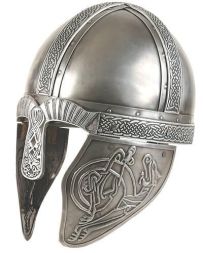
Real Viking Helmet


Accurate Viking helmet, reproduction.  Photo credit, Pinterest, unknown


While everyone seems to accept as a historically proven fact that Viking helmets had horns, the actual fact of the matter is that they didn’t.  While there were many horned helmets dating to before the rise of the Norse powers of Sweden, Norway and Denmark, most, if not all, were for religious or ceremonial purposes.  However, if I write a description of a Norse helmet and leave off the horns, someone will inevitably point it out.

Recently I spent a couple hours on Skype with one of my Beta readers for my current project, the third book in the Northing Trilogy (set in 18th century England).  Several of her comments were based on her knowledge of the 19th century as portrayed by Georgette Heyer, while others were based on her lack of historical knowledge that I, as the author, have amassed over time.  While some of that knowledge needs to seep into my writing to help the reader along, I have to continually remind myself (especially with this particular book in the trilogy, as it is centred around the Royal Navy) that I am not writing a history book but a novel, and anything I include needs to support the plot – the plot should never be forced to support a history lesson.  So it is that questions arose as to the behaviour and manners of the children of the time.

In any time period up until the mid-20th century, children in western societies matured far sooner than their modern counterparts, both out of necessity and out of cultural understanding of their roles in society.  Many families were dependent on the contribution made by the children in their household, whether it was housework, factory work, or working on the streets as beggars, shoe shiners, chimney sweeps, street sweepers, selling newspapers, or any other job they could earn money with (this is still true in many poorer countries of the world today).

If they came from a wealthy family, children were educated, but as to what extent and to which form it took very much depended on their particular circumstances:  They were educated either at home by tutors, or sent away to a boarding school.  Leaving school might be anywhere between ten and twenty; Jane Austen finished her formal education at the age of 10 or 11, whereas Charlotte Brontë’s character Jane Eyre left school at 18.  Boys who were second sons were often educated (after their basic education in either a college or at home) toward the military or toward a life as a minister (if their families held a high status in society, they might be trained toward politics; first-born sons, heirs, were rarely sent to the military due to the inherent dangers).

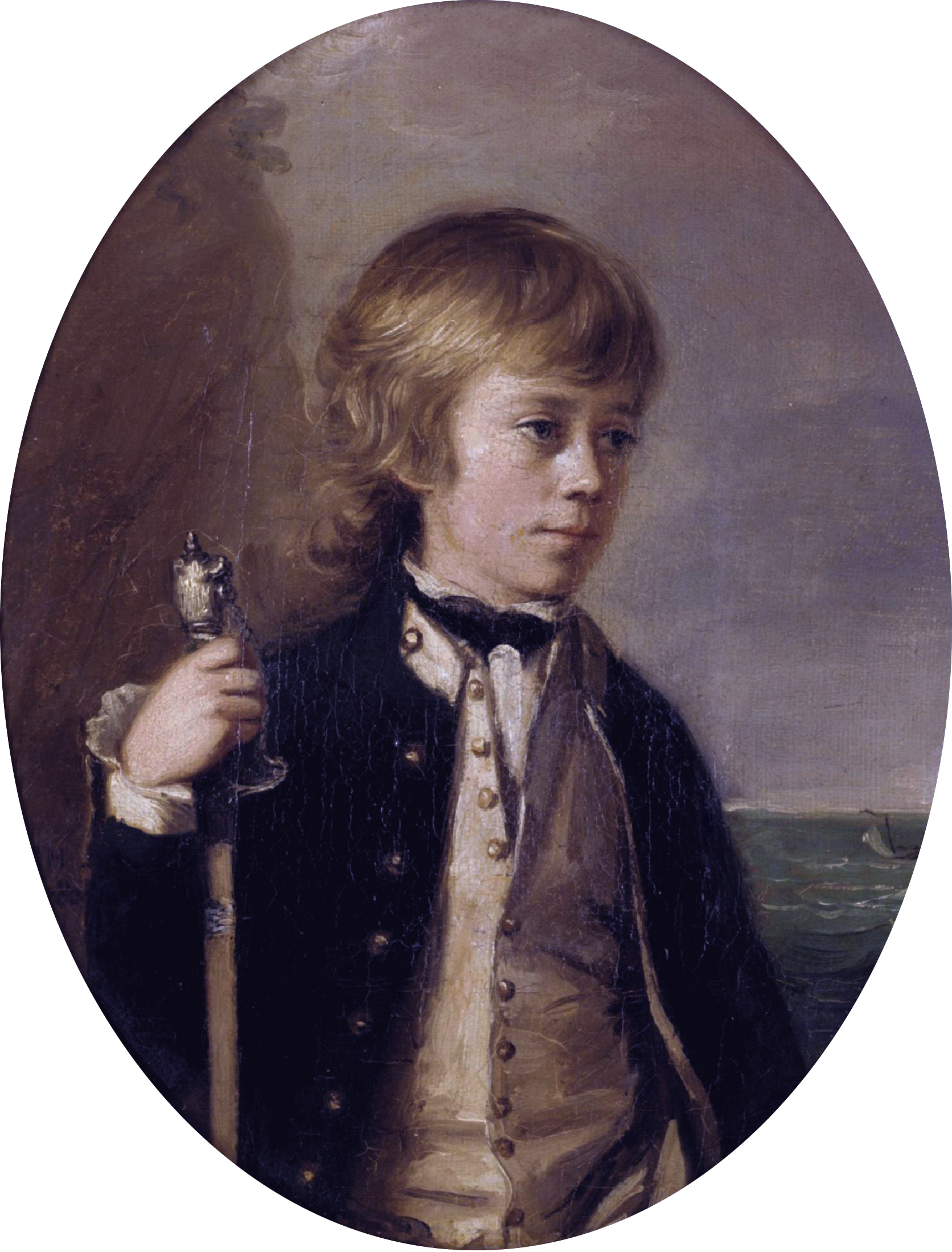
Midshipman Henry William Baynton, aged 13 -1780 - Wikipedia.jpg

Henry William Baynton, aged 13 years, 6 months, midshipman on the Cleopatra.  Photo Credit, Wikipedia.

If their fathers could afford to do so, these younger sons were often bought commissions in the military so that they would start off their career with some smidgen of position, such as a midshipman in the Royal Navy; the younger they entered, the sooner they could rise through the ranks, and thus it was not uncommon for lads of 7 or 8 to enter the navy.  Aboard ship they were trained in various skills, which included not only practical skills to do with the day-to-day running of the ship, but how to read navigational charts and how to use instruments such as sextants. How fast or slow they rose to higher ranks thereafter depended on their skills, intelligence, connections, and luck.

If poor children were either abandoned or given to workhouse orphanages because their families could not afford to keep them alive, they were also trained:  The girls were trained toward becoming servants (paying back society for the privilege of being alive), and the boys were trained for a life in the military (ditto).  They were taught to read using the Bible, and were expected to live by its principles.  Unfortunately, religion was often used as a guise for abuse and heavy-handed tyranny, but as the characters in Jane Eyre portrayed, some were true Christians in their behaviour toward her, such as her friend Helen, or the kind apothecary.  If the girls were going to become governesses, they would also be trained in more refined accomplishments such as French, drawing, needlework, history, etc.

All of this is to say that, were I to include all of this kind of information in a novel (and believe me, there’s a lot more where that came from!), it would get boring rather quickly.  And so I need to pick and choose what is used in the organic flow of the plot and character development that both serves those elements and also helps inform the reader; sometimes it’s a tricky balance.  So when the 11-year-old boy acts far more mature than a modern boy, unless the reader is aware of the historical context, I will inevitably get feedback to that effect.  Sometimes I can help their understanding by including e.g. the subjects he might be learning with his tutor, such as French, sciences, or elocution, but more than that might drag the story into the realm of a history lesson.

There are many modern myths, like the Viking horns, that people have accepted as historically accurate, when in fact they’re not.  One of my pet peeves is Christmas films that inevitably portray three kings showing up at the manger along with the shepherds in Bethlehem.  I won’t go into that here – if you’re interested in the historical details, read my article on History Undusted, here.  Other urban legends include:  We only use 10% of our brains; the full moon affects our behaviour; lightning never strikes the same place twice; cracking your knuckles gives you arthritis, and antibiotics kill viruses.  If I rankled any feathers there, or you said to yourself, “But that one is actually true,” then I would suggest you do your own research on the issue… I’ve got my plate full at the moment with the 18th century.

Save

7 Comments

Filed under Articles, History, Musings, Nuts & Bolts, Plot Thots & Profiles, Research

On Summer Holidays

Have you ever felt that you needed a holiday from holidays?  We’ve crammed more activities into one week that we’d previously done all year!  Gondolas (cable cars), waterfalls, mountains, waterfalls inside mountains, overnight in a hotel at the top of a mountain, international guests for a few days in between (take a deep breath), scenery galore, giant outdoor museums, a glass-blowing facility & its hands-on museum, a Benedictine abbey with a cheese factory, medieval castles, restaurants, a mammoth museum, more gondolas, late nights to stay up with the telescope to see Mars, Saturn and the Moon, and to watch for the Perseid meteor showers, and a car that decided it needed to go overnight for repairs (so we travelled partly in an uncomfortable replacement car) – this also included passengers getting out and pushing the car to jump-start it while up in the mountains, and delays waiting for the touring club mechanic twice… and that’s not including the plans for the coming week (fortunately the car’s problem was easily repaired, and we’re all happy again now).  Even though we thoroughly enjoyed the time our international guest was here for a visit, and are enjoying more quality time with our exchange student, my body is tired and my mind is full; I need time to process all of the impressions and experiences.  I don’t know about you, but this introvert needs a break… as in, “Don’t talk to me for a week…”  Later on I’ll say it was worth it, but right now, all I can say, “Stop the holidays, I want to get off!”

Here’s some photographic evidence:

This slideshow requires JavaScript.

6 Comments

Filed under Articles, History, Images, Lists, Musings

Musings A to Z Challenge: U

Challenge:  Write a short paragraph (100 words or less) daily on a topic beginning with the sequential letter of the alphabet.

Unknown

The more we learn, the more we realise we have yet to learn.  For years, astronomers speculated about planets outside our own solar system, called exoplanets, but none had been discovered.  Then in 1992, two planets were discovered orbiting the pulsar PSR 1257+12.  Once the first were found, there was an explosion of discovery, and since that time over 3,400 have been confirmed.  The unknown became known, opening the door for new discoveries, theories and understanding about our physical universe.  Still today, previously unknown species or insects, birds and mammals are being discovered, though they knew about themselves all along…

PS:  And speaking of the exploration of space:  On this day in 1969, the Apollo 11 crew returned from the moon to Earth… and had to fill out a customs declaration form just like all the rest of us!

Unknown


2 Comments

Filed under A-Z Writing Challenges, History, Images, Quotes, Science & Technology, Space, Astronomy, Writing Exercise

Not Just A Pretty Face

History is full of fascinating stories; some of them are so strange that they would be tossed onto the sludge pile of any self-respecting publisher if it came across their desk in the form of a novel’s premise.  As Mark Twain so elegantly put it, “Truth is stranger than fiction, but it is because fiction is obliged to stick to possibilities; truth isn’t.”  The proof is in the pudding, as they say, in the following story:

What do the following three things have in common:  A young Jewish woman by the name of Hedwig Eva Maria Kiesler, born in 1914 in Vienna, Austria; the spread-spectrum technology that enables Wi-Fi, CDMA & Bluetooth; and a Hollywood starlet discovered in Paris by Louis B. Mayer in 1937?  Quite a lot, in fact; because the woman born in Austria was otherwise known as Hedy Lamarr, inducted posthumously into the National Inventors Hall of Fame in 2014 for developing technology useful for a radio guidance system for torpedoes, the concept behind Bluetooth, Wi-Fi & CDMA (Code Division Multiple Access) and now used for entertainment and communication around the globe.

Lamarr, who became known as “the most beautiful woman in Europe”, was the only child of a prominent upper-class Jewish family, and her birth name was Hedwig (Hedy is the diminutive form).  At 18, she married Friedrich Mandl, reputed to be the third wealthiest man in Austria and an arms dealer who made a killing during the wars (in both senses of the word), in the proverbial bed with both Mussolini and the Nazis.  Lamarr would attend lavish dinner parties and business meetings with her husband as he networked with scientists and those involved in military technology, and her intelligent mind soaked up the information, nurturing her scientific talents.

Lamarr escaped her controlling and jealous husband by disguising herself as a maid and fleeing to Paris, where she obtained a divorce.  There she met Louis B. Mayer, who was scouting for European film talent; he had her change her surname to Lamarr, in homage to the silent film actress Barbara La Marr.  In 1938 she made her American film debut in “Algiers”, but because of her beauty, she was often typecast as a seductress; to alleviate the boredom, she set up an engineering room in her home and turned to applied sciences and inventing.  With the outbreak of World War II, she wanted to help in the war against the Germans, particularly in improving torpedo technology.  She met a composer, George Antheil, who had been tinkering with automating musical instruments; together they came upon the concept of “frequency hopping”:  Until then, torpedoes guided by radio signals could be jammed and sent off course just by tuning into their broadcasting frequency and causing interference; hopping frequencies would enable torpedoes to reach their target before their signal could be locked down.

Hedy Lamarr - Austrian-Actress-Invents-Control-Device

In classic Hollywood-portrayal style, the US Navy wasn’t interested in a technology developed by a beautiful actress and a musician in some suburban home.  I find the Stars and Stripes article above very telling as to their views of a pretty face actually being smart too; its tone is quite condescending from beginning to end.  The US military didn’t apply the groundbreaking technology for another 20 years, until the Cuban Missile Crisis in 1962.  That same technology serves as the basis for our modern communication technology, enabling many people to use broadband simultaneously without interfering with each other; such situations as portrayed between Doris Day and Rock Hudson in “Pillow Talk” are unthinkable today, and all because of Hedy Lamarr.

So the next time you’re sitting in a café using Wi-Fi next to someone else on their own cell phone, give a wink to the memory of Hedy Lamarr.  May you be inspired to reach beyond the possibilities, and create fiction worth reading even in the distant future!

Hedy Lamarr Quote

12 Comments

Filed under History, Quotes, Research