
Before we dive into our virtual tour of the world of umbrellas, I’ll take a moment to let you know what I’ve been up to the past fortnight: Editing. I’ve been working on the final draft of my next novel, and I call this phase the “cutting room floor” phase. If any of you have written a novel, you know that there are many ways an author approaches a story. I personally tend to toss my characters into a room and see how things develop. I start off with an idea of where it will end, but how it gets there is the fun part! Once the story is fleshed out, character arcs and story arcs complete, it might be too wordy; and every word needs to count, so tightening the dialogues or prose is a necessary step in the process. My current manuscript needs a fairly good “chop” to bring it into market norms for Science Fiction. So that’s what I’ve been working on. Looming on the future horizon is the fact that BOTH companies that I’ve been working with in the past have been acquired by other companies, meaning that I will now need to chuck out everything I’ve learned about their formatting requirements and processes and reinvent the wheel… Joy. But hopefully, working with the new companies will be a positive experience.
When I need a mental break from writing, I read, or I watch something interesting on YouTube. Recently in our local news, I came across a story about the only umbrella repairman in Switzerland, Erich Baumann. Every one of us has an umbrella; but I’ve never really stopped to think about the fact that each one is different – different mechanical parts and different tools needed to bring them all together. When I lived in Scotland, umbrellas (“Brollies”) were often considered “one-use” objects – the wind would swirl and suck the umbrella’s canopy upward with such violence that the ribs and stretchers would often snap. It didn’t matter whether it was a cheap or an expensive one – they didn’t last long.
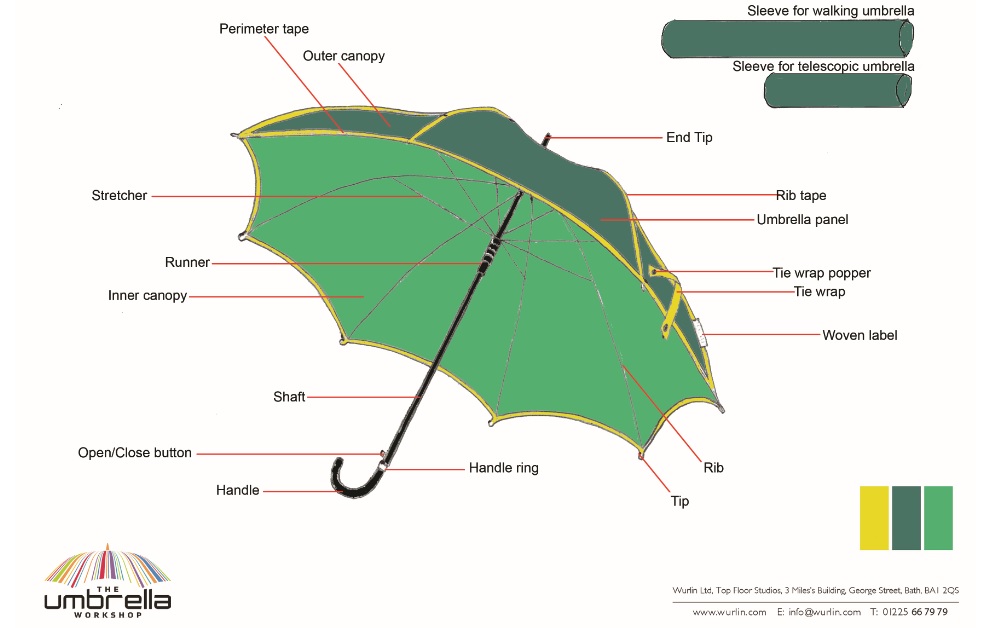
Today, many umbrellas come from Asia; that means that replacement parts are hard to find if you live elsewhere; that also means that umbrella repairmen need the spare parts of those throw-away brollies. If you have a moment, go and get one of your umbrellas, open it, and take a good look inside. Appreciate how complex such an everyday object is. And now, take a look at two videos: The first is how an artisan umbrella is made by hand; the second is a look at how they’re repaired. Enjoy!
Learning something new every day keeps us on our toes!
 If you’re curious as to how to make a rubber band ball like this image, just click






 Stephanie Huesler