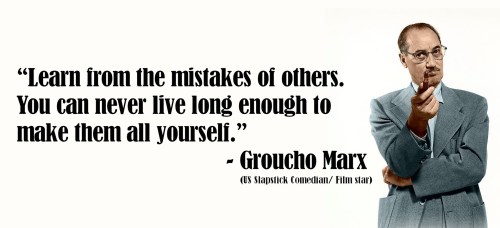
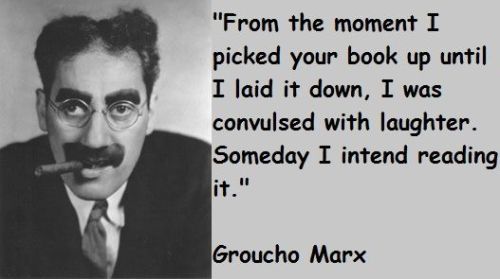
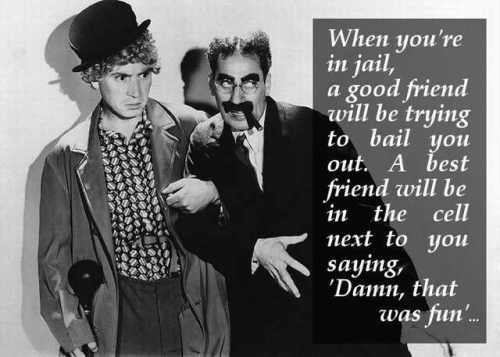
Merry Christmas, everyone! Here are a few cartoons to bring a smile. I hope your Christmas is relaxing, refreshing, and cheerful!
Category Archives: Images
Quintus Quotes: Mark Twain
I love quotes; good ones take an entire concept and condense it down to one or two lines. Some are pithy, some profound, some obscure and some obvious, but most always, they make you stop and think. They often relate universal conditions of the human existence, whether that quote comes from a present-day person or one that lived hundreds of years ago.
I often use quotes in my articles here, but I’ve never really had titled posts dedicated to them; I like to use alliterations, but “quote” doesn’t rhyme with anything practical in English – so (naturally) I went with Latin. [For the few Latin aficionados out there, please let me know if I’ve used the wrong form… there aren’t exactly Latin dictionaries floating around.]
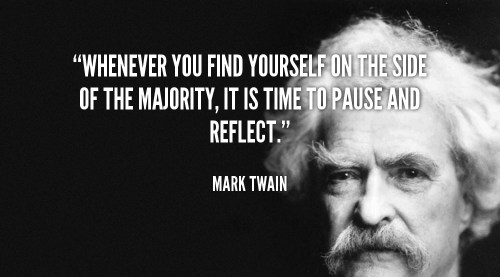
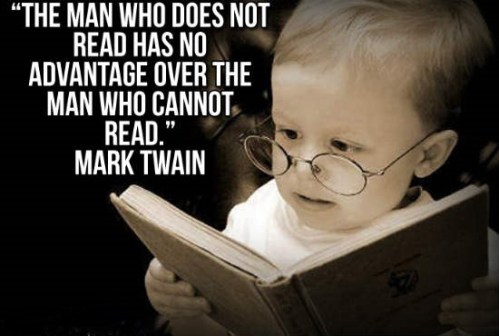
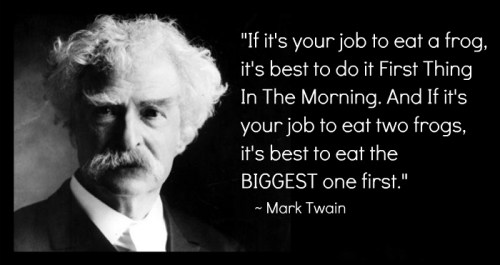
I’d like to kick off with one of the wittiest writers I know of, Mark Twain. Here are five zingers (and I apologize in advance for the grammatical errors – I didn’t make the jpegs!); enjoy!


A Blast from the Past: 1906
Living in the Cyber Age, it’s easy to forget that personal computers only came into existence for the mass market in 1981 (and even then, didn’t become common household items until the early 1990s), with the launch of the IBM Personal Computer (they coined that term, and the shortened “PC”). We got our first personal computer in 1993, and it had the astounding RAM of 256 MB!
As far as telephones went, I grew up with several: My grandparents’ farm had a box phone on the wall, with the separate ear piece; then they modernized to a heavy black beast of a rotary phone – the kind you could really slam down if the need arose; in fact, you had to be careful how you set it down when you weren’t upset, because it was so heavy that it might sound like a slam in the receiver! My family had wireless land-line phones, but the signal was poor if you moved much farther away than a long cable would have allowed. Remember the impatience of dialling a number on the rotary dial, especially if it contained nines or zeros? And remember that curly cable that got tangled on itself from being over-stretched? Cell phones didn’t really come into their own until the late 1990s as a mass-market item; kids today would find that hard to imagine, as they seem to think they’ll fall off the edge of the known universe and die if they leave the house without their cells.
Before Spotify, iTunes or MP3s, and even before CDs were common, cassette tapes and LP (long-play) records were all the rage. Remember winding cassettes with a pencil? Now that films like “Guardians of the Galaxy” have highlighted cassettes, this generation thinks they’re a novel gadget, and history begins to repeat itself with the labels of “retro” or “vintage” attached to make “old” sound “cool”! We had an 8-track player in our car, with a cumbersome disc the size of an old Beta movie cassette case. My father was always at the cutting edge of technology, and in the late 70s we had a laser disc player; the DVDs were the size of LP records (yet looked just like a CD or DVD of today), and we had films like “Logan’s Run” and “Heaven Can Wait”. The technology didn’t catch on, so I’ve never known anyone else who had that contraption (an image below shows the size comparison to a modern DVD). Another gadget we had was a set of picture frames hanging on our living room wall; they were filled with psychedelic lights that reacted to sounds, changing colours as you talked, sang, or watched television. The topic of TVs is a whole other kettle of fish! As the way of dinosaurs, cassettes and 8-tracks, CDs are nearly a thing of the past now, with digital clouds; even television stations will struggle to survive in the changing technology with on-demand digital providers becoming more popular. Here are a few images to stir your nostalgia for stone-age technology:
With so many changes happening just within a few decades, it’s easy to imagine that a century ago, things were even more different. I wish I had statistics for Europe, but here are a few US stats for the year 1906 – 110 years ago. Some of these items came in the form of a chain e-mail several years ago, and I didn’t forward it; even so, I’ve made new friends, I haven’t been hit by a meteorite, and I’ve been perfectly happy, despite the threats that come from breaking such a chain…
- 18% of households in the US had at least one full-time servant or domestic help.
- 2 out of every 10 adults were illiterate; only 6% of all Americans had graduated from high school.
- 90% of all doctors had NO college education; they rather attended “medical schools,” many of which were condemned by the press and the government as sub-standard.
- A 3-minute call from Denver to New York City cost 11 dollars.
- A competent accountant could expect to earn $2,000 per year, a dentist $2,500, a veterinarian between $1,500 and $4,000, and a mechanical engineer about $5,000 per year.
- Alabama, Mississippi, Iowa, and Tennessee were each more heavily populated than California.
- Canada passed a law that prohibited poor people from entering into their country for any reason.
- Crossword puzzles, canned beer, and ice tea hadn’t been invented yet.
- Marijuana, heroin and morphine were all available over the counter at corner drugstores; pharmacists claimed that, “Heroin clears complexion, gives buoyancy to the mind, regulates the stomach and bowels, and is, in fact, a perfect guardian of health.”
- More than 95% of all births in the US took place at home.
- Most women only washed their hair once a month, and used borax or egg yolks for shampoo.
- Sugar cost 4 cents per pound; eggs were 14 cents for a dozen; coffee was 15 cents a pound.
- The American flag had 45 stars: Arizona, Oklahoma, New Mexico, Hawaii and Alaska had not yet been admitted into the Union.
- The population of Las Vegas, Nevada was 30.
- The average life expectancy was 47.
- The average US worker made between $200 and $400 per year.
- The average wage in the US was 22 cents per hour.
- The maximum speed limit for most cities was 10 mph.
- The tallest structure in the world was the Eiffel Tower.
- There was no official Mother’s Day or Father’s Day.
- There were about 230 reported murders in the entire US.
- There were only 8,000 cars in the US, and only 144 miles of paved roads.
- With a mere 1.4 million people, California was only the 21st-most populous state.
- The five leading causes of death in the US:
- Pneumonia and influenza
- Tuberculosis
- Diarrhea
- Heart Disease
- Stroke
- The top news articles of the time:
- Roald Amundsen, Norwegian explorer, located the Magnetic North Pole.
- Ethiopia declared independent in a tripartite pact; the country was divided into British, French, and Italian spheres of influence.
- Finland was the first European country to give women the vote.
- President Roosevelt sailed to the Panama Canal Zone. It was the first time a U.S. president travelled outside the country while in office.
- Reginald Fessenden invented wireless telephony, a means for radio waves to carry signals a significant distance. On December 24, he made the first radio broadcast: a poetry reading, a violin solo, and a speech.
- In Economy, federal spending was $0.57 billion; unemployment was 1.7%, and the cost of a first-class stamp was 2 cents.
- On 18 April, a magnitude 7.8 earthquake hit San Francisco, California, killing over 3,000. Though many have heard of the famous quake, a less-publicized 8.8 magnitude earthquake hit Ecuador and Columbia earlier in the year, on 31 January, causing a tsunami. On 16 August, a magnitude 8.2 earthquake in Valparaíso, Chile left approximately 20,000 dead, while on 18 September, a typhoon and tsunami killed an estimated 10,000 in Hong Kong. The media all but ignored such events, making the San Fran earthquake the best-known, though it was the least of all these events in the loss of lives. [Note the warning about shooting looters, from the San Fran mayor, in the images below.]
- A few famous births in 1906: Dietrich Bonhoeffer (4 Feb.); Hans Asperger (18 Feb.); Lou Costello (6 March).
Below are a few ads and gadgets from 1906 (gleaned around Pinterest), for your amusement:
On Perceptions and Perspectives
I saw this image a few weeks ago on Pinterest, and found it fascinatingly creepy. It’s a great example of perspective, thwarting assumptions, and the fact that the image automatically raises certain expectations – until you see the caption. What our minds initially perceive may or may not be accurate; only when we see the bigger picture, or have more pieces to the puzzle, does that perception or perspective change, or get adjusted to a more accurate overall understanding. Doing this with words is an art form: It’s about building expectations and thwarting them without making the reader feel like you’ve drawn them in under false pretences. If they can look back through what they’ve already read and realize that only their assumptions were wrong – that the writer never misled them, but they misled themselves – then you’ve managed to find that fine line!

Filed under Images, Musings, Nuts & Bolts, Plot Thots & Profiles, Writing Exercise
Musings about Advent
For those of you in highly commercialized countries (I won’t name names, but the initials are USA, for one…), before Thanksgiving is past, Christmas decorations have hit the shop shelves. Before Christmas is really digested, Valentine’s ads appear. I hope that you’ll bear with me, as I contemplate a holiday between your Thanksgiving, and Christmas: Advent.
In today’s global village, people around the world are aware of holidays such as Christmas and Easter, though it might not be a part of their indigenous culture or religion; they may even celebrate them, though that be more of a marketing incentive rather than a religious one. I grew up in Kansas, and though we were aware of Advent as an event leading up to Christmas, we never celebrated it – we rarely, if ever, had an advent calendar, or advent wreath of candles. Here in Switzerland, Advent is like an extended Christmas; our personal advent calendar contains small gifts, and of course chocolate; this year, with a teenager in the house, I also included gag gifts. Our particular form is the Tischibo bags, hung from a rustic red metal heart frame with hooks.
What is the history behind Advent? What is its true meaning? Advent, which comes from the Latin Adventus (which is actually a translation from the Greek word parousia), had two meanings: In relation to Christmas, it is the inner preparation for remembering the first coming of Jesus as a babe into the world as a human, so that he could fulfil God’s plan for salvation for all. For Christians, the second meaning is a time to reflect on, and prepare for, the Second Coming of Christ, which will be the end of time for Earth (no one knows the day or hour, and so the Bible tells us to be prepared – like someone on call needs to be ready to go when the call comes). As an event, it begins on the fourth Sunday prior to Christmas; this year that would be the 27th of November, as Christmas itself falls on a Sunday.
There are several expressions of celebrating Advent: The calendar, the wreath, and devotions.
The calendar was first used by German Lutherans in the 19th century, and usually begins on the 1st of December. They can take on any form imaginable, from a simple paper calendar, to gift boxes, or gift bags labelled 1 – 24. Consecutive numbers are opened one per day from the 1st to Christmas Eve. Sometimes the calendar includes a Bible verse and a prayer or Christian devotion for that day of the Advent. There are even some towns that become living Advent calendars; this tradition began in Stockholm, Sweden.
The wreath, usually a horizontal decoration placed on a table, is made of evergreen boughs (real or synthetic) with four or five candles, representing the four Sundays prior, and Christmas day. The four are usually red, with the white Christmas candle centred. One candle is lit on the first Advent Sunday, with an additional candle lit each week. The concept originated with German Lutherans in the 16th century, though the modern form didn’t catch on until the 19th century, likely in conjunction with the calendar. For a detailed history of the wreath, click here.
The devotions are readings from the Bible accompanied by a prayer, to prepare the heart and mind for the Reason for the Season – the coming of Jesus as a man to Earth.
If you’ve never made an Advent calendar or wreath before (there is still time to prepare one!), or you want to try something new, below are a few examples I’ve collected from Pinterest. Please share in the comments below what kind you use, or what your traditions around this time of the year are!