Category Archives: Images

On Perceptions and Perspectives

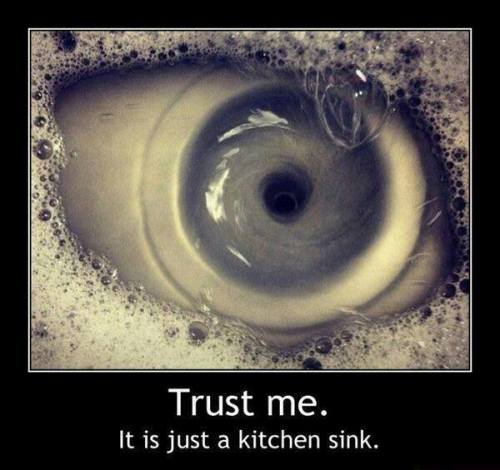
I saw this image a few weeks ago on Pinterest, and found it fascinatingly creepy.  It’s a great example of perspective, thwarting assumptions, and the fact that the image automatically raises certain expectations – until you see the caption.  What our minds initially perceive may or may not be accurate; only when we see the bigger picture, or have more pieces to the puzzle, does that perception or perspective change, or get adjusted to a more accurate overall understanding.  Doing this with words is an art form:  It’s about building expectations and thwarting them without making the reader feel like you’ve drawn them in under false pretences.  If they can look back through what they’ve already read and realize that only their assumptions were wrong – that the writer never misled them, but they misled themselves – then you’ve managed to find that fine line!


kitchen-sink

3 Comments

Filed under Images, Musings, Nuts & Bolts, Plot Thots & Profiles, Writing Exercise

Musings about Advent

For those of you in highly commercialized countries (I won’t name names, but the initials are USA, for one…), before Thanksgiving is past, Christmas decorations have hit the shop shelves.  Before Christmas is really digested, Valentine’s ads appear.  I hope that you’ll bear with me, as I contemplate a holiday between your Thanksgiving, and Christmas:  Advent.

In today’s global village, people around the world are aware of holidays such as Christmas and Easter, though it might not be a part of their indigenous culture or religion; they may even celebrate them, though that be more of a marketing incentive rather than a religious one.  I grew up in Kansas, and though we were aware of Advent as an event leading up to Christmas, we never celebrated it – we rarely, if ever, had an advent calendar, or advent wreath of candles.  Here in Switzerland, Advent is like an extended Christmas; our personal advent calendar contains small gifts, and of course chocolate; this year, with a teenager in the house, I also included gag gifts. Our particular form is the Tischibo bags, hung from a rustic red metal heart frame with hooks.

What is the history behind Advent?  What is its true meaning?  Advent, which comes from the Latin Adventus (which is actually a translation from the Greek word parousia), had two meanings:   In relation to Christmas, it is the inner preparation for remembering the first coming of Jesus as a babe into the world as a human, so that he could fulfil God’s plan for salvation for all.  For Christians, the second meaning is a time to reflect on, and prepare for, the Second Coming of Christ, which will be the end of time for Earth (no one knows the day or hour, and so the Bible tells us to be prepared – like someone on call needs to be ready to go when the call comes).  As an event, it begins on the fourth Sunday prior to Christmas; this year that would be the 27th of November, as Christmas itself falls on a Sunday.

There are several expressions of celebrating Advent:  The calendar, the wreath, and  devotions.

The calendar was first used by German Lutherans in the 19th century, and usually begins on the 1st of December.  They can take on any form imaginable, from a simple paper calendar, to gift boxes, or gift bags labelled 1 – 24.  Consecutive numbers are opened one per day from the 1st to Christmas Eve.  Sometimes the calendar includes a Bible verse and a prayer or Christian devotion for that day of the Advent.  There are even some towns that become living Advent calendars; this tradition began in Stockholm, Sweden.

The wreath, usually a horizontal decoration placed on a table, is made of evergreen boughs (real or synthetic) with four or five candles, representing the four Sundays prior, and Christmas day.  The four are usually red, with the white Christmas candle centred.  One candle is lit on the first Advent Sunday, with an additional candle lit each week.  The concept originated with German Lutherans in the 16th century, though the modern form didn’t catch on until the 19th century, likely in conjunction with the calendar.  For a detailed history of the wreath, click here.

The devotions are readings from the Bible accompanied by a prayer, to prepare the heart and mind for the Reason for the Season – the coming of Jesus as a man to Earth.

If you’ve never made an Advent calendar or wreath before (there is still time to prepare one!), or you want to try something new, below are a few examples I’ve collected from Pinterest.  Please share in the comments below what kind you use, or what your traditions around this time of the year are!

This slideshow requires JavaScript.

This slideshow requires JavaScript.

9 Comments

Filed under Articles, History, Images, Musings, Research

Wordless Wednesday no. 9

shiny

4 Comments

November 9, 2016 · 5:09 AM

Wordless Wednesday no. 8

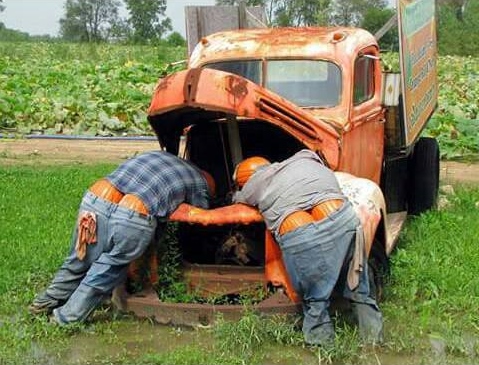
pumpkin-display-1

15 Comments

Filed under Humor, Images, Wordless Wednesday

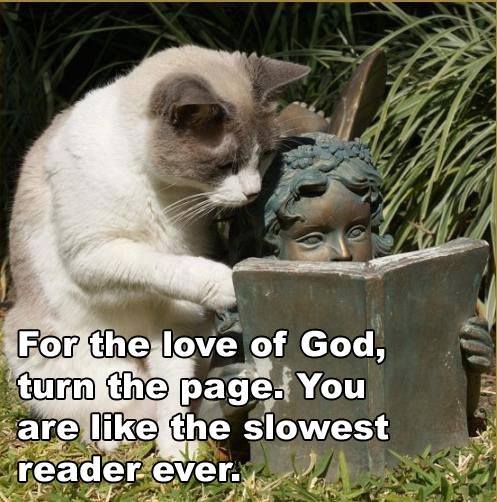
Just for Fun #4: Turn the Page

slow-reader

3 Comments

October 29, 2016 · 5:02 AM

Wordless Wednesday no. 7

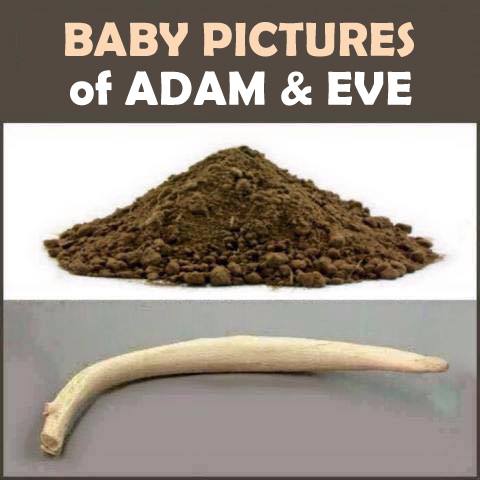
baby-pictures-of-adam-eve

Save

3 Comments

Filed under Humor, Images, Wordless Wednesday

Odd Jobs #14: Virtual Assistants to Worm Farmers

This is the last of my series of odd jobs; along the way, there have been some amazing, some disgusting, and some downright puzzling ones.  Somewhere out there, beneath the deep blue sky, there’s someone thinking, “Why did I take this job, again?”  Having said that, every job has some kind of perk; it’s just that with some jobs, you have to dig into the muck to find it.

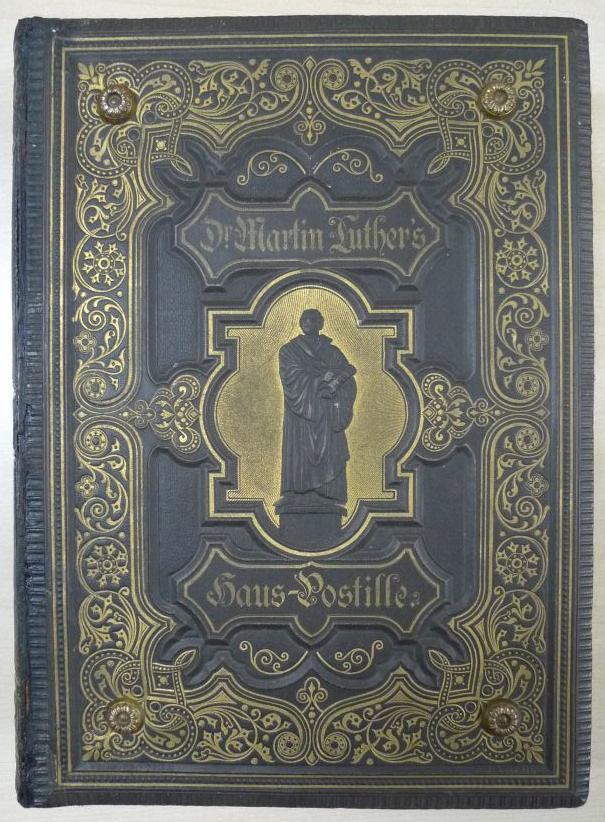
martin-luthers-haus-postille

A friend of mine had a grandfather who was a rubbish collector back in the 1950s here in Switzerland; times were slim for the family, and he used to bring home things he thought were interesting, useful, or perhaps valuable that he’d found in the rubbish.  One of those things he’d brought home was a large tome, with gilt embossing and brass knobs on the pictorial cover board (these “feet” are at the four corners, and were used to support the book cover and protect it from wearing on the gold leaf when it sat on the wooden pulpit), and deep, plain embossing on the back board.  That someone would throw it away rather than giving it to a charity is beyond me.  Be that as it may, it was discovered to be Dr. Martin Luther’s Haus-Postille (sermons), with illustrated lithograph engravings throughout, by W. Walther, from Dresden, dated from 1890.  It was passed down through the family to my friend, and she had no use for it; she knows I collect books (including antique books) and have a library, and thus it has now come to me.  It is in excellent condition, and is being well looked after now, despite its close call in the rubbish!  [The image does not do justice to the brilliant golden gilt that still shines clearly on my copy, even after all these years…]

So, on with the final lineup of odd jobs!  The first and last links take you to another list of odd jobs, which includes the two here.  A couple of the jobs seem a bit dangerous to me – either flying off the side of a water slide that doesn’t quite meet safety standards yet, or dangling by a rope off of a glass building… if I had to choose I’d take the water rather than London pavement as a place to land.  Safer, but not necessarily easier, is the job of a voice-over artist; dubbing languages for films, or filling in the voices for rough tracks in animated films, or even – and I find this particularly unethical, as a singer myself – to be paid to replace a recording artist’s voice, such as the scandal involving Milli Vanilli, which destroyed their careers.  Enjoy browsing the final list; perhaps in the future at some point I’ll bring along another addition or two.

  • Virtual Assistant
  • Virtual Head Hunter
  • Voice-Over Artists
  • Water Slide Tester
  • Wax Figure Sculptor: Mold wax to create figures, often for, but not limited to, the human form. Figures are often made in the likeness of people who have achieved historical or celebrity recognition.
  • Wig Maker: Put simply, they make wigs, but the process is anything but simple. First, wig makers create a plastic model of the wearer’s head and hairline, and then they transfer the mold onto a padded canvas similar to the client’s general head size, covering it with wig lace. Using a needle, they knot and pull thousands of hairs, one by one, through the mesh cap. Once all the hairs are in place, the wig is styled to the wearer’s preference.
  • Window cleaner for the Gherkin (London): It takes a team of 9 cleaners 10 days to complete the task, as the building stands 180 metres tall and consists of 7,429 panes of glass.
  • Worm Farmer

14 Comments

Filed under Articles, Images, Lists, Musings, Research

Wordless Wednesday no. 6

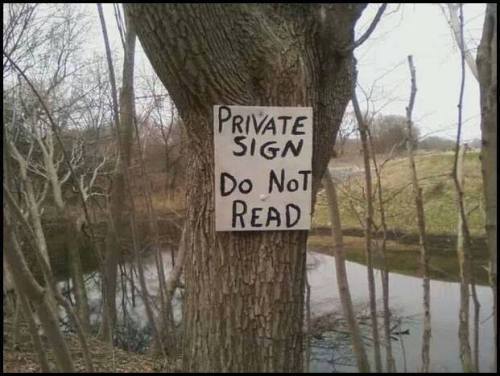
private-sign

Save

9 Comments

Filed under Humor, Images, Wordless Wednesday

Just Smile

smileHave you ever stared at a word for days on end?  I have, and coming to the end of the tunnel is bliss.  When writing, I tend to use “place-markers” – anywhere from a single word to a rough-sketch of a scene that I know will need to be fleshed out, moved, replaced or “cannibalized” for a concept.  Some people like to use special writing programs, and I’ve tried a few over the years, but I tend to do all of my writing in Word; it’s got review “post-its” I can type into the side margins, and I’m usually more organized than programs like Scrivener anyway.  When I go back over such sections, I take off my writer’s hat and put on my editor’s cap, and dive in.
I’ve been editing a manuscript, and at the moment I’m focusing on repetitions; the most recent word was smile.  Each time I came across the word, I needed to read the context, think about whether it should be removed, replaced, the sentence reworded, or left as-is.  I’ve discovered that there are not actually that many synonyms for “smile” in the English language; smirk, sneer, grimace, simper, scowl, grin… they each have their own connotations, and are not simply interchangeable – each choice will effect the overall meaning in distinct ways.   as William Blake once said, “There is a smile of Love, And there is a smile of Deceit, And there is a smile of smiles In which these two smiles meet.”  Sometimes it can simply be left out – the context informs the reader about which emotions are being displayed by the characters.  Characters in love have a different smile for each other than for frenemies, or antagonists, or superiors, or subordinates, and each situation in which various characters are combined might result in a different word for smile.  And does one smile warmly, or coldly?  Broadly or tight-lipped?

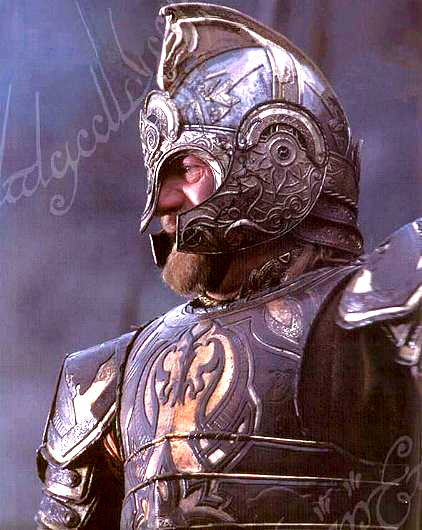
theoden-king-of-rohan-lord-of-the-ringsSometimes I wonder if I think far too much about such details; but I’d rather think about it once too often and get it right than not.  It might have seemed a tad extravagant for Weta Workshop to emboss the inside of King Théoden’s breastplate armour for the Lord of the Rings: The Two Towers, and Return of the King (in which the character appears), knowing it would never actually be seen in the films; but Bernard Hill, who played the king, said that such details helped him easily slip into the role, even feeling the nobility of a king, and it thus enhanced and influenced his performance.  As visuals matter in epic films such as LoR, words matter in writing a novel, drawing the reader into the imaginary landscape of the world the author creates. ever-after

They also matter in script-writing:  In Ever After, starring Drew Barrymore and Dougray Scott, some of the dialogue lines are just downright embarrassing – especially those of Anjelica Huston:  They go to the trouble of being opulent and period-accurate in costumes, locations and scene dressings, and then throw in lines like Relax, child and I’m management!  The editor in me cringes.

One man’s smile is another man’s smirk; one woman’s grin is another woman’s sneer.  Now, on to the next item on my list of editing revisions!

Save

Save

18 Comments

Filed under Articles, Images, Musings, Nuts & Bolts, Research, Writing Exercise

Wordless Wednesday no. 5

7 Comments

Filed under Humor, Images, Signs, Wordless Wednesday