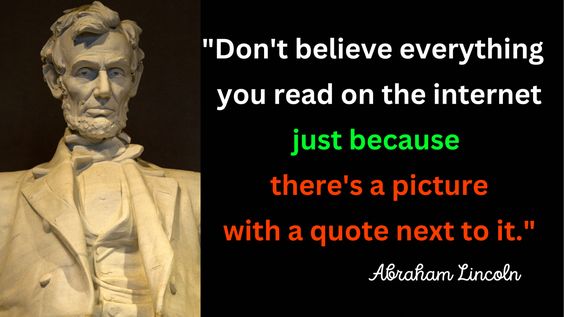
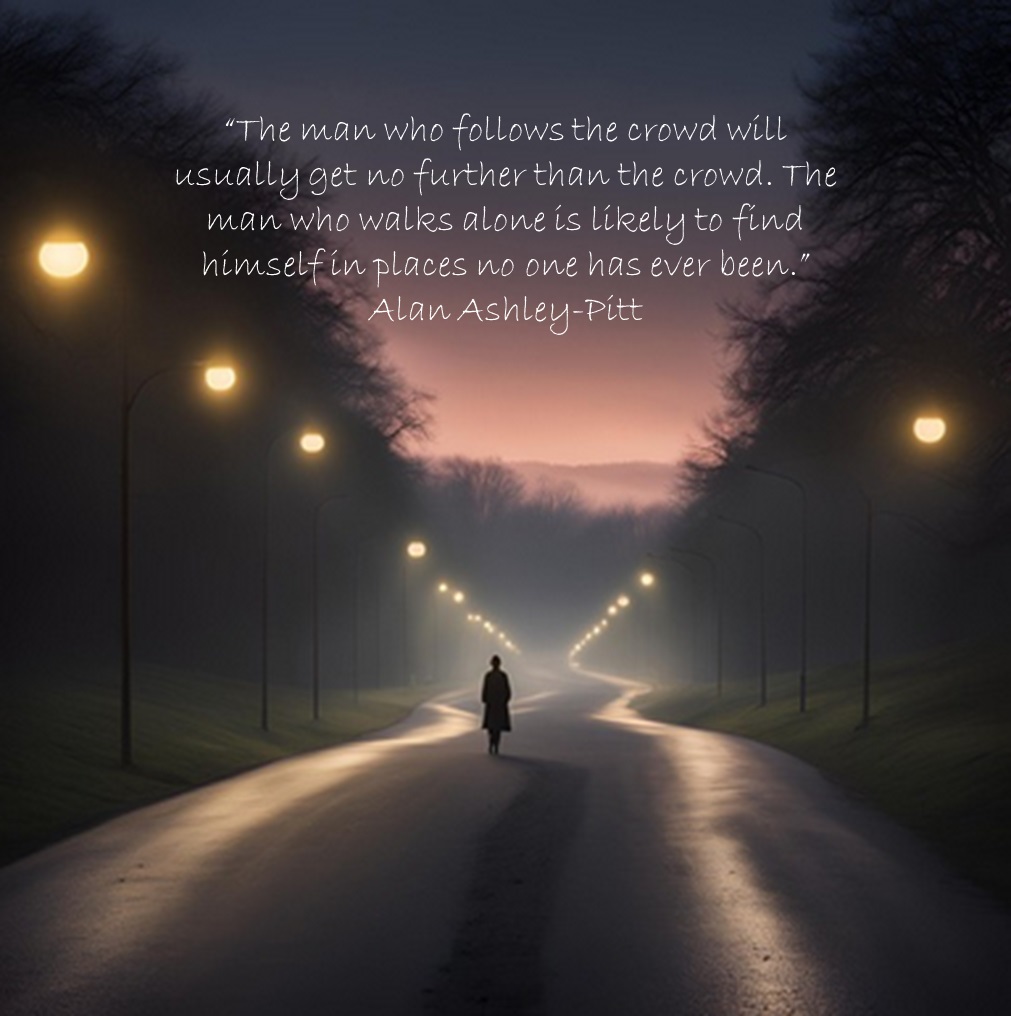
If you’re like me, you might come across a good quote and not think any further about the name attached to it; did that person really say that? I’ve seen quotes attributed to one person but which I know were actually said or written by someone else. Sometimes, a quote is drawn from someone’s writings, letters, essays, or journals from the past. Now, with the dawn of AI upon us, algorithms begin to feed off of their own creations—whether the first effort was accurate or not—which in turn disseminates falsehoods so frequently that most people begin to believe them. It’s important now more than ever that we pay attention and use discernment; don’t believe everything you see or read, but test it. This image is a classic case in point:
So who was Alan Ashley-Pitt? “He” was, in fact, a name made up by a greeting card and poster company headquartered in Santa Barbara, CA, in the late 1960s and early 1970s. The company needed a name to quote for the sayings made up by employees for their cards, decorations, and posters. Though the company was out of business by 1974, many of its creations live on in the Ashley-Pitt quotations. In a way, it’s ironically fitting that a made-up persona’s quote should be imposed on the AI-generated image (below); unfortunately, the AI programs I tried couldn’t grasp the concept of a fork in the road with a crowd on one road and a lone man on the other. It just goes to show you that the human imagination is more creative and able to grasp abstract concepts better than any AI… so far!
The idiom “Catch-22” comes from a book of the same title by American author Joseph Heller (1923-1999). The term originally referred to a military rule whose provisions are mutually frustrating. Heller used Catch-18 instead of Catch-22 when the first chapter of his book was originally published in 1955. He changed it by the time the entire book was published in 1961 because his publisher had already published a book that year with “18” in the title (Leon Uris’ novel, Mila 18). So in 1961, the phrase Catch-22 first appeared. It was first used figuratively in 1971 in Atlantic Monthly magazine. As far as the form goes, it is usually hyphenated and with a capital C, as that is the way Heller originally wrote it.
Since the author’s first usage of the idiom, it has taken on a life of its own: Today, its broader meaning is a paradoxical situation from which an individual cannot escape because of contradictory rules or limitations. It has also been used as a mnemonic for the symptoms of DiGeorge syndrome.
One particular quote from Heller is thought-provokingly insightful: “Everyone in my book accuses everyone else of being crazy. Frankly, I think the whole society is nuts – and the question is: What does a sane man do in an insane society?” In a way, this is perhaps an example of a Catch-22 for the sane person: If they stay in an insane society, they may lose their sanity; but by leaving such a society, they throw away any chance of bringing it back to a state of reason. Social and political polarisation are both poisons that infect society.
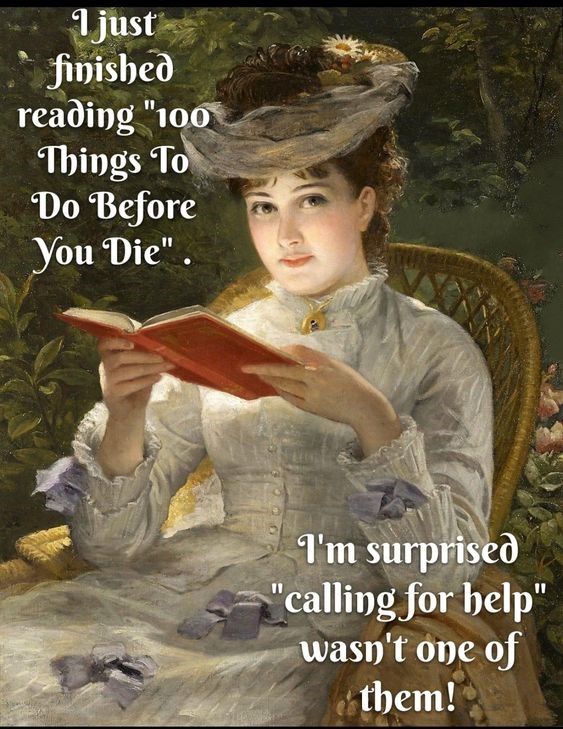
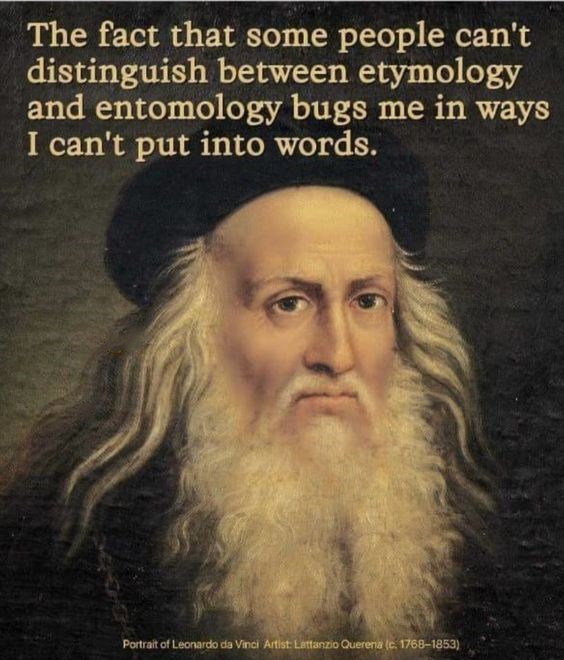
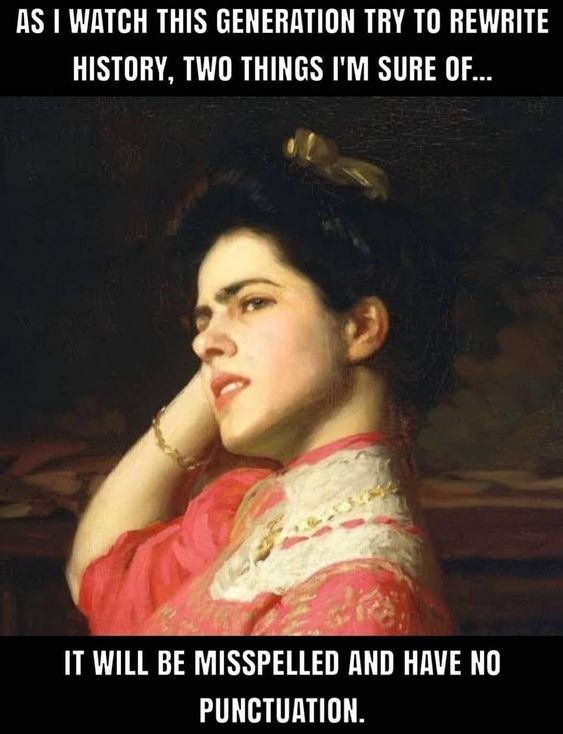
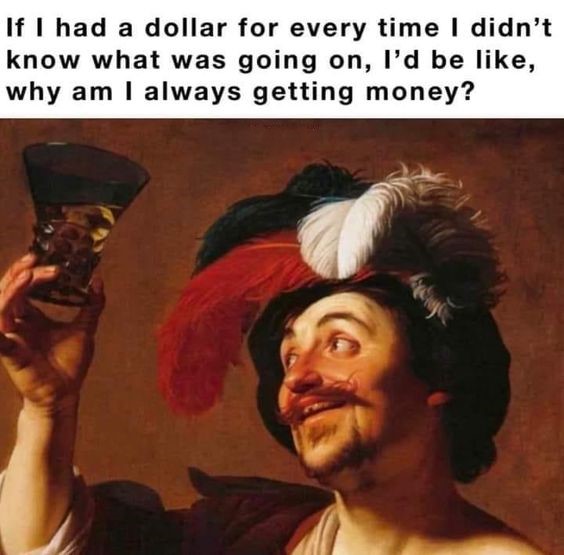
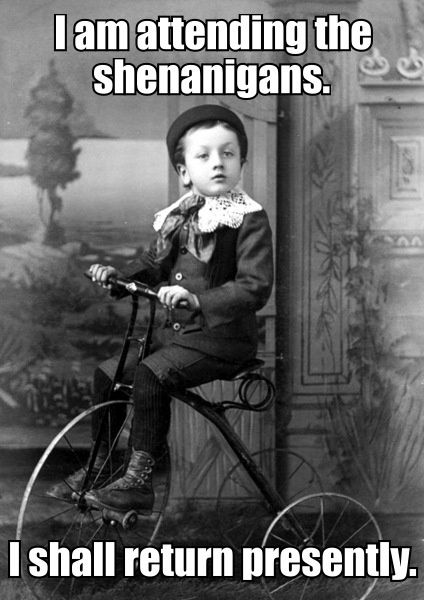
People’s creativity in seeing the world with a sense of humour is a beautiful thing. One form that creativity takes is memes – images with superimposed texts. Antique portraits – paintings from artists of the 18th and 19th centuries – have regained popularity through their use in what I refer to as vintage memes.
Here are a few that somehow hit a funny bone in me; I hope you enjoy them, too!
Picking up from where I left off in February, here are a few more everyday phrases that have been gleaned from the times when ships at sail were the most influential source of importing new ideas, foreign words and catchy tunes (such as shanties). The first of these phrases might be recognized by Star Trek fans, as the captain usually used this term or something similar to hand over the authority of the ship whenever he left the bridge.
Take the Conn: A term used to take over navigational duties on the bridge of a ship (this comes from the mid-1800s, during the age of iron-clad warships). Idiomatically, it means to take control of a situation. The word conn is either a noun or a verb and comes from conning tower – a raised platform from which the entire deck and surrounding environment can be observed.
Sailing Close to the Wind: Strong winds can be just as problematic at sea as no wind; strong winds can unexpectedly shift and take control of a boat’s direction, and many sailors will lower their sails until more favourable conditions exist. To use strong winds for sailing is risky and unpredictable but sometimes necessary; the modern term refers to taking risks that may be unreasonable, being close to breaking the law or going too far.
All Hands on Deck: A call to action – everyone must assist in resolving a problem or addressing a situation. During inspection or trouble, all hands were called to the deck; everyone needed to be present or accounted for, and working as directed.
On the Right Tack/Track: The correct course while sailing requires you to tack or move the sail to catch the wind to keep you on course. To take the wrong tack means to be off course, heading in the wrong direction. Tack has changed to track in a more modern language. Today it refers to Taking the line/course of action that leads to the correct conclusion.
Overboard: If cargo or people went overboard when sailing, the call “overboard” would be yelled out to draw attention to the event. With luck, the items or people could be recovered, but unfortunately, this was not often the case.
Abandon Ship: When a ship was sinking or being overrun by an enemy ship, sailors would need to abandon their posts and escape. The call to abandon the ship was considered a last resort.
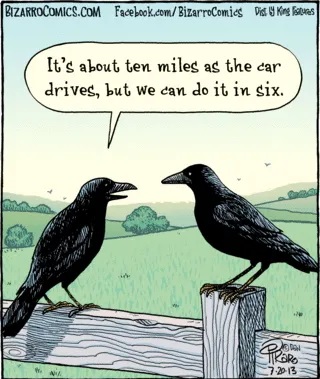
As the Crow Flies: After crossing the oceans, sailors would watch for birds to detect nearby land. Following the direction of birds, such as a crow or seagulls, got them closer to shore to follow it to a port. Crows fly straight, and so it refers to the shortest distance between two points.
Tide Over: When a ship could not get under sail due to poor winds, they would ride the tide until the winds returned. If something tides one over, it will last until new provisions can be obtained or until conditions change.
High and Dry: If a ship was caught in low tide or ran up on the shoals, it might end up being stranded with no hope of recovery. The term was to be caught high and dry, as in up out of the water. It’s used today to describe the feeling of being abandoned, stranded, or helpless.
Sink or Swim: Tossing a person overboard resulted either in them sinking or swimming. The term was made popular in swashbuckling movies featuring pirates deciding on whether they should spare their captives or not. Today, it refers to either failing (sinking) or succeeding (swimming) in a task or an endeavour.
Some people collect things like stamps, postcards, or coins. I’m drawn to unique doors, locks, and keys.
Keys are something everyone has; whether it’s a house key, a car key, or an inner door key. Modern keys come in several forms: Lever (usually used in padlocks or furniture), pin tumbler, dimple, computerized laser (often used in cars), Nutech, cross, skeleton, barrel, transponder, cards, Abloy, and many more.
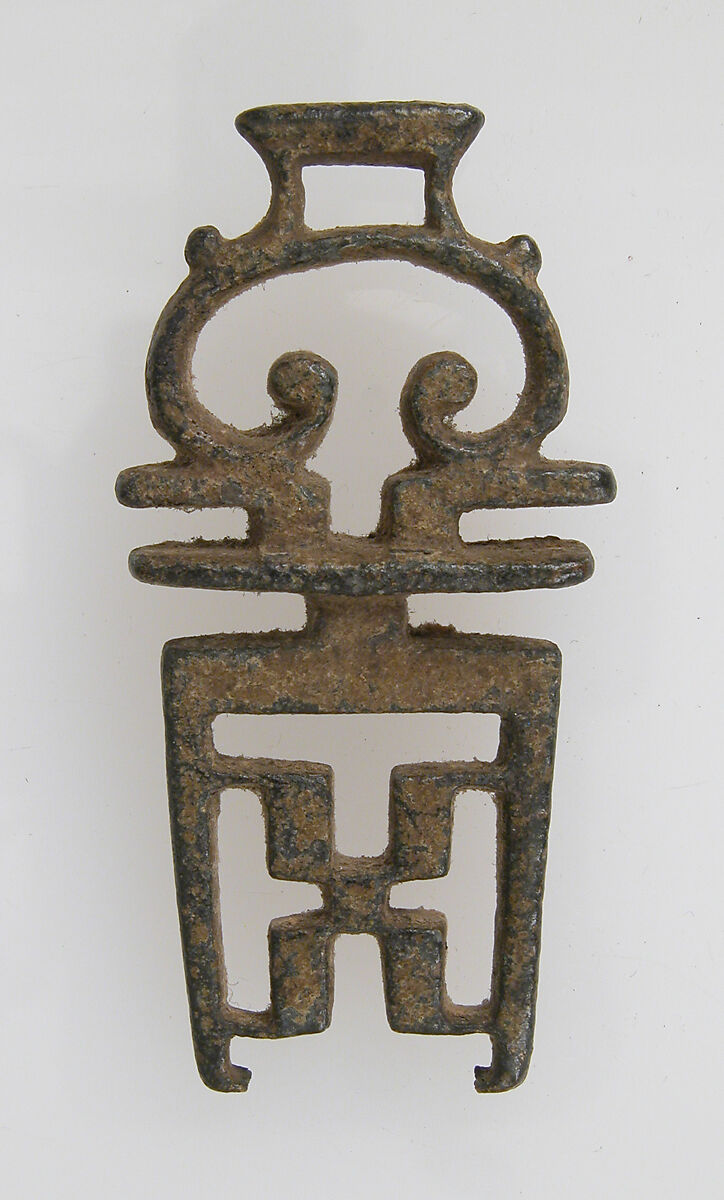
We tend to think of skeleton keys as antiquated, but here in Switzerland, even modern room doors within a home have skeleton keys for their locks (though we use dimple keys on main doors). Even though they’re still used, skeleton keys are one of the oldest forms of keys in history. The Romans had elaborate keys that were nearly as wide as they were long, but they already had the typical ringed head we think of when we think of a skeleton key; it made it easy to slip in a finger and pull the key out of the lock.
Roman Key Latch as old as 1st Century AD – Metmuseum
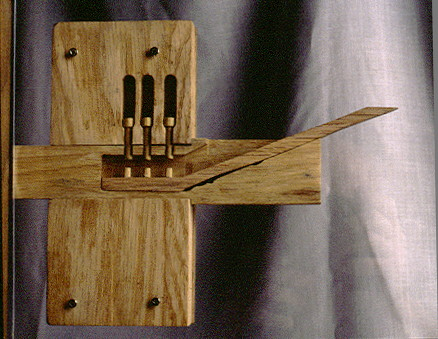
The oldest key found was in the ruins of Ninevah (the capital of ancient Assyria), going back to around 4,000 BC. It was a simple wooden prodder inserted into a hole in a door to lift pegs within a wooden bar used to hold the door securely from the inside; it could only be secured from the inside and was easy to open with any pegged stick. This type of wooden pin lock was common in ancient Egypt, but they’ve also been found in places like Japan and Scandinavia. It is alluded to in the Bible in such passages as Nehemiah 3:3,6,13-15 or Isaiah 22:22-23.
Ancient wooden peg key lock
The Romans improved on the idea and began making brass and iron keys with the ground-breaking technology of projections (wards) inside the lock that required a specific combination to be opened, thus requiring a specific key. The warded key outlasted the Roman Empire itself by more than a thousand years. Though these locks were easy to pick, no major advancements were made in the design until the late 18th century, when Robert Barron invented a new locking mechanism that we essentially recognize as the tumbler lock. Joseph Bramah improved further on the design a few years later, using a cylindrical key with patterned notches that aligned with the metal slides within the lock. The Bramah lock is still used and sold today (after finishing this article, take a moment on Google Images to search “Bramah lock” – you’ll see a wide range of old and new examples). In 1818, Jeremiah Chubb improved the design by adding a retaining spring that held back a tumbler when shifted by the turn of the wrong key; this prevented not only the bolt from being lifted but indicated that someone had tried to pick the lock; they were known as detector locks.
Over time, many more improvements and refinements followed, until today’s key styles are so varied that a comprehensive list would be lengthy – there are variations within categories of keys; some cars today no longer even require a key to start. But to adapt the old adage of “where there are horses there are horse thieves”, where there is a lock there will be a lock pick. Even keyless cars are not theft-proof.
How many keys do you use daily? How have key styles changed in your lifetime?
Throughout history, people have always been fascinated by thinking beyond their own known world; before widespread writing and reading, ancient cultures thought about their own mortality (which, in some ages, wasn’t that far off) and the afterlife. Various cultures prepared for the afterlife in their own ways: The Egyptians removed organs and embalmed the rest, making sure to send on the heart & co. in separate jars (except the brain – who’d need that in the next world?), then sent them on their way with an army of servants (killed for the occasion); the Vikings buried their most honoured dead within a ship with their favourite animals and servants (ditto). Other cultures built pyres to send their loved ones up in smoke.
When writing came along, at first it was used to capture the past and the natural world, ala Pliny the Elder; poems, sagas, verbal tales and folklore began to be recorded; we have such writings still with us today: The Greek Epic Cycle, the Orkneyinga Sagas, the Heimskringla, the Poetic Edda.
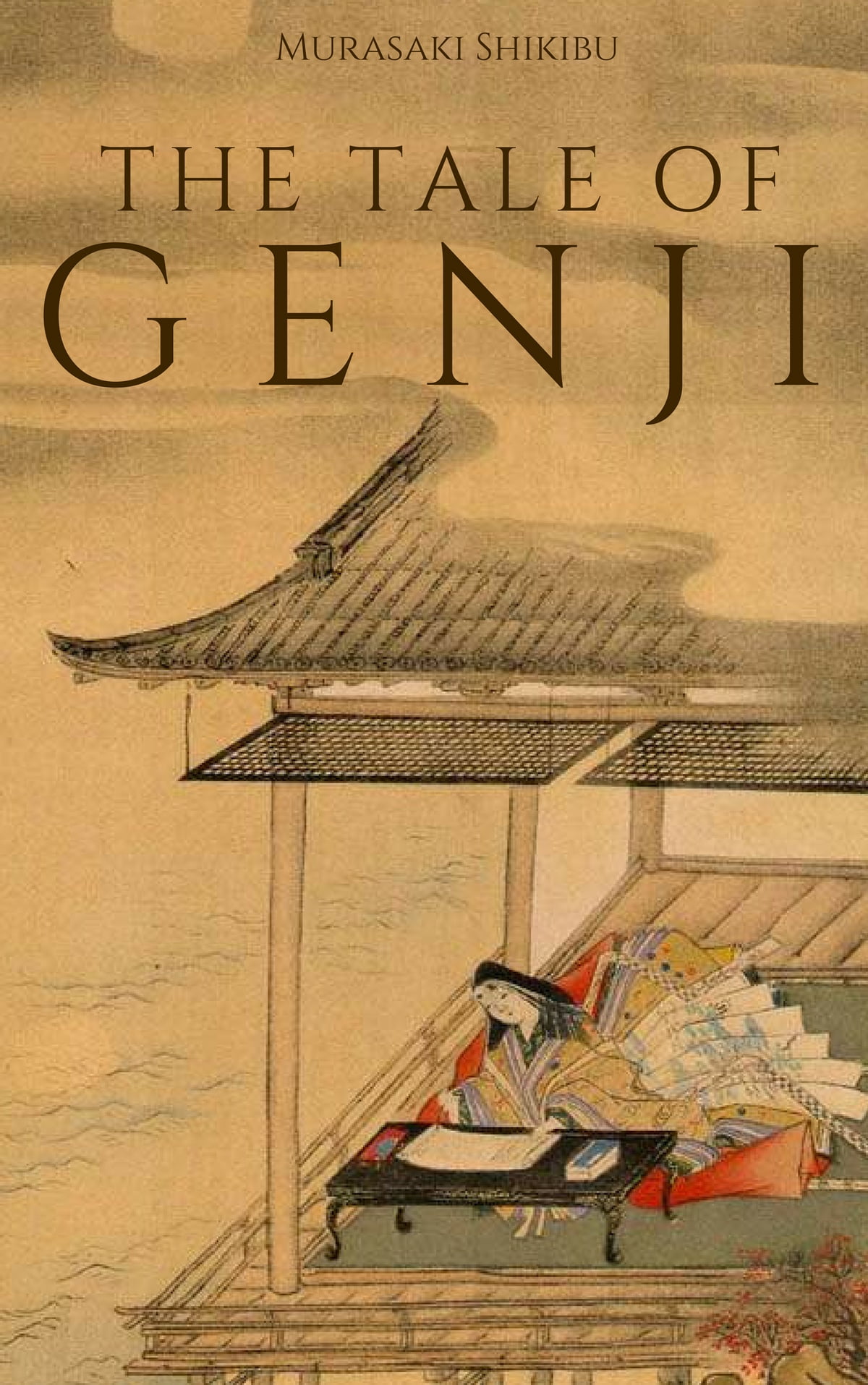
The first novel came along only 1,000 years ago: The Japanese epic The Tale of Genji was written by a woman, Murasaki Shikibu; novels were, for several centuries more, considered on the bottom rung of the literary hierarchy ladder, far behind “serious works” like history. Ironically, Mark Twain referred to history as “fluid prejudice”; it was nearly always recorded by powerful (white) men – hardly ever by a commoner, a member of an ethnic minority, or a woman. The interpretation of events was firmly in the hands of the conquerors. Because of that fact, for instance, we know more about Rome’s version of ancient Britons (Picts, Celts) than we do from their own artefacts; most Celtic and Pictish art is found outside of the UK – many carried off by the Vikings, but that’s another tale. Hollywood has helped perpetuate some of those ancient Roman notions (think of a blue-faced Mel Gibson in Braveheart).
In fact, we don’t even know what the Picts called themselves – the term derives from the Latin Picti, first seen in the writings of Eumenius in AD 297. It can be interpreted (dangerous words) as “to paint” – but there is no evidence that any people groups in northern Britannia painted themselves. Picts is simply a generic term for any people living north of the Forth-Clyde isthmus who fought the Roman Empire’s advancements into their territories. Again, the ink of history flowed from a Roman stylus.
Even Jane Austen herself didn’t begin publishing her novels under her own name. She was a single young woman – for shame that she would dare stain the male-hallowed ground of literature. The saga of how she got published speaks to her tenacity and the support of her family. But she got the last laugh, becoming famous within her (short) lifetime, and she is far better known today than any of the stuffy old men who wrote “proper” books of her day.
The insatiable fascination with other perspectives than our own explains why novels are so popular today. They take us into another time, place and situation, leading us through a story that, if written well, we can relate to and perhaps learn something from. In 1726, Jonathan Swift gave us Gulliver’s Travels. Though he originally wrote it as political satire, to “vex the world rather than divert it”, we know it still today. The fascination with someone being a giant in one land and a miniature in the next grabs our imagination; he travels to floating kingdoms, to an island of immortals, a la Death Becomes Her, and a land of talking horses.
Book Nook (Instagram repeat)
In the age of internet, visual arts have expanded as far as the global imagination can span: Not only paintings or drawings, but even crafts take us into another perspective. I recently saw a series of images in which people have taken the humble walnut shell and turned them into tiny worlds with bookshelves, ladders, lamps, beds and creatures. Book nooks are popular, too: A tiny village, street, or room within the space of a book on a shelf. Science fiction art takes us off-planet.
Films are visual perspectives that take us into other worlds, times and places: When George Lucas showed us a “commonplace” bar scene on Tatooine in the Mos Eisley Cantina in Star Wars, he blew our minds and kicked off a new era of visual storytelling. Avatar took us to another planet and another perception of reality, all the while being an allegorical tale of ecological care vs. abuse. Somewhere along the way, sometime in your life, I’ll bet you’ve been fascinated by a different perspective, whether presented to you through a book, a documentary, a sermon, a play, a film or a conversation. What did you learn from that encounter? How did it change you, or help shape your perspective? And what is your favourite “escape”: Films, books, visual arts, or music? Please comment below!











 Stephanie Huesler
Just for Fun
2 Comments
December 23, 2022 · 6:32 PM