



Category Archives: Quotes
Quintus Quotes: Witty Comebacks
Back when insults had class, words could be sharper than a two-edged sword; in fact, idioms that use the imagery of swords vs. words have been around for thousands of years. I wonder if our modern society, with its political correctness and instant comments, has somewhat lost the art of refined speech and reflective commentary; perhaps we can rescue witty repartee from extinction by writing, thinking, and speaking with more thought and thoughtfulness. In the meantime, for all you logophiles out there, here are a few witty comebacks from days gone by:

Abraham Lincoln vs. Stephan Douglas, after Douglas called Lincoln “two-faced” during a debate


Author Ilke Chase vs. unknown actress

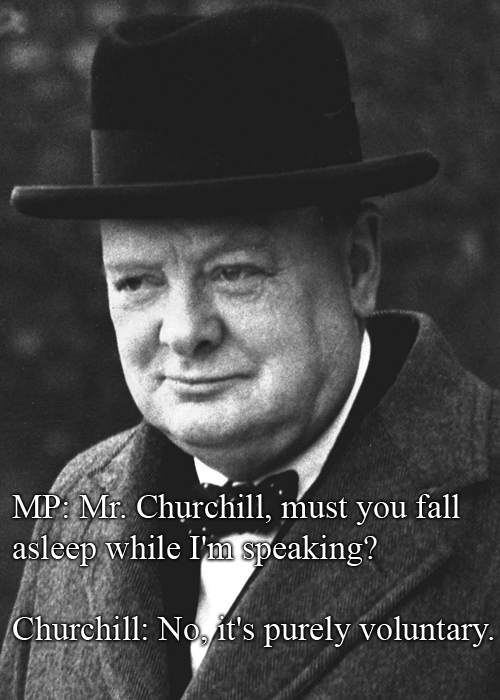
Rules of Writing: Elmore Leonard
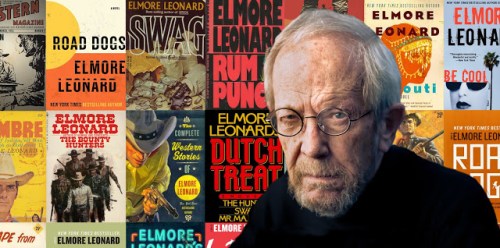 Elmore Leonard, best known for countless novels and their film adaptations, such as Get Shorty, Jackie Brown and Out of Sight, was known for this gritty writing style and strong dialogues.
Here are a few of his gems of advice for writers (with my comments in parentheses):
- “If it sounds like writing, I rewrite it.”
- “Try to leave out the parts that readers tend to skip.” (Think: thick paragraphs of prose; boring lists; role calls that seem to be there more to remind the writer who’s in the scene than to entertain the reader.)
- “If proper (grammar) usage gets in the way, it may have to go. I can’t allow what we learned in English composition to disrupt the sound and rhythm of the narrative.” (This advice should follow the adage, however: First learn the rules; then you’ll know how and when you can break them.)
- “Never open a book with weather. There are exceptions. If you happen to be Barry Lopez, who has more ways to describe snow and ice than an Eskimo, you can do all the weather reporting you want.”
- “I never see my bad guys as simply bad. They want pretty much what you and I want: They want to be happy.”
- “At the time I begin writing a novel, the last thing I want to do is follow a plot outline. To know too much at the start takes the pleasure out of discovering what the book is about.”
- “It doesn’t have to make sense, it just has to sound like it does.”
Filed under Lists, Nuts & Bolts, Plot Thots & Profiles, Quotes
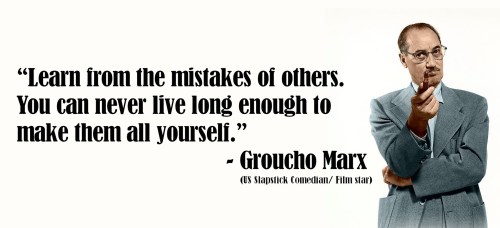
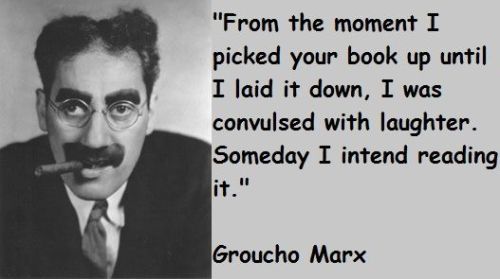
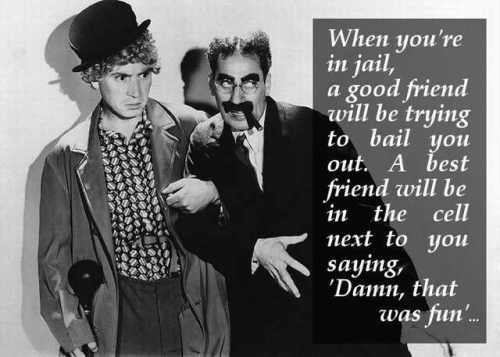
Quintus Quotes: Groucho Marx
Julius Henry Marx (1890-1977) is best known as Groucho Marx, a member of the Marx Brothers comedy group (along with three of his brothers, Harpo,and Chico and Zeppo). He was known for his rapid-fire wit and snappy comebacks.
He also once said, “I get credit all the time for things I never said.” A case in point is a quote that is famously attributed to him, though he denied ever having said: When Marx was hosting a television show called You Bet Your Life, he asked a contestant why she had chosen to raise such a large family (19 children), to which she is said to have replied, “I love my husband”. Marx supposedly retorted, “I love my cigar, but I take it out of my mouth once in awhile.” Though the show was pre-recorded for editing purposes (he was known for innuendo-laced remarks), there was never any footage that contained such a remark.
Groucho’s career spanned seven decades, and his famous grease-paint eyebrows and moustache are still recognizable today, imitated and homaged in the arts in various expressions (just google “groucho marx caricature”!). So without further ado, here are five of my favourite quotes:


Quintus Quotes: Mark Twain
I love quotes; good ones take an entire concept and condense it down to one or two lines. Some are pithy, some profound, some obscure and some obvious, but most always, they make you stop and think. They often relate universal conditions of the human existence, whether that quote comes from a present-day person or one that lived hundreds of years ago.
I often use quotes in my articles here, but I’ve never really had titled posts dedicated to them; I like to use alliterations, but “quote” doesn’t rhyme with anything practical in English – so (naturally) I went with Latin. [For the few Latin aficionados out there, please let me know if I’ve used the wrong form… there aren’t exactly Latin dictionaries floating around.]
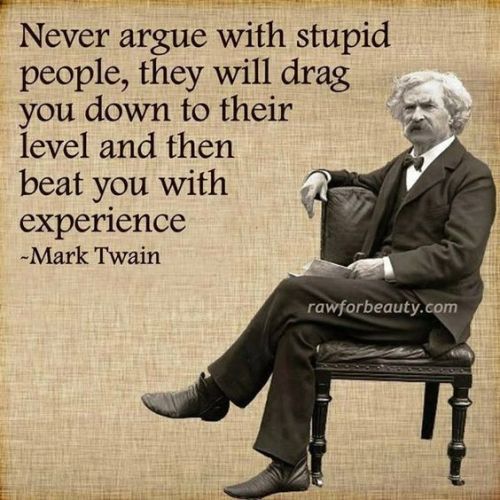
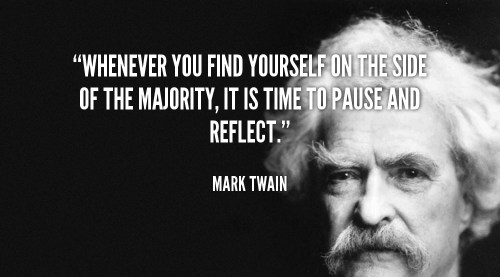
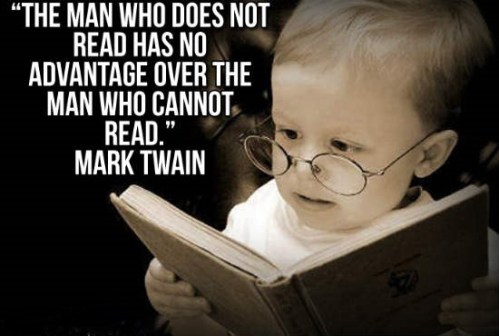
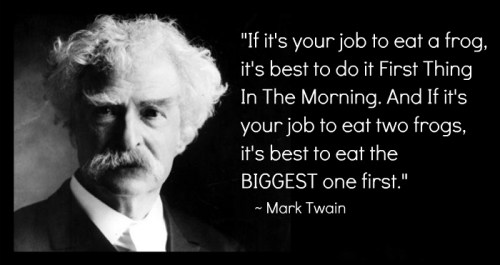
I’d like to kick off with one of the wittiest writers I know of, Mark Twain. Here are five zingers (and I apologize in advance for the grammatical errors – I didn’t make the jpegs!); enjoy!

Novels Worth Reading
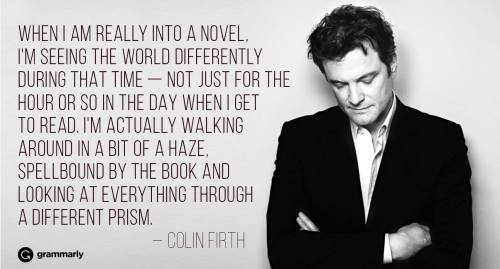
As a novel writer, I’m first and foremost a reader; I love to read, I love to buy books, smell them, feel them, upload them… any form is fine by me. I want the books I read to be witty, intelligent, and well developed in terms of plots, characters and environments.
Kitchen Sink Realism
Everyone has different tastes – that’s why there are so many different genres; but for me personally, there’s also a list of things I don’t want in a novel: I don’t want to be confronted with messy lives dealing with self-inflicted problem after problem; I don’t want tragic or sad or bitter endings; I don’t want to be confronted with the grit, grime, blood and gore of dysfunctional lives that end up learning nothing, making no character arcs, and end up in the mud by the end of the tale. This genre description actually has a name: Kitchen Sink Realism. It was a cultural movement in Britain back in the ‘50s and ‘60s that was portrayed in films, books, plays, and art – the grit, grime, anger, disillusionment and harsh realities of realistic social scenarios. It’s what might also be referred to as postmodernism. My personal response to this kind of novel is, “If I wanted that kind of realistic tension, I could just go hang out at the nearest bar.”
A Tough Nut
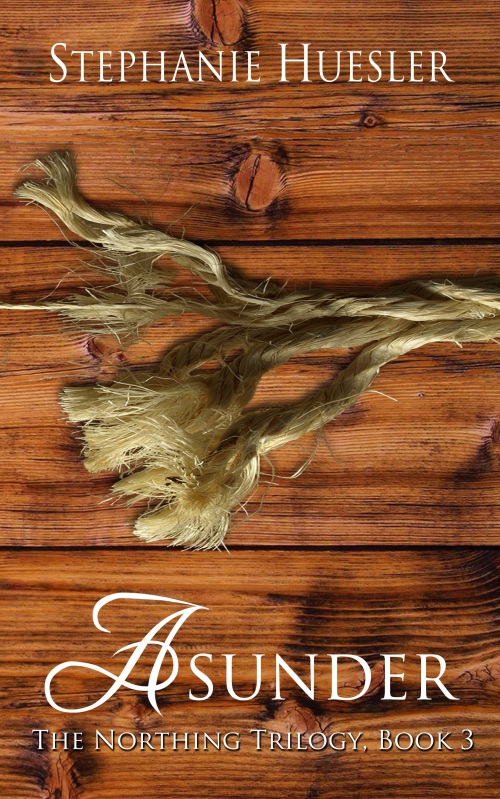
I once had an English student, and our focus was medical English in preparation for their upcoming medical exams (two nurses came together for semi-private tutoring). As part of the lesson we needed to work on basic conversational skills and sentence structures, and I find that the best way to bring in a wide variety of scenarios is usually to do a type of role play – nothing embarrassing, but each person is given a character to put themselves into a situation that they might not normally deal with: They may be a chef, or a secretary, or a customer in a hardware store. This particular student, when asked what kinds of books she read, said, “history and autobiographies or biographies”. When asked what novels she read, she said she found such things ridiculous and a complete waste of time (this was back before I became an author!); she categorically refused to even try to put herself into someone else’s shoes for the scenarios. My impression of her as a person was that she was narrow-minded, knew it, and was proud of that fact. She was a hard character, and all the time I knew her or met her afterwards, I never saw a soft side emerge, either toward herself or toward others; I often found myself wondering why she’d gotten into the nursing profession in the first place – as a patient, I wouldn’t necessarily want her working on my ward… A line from the novel I’m currently writing (Asunder, the third book in the Northing Trilogy) would have fit her life too: “he has never had the propensity for engendering compassion; I pray he never needs it, as he never gives it.” An epic love story might do her a world of good.
What’s Worth Reading
What I want when I read a book is to be transported into another life, whether that’s in the past, present or future, on this earth, or on another planet, or in another dimension; I want to be entertained, made thoughtful, learn something about the world around me, and learn something about myself. Ideally, I will come away from the experience having been changed, in even a small way. I want to feel connected; somewhere out there is a person I can relate to – whether it be the author, or the character, or other readers that appreciate the same books.
Aside from places and times that are genre-specific, such as science fiction and alien planets in the future, or London in the 18th century, all of the elements of what I like in novels are universal. Humans the world over, in every century, want to feel connected; to feel that they can relate to something someone else is going through; even to have parts of their own life’s experiences explained through someone else’s perspectives in similar circumstances. Above all else, at the heart of every good novel – regardless of the genre – is a story of love; that is the ultimate connection between characters. It may be a child finding the love of a family after being shoved through the knocks of life too much for their age; it may be the hero or heroine finding love; it may be a widow or widower finding love again, or reuniting with true loves; it may be someone coming to the point in their life that they accept and love themselves just the way they are.
On to You!
When you read novels, what is it you’re looking for? I would love to hear about it – please comment below, even if it’s just a few key words!
Filed under Articles, Musings, Nuts & Bolts, Plot Thots & Profiles, Quotes, Writing Exercise
Musings A to Z Challenge: Z
Challenge: Write a short paragraph (100 words or less) daily on a topic beginning with the sequential letter of the alphabet.
Zenith
Astronomical zeniths are easy enough to calculate; it’s the metaphorical ones that get tricky. How do you know when someone is at the pinnacle of their career, or their success? If someone could precisely know the zenith of stock prices and when to buy and sell, they’d make a handsome fortune. The thing about zeniths, on a personal level, is that the word implies an end to growth or progress, and as such, is not something to be desired. When we stop growing, learning, and maturing, we die. Seen in that light, I suppose you could classify know-it-alls as zombies.

Filed under A-Z Writing Challenges, Images, Quotes, Writing Exercise
Musings A to Z Challenge: Y
Challenge: Write a short paragraph (100 words or less) daily on a topic beginning with the sequential letter of the alphabet.
Yarn
To spin a yarn, in the meaning the quote implies, comes from the literal act of spinning a yarn; first recorded in the early 1800’s, sailors would tell tales as they worked on sedentary tasks such as spinning yarns for ropes, or strands of oakum to ram into the cracks between deck boards. Sailors could tell tall tales, and as they were generally superstitious, those tales could grow; most firmly believed in mermaids and sirens and Davy Jones’ locker, and the old sailors would spin yarns to strike terror (or at least respect) into the hearts of the Johnny Newcomes.

Filed under A-Z Writing Challenges, Images, Quotes, Writing Exercise
Musings A to Z Challenge: X
Challenge: Write a short paragraph (100 words or less) daily on a topic beginning with the sequential letter of the alphabet.
X
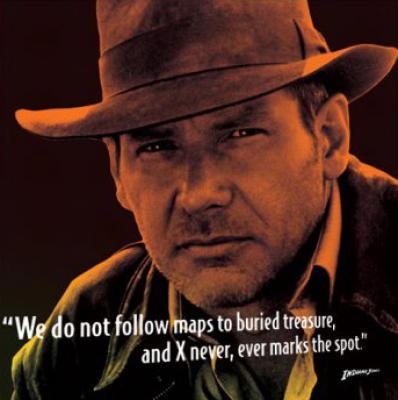
It’s interesting that no other letter in the English alphabet has so many meanings attached to it than the simple X: It marked buried treasure on pirates’ maps (that’s debatable, but it’s one of those urban myths, like horned Viking helmets, that everyone “knows” is true); it provided a legal signature for an illiterate; it’s the symbol of a kiss; it denotes strongest quality, whether on liquor or films; it’s the unknown quantity in algebra, and from there became the symbol for any unknown value or thing (as “A,B,C” represent known, “X,Y,Z” represent unknown); and the list goes on.
Filed under A-Z Writing Challenges, Images, Quotes, Writing Exercise
Musings A to Z Challenge: W
Challenge: Write a short paragraph (100 words or less) daily on a topic beginning with the sequential letter of the alphabet.
Wiring
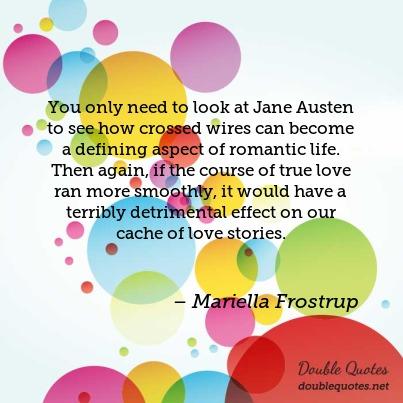
Mark Twain once said, “Truth is stranger than fiction, but it is because fiction is obliged to stick to possibilities; truth isn’t.” Life is usually smoother than its fictional counterpart; true stories made into film, such as It Could Happen to You (Nicholas Cage, 1994) would be “too boring” if they only told the truth. But wires need to be crossed… relationships gone stale must be electrocuted back to life, communication hampered by misunderstandings, and obstacles placed in the path of the hero/heroine to make it more interesting. Crossed wires are the bedrock of most tales, no matter the genre.




 Stephanie Huesler