Category Archives: Writing Prompt

Fieldnotes

A few months ago, I began something that has added a layer of creativity and organisation to my life which, to be honest, is fairly creative and organised as it is. But this little addition adds a nice colour: Fieldnotes.

The original concept of taking fieldnotes comes from the scientific disciplines: An archaeologist in the field, taking notes on where, what and when something was uncovered; a geologist, botanist, ornithologist, or entomologist taking notes on observations, perhaps drawing an illustration of a specimen or a map of the landscape.

Fieldnotes can include writing, diagrams, drawings, or visual clues within an entry such as arrows or other visual connectors. They differ from a daily journal in that the fieldnotes are concise… rambling or expanding on a thought belongs elsewhere, but not in a “quick-draw” situation (pun intended).

Creative thinkers have jumped on the idea for reasons other than scientific observation: As a writer, fieldnotes help me capture snippets of ideas, dialogue, or an observation when out in public (I love to people-watch), or something I read – sometimes the comments on YouTube videos are a great capsule of humour! I also use fieldnotes to keep track of tasks on a busy day – lists of to-dos, to-writes, and so on. When I have a creative project, I take notes on the steps taken – such as making giant flowers that no one else has ever made; how to scale up a smaller version of a crepe paper flower is not always straightforward, and if I have several to make, it helps to have those detailed notes of the prototype phase for the next time around.

Taking fieldnotes might help get your creative juices flowing. If you’d like to start this practice, here are a few tips:

  1. Use a small notebook – one that can fit into a shirt pocket, man-bag, or purse. I’ve made my own with 70gsm blank paper, which allows me to make the same size and style repeatedly. But if you can’t do that, just use something like a moleskin notebook; these come in various sizes, with or without lined pages. There is also a company with books called Field Notes, though they seem a bit pricey for what you can do on your own…
  2. Use a good pen, or pencil, or coloured pencils if you want to sketch something with colour.
  3. You can either take chronological notes, such as dating each entry, or you can organise your notes into groupings: One page per character, scene or topic, or for a to-do list, or whatever you want to capture on the go.
  4. Use visual cues, such as boxes around certain elements or arrows connecting one thing to another. Use illustrations or draw diagrams; attach images from magazines, printouts, etc.
  5. Highlight tags or keywords; consider numbering each page and keeping an index at the back of the book to help you find things later on.
  6. One book that might help kick-start illustrative note-taking if it’s new to you is The Sketchnote Handbook, by Mike Rohde.
  7. Think about how you’re recording things on the page: Do you always want to write straight, top left to bottom right, or do you want to mix things up and write diagonally, sideways, or even backwards? Yes, sometimes that’s a thing; Leonardo da Vinci wrote privately in a mirrored direction, only writing normally when he wanted others to read his notes; he also developed his own shorthand.
Leonardo da Vinci’s Vitruvian Man, with mirrored writing.

I also have my own shorthand for many things; Sometimes I use what I call pigeon Asian (I use this when I don’t want anyone else to read it); it’s something I learned when living in Hawaii. It looks like Kanji (the logographic writing of Japan), but it’s not – that’s all I’ll explain! I also use logographs, such as the ancient Anglo-Saxon rune of daeg, which includes the concept of day, dawn, intuition or breakthrough; I use this to designate those times when I’m writing: Rather than writing, “Today, I wrote/worked on the manuscript for...” I just write that symbol plus the name of the manuscript and details. I have a whole series of such shorthand symbols that I use daily.

While there are note-taking apps available (and I use one, called “Keep My Notes”, on my phone for things like shopping lists or feedback notes for singing students or bands that I take during performances and review with them later), sometimes it’s helpful to get away from digital screens. Sometimes I’ll write whole scenes away from the computer – I don’t use my fieldnotes for that, though it will probably be used to outline a scene that comes to mind until I get to another notebook. Something about writing long-hand sparks a level of creativity that might not come while working at a computer; hand-eye coordination should never be underestimated in creative endeavours. Once a scene has developed enough away from the screen to be integrated into my current manuscript, it then takes on another reiteration as I type it in, tweaking and changing… it’s what I call a “ripening process” as a wine metaphor for the creative maturing process a scene goes through by this method. It gets my head into a new space figuratively, literally, and literarily!

In an age when we are constantly bombarded with visuals wherever we go, sometimes it’s healthy to go back to good ol’ pen and paper. On those days so busy that I can’t remember what I’ve actually done, it’s helpful to look back at my fieldnotes as I write out my thoughts in my daily journal.

Do you write? Do you ever make lists for shopping, chores, people to contact, or things to do? If so, how have you kept track of such things so far? If it’s a system that works for you, brilliant! But if you find yourself wanting to switch things up or wanting to improve your use of time, would you consider taking fieldnotes? Please comment below!
2 Comments

Filed under Articles, Etymology, Humanity Highlights, Links to External Articles, Lists, Musings, Nuts & Bolts, Research, Science & Technology, Writing Exercise, Writing Prompt

Imagination is a Superpower

I’ve taught English as a foreign language for adults for years, from the age of 13 up until Covid put such gatherings on hold. I would often use some kind of exercise that allowed students to think outside of their normal lives, to stretch their vocabulary and to practice speaking and forming sentences outside of their comfort zone. I once had a nursing student, meeting as a semi-private student with another fellow nurse, who categorically refused to do any exercises requiring a make-believe scenario; she called herself a “realist”. Despite reasoning with her, or her friend asking her to participate so that she could learn more, she refused. I found it frustrating as a teacher, but I found it tragic as a writer and creative thinker.

Thinking outside of the box and thinking creatively stretches our brains in extraordinary ways; it promotes creative problem solving, allows us to put ourselves in someone else’s shoes for a moment, and can help us view a situation from several different angles. By thinking into fictitious scenarios, we learn something about ourselves along the way – those things that make us tick, our strengths, or our weaknesses.

For years, I’ve collected interesting writing prompts whenever I’ve come across them; it’s going down the proverbial rabbit hole to follow leads on the internet, but because I’ve collected them willy-nilly, I can’t tell you exactly where they originated – it’s a common problem with online research, and as often as I can, I try to give proper credit to images that I use if they’re not my own; the people out there who offer their creative perspectives, photography talents, or Photoshop skills deserve credit where credit’s due. But it’s one reason that I don’t often share such prompts here, for those of you following who are also writers. Another reason is that there are enough sites out there stuffed to the gills with prompts. What I would like to do today is share an exercise in imagination.

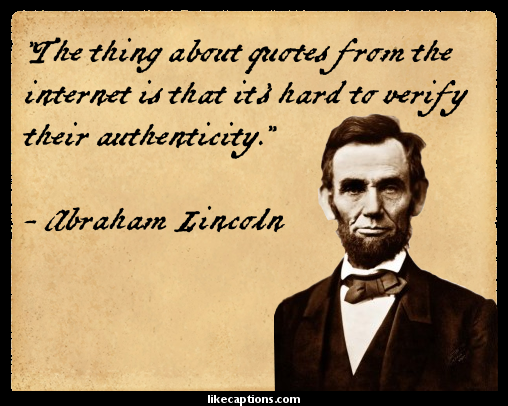
Albert Einstein quotes run rampant on the internet; without a reference book to know what he actually said, I feel that many of them fall into this category:

Having said that, sometimes you can gather the essence of what he probably said by reading “diagonally” through the supposed quotes, and one such sentiment is that Einstein said something like, “Imagination is more important that knowledge; knowledge is limited to all we know and understand, while imagination embraces the entire world.” Mark Twain once wrote*, “You can’t depend on your eyes when your imagination is out of focus.” [* Excerpt from his Complete Works] (By the by, if you’d like more Mark Twain wit, I wrote an article about his views on Switzerland, and the German language – just click here.)

So here’s something to exercise your imagination with:

You have the choice between flight and invisibility; which do you choose and why? What will you do with this superpower?

I’d love to hear your answers in the comments below!

13 Comments

Filed under Articles, Humor, Images, Musings, Quotes, Research, Writing Exercise, Writing Prompt

Obscurities: Petrichor

Obscure 19Today’s obscure word is one which describes something most of us know and love, but which most of us have probably never even thought about naming: Petrichor. It’s used to describe that delicious scent hanging in the air after rain has fallen on dry ground. The word entered the English language in the 1960s, and is a combination of the Greek terms “petra,” which means stone, and “ichor,” which means the fluid that flows in the veins of the gods in Greek mythology.

I grew up quite aware of nature: We would sit outside on porch swings to soak in the atmosphere of a spring or summer rain, sometimes curled up in blankets and usually silent as we listened to the rain pattering off tree leaves, or grass, or hitting the steaming asphalt of the street in front of our house. I could recognize the smell of approaching rain; I could recognize the signs of a coming tornado (that’s Kansas for you!) and could feel the crackle of electricity in the air prior to a lightning storm. Just before lightning strikes, there’s ominous silence, as if all energy has suddenly been diverted to that interaction; after it releases, the sounds of nature pick up again where they left off.

One sound I miss that was associated in my mind with those spring and summer rains is the chirping of cicadas in the evenings. We don’t really have such insects here in Switzerland, though I still have the sounds of crickets chirping at night, and the rain dancing across the forest and housetops, and the smell of Petrichor hanging in the air.

Rain 2

5 Comments

Filed under Articles, Etymology, Grammar, Obscurities, Writing Prompt

Columbus’s Egg

1200px-columbus_breaking_the_egg'_(christopher_columbus)_by_william_hogarth

Columbus Breaking the Egg, by William Hogarth, 1752

At the end of December, I began a new training course in crafting short stories; this has renewed my interest in finding good writing prompts. By focusing on something, you usually begin to see things related to it everywhere you go. For instance, if you’re doing a puzzle and focus on the edges, you’ll begin to see them right under your nose where they’d been all along – you just hadn’t seen them before because you’d been focused on a specific colour or a particular section.

My brain is usually on rapid-fire mode; in any given second, dozens of topics flash through my thoughts. Reaching into this stream and pulling out one particular topic to focus on can lead to interesting, related issues, and Columbus’s Egg is one of the results.

The original thought that I plucked from the stream this morning was, “How do you actually spell Kobayashi Maru?” (I know, right? I’m sure you had exactly that thought as soon as your feet hit the ground this morning; it’s just that my “morning” began this afternoon as I wrote through the night and got to bed at 9:30 this morning…) By looking it up, I came across the apocryphal story about Columbus:

The story goes that Christopher Columbus, while attending a dinner, was confronted with Spanish scoffers who said that, had he not been the first to discover the Americas, someone else would have done so. He made no answer but asked a servant to bring him an egg (presumably a boiled one). He then challenged everyone present: They must try to get an egg to stand on its end, with nothing to support it in that position. Everyone tried and failed; when it was Columbus’s turn, he tapped the tip of the egg on the table, and the crushed, flat end made the egg remain upright. the moral was that a solution is obvious to everyone, but only once it has been found by someone else.

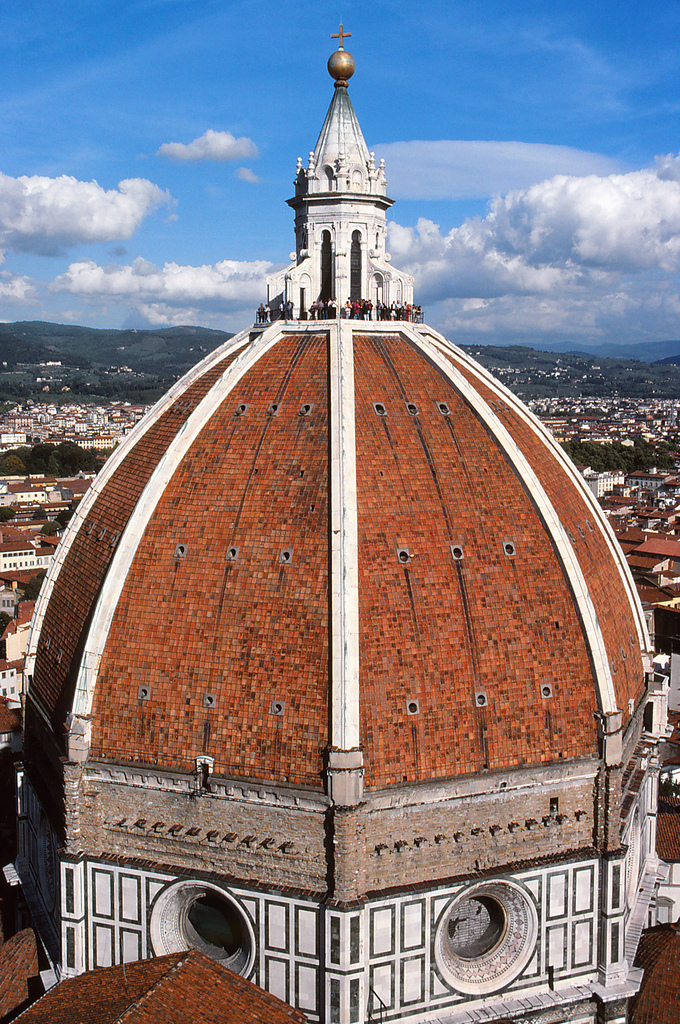
brunelleschi's dome, duomo of florence

the dome of the Santa Maria del Fiore cathedral

The story is recorded in Girolamo Benzoni’s History of the New World, published in 1565, as he related it to Columbus, but it is likely apocryphal as the same anecdote was circulating 15 years previously about the architect of the dome of the Santa Maria del Fiore cathedral in Florence, Italy.

My original thought’s term, Kobayashi Maru, is a term that any Trekkie will be familiar with: It was a no-win scenario designed to test Star Fleet cadets’ characters in the face of certain defeat. The term has gone beyond Star Trek and is used in business to illustrate the importance of changing the rules of the game in order to win, i.e. re-evaluating the foundation of a particular business scenario.

There are other such related terms, such as the Gordian KnotCatch-22, and the Archimedean point. All of these concepts are about thinking outside the box, which is exactly what I try to do as a writer.  If you’re also a writer, catch those thoughts – write them down, and let them foment into something interesting! Keep writing!

6 Comments

Filed under Articles, Etymology, History, History Undusted, Links to External Articles, Musings, Nuts & Bolts, Research, Writing Prompt

Obscurities: Adronitis

Obscure 21Have you ever had that feeling that, when you meet someone for the first time, you already know them? Most of us might think of that person as a soulmate – someone we understand and who understands us without using many words or having to explain ourselves.

Well, adronitis might be the antithesis: It means “the frustration with how long it takes to get to know someone”.  There are people I’ve known for years and tried to understand better, who are still a mystery to me. I can’t feel how they are doing or know what they are thinking, even with a lot of words. One might say with such people that they’re “on another wavelength” – and unless that person is a relative, they usually end up falling out of our lives fairly quickly.

May we all meet more people who are soulmates than those who give us adronitis!


8 Comments

Filed under Etymology, Obscurities, Writing Prompt

Wordless Wednesday #40: Architectural Inspirations #6 – Pools

This slideshow requires JavaScript.

2 Comments

February 15, 2018 · 1:23 PM

History Undusted: Dear Photograph

I love coming across websites that combine humanity with a history that is as unique as the people involved.  I recently came across “Dear Photograph,” a viral concept that encourages people to take photographs of photographs in the same locations, and to tell the story of the original photograph in the submission.  Some of the images could spark an idea for a story or two!  Take some time and browse through this site; you’ll be glad you did.  Just click on the photo below:


Dear Photograph


Originally posted on

1 Comment

Filed under History Undusted, Images, Links to External Articles, Writing Prompt

Quintus Quotes: Dreams

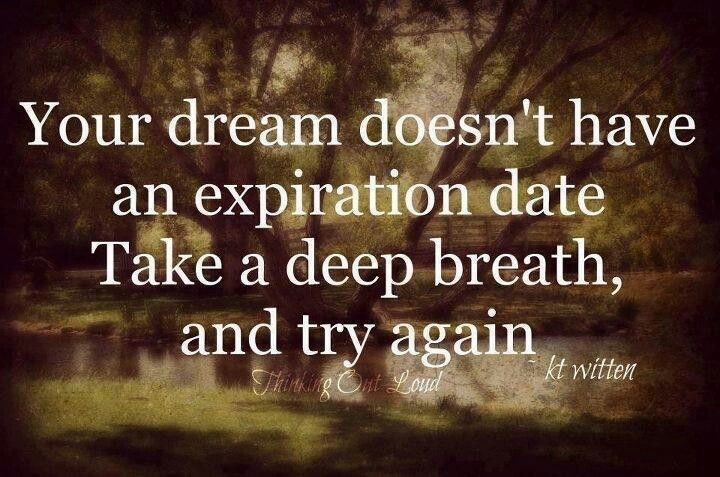
C.S. Lewis - Never Too Old to DreamDream, DestinyColin Powell - Dream, Determination, Hard WorkDream, No Expiration Date, Try Again, Never Give UpRalph Waldo Emerson - Problems vs Dreams

Leave a comment

Filed under Images, Musings, Quotes, Writing Prompt

Obscurities: Jayus

Obscure 4

(n.)  A joke so poorly told and unfunny that you can’t help but laugh.  Lame; a lame joke.

Today’s obscurity is a slang word from Indonesia, and a tough one to prove, as one man’s junk is another man’s treasure, so to speak – everyone has a different sense of humour, and what is funny to one person may be lame to another, and visa versa.  But there have been enough bad jokes and opinions over the years that someone came up with a term for them.  In English, I’ve always known such jokes as “groaners”.

Here are a few examples:

I bought a ceiling fan the other day.
Complete waste of money. He just stands there applauding and saying “Ooh, I love how smooth it is.”


What’s Forrest Gump’s email password?

1forrest1


What do you call somebody with no body and just a nose?

Nobody knows!

2 Comments

Filed under Etymology, Humor, Obscurities, Writing Prompt

Obscurities: Flumadiddle

According to the Merriam-Webster Dictionary and Wiktionary,  Flumadiddle(s) is something completely nonsensical or ridiculous; utter nonsense; cheap, worthless frills.   According to Dictionary.com, it is an Americanism that arose in the 1840s as a combination of flummery, meaning “complete nonsense,” and diddle, meaning “to fool with.”  It’s also the name for a savoury dish from the region around Cape Cod; click here to see the recipe.

I think it’s a word well worth rescuing from obscurity!  In fact, it’s probably more relevant than ever in our modern “culture” (I use that term cautiously, as what some people consider culture, others consider flumadiddle).  IMHO, flumadiddle could be applied to most television series, political speeches, internet “information”, and even many news articles.  So add it to your vocabulary, and have fun!

Obscure 1

8 Comments

Filed under Etymology, Grammar, History, Obscurities, Writing Prompt