Tag Archives: BBC

History Undusted: MacGyver and Blue Peter

This week’s topic arose from a conversation with my husband; we were discussing a temporary fix we had made at his mother’s home to make something usable until we could find a permanent solution. I said that we had “MacGyvered” it, and he had never heard the word before. That led me down a rabbit hole to naval flags, a card game, and British tele.

First, MacGyver: Though I knew the term, I had no idea what its origin was. The name comes from the eponymous character in a US television series that ran from 1985 to 1992; Angus MacGyver was a non-violent, resourceful genius, and his favourite tool was, of course, a Swiss Army knife. Though I was living in the States at that time, its running years explain why I didn’t know of the origin: In 1985, I was in college, having finished high school a year early (I took my final two years in one); I was too busy to watch television. In 1986, I moved to Hawaii to do a Discipleship Training School (DTS) with Youth With A Mission (YWAM), and went from there to the Philippines, where we worked in the red-light district of Olongapo. 1987 was a year of multiple jobs, earning money and hanging out with college friends – again, TV was not a priority. In 1988, I emigrated to Scotland.

The traits mentioned above made MacGyver a verb; when something is “MacGyvered“, a simple yet elegant solution to a problem is employed by using existing resources. At my mother-in-law’s home, we needed to level a new microwave that was sitting tilted atop the welded inserts that fit the original one. Our solution was to use an actual leveller, removing the end caps to make it fit inside the metal frame.

Now, down the rabbit hole: In the time of British ships of sail, when a blue flag with a white square or rectangle in the centre flew alone, it served as the sign for imminent departure (signifying P, leaving port); any passengers and crew in port would then return to the ship. The flag came into use in 1777, and by the turn of the century had become known as the blue peter. I have my suspicions that the term may have come from the card game of whist, in which a strategic manoeuvre known as the “blue peter” calls for trumps by throwing away a higher card of a suit while holding a lower one. No one can say for sure which came first, the ship or the card, so to speak, but the connection is likely.

The British children’s television programme, Blue Peter, first aired on 16 October 1958; the name was inspired when Owen Reed, the producer, was inspired by a radio programme for children (produced by Trevor Hill) that began airing on television once a month; it was launched aboard the MV Royal Iris ferry on the River Mersey, Liverpool, with presenter Judith Chalmers standing at the bottom of the gangplank to welcome everyone aboard. Reed was so captivated by the idea, and with the blue peter flag, that he asked to rename the programme (then called the Children’s Television Club) and take it to London.

Blue Peter, catering to younger children, is the longest-running children’s TV programme in the world; over the years it has changed with the times, and its content is wide-ranging, but they still give a nod and a wink to that original blue peter flag by giving out badges in the shape of a shield with a blue ship of sail on a wave. It is awarded to viewers for achievements, efforts, or creative work. There are different levels of badges, with the gold badge being the most prestigious; this is usually given to presenters upon their retirement or to people who have accomplished something extraordinary.

Among other things, the show is famous for its segments of “makes” – demonstrations of how to make useful objects, or how to make something to eat. This is the element that linked the term Blue Peter to MacGyver in my mind, so now ya know!

What is something that you have MacGyvered? And do any of my British followers know if “Blue Peter” is used as a verb in a similar fashion? Please comment below!
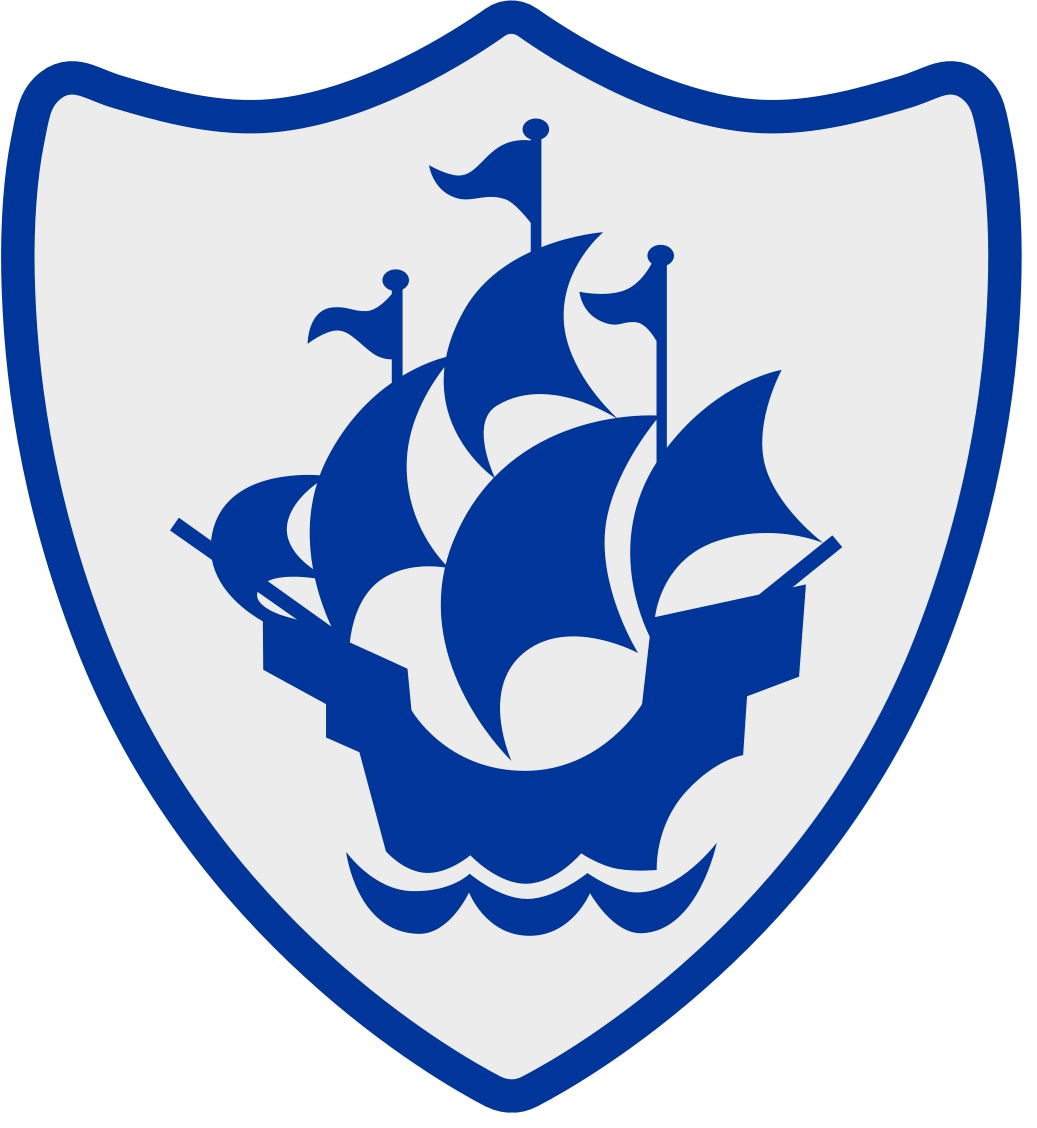
Blue Peter Badge

1 Comment

Filed under Etymology, Family History, History, History Undusted, How It's Made, Liguistics, Military History

History Undusted: Bells

Recently, my husband was catching up with the articles on my blog, and he made the cheeky comment that I’d written about everything except the history of bells. Now, I know that’s not true – there are other things out there I still have yet to discover – but I took up the challenge; hence, this post. The history of bells, or of anything, for that matter, is an audacious title; as Mark Twain once said, “The very ink with which all history is written is merely fluid prejudice.” At best, such an online article can skim the surface of any historical topic; my purpose is not to give an extensive report – it’s to whet your appetites to search out history for yourself. I “undust” it for you – it’s up to you to grab it by the horns and hang on.

Every country has their favourite bells: Americans have the Liberty Bell (“At noon, on the Fourth of July, 1826, while the Liberty Bell was again sounding its old message to the people of Philadelphia, the soul of Thomas Jefferson passed on; and a few hours later John Adams entered into rest, with the name of his old friend upon his lips.” – Allen Johnson); the Brits have Big Ben (it’s the actual name of the bell, not the clock tower) and other, regional celebrities; the Russians have the Tsar Bell, in Moscow; the Polish have the Sigismund, located in Wawel Cathedral in Krakow, Poland. but where did they come from originally? What was their original purpose?

The oldest known bell is from around 2000 BC, from Neolithic China, and it was made of pottery tiles. As far as historians can deduce, the bell has always been associated with two social functions: As a signal for messages, such as when a work day would begin or end, and for calls to religious ceremonies or as reminders for specific times of day for various rituals. The sound of bells have always been associated with divinity, likely because it was a sound unlike any natural sound known to the people who heard them ringing out over a great distance – they could hear them, but not see the source of the sound. In ancient times, when most people were both uneducated and superstitious, it’s not hard to follow such reasoning.

Bells can range from tiny jingle bells to several tonnes; the Great Bell of Dhammazedi was the largest bell ever made, in 1484, for King Dhammazedi of Hanthawaddy Pegu (Lower Burma), and weighed 327 tonnes. It was placed in the temple of Shwedagon Pagoda and stolen by the Portuguese – whose ship promptly sunk under the weight of the bell.

Today, church bells still ring out across Europe, calling parishioners to church services, as well as ringing out on the hour to mark the passing of time. They ring out in special ways for various celebrations, whether weddings or holidays such as Christmas, New Year’s Eve, and Easter.

16th century Islamic painting of Alexander the Great lowered in a glass diving bell - Wikipedia

16th-century Islamic painting of Alexander the Great lowered in a glass diving bell – Wikipedia

Certain kinds of bells hold special value: Ship’s bells are like catnip to divers – they’re the primary method of identifying ships, as their names are engraved on the bells even long after the painted names on the hulls have succumbed to the sea; they are a wreck-diver’s trophy of desire, and always hold special place in their collections. An interesting link between diving and bells is that the first actual diving bells – the rigid chambers designed to transport divers from the surface to the depths and back – were shaped like ringing bells; the air would be trapped in the upside-down chamber, allowing a person to be underwater and still breathe. The first description of its use is recorded by Aristotle in the 4th century BC; the most famous diver from that period is Alexander the Great.


English has many idioms associated with bells: Alarm bells ringing (or set off alarm bells, or warning bells going off – i.e. your mind is warning you about a danger or deception in a particular situation); to be as sound as a bell (to be healthy or in good condition); when something has (all the) bells and whistles (extra or entertaining features or functions that aren’t necessary, but nice-to-haves); Hell’s bells! (an expression when one is surprised or annoyed); something rings a bell (i.e. sounds familiar); saved by the bell (i.e. a difficult situation is ended suddenly by an unforeseen interruption); with bells on (i.e. if you go somewhere or do something with bells on, you do it with great enthusiasm or energy); to bell the cat (i.e. undertake a difficult or dangerous task); something to be as clear as a bell (i.e. clearly understood); pull the other leg/one – it has bells on it (i.e. you don’t fool me); one can’t unring a bell (once something has been said or done, you can’t unsay or undo it); the final bell (the end of an event or, euphemistically, a life). I’m sure there are more – if you know of one, please leave it in the comments below!

There is also a powerful experience written by Corrie Ten Boom, a Holocaust survivor, about the Bells of Forgiveness – you can read her story here.

If you’ve got an hour to spare, BBC has an hour-long “History of Bell Ringing” video on YouTube.

So there you have it: Bells, undusted, to pull your rope cord and get those bells ringing in your head, to find out more for yourself!

8 Comments

Filed under Articles, Grammar, History, History Undusted, Military History, Quotes, Research

History Undusted: Mary Seacole

Have you ever heard of Mary Seacole? Probably not – I hadn’t, and I’m a history fan. Have you ever heard of Florence Nightingale? You probably had something taught to you in school about her.  In reading about the two, the most striking difference, and perhaps the one that made all the difference in the paths their lives took, was that Florence was born into a rich, upper-class and well-connected English family; Mary was the daughter of a Scottish soldier and a Jamaican woman, who first taught her about medicine.

mary seacole


Mary Seacole. Source: Wikipedia


While Florence was famous for training nurses during the Crimean War, the English authorities refused Mary’s request to be sent there, too, even though it was known that the nursing care was far too inadequate; so she scraped the money together herself, travelled to the front lines on her own, and established a hotel in order to provide meals, a place of rest, and medical treatment for the wounded. She would often go out to the battles to bring in the wounded, and as mortars flew past, a soldier would shout, “Down, mother!” and she would hit the dirt, then pick herself back up and continue on. To tell her whole story would be a lengthy one here, but she has told it in her own words by writing a book: The Wonderful Adventures of Mrs Seacole in Many Lands, available for free as a Kindle or other formats here. You can also read more about Mary herself in the following links:


Wikipedia

BBC

YouTube

Her story is well worth reading, because it truly was an adventure, and it neither started nor stopped in Crimea. Kudos to the woman who overcame a triple-prejudice (being a woman of mixed race from a poor background) to achieve her calling and change the lives of the men she helped. It’s a history gem worth undusting!

Leave a comment

Filed under History, History Undusted, Links to External Articles, Military History