The word Mondegreen is an example of what it means: Misheard lyrics in songs. The word was coined by the journalist Sylvia Wright in 1954, when she misheard the lyrics in a Scottish ballad; instead of hearing They have slain the Earl o’ Moray, / And laid him on the green, she heard Lady Mondegreen.
Examples of this happen frequently; when I was a child, I misheard the lyrics from Dashing through the snow in a one-horse open sleigh as a one-hose hope and slay – I had no idea what that was supposed to mean, but I sang it with gusto! A famous mondegreen is Bob Dylan’s The answer, my friend, is blowing in the wind misheard as The ants are my friends. All the whiskey in the sea can be heard in Club Tropica, by Wham!; the actual line is All that’s missing is the sea. From Toto’s song Africa, instead of the line bless the rains down in Africa, some people hear left my brains down in Africa. In Abba’s Dancing Queen, they sing feel the beat from the tambourine, but Ihear tangerine. There are likely as many mondegreens as there are songs, as garbled communication, Chinese whispers, accents and the mix of words and music can all lead to different conclusions than those intended by the singers or songwriters.
Have you ever misheard lyrics? Share your mondegreens below!
English is relatively young, as languages go. Like a sponge, it absorbs words and meanings from other languages, then squeezes them out in a similar (or widely different) form. In other words, English is a survivor; it has survived the attempts to destroy it by the Danish Vikings, the French (Normans, aka Vikings disguised as French), and the Germans. These historical encounters give me high hopes that it will survive the age of the Cell Phone. With each skirmish, it has come out stronger, more versatile and more flexible. When the Pilgrims packed up English and crated it off to the New World, it was locked, as it were, in a time capsule. British English absorbed a few bad habits from the French before they thought better of it and distanced themselves during the French Revolution, but in the meantime, contentious pronunciation differences to that time-capsule relative over the Pond had crept in and persist to this day. One example: The American pronunciation of schedule (/skedju(e)l/) is from the original Greek pronunciation, which was used in Britain for onk-years until they took on the fancier French-ified pronunciation of /shedju(e)l/. For a fascinating glimpse into how Modern English was formed, William Caxton (~1422-~1491) is your man.
While English pilled through the pockets of invaders stealing loose grammar, we also lost a few words along the way: Some words are known to us in one form but not the other, while other words have been lost altogether due to a more convenient absorption or form arising. You know of disgruntled (adj.), but what about gruntle (v.) or disgruntle (v.)? And dis– in this particular case is not used to form the antonym of gruntle, but means exceedingly gruntled. And I don’t know about you, but conject as a verb makes more sense than “conjecture” to me. And shall we vote to bring back “Oliphant,” as J.R.R. Tolkien saved it from extinction through his use of it in Lord of the Rings? What about pash (n.), contex (v.), or spelunk (n.)? We know of fiddle-faddle, but what about plain ol’ “faddle” (to trifle)? Some, admittedly, are not missed; toforan is better served with heretofore, in my humble opinion (IMHO). Needsways is a Scottish word, obsolete in England and America perhaps, but alive and well north of the Border. There are some deliciously eccentric words which deserve resuscitation, such as loblolly, bric-a-brac, sulter, pill (v., to plunder, pillage – ought to come in handy, that), quib, bugbear, uptake (as a verb), wist (intent), or sluggy. If Sir Walter Scott can save words such as doff and don from extinction, so can we.
Oh, and if you’re wondering about the word archaism, it means “retention of what is old and obsolete.” So twinge your language to include these mobile words and their meanings, and revelate your intelligence! And if you’re curious, yes, Grammarly and spellcheck were going batship crazy with this post!😎
(Comic from xkcd used under a Creative Commons license)
Although it’s already summer, we have only had one day over 30°C. Don’t get me wrong – I’m perfectly happy with cooler days; you can layer clothes, but when it’s hot, you can only take off so much and still be socially acceptable.
But when the weather begins to warm up, thoughts turn to spring cleaning. The practice goes back centuries: For climates that experience cold winter months, spring cleaning usually takes place when the weather begins to be warm enough to open windows but not warm enough yet for swarms of bugs coming in as a side effect. Also, back when wood was the main source of heat, if it was warm enough not to need the wood-burning stove, it was the ideal time to clean out the soot and to dust the house, letting the breeze help carry it away. In modern times, where most houses no longer depend on wood or fireplaces as the main heat source and windows can be opened year-round (with the heater returning indoors to comfortable temperatures), spring cleaning is still a tradition.
Most people have those areas in their homes where things can stand around for months or even years before they put them in their proper places; sometimes those things that don’t have a proper place stand around even longer. Spring cleaning is the ideal occasion to look around, notice those stand-arounds, and put them away properly or eliminate them altogether.
“Mis en place” is a French culinary term meaning “putting in place”, or “gathering” (as in gathering ingredients in preparation for cooking). Outside of the kitchen, it can be used as a description for putting everything in its place. Spring cleaning and mis en place is a great opportunity to de-clutter.
Here are 10 tips for de-cluttering:
Once-in-the-hand principle: Firstly, get yourself a basket to carry from room to room to gather things that need putting in their places; once the basket is full, put the items where they go. Don’t lay things down somewhere else “for now”!
Two-Year Gauge: If you haven’t touched, missed, or used an item in the past two years, chances are you won’t miss it – give it away, donate it to a second-hand shop, or recycle it.
Clothes: Do you have clothes you’ve kept but never wear, or they’re the wrong size, or they’re worn out? Keep one worn-out outfit for dirty work, but bag up the other items to donate, scrap, or give away.
Kitchen: Go through your food cupboards: Toss out anything past its expiry date (this is at your discretion; foods today rather more honestly call it a “best before date”, as canned goods are often good for a while past that…); rotate the older cans of food to the front, the newest toward the back (also best practice when putting away new shopping); toss out any spices that have gone off or are stale.
Storage: Do you have plastic containers without matching lids or lids without containers? Get rid of them. Do you have duplicate utensils that you don’t need? Donate them. Do you have pots or pans that are worn out? Replace them if need be.
Linens (towels, bedding, etc.): Toss or recycle any threadbare, ripped, or worn-out items. Fold the keepers and store them neatly (stacks tend to get lazy over time, don’t they?).
Electronic Gadgets: Go through your electronic items and match cables to each piece of (working) equipment, and recycle the rest. Along the same line, clean out your inbox of superfluous emails.
Toiletries: Toss anything that has gone off – hand cream, makeup, nail polish and medicines included.
Paperwork: Get rid of any guarantees that have expired, old paperwork, or manuals for items you no longer own; file and organize what you keep. While you’re there, check those pens to see which ones still work and chuck the rest.
Sentimentality: Don’t hold on to something out of guilt (someone gave you X…) or obligation (they might notice I’ve tossed it). If it brings you no joy, is not practical, or isn’t in keeping with your aesthetic, don’t keep it.
Have you already started spring cleaning this year? Tackling one point at a time (in a day, or a week) will make it possible, and you’ll be done before the cat can lick its ear!
I’m curious to know if any of these tips inspire you to de-clutter a specific area – please comment below!
Happy New Year! I don’t know about you, but I’m happy to leave 2021 behind me! On New Year’s Eve, my husband and I sit down and review the last year, and talk about what we’d like to see or do in the following; this year, when we reviewed the last 12 months, we had to say, “what did we experience unrelated to health issues?” and we were hard-pressed to come up with anything substantial: Holidays were a non-topic, as my husband was in and out of the hospital, sometimes emergency, with complications that delayed his chemotherapy; finally, that got started – which meant that either he had little energy for taking day trips, or we couldn’t go because he had appointments. If anyone has had it themselves or has a family member who’s had cancer, you’ll know the “routine” – if you can even call it that.
In the midst of all that, with my energy and focus on him, or on communicating with friends and family, everything else seemed to fall to the back burner, including regular blog posts. In the past few months, if I wrote at all, I worked on my next novel; I finished the final draft in mid-December! Then I immediately did a straight read-through and began the work of fine-tuning and editing. I have Beta readers for feedback, but because I’m an Indie publisher, I do all of the nitty-gritty myself, the work of graphics, formatting, editing, and a long list of to-dos that could fill a book by themselves. Those are what I’m tackling next – after the feedback is in and incorporated where needed.
Now that chemotherapy is behind us (his last ended on Christmas Day!), we’re still not out of the woods but at least we can see the skies through the thinning trees. Also in December, I had my 2nd Covid vaccination and have noticed a marked drop in the long-term symptoms that had been slowing me way down, some days stopping me altogether, since March 2020. The end of those two issues gives me more hope for the coming year! It also means that we can look forward. Last year, it was impossible to plan; at the worst times, we couldn’t even plan an hour ahead. Of course, Covid complicates things, with travel restrictions or threats of lockdowns, but I think we’re all used to that by now.
Have you made any holiday plans for the coming year? If we could fly anywhere, without Covid complications at the airport or crossing borders, ideally we would love to go back to Scotland, where I used to live and where we met back in the day! But we live in one of the other most beautiful patches on Earth, so we’re hoping to take the Grand Tour route of Switzerland this year instead. In the past, we’ve often rented a motorhome for holidays, whether in New Zealand, Norway or Scotland, so perhaps we’ll do that here, too. Every plan is qualified these days with a maybe, perhaps, or we’ll see.
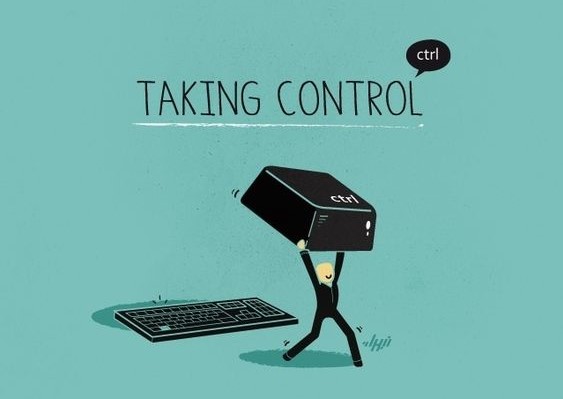
My hope for this blog in the coming year is that I can take control of time and energy once again and begin posting regularly. I have a few ideas, so keep an eye on this space!
Several years ago, I wrote about this topic; but viewed from today’s perspective, I thought it might be worth ruminating on, so here’ goes:
Everyone has three places they spend time in: The first place is the home; the second is either school or the workplace; and the third is a place that feels comfortable – a home away from home, or a place we can unwind. The third place varies from person to person; it might be your local hairdresser’s, a pub, Starbucks, a small café, a favourite park bench, a nearby spot out in nature, or a library or museum. Companies like Starbucks have capitalized on people’s need for an environment of comfort; they have couches and armchairs and free Wi-Fi, and don’t make you feel like you need to drink up and move on. Your third place might even be virtual – Facebook and other social media sites where you like to “hang out” and connect with friends. It might be your local community centre; such places are crucial to a neighbourhood, whether or not we realize it, because they facilitate a sense of group identity. When a local crisis arises, they have been the places people gather to distribute clothing or food to those hit; meeting others, encouraging them, helping and being able to contribute to the greater good are all important to our sense of humanity; we all want to feel useful and needed in some way.
Thinking about that topic now through Covid-coloured glasses, at some point we’ve all lost our third places through lockdowns; the rules that govern social interaction have changed drastically, and it has effected the psychological health of both individuals and communities alike. While some of you may have been able to return to business as usual more or less, other regions have had multiple lockdowns; in either case, the subtle changes have made third places less inviting: Regulations about masks, needing to make reservations in restaurants that are half-empty, filling out contact tracing forms, etc. Perhaps your favourite haunt didn’t survive the financial strain of months of forced closure, or it closed because the owner passed away. More than missing that physical place, many people have suffered because of social distancing: Not being able to meet up with friends, spend time in good company, and, in the advent of mass home-office work, even the absence of spontaneous encounters with co-workers around the break room. Having a drink together over Skype or Zoom just isn’t the same; the spontaneity is missing. Those people who thrive on physical contact, such as a hug or a pat on the back, have suffered deeply on a psychological level whether they realize it or not.
Some positive effects have also come from lockdown: Many people have intentionally invested more into their local community; we’ve shopped locally or supported the local restaurants by ordering delivery or take-away more often than we normally would have, or bought from local farm shops (we’re blessed with an abundance of those in our area); by working at home, carbon emissions have been reduced by thousands of daily commuters (usually only one per car) not being on the road. Our holiday budgets have taken a breather. We’ve wasted less money on impulse-shopping. More and more people have felt the growing need to be off-grid and self-sufficient for future times of crisis, and the tiny home and homesteading movements are booming. More people are planting gardens, or they’re spending more time with their family.
Pre-pandemic habits made it easier to compartmentalize life: We had the home and the workplace in separate physical locations, which made it easier to leave the stress of one behind when returning to the other and, depending on your home or work environment, the relief of change might have been a subtle but necessary transition for your mental health. The potential emotional or mental strain that happened when those two places merged, at the same time losing our third place possibilities through lockdown, is not to be glossed over. The thing about the third place is that it’s also a responsibility-free zone; there are no expectations or obligations placed on us there; that kind of environment also inspires productivity and creativity, and many people have lamented becoming more “lazy” or “lackadaisical” in their habits over the past year; why get dressed up if you don’t have to go to work or be seen in public? Maybe you’ve grown comfortable in your “junk around the house” attire, or not wearing make-up or not shaving. The old adage of “Fine feathers make fine birds” is true: If you want to feel creative, dress for it; if you want to mean business in your schedule, dress for it. Even if you’re alone at home. Then, the transition to being seen by friends and strangers again might not be so daunting.
Returning to those third places may not be as easy at it sounds; we may never perceive such places the same ol’ way again. While some people can’t wait to get out and mingle, many of us have become cautious around groups of strangers – will they observe healthy social distancing and hygiene rules? Will they stay home if they’re sick? One thing I will never miss is someone giving me the Swiss three-kisses-to-the-cheeks greeting and then telling me they forgot to mention it – they have a cold. I’ve been far less sick in the last year, because of social distancing, than ever before*! I’ve been relieved to know that people are not wiping their noses on their hands and then offering it to me in greeting; hand disinfectants are ubiquitous now, and I’m perfectly fine with that.
[* I was recently chatting with my doctor about that topic, and she said that serious cases of influenza and pneumonia are already beginning to increase, even though it’s summer here; the suspicion in the medical community is that, because we’ve been disinfected and protected from fighting the minor cold viruses throughout the year, they’ve learned to hit aggressively if they get the chance. So talk to your doctor, or educate yourself through serious medical websites, about how you can support or encourage a healthy immune system.]
Today, while we were out for a day trip on the Lake of Zurich, I noticed that while many people have the typical pale blue medical masks, a variety of colours are becoming more common; they’ve at length become a fashion accessory. You can buy cloth masks in shops everywhere here now, or sew your own like I do. Back when this all started in 2020, many people scoffed at the idea of wearing a mask in public, and now it’s so engrained in us that we stare if someone forgot to put theirs on (here, they are required inside any building as well as when using public transport). Despite the hygienic regulations, things are slowly returning to a semblance of normalcy here; restaurants are open again (though masks can only be removed while you’re seated at your table); street cafés are popular because, as of right now, masks are not required outdoors (though that may change again now that the dangers of infection through aerosols are better understood and greater than previously assessed); and third places are becoming available again. People are cautious – and frankly, they have reason to be (I say this from the perspective of one who has long-term Covid symptoms that flare up every 3-4 weeks), but they’re starting to emerge from their hibernation, and that’s a good thing.
I don’t know about you, but I’ve been more or less in a state of limbo for several months: COVID-19* has thrown a spanner in most people’s schedules. Events postponed. Then cancelled. Then re-scheduled. Then cancelled again. And again. Or maybe in a few weeks? Not likely, but things still need to be decided, planned as-if, and prepared for. But it’s challenging to work toward a goal that’s too fluid to pin down; is it happening or not? Will it be worth all the effort to prepare, or will that all come to nothing? [*Shouldn’t we now be calling it COVID-20? I think 2020 deserves to be known as the year of COVID more than 2019 when most of us had never even heard about it last year.]
One event I am planning for (maybe) is our semi-annual Christmas craft fair at our church. I usually provide a variety of options, and this year is no different; but now that I’ve found out it’s actually happening (as far as we can tell at the moment), I’ve been scrambling to make various-sized face masks and mask mates (button/ cloth extensions to relieve pressure from the ears) in time for the last November weekend. Part of my mind – that part a bit gun-shy from on/off plans – has wondered what I’ll do with so many masks if we don’t end up having the fair! But I can’t let that stop me from preparing for it, anyway.
My husband and I are both active in the leadership of our church; he is an elder, while I am in the team that organises / produces the church services. By “producing” in this context, in normal times it would simply mean coordinating the various teams beforehand to make sure everything runs smoothly on the Sunday; but with Corona, it now also means that – at least for now (as in March/April for a while) – it is once again restricted to livestream. But for how long? Or will we soon be back at full capacity? And how long will that last? Our quarterly planning sessions have become an exercise in limbo… in how many ways we can say “maybe”. The production side of such an event has taken on another quality: We are responsible for ensuring that the security measures are followed; we have also shifted from service leaders to producers of a video. It’s a learning curve, as there are a lot of considerations to plan for that were not necessary in a live service.
In the first wave, most people in general were supportive of governments’ restrictions such as lock-downs and closures of events (concerts, exhibitions, weekly food markets) and restaurants, pubs, etc. Many probably thought it would soon be over. But as the second wave hit Switzerland, and we became a “hot spot”, I think people have not only begun to feel tired of it all, but also are beginning to think in terms of long-term preparation and planning that needs to be done. The first wave brought on panic-hoarding of things like loo rolls (toilet paper) and canned foods; at least here, the second wave has been met with calm pragmatism. Facemasks were scoffed at back in spring; now, they’re becoming a fashion accessory and an accepted part of our collective psyche.
If you or someone you know has been affected by COVID, then you’ve learned that “recovery” is also a limbo concept: There are longer term effects that could not have been anticipated, such as heart problems, breathing problems, effects on the brain, exhaustion, hair loss, rashes, smell and taste disruptions, achy joints, brain fog, headaches, and even depression. This isn’t just a flu virus. I myself had a mild case back in March, and I still have achy joints, exhaustion, occasional headaches and brain fog. I have no desire to test the hypothesis of herd immunity; I think that’s been debunked by now, anyway… it’s possible to be re-infected, so that’s enough for me to err on the side of caution.
Eventually, we’ll emerge from the fog of 2020; in the meantime, we can choose how we approach the current events: Some will buck against being told to wear a mask and wash their hands and keep their distance; some will hunker down in a food-stuffed bunker; some may focus on the not-haves and become impatient and depressed; some may choose to find a new hobby or something to positively focus their mind on; and some will do all of the above at various phases along the way. I think it’s similar to the process of grief or loss: Denial, shock, anger, bargaining, mourning, acceptance, peace. Wherever you’re at, I think we’re in this thing for the long haul, so I hope you arrive at the positive phases soon.
With what energy I have (which, admittedly, is a lot less than pre-Corona), I will try to keep a positive outlook, and do what I can with the time given to me. I hope you are well, that you stay healthy, stay safe, and that you can find creative ways to approach the upcoming holiday seasons within the restrictions of our times.
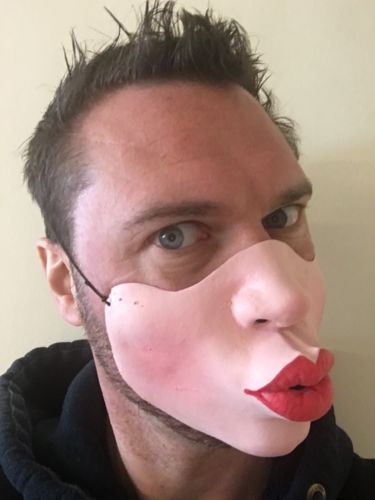
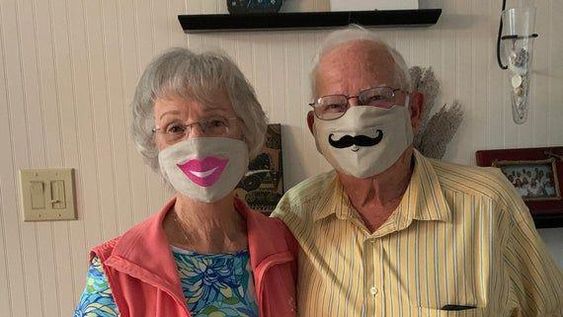
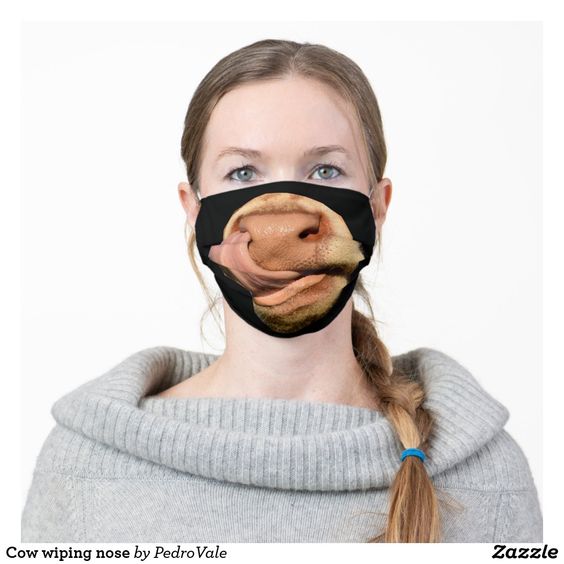
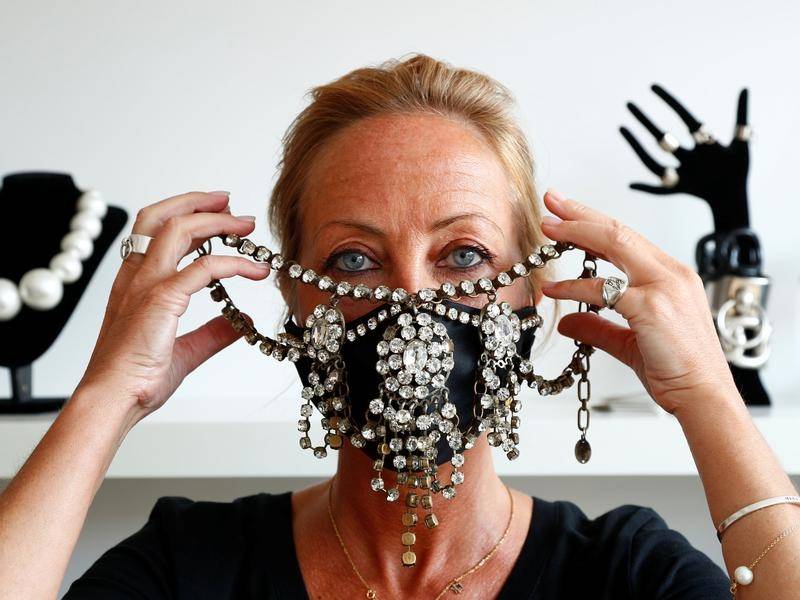
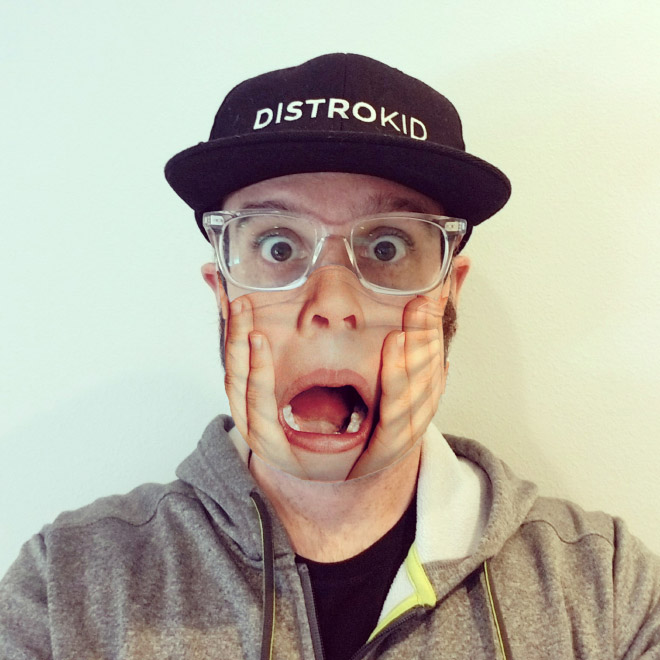
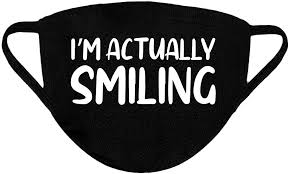
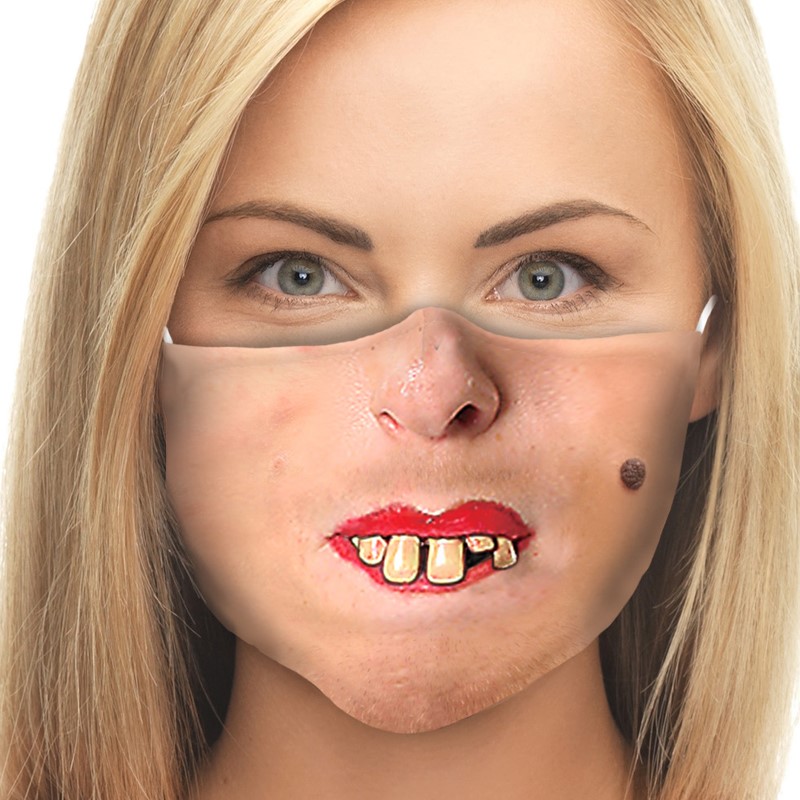
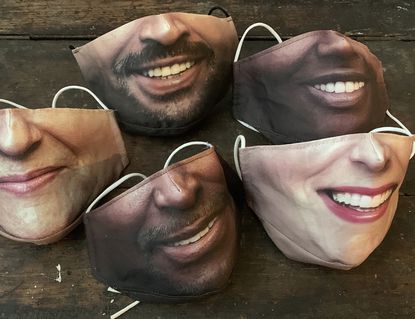
To end this with a smile, take a look at a few fun face masks!


















 Stephanie Huesler
Wordless: Couch Potatoes, Unite!
Leave a comment
March 31, 2021 · 9:54 PM