Tag Archives: History

History Undusted: Lammas Day

Did any of you celebrate Lammas Day this past Thursday, 1 August?  The original Thanksgiving day, Lammas has a centuries-old tradition in some English-speaking countries.  “Lammas” comes from the Old English hlafmæsse, meaning “loaf mass”, and was a celebration to give thanks for the harvest.  Everyone would bring a loaf of bread to the church on that day, made from freshly-harvested wheat; it would then be blessed by the minister as a symbol of giving thanks for the entire harvest.  Perhaps this is the Eucharistic overtone admitted by J.R.R. Tolkien* in a private letter concerning the Lembas Bread of the Elves; this bread might have been based on Hardtack texture-wise, but the name itself is a  clear nod to Lammas. 

In the Anglo-Saxon Chronicles, it’s mentioned several times, where it is referred to as the feast of the first fruits. To read more about this celebration, click on the image below.

And before I close, I will also say, “Happy Birthday, Switzerland!”  Thursday was also our Founding Day, the first being in 1291.  It was perfect weather for fireworks, and we enjoyed the displays of towns and villages from our flat!

Breads, Harvest, Lammas Day

*Carpenter, Humphrey, ed. (1981), The Letters of J. R. R. Tolkien, Boston: Houghton Mifflin, ISBN 0-395-31555-7


Originally posted on 1

12 Comments

Filed under Articles, Etymology, History, History Undusted

History Undusted: A Grain of Mustard

MustardMy husband and I once discussed mustard (as one does).  Specifically, he had been on Google Earth and mentioned that he saw rapeseed fields near Dijon; I replied that they were more likely to be mustard fields.  He was under the impression that mustard was a bush, or a tree, and we wondered if there might be varieties of the plant that ranged in size, especially if left to grow wild.  And thus, a bit of research into the mustard plant ensued (naturally).
First, a bit of history on Dijon mustard:  Originating in 1856, the first Dijon mustard was made by substituting green (unripe) grape juice for the more typical vinegar, though today that unripe grape juice is a spade called a spade, white wine.  Surprisingly, 90% of the mustard seed used in local Dijon production comes (mainly) from Canada – so those yellow flowering fields near Dijon could be rapeseed after all!

Dijon, France doesn’t just make the eponymous mustard, but has dozens of specialityDijon Hand-Painted Jar mustards; when travelling through a few years ago, we picked up jars of orange mustard, fig mustard, lavender mustard and tomato mustard.  They often come in hand-painted pots, though plain glass jars are common as well.  The word mustard itself comes from Old French mostarde, which comes from Latin mustum, meaning “new wine”.  This may also be related to a Swiss-German term Most, meaning apple juice that’s nearly fermented; it’s often sold in the autumn from farmer’s shops, if they have an apple orchard from which to produce it.

Mustard seeds come in white, brown or black.  White seeds contain fewer volatile oils and so are milder than brown or black.  Years ago I consulted a doctor for remedies I could recommend to singing students who often struggle with sore throat issues; she told me to have them put 1 teaspoon of dark mustard seeds into a hot foot bath and soak the feet for 10-15 minutes; the mustard oils draw out the infection.

Mustard, as a condiment, was likely first made in Rome, appearing in cookbooks as far back as the 4th or 5th centuries.  They probably exported the seeds to France (Gaul), and by the 10th century monks were experimenting with recipes.  Grey-Poupon was established in 1777 between the partners Maurice Grey and Auguste Poupon.

So were those French fields rapeseed or mustard?  Well, actually, both:  Rapeseed is a bright-yellow flowering member of the family Brassicaceae (mustard or cabbage family).  While both rapeseed and mustard are harvested for their oils, they are as similar as mustard is to cabbage; rapeseed oil is the third-largest source of vegetable oil in the world, while mustard seeds are usually prepared as mustard condiment (though mustard oil is also popular in cuisines such as Indian).

Now we know!

Originally posted on History Undusted, 17

5 Comments

Filed under Etymology, History, History Undusted, Research

History Undusted: The Wild Women of the Old West

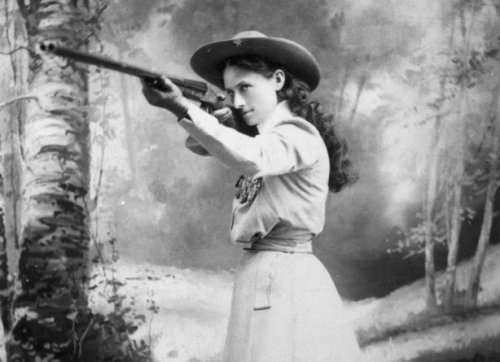
Often unsung heroines, the women who trailblazed (alongside their husbands, or on their own through the loss of said man along the trail, or who headed west on their own to forge a new way of living) were the backbone of settlements.  Without the women, there would have been no way for a man to survive for long.  I grew up in Kansas, and my father’s ancestors were immigrants from Denmark who travelled west to Kansas in covered wagons in the 1880s; the farm which my great grandfather built was eventually inherited by my grandfather, and many of my happy childhood memories are associated with that farmstead.  Looking back through family photos, there’s not a photo of a weak woman among them; weak women (and men, for that matter) simply didn’t survive the trail.  They became the strength that built the West.

For a 46-minute documentary on the importance of the pioneer woman, and the legends that grew up around the likes of Calamity Jane, Annie Oakley and Belle Starr, please click on the image below.  It’s well worth the time to watch, when you have a moment!


Annie Oakley


Originally posted on

8 Comments

Filed under History, History Undusted, Military History, Videos

History Undusted: Mary Seacole

Have you ever heard of Mary Seacole? Probably not – I hadn’t, and I’m a history fan. Have you ever heard of Florence Nightingale? You probably had something taught to you in school about her.  In reading about the two, the most striking difference, and perhaps the one that made all the difference in the paths their lives took, was that Florence was born into a rich, upper-class and well-connected English family; Mary was the daughter of a Scottish soldier and a Jamaican woman, who first taught her about medicine.

mary seacole


Mary Seacole. Source: Wikipedia


While Florence was famous for training nurses during the Crimean War, the English authorities refused Mary’s request to be sent there, too, even though it was known that the nursing care was far too inadequate; so she scraped the money together herself, travelled to the front lines on her own, and established a hotel in order to provide meals, a place of rest, and medical treatment for the wounded. She would often go out to the battles to bring in the wounded, and as mortars flew past, a soldier would shout, “Down, mother!” and she would hit the dirt, then pick herself back up and continue on. To tell her whole story would be a lengthy one here, but she has told it in her own words by writing a book: The Wonderful Adventures of Mrs Seacole in Many Lands, available for free as a Kindle or other formats here. You can also read more about Mary herself in the following links:


Wikipedia

BBC

YouTube

Her story is well worth reading, because it truly was an adventure, and it neither started nor stopped in Crimea. Kudos to the woman who overcame a triple-prejudice (being a woman of mixed race from a poor background) to achieve her calling and change the lives of the men she helped. It’s a history gem worth undusting!

Leave a comment

Filed under History, History Undusted, Links to External Articles, Military History

History Undusted: New Year’s Day

Happy New Year!

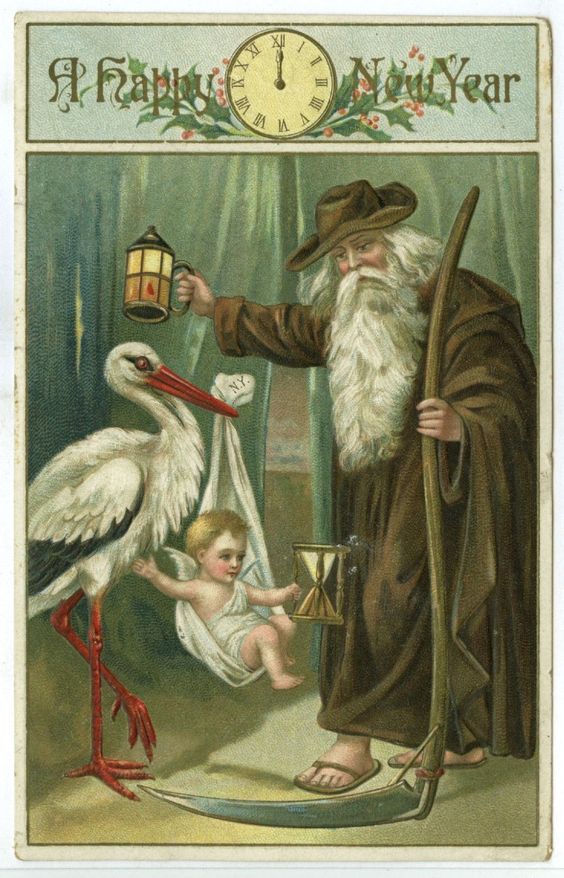
Happy New Year VintageOn such a day more than any other time of the year, one tends to think of time. Time has been personified through Father Time for centuries, with the New Year usually being a baby. But what we assume is a universal start of a new year actually isn’t. By the Julian calendar, today is 19 December 2018; by the Gregorian, 1 January 2019.

Perhaps it would help to review the Julian and the Gregorian calendars:

The Julian calendar was introduced by Julius Caesar in 46 BC as a reformation of the Roman calendar, which had months of 29 or 31 days (except February, which must have confused even the contemporaries of the system – it had 28 days or 23 or 24 some years). The Julian calendar has been gradually increasing in discrepancy to the Gregorian calendar, which means that currently, it is 13 days behind. It is still used today by the Eastern and Oriental Orthodoxy, and the North African Berbers.

The Gregorian calendar was introduced by Pope Gregory XIII in October 1582. The corrections spaced leap years to a set rule, making the average year 365.2425 days long. The rule is that every year exactly divisible by 4 is a leap year except those exactly divisible by 100; of the years divisible by 100, if it is exactly divisible by 400, it is a leap year. For example, the year 2000 was exactly divisible by 400, so it was a leap year; 1900 was not, so it wasn’t a leap year (it is exactly divisible by 100 but not 400).

Even though the Gregorian calendar is the only one most westerners have grown up using, it is not the only calendar in use – not by a long shot. There are many religion-related calendars, so some people grow up with 2 calendars (Ethiopian Coptics, Hebrews, and Chinese, to name a few). Added to the confusion is the civil interpretation of the leap year day of 29 February: If you were born on 29 February, in China your birthday in common years would be 28 February but in Hong Kong, it would be 1 March.

When the Gregorian calendar was introduced, imagine the confusion it must have led to (as it was not implemented everywhere at once): Pope Gregory XIII had no authority beyond the Catholic Church and the Papal States of the time, yet he was proposing changes to the civil calendar; this required adoption by the governing rulers of every individual country to have legal effect. It meant that, for the countries which adopted it, they had to have dual dates for clarity with neighbouring states and for their own people who were still adjusting to the fact that they’d just lost nearly 2 weeks. Other countries made a gradual transition, which must have confused things even more; for instance, Scotland adopted 1 January as the beginning of their New Year (previously, around 25 March) in 1600 (making 1599 a very short year), but didn’t switch to the Gregorian calendar until 1752, whereas the rest of the United Kingdom made both switches in 1752, meaning that for 152 years, Scotland’s dates were out of sync with their neighbouring countries.

So the next time you wish someone a Happy New Year, remember the privilege of sharing a mutual understanding of the same date with that friend. Even in our global village, it’s not something we can take for granted!

New Year 2019

8 Comments

Filed under Articles, History, History Undusted, Science & Technology

History Undusted: Agafia Lykov – Surviving in the Taiga

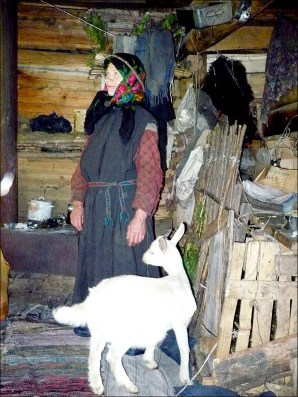
Agafia Lykov - Siberian Times

Agafia Lykov. Photo credit: Siberian Times

I recently came across a documentary about a woman, Agafia Lykov. I’d come across information about her family years ago, and had intended to write an article about them;  life happened, and I forgot about it, so I’m glad to do it now.


The Lykov family were part of what is known as the “Old Believers” – Eastern Orthodox Christians from Russia who refused to submit to the new regulations laid out by the Patriarch Nikon of Moscow, between 1652 and 1666. At a time when religious affiliation was political power, they were viewed as a threat and were shunned and persecuted. In 1936,  Karp Lykov’s brother was killed by communists during Stalin’s religious purgings, and he fled with his wife and two children into the Taiga wilderness, an inhospitable region of Siberia. In this isolation, 250 km (160 miles) from the nearest settlement, two more children were born; Agafia was born in 1944.

The family was a living time capsule; they weren’t aware that World War 2 had come and gone; they missed the birth of the Space Age, though they knew that something had taken place when rocket chunks began raining down in the Taiga near their home, as they are under the flight path of the Baikonur Cosmodrome in Kazakhstan (if you have Google Earth, just search for her name; her homestead is marked). Survival was difficult, and they had to work constantly; in 1961, the mother, Akulina, starved herself to death in order to give the children a fighting chance of survival when food was scarce. At one point, they were forced to eat their leather shoes to survive. Agafia’s teeth have been worn down from eating such tough foods.

In 1978, they were discovered by accident when a geology team’s helicopter was searching for a place to land in the remote wilderness; they saw the homestead and decided to trek to it when they’d finally landed. Most likely as a result of contact with outsiders, in 1981, three of the four children died of pneumonia. At first, the geologists thought the children were mentally disabled, as they spoke a strange lilting and chirping language; but they soon realized that it was simply the isolation and family dialect that had developed a shorthand between themselves; Agafia actually speaks two languages: Russian and Old Slavic, which modern Russians cannot understand (it would be the same for English speakers to hear Old English; it’s related, but unrecognizable to its modern version).

Born into such isolation and alone since 1988, Agafia is surprisingly informed about the wider world; she has left her homestead for populated areas only six times since contact with the outside world began, but she prefers her home – the world is too busy for her, too many cars, bad air in the cities, and no peace. Her beliefs are also a time capsule; she only knows what her father taught her, and has had no teaching beyond that; her prayer book is over 400 years old, a family heirloom, and one she uses every day.

In January 2016, she was airlifted to a hospital in Tashtagol, Russia, due to pain in her legs caused by the cold. Before the end of the month, she had returned home – all the time she was away, she was worried about her goats and chickens, and about Georgy, and Old Believer who had come to live with her to help in her old age.

I find her life fascinating; she is an example of the unquenchable human tenacity to survive, and thrive in any environment; she is content with her simple life, as hard as it is, because it is what she knows; she knows of modern conveniences, and has accepted some things – learning how to make bread, or accepting supplies such as salt and flour (as long as the products don’t have barcodes on them, which she considers a “mark of the beast”); but for the most part, she wants nothing of the modern world.

To watch a 35-minute documentary (made in 2013) of her daily life, just click on the image below.

Agafia Lykov - Titlovi-com


2 Comments

Filed under History, History Undusted, Military History, Space, Astronomy

On the Tracks of History

“Neither a wise man nor a brave man lies down on the tracks of history to wait for the train of the future to run over him.”

Dwight D. Eisenhower

traintracks

Leave a comment

Filed under History Undusted, Quotes

History Undusted: The Shilling

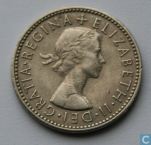
1 Shilling front

Numismatics is an interesting field, and in doing research for the Northing Trilogy, I wanted to know just what currencies would have been used at the time (1750s, England), and what the value of the currencies were:  How much could be purchased or earned?  Would a Stirling pound have made a pauper a land owner or not?  That brought me to the current book I’m reading, called “The Splendid Shilling” by James O’Donald Mays.  Here are a few bits and bobs:

The Shilling was a form of currency used in Britain up until the 1970s; even after that, the coins continued in circulation as smaller denominations (1 shilling was 5 p, and 2 shilling was 10p) until 1990, when it was demonetized.  I remember using them until they were phased out and replaced by the smaller coins of 5p and 10p values, and I kept a few for my coin collection.  One shilling coins were called “bobs”, and that led to programs such as “bob-a-job” fund raisers by the boyscouts, starting in 1914.  Two shillings were known as Florins, or “two-bob bits”.

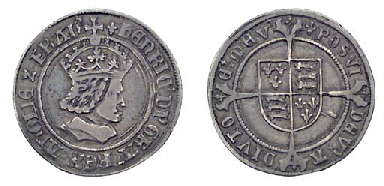
1 Shillings reverseThe word shilling most likely comes from a Teutonic word, skel, to resound or ring, or from skel (also skil), meaning to divide.  The Anglo-Saxon poem “Widsith” tells us …”þær me Gotena cyninggodedohte; se me beag forgeaf, burgwarenafruma, on þam siexhund wæs smætes goldes, gescyred sceatta scillingrime...”  “There the king of the Goths granted me treasure: the king of the city gave me a torc made from pure gold coins, worth six hundred pence.”  Another translation says that the gold was an armlet, “scored” and reckoned in shilling.  The “scoring” may refer to an ancient payment method also known as “hack” – they would literally hack off a chunk of silver or gold jewellery to purchase goods, services and land, and the scoring may have been pre-scored gold to make it easier to break in even increments, or “divisions”.  From at least the times of the Saxons, shilling was an accounting term, a “benchmark” value to calculate the values of goods, livestock and property, but did not actually become a coin until the reign of Henry VII in the 1500s, then known as a testoon.  The testoon’s name and design were most likely inspired by the Duke of Milan’s testone.
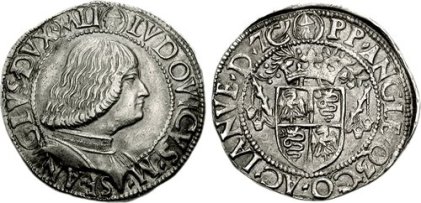
 

Duke of Milan's Testone

Duke of Milan’s Testone


Henry VII Testoon

Henry VII Testoon


Originally posted on History Undusted, 15

8 Comments

Filed under Articles, Etymology, History, History Undusted, Research

The Art of Diatom Microscopy


John Quekett.jpg

John Quekett

Recently, I came across an interesting piece of history:  During the Victorian Age, people were fascinated with nature, excursions, and technology.  Microscopes were becoming accessible to the rising middle classes of England, and one man, John Quekett, was fascinated by both microscopes and phytoplankton. He wrote a book called Practical Treastise on the Use of the Microscope, which was a hit among the Victorians, and they began discovering a hidden world of tiny creatures known as plankton and diatoms.


Plankton is what makes the ocean waters green, or aqua-blue – the differences are not only the sand or rock colour of a particular region, but also the density of microscopic life in the water. The denser the population, the lower the visibility. A teaspoon of seawater can contain a million living creatures. Regardless of their size, they underpin the marine foodchain, and indeed, all life on earth: Diatoms, which is the most common type of plankton, number in the trillions (there are over 100,000 known species to date), produce more than 20% of all oxygen on earth, and contribute nearly half of the organic life in the oceans. The shells of dead diatoms can cover the ocean bed as deep as half a mile in places, and they fertilize the Amazon basin to a tune of 27 million tons annually.

The Victorians knew very little of all that; they were at the dawn of discovery, and modern sciences owe a lot to those early intrepid explorers – women and men who braved the weather, cliffs and oceans in (heavy skirts and) leather shoes to discover, explore, and appreciate nature.  Not only did they discover it, but they began making beautiful arrangements from the various shapes – they would display their microscopic artwork to friends, much like we might look through someone’s holiday photos today.  These were known as Rosette Slides, and there is still one famous artist keeping this art form alive today: Klaus Kemp, known as the Diatomist. Here are just a few of his masterpieces; to see more, just google his name. The two links in this article will take you to two short videos on the topic.  Enjoy!

This slideshow requires JavaScript.

5 Comments

Filed under Articles, History, History Undusted, Images, Research, Science & Technology

Upgrades & Technostalgia

Computer UpgradeThere’s no denying the fact that computers are huge blessings – combined with that little invention called “internet” they’re an unstoppable pair… until they stop, and life comes to a screeching halt.

That happened last week, as our main office computer gave up the ghost, after fighting a long, painful demise.  My own laptop, from which I write, has been limping and is in need of repair, but it was our only lifeline to ordering a replacement… done, and three days later, the packages arrived!  I’ve spent the better hours of 5 days sorting out things like transfer of emails and contact lists, programmes, updates, software and hardware setups, and patch-jobs to get old programmes to understand the new ones and vice-versa!

Instead of the “old fashioned” desktop computer with a huge processor that either stands on the floor and collects cat hairs and dust bunnies or stands on our desk and collects dust bunnies and cat hairs, we decided to go with a laptop hooked up to a docking station and two screens.  Sweet!  And yes, I can use both… it’s great when I’ve got research documents open while writing, or doing translations or editing two documents simultaneously.  Now, to get my laptop repaired.

It’s amazing how we’ve become so dependent on computers, isn’t’ it?  Personal computers didn’t really begin to enter households in any significant way until around 1990; technically, they hit the market in the early ’80’s, but the products were mostly limited to electronics geeks and university libraries.  We got our first home computer in 1993, and it had RAM of a whopping 256 MB!!  How could anyone ever use THAT much??  Now we’ve passed Gigabytes, and we’re into terabytes (TB, 10004 ), and it won’t be long until we’re into petabytes (PB, 10005), exabytes (EB, 10006 ), zettabytes (ZB, 10007) and yottabytes (YB, 10008).  I remember writing business letters in DOS – back before Windows, virtual desktops or virtual wallpaper had even been dreamt of.  I remember floppy discs – the latest in technology, now used as drink coasters somewhere in the world, I’m sure.  5-inch floppy discs became passé with the advent of (gasp!) 2-inch version… how could anything that small have so much space on it (1.44 MB).  Imagine – back in the advent of computers, there was no Microsoft, no Amazon, no internet, no cloud storage, no dropbox, no websites, no Skype… they were essentially an information processor, with transfer of information only possible through a floppy disc or good ol’ fashioned printouts and photocopies (we won’t even go into the whole issue of the love-hate relationship most secretaries had with the first few generations of photocopiers).

Do you remember cassette tapes?  Polaroid cameras?  Now music is on a cloud or virtual shelf, and selfies and Instagram have made physical print photos nearly obsolete, except as an art form.

20 years later and these things all fit in your pocketMobile Phone History


These images show how far we’ve come in less than 40 years.  But you ain’t seen nothin’ yet.  Check out these up-and-coming products or concepts that are in the making:  Just hover your cursor over each image for more information.


This slideshow requires JavaScript.

19 Comments

Filed under Articles, History, Humor, Science & Technology, Space, Astronomy