Tag Archives: Links

What We Eat

Photographer Peter Menzel has gathered an amazing visual documentation on eating habits around the world; each photo represents the food eaten in a week by the people in the photo (which implies that it is the number of people who live in the same household, even it that “house” is a cardboard box or a tin shack…).  It’s eye-opening in many ways:  The amount of junk food in any one of the American households outweighs nearly the entire weekly diet of a family in Chad; some cultures are starch-oriented (pastas, breads, potatoes), and others are meat-oriented.  Click on the photo below to see a video compilation, with the countries labeled, of who eats what.

What do you eat in a week?  How much is natural, how much is man-made?  How much water and natural drinks (teas, fruit juices) vs. artificial drinks (sodas, syrups) do you drink in a week?  Just curious…!

A Week of Food - Ecuador

2 Comments

Filed under Articles, History

Families of Complete Strangers

Photographer Richard Renaldi has a unique way of posing humanity, and something unique happens along the way:  Complete strangers discover that feeling of family, even if only for a moment.  They’ll never look at strangers the same way again.  Click on the image below to see for yourself.

Complete Strangers - Richard Renaldi

2 Comments

Filed under Articles, History

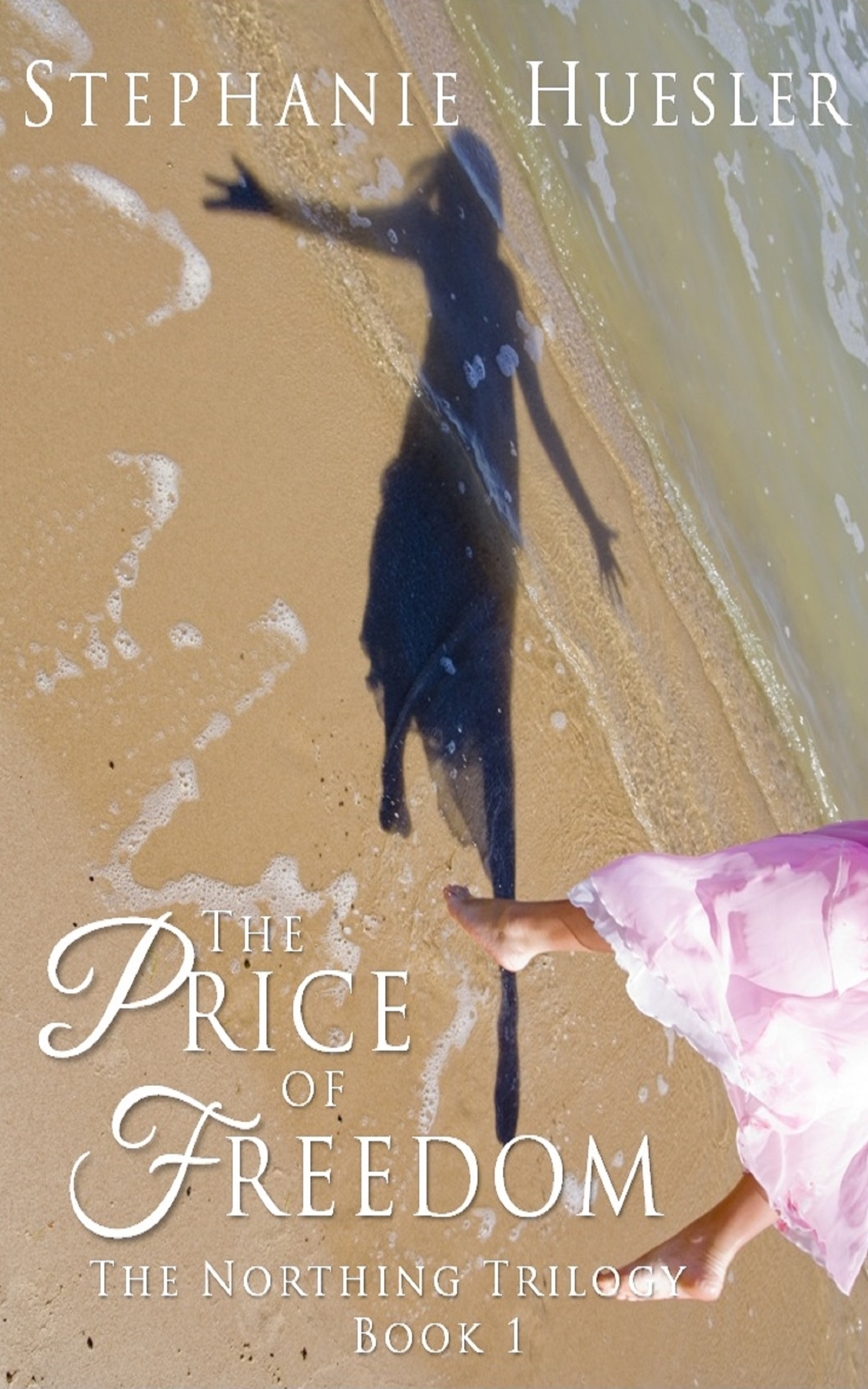
New Book Release: The Price of Freedom

POF1 - Amazon Optimal Pixel

The Price of Freedom
Now available on Amazon

At last, I can announce it!  My first published book, pre-Regency fiction called “The Price of Freedom” is out!  Available on Amazon worldwide, and ready to read and enjoy in the Kindle e-book format!

It’s been a long process, and one fraught with delays, hiccups, a lot of homework, and the unsexy side of writing.  It’s my first baby – the story that started me writing several years ago, and has been the friend I honed my writing chops on.  It’s hard to let go of that baby and let the wider world into its life, and allow it to take on a life of its own, but so it is.

As you know, self-published books are dependent on word-of mouth marketing.  I would really appreciate your help!  If anyone would like to interview me, review the book, and / or write a great review on Amazon, that would be amazing!  If you know anyone remotely interested in literary fiction, Jane Austen, Georgette Heyer (my style has been compared to both of those writers by editors & other writers), historical fiction, Regency or Pre-Regency era, please pass the word on to them!

Here’s a review, from Sue Moorcroft (Author, tutor):

“She was tall and willowy, and had a way of coming into a room like a welcomed summer breeze, drawing all eyes to herself.” – What a great description! It’s the kind of thing I wish I’d written. It really conjures up an image for the reader.

“…his death at such a ripe old age could not conveniently be avoided I suppose…” – A great snippet of dialogue. It’s exactly this kind of sly humour, that Jane Austen did so well, that earns for Regency fiction the tag, ‘comedy of manners’.

So… pass the word, download the book, grap a cuppa and curl up for a good read!

Leave a comment

Filed under Publications

Coherency: Just sayin’…

gibberish-cartoonIs it just my imagination, or is written English slipping in quality, even among writers?  Is it that less attention is paid to the end results than to the actual “getting it out there to be read by others”?  I just returned to my blog after taking a jaunt around WordPress Land; the blogs I visited, I went to with good will, interested to see what others are thinking and writing about.  But I have to admit I couldn’t understand half of what was written.  Half.  Now, I’m an English teacher and writer and all that, and yes, I’ve been living in a non-English speaking environment for a quarter of a century.  But has it really deteriorated to the point of not only miscommunication, but of downright gibberish at times?  I’m not looking down my nose at those who are trying to communicate (something); I am simply throwing out this question into the cosmos and asking if I’m the only one who’s noticed this?

Where is the satisfaction of a job well done in a sentence that looks like it was fed through BabbleFish a few dozen times?  Where is the pride in having written something well, communicated the heart of the matter, and allowed others a glimpse into the mind of the writer without confusing them with poor spelling, syntax and punctuation?  I find myself editing more than reading sometimes, and that does not bode well for the writer.  As a writer I take my job seriously, in all its aspects, from research, to presentation.  If we as writers don’t set a good example to follow, how will the next generation know right from wrong, or rite from wong?

A few simple rules I follow:

1) Read your text aloud before you hit that “post” button.

2) Have a good dictionary available (such as onelook.com), and check those words you’re unsure of.

3) Do NOT trust a spell-checker!  Learn the basic rules of spelling, punctuation and syntax, and if you’re still not sure, double-check online with reliable sources.

Let’s swim against the tide of laziness and stagnation in writing; let’s expand our vocabulary instead of relying on the same ol’ same ol’; let’s set an example of good writing, even though it may not be perfect every time.


2 Comments

Filed under Articles, Cartoon, Nuts & Bolts, Writing Exercise

Cover Art, Cover Art, Where Art Thou

For those of us who are writers, you know what I mean when I say that we’d MUCH rather spend our time writing, creating, moulding, researching characters and plots, and basically ANYTHING else than the dusty technical nuts & bolts of publication.  With the hurdles one has to leap in the publishing world, it’s no wonder that e-books are becoming THE path of choice.  I spent those required months writing cover letters, creating packages to agents, etc. only to get those letters back that said, “Great ideas!  We loved it!  But…” when they already have clients in that genre, they’re not about to take on competition for them…  So like many others, I’ve chosen the route of Kindle.  I’ve got one book ready to go, and another first draft just completed, as well as no less than 5 other projects at various stages of completion.  A meeting with an artist proved fruitless to my purpose; he knows art, but not all the aspects of doing cover art.  I’ve worked with graphic artists for album covers and artwork, but I’m not prepared to invest several thousand at a time when I’ve got dozens in my future… so…

That’s where www.Fiverr.com comes in!  For a fiver, you can find just about any service you can think of, from fake testimonials, to placebo-effect health talks, to business advertising on the back of a Harley, to language lessons over Skype,  to cover art for e-books.  If you find yourself swimming in the Maelstrom of publishing, check it out.

But a word to the wise:  You get what you pay for.  Take it as a springboard, an idea; but take it and own it yourself.  Take the time to invest your energy in learning all you can about each step of the publishing, editing, and artistic processes.  Also, such offers only cover e-book cover art; they are lower in pixel than will be required for a paperback cover, so it’s worth looking into a solution that covers both formats.

Leave a comment

Filed under Nuts & Bolts, Research

A Date with History

In writing, I like to have my days of the week accurate with the year I’m writing in; at the moment I’m putting the final touches on a novel set in 1788, and to get the dates accurate, here’s the website I’ve been using:

http://www.timeanddate.com/calendar/?year=2013&country=9

Just feed in the year and place you’re wanting, and bob’s your uncle.  If you go further back in time, just be aware that calculations of months and days have not always been the same; The Gregorian calendar has gone through some changes since its inception; for instance, there are 10 days missing in October 1582 (the last day of the Julian calendar was Thursday, 4 October 1582 and this was followed by the first day of the Gregorian calendar, Friday, 15 October 1582).

There are also other calendars to consider, e.g. the Roman calendar (http://en.wikipedia.org/wiki/Roman_calendar), Germanic, Icelandic, Asian, Arabic… time has long been calculated.  It’s a bit comforting to know, when I have trouble remembering what day of the week it is sometimes!

Leave a comment

Filed under Research