Tag Archives: Poetic Edda

Insatiable Fascination

Throughout history, people have always been fascinated by thinking beyond their own known world; before widespread writing and reading, ancient cultures thought about their own mortality (which, in some ages, wasn’t that far off) and the afterlife. Various cultures prepared for the afterlife in their own ways: The Egyptians removed organs and embalmed the rest, making sure to send on the heart & co. in separate jars (except the brain – who’d need that in the next world?), then sent them on their way with an army of servants (killed for the occasion); the Vikings buried their most honoured dead within a ship with their favourite animals and servants (ditto). Other cultures built pyres to send their loved ones up in smoke.

When writing came along, at first it was used to capture the past and the natural world, ala Pliny the Elder; poems, sagas, verbal tales and folklore began to be recorded; we have such writings still with us today: The Greek Epic Cycle, the Orkneyinga Sagas, the Heimskringla, the Poetic Edda.
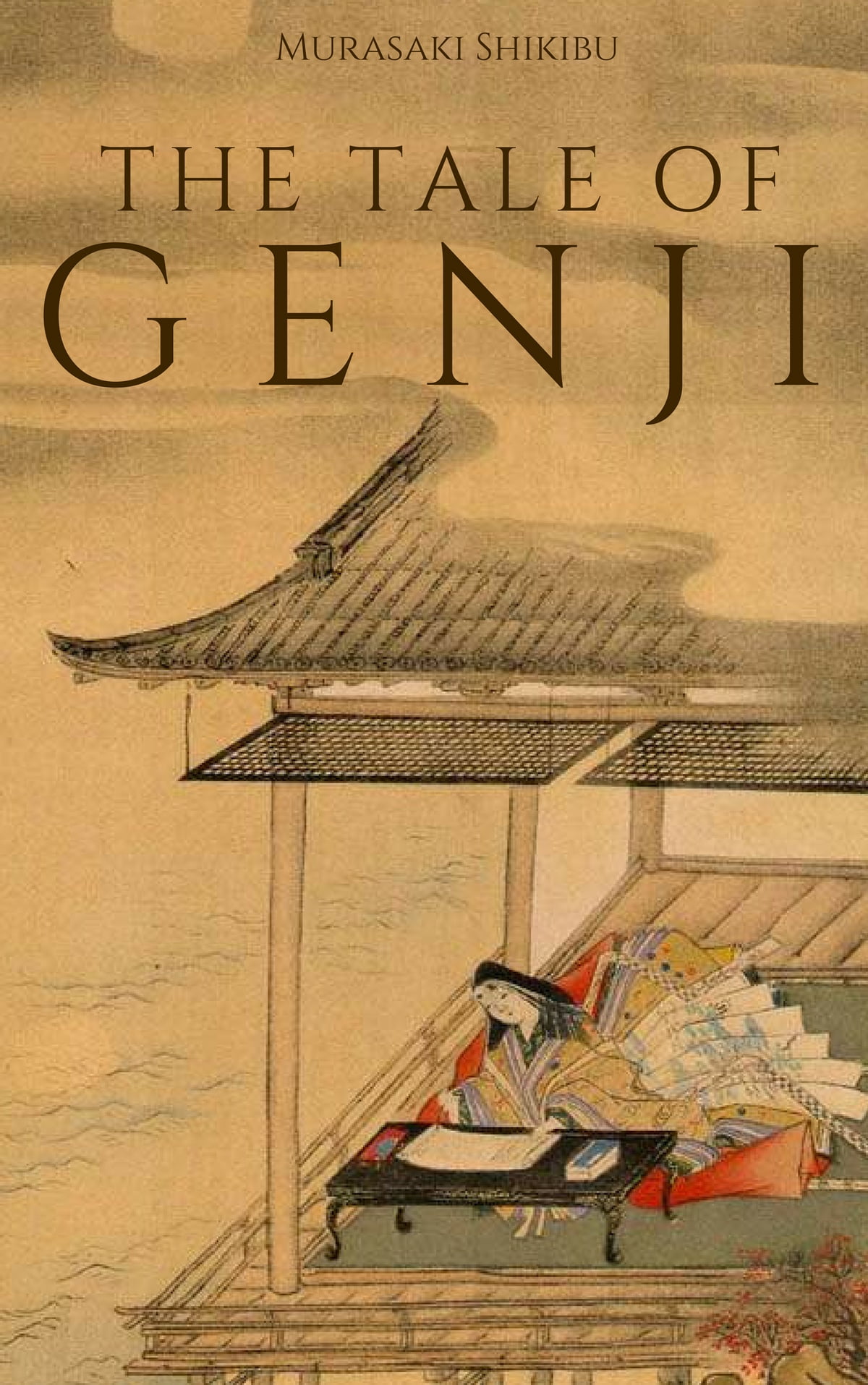
The first novel came along only 1,000 years ago: The Japanese epic The Tale of Genji was written by a woman, Murasaki Shikibu; novels were, for several centuries more, considered on the bottom rung of the literary hierarchy ladder, far behind “serious works” like history. Ironically, Mark Twain referred to history as “fluid prejudice”; it was nearly always recorded by powerful (white) men – hardly ever by a commoner, a member of an ethnic minority, or a woman. The interpretation of events was firmly in the hands of the conquerors. Because of that fact, for instance, we know more about Rome’s version of ancient Britons (Picts, Celts) than we do from their own artefacts; most Celtic and Pictish art is found outside of the UK – many carried off by the Vikings, but that’s another tale. Hollywood has helped perpetuate some of those ancient Roman notions (think of a blue-faced Mel Gibson in Braveheart).

In fact, we don’t even know what the Picts called themselves – the term derives from the Latin Picti, first seen in the writings of Eumenius in AD 297. It can be interpreted (dangerous words) as “to paint” – but there is no evidence that any people groups in northern Britannia painted themselves. Picts is simply a generic term for any people living north of the Forth-Clyde isthmus who fought the Roman Empire’s advancements into their territories. Again, the ink of history flowed from a Roman stylus.

Even Jane Austen herself didn’t begin publishing her novels under her own name. She was a single young woman – for shame that she would dare stain the male-hallowed ground of literature. The saga of how she got published speaks to her tenacity and the support of her family. But she got the last laugh, becoming famous within her (short) lifetime, and she is far better known today than any of the stuffy old men who wrote “proper” books of her day.

The insatiable fascination with other perspectives than our own explains why novels are so popular today. They take us into another time, place and situation, leading us through a story that, if written well, we can relate to and perhaps learn something from. In 1726, Jonathan Swift gave us Gulliver’s Travels. Though he originally wrote it as political satire, to “vex the world rather than divert it”, we know it still today. The fascination with someone being a giant in one land and a miniature in the next grabs our imagination; he travels to floating kingdoms, to an island of immortals, a la Death Becomes Her, and a land of talking horses.

Book Nook (Instagram repeat)

In the age of internet, visual arts have expanded as far as the global imagination can span: Not only paintings or drawings, but even crafts take us into another perspective. I recently saw a series of images in which people have taken the humble walnut shell and turned them into tiny worlds with bookshelves, ladders, lamps, beds and creatures. Book nooks are popular, too: A tiny village, street, or room within the space of a book on a shelf. Science fiction art takes us off-planet.

Films are visual perspectives that take us into other worlds, times and places: When George Lucas showed us a “commonplace” bar scene on Tatooine in the Mos Eisley Cantina in Star Wars, he blew our minds and kicked off a new era of visual storytelling. Avatar took us to another planet and another perception of reality, all the while being an allegorical tale of ecological care vs. abuse. Somewhere along the way, sometime in your life, I’ll bet you’ve been fascinated by a different perspective, whether presented to you through a book, a documentary, a sermon, a play, a film or a conversation.  What did you learn from that encounter? How did it change you, or help shape your perspective? And what is your favourite “escape”: Films, books, visual arts, or music? Please comment below!

8 Comments

Filed under Articles, History Undusted, Humanity Highlights, Images, Psychology Undusted

The Eddic Poems (Poetic Edda)

Poetic EddaIn the course of research for the novel I’m currently polishing, I developed a taste for obscure literature; among other manuscripts I’ve read is the Poetic Edda, or Eddic Poems.  What I find fascinating in the poems is not just the language itself, but encapsulated within the language is always a glimpse into the mentality, humour, and mindset of a people.

The Poetic Edda is a collection of Norse poems and mythology, mainly preserved in the medieval manuscript Codex Regius which was written in the 13th century, though the poems and tales are centuries older, having been oral history passed on by the skalds for generations before they were written down.  The poems were originally composed in alliterative verse (the alliteration may have changed from line to line, such as “Over beer the bird of forgetfulness broods / and steals the minds of men”), and kennings were often used (a compound noun used instead of a straight-forward noun, e.g. “wound-hoe” for “sword”), though they were not as complex as many skaldic poems were.  For a far more detailed history on the collection, click here.

I’d like to share a few gems with you; the reference “EP#” is the page number embedded in the Kindle manuscript.  These gems are either sayings, kennings, customs, or historical trivia.  Enjoy!

EP17:  “The wolf that lies idle shall win little meat, or the sleeping man success.”

EP20:  “Hard is it on earth / With mighty whoredom; axe-time, sword-time / shields are sundered, wind-time, wolf-time / Ere the world falls; Nor ever shall men each other spare.”

EP30:  “A faster friend one never finds / Than wisdom tried and true.”

EP31:  “Less good there lies / than most believe In ale for mortal men; / For the more he drinks / the less does man / Of his mind the mastery hold.”

EP35:  “To mankind a bane must it ever be / When guests together strive.”

EP36:  “Love becomes loathing if one long sits by the hearth in another’s home.”

EP36:  “Away from his arms in the open field a man should fare not a foot / For never he knows when the need for a spear / Shall arise on the distant road.”

EP39:  “No great thing needs a man to give / Oft little will purchase praise. / With half a loaf and a half-filled cup / A friend full fast I made.”

EP41:  “To question and answer must all ready be / Who wish to be known as wise. / Tell one they thoughts, but beware of two / – All know what is known by three.”

EP44:  “Wealth is as swift / As a winking eye, / Of friends the falsest it is.”

EP45:  “Give praise to the day at evening, to a woman on her pyre, to a weapon which is tried, to a maid at wedlock, to ice when it is crossed, to ale that is drunk.”

EP45:  “From the ship seek swiftness, from the shield protection, cuts from the sword, from the maiden kisses.”

EP48:  “Wise men oft / Into witless fools / Are made by mighty love.”

EP71:  “If a poor man reaches / The home of the rich, / Let him speak wisely or be still; / For to him who speaks / With the hard of heart / Will chattering ever work ill.”

EP167:  “Drink beyond measure / will lead all men / No thought of their tongues to take.”

EP250:  “On the gallows high / shall hungry ravens / Soon thine eyes pluck out, / If thou liest…”

“Welcome thou art, / for long have I waited; / The welcoming kiss shalt thou win! / For two who love / is the longed-for meeting / The greatest gladness of all.”

EP277:  “In the hilt is fame, / in the haft is courage, / In the point is fear, / for its owner’s foes; / On the blade there lies / a blood-flecked snake, / And a serpent’s tail / round the flat is twisted.” (Runes carved on a sword)

EP296:  A “breaker of rings” was a generous prince, because the breaking of rings was the customary form of distributing gold.

EP299: “There was beat of oars / and clash of iron, Shield smote shield / as the ships’-folk rowed; Swiftly went / the warrior-laden Fleet of the ruler / forth from the land.”

EP300:  Raising a red shield was a signal for war.

EP304:  “Helgi spake: “Better, Sinfjotli, / thee ‘twould beseem Battle to give / and eagles to gladden, Than vain and empty / words to utter, Though ring-breakers oft / in speech do wrangle.”

“…For heroes ’tis seemly / the truth to speak.”

EP305:  “Swift keels lie hard by the land, mast-ring harts* and mighty wards, wealth of shields and well-planed oars.” (*the ring attaching the yard to the ship’s mast.)

“Fire-Beasts” = Dragons = Ships:  Norse ships of war, as distinguished from merchant vessels, were often called Dragons because of their shape and the carving of their stems.

EP349:  “The word “Goth” was applied in the North without much discrimination to the southern Germanic peoples.”  “The North was very much in the dark as to the differences between Germans, Burgundians, Franks, Goths, and Huns, and used the words without much discrimination.”

EP368:  “Combed and washed / shall the wise man go, And a meal at morn shall take; For unknown it is / where at eve he may be; It is ill thy luck to lose.”

EP369:  the “Bloody Eagle” was an execution for a captured enemy, by cleaving the back bone from the ribs and pulling out the lungs.

EP373:  “Few are keen when old age comes / Who timid in boyhood be.”

EP374:  “When one rounds the first headland” means, “at the beginning of life’s voyage, in youth”.

EP378:  “Unknown it is, / when all are together, / Who bravest born shall seem; / Some are valiant / who redden no sword / In the blood of a foeman’s breast.”

EP379:  “”Better is heart / than a mighty blade For him who shall fiercely fight; The brave man well / shall fight and win, Though dull his blade may be.”

“Brave men better / than cowards be, When the clash of battle comes; And better the glad / than the gloomy man Shall face what before him lies.”

EP382:  “There is ever a wolf / where his ears I spy.”  This is an Old Norse proverb that basically means, “Where there’s smoke, there’s fire”.

EP398:  “I rede thee, / if men shall wrangle, And ale-talk rise to wrath, No words with a drunken / warrior have, For wine steals many men’s wits.”

EP399: “I rede thee, / if battle thou seekest With a foe that is full of might; It is better to fight / than to burn alive In the hall of the hero rich.”  “The meaning is that it is better to go forth to battle than to stay at home and be burned to death. Many a Norse warrior met his death in this latter way; the burning of the house in the Njalssaga is the most famous instance.”

EP400:  “I rede thee, / that never thou trust The word of the race of wolves, (If his brother thou broughtest to death, Or his father thou didst fell;) Often a wolf / in a son there is, Though gold he gladly takes.”

“Battle and hate / and harm, methinks, / Full seldom fall asleep; / Wits and weapons / the warrior needs / If boldest of men he would be.”

EP405:  Eating snakes and the flesh of beasts of prey was commonly supposed to induce ferocity.

EP409:  The actual mingling of blood in one another’s footprints was a part of the ceremony of swearing blood-brother hood.

EP418:  “Borne thou art on an evil wave” i.e. “every wave of ill-doing drives thee”.  A proverb.

“Flame of the snake’s bed” = Gold, so called because serpents and dragons were the’ traditional guardians of treasure, on which they lay.

EP452:  “As the leek grows green / above the grass, / Or the stag o’er all / the beasts doth stand, / Or as glow-red gold / above silver gray.”

EP455:  “On the tapestry wove we / warrior’s deeds, And the hero’s thanes / on our handiwork; (Flashing shields / and fighters armed, Sword-throng, helm-throng, / the host of the king).”

EP457:  “In like princes / came they all, The long-beard men, / with mantles red, Short their mail-coats, / mighty their helms, Swords at their belts, / and brown their hair.”

EP458: “Heather-fish” = snake

EP468:  The punishment of casting a culprit into a bog to be drowned was particularly reserved for women, and is not infrequently mentioned in the sagas.

EP513:  “Thou hast prepared this feast in kingly fashion, and with little grudging toward eagle and wolf.”  = “You’ve been generous in the men you give to die in battle today.”

EP524:  “Full heedless the warrior / was that he trusted her, So clear was her guile / if on guard he had been; But crafty was Guthrun, / with cunning she spake, Her glance she made pleasant, / with two shields she played.”  In other words, Guthrun concealed her hostility (symbolized by a red shield) by a show of friendliness (a white shield).

EP546:  “The dawning sad / of the sorrow of elves” (i.e., sunrise – the Old Norse belief was that sun killed elves).


Notes from The Poetic Edda (Snorri Sturluson), translated by Henry Adams Bellows. Kindle Edition.


2 Comments

Filed under Articles, History, Research, Translations