Category Archives: Lists

History Undusted: 15 January

Unless you’ve been busier than I‘ve been, you’ll have realized that half of January 2025 is already gone. The end of 2024 was crazy busy, and after the dust of the Christmas holidays settled, life was about getting caught up with all of those little things that had been neglected for a couple of months.

I’ve thought about how I want to go forward with this blog in the coming year; I enjoy having this platform to dive into topics I might not otherwise encounter in my day-to-day life, but life in the real world has many facets that keep me busy, too. I’ve decided to post roughly once per fortnight, giving me time to live, write/edit/publish, and research topics of interest. I’ve always tried to write quality above quantity, and I want to share things that interest me, grab my imagination, or give me a good laugh. If you feel the same, sit back and enjoy the ride!

Since this is mid-January, let’s take a look at some of the highlights of history on this day, the 15th of January:

1541: A commission to settle New France (Canada) was granted by King Francis I of France.

1559: Queen Elizabeth I was crowned Queen of England in Westminster Abbey, London.

1759: The British Museum opened to the public for the first time.

1777: In the American Revolutionary War, New Connecticut (Vermont) declares its independence.

1782 – The U.S. Congress was petitioned to establish a national mint and decimal coinage.

1870 – For the first time, a political cartoon symbolizes the Democratic Party with a donkey (“A Live Jackass Kicking a Dead Lion” by Thomas Nast for Harper’s Weekly).

1889 – The Pemberton Medicine Company (later to become known as the Coca-Cola Company) is incorporated in Atlanta.

1908 – The Alpha Kappa Alpha sorority becomes the first Greek-letter organization founded and established by African American college women.

1919 – Great Molasses Flood (a wave of molasses ejected from an exploding storage tank) sweeps through Boston, Massachusetts.

1943 – The Pentagon is dedicated in Arlington County, Virginia.

2001 – Wikipedia, a free Wiki content encyclopedia, is launched (Wikipedia Day).

2009 – US Airways Flight 1549 ditches safely in the Hudson River after the plane collides with birds less than two minutes after take-off. This became known as “The Miracle on the Hudson” as all 155 people on board were rescued. This story was adapted for the “Sully” film in 2016.

2015 – The Swiss National Bank abandons the cap on the Swiss franc’s value relative to the euro, causing turmoil in international financial markets.

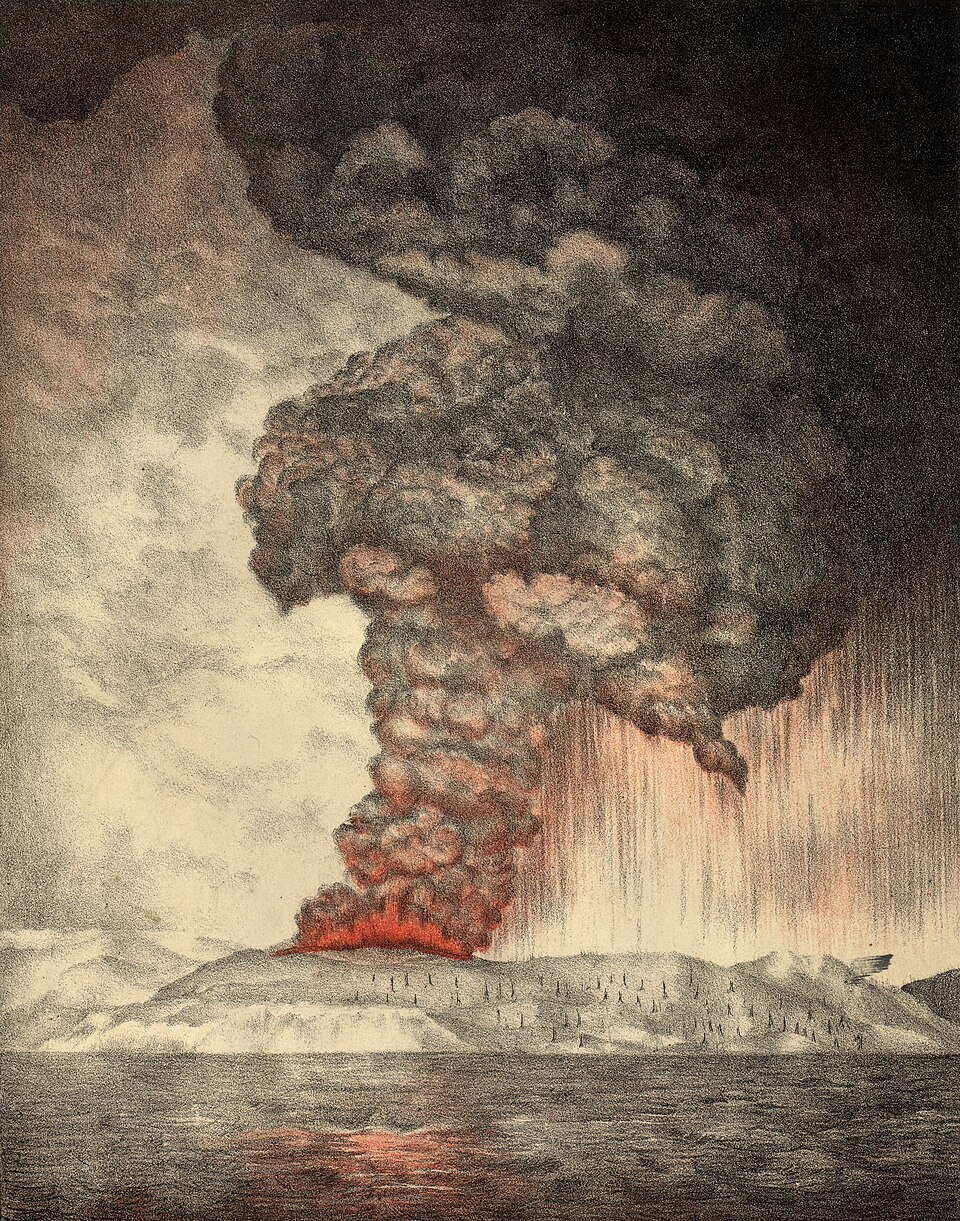
2022 – The Hunga Tonga-Hunga Haʻapai volcano erupts, cutting off communications with Tonga and causing a tsunami across the Pacific. It was the largest volcanic eruption since the 1991 eruption of Mt. Pinatubo (Philippines).

Which of these events do you find most interesting? Please comment below and let us know! For me personally, it’s the opening of the British Museum. What was it like back in 1759, and how has it evolved into the massive collection it is today? I’ve been there a few times, but I have yet to see it all!

This is AI’s interpretation of “ancient scroll rolled up”. No idea where the man came into that result, but his longsuffering expression is apt!

3 Comments

Filed under Articles, History, History Undusted, Lists, Military History, Snapshots in History

Blast from the Past: Excuses for Missing a Day of Work

The Sunday, 14 April 1994 edition of the Washington Post held a contest in which readers were asked to come up with excuses to miss a day of work. The results will bring a smile to your face!

•If it is all the same to you I won’t be coming in to work. The voices told me to clean all the guns today.

•When I got up this morning, I took two Ex-Lax in addition to my Prozac. I can’t get off the john, but I feel good about it.

•I set half the clocks in my house ahead an hour and the other half back an hour Saturday and spent 18 hours in some kind of space-time continuum loop, reliving Sunday (right up until the explosion). I was able to exit the loop only by reversing the polarity of the power source exactly e*log(pi) clocks in the house while simultaneously rapping my dog on the snout with a rolled-up Times. Accordingly, I will be in late, or early.

•My stigmata’s acting up.

•I can’t come in to work today because I’ll be stalking my previous boss, who fired me for not showing up for work. OK?

•I have a rare case of 48-hour projectile leprosy, but I know we have that deadline to meet…

•I am stuck in the blood pressure machine down at the Food Giant.

•Yes, I seem to have contracted some attention-deficit disorder and, hey, how about them Skins, huh? So, I won’t be able to, yes, could I help you? No, no, I’ll be sticking with Sprint, but thank you for calling.

•Constipation has made me a walking time bomb.

•I just found out that I was switched at birth. Legally, I shouldn’t come to work knowing my employee records may now contain false information.

•The psychiatrist said it was an excellent session. He even gave me this jaw restraint so I won’t bite things when I am startled.

•The dog ate my car keys. We’re going to hitchhike to the vet.

•I prefer to remain an enigma.

•My mother-in-law has come back as one of the Undead and we must track her to her coffin to drive a stake through her heart and give her eternal peace. One day should do it.

•I can’t come to work today because the EPA has determined that my house is completely surrounded by wetlands and I have to arrange for helicopter transportation.

•I am converting my calendar from Julian to Gregorian.

•I am extremely sensitive to a rise in the interest rates.

•I refuse to travel to my job in the District until there is a commuter tax. I insist on paying my fair share.

Leave a comment

Filed under Humor, Images, Just for Fun, Lists

Community Care Quiz

With the increasing complexity of our world and a political climate of distrust and division being spread recently, I’d like to offer an antithesis by encouraging everyone to do good, to make a difference by responding in the opposite spirit. Below is a short quiz that might spark a few ideas of how you can make that difference:

WHEN WAS THE LAST TIME THAT YOU…

  1. …told someone that you appreciate what they do in your community?
  2. …sent a message of encouragement to someone?
  3. …invited someone out for a drink or a meal?
  4. …invited someone new to your home?
  5. …sent a message or made a phone call to someone who’s sick?
  6. …intentionally identified someone who needs encouragement, and then acted on that?
  7. …did something fun with one or more community members (e.g., a neighbourhood party, a bike ride, a picnic, or a fun-raising event)?
  8. …spent time with children in your community? (Sometimes young people need encouragement from older community members.)
  9. …thanked someone for their contributions to your community?
  10. …given a small financial gift (anonymously or known) to someone who really needs a sign that someone cares about them?

If you haven’t done any of the above for a while, plan to do something about it this coming week!

3 Comments

Filed under Articles, Humanity Highlights, Lists, Psychology Undusted, Quotes

Comprehensive Examination

Recently, my office got an upgrade, my “office” being in our home library. I got a larger desk, and in the process of moving the old out and the new in, I took the opportunity to do a bit of “house cleaning” – sorting through papers, a notebook full of articles, and bits and bobs I’d kept over the years for teaching English to adults (I was an active EFLA teacher for more years than I care to calculate!). One of the papers I came across was the following; I knew I needed to share it because it always gives me and my husband a good laugh. I don’t know who originally wrote this, but it’s genius!

Comprehensive Examination

Instructions: Read each question carefully. Answer all questions. Time limit: 4 hours.  Begin immediately.

HISTORY: Describe the history of the papacy from its origins to the present day, concentrating especially but not exclusively, on its social, political, economic, religious and philosophical impact on Europe, Asia, America and Africa. Be brief, concise and specific.

MEDICINE: You have been provided with a razor blade, a piece of gauze and a bottle of scotch. Remove your appendix. Do not suture until your work has been inspected. You have fifteen minutes.

PUBLIC SPEAKING: 2,500 riot-crazed Aborigines are storming the classroom. Calm them. You may use any ancient language except Latin or Greek.

BIOLOGY: Create life. Estimate the differences in subsequent human culture if this form of life had developed 500 million years earlier, with special attention to its probable effect on the English parliamentary system. Prove your thesis.

MUSIC: Write a piano concerto. Orchestrate and perform it with flute and drum. You will find a piano under your seat.

PSYCHOLOGY: Based on your knowledge of their works, evaluate the emotional stability, degree of adjustment and repressed frustrations of each of the following: Alexander of Aphrodisias, Ramses II, Gregory of Nicea, Hammurabi. Support your evaluation with quotations from each man’s work, making appropriate references. It is not necessary to translate.

SOCIOLOGY: Estimate the sociological problems which might accompany the end of the world. Construct an experiment to test your theory.

MANAGEMENT SCIENCE: Define management. Define Science. How do they relate?

COMPUTER SCIENCE: Create a generalized algorithm to optimize all managerial decisions, assuming an 1130 CPU supporting 50 terminals, each terminal to activate your algorithm; design the communications interface and all necessary control programs.

ENGINEERING: The disassembled parts of a high-powered rifle have been placed in a box on your desk. You will also find an instruction manual, printed in Swahili. In ten minutes a hungry Bengal tiger will be admitted to the room. Take whatever action you feel appropriate. Be prepared to justify your decision.

ECONOMICS: Develop a realistic plan for refinancing the national debt. Trace the possible effects of your plan in the following areas: Cubism, the Donatist controversy, and the wave theory of light. Outline a method for preventing any negative effects. Criticize this method from all possible points of view. Point out the deficiencies in your point of view, as demonstrated in your answer to the last question.

POLITICAL SCIENCE: There is a red phone on the desk beside you. Start World War III. Report at length on its socio-political effects, if any.

EPISTEMOLOGY: Take a position for or against the truth. Prove the validity of your position.

PHYSICS: Explain the nature of matter. Include in your answer an evaluation of the impact of the development of any other kind of thought.

PHILOSOPHY: Sketch the development of human thought; estimate its significance. Compare this with the development of any other kind of thought.

GENERAL KNOWLEDGE: Describe in detail. Be objective and specific.

EXTRA CREDIT: Define the universe; give three examples.

7 Comments

Filed under Humor, Just for Fun, Lists, Writing Exercise

Nature Undusted: The Phenomena of Ghost Lights

Pixar’s “Brave”, showing will-o’-the-wisps.

Back in January, I wrote about the phenomenon of the Hum, something that occurs around the world.

Another global phenomenon is that of “ghost lights,” also known as fata morgana, mirages (both inferior and superior), will-o’-the-wisps, fairy fires, or ignis fatuus (“foolish flame”).

I grew up in a climate zone with hot, dry summers and wide, flat highways that stretched to the horizon. On a hot summer day, you could see the cab of a semi-truck floating mid-air for some distance before you actually saw the truck finally touch the ground. Sometimes the highway would look flooded – this kind of water mirage is also a danger in desert regions. Death Valley is dangerous, not only because of the heat but also because of disorienting mirages.

Ghost Lights can have a variety of natural causes: methane gas combustion or other organic decay which can cause photon emissions (these lights often appear over swamp or boggy areas); light refraction in certain atmospheric conditions that cause the lights of cars on distant roads or firelights from campfires to “float” midair (like the semi-truck cab above); it may also be caused by the bioluminescence of various micro-organisms and insects.

Here are a few well-known lights:

Marfa Lights

Hornet Spooklight

Gurdon Light

Brown Mountain Lights

Hessdalen Lights

Min Min Light

Naga Fireballs (Thailand)

Palatine Light

Paulding Light

Chir Batti

St. Louis Ghost Train (Canada)

 plus many more!

For a fun dive into these phenomena, the Why Files has a video covering the topic (the actual content starts at 4:15); I enjoy his videos because the author in me likes the way he sets stories up as real – as if reporting facts – before he debunks them or offers probable explanations. While he knows that many people likely believe in the stories he eventually debunks, he goes about it in a respectful, tongue-in-cheek way.

For a shorter video on the topic, Joe Scott has an interesting one.

Have you ever seen any of these lights, or experienced mirages? If so, please tell us about it in the comments below!

Leave a comment

Filed under Articles, History, Links to External Articles, Lists, Nature, Psychology Undusted, Science & Technology, Space, Astronomy, YouTube Link

10 Tips for De-Cluttering

Although it’s already summer, we have only had one day over 30°C. Don’t get me wrong – I’m perfectly happy with cooler days; you can layer clothes, but when it’s hot, you can only take off so much and still be socially acceptable.

But when the weather begins to warm up, thoughts turn to spring cleaning. The practice goes back centuries: For climates that experience cold winter months, spring cleaning usually takes place when the weather begins to be warm enough to open windows but not warm enough yet for swarms of bugs coming in as a side effect. Also, back when wood was the main source of heat, if it was warm enough not to need the wood-burning stove, it was the ideal time to clean out the soot and to dust the house, letting the breeze help carry it away. In modern times, where most houses no longer depend on wood or fireplaces as the main heat source and windows can be opened year-round (with the heater returning indoors to comfortable temperatures), spring cleaning is still a tradition.

Most people have those areas in their homes where things can stand around for months or even years before they put them in their proper places; sometimes those things that don’t have a proper place stand around even longer. Spring cleaning is the ideal occasion to look around, notice those stand-arounds, and put them away properly or eliminate them altogether.

“Mis en place” is a French culinary term meaning “putting in place”, or “gathering” (as in gathering ingredients in preparation for cooking). Outside of the kitchen, it can be used as a description for putting everything in its place. Spring cleaning and mis en place is a great opportunity to de-clutter.

Here are 10 tips for de-cluttering:

  1. Once-in-the-hand principle: Firstly, get yourself a basket to carry from room to room to gather things that need putting in their places; once the basket is full, put the items where they go. Don’t lay things down somewhere else “for now”!
  2. Two-Year Gauge: If you haven’t touched, missed, or used an item in the past two years, chances are you won’t miss it – give it away, donate it to a second-hand shop, or recycle it.
  3. Clothes: Do you have clothes you’ve kept but never wear, or they’re the wrong size, or they’re worn out? Keep one worn-out outfit for dirty work, but bag up the other items to donate, scrap, or give away.
  4. Kitchen: Go through your food cupboards: Toss out anything past its expiry date (this is at your discretion; foods today rather more honestly call it a “best before date”, as canned goods are often good for a while past that…); rotate the older cans of food to the front, the newest toward the back (also best practice when putting away new shopping); toss out any spices that have gone off or are stale.
  5. Storage: Do you have plastic containers without matching lids or lids without containers? Get rid of them. Do you have duplicate utensils that you don’t need? Donate them. Do you have pots or pans that are worn out? Replace them if need be.
  6. Linens (towels, bedding, etc.): Toss or recycle any threadbare, ripped, or worn-out items. Fold the keepers and store them neatly (stacks tend to get lazy over time, don’t they?).
  7. Electronic Gadgets: Go through your electronic items and match cables to each piece of (working) equipment, and recycle the rest. Along the same line, clean out your inbox of superfluous emails.
  8. Toiletries: Toss anything that has gone off – hand cream, makeup, nail polish and medicines included.
  9. Paperwork: Get rid of any guarantees that have expired, old paperwork, or manuals for items you no longer own; file and organize what you keep. While you’re there, check those pens to see which ones still work and chuck the rest.
  10. Sentimentality: Don’t hold on to something out of guilt (someone gave you X…) or obligation (they might notice I’ve tossed it). If it brings you no joy, is not practical, or isn’t in keeping with your aesthetic, don’t keep it.

Have you already started spring cleaning this year? Tackling one point at a time (in a day, or a week) will make it possible, and you’ll be done before the cat can lick its ear!

I’m curious to know if any of these tips inspire you to de-clutter a specific area – please comment below!

3 Comments

Filed under Articles, Cartoon, Lists

Fieldnotes

A few months ago, I began something that has added a layer of creativity and organisation to my life which, to be honest, is fairly creative and organised as it is. But this little addition adds a nice colour: Fieldnotes.

The original concept of taking fieldnotes comes from the scientific disciplines: An archaeologist in the field, taking notes on where, what and when something was uncovered; a geologist, botanist, ornithologist, or entomologist taking notes on observations, perhaps drawing an illustration of a specimen or a map of the landscape.

Fieldnotes can include writing, diagrams, drawings, or visual clues within an entry such as arrows or other visual connectors. They differ from a daily journal in that the fieldnotes are concise… rambling or expanding on a thought belongs elsewhere, but not in a “quick-draw” situation (pun intended).

Creative thinkers have jumped on the idea for reasons other than scientific observation: As a writer, fieldnotes help me capture snippets of ideas, dialogue, or an observation when out in public (I love to people-watch), or something I read – sometimes the comments on YouTube videos are a great capsule of humour! I also use fieldnotes to keep track of tasks on a busy day – lists of to-dos, to-writes, and so on. When I have a creative project, I take notes on the steps taken – such as making giant flowers that no one else has ever made; how to scale up a smaller version of a crepe paper flower is not always straightforward, and if I have several to make, it helps to have those detailed notes of the prototype phase for the next time around.

Taking fieldnotes might help get your creative juices flowing. If you’d like to start this practice, here are a few tips:

  1. Use a small notebook – one that can fit into a shirt pocket, man-bag, or purse. I’ve made my own with 70gsm blank paper, which allows me to make the same size and style repeatedly. But if you can’t do that, just use something like a moleskin notebook; these come in various sizes, with or without lined pages. There is also a company with books called Field Notes, though they seem a bit pricey for what you can do on your own…
  2. Use a good pen, or pencil, or coloured pencils if you want to sketch something with colour.
  3. You can either take chronological notes, such as dating each entry, or you can organise your notes into groupings: One page per character, scene or topic, or for a to-do list, or whatever you want to capture on the go.
  4. Use visual cues, such as boxes around certain elements or arrows connecting one thing to another. Use illustrations or draw diagrams; attach images from magazines, printouts, etc.
  5. Highlight tags or keywords; consider numbering each page and keeping an index at the back of the book to help you find things later on.
  6. One book that might help kick-start illustrative note-taking if it’s new to you is The Sketchnote Handbook, by Mike Rohde.
  7. Think about how you’re recording things on the page: Do you always want to write straight, top left to bottom right, or do you want to mix things up and write diagonally, sideways, or even backwards? Yes, sometimes that’s a thing; Leonardo da Vinci wrote privately in a mirrored direction, only writing normally when he wanted others to read his notes; he also developed his own shorthand.
Leonardo da Vinci’s Vitruvian Man, with mirrored writing.

I also have my own shorthand for many things; Sometimes I use what I call pigeon Asian (I use this when I don’t want anyone else to read it); it’s something I learned when living in Hawaii. It looks like Kanji (the logographic writing of Japan), but it’s not – that’s all I’ll explain! I also use logographs, such as the ancient Anglo-Saxon rune of daeg, which includes the concept of day, dawn, intuition or breakthrough; I use this to designate those times when I’m writing: Rather than writing, “Today, I wrote/worked on the manuscript for...” I just write that symbol plus the name of the manuscript and details. I have a whole series of such shorthand symbols that I use daily.

While there are note-taking apps available (and I use one, called “Keep My Notes”, on my phone for things like shopping lists or feedback notes for singing students or bands that I take during performances and review with them later), sometimes it’s helpful to get away from digital screens. Sometimes I’ll write whole scenes away from the computer – I don’t use my fieldnotes for that, though it will probably be used to outline a scene that comes to mind until I get to another notebook. Something about writing long-hand sparks a level of creativity that might not come while working at a computer; hand-eye coordination should never be underestimated in creative endeavours. Once a scene has developed enough away from the screen to be integrated into my current manuscript, it then takes on another reiteration as I type it in, tweaking and changing… it’s what I call a “ripening process” as a wine metaphor for the creative maturing process a scene goes through by this method. It gets my head into a new space figuratively, literally, and literarily!

In an age when we are constantly bombarded with visuals wherever we go, sometimes it’s healthy to go back to good ol’ pen and paper. On those days so busy that I can’t remember what I’ve actually done, it’s helpful to look back at my fieldnotes as I write out my thoughts in my daily journal.

Do you write? Do you ever make lists for shopping, chores, people to contact, or things to do? If so, how have you kept track of such things so far? If it’s a system that works for you, brilliant! But if you find yourself wanting to switch things up or wanting to improve your use of time, would you consider taking fieldnotes? Please comment below!

2 Comments

Filed under Articles, Etymology, Humanity Highlights, Links to External Articles, Lists, Musings, Nuts & Bolts, Research, Science & Technology, Writing Exercise, Writing Prompt

10 Everyday Phrases with Nautical Origins #4

Picking up from where I left off in February, here are a few more everyday phrases that have been gleaned from the times when ships at sail were the most influential source of importing new ideas, foreign words and catchy tunes (such as shanties). The first of these phrases might be recognized by Star Trek fans, as the captain usually used this term or something similar to hand over the authority of the ship whenever he left the bridge.

Take the Conn: A term used to take over navigational duties on the bridge of a ship (this comes from the mid-1800s, during the age of iron-clad warships). Idiomatically, it means to take control of a situation. The word conn is either a noun or a verb and comes from conning tower – a raised platform from which the entire deck and surrounding environment can be observed.

Sailing Close to the Wind: Strong winds can be just as problematic at sea as no wind; strong winds can unexpectedly shift and take control of a boat’s direction, and many sailors will lower their sails until more favourable conditions exist. To use strong winds for sailing is risky and unpredictable but sometimes necessary; the modern term refers to taking risks that may be unreasonable, being close to breaking the law or going too far.

All Hands on Deck: A call to action – everyone must assist in resolving a problem or addressing a situation. During inspection or trouble, all hands were called to the deck; everyone needed to be present or accounted for, and working as directed.

On the Right Tack/Track: The correct course while sailing requires you to tack or move the sail to catch the wind to keep you on course. To take the wrong tack means to be off course, heading in the wrong direction. Tack has changed to track in a more modern language. Today it refers to Taking the line/course of action that leads to the correct conclusion.

Overboard: If cargo or people went overboard when sailing, the call “overboard” would be yelled out to draw attention to the event. With luck, the items or people could be recovered, but unfortunately, this was not often the case.

Abandon Ship: When a ship was sinking or being overrun by an enemy ship, sailors would need to abandon their posts and escape. The call to abandon the ship was considered a last resort.

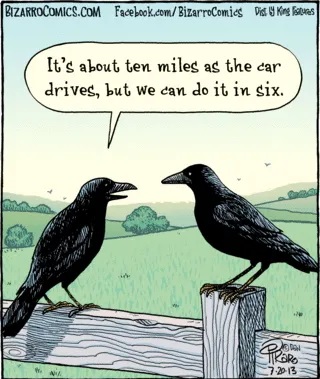
As the Crow Flies: After crossing the oceans, sailors would watch for birds to detect nearby land. Following the direction of birds, such as a crow or seagulls, got them closer to shore to follow it to a port. Crows fly straight, and so it refers to the shortest distance between two points.

Tide Over: When a ship could not get under sail due to poor winds, they would ride the tide until the winds returned. If something tides one over, it will last until new provisions can be obtained or until conditions change.

High and Dry: If a ship was caught in low tide or ran up on the shoals, it might end up being stranded with no hope of recovery. The term was to be caught high and dry, as in up out of the water. It’s used today to describe the feeling of being abandoned, stranded, or helpless.

Sink or Swim: Tossing a person overboard resulted either in them sinking or swimming. The term was made popular in swashbuckling movies featuring pirates deciding on whether they should spare their captives or not. Today, it refers to either failing (sinking) or succeeding (swimming) in a task or an endeavour.

2 Comments

Filed under Articles, Cartoon, Etymology, Grammar, History, Images, Lists, Military History

History Undusted: Burma-Shave

For those outside of the US and/or Millennials, the term “Burma-Shave” might be new to you – which is why I’d like to “undust” this fascinating little piece of history.

The 1920s was a time of change; World War 1 was over, and the following Spanish flu had wiped out more people than the war itself; the survivors just wanted to celebrate life. Out went the starchy mentality of Victorian dresses and in came the flappers; innovations and scientific breakthroughs fed the hunger for the new and anything that made life easier.

At the time, men shaved themselves with shaving cream applied to the face with a brush and a straight razor blade (still common into the 1950s, when the double-edged safety razor began to gradually take over).

Enter, the Burma-shave brushless shaving cream: Introduced in 1925 by the Burma-Vita Company in Minneapolis, Minnesota, it was purported to have come from “the Malay Peninsula and Burma.” It was, in fact, a result of chemical experiments by chemist Carl Noren. The monicker was a marketing gimmick, much like products touting to be “Swiss” that are unknown here (even “Swiss cheese” – which one of the hundreds is meant?). The cream didn’t really take off, and while other similar products were coming out of larger companies such as Barbasol and Gilette, Burma-Shave managed to beat the odds when their clever advertising campaign was hit upon.

Around this time, the Ford Model T had become a huge success, with millions of new automobiles on ever-expanding road systems. Roadside signage was taking off, and the advertising gimmick was destined to go down in history as one of the quirkiest success stories.

Burma-Shave ads were a series of signs along the road that concluded in the sign saying “Burma-Shave”. The first couple of years, the signs were rather prosaic ads for the company; but as they began bringing in repeat customers, the signs became bolder and more experimental. They became more humorous rhymes – usually five signs, with a sixth ending the series as “Burma-Shave”.

Here are a few examples:

  • Shaving brushes / you’ll soon see ’em / on the shelf / in some / museum / Burma-Shave (1943)
  • Uncle Rube / buys tube / one week / looks sleek / like sheik / Burma-Shave (1930)
  • A shave / that’s real / no cuts to heal / a soothing / velvet after-feel / Burma-Shave (1932)
  • Shaving brush / and soapy smear / went out of / style with / hoops my dear / Burma-Shave (1936)
  • The Burma girls / in Mandalay / dunk bearded lovers / in the bay / who don’t use / Burma-Shave (1937)

As cars began to speed up, safety messages increased around 1939:

  • Hardly a driver / Is now alive / Who passed / On hills / At 75 / Burma-Shave (1939)
  • If you dislike / big traffic fines / slow down / ‘till you / can read these signs / Burma-Shave (1939)
  • At crossroads / don’t just / trust to luck / the other car / may be a truck / Burma-Shave (1939)
  • Don’t pass cars / on curve or hill / if the cops / don’t get you / morticians will / Burma-Shave (1940)
  • At intersections / look each way / a harp sounds nice / but it’s / hard to play / Burma-Shave (1941)

When World War 2 came around, the signs reflected the social conscience:

  • Maybe you can’t / shoulder a gun / but you can shoulder / the cost of one / buy defence bonds / Burma-Shave (1942)
  • Shaving brush / in army pack / was straw that broke / the rookie’s back / use brushless / Burma-Shave (1942)
  • Slap / the Jap / with / iron / scrap / Burma-Shave (1943)
  • Tho tough / and rough / from wind and wave / your cheek grows sleek / with / Burma-Shave (1943)

A few humorous signs:

  • She kissed / the hairbrush / by mistake / she thought it was / her husband Jake / Burma-Shave (1941)
  • We know / how much / you love that gal / but use both hands / for driving pal / Burma-Shave (1947)
  • I use it too / the bald man said / it keeps my chin / just like / my head / Burma-Shave (1947)
  • Road was slippery / curve was sharp / white robe, halo / wings and harp / Burma-Shave (1948)
  • If you think / she likes / your bristles / walk bare-footed / through some thistles / Burma-Shave (1948)
  • A man / a miss / a car – a curve / he kissed the miss / and missed the curve / Burma-Shave (1948)
  • Our fortune / is your / shaven face / it’s our best / advertising space / Burma-Shave (1963)

Toward the latter part of the signage, they began recycling earlier messages. Road signs and maintenance became increasingly expensive, and cars sped by faster than ever. The signs disappeared from the roads in 1963 when the company was sold to Phillip Morris and they discontinued the marketing campaign, which turned out to be a mistake; sold once again, the product eventually disappeared, but the term “Burma-Shave” can still be heard, referring to short, quirky rhymes.

To read more about this topic:

Route Magazine: Defining the American Dream, One Sign at a Time

I hate to end / this fun article / but time is short / so here’s what’s possible / Burma-Shave examples from Pinterest:

This illustration is from “A History of the Burma-Vita Company”, written by Frank Rowsome Jr. and illustrated by Carl Rose (published by the Stephen Greene Press in 1963).

12 Comments

Filed under Articles, History, History Undusted, Links to External Articles, Lists, Military History, Quotes, Signs, Snapshots in History

10 Everyday Phrases with Nautical Origins #3

Some of today’s nautical idioms are well known, such as to be on board with a proposal or suggestion or learning the ropes in a new job or position, while others, such as three sheets to the wind are less common (unless you happen to work in a bar – then it may come in quite handy). Either way, enjoy these, matey!

Be On Board: As part of a crew, a sailor bore their part of the responsibilities. In today’s terms, it means to accept or agree with a proposal or a way of doing something and go along with it.

Rats Deserting a Sinking Ship: Rats and mice were common aboard ships, often in the bulkhead (lowest section of a ship, where the grains were stored (the weightier things being stored low and balanced to keep the ship sturdy in rough seas). If the ship began to take on water, the rats would go up the deck ladders to stay away from the water; if they started jumping overboard, sailors wouldn’t stand much better of a chance (most sailors could not swim). It’s a vividly grim picture of life aboard. Now, it’s an idiom describing people abandoning a failing activity or situation.

Close/Tight Quarters: Tightly packed (e.g. people in a small space). Space was at a premium, especially on the lower decks of a ship of sail. Men slept in hammocks close together and shared the space with stowed ship equipment and their own storage chests. Even today on submarines, bunks are shared by those who are off-duty and those on-duty to save sleeping quarter space.

Run a Tight Ship: Manage and organization strictly, efficiently, and effectively. A ship, especially in times of war, was run tightly to avoid unnecessary dangers and/or deaths, and to maintain discipline that would be needed to succeed in crucial moments.

Learn the Ropes: Sails were raised and lowered with ropes, and knowing how to control the sails allowed a ship to take full advantage of the wind and sail safely. There were miles of ropes on a ship, each with an important and specific function. Learning the ropes was essential for everyone aboard – it would keep others out of danger and oneself alive! Today, one learns the way things are done in a given setting or situation.

Broadside: The broadside was the side of the ship which sat above the waterline; cannons were arranged on several decks, and when ships sat broadsides facing, firing simultaneously, it was known as broadsiding. Today, it refers to being taken off guard or being surprised by something unpleasant.

 Broad in the Beam: Describes the width of the beam or mast on a larger ship. It denotes a person who’s wide across the hips and buttocks.

Keel Over: To collapse, to die. If the keel of a boat were to rise out of the water, the ship would be in danger of capsizing; this might happen due to a storm or damage by an enemy attack.

To Keelhaul: To rebuke harshly. It was a punishment meted out in extreme cases by dragging someone, ankles weighted, by ropes beneath the ship along or over the keel (the backbone of wood along the bottom of the ship). As these were usually covered with barnacles, clothes and skin would be shredded by the barnacle shells, and if the salt water of the ocean didn’t disinfect the wounds on the way up, it could be a death sentence. How much it was actually practised is difficult to say, as written records are sparse (perhaps a cruel captain didn’t want it on record, or perhaps it was not as widely practised as we think); the most concrete records of the punishment come from the Dutch. It was banned by the British Royal Navy around 1720, and by the Dutch around 1750. That bans were necessary tells its own tale…

Three Sheets to the Wind: Implies an unsteady, drunk person. The sheet referred to the ropes (lines) used to control the trim (the advantageous angle of the sails in relation to the wind) of the sail. If the sheets are loose, the sails will flap in the wind which causes the ship to lurch about like a drunken sailor. There are variations of the number of sheets in the idiom: 1 would be tipsy, 3 would be staggering drunk!

3 Comments

Filed under Etymology, History, History Undusted, Lists, Military History