Category Archives: Musings

A Little Light Reading… Not

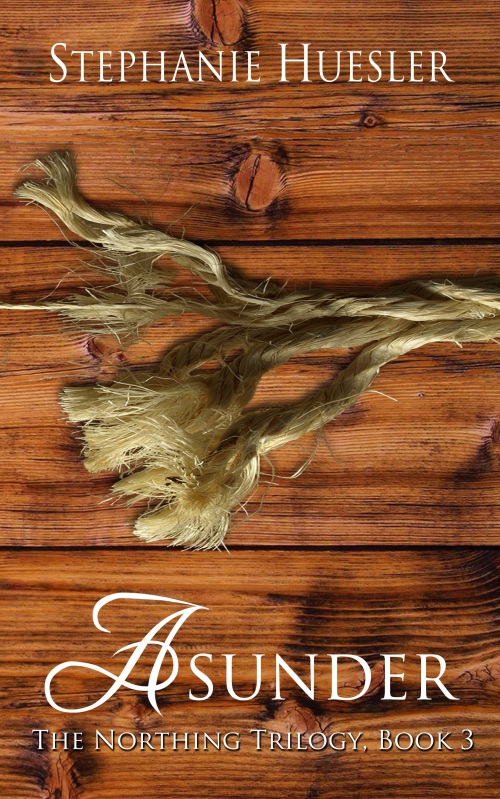
I will admit that I have quite odd tastes in reading, especially for a woman; I tend toward history, nautical, and obscure or long-forgotten books.  In writing my current manuscript, which is Asunder, the third book in the Northing Trilogy, I’ve read more than a fair share of military history books, specifically covering the 18th century of the Royal Navy.  Once, on a research trip to London, I searched out a bookstore that specializes in military and transport books, even reputed to have remainders; I don’t think they’d seen a woman in the shop in years (who’d entered intentionally) by the looks I got; one of the men even said, “The beauty shop’s two doors down, love.”  When I asked if they had the out-of-print autobiography by William Spavens, a unique lower deck view of the 18th century navy, they froze as if they hadn’t heard me correctly.  The question must have been laced with catnip, because after that I had the entire shop of men eating out of my hand, and I spent nearly two hours in there being helped to the finest pick of naval history books (including the autobiography I was after!).  Sadly, the last time I was there the shop was gone, but I’ve since found the largest used book shop in London, Skoob, which is highly dangerous for a bibliophile with a private library…!

A few of the books I’ve read in the course of research for Asunder are fairly gory, like Medicine Under Sail (I’d bet my bottom dollar that the screen writers for “Master and Commander“, with Russell Crowe, read that book as they wrote the script) and “Poxed & Scurvied” – the story of sickness and health at sea, while others have been like reading a thriller, such as “The Seven Years War” by Rupert Furneaux  or “A Sailor of King George” by Captain Frederick Hoffman.

I devour history books like other people devour pulp fiction; but especially during the first draft of the book, I had to continually keep in mind that I was writing historical fiction, not a history book; the details that I included had to serve the plot and character development, and not visa versa.  Only a fraction of what I learned has gone into the book; but those rich details give salt to the waves, creaks to the ship, and whip to the rope (I’ve also spent hours aboard the Cutty Sark “filling in the blanks” of a docked ship, so to speak, but that’s another story).  I could have peppered the dialogue with so much naval slang you wouldn’t have been able to swing a cat (naval slang, by the way), but if readers were to get ripped out of the story trying to figure things out, then I would have missed the mark.

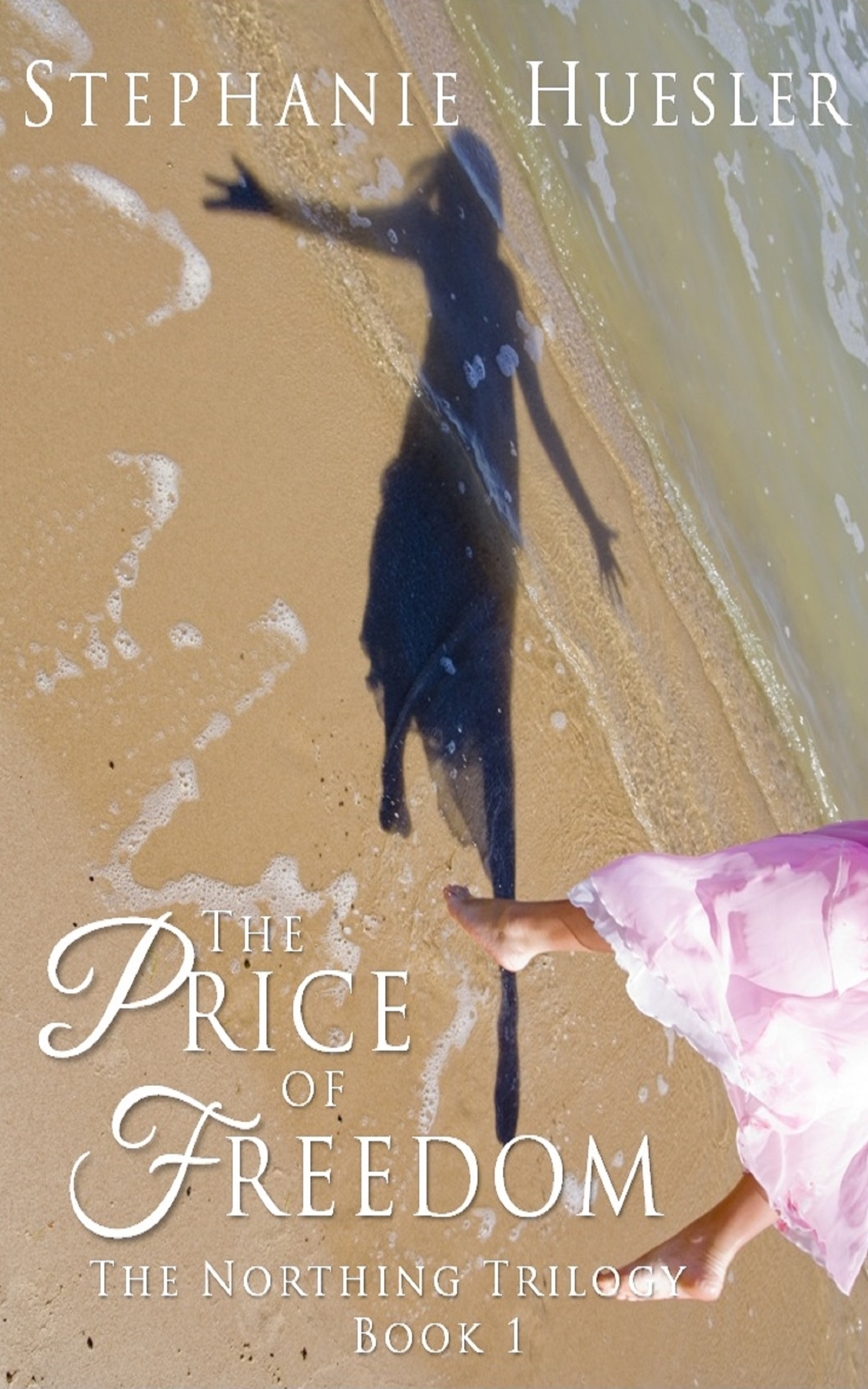
So, the next time you sit down for a little light reading, you might want to consider one of the books linked above; then again, if you don’t want gory dreams, rather go with “The Price of Freedom“, or “Redemption“, or “The Cardinal, Part One or Part Two“…  and enjoy!
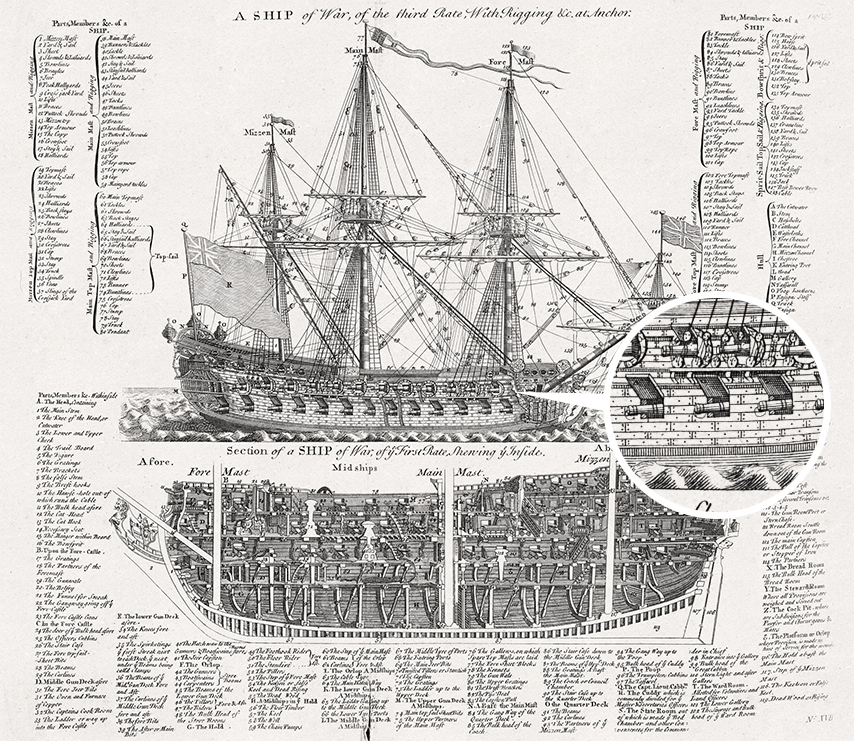
third-rate-ship-of-the-line-diagram

One of my library posters

8 Comments

Filed under Articles, History, Military History, Musings, Nuts & Bolts, Research

New Year’s Resolutions

new-years-resolutions-3It’s that time of the year again, when people talk about “New Year’s Resolutions”, as if the turning of the yearly calendar will somehow magically give them the impetus to make changes.  Rarely does it work that way, however.

A work colleague of my husband once upon a time trained to be a competitive  cyclist, and he said that once one makes the decision to give up in a race – for whatever reason – it makes it all the more difficult to persevere thereafter… once resolve caves, winning it back is harder work than ever before.  The same can be said of life, and resolutions.  If our daily goals don’t match our long-term goals, those long-term goals will never be reached; if we give up or cave in, we’ll find daily excuses why we can’t reach for the goal “yet”, and we’ll have a growing sense of guilt that makes us less willing to face the challenge.

Resolutions at the beginning of the year are usually related to a desire to better oneself; but resolve is something that’s built on a day-to-day basis, and should be a process.  If you set a mental goal – such as going to the gym twice a week  – which is not in agreement with your heart’s desires, then it won’t happen; our mind and heart need to get aligned in order for us to reach any target.

So I say, rather than making a resolution, become resolved.  Take baby steps to reach a goal; those steps might be to go on a walk once a week, or to take the stairs instead of the lift, or to purchase an exercise bike and put it somewhere in your home that’s a motivating place (e.g. near a window with a nice view), and then resolve to build up your stamina gradually with an initial time limit, stretching it as you feel you want to rise to the challenge.  If your goal is to write more, then decide on a specific amount, and take those baby steps – make space in your schedule, or learn how to utilize “limbo” moments toward your goal; carry a notebook and pen, and use them.  If your goal is to appreciate those around you more, then begin to focus on the positives, not the negatives; learn to compliment more and criticize less.

Whatever you want to see change in your life, go for it!  If you fail today, pick yourself back up, dust off your knees, and try again tomorrow.  Anything worth reaching is worth the effort, and every new day is full of opportunities.

Have a wonderful year, and may you look back on 2017 with satisfaction, knowing you’ve grown in positive ways!

6 Comments

Filed under Articles, Cartoon, Musings

A Blast from the Past: 1906

Living in the Cyber Age, it’s easy to forget that personal computers only came into existence for the mass market in 1981 (and even then, didn’t become common household items until the early 1990s), with the launch of the IBM Personal Computer (they coined that term, and the shortened “PC”).  We got our first personal computer in 1993, and it had the astounding RAM of 256 MB!

As far as telephones went, I grew up with several:  My grandparents’ farm had a box phone on the wall, with the separate ear piece; then they modernized to a heavy black beast of a rotary phone – the kind you could really slam down if the need arose; in fact, you had to be careful how you set it down when you weren’t upset, because it was so heavy that it might sound like a slam in the receiver!  My family had wireless land-line phones, but the signal was poor if you moved much farther away than a long cable would have allowed.   Remember the impatience of dialling a number on the rotary dial, especially if it contained nines or zeros?  And remember that curly cable that got tangled on itself from being over-stretched?  Cell phones didn’t really come into their own until the late 1990s as a mass-market item; kids today would find that hard to imagine, as they seem to think they’ll fall off the edge of the known universe and die if they leave the house without their cells.

Before Spotify, iTunes or MP3s, and even before CDs were common, cassette tapes and LP (long-play) records were all the rage.  Remember winding cassettes with a pencil?  Now that films like “Guardians of the Galaxy” have highlighted cassettes, this generation thinks they’re a novel gadget, and history begins to repeat itself with the labels of “retro” or “vintage” attached to make “old” sound “cool”!  We had an 8-track player in our car, with a cumbersome disc the size of an old Beta movie cassette case.  My father was always at the cutting edge of technology, and in the late 70s we had a laser disc player; the DVDs were the size of LP records (yet looked just like a CD or DVD of today), and we had films like “Logan’s Run” and “Heaven Can Wait”.  The technology didn’t catch on, so I’ve never known anyone else who had that contraption (an image below shows the size comparison to a modern DVD).  Another gadget we had was a set of picture frames hanging on our living room wall; they were filled with psychedelic lights that reacted to sounds, changing colours as you talked, sang, or watched television.  The topic of TVs is a whole other kettle of fish!  As the way of dinosaurs, cassettes and 8-tracks, CDs are nearly a thing of the past now, with digital clouds; even television stations will struggle to survive in the changing technology with on-demand digital providers becoming more popular.  Here are a few images to stir your nostalgia for stone-age technology:

This slideshow requires JavaScript.

With so many changes happening just within a few decades, it’s easy to imagine that a century ago, things were even more different.  I wish I had statistics for Europe, but here are a few US stats for the year 1906 – 110 years ago.  Some of these items came in the form of a chain e-mail several years ago, and I didn’t forward it; even so, I’ve made new friends, I haven’t been hit by a meteorite, and I’ve been perfectly happy, despite the threats that come from breaking such a chain…

  • 18% of households in the US had at least one full-time servant or domestic help.
  • 2 out of every 10 adults were illiterate; only 6% of all Americans had graduated from high school.
  • 90% of all doctors had NO college education; they rather attended “medical schools,” many of which were condemned by the press and the government as sub-standard.
  • A 3-minute call from Denver to New York City cost 11 dollars.
  • A competent accountant could expect to earn $2,000 per year, a dentist $2,500, a veterinarian between $1,500 and $4,000, and a mechanical engineer about $5,000 per year.
  • Alabama, Mississippi, Iowa, and Tennessee were each more heavily populated than California.
  • Canada passed a law that prohibited poor people from entering into their country for any reason.
  • Crossword puzzles, canned beer, and ice tea hadn’t been invented yet.
  • Marijuana, heroin and morphine were all available over the counter at corner drugstores; pharmacists claimed that, “Heroin clears complexion, gives buoyancy to the mind, regulates the stomach and bowels, and is, in fact, a perfect guardian of health.”
  • More than 95% of all births in the US took place at home.
  • Most women only washed their hair once a month, and used borax or egg yolks for shampoo.
  • Sugar cost 4 cents per pound; eggs were 14 cents for a dozen; coffee was 15 cents a pound.
  • The American flag had 45 stars: Arizona, Oklahoma, New Mexico, Hawaii and Alaska had not yet been admitted into the Union.
  • The population of Las Vegas, Nevada was 30.
  • The average life expectancy was 47.
  • The average US worker made between $200 and $400 per year.
  • The average wage in the US was 22 cents per hour.
  • The maximum speed limit for most cities was 10 mph.
  • The tallest structure in the world was the Eiffel Tower.
  • There was no official Mother’s Day or Father’s Day.
  • There were about 230 reported murders in the entire US.
  • There were only 8,000 cars in the US, and only 144 miles of paved roads.
  • With a mere 1.4 million people, California was only the 21st-most populous state.
  • The five leading causes of death in the US:
    1. Pneumonia and influenza
    2. Tuberculosis
    3. Diarrhea
    4. Heart Disease
    5. Stroke
  • The top news articles of the time:
    1. Roald Amundsen, Norwegian explorer, located the Magnetic North Pole.
    2. Ethiopia declared independent in a tripartite pact; the country was divided into British, French, and Italian spheres of influence.
    3. Finland was the first European country to give women the vote.
    4. President Roosevelt sailed to the Panama Canal Zone. It was the first time a U.S. president travelled outside the country while in office.
    5. Reginald Fessenden invented wireless telephony, a means for radio waves to carry signals a significant distance. On December 24, he made the first radio broadcast: a poetry reading, a violin solo, and a speech.
    6. In Economy, federal spending was $0.57 billion; unemployment was 1.7%, and the cost of a first-class stamp was 2 cents.
    7. On 18 April, a magnitude 7.8 earthquake hit San Francisco, California, killing over 3,000. Though many have heard of the famous quake, a less-publicized 8.8 magnitude earthquake hit Ecuador and Columbia earlier in the year, on 31 January, causing a tsunami.  On 16 August, a magnitude 8.2 earthquake in Valparaíso, Chile left approximately 20,000 dead, while on 18 September, a typhoon and tsunami killed an estimated 10,000 in Hong Kong.  The media all but ignored such events, making the San Fran earthquake the best-known, though it was the least of all these events in the loss of lives. [Note the warning about shooting looters, from the San Fran mayor, in the images below.]
    8. A few famous births in 1906: Dietrich Bonhoeffer (4 Feb.); Hans Asperger (18 Feb.); Lou Costello (6 March).

Below are a few ads and gadgets from 1906 (gleaned around Pinterest), for your amusement:

This slideshow requires JavaScript.

5 Comments

Filed under Articles, History, Images, Musings

Musings on Adapting

frog-serenityAs I write this, it’s 4:30 a.m. and I’ve just had a relatively peaceful 3-hour nap in my recliner (minus the minutes spent being walked on by one of our cats until she got settled, minus the minutes spent coughing).  “A nap at night?” I hear you ask.  Yep.  Due to the fact that I’ve been sick for nearly a month with another respiratory tract infection ranging from upper to lower, naps are all I get right now; 3 hours is actually good!  I’m very grateful for the comfortable recliner we were finally able to find this year here in Switzerland, because at the moment I can’t sleep horizontally (I start coughing if I try)!  I won’t go into the arm-long list of medicines/respirators I have to remember every day/night; it’s just that the best healer, rest, seems to elude me.  I try to look on the bright side, and so I am grateful that I can still breathe (mostly) on my own; I can still walk, think, talk and climb our stairs; I’m not dependent on someone else for my mobility; and though I have no sense of taste or smell at the moment (which makes my cooking an adventure for everyone else!), I can still hear and see and feel.  I’m not telling you all of this to garner sympathy – not at all!  If you’ve been around this blog for a bit, or have gone looking through my cupboards of past posts (make yourself at home!), you’ll know that this isn’t my first, nor is it likely my last, battle with health issues; some are minor, such as this, and some have been major.  But no matter how challenging it may be for me, I know that it’s nothing compared to the hurdles faced by those with chronic diseases, incapacitating disabilities, or bodies that formed incompletely (thus creating their own unique issues).

My point is this:  I’ve gotten adept at adapting.  I’ve learned over the years to have grace and patience with myself when things don’t go according to plan; when schedules get tossed out on their ears; when I can’t do things at my usual break-neck speed; when goals get deferred by circumstances beyond my control.  I’m not the kind of person who can just sit around doing nothing – even when my energy is rock-bottom, I’ll still find things to do.  When I don’t have the energy to write or even take care of household chores, at least I have the capacity to read, or listen to audio books while I do crafts (at the moment, I’m crocheting pencil toppers for Christmas boxes next year – I make them when I have time, so that by then I’ll have 100 or more).  If anyone knows any great audio books, please let me know!  I’ve had a new laptop for a few days now, just waiting to be set up; no matter how much I’d love to have the energy to tackle transferring data and programs, I’m realistic enough to wait.  The fact that I could get it is a reminder that I wore out the other one – i.e. I got a lot of writing done on that poor thing over the years that it served me well!  It’s also a reminder that my husband provides well, for which I am amazingly grateful… I don’t have to hold down a nine-to-five job regardless of my health!

Life is about adapting; it’s about change, seasons coming and going, and cycles.  Flexibility and attitudes make the path smoother or rockier, depending on which we choose.  I choose to be grateful, and I hope that I can encourage others to do likewise.

15 Comments

Filed under Articles, Musings

Musings on Christmas Shopping

Recently there was a very black day; a Black Friday, to be precise.  The shocking images coming from America of people who (for the sake of giving them the benefit of the doubt, I’ll assume are fairly sane otherwise) put aside every shred of human dignity to fight over an object they don’t really need just because it’s on sale (and which was most likely marked up in price beforehand…).  This, the very day after they spent time remembering everything they have to be thankful for.  Such behaviour is inconceivable to me.  What possesses people to stampede, trampling others for baubles and trinkets?  The introvert in me rather asks why anyone would want to go shopping on the busiest day in the year… heck, I even avoid shopping on normal Saturdays because of the weekend crowds!  That scourge of marketing tactics is making its way over to Europe as well, but what’s odd about the European version is that there is no “Thanksgiving Day” as it’s strictly an American holiday, so the Black Friday on the following day is completely artificial timing.

bulach-market

Bülach Christmas Market.  Credit: ZVV.ch

Personally, I much rather prefer staying home and enjoying a day of rest; it saves me money, time, stress and injury.  If I do any special shopping on the day, it is done online.  Besides, it’s around this time of the year that Christmas markets burst forth; nearly every town in Switzerland has its own market, some larger and more elaborate than others.  This past weekend, we went to one of our favourite local Christmas markets in a town called Bülach.  Vendors might be individuals, or groups such as youth groups, or mom-and-pop co-op businesses.  We tend to buy specialty items, such as gourmet cheeses, smoked meats, spices, honeys direct from the beekeepers, and homemade spiced oils.  Other items I like to look for are nice olive-wood spoons for the kitchen, or handcrafts that I don’t make myself (e.g. metal or glass crafts).  There’s also an Iranian vendor; I always pick up a kilogram of Persian rice (it’s got a basmati/smoky flavour) and an assortment of dried fruits from him.

Besides food items, we look for Christmas gifts for each other; that goes something like this:

 (Me to my husband):  “That’s a nice ring…” (Try it on; it fits).

(My husband) “Go away.”

“I’ll just walk on to the next booth.”

“Don’t look.” (He buys said ring, or something else besides, then joins me at the next booth.)

Along the way, we head toward the whisky shop and the conversation gets reversed – once he’s picked out a possible whisky he’d like to add to his collection, he leaves the shop, and I buy it plus stocking stuffer samplers (Schätzli, if you’re reading this, forget you saw that last sentence…).

In two weeks our own town will be having its market; it’s a time to get out, meet up with friends and neighbours, chat until it’s time to warm up with a glass of Glühwein (hot spiced wine) or hot chocolate, and find our favourite items, stocking up until the next year’s market days.  The walk home is crispy cold, topped off with a hot tea and a cat on the lap; life doesn’t get much better than that.

When you go to Christmas markets, or street markets at any time of the year, what do you look for?  What do you end up buying?  Does your town have a Christmas market?  What makes it special for you?  I’d love to hear about your own experiences in the comments below!

10 Comments

Filed under Articles, Musings

On Perceptions and Perspectives

I saw this image a few weeks ago on Pinterest, and found it fascinatingly creepy.  It’s a great example of perspective, thwarting assumptions, and the fact that the image automatically raises certain expectations – until you see the caption.  What our minds initially perceive may or may not be accurate; only when we see the bigger picture, or have more pieces to the puzzle, does that perception or perspective change, or get adjusted to a more accurate overall understanding.  Doing this with words is an art form:  It’s about building expectations and thwarting them without making the reader feel like you’ve drawn them in under false pretences.  If they can look back through what they’ve already read and realize that only their assumptions were wrong – that the writer never misled them, but they misled themselves – then you’ve managed to find that fine line!


kitchen-sink

3 Comments

Filed under Images, Musings, Nuts & Bolts, Plot Thots & Profiles, Writing Exercise

Musings about Advent

For those of you in highly commercialized countries (I won’t name names, but the initials are USA, for one…), before Thanksgiving is past, Christmas decorations have hit the shop shelves.  Before Christmas is really digested, Valentine’s ads appear.  I hope that you’ll bear with me, as I contemplate a holiday between your Thanksgiving, and Christmas:  Advent.

In today’s global village, people around the world are aware of holidays such as Christmas and Easter, though it might not be a part of their indigenous culture or religion; they may even celebrate them, though that be more of a marketing incentive rather than a religious one.  I grew up in Kansas, and though we were aware of Advent as an event leading up to Christmas, we never celebrated it – we rarely, if ever, had an advent calendar, or advent wreath of candles.  Here in Switzerland, Advent is like an extended Christmas; our personal advent calendar contains small gifts, and of course chocolate; this year, with a teenager in the house, I also included gag gifts. Our particular form is the Tischibo bags, hung from a rustic red metal heart frame with hooks.

What is the history behind Advent?  What is its true meaning?  Advent, which comes from the Latin Adventus (which is actually a translation from the Greek word parousia), had two meanings:   In relation to Christmas, it is the inner preparation for remembering the first coming of Jesus as a babe into the world as a human, so that he could fulfil God’s plan for salvation for all.  For Christians, the second meaning is a time to reflect on, and prepare for, the Second Coming of Christ, which will be the end of time for Earth (no one knows the day or hour, and so the Bible tells us to be prepared – like someone on call needs to be ready to go when the call comes).  As an event, it begins on the fourth Sunday prior to Christmas; this year that would be the 27th of November, as Christmas itself falls on a Sunday.

There are several expressions of celebrating Advent:  The calendar, the wreath, and  devotions.

The calendar was first used by German Lutherans in the 19th century, and usually begins on the 1st of December.  They can take on any form imaginable, from a simple paper calendar, to gift boxes, or gift bags labelled 1 – 24.  Consecutive numbers are opened one per day from the 1st to Christmas Eve.  Sometimes the calendar includes a Bible verse and a prayer or Christian devotion for that day of the Advent.  There are even some towns that become living Advent calendars; this tradition began in Stockholm, Sweden.

The wreath, usually a horizontal decoration placed on a table, is made of evergreen boughs (real or synthetic) with four or five candles, representing the four Sundays prior, and Christmas day.  The four are usually red, with the white Christmas candle centred.  One candle is lit on the first Advent Sunday, with an additional candle lit each week.  The concept originated with German Lutherans in the 16th century, though the modern form didn’t catch on until the 19th century, likely in conjunction with the calendar.  For a detailed history of the wreath, click here.

The devotions are readings from the Bible accompanied by a prayer, to prepare the heart and mind for the Reason for the Season – the coming of Jesus as a man to Earth.

If you’ve never made an Advent calendar or wreath before (there is still time to prepare one!), or you want to try something new, below are a few examples I’ve collected from Pinterest.  Please share in the comments below what kind you use, or what your traditions around this time of the year are!

This slideshow requires JavaScript.

This slideshow requires JavaScript.

9 Comments

Filed under Articles, History, Images, Musings, Research

Shifting Sands

The title is an apt one this year for me:  In February, we went from having no kids to having a love-starved, distrustful PTSD teenager with defence mechanisms and trauma-induced autism, who, in the first few weeks of her being here, barely spoke intelligible sentences (communication with the outer world is a challenge for her, whether in her mother tongue or not).  She’ll be with us until late-January 2017 as an exchange student, but she’ll be in our lives for years to come, because we’ve become the parents she never had.  When she returns home, we will have to release her back into the abusive situation which caused many of the problems in the first place.  The country she comes from in Asia seems to be stuck in the past by several centuries, especially when it comes to things like psychology; diagnosis and treatment are nearly impossible, simply because they see such things as a weakness that would cause the family to lose face, and in this particular case the fear is that the father would put her on the streets if he found out.  Because of that fact, we’ve not been able to draw on the help of the student organisation’s volunteer psychologist (they would need to inform the father), so we’ve basically been on our own in this complex process; even the diagnosis is my own, having had to apply my research skills into an unknown field and narrow down the symptoms and manifestations, and figure out what we were all dealing with (it’s since been confirmed by friends who work with autistic children). shifting-sands-2 I have a profound respect for parents who raise autistic children on any spectrum of the condition; I know that our situation is simply not comparable – in a few weeks she will be leaving us; at the same time, we had no preparation for going from zero to a hundred overnight.  We thought we’d be getting the average exchange student; God had other plans both for her and for us – plans that go far beyond a year, touching eternity.
What that’s translated into for me this year is an abrupt shift in long-term goals and the shifting sands of daily priorities getting turned on their heads at a moment’s notice.  If you’re like me as a writer or creative person, an inner irritability arises when I can’t write – not as in “writer’s block”, but as in “as soon as I sit down I’m going to be interrupted, so I can’t even begin”.  Two weeks of this month were school holidays, which meant she was here 24/7 except when she was out with friends (which was unpredictable, and not very often as she enjoys being “home”); one week of that time it was just the two of us as my husband was away.  By 24/7, I mean it – any time night or day, when I was trying to focus, she’d show up in the doorway, whether noon or 3 a.m; parents understand!  We watched films, talked, painted, and did our own things.  By the time she went back to school on Monday, I was ready to have my time for focusing again – I’m sure every mother on the planet can empathise!  She gravitates to me, soaking in my presence; that’s lovely – it means she trusts me, wants to be with me, and gets the attention she craves (and should have been getting throughout her life).  I like spending time with her; but it also means that my priorities – writing, editing, graphics, blurbs, and all of the thousand other steps toward publishing my fifth novel – have taken a back burner; the goal of getting this book out by Christmas had shifted away with the dunes of life by May.  It also means that I can’t really relax – I never know when, after finally sitting down for a moment, I open one eye to find myself being watched.  Literally.  Or I just sit down and hear, “Mom!” from a distance corner of the flat.  Sometimes it feels like every move I make draws some kind of commentary – it’s her way of trying to connect, and I understand that with my heart, but sometimes my mind wishes I could just flip a switch and turn it off for a while.  Again, I know that every mother can relate to those feelings; just keep in mind that I’m not actually the mother, in the sense that I haven’t had years to get used to these things!  She has a great father-daughter relationship with my husband, too – pillow fights, lots of fun and talks at the dinner table, and the occasional ice hockey date are icing on the cake.

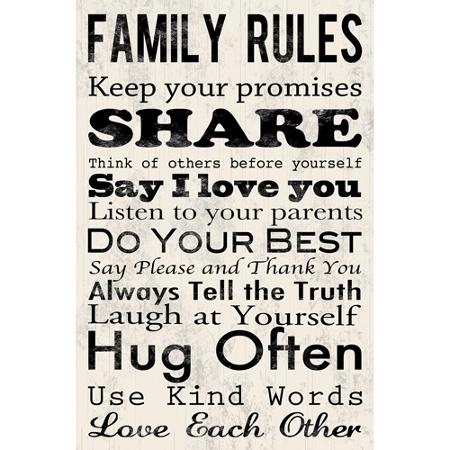
maidWe’ve had to raise a teenager that had basically raised herself the past (very formative) five years (her father bought her a flat in another city, and just paid for a maid).  I am not a maid (this image is a magnet hanging on our guest room door frame).  Everything that parents teach their children along the way over the years, we’ve had to try to teach her within a few months, as far as what it means to live in a family, communicate with each other, and basic principles such as clean up after yourself, turn off lights behind you, shut the refrigerator door, fold and put away clothes neatly, respect others’ property, and the list goes on and on and on. family-rule-signThis family rule sign, which hangs outside our front door, is what we’re trying to teach as a foreign concept in more ways than one… oh, and her mouth would have driven sailors from bars the first fortnight she was here; we started charging 1 Franc for every curse word, and encouraged her to get creative with such things; now she says “Fluff-butt” and “sweet cheese and crackers” instead!  Needless to say, it’s been a huge learning curve for us all.

Sands have shifted; priorities, for this year, have been relentlessly shifted; but more importantly, we’ve seen the shifting sands in one life transform into a foundation planted on solid rock.  We’ve seen her open her heart to be loved, to begin to recognize the issues in her own life that will need professional help once she’s old enough to seek it without repercussions, and also begin to have an understanding and patience for and with herself.  We’ve played a part in rescuing someone from the verge of suicide to a place of eternal perspective, future hope, and present happiness, and we are humbly grateful for the opportunity entrusted to us.  Writing priorities be hanged… there are more important things in this life sometimes.  There is a time for every purpose under heaven.

Save

Save

Save

Save

Save

Save

23 Comments

Filed under Articles, Musings

Novels Worth Reading

As a novel writer, I’m first and foremost a reader; I love to read, I love to buy books, smell them, feel them, upload them… any form is fine by me.  I want the books I read to be witty, intelligent, and well developed in terms of plots, characters and environments.

Kitchen Sink Realism

Everyone has different tastes – that’s why there are so many different genres; but for me personally, there’s also a list of things I don’t want in a novel:  I don’t want to be confronted with messy lives dealing with self-inflicted problem after problem; I don’t want tragic or sad or bitter endings; I don’t want to be confronted with the grit, grime, blood and gore of dysfunctional lives that end up learning nothing, making no character arcs, and end up in the mud by the end of the tale.   This genre description actually has a name:  Kitchen Sink Realism.  It was a cultural movement in Britain back in the ‘50s and ‘60s that was portrayed in films, books, plays, and art – the grit, grime, anger, disillusionment and harsh realities of realistic social scenarios.  It’s what might also be referred to as postmodernism.  My personal response to this kind of novel is, “If I wanted that kind of realistic tension, I could just go hang out at the nearest bar.”

A Tough Nut

I once had an English student, and our focus was medical English in preparation for their upcoming medical exams (two nurses came together for semi-private tutoring).  As part of the lesson we needed to work on basic conversational skills and sentence structures, and I find that the best way to bring in a wide variety of scenarios is usually to do a type of role play – nothing embarrassing, but each person is given a character to put themselves into a situation that they might not normally deal with:  They may be a chef, or a secretary, or a customer in a hardware store.  This particular student, when asked what kinds of books she read, said, “history and autobiographies or biographies”.  When asked what novels she read, she said she found such things ridiculous and a complete waste of time (this was back before I became an author!); she categorically refused to even try to put herself into someone else’s shoes for the scenarios.  My impression of her as a person was that she was narrow-minded, knew it, and was proud of that fact.  She was a hard character, and all the time I knew her or met her afterwards, I never saw a soft side emerge, either toward herself or toward others; I often found myself wondering why she’d gotten into the nursing profession in the first place – as a patient, I wouldn’t necessarily want her working on my ward…  A line from the novel I’m currently writing (Asunder, the third book in the Northing Trilogy) would have fit her life too:  “he has never had the propensity for engendering compassion; I pray he never needs it, as he never gives it.”  An epic love story might do her a world of good.

What’s Worth Reading

What I want when I read a book is to be transported into another life, whether that’s in the past, present or future, on this earth, or on another planet, or in another dimension; I want to be entertained, made thoughtful, learn something about the world around me, and learn something about myself.  Ideally, I will come away from the experience having been changed, in even a small way.  I want to feel connected; somewhere out there is a person I can relate to – whether it be the author, or the character, or other readers that appreciate the same books.

Aside from places and times that are genre-specific, such as science fiction and alien planets in the future, or London in the 18th century, all of the elements of what I like in novels are universal.  Humans the world over, in every century, want to feel connected; to feel that they can relate to something someone else is going through; even to have parts of their own life’s experiences explained through someone else’s perspectives in similar circumstances.  Above all else, at the heart of every good novel – regardless of the genre – is a story of love; that is the ultimate connection between characters.  It may be a child finding the love of a family after being shoved through the knocks of life too much for their age; it may be the hero or heroine finding love; it may be a widow or widower finding love again, or reuniting with true loves; it may be someone coming to the point in their life that they accept and love themselves just the way they are.

On to You!

When you read novels, what is it you’re looking for?  I would love to hear about it – please comment below, even if it’s just a few key words!

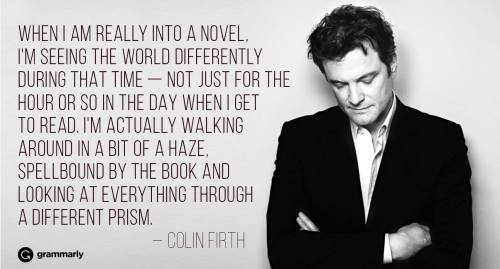
novel-colin-firth

Save

28 Comments

Filed under Articles, Musings, Nuts & Bolts, Plot Thots & Profiles, Quotes, Writing Exercise

Odd Jobs #14: Virtual Assistants to Worm Farmers

This is the last of my series of odd jobs; along the way, there have been some amazing, some disgusting, and some downright puzzling ones.  Somewhere out there, beneath the deep blue sky, there’s someone thinking, “Why did I take this job, again?”  Having said that, every job has some kind of perk; it’s just that with some jobs, you have to dig into the muck to find it.

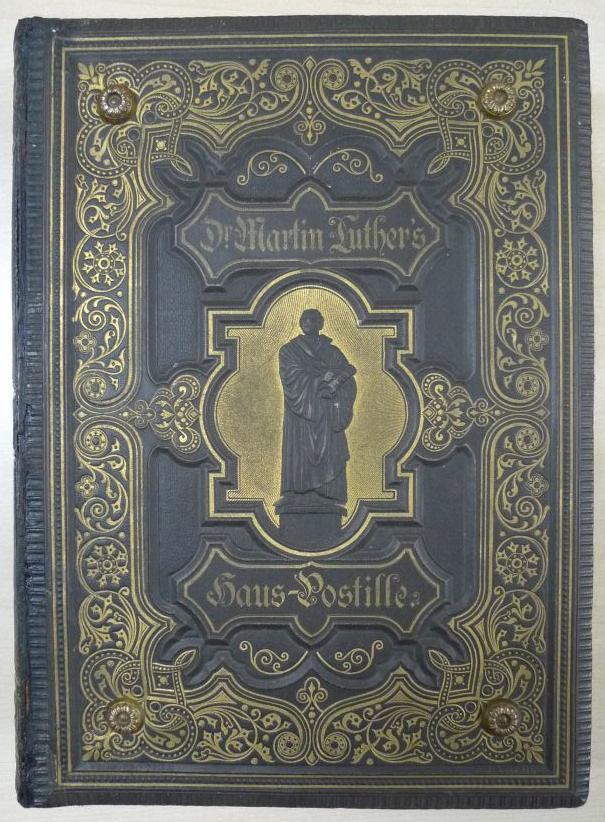
martin-luthers-haus-postille

A friend of mine had a grandfather who was a rubbish collector back in the 1950s here in Switzerland; times were slim for the family, and he used to bring home things he thought were interesting, useful, or perhaps valuable that he’d found in the rubbish.  One of those things he’d brought home was a large tome, with gilt embossing and brass knobs on the pictorial cover board (these “feet” are at the four corners, and were used to support the book cover and protect it from wearing on the gold leaf when it sat on the wooden pulpit), and deep, plain embossing on the back board.  That someone would throw it away rather than giving it to a charity is beyond me.  Be that as it may, it was discovered to be Dr. Martin Luther’s Haus-Postille (sermons), with illustrated lithograph engravings throughout, by W. Walther, from Dresden, dated from 1890.  It was passed down through the family to my friend, and she had no use for it; she knows I collect books (including antique books) and have a library, and thus it has now come to me.  It is in excellent condition, and is being well looked after now, despite its close call in the rubbish!  [The image does not do justice to the brilliant golden gilt that still shines clearly on my copy, even after all these years…]

So, on with the final lineup of odd jobs!  The first and last links take you to another list of odd jobs, which includes the two here.  A couple of the jobs seem a bit dangerous to me – either flying off the side of a water slide that doesn’t quite meet safety standards yet, or dangling by a rope off of a glass building… if I had to choose I’d take the water rather than London pavement as a place to land.  Safer, but not necessarily easier, is the job of a voice-over artist; dubbing languages for films, or filling in the voices for rough tracks in animated films, or even – and I find this particularly unethical, as a singer myself – to be paid to replace a recording artist’s voice, such as the scandal involving Milli Vanilli, which destroyed their careers.  Enjoy browsing the final list; perhaps in the future at some point I’ll bring along another addition or two.

  • Virtual Assistant
  • Virtual Head Hunter
  • Voice-Over Artists
  • Water Slide Tester
  • Wax Figure Sculptor: Mold wax to create figures, often for, but not limited to, the human form. Figures are often made in the likeness of people who have achieved historical or celebrity recognition.
  • Wig Maker: Put simply, they make wigs, but the process is anything but simple. First, wig makers create a plastic model of the wearer’s head and hairline, and then they transfer the mold onto a padded canvas similar to the client’s general head size, covering it with wig lace. Using a needle, they knot and pull thousands of hairs, one by one, through the mesh cap. Once all the hairs are in place, the wig is styled to the wearer’s preference.
  • Window cleaner for the Gherkin (London): It takes a team of 9 cleaners 10 days to complete the task, as the building stands 180 metres tall and consists of 7,429 panes of glass.
  • Worm Farmer

14 Comments

Filed under Articles, Images, Lists, Musings, Research