Category Archives: Plot Thots & Profiles

The hows & whys of my novels’ characters, and the decision process that gets me from A to Z.

Mrs Palfrey at the Claremont

Writers love to read; I think there’s also a bit of a movie buff in each one of us!  I like to watch films for the entertainment, but also for the analytical aspects; to see how the plot is built, how characters are developed, how scenes unfold, and which camera angles work best in a particular moment (that translates in writing to the point of view in a given context).

Mrs Palfrey at the Claremont“Mrs Palfrey at the Claremont” (2005) is a beautiful piece of cinematic craft in which characters are explored with a great deal of tenderness, wit and insight.  The film is based on the eponymous book by the English writer Elizabeth Taylor (1912-1975), considered one of the greatest British authors of the twentieth century.  There are a wide range of characters, from the calm and insightful Mrs Palfrey or the spontaneous and warm-hearted honorary grandson, to a collection of oddball characters all staying together in the same London hotel for better or worse, and the great minor characters such as the “bellboy”, the waitress, the ex-girlfriend or the real grandson.

It’s a gem of a film; if you haven’t seen it, consider getting your hands on it to watch!  It’s one to enjoy, and then re-watch and take notes on how it unfolds.  Be inspired, and keep writing!

2 Comments

Filed under Articles, Plot Thots & Profiles

Writing Tips: Dialogue

howtobebritish1Dialogue is (to point out the obvious) vital to a novel; it displays the voices of your characters and helps the reader get to know and care about the characters, understand their motives, their interrelationships, and distinguish each character’s point of view.  If you don’t get the dialogue right, you rip the reader out of the story, or worse – make them put down your novel and add your name to “never again” lists!  So, here are a few pointers and tips to keep in mind as you develop your characters and put words into their mouths:

1) Develop your characters well enough to make their voice distinct; do they have catch-phrases, or local dialects that influence their vocabulary?  Do they tend toward long or short sentences, or are they from a past time and place that had a different way of speaking?  Educate yourself if necessary in various modes of speech .

2) Dialogue is an illusion of conversation; but it’s also about what is not said.  Non-verbal actions reveal:

a) How a character says something

b) What a character chooses not to say, but inadvertantly reveals through actions.

c) Why the character says what they do.

Do they have particular actions when they are upset or aggitated that communicate their moods to the reader?  Do they bounce their knees when excited?  Does their body language confirm or contradict their verbal message?

3)  Fictional dialogue needs to cut to the chase; if there’s no point to the text (revealing motivation, character or plot point), then chop it!

4)  Avoid the trap of using dialogue as exposition (the proverbial villain’s monologue as he prepares to destroy the hero), but rather reveal essential information through action, or narration.

Explore your characters and develop their voices, and above all – keep writing!

Leave a comment

Filed under Articles, Cartoon, Nuts & Bolts, Plot Thots & Profiles, Writing Exercise, Writing Prompt

The Etymology of Hobson’s Choice

Thomas HobsonThomas Hobson (1544-1631) is still famous through the idiom, “Hobson’s Choice”, which means basically “take it or leave it”.  An innkeeper in Cambridge, England, he would hire out his horses (according to information at the Cambridge Guildhall, he had an extensive stable of 40 horses, which was a sign of vast wealth in those days!).  To avoid the best horses being favoured and thus worn out more quickly, he devised a rotation system that became known as Hobson’s Choice:  The horse closest to the entrance, or none.  The idiom is sometimes used erroneously to mean a choice between two equally good (or bad) situations or solutions (which is rather a dilemma, or Morton’s fork); but Hobson’s choice was really a choice between something or nothing.

I first came across the phrase when reading Frederick Hoffman’s “A Sailor of King George“:

I interrogated the next, who was a short, slight, pale-faced man. “And pray,” said I, “what part of the play have you been performing; were you ever at sea?” “No, sir,” said he; “I am a hairdresser, and was pressed a week ago.” “D——n these fellows!” said my captain; “they are all tailors, barbers, or grass-combers. I want seamen.” “Then,” said Captain N., who was the flag-captain, and had just come on board, “I much fear you will be disappointed. These are the only disposable men, and it’sHobson’s choice—those or none.” “The admiral promised me some good seamen,” returned my skipper, rather quickly. “Then I fear the admiral must find them,” was the answer, “as I have not more than twenty seamen on board besides the petty officers. The last were drafted a few days ago in the Defiance. Will you take any of these men, Captain W.?” “What do you think,” said my captain to me; “shall we take any of them?” “Suppose,” returned I, “we take twenty of them and the tailor; they will all fit in in time.” I then picked out twenty of the best, who were bad enough, as they were the worst set I ever saw grouped. Their appearance and dress were wretched in the extreme. I reached the ship before the hour of dinner with my live cargo. “What, more hard bargains,” said the first lieutenant, “we have too many clodhoppers on board already. The captain told me we were to have seamen.” “Captain N.,” said I, “assured our noble captain that the Defiance had taken all the A.B.’s.*” “D——n the Defiance!” replied he; “I defy Captain N. or anybody else to match those gentlemanly ragamuffins.” The master’s mates were called, and they were given into their charge.

Captain Frederick Hoffman. A Sailor of King George (Kindle Locations 2063-2077).

*A.B.s – Able-bodied seamen

2 Comments

Filed under Plot Thots & Profiles

Archetypes: Aphrodite vs. Dionysus

Throughout literary history, archetypes have been used to help us relate to characters, their stories, the morals of the tale and the paths they choose and why.  Understanding the archetypes helps to figure out how to portray a particular character; it keeps you on the “same page” as you write, as you develop characters, and try to figure out what makes them tick and where that ticking will take you and them.  Today I’d like to take a closer look at Aphrodite and her male counterpart, Dionysus.  I’ll give examples of these characters from films and books, relatable to most whether you like to read or prefer the visual experience of film.

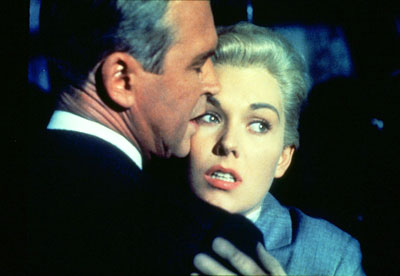
Kim Novak,  Vertigo

Kim Novak, Vertigo

Aphrodite was the Greek goddess of love, pleasure, beauty and procreation.  Like a coin, there are two sides to the character:  The Lover (or seductive muse), and the Femme Fatale.  On the Lover’s side of the coin, there are characters such as Julia Roberts in Pretty Woman, or Ginger on Gilligan’s Island.  The positive side of this character motivates others to improve themselves.  The flip side of that coin are seen in Sharon Stone’s portrayal in Basic Instinct, Kim Novak’s character in Vertigo, or the Bible characters of Salome or Delilah.  On one side you have a character that is nurturing, attractive, seductive and at the core often good, while the Femme Fatale is seductive with often quite dark ulterior motives.  Sean Young’s character in Blade Runner is a good example of the Seductive Muse; she forces Harrison Ford’s character to examine his own sense of humanity by her mere existence.

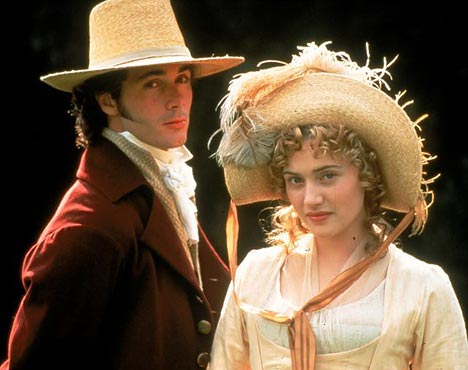
Mr. Willoughby, in Sense & Sensibility

Mr. Willoughby, in Sense & Sensibility

Dionysus is her male counterpart:  His two sides are the Woman’s Man, and the Seducer.  Either way, Dionysus needs women in his life.  He loves women; on the positive side, he loves to make women feel loved.  The flip side is abuse in one form or another, with darker motivations behind his love.  Fifty Shades of Grey is a touchy topic right now; on one hand it’s immensely popular, and on the other very harshly condemned as glorifying abuse, violence and manipulation in the guise of relationship or love.  I tend toward the latter view, as did the main actor in interviews during his junket (he often found himself apologizing to his co-star after their scenes, which speaks volumes about his instincts of what’s right and wrong, and Shades definitely crossed that line for him and for a growing number of critics).  Other examples are Mel Gibson’s character in What Women Want – his character makes the arc from the negative side to the positive; Cary Grant’s character in An Affair to Remember makes a similar arc.  Leo DeCaprio’s Jack in Titanic sits firmly on the positive side of the coin, and makes for a memorable and loved character.  Count Dracula is a typical Seducer, as is Jane Austen’s character of Mr Willoughby in Sense and Sensibility.

There are many other archetypes; if you’d like to know more on the topic, check out Victoria Lynn Schmidt’s 45 Master Characters.

Keep writing!

1 Comment

Filed under Articles, Plot Thots & Profiles, Research, Writing Exercise

Writing Tip: “Sense” Your Scenes

I try to read a book a week; it’s usually on a Saturday, when I have time to sit down and read a good chunk at a time.  This past weekend I read a book which prompted thoughts around this concept of “sensing” a scene, and reading it aloud to hear any howlers that might have crept into the writing.  The author of that book obviously did neither, though her editor might have told her to beef up descriptives – so they were clumped all together, staggering me as a reader to a halt while I tried to figure out the context of the pages of descriptives before remembering what the characters were doing there in the first place, and often the dialogue sounded very stilted (e.g. using “vocalized” instead of “shouted” – the latter of the two would have fit into the character’s time and place far better) – a good reading-aloud editing session might have done wonders for the novel.

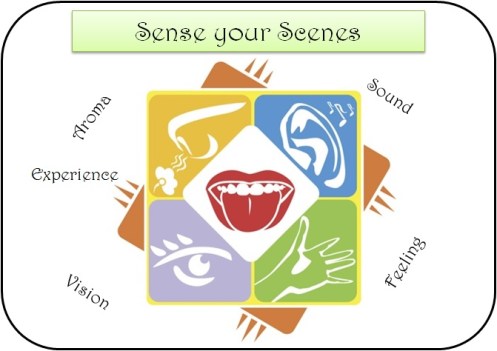
SensesThis image is one I have printed out on a card and hung near my desk when writing; it reminds me to apply all of my senses to a scene, to enrich the imagery and draw the reader in.  Describe the sights, smells, sounds, feelings and taste of a scene; make it a sensory experience and it will be far more memorable; this is done through sentence structure and the pacing of those elements, but sometimes also through “camera angle” – looking at the scene from a particular perspective.  How does your character feel in the moment?  What are their perceptions?  Does a smell remind them of something or someone?  Here are a few tips to achieving these goals:

  1. While adjectives are useful for adding colour or depth to a sentence, think of them as pepper; too much can spoil the scene.  If using more than one to describe a noun, familiarize yourself with the rule of order for adjectives.
  2. Use action verbs rather than passive/being verbs with adverbs.  E.g. “She stumbled down the hill” rather than “She went unsteadily down the hill”.
  3. Most importantly:  Read your sentences and scenes aloud!  I cannot stress this enough – if it sounds choppy or stilted to your ears, or doesn’t sound like something your character would say or do, then change it!

Writing is a dynamic process, and being a writer means constantly striving to improve oneself – building vocabulary and learning how to use words effectively, building your knowledge through research, studying, and reading, reading, reading!  Keep on writing!

2 Comments

Filed under Articles, Images, Nuts & Bolts, Plot Thots & Profiles, Writing Exercise

Writing Tip: Layering

Lightning BugIf you’ve ever painted a picture more than a colouring book or a paint-by-number, chances are you’ve learned something along the way about layers.  Layering is also a digital graphics technique in programs such as Photoshop, and as each layer is made, the image changes, taking on the shapes or colours as you add the consecutive elements.

Besides being a writer, I am also a vocal coach.  I only take on students who are already in bands, or preparing for recordings or competitions, and one of the things I teach them is layering within a vocal performance:  The nuances of thoughts, the power of imagination, the colouring of the vocals through not only the physical placement of the tone within their instrument (their body), but the placement of their imagination.  One can communicate boredom or interest or empathy with the exact same wording by merely varying the intonation, and that comes through the layering of the performance.

Writing is much the same way:  It is through the employment of grammar, spelling and punctuation that we signal the reader to prepare for a particular experience; as Mark Twain said, “The difference between the right word and the almost right word is the difference between lightning and a lightning bug.”  

Oh, the difference between, “It was rainy last night,” and “It was a dark and stormy night”!

So the next time you feel like your manuscript or poem is falling flat, take a minute to think about the layers, and see what creative brush strokes you can give your work.

1 Comment

Filed under Articles, Nuts & Bolts, Plot Thots & Profiles, Writing Exercise

7 Steps to a Powerful Opening

bottle-opener - millennium-falcon-

A powerful opener…

Anyone who writes novels worth reading can tell you that, as with any relationship, the first impression you make is the most important.  You know that you need to get your character from A to Z through the story, but how you introduce A is more important than B through Z – in other words, if you lose your reader’s interest from the get-go, they might not stick around long enough to find out where you want to lead them.  Here are 7 steps to remember that will lead you to that great first impression:

  1. Dive in! Hit the ground running!  Begin your story in the middle of an action scene, or in the middle of a conversation.  Let your reader feel like they’re eavesdropping on a decisive moment in your character’s life.  Make them wonder, make them ask questions they want answers to!  Who’s speaking?  What’s the context?  Why is there X problem / challenge / discussion?
  2. Make your character human: Give them sympathetic traits, a relatable nature, and attitudes that readers can identify with.  Do this through dialogue and actions, or by internalization (getting inside the character’s head, an “inner dialogue”).  It will help you to prepare your main characters by writing out a biography for them.  Give them memorable names (not complicated ones, or names that are difficult to work out how to pronounce).  The main character must be somewhat larger than life (more interesting than the average person in some way); do this through giving them idiosyncrasies, habits, a quirky sense of humour, etc.
  3. Romance: If your character is real, there will be romance – some kind of heart-to-heart relationship that touches that key human emotion.  I’m not talking about slutty romance novels; I’m talking about real human connection and rich emotional landscapes, whether it’s a small-town story, a science fiction planet, or a war zone.
  4. Supporting character: This might be a sidekick, a friend, partner, companion, or even an object or pet.  It is someone or something for the main character to share their experiences with.  The supporting character should contrast your main character – perhaps someone who asks the reader’s questions, or wants explanation of terms or concepts the reader might not be familiar with, without becoming “teach-y”.  They might be the voice of reason to an impulsive main character, or the voice of adventure to a staid hero/heroine.
  5. Antagonist: This opponent is an obstruction to the main character’s goals.  They create problems, sometimes danger.  They may be human, or non-human (e.g. man vs. nature), or may be an internal struggle of the main character (haunted by their past, or an addiction, a weakness such as impatience, etc.).
  6. Emotion: Build an emotional landscape (this links closely with # 3).  Show the main character as life-like, and develop relationships, or show struggles the character has with particular issues that give them depth and breadth.
  7. Style: Bring it all together in a style unique to your character’s voice and biography.  Show their feelings, conflicts, adding complications and subplots to take it deeper.  In your first chapter the goal of your character should come out – what their desires are, their determination, problems to solve, etc. – without making the arrival at that goal all too obvious!

6 Comments

Filed under Lists, Plot Thots & Profiles, Writing Exercise

Novel Writing Pyramid

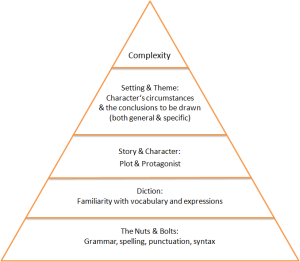
Novel Pyramid

When writing or drafting a new story, sometimes it’s easy to get lost in the forest due to the trees – in the myriad of ideas that flash up in a brainstorm.  The pyramid above helps remind me of the emphasis each area needs in the overall structure:

If a story is too complex, you’ll lose or confuse your readers; but if it’s too simple, it becomes predictable and therefore no challenge to the mind of the adventurer who’s picked up your book to get lost in another world.  Most of the best stories are, at their heart, quite simple – “boy meets girl”, or “person achieves goal”.

If you don’t know what your settings and themes are, how can you effectively work toward the final outcome?  If you don’t know who your character is, and what your basic plot (goal and how it’s achieved) is, how can you guide the reader through dialogue or prose toward the desired conclusion?  Diction is important because it is central to creating the voice of each character, and sticking to genre-specific vocabulary and expressions (i.e. no proverbial airplanes through the scenes of a historical novel).  As Mark Twain once wrote,

“The difference between the right word and the almost-right word is the difference between lightning and a lightning bug.”

And if you have the top four slices of the pyramid in place, but don’t have proper foundations – in other words, know your grammar, spelling, punctuation and syntax (sentence structures, tense usage, etc.) then no matter how brilliant your plot might be, or your character development, if readers can’t get past your bad diction and grammar, you’ve lost them as present and future readers!

I’d like to encourage you to know your weaknesses, and develop them into strengths!  If grammar or spelling is a weakness, work on it – invest time into reviewing the rules – Wikipedia is an excellent source for articles on how to use punctuation, etc.  Buy a good grammar book, or even a grammar practice book with an answer key at the back (The “English Grammar in Use” series is one I used for years with EFLA students).  If plot or character development is a weakness, then make a list of questions for each, and take the time to think about and answer them.

Good writing is about quality; it’s about solid foundations and constant development, the honing of your skills; it’s about research, thinking outside the box, and being able to convey in words the images born in your mind.  Just as sharpening a pencil makes it easier to write, so does sharpening your mind and skills.

1 Comment

Filed under Articles, Images, Nuts & Bolts, Plot Thots & Profiles, Research, Writing Exercise

Plot Thots: 14 Tips from Steven Spielberg

Steven SpielbergHappy New Year!  2015 has begun, and with it I’ve begun the research for my next novel; this one, 18th century historical fiction (rounding off the Northing Trilogy with the final book), is taking me back into the world of workhouse orphanages, royal naval vessels, and 1760s fashions and mores.  As I research, read, take notes and wiggle my way into a mental corset (to limit myself linguistically, morally, historically and socially to the times), I can still take advice from a more modern medium:  Films.

I like to listen to good film commentaries, and one of the best teachers in the field is Steven Spielberg; he not only discusses the filming process itself, but the thought processes and philosophy behind his decisions and choices.  Here are a few notes I’ve taken from his commentaries, and where I noted the particular film, I’ll let you know in case you want to hear it for yourself:

14 Tips from Steven Spielberg:

  • Give environments a “used” feel – gritty, creaky, broken-in.  Don’t explain every little detail, but take some things for “granted” to give an authentic feel. (Star Wars)
  • The subconscious mind doesn’t know the difference between dreams and films – emotions will be touched equally.
  • Running gags create humour (e.g. Indiana Jones hates snakes).
  • One problem solved leads to another.  One bad decision leads down – the main character must either decide to be redeemed by good actions, or be ruined (e.g. Darth Vader).
  • If you have point A & point B of your plot, don’t be afraid to explore, to fill in the blanks to get you from A to B!
  • The clothes have to match the characters to be believable.  (Can you imagine Indiana Jones without that iconic hat?)
  • If you edit cerebrally, you will lose feeling; rather, edit to “it feels right.”
  • Sometimes you need a pointer scene, though it needs to be subtle:  “This is where we are; this is where we need to be; this is how we get there.” (e.g. strategy scene before Luke destroys the Death Star)
  • If there’s no emotional connection, there’s no point in doing something for narrative clarity.
  • Contemplation time is essential in the creative process – don’t fill it with brain work that distracts.  Take a bath.  Do the laundry.  Draw; doodle; do a craft.
  • Get under the skin of a character, or culture, or landscape.
  • Every act has three events.
  • What is your main character’s “third place”?  The first place is home; the second place is work; the third place is a socializer.
  • Establish the mystery, and then begin peeling layers away.

[Plot Thots is my own shorthand for anything to do with mapping out a storyline.]

4 Comments

Filed under Articles, Nuts & Bolts, Plot Thots & Profiles, Quotes, Research

26 Things to Do This Weekend!

If you’re like me, writing can be addicting; I’m in the final phase of two book manuscripts, and when I’m on a roll I can write 10+ hours in a day. When I have such long work days, it’s important to change gears, change pace, and get away from my desk. Here’s a great list of ideas to shake things up! I’ve done quite a few things on this list already (albeit not in the same weekend!), so I can testify to the fact that they refresh tired brains, eyes and hands; they can give a burst of creative energy the next time I sit down to work. Whatever you do in life, remember to take some time out once in a while; God told us to take one day a week to rest, because I think he understands our tendencies toward burnout, workaholism and burning the candle at both ends…

stephenlifecoach's avatarStephen Halpin - Communication Coach

weekend 3
Welcome to another Friday. If you are one of those people who has every minute of your weekend planned then this post isn’t for you. However, if you get half way through your weekend and think “I should really do something this weekend.” This post if for you. Part of living a full life is taking the time to engage yourself in new and exciting things. Enjoy these 26 things to do this weekend.
weekend 4
Attend a life theater performance.
BikingBeach weather will be gone before you know it. Head to the beach.
Clean out your garage, closet or desk.
Dine at a restaurant you have never tried before.
Entertain a family you have been meaning to get to know better.
Farmers Markets are great places to get fresh vegetables and plants.
Gym is usually empty on weekends. Have a great extra workout.
H

View original post 215 more words

Leave a comment

Filed under Plot Thots & Profiles