Category Archives: Research

Deaf Space

Take a moment to stop what you’re doing, and close your eyes:  What do you hear?  A tea kettle? The hum of your computer?  a television?  A car driving by?  All of these sounds tell you something about your environment:  That water is boiling; that your computer is working well, or struggling, or processing something that makes it slower at the moment; that someone, perhaps in another room, is occupied; that traffic is flowing, or that it might be dangerous for children outside at play.

Now take away all those sounds.  It can be disorienting; it makes you feel insecure.  It also makes you more alert to other environmental cues, and to your other senses – particularly sight.  If a person mumbles, or turns away, or moves their hand across their face while speaking to a deaf person, communication is disrupted.  People can be sensitized to the challenges, but can architecture?  Yes.  It can be made suitable for various perceptions and perspectives.

When I lived in Scotland, I translated regularly (BSL) for the deaf in our church, and would hang out with deaf friends sometimes.  Some of them lived in a flat complex designed for the visually or auditorily-impaired, with bold red counter tops, light switches and phones to help them navigate, as well as light signals for various things such as the door bell or the phone ringing.  The deaf sports club was a wide-open space, with room for a large crowd to chat in groups; as a hearing person, it was a unique experience to be in a crowd of signing people:  There are few secrets in the deaf community, because even across the room one can understand the conversation; and though we were all signing, it was not quiet – sounds made with the mouth to support the sign, or the slap of skin on skin, or a laugh, or the shifting of clothing could be heard.

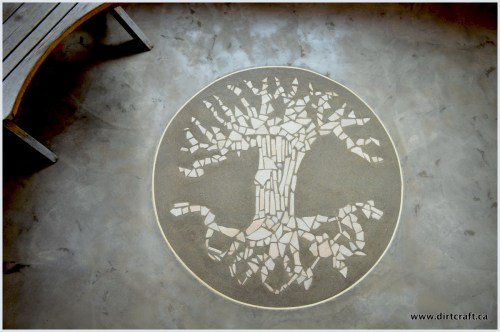
Look at the layout of your room, or office:  If your interaction with the people around you needs to be visual, what could potentially hinder it?  A solid wall, a glaring light fixture, blind corners, stairs (which must be focused on, to navigate), or a narrow passage that makes it difficult to walk side by side, signing.  Deaf architects have begun incorporating their unique considerations into designs, and they not only offer a unique perspective on architecture but, by doing so, have created some stunning spaces:  Deaf Space.  To see a short video on the topic, please click here.  Do yourself a favour, and watch the video at least once without sound.  Below are a few images of deaf space from Google Images.

As a writer, it is always fascinating for me to explore new perspectives, and to try to see the world around me through the eyes of others; doing so enriches the writing experience, and opens new possibilities in developing characters, environments, or situational elements.
This slideshow requires JavaScript.

5 Comments

Filed under Articles, Research, Signs, Videos

Writing Trivia: Earthen Floors

I do a lot of research online; sometimes it leads down the oddest of trails, and those are always the fun ones to follow – the road less travelled, and all that.  I keep a storehouse of “odds and ends” information, the trivial bits and bobs that might come in handy as I create a new world for a story.

I was recently writing an article for one of my other blogs (click here to read it), and came across an interesting article on the topic of earthen flooring; such an element could be used in historical fiction, science fiction, or modern eco-escapism fiction.

What I found fascinating is the way the writer describes her first experience of walking on such a floor:  The leathery softness, the warmth, the texture, and the creative possibilities this type of flooring allows.

Such things stir my creative juices, and I have to remind myself to finish my current manuscript before moving on!  But such an element will come in very handy for my next book, which is a science fiction story… and now, because I’ve shared it with you, I’ll know where to find it when I need it!

Click on the image below to read the article, and be inspired.  Keep writing!

Earthen Flooring


5 Comments

Filed under Articles, Nuts & Bolts, Plot Thots & Profiles, Research

A Page in History

As a writer, I’m constantly absorbing information; I never know when something might come in handy!  It may inform my scene with more realism, or infuse a character with a quirk or a background that gives them depth.  History is full of oddities and amazing events that can spark our imaginations; the event below is one such event:  If you ever need to write a scene about an explosion, or the effects of wrong decisions gone awry, look to history to teach you how it’s done (or in this case, how it should not be done).  This story shows the importance of decisions, and begs the question, “What if?”  What if one of those factors had changed?  What if the captain of the SS Imo had given way to the captain of the SS Mont-Blanc?  We’ll never know, but as writers, we can use our greatest tool:  Imagination.

This day in history:  The Halifax Explosion

6 December 1917 will live on in infamy in Halifax, Nova Scotia, and in Canada, as one of the worst disasters in history.  On that day, the largest man-made explosion prior to the Nuclear Age occurred, wiping out several communities and reshaping Halifax forever.

The events that led up to the explosion that killed thousands and maimed thousands more reads like a thriller:  The delay of a shipment of coal; the climate of war that complicated the comings and goings from the harbour; an experienced captain now behind schedule who “bent the rules” for once; the captain whose impatience at previous delays pressed him to disregard the harbour speed limits and refuse to give way a third time; the third ship in his path who, because of their cargo (tons of explosives), could not make sudden manoeuvres and was relying on him to give way; a right decision made too late.  Curious onlookers who gathered at their windows to watch the blazing ship in the harbour had little idea that it would be the last thing most of them would ever see; if they were not obliterated in the initial blast, the light from the flash or the window glass shattering [in virtually every window within a 2.6-kilometre (1.6 mile) radius] blinded them; some 5,900 eye injuries were treated, leaving over 40 survivors permanently blind.

Confusion after the initial blast was compounded when people began evacuating thinking that it was a German bomb attack; fires throughout the city (caused by tipped oil lamps and ovens in collapsed homes) added to the confusion and hindrance to rescue efforts,  but within a few hours the true cause had become widely-enough known to calm initial fears.  Rescue teams started arriving from as far away as 200 km (120 miles), their help hampered by damaged roads and fears of secondary explosions from a munitions magazine at the Wellington Barracks.  To make matters worse, the next day blew in a blizzard which dumped 41 cm (16 inches) of heavy snow on the area; this blocked train transport with snowdrifts, and tore down hastily-erected telegraph lines.  Halifax was isolated, though the snow did help to extinguish the fires throughout the city.

Here in Switzerland, the NZZ (Neue Zürcher Zeitung) reported on the 7th of December:

“Zerstörung der Stadt Halifax? New York, 6. Dez. (Havas.)  Aus Halifax wird gemeldet: Die Hälfte der Stadt Halifax sei ein Trummerhaufen infolge einer Explosion.  Die Verluste werden auf mehrere Millionen geschätzt.  Der Nordteil der Stadt steht in Flammen.  Es gibt hunderte von Toten und an die tausend Verwundete.

[“Destruction of the city of Halifax?  New York, 6 December (Havas – a French media group based in Paris.)  From Halifax was reported:  Half of the city of Halifax lies in ruins as a result of an explosion.  The loss has been estimated at several million (unclear whether it means Canadian dollars or Swiss Francs).  The northern part of the city is in flames.  There are hundreds of dead and thousands injured.”]

On the 8th of December, a similar footnote was reported, adding, “Kein Haus der Stadt ist unbeschädigt geblieben…” (“No house in the city has remained undamaged”)

That it even made it into a footnote of the international news section is actually remarkable, considering that Switzerland was surrounded by war at the time and had far more pressing matters on the home front and in neighbouring countries with which to keep abreast.

In the end, it is estimated that over 2,000 people were killed and 9,000 injured (of those injured, it is unclear how many died of the injuries, and how many were permanently disabled in some way).  The blast was so hot that it evaporated water in the harbour, exposing the harbour’s floor momentarily; as water rushed back in to fill the void, the resulting tsunami erased a settlement of  Mi’kmaq First Nations along the shores of Bedford Basin, on the Dartmouth side of the harbour; how many were killed is not known, though around 20 families lived there at the time.

Halifax Explosion, 6 December 1917To read the fascinating history of this event, please click here.

Sources:  Wikipedia; NZZ digital archives

8 Comments

Filed under Articles, History, Plot Thots & Profiles, Quotes, Research, Translations

If These Walls Could Speak

There’s just something about abandoned places that speaks to me; each one has a unique history, and an ending that seems somehow premature.  Whether it be a shopping mall in Thailand now occupied by goldfish; cities within range of the radioactivity of Chernobyl; an island that was once inhabited but now forlorn; an underground station or even an entire train station in the middle of an inhabited city, or an abandoned house, they each have a story to tell.  If their walls could speak, what would they say?  What have they seen?  What would they have liked to see but were prematurely cut off from the habitation or transient experiences of humanity?

DSCN5118 - Overtoun House

Overtoun House. Image Credit: Stephanie Huesler

I once lived in a manor house in Scotland, called Overtoun House; it was often my home over the years that I lived in the UK; once we moved away it fell into disrepair, ransacked by vandals and left to rot by the town council that was charged with its maintenance.  Several years ago I went back to visit and actually cried at the state it had fallen into – it was literally like finding a good friend face down in the gutter.  Finally, a few years ago an organisation moved in to restore the building to its former glory, and it will be used to house women in distressed circumstances.  My husband and I met there in 1991, and this past summer we went back for a visit; it was comforting to see her in good hands once more.

If you google “abandoned places”, you’ll find thousands of photos and stories just begging to be told:  Salton City, former Olympic venues, World War Two installations, train stations, castles, theme parks, homes, libraries (abandoning books is just wrong), subway / underground stations, shipwrecks, asylums, private homes, and even (most tragic of all) the abandoned dead in the “death zone” of Mount Everest.  Each one with a history and a reason they were abandoned, yet also an inspiration for writers to dig below the superficial surface to create an untold tale.

If those walls could speak to your inner writer, what would you hear?  Write it!

21 Comments

Filed under History, Research, Writing Exercise

SWOT Analysis in Fiction

Writing fiction often brings the writer to a crossroads:  Should I take my character(s) down this road or that?  Will they decide this or that, and what will the consequences of either choice or decision be?  Which would fit best into my plot?  All of these questions can be answered by applying a corporate business tool called the SWOT analysis chart.  I have this baby hung on a magnet strip near my desk, along with other prompts such as the sensory image, and I apply it frequently.  Just last week I faced a crossroads:  Would A) my character run away, or would B) another character (or C) take her away?  On the latter question, I had another two options (thus, B & C); I needed the SWOT.

SWOT Analysis Chart, Watermark

This image shows you the variables of each option; internal vs. external influences or attributes of a situation or choice; helpful vs. harmful in reaching the character’s goals, or the consequences of the choices laid before you.  What are the Strengths, Weaknesses, Opportunities and Threats of each path at your character’s feet?

I’ll give you the example of my thought process as I applied it to my historical novel’s fictional situation:  If my character ran away (A) , the strength would be that she would be taking her destiny into her own hands – it’s what you want your main character to do; the threat would be that such an action might raise assumptions that would damage her reputation (was she pregnant?).  The opportunity of doing things in her own timing was overshadowed by the weakness of practicalities:  How would she, without support, get from her family’s estate to Portsmouth, at least a good half-day’s journey by carriage?  If the “B” character (her mother) took her to Portsmouth, the main character would be passive in the decision – the action would happen to her rather than her controlling or causing it.  The opportunity of solving the weakness of “A” by giving her a ride to Portsmouth was a strong incentive, but would raise a bigger threat in that it might seem like the mother was being just as manipulative as the father, forcing the main character into making a choice to suit the mother, which wasn’t the case.  If “C”, her future husband, came to sweep her away from the problems at home, again it would seem that the main female character wasn’t strong on her own two feet, or was too pliable and passive.

I took each scenario through the SWOT rigorously, and in the end I decided – well, when the book comes out next year, you can find out for yourself!

Applying such tools helps you focus your energies on finding solutions, rather than finding yourself stuck in writer’s block.

6 Comments

Filed under Articles, Images, Nuts & Bolts, Plot Thots & Profiles, Research, Writing Exercise

Truth into Fiction

Sometimes truth is more fascinating, more adventurous than fiction.  Sometimes a news article becomes a spark for a fictional story.  One of the greatest films of all time, Titanic, took its cue from real life; many books and films are based on real life stories, mysteries, narrow escapes, historical events and experiences.  The best kinds of story sparks are those things which capture our imagination; not only best for the reader, but also for the writer – for if you are not excited by and captivated by what you’re writing about, researching and investigating, how do you expect a reader to be excited or captivated by it?  Personally, history has always fascinated me; I wonder, “What would it be like to walk among them?” or “What would it be like to discover these events as a modern archaeologist?”  I explored such a theme in my novels, “The Cardinal“.

Here are a few historical sparks that might capture your imagination; just click on  each image to link to the article:

Artifacts from the Battle of the Egadi Islands, ca. 240 BC

Battle of the Egadi Islands, 241 BC

The City of Heracleion, Plunged into the Sea

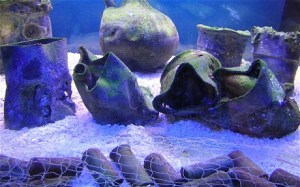
Heracleion Artifacts

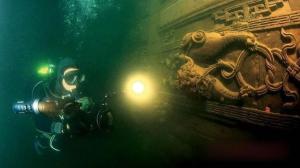
China’s Atlantis:  Shi Cheng

China's Atlantis of the East, Shi Cheng

The Skulls of  Sac Uayum

The Elongated Skulls of the Yucatan underwater cave, Sac Uayum

An Ancient Roman Shipwreck Reveals Medicinal Remedies

Roman Shipwreck with Medicinal Supplies

2 Comments

Filed under History, Images, Lists, Nuts & Bolts, Plot Thots & Profiles, Research, Writing Exercise

Singularity vs. Anomaly

On our recent holiday in Scotland, my husband and I discussed the difference between singularity and anomaly; specifically, we were trying to decide whether we would call the Corryvreckan one or the other (as one does).

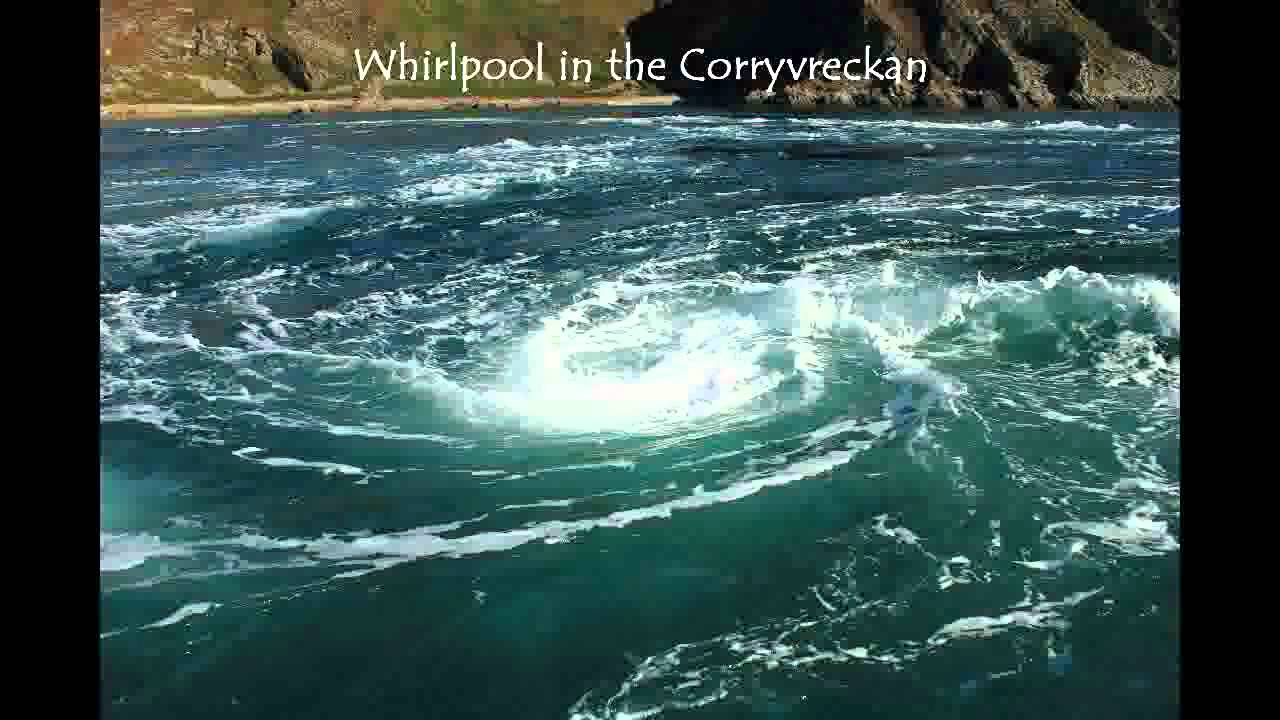
Corryvreckan WhirlpoolThe Corryvreckan, which is the strait between the isles of Jura and Scarba off the West Coast of Scotland, contains the world’s third largest whirlpool (following the Saltstraumen off of Norway, and the Moskstraumen, also off Norway), and is considered by many as the most dangerous scuba dive in the UK (there’s only a few minutes’ safe diving time there; when your bubbles start to go down, not up, you’ve overstayed your welcome).  Planted underwater in the middle of the strait is a giant pinnacle of basalt (the same rock that created the Scottish Isle of Staffa, and the Giant’s Causeway in Ireland); its position means that when tides flow in or out, they end up being churned into a broiling mass of suck-ships-under sea.

The name of Corryvreckan comes from the Gaelic Coire Bhreacain – “Cauldron of the Plaid”, and is connected with a myth of Cailleach Bheur, an old hag who was said to stir the waters of the strait in order to wash her plaid.  The English word whirlpool comes from Old English wirfelmere; in German this word paints the image of rolling dice (Würfel) on the ocean (Meer).  Harmlessly small swirling vortices of water are known as whirlpools, and you can see them when you drain a sink or flush a loo. But the more appropriate word for the ship-eating monster-vortices is the Norwegian word Maelstrom; since they have several of the largest, most dangerous ones, I think it’s only fair that they get to name them.

Now, is it a singularity or an anomaly?

Singularity:  “Anything singular, rare, or curious; the state of being singular, distinct, peculiar, uncommon or unusual.”

Anomaly:  “Something or someone that is strange or unusual; any event or measurement that is out of the ordinary regardless of whether it is exceptional or not.”

Our debate on which word to apply to the Corryvreckan is a tie, I think.  While it’s not singular as far as being the only maelstrom in the world, it is distinct, unusual and extraordinary; it’s an anomaly in the geological and topographical sense, which gives it its power and dangerous currents.  If you ever decide to check it out, don’t do it without a local guide unless you’re insane; if you are insane, enjoy washing your clothes with Cailleach Bheur.

6 Comments

Filed under Articles, History, Research

Thoughts From Gibraltar and London

I just returned from a research trip a week ago; after the dust of “coming home” has settled, it’s time to sit down and get to work in earnest on my next novel.  I’m working on the third book in my 18th century historical trilogy, and to be honest, up until this trip I would have rather been working on a different manuscript!  My time away was research into the major section of the book which takes place in the Royal Navy aboard a ship of the line.  Part of the reason I think I’ve had “writer’s block” on this manuscript is that the military aspect of the plot is not my favourite topic to delve into from a writing aspect – I love reading about it, but condensing that down into dialogue and prose is not my forté.  But I know myself:  As with anything, if it’s not my strength I’ll work at it and hone it until it is.

The Cutty Sark 1

The Cutty Sark

A very important thing for me to remember in the midst of the research is that I’m not writing a maritime history book, but a novel; I’ve got to take the research, sift it for the elements that support my plot and leave the rest of the information aside as “nice to know”.  I’ve bought, read and taken notes on dozens of history books focused on the Royal Navy; I spent a day taking in impressions aboard the Cutty Sark (one of the fastest clippers from the days of Sail, on the right), and talking to curators both there and in the Maritime Museum, as well as the British Museum; I spent time on a clipper on the Thames, taking in the sights, sounds, smells, salt spray and tastes of the river.   My hotel was literally just round the corner from the largest used book shop in London (Skoob Books)… a very dangerous thing.  Trust me.  I found some great gems, from a history book on the Seven Years War (exactly in my time period), to a portrait collection of 18th century fashions – invaluable visual aids, with explanations of things like mob caps, waistcoats, etc.  If I’d had more time (and more room in my carry-on-sized luggage), I still would have had to leave hundreds of great books behind…!

Gibraltar - Barbary macaque 2

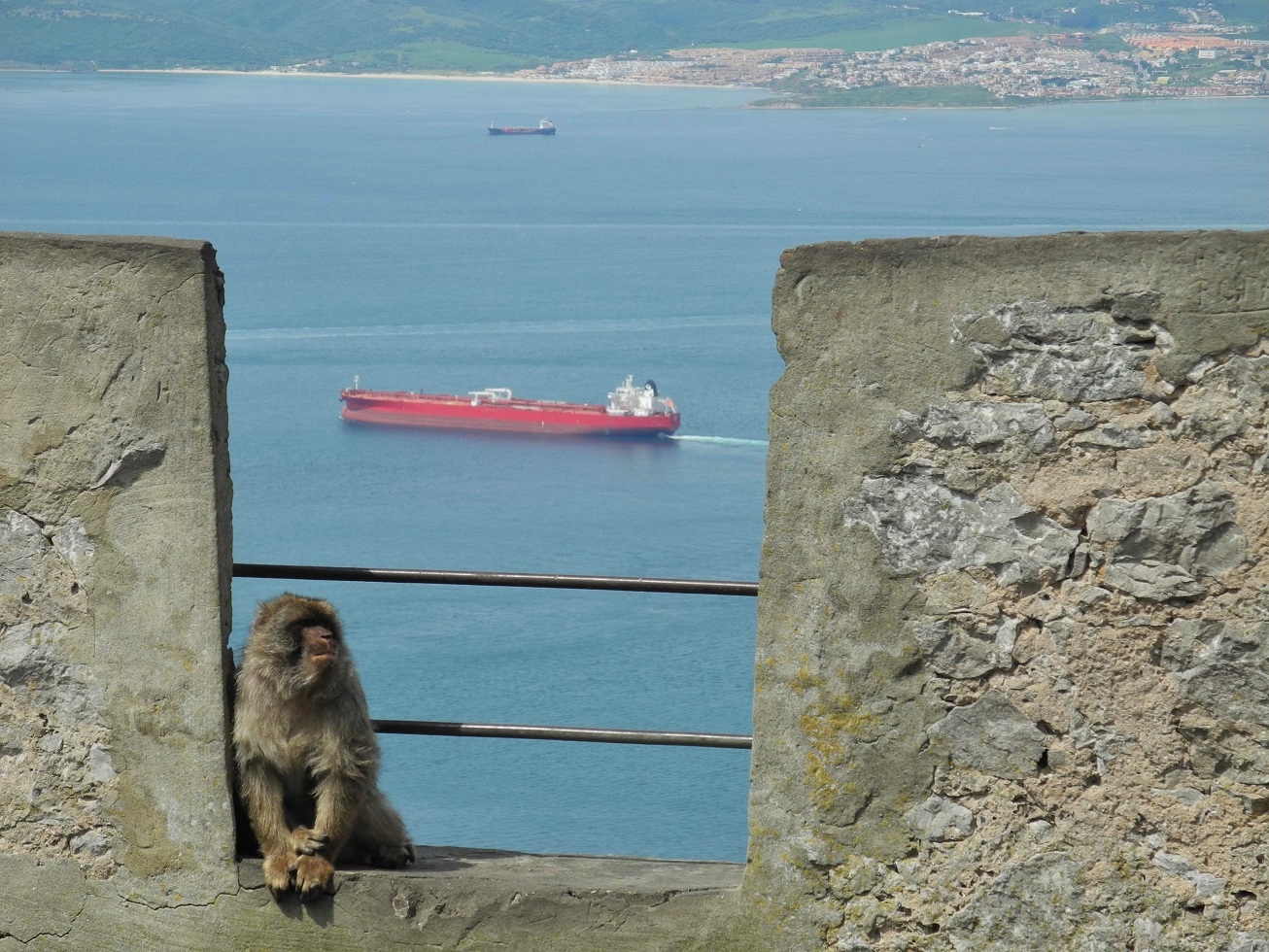
A Barbary Ape, with Spain in the distance.

Gibraltar itself was a special time:  I was there with my husband, who then took off for a 10-day bike ride toward Madrid on the day I flew to London.  Gibraltar was vitally important as a British Naval base for centuries, and you literally cannot walk down any street without being reminded of its military past:  Atop the Rock are the ruins of fortifications; St Michael’s cave was a strategic hideout; in the town are cannons everywhere; ramparts are now part of walled parks, and everywhere there are military street names, town square names, and military ships in the harbour; Spain is a spit away, and Morocco is visible even on a foggy day; it is literally the gateway to the Mediterranean.  Taking a cable car to the top of the Rock you’ll find Barbary Macaque (aka Barbary Apes, though they are tailless monkeys) everywhere; they were originally brought from Africa in the 18th century by British sailors.  A few of them escaped and set up house on the rocky slopes above the town, and now they run the show; tourists are lower down in the pecking order than they are, and if they get half a blink they’ll steal your food if you’re silly enough to take it outside.  They usually stay up on the Rock, but it’s still not wise to leave your hotel window open…

Gibraltar: The War Memorial with a Russian cannon in the foreground.

Gibraltar: The War Memorial with a Russian cannon in the foreground.

So now that I’m back, I’m looking forward to sinking my teeth into this new manuscript!  Sometimes it just helps to get away, get new impressions, percolate ideas, and become inspired.  If you’re stuck on something you’re writing, get out!  Go on a research trip, or if you can’t afford it time- or money-wise, then get out to a park, or somewhere different for a change; take your notebook, and let your mind wander.  You’ll find a way through the block!

Leave a comment

Filed under Articles, History, Research, Writing Exercise

Archetypes: Aphrodite vs. Dionysus

Throughout literary history, archetypes have been used to help us relate to characters, their stories, the morals of the tale and the paths they choose and why.  Understanding the archetypes helps to figure out how to portray a particular character; it keeps you on the “same page” as you write, as you develop characters, and try to figure out what makes them tick and where that ticking will take you and them.  Today I’d like to take a closer look at Aphrodite and her male counterpart, Dionysus.  I’ll give examples of these characters from films and books, relatable to most whether you like to read or prefer the visual experience of film.

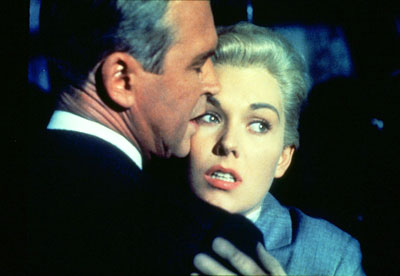
Kim Novak,  Vertigo

Kim Novak, Vertigo

Aphrodite was the Greek goddess of love, pleasure, beauty and procreation.  Like a coin, there are two sides to the character:  The Lover (or seductive muse), and the Femme Fatale.  On the Lover’s side of the coin, there are characters such as Julia Roberts in Pretty Woman, or Ginger on Gilligan’s Island.  The positive side of this character motivates others to improve themselves.  The flip side of that coin are seen in Sharon Stone’s portrayal in Basic Instinct, Kim Novak’s character in Vertigo, or the Bible characters of Salome or Delilah.  On one side you have a character that is nurturing, attractive, seductive and at the core often good, while the Femme Fatale is seductive with often quite dark ulterior motives.  Sean Young’s character in Blade Runner is a good example of the Seductive Muse; she forces Harrison Ford’s character to examine his own sense of humanity by her mere existence.

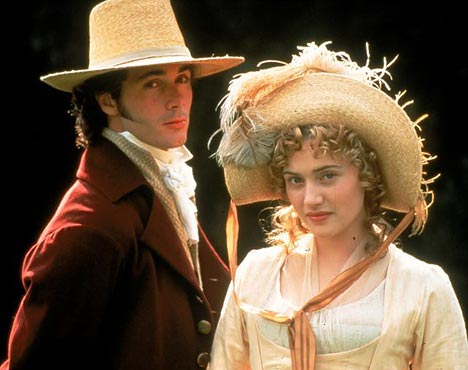
Mr. Willoughby, in Sense & Sensibility

Mr. Willoughby, in Sense & Sensibility

Dionysus is her male counterpart:  His two sides are the Woman’s Man, and the Seducer.  Either way, Dionysus needs women in his life.  He loves women; on the positive side, he loves to make women feel loved.  The flip side is abuse in one form or another, with darker motivations behind his love.  Fifty Shades of Grey is a touchy topic right now; on one hand it’s immensely popular, and on the other very harshly condemned as glorifying abuse, violence and manipulation in the guise of relationship or love.  I tend toward the latter view, as did the main actor in interviews during his junket (he often found himself apologizing to his co-star after their scenes, which speaks volumes about his instincts of what’s right and wrong, and Shades definitely crossed that line for him and for a growing number of critics).  Other examples are Mel Gibson’s character in What Women Want – his character makes the arc from the negative side to the positive; Cary Grant’s character in An Affair to Remember makes a similar arc.  Leo DeCaprio’s Jack in Titanic sits firmly on the positive side of the coin, and makes for a memorable and loved character.  Count Dracula is a typical Seducer, as is Jane Austen’s character of Mr Willoughby in Sense and Sensibility.

There are many other archetypes; if you’d like to know more on the topic, check out Victoria Lynn Schmidt’s 45 Master Characters.

Keep writing!

1 Comment

Filed under Articles, Plot Thots & Profiles, Research, Writing Exercise

Writing Tip: Dealing with Boredom

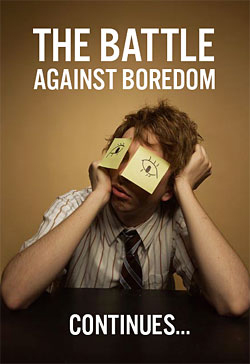
boredomIf you’re bored with the subject you’re writing about, it won’t work to try and think your way out of it, or to convince yourself to write.  I know all too well that when that’s the case I can find a million things that are suddenly far more pressing, like cleaning out a (clean) cupboard or repairing a household appliance.  But often, boredom is an indication that we don’t know enough about our subject matter, and that our writing has simply subsided into going through the motions.

There’s a simple solution:  Find out more!  Read more on your topic; travel to the location; find maps from your time period; investigate the place with Google Earth Street View; go to a museum; ask questions; look for original documents; engage your senses to gain more knowledge and understanding about your theme.  As you find out more, write scenes to inform your work, or a dialogue between characters that will inform you about their situation, setting, personalities or role in the story as a whole.  Beware of your motives in extended periods of research, however:  Are you procrastinating, or percolating?

I look at it this way:  If I’m not getting anywhere with a manuscript, I can either give in and call it “writer’s block” and allow it to paralyze me, or I can proactively work against that block in what I call “percolating mode” – thinking around the problems that I’ve run into, and use the time to inform myself, learn about the time period, and investigate aspects of the story that I am interested in.  That block may be like a boulder in the stream’s path, but my writing, like water, will eventually find a way around it.

Let that boulder of a writer’s block make you stronger and more diversified – and keep on writing!

2 Comments

Filed under Articles, Research, Writing Exercise