Category Archives: Research

The historical, geological, scientific & gadgety interests that inform and propel my writing.

Singularity vs. Anomaly

On our recent holiday in Scotland, my husband and I discussed the difference between singularity and anomaly; specifically, we were trying to decide whether we would call the Corryvreckan one or the other (as one does).

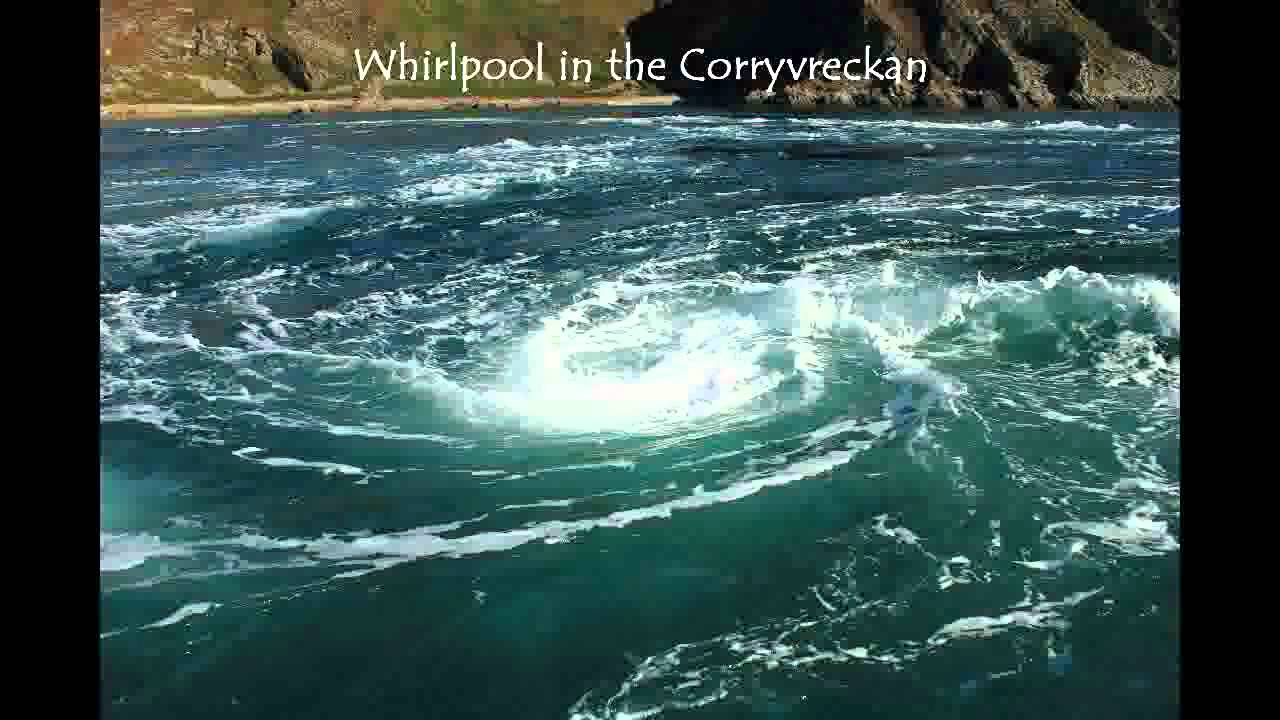
Corryvreckan WhirlpoolThe Corryvreckan, which is the strait between the isles of Jura and Scarba off the West Coast of Scotland, contains the world’s third largest whirlpool (following the Saltstraumen off of Norway, and the Moskstraumen, also off Norway), and is considered by many as the most dangerous scuba dive in the UK (there’s only a few minutes’ safe diving time there; when your bubbles start to go down, not up, you’ve overstayed your welcome).  Planted underwater in the middle of the strait is a giant pinnacle of basalt (the same rock that created the Scottish Isle of Staffa, and the Giant’s Causeway in Ireland); its position means that when tides flow in or out, they end up being churned into a broiling mass of suck-ships-under sea.

The name of Corryvreckan comes from the Gaelic Coire Bhreacain – “Cauldron of the Plaid”, and is connected with a myth of Cailleach Bheur, an old hag who was said to stir the waters of the strait in order to wash her plaid.  The English word whirlpool comes from Old English wirfelmere; in German this word paints the image of rolling dice (Würfel) on the ocean (Meer).  Harmlessly small swirling vortices of water are known as whirlpools, and you can see them when you drain a sink or flush a loo. But the more appropriate word for the ship-eating monster-vortices is the Norwegian word Maelstrom; since they have several of the largest, most dangerous ones, I think it’s only fair that they get to name them.

Now, is it a singularity or an anomaly?

Singularity:  “Anything singular, rare, or curious; the state of being singular, distinct, peculiar, uncommon or unusual.”

Anomaly:  “Something or someone that is strange or unusual; any event or measurement that is out of the ordinary regardless of whether it is exceptional or not.”

Our debate on which word to apply to the Corryvreckan is a tie, I think.  While it’s not singular as far as being the only maelstrom in the world, it is distinct, unusual and extraordinary; it’s an anomaly in the geological and topographical sense, which gives it its power and dangerous currents.  If you ever decide to check it out, don’t do it without a local guide unless you’re insane; if you are insane, enjoy washing your clothes with Cailleach Bheur.

6 Comments

Filed under Articles, History, Research

Thoughts From Gibraltar and London

I just returned from a research trip a week ago; after the dust of “coming home” has settled, it’s time to sit down and get to work in earnest on my next novel.  I’m working on the third book in my 18th century historical trilogy, and to be honest, up until this trip I would have rather been working on a different manuscript!  My time away was research into the major section of the book which takes place in the Royal Navy aboard a ship of the line.  Part of the reason I think I’ve had “writer’s block” on this manuscript is that the military aspect of the plot is not my favourite topic to delve into from a writing aspect – I love reading about it, but condensing that down into dialogue and prose is not my forté.  But I know myself:  As with anything, if it’s not my strength I’ll work at it and hone it until it is.

The Cutty Sark 1

The Cutty Sark

A very important thing for me to remember in the midst of the research is that I’m not writing a maritime history book, but a novel; I’ve got to take the research, sift it for the elements that support my plot and leave the rest of the information aside as “nice to know”.  I’ve bought, read and taken notes on dozens of history books focused on the Royal Navy; I spent a day taking in impressions aboard the Cutty Sark (one of the fastest clippers from the days of Sail, on the right), and talking to curators both there and in the Maritime Museum, as well as the British Museum; I spent time on a clipper on the Thames, taking in the sights, sounds, smells, salt spray and tastes of the river.   My hotel was literally just round the corner from the largest used book shop in London (Skoob Books)… a very dangerous thing.  Trust me.  I found some great gems, from a history book on the Seven Years War (exactly in my time period), to a portrait collection of 18th century fashions – invaluable visual aids, with explanations of things like mob caps, waistcoats, etc.  If I’d had more time (and more room in my carry-on-sized luggage), I still would have had to leave hundreds of great books behind…!

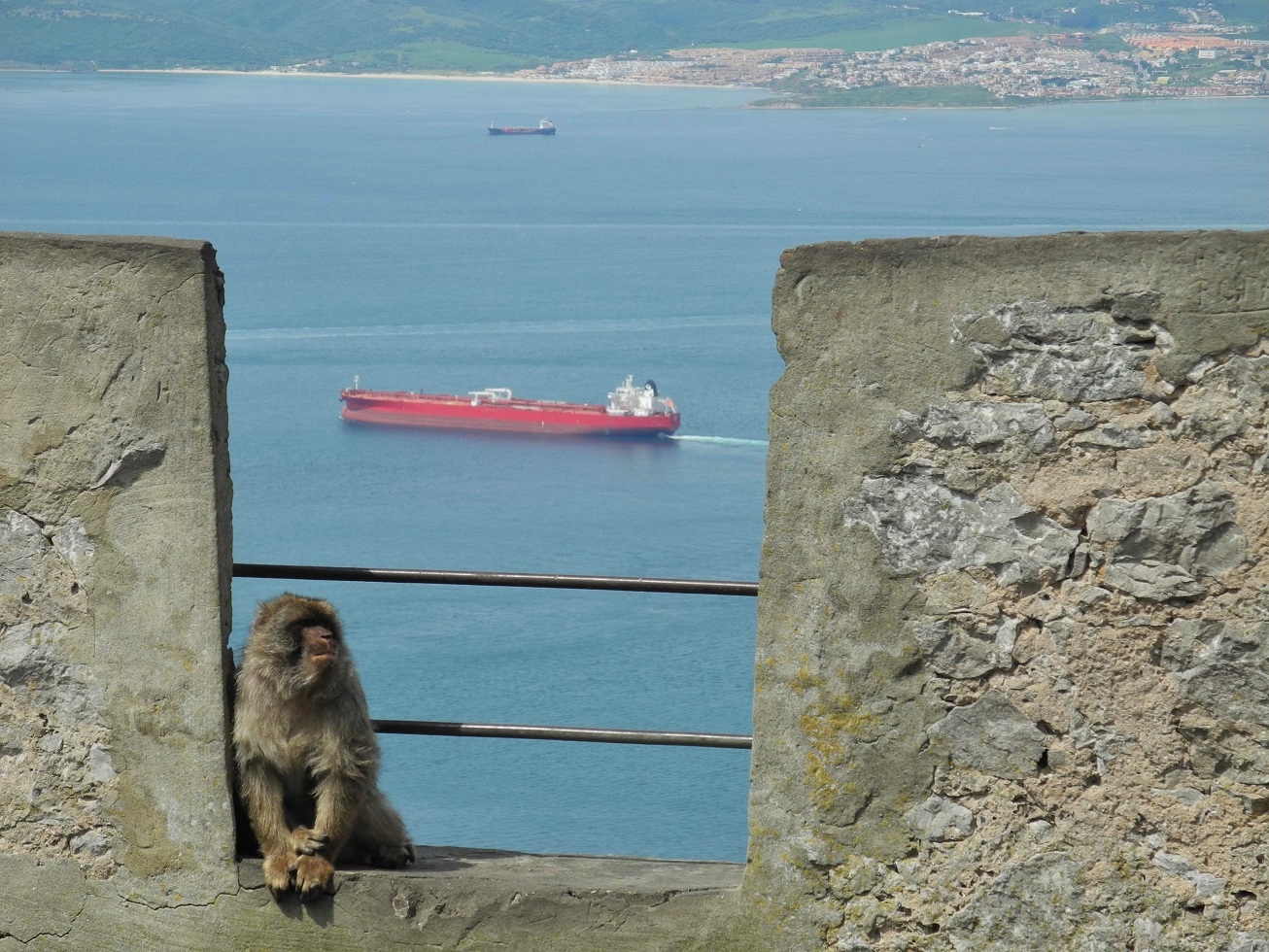
Gibraltar - Barbary macaque 2

A Barbary Ape, with Spain in the distance.

Gibraltar itself was a special time:  I was there with my husband, who then took off for a 10-day bike ride toward Madrid on the day I flew to London.  Gibraltar was vitally important as a British Naval base for centuries, and you literally cannot walk down any street without being reminded of its military past:  Atop the Rock are the ruins of fortifications; St Michael’s cave was a strategic hideout; in the town are cannons everywhere; ramparts are now part of walled parks, and everywhere there are military street names, town square names, and military ships in the harbour; Spain is a spit away, and Morocco is visible even on a foggy day; it is literally the gateway to the Mediterranean.  Taking a cable car to the top of the Rock you’ll find Barbary Macaque (aka Barbary Apes, though they are tailless monkeys) everywhere; they were originally brought from Africa in the 18th century by British sailors.  A few of them escaped and set up house on the rocky slopes above the town, and now they run the show; tourists are lower down in the pecking order than they are, and if they get half a blink they’ll steal your food if you’re silly enough to take it outside.  They usually stay up on the Rock, but it’s still not wise to leave your hotel window open…

Gibraltar: The War Memorial with a Russian cannon in the foreground.

Gibraltar: The War Memorial with a Russian cannon in the foreground.

So now that I’m back, I’m looking forward to sinking my teeth into this new manuscript!  Sometimes it just helps to get away, get new impressions, percolate ideas, and become inspired.  If you’re stuck on something you’re writing, get out!  Go on a research trip, or if you can’t afford it time- or money-wise, then get out to a park, or somewhere different for a change; take your notebook, and let your mind wander.  You’ll find a way through the block!

Leave a comment

Filed under Articles, History, Research, Writing Exercise

Archetypes: Aphrodite vs. Dionysus

Throughout literary history, archetypes have been used to help us relate to characters, their stories, the morals of the tale and the paths they choose and why.  Understanding the archetypes helps to figure out how to portray a particular character; it keeps you on the “same page” as you write, as you develop characters, and try to figure out what makes them tick and where that ticking will take you and them.  Today I’d like to take a closer look at Aphrodite and her male counterpart, Dionysus.  I’ll give examples of these characters from films and books, relatable to most whether you like to read or prefer the visual experience of film.

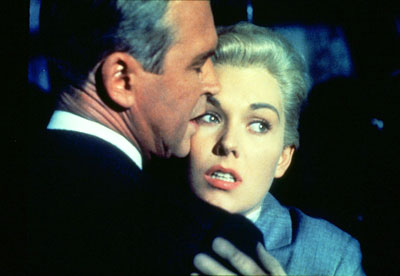
Kim Novak,  Vertigo

Kim Novak, Vertigo

Aphrodite was the Greek goddess of love, pleasure, beauty and procreation.  Like a coin, there are two sides to the character:  The Lover (or seductive muse), and the Femme Fatale.  On the Lover’s side of the coin, there are characters such as Julia Roberts in Pretty Woman, or Ginger on Gilligan’s Island.  The positive side of this character motivates others to improve themselves.  The flip side of that coin are seen in Sharon Stone’s portrayal in Basic Instinct, Kim Novak’s character in Vertigo, or the Bible characters of Salome or Delilah.  On one side you have a character that is nurturing, attractive, seductive and at the core often good, while the Femme Fatale is seductive with often quite dark ulterior motives.  Sean Young’s character in Blade Runner is a good example of the Seductive Muse; she forces Harrison Ford’s character to examine his own sense of humanity by her mere existence.

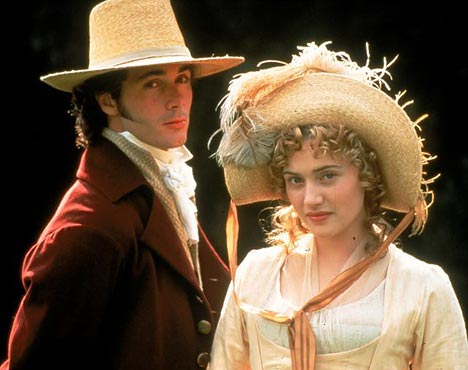
Mr. Willoughby, in Sense & Sensibility

Mr. Willoughby, in Sense & Sensibility

Dionysus is her male counterpart:  His two sides are the Woman’s Man, and the Seducer.  Either way, Dionysus needs women in his life.  He loves women; on the positive side, he loves to make women feel loved.  The flip side is abuse in one form or another, with darker motivations behind his love.  Fifty Shades of Grey is a touchy topic right now; on one hand it’s immensely popular, and on the other very harshly condemned as glorifying abuse, violence and manipulation in the guise of relationship or love.  I tend toward the latter view, as did the main actor in interviews during his junket (he often found himself apologizing to his co-star after their scenes, which speaks volumes about his instincts of what’s right and wrong, and Shades definitely crossed that line for him and for a growing number of critics).  Other examples are Mel Gibson’s character in What Women Want – his character makes the arc from the negative side to the positive; Cary Grant’s character in An Affair to Remember makes a similar arc.  Leo DeCaprio’s Jack in Titanic sits firmly on the positive side of the coin, and makes for a memorable and loved character.  Count Dracula is a typical Seducer, as is Jane Austen’s character of Mr Willoughby in Sense and Sensibility.

There are many other archetypes; if you’d like to know more on the topic, check out Victoria Lynn Schmidt’s 45 Master Characters.

Keep writing!

1 Comment

Filed under Articles, Plot Thots & Profiles, Research, Writing Exercise

Writing Tip: Dealing with Boredom

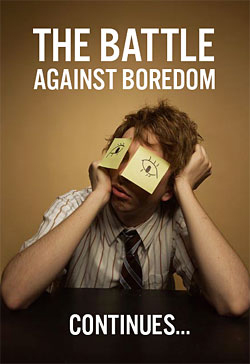
boredomIf you’re bored with the subject you’re writing about, it won’t work to try and think your way out of it, or to convince yourself to write.  I know all too well that when that’s the case I can find a million things that are suddenly far more pressing, like cleaning out a (clean) cupboard or repairing a household appliance.  But often, boredom is an indication that we don’t know enough about our subject matter, and that our writing has simply subsided into going through the motions.

There’s a simple solution:  Find out more!  Read more on your topic; travel to the location; find maps from your time period; investigate the place with Google Earth Street View; go to a museum; ask questions; look for original documents; engage your senses to gain more knowledge and understanding about your theme.  As you find out more, write scenes to inform your work, or a dialogue between characters that will inform you about their situation, setting, personalities or role in the story as a whole.  Beware of your motives in extended periods of research, however:  Are you procrastinating, or percolating?

I look at it this way:  If I’m not getting anywhere with a manuscript, I can either give in and call it “writer’s block” and allow it to paralyze me, or I can proactively work against that block in what I call “percolating mode” – thinking around the problems that I’ve run into, and use the time to inform myself, learn about the time period, and investigate aspects of the story that I am interested in.  That block may be like a boulder in the stream’s path, but my writing, like water, will eventually find a way around it.

Let that boulder of a writer’s block make you stronger and more diversified – and keep on writing!

2 Comments

Filed under Articles, Research, Writing Exercise

Novel Writing Pyramid

Novel Pyramid

When writing or drafting a new story, sometimes it’s easy to get lost in the forest due to the trees – in the myriad of ideas that flash up in a brainstorm.  The pyramid above helps remind me of the emphasis each area needs in the overall structure:

If a story is too complex, you’ll lose or confuse your readers; but if it’s too simple, it becomes predictable and therefore no challenge to the mind of the adventurer who’s picked up your book to get lost in another world.  Most of the best stories are, at their heart, quite simple – “boy meets girl”, or “person achieves goal”.

If you don’t know what your settings and themes are, how can you effectively work toward the final outcome?  If you don’t know who your character is, and what your basic plot (goal and how it’s achieved) is, how can you guide the reader through dialogue or prose toward the desired conclusion?  Diction is important because it is central to creating the voice of each character, and sticking to genre-specific vocabulary and expressions (i.e. no proverbial airplanes through the scenes of a historical novel).  As Mark Twain once wrote,

“The difference between the right word and the almost-right word is the difference between lightning and a lightning bug.”

And if you have the top four slices of the pyramid in place, but don’t have proper foundations – in other words, know your grammar, spelling, punctuation and syntax (sentence structures, tense usage, etc.) then no matter how brilliant your plot might be, or your character development, if readers can’t get past your bad diction and grammar, you’ve lost them as present and future readers!

I’d like to encourage you to know your weaknesses, and develop them into strengths!  If grammar or spelling is a weakness, work on it – invest time into reviewing the rules – Wikipedia is an excellent source for articles on how to use punctuation, etc.  Buy a good grammar book, or even a grammar practice book with an answer key at the back (The “English Grammar in Use” series is one I used for years with EFLA students).  If plot or character development is a weakness, then make a list of questions for each, and take the time to think about and answer them.

Good writing is about quality; it’s about solid foundations and constant development, the honing of your skills; it’s about research, thinking outside the box, and being able to convey in words the images born in your mind.  Just as sharpening a pencil makes it easier to write, so does sharpening your mind and skills.

1 Comment

Filed under Articles, Images, Nuts & Bolts, Plot Thots & Profiles, Research, Writing Exercise

Plot Thots: 14 Tips from Steven Spielberg

Steven SpielbergHappy New Year!  2015 has begun, and with it I’ve begun the research for my next novel; this one, 18th century historical fiction (rounding off the Northing Trilogy with the final book), is taking me back into the world of workhouse orphanages, royal naval vessels, and 1760s fashions and mores.  As I research, read, take notes and wiggle my way into a mental corset (to limit myself linguistically, morally, historically and socially to the times), I can still take advice from a more modern medium:  Films.

I like to listen to good film commentaries, and one of the best teachers in the field is Steven Spielberg; he not only discusses the filming process itself, but the thought processes and philosophy behind his decisions and choices.  Here are a few notes I’ve taken from his commentaries, and where I noted the particular film, I’ll let you know in case you want to hear it for yourself:

14 Tips from Steven Spielberg:

  • Give environments a “used” feel – gritty, creaky, broken-in.  Don’t explain every little detail, but take some things for “granted” to give an authentic feel. (Star Wars)
  • The subconscious mind doesn’t know the difference between dreams and films – emotions will be touched equally.
  • Running gags create humour (e.g. Indiana Jones hates snakes).
  • One problem solved leads to another.  One bad decision leads down – the main character must either decide to be redeemed by good actions, or be ruined (e.g. Darth Vader).
  • If you have point A & point B of your plot, don’t be afraid to explore, to fill in the blanks to get you from A to B!
  • The clothes have to match the characters to be believable.  (Can you imagine Indiana Jones without that iconic hat?)
  • If you edit cerebrally, you will lose feeling; rather, edit to “it feels right.”
  • Sometimes you need a pointer scene, though it needs to be subtle:  “This is where we are; this is where we need to be; this is how we get there.” (e.g. strategy scene before Luke destroys the Death Star)
  • If there’s no emotional connection, there’s no point in doing something for narrative clarity.
  • Contemplation time is essential in the creative process – don’t fill it with brain work that distracts.  Take a bath.  Do the laundry.  Draw; doodle; do a craft.
  • Get under the skin of a character, or culture, or landscape.
  • Every act has three events.
  • What is your main character’s “third place”?  The first place is home; the second place is work; the third place is a socializer.
  • Establish the mystery, and then begin peeling layers away.

[Plot Thots is my own shorthand for anything to do with mapping out a storyline.]

4 Comments

Filed under Articles, Nuts & Bolts, Plot Thots & Profiles, Quotes, Research

Toe the Line vs. Tow the Line

Toe the LineRecently I used the title’s idiom, and to be honest I don’t know if I’d ever used it before in writing; I’ve heard it said onk-times, but never had much use for it so far in written form.  Then came the question, is it “toe” or “tow”?  Actually the original phrase is nautical; but that could still be either spelling.  I did a bit of research, in both etymology dictionaries and a book of naval slang, online and in my library.  The consensus, I present here.

“Toe the line,”  according to Naval History & Heritage, comes from the practice of waterproofing between deck boards with a layer of oakum, pitch and tar, thus creating a striped deck; when the crew was ordered to fall in at quarters they would line up at their designated area of the deck, toes to the line to ensure a neat line for inspection.  Toeing the line was also used as a form of punishment for lighter misdemeanours aboard a ship, such as younger crew members talking at the wrong time; they were made to stand at the line for a specified amount of time to remind them to behave.  A logical leap later and we have our idiom, because the young lads were warned to “toe the line” – they were to mentally toe the line to avoid getting in trouble.

Tow the LineHowever, “Tow the line” could be seen as a malapropism, a mondegreen, or an eggcorn.  A malapropism (also called Dogberryism) is the substitution of an inappropriate word or expression in place of the correct and similarly-sounding word.  Example:  “Officer Dogberry said, “Our watch, sir, have indeed comprehended two auspicious persons” (apprehended two suspicious persons).  A mondegreen is an error arising from  understanding a spoken word or song text incorrectly.  Example:  “The ants are my friends, blowin’ in the wind” (the answer my friends) – Bob Dylan.  An eggcorn is an idiosyncratic (but semantically motivated) substitution of a word or phrase for a word or phrase that sound identical, or nearly so, at least in the dialect the speaker uses.  Example:  “for all intensive purposes” instead of “for all intents and purposes”.  Depending on your view of things, “tow the line could fall into any of those categories.  But it has so often been misused that it has begun to develop its own connotation independent of the original idiom:  While “toe the line” indicates a passive agreement or adherence to a particular regulation or ideology, “tow the line” implies more of an active participation in the enforcement or propagation of that “line” whether political, social, or business policy, as towing an object is not passive, but participative.

10 Comments

Filed under Articles, History, Mistranslations, Nuts & Bolts, Research

The Eddic Poems (Poetic Edda)

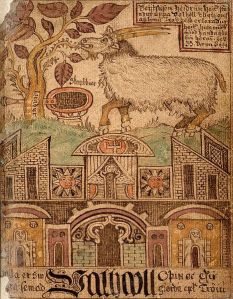
Poetic EddaIn the course of research for the novel I’m currently polishing, I developed a taste for obscure literature; among other manuscripts I’ve read is the Poetic Edda, or Eddic Poems.  What I find fascinating in the poems is not just the language itself, but encapsulated within the language is always a glimpse into the mentality, humour, and mindset of a people.

The Poetic Edda is a collection of Norse poems and mythology, mainly preserved in the medieval manuscript Codex Regius which was written in the 13th century, though the poems and tales are centuries older, having been oral history passed on by the skalds for generations before they were written down.  The poems were originally composed in alliterative verse (the alliteration may have changed from line to line, such as “Over beer the bird of forgetfulness broods / and steals the minds of men”), and kennings were often used (a compound noun used instead of a straight-forward noun, e.g. “wound-hoe” for “sword”), though they were not as complex as many skaldic poems were.  For a far more detailed history on the collection, click here.

I’d like to share a few gems with you; the reference “EP#” is the page number embedded in the Kindle manuscript.  These gems are either sayings, kennings, customs, or historical trivia.  Enjoy!

EP17:  “The wolf that lies idle shall win little meat, or the sleeping man success.”

EP20:  “Hard is it on earth / With mighty whoredom; axe-time, sword-time / shields are sundered, wind-time, wolf-time / Ere the world falls; Nor ever shall men each other spare.”

EP30:  “A faster friend one never finds / Than wisdom tried and true.”

EP31:  “Less good there lies / than most believe In ale for mortal men; / For the more he drinks / the less does man / Of his mind the mastery hold.”

EP35:  “To mankind a bane must it ever be / When guests together strive.”

EP36:  “Love becomes loathing if one long sits by the hearth in another’s home.”

EP36:  “Away from his arms in the open field a man should fare not a foot / For never he knows when the need for a spear / Shall arise on the distant road.”

EP39:  “No great thing needs a man to give / Oft little will purchase praise. / With half a loaf and a half-filled cup / A friend full fast I made.”

EP41:  “To question and answer must all ready be / Who wish to be known as wise. / Tell one they thoughts, but beware of two / – All know what is known by three.”

EP44:  “Wealth is as swift / As a winking eye, / Of friends the falsest it is.”

EP45:  “Give praise to the day at evening, to a woman on her pyre, to a weapon which is tried, to a maid at wedlock, to ice when it is crossed, to ale that is drunk.”

EP45:  “From the ship seek swiftness, from the shield protection, cuts from the sword, from the maiden kisses.”

EP48:  “Wise men oft / Into witless fools / Are made by mighty love.”

EP71:  “If a poor man reaches / The home of the rich, / Let him speak wisely or be still; / For to him who speaks / With the hard of heart / Will chattering ever work ill.”

EP167:  “Drink beyond measure / will lead all men / No thought of their tongues to take.”

EP250:  “On the gallows high / shall hungry ravens / Soon thine eyes pluck out, / If thou liest…”

“Welcome thou art, / for long have I waited; / The welcoming kiss shalt thou win! / For two who love / is the longed-for meeting / The greatest gladness of all.”

EP277:  “In the hilt is fame, / in the haft is courage, / In the point is fear, / for its owner’s foes; / On the blade there lies / a blood-flecked snake, / And a serpent’s tail / round the flat is twisted.” (Runes carved on a sword)

EP296:  A “breaker of rings” was a generous prince, because the breaking of rings was the customary form of distributing gold.

EP299: “There was beat of oars / and clash of iron, Shield smote shield / as the ships’-folk rowed; Swiftly went / the warrior-laden Fleet of the ruler / forth from the land.”

EP300:  Raising a red shield was a signal for war.

EP304:  “Helgi spake: “Better, Sinfjotli, / thee ‘twould beseem Battle to give / and eagles to gladden, Than vain and empty / words to utter, Though ring-breakers oft / in speech do wrangle.”

“…For heroes ’tis seemly / the truth to speak.”

EP305:  “Swift keels lie hard by the land, mast-ring harts* and mighty wards, wealth of shields and well-planed oars.” (*the ring attaching the yard to the ship’s mast.)

“Fire-Beasts” = Dragons = Ships:  Norse ships of war, as distinguished from merchant vessels, were often called Dragons because of their shape and the carving of their stems.

EP349:  “The word “Goth” was applied in the North without much discrimination to the southern Germanic peoples.”  “The North was very much in the dark as to the differences between Germans, Burgundians, Franks, Goths, and Huns, and used the words without much discrimination.”

EP368:  “Combed and washed / shall the wise man go, And a meal at morn shall take; For unknown it is / where at eve he may be; It is ill thy luck to lose.”

EP369:  the “Bloody Eagle” was an execution for a captured enemy, by cleaving the back bone from the ribs and pulling out the lungs.

EP373:  “Few are keen when old age comes / Who timid in boyhood be.”

EP374:  “When one rounds the first headland” means, “at the beginning of life’s voyage, in youth”.

EP378:  “Unknown it is, / when all are together, / Who bravest born shall seem; / Some are valiant / who redden no sword / In the blood of a foeman’s breast.”

EP379:  “”Better is heart / than a mighty blade For him who shall fiercely fight; The brave man well / shall fight and win, Though dull his blade may be.”

“Brave men better / than cowards be, When the clash of battle comes; And better the glad / than the gloomy man Shall face what before him lies.”

EP382:  “There is ever a wolf / where his ears I spy.”  This is an Old Norse proverb that basically means, “Where there’s smoke, there’s fire”.

EP398:  “I rede thee, / if men shall wrangle, And ale-talk rise to wrath, No words with a drunken / warrior have, For wine steals many men’s wits.”

EP399: “I rede thee, / if battle thou seekest With a foe that is full of might; It is better to fight / than to burn alive In the hall of the hero rich.”  “The meaning is that it is better to go forth to battle than to stay at home and be burned to death. Many a Norse warrior met his death in this latter way; the burning of the house in the Njalssaga is the most famous instance.”

EP400:  “I rede thee, / that never thou trust The word of the race of wolves, (If his brother thou broughtest to death, Or his father thou didst fell;) Often a wolf / in a son there is, Though gold he gladly takes.”

“Battle and hate / and harm, methinks, / Full seldom fall asleep; / Wits and weapons / the warrior needs / If boldest of men he would be.”

EP405:  Eating snakes and the flesh of beasts of prey was commonly supposed to induce ferocity.

EP409:  The actual mingling of blood in one another’s footprints was a part of the ceremony of swearing blood-brother hood.

EP418:  “Borne thou art on an evil wave” i.e. “every wave of ill-doing drives thee”.  A proverb.

“Flame of the snake’s bed” = Gold, so called because serpents and dragons were the’ traditional guardians of treasure, on which they lay.

EP452:  “As the leek grows green / above the grass, / Or the stag o’er all / the beasts doth stand, / Or as glow-red gold / above silver gray.”

EP455:  “On the tapestry wove we / warrior’s deeds, And the hero’s thanes / on our handiwork; (Flashing shields / and fighters armed, Sword-throng, helm-throng, / the host of the king).”

EP457:  “In like princes / came they all, The long-beard men, / with mantles red, Short their mail-coats, / mighty their helms, Swords at their belts, / and brown their hair.”

EP458: “Heather-fish” = snake

EP468:  The punishment of casting a culprit into a bog to be drowned was particularly reserved for women, and is not infrequently mentioned in the sagas.

EP513:  “Thou hast prepared this feast in kingly fashion, and with little grudging toward eagle and wolf.”  = “You’ve been generous in the men you give to die in battle today.”

EP524:  “Full heedless the warrior / was that he trusted her, So clear was her guile / if on guard he had been; But crafty was Guthrun, / with cunning she spake, Her glance she made pleasant, / with two shields she played.”  In other words, Guthrun concealed her hostility (symbolized by a red shield) by a show of friendliness (a white shield).

EP546:  “The dawning sad / of the sorrow of elves” (i.e., sunrise – the Old Norse belief was that sun killed elves).


Notes from The Poetic Edda (Snorri Sturluson), translated by Henry Adams Bellows. Kindle Edition.

 

2 Comments

Filed under Articles, History, Research, Translations

The Handshake of Character Development

business.gov.au, the Australian Government's dedicated business website1Have you ever stopped to consider the handshake?  It is a non-verbal form of communication, and it can tell you volumes about a person.  It is usually the first contact in a face-to-face transaction, used not only as a greeting form, but as an aid in assessing the other person’s confidence, assertiveness, aggression, or social skills.  What if the handshake is weak or strong, clammy or crushing?  Is it too short (which sends the signal that the person who breaks off the touch either disdains or disrespects the partner), or too long (which is an invasion of private space, too intimate, or disconcerting – it can even interrupt verbal exchange if it’s too awkward)?  Is it a neutral-valued exchange, or does the touch signify some ulterior motive (power-play, intimidation, invasion of the partner’s intimate sphere, a sexual connotation, etc.)?  What difference does it make for any of the above factors to take place between partners of the same sex vs. the opposite sex?  In other words, if two men shake hands and one is crushing, what message comes across differently if the partner being crushed is a woman?  Different cultural interpretations enter into the equation as well, as touch signifies various things in various cultures.  What difference is there to a handshake with a superior or authority figure to that of a peer or inferior?  What if the superior is a woman shaking the hand of a man of lower rank?  Or a woman of lower rank?  Or a man from a culture that does not recognize women as authority figures?

When developing a character for a novel, the handshake can be a telling gesture.  Even if none of the above questions are answered explicitly in your manuscript, just answering the questions for yourself can go a long way to your own understanding of the character, and how you want to express them to your readership.  So the next time you shake someone’s hand, alert your writer’s mind to take notes – putting those feelings into words develops your senses far more than simply identifying those feelings.  There have been a lot of studies on body language, particularly in the field of international business.  For a humorous yet telling video of the “Top Ten Bad Business Handshakes”, click on the image above.

Leave a comment

Filed under Articles, Nuts & Bolts, Plot Thots & Profiles, Research, Videos

One-Sentence Stories

One of the most challenging things as a writer is to remain succinct; “every word counts” needs to be printed on the back of my hands whether I’m working on a book manuscript, writing to a friend, or answering grammar questions on a forum I lead.  Occasional ramblings are far more acceptable than chronic ones; everyone has a friend, acquaintance or family member who rambles (or – you know who you are!):  I have a neighbour near our building who can turn the reply to a simple, “How are you?” into a 45-minute explanation of how her cousin’s frog’s nephew’s classmate’s teacher’s son’s uncle came by with a blue – or was it green?  You know the kind of green that looks like wilting grass, no, that’s too yellow… by the time she takes a breath she’s gone down so many detours I have NO idea what she’s talking about, or even what the original question was.  Needless to say, when I’m on a deadline I politely avoid that side of the house.

I’ve come across a website that would be a literal impossibility for that neighbour, and would even be a challenge for many of us who consider ourselves to personify the phrase, “brevity is the soul of wit”:  Click on the image below to see “One Sentence – True Stories Told in One Sentence”.  Take the challenge – can you write a story in one sentence?  And take inspiration from the site as well; there are some great starter-sentences there that could be expanded upon to make a short story, or even a novel.

Note:  Since this was originally posted, the site at the link below has gone offline.  Instead, just go to Google and search for “one-sentence stories“, and you’ll come across several great options.

That One Sentence

Leave a comment

Filed under Links to External Articles, Nuts & Bolts, Research, Writing Exercise