What’s in a Name?
The topic of names could cover quite a wide variety of areas, such as naming babies, place names, collective names of animal groups, or translations of names into languages such as Elvish or Runes; but I’d like to focus on the naming of characters for fiction writers.
Choosing character names can be fairly straightforward if you’re writing contemporary fiction; having said that, be sure to choose names that are not too similar from one character to the next. Unless there is a reason for close names, such as Sandy and Brandi for twins, the names need to stand apart to help readers keep straight who’s who, especially if there are multiple characters in a scene. In Lord of the Rings, however, JRR Tolkien uses names to comical effect when naming the dwarves: Bifur, Bofur & Bombur; Dori, Nori & Ori; Kili & Fili; Balin & Dwalin; Gloin & Oin; only Thorin stands out as leader and king with a unique name.
When choosing names for modern characters, consider their place, time and age: If you’re writing a grandfatherly character, he can have a name that was popular in the ‘30s or ‘40s; but if your character is in their 20s, then don’t name them Mildred or Frank. If you are writing children’s fiction, keep the names modern and simple to pronounce when reading aloud.
If you’re writing historical fiction, consider the era and country in which you’ve set your characters. For my 18th century trilogy, I compiled a list of names from parish records in southern England from the early-to-mid 18th century, and then condensed it down according to frequency; that gave me a list of the top 20 male names and top 20 females names from which to choose. Back then, children could only be christened with Christian names approved of by the church; names of kings and queens were popular, such as James, William, Charles, Anne, Charlotte, or Elizabeth. Biblical names from the New Testament such as Timothy or Mary were also popular, but Old Testament names, such as Jacob or Rachel, were only given to Jewish children. If you’re setting your story in the ancient Middle East, then find out what names were common then and there; just make sure that whatever you name your characters, they’re easy to read. Combinations of consonants that are difficult to read will be skipped over – a pity, if your main character is saddled with a forgettable name, such as Cthulhu (Lovecraft), or Tylwyth or Tleilax (Dune). In my 18th century trilogy, I also had a few characters’ names which emphasized their general character: Mrs Stacklesprat was a prickly, withered, gossiping, sour woman, while Mrs Huddlepoke was a cuddly, motherly, soft & jolly woman.
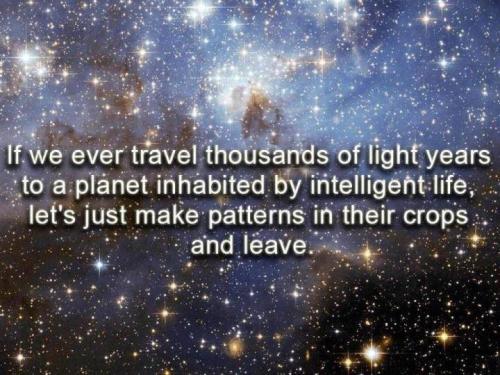
For Science Fiction and Fantasy genres, names can be drawn from sources such as planets, galaxies or stars (Andromeda, Galaxus, Draco), or objects such as trees or flowers, or natural occurrences (Vortex, Sparkle, Wave, etc.)
There are so many resources available for choosing names these days: Online you’ll find dozens of sites for baby names and what they mean; a great place to find names is in film credits – I watch those with pen in hand, and when I find an interesting first or last name, I jot them down; you can combine them randomly and come up with some great fictional names.
Things to consider when choosing your names:
- Culture: Don’t assume a name is Japanese when it might be Chinese – research!
- Era: Don’t choose a modern name for a character set in the 1920’s, and vice versa.
- Age of character: Give age-appropriate names to each character, especially for modern fiction.
- Combinations with other characters’ names: Unless you’re going for the comical effect of JRR Tolkien and have the language chops to carry it off, choose names that differ from the others in your story.
- Occupation: Don’t name your murderer Fluffy…
- Ensure it’s fictional: Don’t name a character and publish your book, only to find out it’s a real name (unless it’s John Doe – then I’d say, go back to the drawing board with choosing a good name)! Google it to see if it exists…
- Be cautious: If a character is closely based on someone you know, choose a name unrelated to your (soon-to-be-ex) friend or relative…! Also, there are certain names that are taboo due to historical events; I’d never recommend naming your character Adolf, or Hitler, or Stalin.
- Personality: If your character is a sturdy, reliable, powerful personality, don’t give them a wimpy name! And if a character is a wimp by nature, don’t give them a powerful-sounding name – unless they’re going to grow into the name over the arc of the story.
- Meaning: A name’s meaning might have bearing on your character; it could also add a double meaning. In the story I’m currently writing, a character is called Janus; this was the name of a Roman god who was two-faced – one looking to the past and the other to the future; it is also the name of one of Saturn’s moons. As the story is Science Fiction, either meaning applies to my character.
I hope these thoughts help you on your way to choosing memorable character names for your own projects. Whatever you do, keep writing!
Filed under Articles, Cartoon, Etymology, Humor, Lists, Nuts & Bolts, Research, Space, Astronomy
Stinging Nettles: A Weed with a Bad Rap and a Great Sap!
Stinging nettles have gotten a bad rap, in my opinion. True, they’ve not done much to endear themselves to hikers who get stung as they walk through undergrowth; but if you can get beyond first impressions, you’ll discover one of the power-packs of nature! Stinging nettles have been around for thousands of years, and recipes for their use have been around for probably just as long. A fast-growing herb related to the mulberry, they grow everywhere (especially well in northern climates), and the list of their benefits reads more like a “Who’s Who” of remedies, from prostate, arthritis, blood pressure (it balances both high and low!), to iron and mineral deficiencies. The younger the leaves, the more power and goodness they still have in them, so pick the top 4 to 6 new leaves for the best results.
It can be eaten raw straight off the plant: “Taco”-fold the leaf by gripping it on the underside near the base of a young leaf and nipping it off with a pinch of the fingers, pop it in the mouth and chew; the juices from the leaf itself will neutralize any brief sting. Also, if you’re out on a hike and get stung by the leaves inadvertently, take a leaf as described, chew it up or smash it up in your hand and rub the juices onto the sting area; it will neutralize itself. It can also be boiled for teas, soups (it boils down like spinach, so you’ll need a lot more than you think you will), or blended into a pesto, or pizza sauce; the variety of ways to eat it are endless. Once the stingers have been neutralized (their own juices will do the trick once released through blending, boiling, or processing in any way needed), its health benefits are unprecedented as a common plant, free to be had! Just a word to the wise: If you let it grow in your own garden, eat it as-is or with a light rinse if you’d like; but if you harvest from a public pathway, park or forest, washing it thoroughly is a good idea; where there are humans, there could be traces of herbicides or dogs… need I say more?
Click on the image above for a delicious, quick recipe. When spring arrives, I’ll be looking for a fresh patch!
History Undusted, 19 January 2014
Filed under History Undusted, Research
Upgrades & Technostalgia
There’s no denying the fact that computers are huge blessings – combined with that little invention called “internet” they’re an unstoppable pair… until they stop, and life comes to a screeching halt.
That happened last week, as our main office computer gave up the ghost, after fighting a long, painful demise. My own laptop, from which I write, has been limping and is in need of repair, but it was our only lifeline to ordering a replacement… done, and three days later, the packages arrived! I’ve spent the better hours of 5 days sorting out things like transfer of emails and contact lists, programmes, updates, software and hardware setups, and patch-jobs to get old programmes to understand the new ones and vice-versa!
Instead of the “old fashioned” desktop computer with a huge processor that either stands on the floor and collects cat hairs and dust bunnies or stands on our desk and collects dust bunnies and cat hairs, we decided to go with a laptop hooked up to a docking station and two screens. Sweet! And yes, I can use both… it’s great when I’ve got research documents open while writing, or doing translations or editing two documents simultaneously. Now, to get my laptop repaired.
It’s amazing how we’ve become so dependent on computers, isn’t’ it? Personal computers didn’t really begin to enter households in any significant way until around 1990; technically, they hit the market in the early ’80’s, but the products were mostly limited to electronics geeks and university libraries. We got our first home computer in 1993, and it had RAM of a whopping 256 MB!! How could anyone ever use THAT much?? Now we’ve passed Gigabytes, and we’re into terabytes (TB, 10004 ), and it won’t be long until we’re into petabytes (PB, 10005), exabytes (EB, 10006 ), zettabytes (ZB, 10007) and yottabytes (YB, 10008). I remember writing business letters in DOS – back before Windows, virtual desktops or virtual wallpaper had even been dreamt of. I remember floppy discs – the latest in technology, now used as drink coasters somewhere in the world, I’m sure. 5-inch floppy discs became passé with the advent of (gasp!) 2-inch version… how could anything that small have so much space on it (1.44 MB). Imagine – back in the advent of computers, there was no Microsoft, no Amazon, no internet, no cloud storage, no dropbox, no websites, no Skype… they were essentially an information processor, with transfer of information only possible through a floppy disc or good ol’ fashioned printouts and photocopies (we won’t even go into the whole issue of the love-hate relationship most secretaries had with the first few generations of photocopiers).
Do you remember cassette tapes? Polaroid cameras? Now music is on a cloud or virtual shelf, and selfies and Instagram have made physical print photos nearly obsolete, except as an art form.


These images show how far we’ve come in less than 40 years. But you ain’t seen nothin’ yet. Check out these up-and-coming products or concepts that are in the making: Just hover your cursor over each image for more information.
Filed under Articles, History, Humor, Science & Technology, Space, Astronomy