

Digital Echo Chambers
This article is longer than my usual blog, but please bear with me; the issues below affect all of us, and they are important to become aware of; after all, you can only keep an eye on something you see.
I watched a fascinating TED talk recently about an African American man, Theo E.J. Wilson, who went “undercover” online as a white supremacist. He did it in order to try and understand where some of the internet trolls who were attacking him were coming from, and to try and discover where they were getting their “information” and ideas from. His findings were insightful.
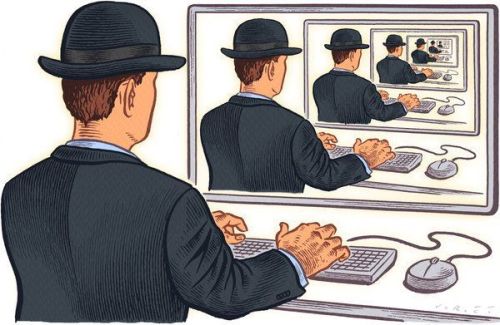
He discovered something that has become more and more obvious to me lately, and that is that we all live online in “digital echo chambers”. The definition of echo chamber is “A room or other enclosed space that is highly conducive to the production of echoes, particularly one that has been designed and built for this purpose. An insular communication space that is of no interest to outsiders or refuses their input.”
The echo chamber is harmless, though annoying, when it comes to shopping or interest feeds; but it can be catastrophic when it comes to life decisions and social or political views.
“If you surround yourself with voices that echo similar opinions to those you’re feeding out, they will be reinforced in your mind as mainstream, to the point that it can distort your perception of what is the general consensus.”
Alan Martin, Wired
Big Brother
The question growing in my mind is, am I telling algorithms online what I want to see/hear/learn, or visa versa? I’ll give a few examples of what I mean:
Sitting at my dining table chatting over a tea with a friend, our cell phones sat off to one side. We were chatting about holidays, and she spontaneously mentioned Mallorca (Spanish islands). The next time we looked online, we both had ads for Mallorca. This has happened many times – that a live conversation in a private home, with no online searches previously made, have resulted in ads, or articles popping up in suggestions; the conclusion is that Google is listening in on your life. If you don’t have your phone on airplane mode and your cameras blocked (I keep small post-its on both front and back cameras on my phones, as well as my laptop’s camera), chances are you’re giving away a lot more than you want to. If you tend to say your passwords out loud as you’re typing them in, you may be giving them away.
Facebook & co.
Facebook, theoretically a social media site to connect with your friends, in reality decides what it is you see, and whose activities you see in your feed. I haven’t been on Facebook regularly for several months now as I removed it from my home tabs on my browser; that one move has saved a lot of time otherwise being wasted! Now, when I look on Facebook, I literally see the home feed activities from only a handful of friends out of 300+; most of what I now see in my home feed is Facebook ads, FB suggestions, memories they’ve selected, and unrelated video stream suggestions. They’re trying to draw me in; but they’ve missed the memo that I’m only there for real connections with friends, and I intend to keep it that way. Maybe I should turn on my phone’s Wi-Fi and say that out loud… [Keep in mind that Facebook, or Amazon, or Google are not “they” as in human faces seeing your information; they are algorithms designed to harvest it.]
The more time you spend online, the clearer your digital fingerprint becomes; the more the algorithms know about your likes and interests, the more they will feed you just that information. The dark side of this is that, if someone has temptations in a particular area, they will be bombarded by tailor-made algorithmic choices, guiding them toward the thing they may be trying to avoid. A recent article in our local newspaper stated that, according to Netzsieger, a comparison portal, 25% of all searches online are related to pornography. Let that statistic sink in a moment.
.Com is not .Com
And were you aware of the fact that, if you are outside of the borders of the US, a certain monopolistic shopping portal beginning with “Amaz” has been discriminating against you? The prices you see are not the prices an American within the borders of the US are seeing. I found this out recently when I was running a sale on one of my books; the sales price was 99 cents; the usual price is $2.99. But when I went on (I am a registered kindle customer at .com) to see if the sale had begun, the only price I saw was $3.56. That’s nearly a 20% price increase; no sale in sight. When I asked them about it, they gave a fluff algorithmic answer, but did not address the real issue. And they never answered my question whether I, as author, am being paid commission on the higher price or not.
It makes me wonder what else they’re not telling me as both author and as customer, and what else they’ve been charging me more for (likely, everything) than if I lived within the borders of the US; as a result, I’ve taken my online shopping elsewhere. I will be doing further investigation into this, and if you do online shopping, I would recommend you do the same, and call them on the carpet about it – write complaint emails, and make your voices heard! Have friends in other countries check out the prices on the same website and product, and compare.
[Now I have another example of the digital eavesdropping: I’ve been typing up this article in my Word program on my laptop – not directly into the WordPress blog; when I went onto Google to refresh my memory about percentage calculation, I began typing in, “how to calculate” – and it filled in “percentage” – with NO previous such search on my part… they didn’t choose “exchange rate” or any other more common option of mine…]
Breaking Out
So, how can we break out of our digital echo chambers and mess with the results of algorithms? There are quite a few ways, actually: Below are a few links to articles about that very topic. I would encourage you to get informed, and put into action various methods to burst the digital bubble, and breathe in the fresh air outside your echo chamber.
Five Ways to Break Out of Your Online Echo Chamber
You can break out of your echo chamber – and here’s how
How To Break Out Of An Echo Chamber – Your Bubble
Escape the echo chamber: How to fix your Facebook News Feed
5 Super Easy Ways to Eliminate Your Echo Chamber
Fake news, echo chambers and filter bubbles: Under-researched and overhyped
Filed under Articles, Musings, Research, Science & Technology, Videos





History Undusted: A World War II Love Story
Once in a while I come across amazing stories; this one is truly one of dedication, perseverance, love, and gratitude.
Peggy and Billie Harris were married just 6 weeks before he was sent off to war as a fighter pilot over Nazi-occupied France in the Second World War. Six decades later, Peggy finally found out what happened to him, no thanks to her own government. Deep gratitude to, and a friendship with, a small French village is just one result of her amazing patience and quest for the truth. Click on the picture to hear about this amazing story. (9½ minutes long, 3-part story)

November 30, 2013
Filed under History, History Undusted, Military History, Videos
Living in an Algorithmic World
Back in the good ol’ days, we just shouted at the photocopier that we were sure was out to get us, as it ate the only hand-typed copy of our document. Then dawned computers – albeit without luxuries-cum-necessities such as Windows. I remember writing business letters in DOS.
Now, our lives are controlled by machines, and to a large extent, like proverbial frogs in a boiling pot of water, we don’t even recognize the fact – or if we do, we simply don’t know what to do about it. But we have an advantage that we didn’t have way back then: A voice on an international platform… blogs.
What’s brought this topic up recently is a string of frustratingly pointless emails back and forth with algorithms. Around Christmas, Pinterest introduced a new feature – sections within boards. It’s a great feature, theoretically, especially if you have tons of boards or tons of pins in said boards. Theoretically. While migrating my massive collections of pins to new sections, Pinterest constantly blocked me with their “spam filter”; when I did get things done, after the fact, they simply LOST three entire sections (not all at once… one here, one another day, one two days ago)! Now comes the useless algorithmic runaround. They have a limited number of options which you are required to choose from among; if your query is out of the “beginners problems” categories, you’re out of luck. I have never, not once, reached an actual human on Pinterest Help. I did once receive a response from some “one” named “Charlie” – but from the response, it was not human – just another algorithm. They neither help solve problems, take responsibility, or offer an apology. It is what it is, take it or stuff it.
 When did “customer service” become pointless? The moment companies realized that they could make money off of the masses without actually bothering with them, that’s when. If that sounds cynical, it probably is – and I don’t often let things ruffle me, but honour is one area that will always get up my nose, as I have a strong sense of justice: When companies or people stop honouring those around them with common courtesies, they will hear about it from me. If Pinterest refuses to add customer service (not just “customer processing”) to their list of skills, it will only be a matter of time before someone comes up with an alternative service with that issue as their strong point; and every disgruntled person of the “mass” will leave Pinterest in the dust, including me. Because despite what some of these online upstart companies seem to think, humanity and human customers should always be the top priority; after all, we can and will make our own decisions, and we will go where we feel wanted, and taken care of.
Algorithms are everywhere; some are more intelligent than others. If you have any amount of online presence, chances are that mega-sites like Google know more about you than your own mother. So what can we frogs do? Unless you’re willing to jump off-grid and become a cyber recluse (which isn’t an option for authors, writers, or most people in the civilized world these days), then let your voice be heard: Write about it on your blog, Instagram, Twitter, Facebook – wherever you have a voice. When we’re loud about it, we will be heard; it will stir others to action; it may be a single drop of water, but it may be the one that eventually causes the dam to burst.
If you don’t want to make those waves, then I’d suggest you just pour yourself a piña colada, topped with one of those little bamboo umbrellas, lean back and enjoy the sauna while you can. And if you decide to go for a swim while you’re in there, just watch out for the phishing lines…

Merry Christmas!

For me, Christmas has never been about the commercialism or the food or the decorations; we do things low-key here in Switzerland, though we do decorate and exchange gifts. It’s about family, time together, specific gifts that the receiver wanted or needed (not just purchases to stuff the stocking or load the base of the tree). As a Christian, the true meaning of Christmas has nothing to do with Santa or sitting around a dead tree in the living room eating candy out of socks. It has to do with the single greatest event in the history of humanity, which was simultaneously a “non-event”… nothing like the people of the times had been expecting, and so most of them missed it altogether. Those who have ears to hear, or eyes to see, will hear and see; those who don’t, or who choose to remain deaf and blind, will do so; it’s that simple. So it is that many people today repeat history and miss the point of Christmas altogether. They get bogged down in materialism, commercialism, superficiality or social pressures of one form or another, and forget about the historical and spiritual aspects of the holiday.
Personally, we will continue to celebrate Christmas with a Christmas tree, gifts, Christmas music and time together with loved ones, all the while remembering the true Reason for the Season, for the greatest demonstration of sacrificial love next to the act of Jesus’s obedience to the point of the crucifixion: That of coming to Earth in the vulnerable form of a baby, born into a family with no status, no wealth and no social power, becoming a human in order to identify with us in every way, and to eventually pay the ultimate price on our behalf so that, if we accept what Jesus did for us on the cross, we can know him intimately – on the deepest level of connection possible to humans in our limitations of time and space: That of the heart, the soul, the mind, and the spirit. The more I think about it, the more mind-boggling it is; the events that we celebrate at Christmas were set in motion for you and for me. It’s that simple.
I wish you all a Merry Christmas, and a Blessed New Year!

The History of the Nativity & Christmas
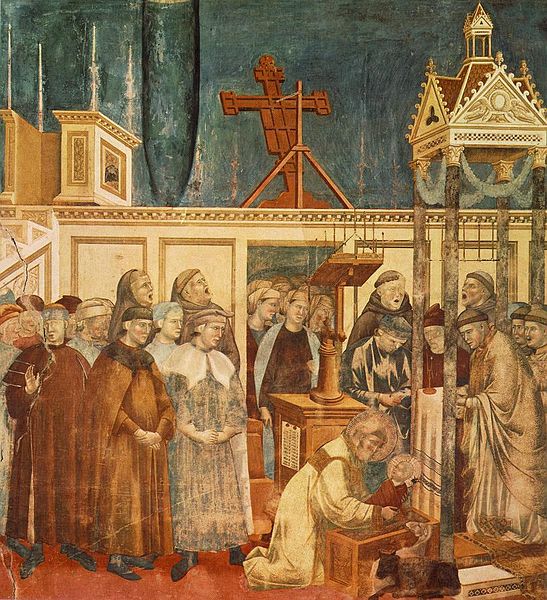 In 1223, in Greccio, Italy, Saint Francis of Assisi is accredited with creating the first Nativity Scene. We tend to think of commercialism and materialism as a modern disease, but in fact, Francis created that display to be a visual reminder of what Christmas was all about, and to counter what he felt was a growing emphasis on secular materialism and gift-giving. It was to be a day of celebration and worship of thanks to God for what he had inaugurated through the birth of the prophesied Messiah, Jesus.
When we think of a modern nativity scene, we think of a few elements as standard: Shepherds, Jesus in a wooden manger of straw, three kings, angels, and cattle and donkeys and sheep. In fact, the stable was more likely a cave or a small hand-dug dugout, a shelter for animals in cold weather or raids, and perhaps a place to store surplus grains or foodstuffs. The manger was a feeding trough, much like modern feeding troughs found on small farms. The shepherds “watching the flocks by night” tells us that it was likely in spring or summer in that region; the day we celebrate as Christmas was adopted throughout Western Europe in the fourth century. Imagine the scenario: Rome had called for a census of the entire region, turning everything on its head as everyone was required to travel to their ancestral homes, including businessmen like Joseph, and innkeepers as well. Hundreds of people descended en masse onto sleepy little villages unequipped with beds or food to cope with them all. Perhaps Joseph had tried at several places in Bethlehem; perhaps there was only one Bed & Breakfast in the entire village; turned away, they headed back to the stable to get their donkey, and uh, “Wait! The baby’s coming!”
The kings were actually Magi, likely a caste of scientists and astronomers, from the “east” – i.e. east of Israel, which could have made them Asian, Indian, Caucasian, or even African. There were not three, but rather three gifts: Gold, Frankincense and Myrrh. In reality, their number might have been more like a small army: They would not have travelled such a distance with the quantities of gifts fit not only for a king but representing their own importance, as well as the honour they wished to bestow on this new king, without protection! The Bible records that King Herod and all Jerusalem were disturbed by their presence and the reason for their journey (Matthew 2). The three gifts offered by the Magi were very symbolic: Gold was a symbol of kingship, the wealth of the earth. It is one of the only metals that, when heated, loses none of its nature, weight or colour, but allows impurities to surface. It is used to symbolize faith and the process of refinement. Frankincense represents priesthood and divinity. It was familiar to most people in the ancient world, used in religious ceremonies. Myrrh, unlike sweet Frankincense, is bitter. It was used as a resin in a spice mixture used to embalm the dead and was symbolic of Jesus’ purpose in coming: His death, burial and resurrection. It makes an appearance both at the beginning and the end of Jesus’ life on earth. It was used medicinally as a painkiller (often dissolved in wine) which is the reason Jesus refused to drink it on the cross (Mark 15:23). And note that the Magi did not show up at the manger in Bethlehem, but by the time they’d travelled that far and found Jesus, he was a child, and Mary and Joseph had set up house (Matthew 2:11).

ICHTHYS
Let’s address one more historical topic: Xmas. Many people think it’s a modern attempt to “X” Christ from Christmas; but in fact, it is just the opposite, historically-speaking. The X is the first letter of the Greek word Χριστός which comes into English translated as “Christ.” and such abbreviated references date back as far as the Anglo-Saxon Chronicle, 1021. Even further back, ΙΧΘΥΣ (Ichthys) was an acronym meaning “Jesus Christ, God’s Son, Saviour” used by ancient Christians. It is often placed within the symbol of a fish, as Jesus called his disciples to become “fishers of men.” Ichthyology is the study of fish, reflecting the Greek connection for the use of the symbol.
Modern Nativity scenes represent a condensed version of a historical event (there is, after all, more historical evidence for Jesus’ birth, life, death and resurrection than many other events in history people accept as fact); so the next time you see one, think about the significance, the reason for its inception by St. Francis of Assisi in the first place, and the Reason for the season.
Merry Christmas! Or, Merry Xmas!
Originally posted on History Undusted, 14 2013
Filed under Articles, History, History Undusted, Research
Cultural Oddities of Japan
I came across an article recently about a Japanese trend among single women to marry themselves. It reminded me that there are a lot of oddities and quirks that come out of the Land of the Rising Sun; they even have a name for odd inventions: “Chindogu”, meaning “‘un-useless’ or priceless tool”; I think that’s meant in irony, but one never knows, with Japan. For the list below, believe me when I say that I’ve left off hundreds of REALLY bizarre items! Here are a few of the less-weird ideas:
- Soap-printing pens: 3D sculpting pens for bath time that make soap foam.
- Sleeping dome head tent: Just like it sounds – a small tent to put your head in at night, so that your skin stays hydrated.
- Salty potato ice cream
- Ice-block noodle bowls
- Hyperrealistic food bookmarks
- Watermelon-shaped dumplings on a stick
- Charcoal Face Wash
- Smile Assessment Apps: Designed to assess a smile’s quality with facial recognition; used in hospitality industries such as airline flight attendants and customer service positions. A symptom of this image-obsessed age.
- Umbrellas with wheels: A “rolling cane umbrella” means you can drag it behind until needed…
- Single weddings: “Me marrying myself” weddings are becoming popular among single women in Kyoto, Japan – complete with bridal pampering, the dress, the hair & make-up and photo album of memories, but without a groom necessary.
- Eyedrop funnels
- Karaoke, and “silent karaoke” (for those moments you don’t want to be heard belting out a tune)
- Shoe umbrellas
- Square watermelon: Makes them more space-efficient to ship
- Umbrella necktie
- Hearing enhancers: Basically, aluminium bowls strapped to the side of your head – in case hearing aids are too discreet for you.
- Bubble wrap keychain – re-pop-able stress relief. This would be a good gag gift for a stocking stuffer or Advent calendar.
- Baby Mop Suit: Let the baby clean the floor while they’re crawling around. Very hygienic.
- Half-body, or “hug” pillow: A torso-shaped pillow with arm, for the lonely woman.
- Lap pillow: For the lonely man, a pillow shaped like a woman’s kneeling lap.
- Capsule hotels: Literally a box, similar to a morgue slab, for sleeping in; an economical way to crash overnight.
- Themed food for films (see hamburger below, made for the Ghost Busters film)
- Zentai – De-stressing and escaping social pressures by dressing in full-body lycra suits
- Commuter’s Aids: Either a construction helmet with a suction cup on the back to hold your head upright while sitting in the U-Tube (subway), or a stick with a padded “U” to hold your chin while you stand.
- Face Gadgets: Everything from face irons, eyebrow wrinkle stretchers, smile exercisers, lipstick application masks (because every woman has the same size and shape mouth, right?), round-eye enhancers, eyelid trainers, face slimmer mouth exercisers, face lift chin-belts… the list goes on and on, with the Japanese fixation on Western standards of “beauty” reaching maniac proportions.
- Cat costumes: The Japanese are cat-crazy, from the lucky cat waving everywhere, to cat restaurants (as well as any other kind of animal you can think of), and the weird (and animal-unfriendly, if you asked the animals) custom of dressing cats and dogs in bizarre mini outfits.
The slide show below illustrates a few of these gadgets or concepts, plus a few others. Enjoy!
Filed under Articles, History, Humor, Images, Lists, Obscurities, Research, Science & Technology






 Stephanie Huesler