
Tag Archives: Musings
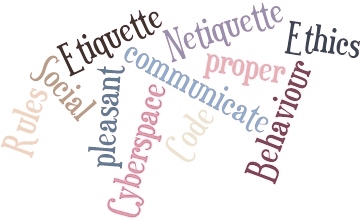
Regarding Netiquette
 The internet is the collective human expression of Self, in all its facets: You can find ANYTHING on here, literally. I for one am very grateful; historical, scientific, archaeological, medical, and general research available online enables writers such as myself to stand on the shoulders of generations gone before and view the wider world from that enriched perspective. You can also find anything for sale or free, an endless knowledge base, or entertainment, or simply a trivial waste of time, available to the entire wireless planet 24/7. It’s a place to express opinions (informed or not), ideas (thought-through or not), philosophies (ditto), creations from songs to videos, crafts, discoveries and more. Wonders to behold, as well as just plain wondering what the heck someone was thinking when they uploaded that.
But with the good come the bad. I’ve gotten spam sidelined; it’s obviously spam when the text is something like, “I think you people just need to lighten up. The writer of this article is just trying to… (blah, blah, blah)”; there are no comments on that particular article yet, which tells me the spam’s originator is just out to stir up dissention if it happens to land on a live and already-active blog. Why? Are people so directionless in their lives that they have nothing better to do than stir up trouble? Apparently.
The anonymity of the internet often brings out the worst side of people; they seem to think that, because they don’t know the person they are responding / reacting to and will probably never meet, that somehow gives them the license to be rude, belligerent, aggressive, offensive, and sloppy with everything from spelling to sentence structure. Whatever happened to Netiquette? Remember that quaint word (I was about to say old, but wait – internet has only been on the scene since 1993) that was an updated version of its predecessor, etiquette? The definition (according to Wikipedia) of netiquette is, “Conduct while online that is appropriate and courteous to other Internet users.” Ironically, the word is exactly as old as the internet itself; the need was quickly seen of reminding people to be courteous within such an anonymous setting. In that most famous of books, the Bible, one guideline is found in Colossians 4:6: “Let your conversation be always full of grace, seasoned with salt, so that you may know how to answer everyone.” That’s what’s missing in a lot of the communication online: Graciousness. Salt is mentioned because it is a preservative, and something that adds flavour. Graciousness not only preserves your own dignity, but guards the dignity of the person being responded to, and those that will end up reading it. The danger in unguarded remarks is that they will bite back; it’s all too easy to wear blinders, thinking everyone will agree with our viewpoint while forgetting that we live on a planet of diversity. Rudeness isolates; graciousness invites. It’s the old adage about honey drawing more bees than vinegar.
There seem to be a lot of people out there who have either never learned, or have forgotten the basic rules of Netiquette. On one hand it’s easiest and most comfortable to say that it’s not our place to educate them; after all, they’re strangers, and to each his own, right? I say wrong: Why do I write, if not to communicate what’s important to me? Why do I interact with others online if not to learn something new, or be encouraged by a great story or news item or event in the life of a friend on Facebook? And if I interact, that means addressing issues, comfortable or not. If someone is rude, the challenge is to point it out with graciousness, not reacting to fire with fire, but with water – putting out the brush fires that have potential to do damage… taking the wind out of their sails in a gentle way. And try to use the sandwich technique: A compliment first, the meat of the matter (graciously put, the correction, or rebuke, or however you want to label it), and then ending on another positive note. If they continue a barrage of crudeness, there’s always that “delete” or “block” possibility. Peer pressure is the most effective way of making changes, for good and bad. Let’s become peers for good in this vast cyberworld, one step at a time. And the next time you’re tempted to fight fire with fire, remember the salt of Grace.
Filed under Articles
Thoughts on Writing from a Reader’s Perspective
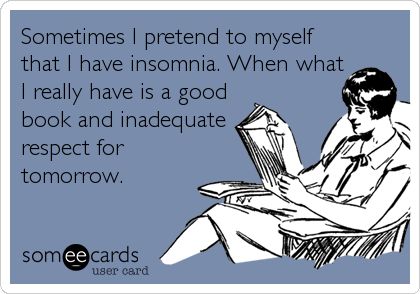 For me, reading a book is about escaping to a new world, diving into that world through the medium of the senses that are stimulated by well-chosen words, precision instruments that play a symphony of emotions, smells, sights, sounds, touches, tastes, balance and harmony. I’ve never really appreciated books that are written with gratuitous scenes of violence or sex; sometimes it seems to me (as a reader) that writers throw in scenes willy-nilly to spice things up or to patch over the fact that they haven’t researched and developed their characters thoroughly, or because they run out of plot ideas and just spin their wheels. Such scenes grate against my senses just as much as random punctuation or bad spelling does. If such elements are not organic, logical, and a natural development of the plot, they do not belong there. Period. It’s an insult to my intelligence and a brazen demand on my “believability credits” that is frankly not the author’s to demand… those credits are something that I as a reader give gladly to a good writer, but a writer has to earn them, and has no right to demand that I suspend disbelief to dive into their story when they haven’t bothered to make it believable. The writer’s job is to earn those credits through good writing, good writing, and good writing, i.e. plot, character development, grammar, syntax, orthography, and structure.
Don’t misunderstand me: There are times when the darker scenes are organic; they are necessary to portray the character, or are a natural outflow of the character’s flaws or decision process, or lack of positive input earlier on in life. Sexual scenes can be sexy without being vulgar, sensual without being slutty. Sometimes I read books that deal with such issues, but more as a writer than a reader, to see how they are structured. I read part of a book recently (I gave up quite early, which not a good sign for the writer) where the author had seemingly tried to cram as many vulgar terms as they could into one chapter, or one page, or one dialogue. It got so ridiculous that I started reading as an editor, slicing out entire passages to improve the script. As far as I’m concerned, there’s not really a point in publishing something that will likely offend half your demographic sector away from buying a second book.
Give me something to read that’s intelligent, entertaining, witty, smart, deep, and that I can come away from the experience wanting more – not just another book with those characters, but that I come away having learned something about myself or the world around me, having been positively changed, encouraged, enlightened or satisfied.
Coherency: Just sayin’…
 Is it just my imagination, or is written English slipping in quality, even among writers? Is it that less attention is paid to the end results than to the actual “getting it out there to be read by others”? I just returned to my blog after taking a jaunt around WordPress Land; the blogs I visited, I went to with good will, interested to see what others are thinking and writing about. But I have to admit I couldn’t understand half of what was written. Half. Now, I’m an English teacher and writer and all that, and yes, I’ve been living in a non-English speaking environment for a quarter of a century. But has it really deteriorated to the point of not only miscommunication, but of downright gibberish at times? I’m not looking down my nose at those who are trying to communicate (something); I am simply throwing out this question into the cosmos and asking if I’m the only one who’s noticed this?
Where is the satisfaction of a job well done in a sentence that looks like it was fed through BabbleFish a few dozen times? Where is the pride in having written something well, communicated the heart of the matter, and allowed others a glimpse into the mind of the writer without confusing them with poor spelling, syntax and punctuation? I find myself editing more than reading sometimes, and that does not bode well for the writer. As a writer I take my job seriously, in all its aspects, from research, to presentation. If we as writers don’t set a good example to follow, how will the next generation know right from wrong, or rite from wong?
A few simple rules I follow:
1) Read your text aloud before you hit that “post” button.
2) Have a good dictionary available (such as onelook.com), and check those words you’re unsure of.
3) Do NOT trust a spell-checker! Learn the basic rules of spelling, punctuation and syntax, and if you’re still not sure, double-check online with reliable sources.
Let’s swim against the tide of laziness and stagnation in writing; let’s expand our vocabulary instead of relying on the same ol’ same ol’; let’s set an example of good writing, even though it may not be perfect every time.
Filed under Articles, Cartoon, Nuts & Bolts, Writing Exercise
Cover Art, Cover Art, Where Art Thou
For those of us who are writers, you know what I mean when I say that we’d MUCH rather spend our time writing, creating, moulding, researching characters and plots, and basically ANYTHING else than the dusty technical nuts & bolts of publication. With the hurdles one has to leap in the publishing world, it’s no wonder that e-books are becoming THE path of choice. I spent those required months writing cover letters, creating packages to agents, etc. only to get those letters back that said, “Great ideas! We loved it! But…” when they already have clients in that genre, they’re not about to take on competition for them… So like many others, I’ve chosen the route of Kindle. I’ve got one book ready to go, and another first draft just completed, as well as no less than 5 other projects at various stages of completion. A meeting with an artist proved fruitless to my purpose; he knows art, but not all the aspects of doing cover art. I’ve worked with graphic artists for album covers and artwork, but I’m not prepared to invest several thousand at a time when I’ve got dozens in my future… so…
That’s where www.Fiverr.com comes in! For a fiver, you can find just about any service you can think of, from fake testimonials, to placebo-effect health talks, to business advertising on the back of a Harley, to language lessons over Skype, to cover art for e-books. If you find yourself swimming in the Maelstrom of publishing, check it out.
But a word to the wise: You get what you pay for. Take it as a springboard, an idea; but take it and own it yourself. Take the time to invest your energy in learning all you can about each step of the publishing, editing, and artistic processes. Also, such offers only cover e-book cover art; they are lower in pixel than will be required for a paperback cover, so it’s worth looking into a solution that covers both formats.
Filed under Nuts & Bolts, Research
Concerning Fairy Tales
“Fairy tales are more than true; not because they tell us that dragons exist, but because they tell us that dragons can be beaten.”
G.K. Chesterton

On Writing
“True glory consists in doing what deserves to be written; in writing what deserves to be read; and in so living as to make the world happier for our living in it.”
Pliny The Elder (Roman scholar & scientist, 23-79 AD)
Filed under Quotes
The Silent Scream of Oxymorons
 An oxymoron is an expression that contains words with opposite meanings; sometimes, like idiot savants, we use them without even realizing how clearly confusing they might be, or how seriously funny they might sound to others.
Having friends around the world, I’m quite aware of cultural issues; for instance, British fashion might sound like an oxymoron to a French designer, while French deodorant might sound like one to the Brit. There are the usual internationally recognized oxymorons like good airline food, or train schedule, and then there are locally-limited ones such as funky white guy that might not make any sense to someone from the African continent. A divorcee might think that marital bliss is an oxymoron, but then I’ve been married nearly 20 years and I can confirm that it is NOT a contradiction in terms. Comfortably dressed might seem an oxymoron to a nudist colony, and Wall Street might think that business ethics is a tragic comedy. Calm wind may sound like a contradiction, but I’ve spent enough time along the northern coast of Scotland to confirm that wind can indeed seem calm… anything less than gale-force winds would suffice on that count.
But it’s the universally understood oxymorons that are the most fun, such as military intelligence or Arabian democracy, government organization or industrial park. How many times have you been alone together with a friend and heard them say, “Just act naturally” as someone you’re attracted to walks by… when you’d rather be whispering bittersweet nothings in their ear? Have you ever gained weight after having a lite beer? Yep. Ditto for diet ice-cream, non-alcoholic beer or non-alcoholic wines. Some oxymorons are clearly ambiguous, while others are an exact estimate of feelings, such as acute dullness, feeling almost exactly like a cowardly lion or an unsung hero. Groucho Marx proved that educational television is not necessarily an oxymoron; he said, “I find television very educational; every time someone turns it on, I go into another room and read a book.”
And don’t even get me started about politics: Do you have fun at a political party? What about moral majority – they took God out of society and must now live with the consequences; moral has never been majority, but rather the discriminated minority, in my unbiased opinion. And there will never truly be united nations – I’ve lived smack in the middle of Europe for 25 years and have watched the EU decay from idealistic dreams to cooking the books just to stay afloat. There’s really no such thing as modern history, holy wars, conservative liberals, socialist market economies, humanitarian invasions, peace force, peace offensive, or peacekeeper missiles, though sometimes I get the impression that criminal justice is more alive and well in America than is common sense.
There are some oxymorons that sound accurate, but using the term non-working mother may land you in the emergency ward through a display of passive aggression! And how many know the truth of the oxymoron Microsoft Works? Now then: Old news, near miss, extensive briefing, advanced basics, even odds, federal budget, free trade, friendly fire, homeland security, paid volunteers, least favourite and software documentation… our lives are permeated with them.
I’m terribly pleased that I’m a private citizen with a home office, but working holidays are a virtual reality in such a situation, as the line between work and private life is obviously obscured. I don’t miss facing all those rolling stops of rush hour, though I’m vaguely aware of the deafening silence of Tinnitus more when I’m home alone. I call it a qualified success when I’ve managed to do a bit of writing, cleaning, editing, cooking and blogging in a day. I can listen to music, whether soft rock, light rock, instant classics, rap music, or rock opera, and I’m the uncrowned queen of dancing with my cats.
Some oxymorons just make me shake my head in sympathetic pain: There are actually those who somehow think that non-dairy creamer is either dairy, cream, or a wholesome substitute, when I think they’re rather dangerously safe at best, and misanthropic humanitarianism at worst. One should never be deliberately thoughtless when it comes to genuine imitation nutrition; when vitamins and minerals are found missing, it can’t be healthy; it may even lead to a great depression! And what is it with “masterpiece of evolution”? Follow that to its logical conclusion.
What about those who feel intense apathy or feel clearly misunderstood, or second best? And is ill health the same difference as good grief? Cheerleading scholarship? Really? Is there ever real potential for a minor crisis? Either it is or it isn’t. And how many have experienced the headache of trying to open a childproof container as an adult? It’s a minor miracle to open some of them.
I could go on and on ad infinitum – that’s why I love the English language! There are so many glorious contradictions – almost as many as there are people with different perspectives! So let’s organize a friendly takeover of the English language, reclaiming ground lost to the insipidity of poor grammar, apathetic vocabulary and lazy spelling!
If you’ve got any more great oxymorons, please let us know in a comment below! Happy hunting!
Filed under Nuts & Bolts




 Stephanie Huesler