Tag Archives: Recipe

Tasteful History: Hot Cross Buns

This “History Undusted” has a tasty twist: I’ll dive into the history behind this food popular throughout the English-speaking world and Commonwealth nations, and then I’ll include a recipe if you’d like to try it yourself.

Pompei Bread, AD 79

Hot Cross Buns can be traced back to the medieval period, though scoring the top of breads has been practised for thousands of years; a bread, found in the ashes of the volcanic eruption that wiped out Pompei, shows scoring – likely to make the portioning of the loaf easier; it’s a precursor to the sliced bread we know today. Early Hot Cross Buns used this knife-scoring; the version we recognize today was first introduced in 1361 by Brother Thomas Rocliffe, an English monk at St Alban’s Abbey, who made what he called the Saint Alban’s Bun; he distributed the baked goods to the poor and pilgrims on Good Friday. Many foods can be traced back to a specific holiday: For instance, when you think of a Christmas meal, wherever you are in the world that celebrates Christmas, specific combinations of dishes come to mind that you probably don’t eat at any other time of the year.

During the medieval period, the crossed buns would be hung from the rafters of houses for an entire year, believing that they would ward off evil spirits. During the 1600s, the Puritans put an end to that practice, and Queen Elizabeth I even banned the sweet breads, consigning them to consumption on Good Friday, Christmas, or at funerals (bad luck for the deceased, who missed the excuse for the treat). By the 18th century, it had become firmly associated with Good Friday. To give you a taste of history, click here to watch a short video from the York Castle Museum.

Today, all kinds of versions are on the market year-round, from the traditional, to chocolate, to Cheddar cheese and marmite.

So, without further ado, here’s a traditional recipe you can recreate for yourself.

Hot Cross Buns

To watch this recipe’s creation, click here. Below, I’ve listed out the ingredients and basic instructions, as used in this video by Chef Jack Ovens.

1½ C. (375 ml.) whole milk – heat the milk until just warm on the stove or in the microwave on short bursts, until around 104°F/40°C.

In a mixing bowl, add 1 Tbs./9gr. Dry yeast & 2 tsp. out of ½ C. sugar (the rest will be used later); pour in the warm milk and whisk until combined. Set it aside for 10 minutes to allow the yeast to feed off of the sugar. A froth will form, which means the yeast is active.

Add in 4 ¼ C. (640 gr.) bread flour

the rest of the ½ C. sugar

1½ C. sultanas (raisins) (you could substitute ¼ C. with candied orange for the traditional version)

2 tsp. ground cinnamon

2 tsp. ground allspice (cloves, for the traditional version)

The zest of 1 large orange

1 egg, beaten

50 gr. melted, cooled unsalted butter

¾ tsp. sea salt

Mix all of this until thoroughly combined – either using a mixer with a dough hook, or by hand.

Dust your workspace with flour, turn the dough out and knead for 8-10 minutes. Shape it into a smooth ball. In a greased mixing bowl, place the dough and cover with a warm, damp tea towel and allow to proof for 1 hour, or until doubled in size. When it’s risen, punch the dough a few times to remove the air; dust your workspace with flour and tip out the dough. Knead the dough to remove any air bubbles, then shape it into a log around 60 cm / 23 inches long. Slice that in half, then roll each section to a log to 40 cm / 15 inches long.

Slice each half into 6 even pieces; form each into a ball, tucking the edges underneath.

Line a deep-sided baking tray with parchment/baking paper, and lay your balls of dough in rows of 3 by 4. Cover with an oiled piece of plastic wrap to allow the buns to rise without sticking to a towel. Allow to proof for 40 minutes.

While it’s proofing this final time, preheat your oven to 180°C/350°F

To make the dough for the crosses:

½ C. /70 gr. bread flour

95 ml. cold water

Whisk these together until it forms a piping paste.

In either a piping bag with a 3mm nozzle or in a plastic bag with the corner snipped off, spoon in the dough and pipe it across the rows of buns, making sure to cover to the edges of the buns.

Bake for 20-22 minutes, rotating the tray halfway through. A few minutes before the buns are done, in a small bowl, mix:

½ C. / 110 gr. caster sugar

150 ml. boiling water

Mix with a pastry brush until the sugar is dissolved. Remove the buns from the oven and glaze them with the sugar water – just enough to cover each. This will give a nice crunch to the crust of the bun. Allow them to sit in the tray for a few minutes, then transfer to a wire rack. Slice, butter, and enjoy!

Leave a comment

Filed under Food History, History, History Undusted, Snapshots in History, YouTube Link

Food History Undusted: Mac & Cheese

As I recently mentioned, we had problems with kitchen moths; the source has been found (dates) – the jar which contained them also isolated them; I played the jar like a maraca and sang “La Cucaracha” as we put them in the compost. We are now moth-free! Woo-hoo!

We really appreciate the advantages of storing everything in glass jars: It looks pretty, we can see exactly how much we have, what we have, and it’s inviting to be creative in meal planning. One of the pasta jars we have contains mini “Hörnli / Hoernli” – the Swiss word for “little horns” and what the rest of the world probably refers to as macaroni. The topic came up as a meal idea, and of course, being us, we got into the historical aspect. Where did it originally come from? Did it arrive in America with Italian immigrants or is it a hybrid dish?

Mac & Cheese History

This image above is nearly sacrilege for many people, myself included – I cannot imagine eating pasta from a can! But just after World War 2, manufacturing of canned goods, frozen meals and the like were coming into their stride as families pieced their lives back together and got on with the business of rebuilding the country and economy; televisions entered the home mainstream in the early 1950s (think black and white, rabbit ear antennas, no remote and 2 channels) – but that’s another topic. Product placement during television programmes and news was a major factor in influencing the purchasing power of the average consumer (product placement may have begun as early as 1873, when Jules Verne’s fame led shipping companies to lobby being mentioned by name in his upcoming novel,  “Around the World in 80 Days”).*

The oldest known reference to a dish that may be recognizable as the ancestor to the modern concoction is from the 13th century, from someone in the court of Charles II of Anjou who was familiar with the Neapolitan court; the dish was basically prepared with sheets of lasagne sliced into small squares, cooked in water and tossed with Parmesan cheese. The American version some might be more familiar with has two claims to ancestry: Either it began as a Connecticut church supper dish known as Macaroni Pudding, or it was brought over from Italy in the form of a recipe by Thomas Jefferson, who also brought back a pasta machine.

So, where was the noodle dish invented that we know today as “Macaroni and Cheese”? Switzerland, of course!

The dish, known as “Älplermagronen” (=”Alpine herders’ macaroni“) in the German-speaking areas and “Macaroni du Chalet” in the French-speaking areas, is made with those Hörnli, also known as “Magronen”, which were dubbed for the horns of the cattle, sheep and goats which the herders tend. The cheese was often a local product from the milk of those very animals, and the dry pasta was easy to hike up to their summer chalets where they slept on the Alps during the summer grazing seasons.

For a good, long read about the history of the pasta, click here for a “BBC Travel” article on the topic – and get a good taste of the Swiss Alps in the meal! And be honest – how many of you have a hankering for Mac & cheese after reading this? Click on the image below for an authentic recipe.

Alplermagronen - Betty Bossi

Image credit: Betty Bossi (the Swiss version of Betty Crocker)


*Information source: Wikipedia, William Butcher (translation and introduction). Around the World in Eighty Days, Oxford Worlds Classics, 1995, Introduction.

3 Comments

Filed under Articles, Etymology, History, History Undusted, Images, Links to External Articles, Military History, Research, Science & Technology, Snapshots in History

Stinging Nettles: A Weed with a Bad Rap and a Great Sap!

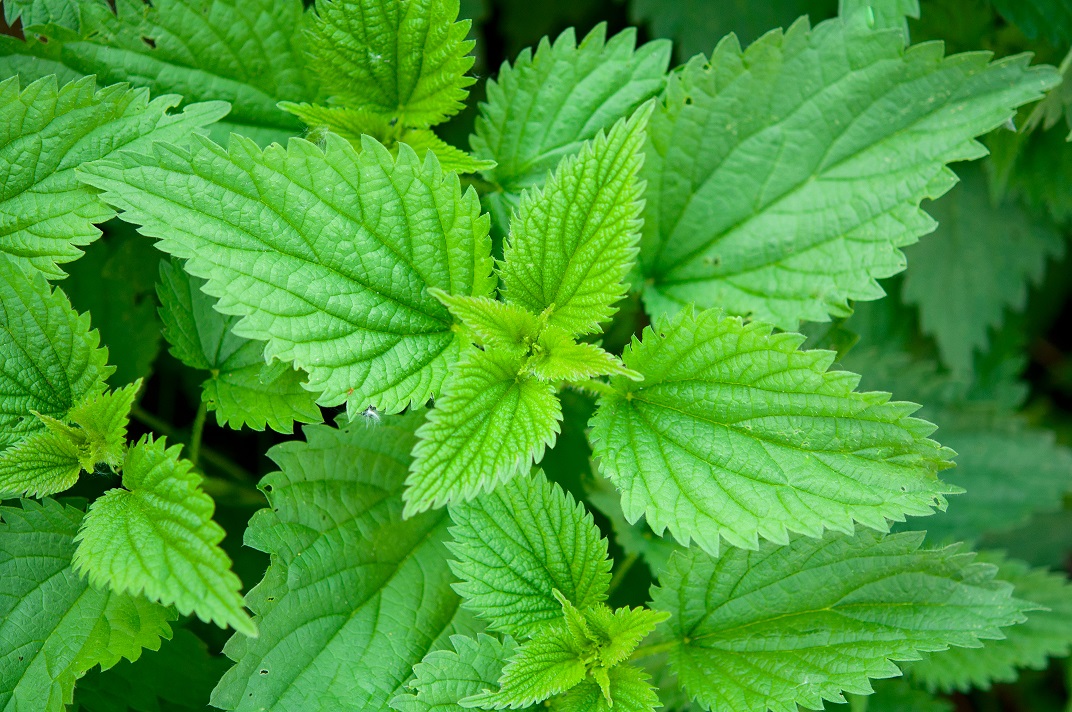
stinging nettleStinging nettles have gotten a bad rap, in my opinion.  True, they’ve not done much to endear themselves to hikers who get stung as they walk through undergrowth; but if you can get beyond first impressions, you’ll discover one of the power-packs of nature!  Stinging nettles have been around for thousands of years, and recipes for their use have been around for probably just as long. A fast-growing herb related to the mulberry, they grow everywhere (especially well in northern climates), and the list of their benefits reads more like a “Who’s Who” of remedies, from prostate, arthritis, blood pressure (it balances both high and low!), to iron and mineral deficiencies.  The younger the leaves, the more power and goodness they still have in them, so pick the top 4 to 6 new leaves for the best results.

It can be eaten raw straight off the plant:  “Taco”-fold the leaf by gripping it on the underside near the base of a young leaf and nipping it off with a pinch of the fingers, pop it in the mouth and chew; the juices from the leaf itself will neutralize any brief sting.  Also, if you’re out on a hike and get stung by the leaves inadvertently, take a leaf as described, chew it up or smash it up in your hand and rub the juices onto the sting area; it will neutralize itself.  It can also be boiled for teas, soups (it boils down like spinach, so you’ll need a lot more than you think you will), or blended into a pesto, or pizza sauce; the variety of ways to eat it are endless.  Once the stingers have been neutralized (their own juices will do the trick once released through blending, boiling, or processing in any way needed), its health benefits are unprecedented as a common plant, free to be had!  Just a word to the wise:  If you let it grow in your own garden, eat it as-is or with a light rinse if you’d like; but if you harvest from a public pathway, park or forest, washing it thoroughly is a good idea; where there are humans, there could be traces of herbicides or dogs… need I say more?

Click on the image above for a delicious, quick recipe.  When spring arrives, I’ll be looking for a fresh patch!


Originally posted on History Undusted,

7 Comments

Filed under History Undusted, Research

Obscurities: Flumadiddle

According to the Merriam-Webster Dictionary and Wiktionary,  Flumadiddle(s) is something completely nonsensical or ridiculous; utter nonsense; cheap, worthless frills.   According to Dictionary.com, it is an Americanism that arose in the 1840s as a combination of flummery, meaning “complete nonsense,” and diddle, meaning “to fool with.”  It’s also the name for a savoury dish from the region around Cape Cod; click here to see the recipe.

I think it’s a word well worth rescuing from obscurity!  In fact, it’s probably more relevant than ever in our modern “culture” (I use that term cautiously, as what some people consider culture, others consider flumadiddle).  IMHO, flumadiddle could be applied to most television series, political speeches, internet “information”, and even many news articles.  So add it to your vocabulary, and have fun!

Obscure 1

8 Comments

Filed under Etymology, Grammar, History, Obscurities, Writing Prompt