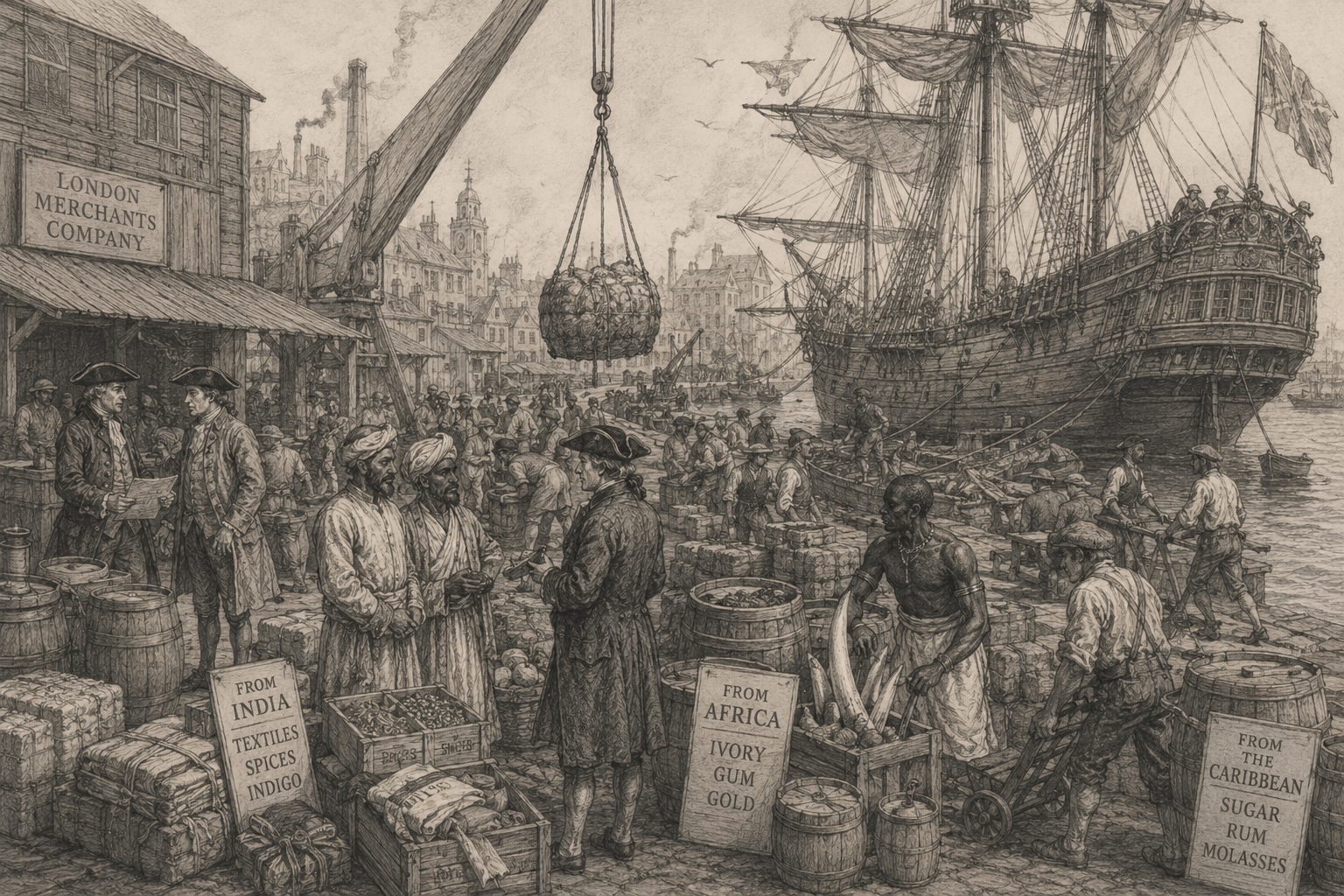
Just as language in 11th-century Britain needed to adapt to facilitate communication between the Anglo-Saxons and the Norman French-speaking ruling class, when Britain eventually expanded into what became the British Empire, the nations under their rule absorbed English for the same reasons. English is known as the common language that divides; Caribbean English has little to do with Indian English; Australian English has little to do with Creole English. The rich linguistic diversity that resulted from geopolitical constellations is something we still benefit from today. English is still absorbing new words from other languages, such as umami (Japanese); many new words may only be understood in local regions before they spread to wider use.
British English has many words imported from the time of Colonialism, from India, the Caribbean, Australia, and Africa. Over time, many of those words have been exported to the colonies of the New World, and so they are familiar to English speakers outside of the colonial regions of the former British Empire. Here are a few words we owe to Indian languages (which number over 120; if you count dialects, it can be into the high thousands):
From Hindi, we have: Jungle, pajamas (pyjamas), pundit, bungalow, cushy, monsoon, avatar, bangle, bandana, chutney (and many spice names, such as garam masala), cheetah, cot, cummerbund, dinghy, dungaree, juggernaut, khaki, karma, loot, mantra, punch, pukka*, shampoo, typhoon, and veranda – to name a few.
*Pukka is a modern British slang word meaning superior, excellent, first-class.
From the Indian Tamil language, we have catamaran and curry; from Malayalam, we have calico and jackfruit; from Kannada, we have bamboo; from Sanskrit, we have atoll, aubergine, basmati, candy, carmine and crimson, cowrie, crocus, ginger, jute, lacquer, lilac, mandala, mandarin, musk, nard, opal, orange, pepper, rice, sapphire, sandalwood and shawl.
From Australia, many Aboriginal words have spread throughout the English-speaking world and beyond; here are the most common: kangaroo, koala, dingo, wombat, kookaburra, boomerang, gammon, cheeky, lingo,moola (money), and wallaby.
African words that have made it into English include banjo, jazz, cola, chigger, ebony, goober, gumbo, impala, jive, jukebox, jumbo, mojo, okra, safari, tango, jam, and zebra.
From the indigenous Caribbean languages, we get words like barbecue, canoe, cassava, guava, hammock, hurricane, iguana, maroon, potato, savanna, and reggae.
This list could be pages long, as the British Empire influenced, as well as absorbed, languages and vocabulary from around the world.
Do you know of any others to add to the list? Please add them, and where they come from, below!