
Monthly Archives: October 2016
Shifting Sands
The title is an apt one this year for me: In February, we went from having no kids to having a love-starved, distrustful PTSD teenager with defence mechanisms and trauma-induced autism, who, in the first few weeks of her being here, barely spoke intelligible sentences (communication with the outer world is a challenge for her, whether in her mother tongue or not). She’ll be with us until late-January 2017 as an exchange student, but she’ll be in our lives for years to come, because we’ve become the parents she never had. When she returns home, we will have to release her back into the abusive situation which caused many of the problems in the first place. The country she comes from in Asia seems to be stuck in the past by several centuries, especially when it comes to things like psychology; diagnosis and treatment are nearly impossible, simply because they see such things as a weakness that would cause the family to lose face, and in this particular case the fear is that the father would put her on the streets if he found out. Because of that fact, we’ve not been able to draw on the help of the student organisation’s volunteer psychologist (they would need to inform the father), so we’ve basically been on our own in this complex process; even the diagnosis is my own, having had to apply my research skills into an unknown field and narrow down the symptoms and manifestations, and figure out what we were all dealing with (it’s since been confirmed by friends who work with autistic children).  I have a profound respect for parents who raise autistic children on any spectrum of the condition; I know that our situation is simply not comparable – in a few weeks she will be leaving us; at the same time, we had no preparation for going from zero to a hundred overnight. We thought we’d be getting the average exchange student; God had other plans both for her and for us – plans that go far beyond a year, touching eternity.
What that’s translated into for me this year is an abrupt shift in long-term goals and the shifting sands of daily priorities getting turned on their heads at a moment’s notice. If you’re like me as a writer or creative person, an inner irritability arises when I can’t write – not as in “writer’s block”, but as in “as soon as I sit down I’m going to be interrupted, so I can’t even begin”. Two weeks of this month were school holidays, which meant she was here 24/7 except when she was out with friends (which was unpredictable, and not very often as she enjoys being “home”); one week of that time it was just the two of us as my husband was away. By 24/7, I mean it – any time night or day, when I was trying to focus, she’d show up in the doorway, whether noon or 3 a.m; parents understand! We watched films, talked, painted, and did our own things. By the time she went back to school on Monday, I was ready to have my time for focusing again – I’m sure every mother on the planet can empathise! She gravitates to me, soaking in my presence; that’s lovely – it means she trusts me, wants to be with me, and gets the attention she craves (and should have been getting throughout her life). I like spending time with her; but it also means that my priorities – writing, editing, graphics, blurbs, and all of the thousand other steps toward publishing my fifth novel – have taken a back burner; the goal of getting this book out by Christmas had shifted away with the dunes of life by May. It also means that I can’t really relax – I never know when, after finally sitting down for a moment, I open one eye to find myself being watched. Literally. Or I just sit down and hear, “Mom!” from a distance corner of the flat. Sometimes it feels like every move I make draws some kind of commentary – it’s her way of trying to connect, and I understand that with my heart, but sometimes my mind wishes I could just flip a switch and turn it off for a while. Again, I know that every mother can relate to those feelings; just keep in mind that I’m not actually the mother, in the sense that I haven’t had years to get used to these things! She has a great father-daughter relationship with my husband, too – pillow fights, lots of fun and talks at the dinner table, and the occasional ice hockey date are icing on the cake.
 We’ve had to raise a teenager that had basically raised herself the past (very formative) five years (her father bought her a flat in another city, and just paid for a maid). I am not a maid (this image is a magnet hanging on our guest room door frame). Everything that parents teach their children along the way over the years, we’ve had to try to teach her within a few months, as far as what it means to live in a family, communicate with each other, and basic principles such as clean up after yourself, turn off lights behind you, shut the refrigerator door, fold and put away clothes neatly, respect others’ property, and the list goes on and on and on.
 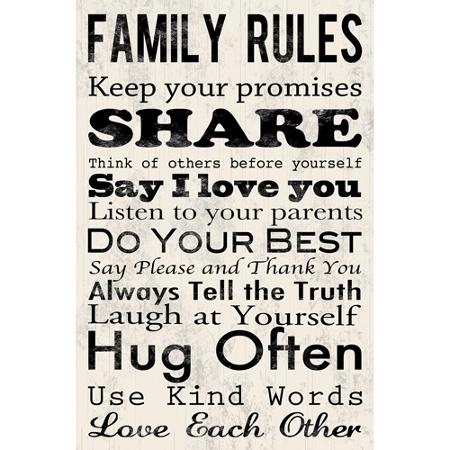 This family rule sign, which hangs outside our front door, is what we’re trying to teach as a foreign concept in more ways than one… oh, and her mouth would have driven sailors from bars the first fortnight she was here; we started charging 1 Franc for every curse word, and encouraged her to get creative with such things; now she says “Fluff-butt” and “sweet cheese and crackers” instead! Needless to say, it’s been a huge learning curve for us all.
Sands have shifted; priorities, for this year, have been relentlessly shifted; but more importantly, we’ve seen the shifting sands in one life transform into a foundation planted on solid rock. We’ve seen her open her heart to be loved, to begin to recognize the issues in her own life that will need professional help once she’s old enough to seek it without repercussions, and also begin to have an understanding and patience for and with herself. We’ve played a part in rescuing someone from the verge of suicide to a place of eternal perspective, future hope, and present happiness, and we are humbly grateful for the opportunity entrusted to us. Writing priorities be hanged… there are more important things in this life sometimes. There is a time for every purpose under heaven.
Finding Creative Inspiration Part 1: Notebooks and Sketchpads
Here’s an excellent article on creativity, and how to stir it up! Enjoy!


As a creative that often works to deadlines I am in the business of using imagination and inspiration as tools, rather than viewing them as the rare and fleeting gifts of fickle muses. I see it as entirely possible to produce inspiration and train the imagination, because I do this on a regular basis, as do all creatives. In this series of articles I intend to demystify the idea of the “creative genius” a bit by offering some concrete things you can actually do to find inspiration.
The number one tip should probably be that you want to be inspired, that you crave that fabulous idea so much that a bit of poking and prodding will convince it to scurry out of hiding and harass you like a hungry cat to make it happen. This should really be obvious, but if you try my suggestions and come up empty I’m…
View original post 875 more words
Filed under Links to External Articles, Writing Exercise, Writing Prompt
Novels Worth Reading
As a novel writer, I’m first and foremost a reader; I love to read, I love to buy books, smell them, feel them, upload them… any form is fine by me. I want the books I read to be witty, intelligent, and well developed in terms of plots, characters and environments.
Kitchen Sink Realism
Everyone has different tastes – that’s why there are so many different genres; but for me personally, there’s also a list of things I don’t want in a novel: I don’t want to be confronted with messy lives dealing with self-inflicted problem after problem; I don’t want tragic or sad or bitter endings; I don’t want to be confronted with the grit, grime, blood and gore of dysfunctional lives that end up learning nothing, making no character arcs, and end up in the mud by the end of the tale. This genre description actually has a name: Kitchen Sink Realism. It was a cultural movement in Britain back in the ‘50s and ‘60s that was portrayed in films, books, plays, and art – the grit, grime, anger, disillusionment and harsh realities of realistic social scenarios. It’s what might also be referred to as postmodernism. My personal response to this kind of novel is, “If I wanted that kind of realistic tension, I could just go hang out at the nearest bar.”
A Tough Nut
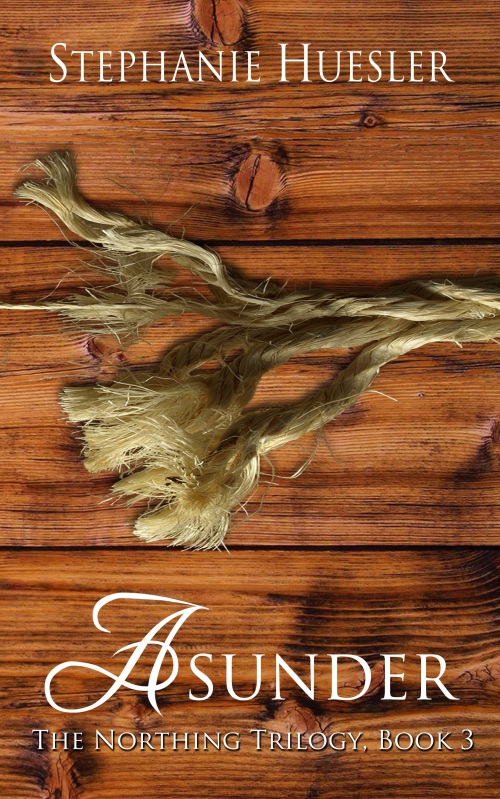
I once had an English student, and our focus was medical English in preparation for their upcoming medical exams (two nurses came together for semi-private tutoring). As part of the lesson we needed to work on basic conversational skills and sentence structures, and I find that the best way to bring in a wide variety of scenarios is usually to do a type of role play – nothing embarrassing, but each person is given a character to put themselves into a situation that they might not normally deal with: They may be a chef, or a secretary, or a customer in a hardware store. This particular student, when asked what kinds of books she read, said, “history and autobiographies or biographies”. When asked what novels she read, she said she found such things ridiculous and a complete waste of time (this was back before I became an author!); she categorically refused to even try to put herself into someone else’s shoes for the scenarios. My impression of her as a person was that she was narrow-minded, knew it, and was proud of that fact. She was a hard character, and all the time I knew her or met her afterwards, I never saw a soft side emerge, either toward herself or toward others; I often found myself wondering why she’d gotten into the nursing profession in the first place – as a patient, I wouldn’t necessarily want her working on my ward… A line from the novel I’m currently writing (Asunder, the third book in the Northing Trilogy) would have fit her life too: “he has never had the propensity for engendering compassion; I pray he never needs it, as he never gives it.” An epic love story might do her a world of good.
What’s Worth Reading
What I want when I read a book is to be transported into another life, whether that’s in the past, present or future, on this earth, or on another planet, or in another dimension; I want to be entertained, made thoughtful, learn something about the world around me, and learn something about myself. Ideally, I will come away from the experience having been changed, in even a small way. I want to feel connected; somewhere out there is a person I can relate to – whether it be the author, or the character, or other readers that appreciate the same books.
Aside from places and times that are genre-specific, such as science fiction and alien planets in the future, or London in the 18th century, all of the elements of what I like in novels are universal. Humans the world over, in every century, want to feel connected; to feel that they can relate to something someone else is going through; even to have parts of their own life’s experiences explained through someone else’s perspectives in similar circumstances. Above all else, at the heart of every good novel – regardless of the genre – is a story of love; that is the ultimate connection between characters. It may be a child finding the love of a family after being shoved through the knocks of life too much for their age; it may be the hero or heroine finding love; it may be a widow or widower finding love again, or reuniting with true loves; it may be someone coming to the point in their life that they accept and love themselves just the way they are.
On to You!
When you read novels, what is it you’re looking for? I would love to hear about it – please comment below, even if it’s just a few key words!
Filed under Articles, Musings, Nuts & Bolts, Plot Thots & Profiles, Quotes, Writing Exercise

Odd Jobs #14: Virtual Assistants to Worm Farmers
This is the last of my series of odd jobs; along the way, there have been some amazing, some disgusting, and some downright puzzling ones. Somewhere out there, beneath the deep blue sky, there’s someone thinking, “Why did I take this job, again?” Having said that, every job has some kind of perk; it’s just that with some jobs, you have to dig into the muck to find it.
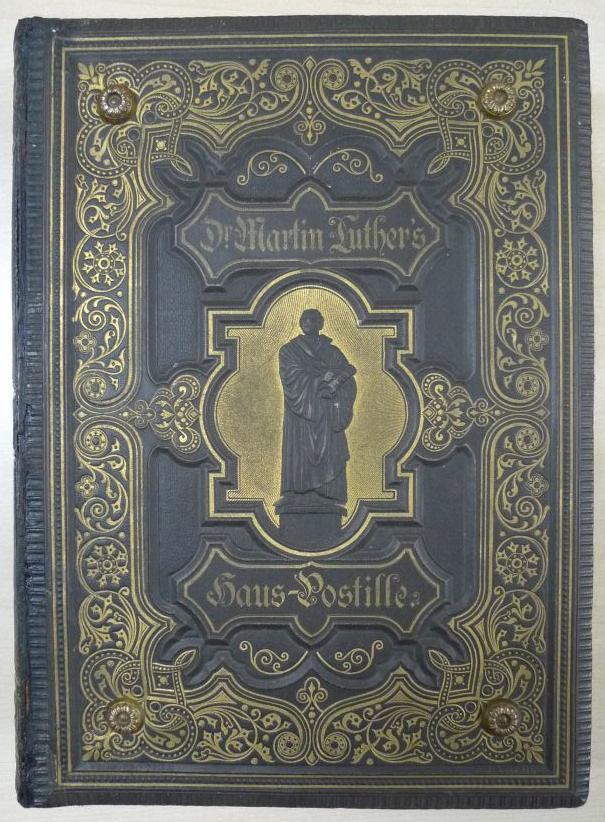
A friend of mine had a grandfather who was a rubbish collector back in the 1950s here in Switzerland; times were slim for the family, and he used to bring home things he thought were interesting, useful, or perhaps valuable that he’d found in the rubbish. One of those things he’d brought home was a large tome, with gilt embossing and brass knobs on the pictorial cover board (these “feet” are at the four corners, and were used to support the book cover and protect it from wearing on the gold leaf when it sat on the wooden pulpit), and deep, plain embossing on the back board. That someone would throw it away rather than giving it to a charity is beyond me. Be that as it may, it was discovered to be Dr. Martin Luther’s Haus-Postille (sermons), with illustrated lithograph engravings throughout, by W. Walther, from Dresden, dated from 1890. It was passed down through the family to my friend, and she had no use for it; she knows I collect books (including antique books) and have a library, and thus it has now come to me. It is in excellent condition, and is being well looked after now, despite its close call in the rubbish! [The image does not do justice to the brilliant golden gilt that still shines clearly on my copy, even after all these years…]
So, on with the final lineup of odd jobs! The first and last links take you to another list of odd jobs, which includes the two here. A couple of the jobs seem a bit dangerous to me – either flying off the side of a water slide that doesn’t quite meet safety standards yet, or dangling by a rope off of a glass building… if I had to choose I’d take the water rather than London pavement as a place to land. Safer, but not necessarily easier, is the job of a voice-over artist; dubbing languages for films, or filling in the voices for rough tracks in animated films, or even – and I find this particularly unethical, as a singer myself – to be paid to replace a recording artist’s voice, such as the scandal involving Milli Vanilli, which destroyed their careers. Enjoy browsing the final list; perhaps in the future at some point I’ll bring along another addition or two.
- Virtual Assistant
- Virtual Head Hunter
- Voice-Over Artists
- Water Slide Tester
- Wax Figure Sculptor: Mold wax to create figures, often for, but not limited to, the human form. Figures are often made in the likeness of people who have achieved historical or celebrity recognition.
- Wig Maker: Put simply, they make wigs, but the process is anything but simple. First, wig makers create a plastic model of the wearer’s head and hairline, and then they transfer the mold onto a padded canvas similar to the client’s general head size, covering it with wig lace. Using a needle, they knot and pull thousands of hairs, one by one, through the mesh cap. Once all the hairs are in place, the wig is styled to the wearer’s preference.
- Window cleaner for the Gherkin (London): It takes a team of 9 cleaners 10 days to complete the task, as the building stands 180 metres tall and consists of 7,429 panes of glass.
- Worm Farmer
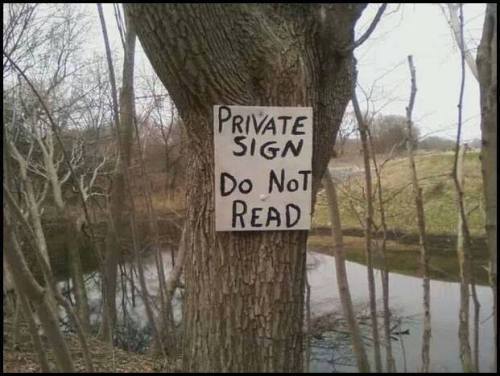
Just Smile
 Have you ever stared at a word for days on end? I have, and coming to the end of the tunnel is bliss. When writing, I tend to use “place-markers” – anywhere from a single word to a rough-sketch of a scene that I know will need to be fleshed out, moved, replaced or “cannibalized” for a concept. Some people like to use special writing programs, and I’ve tried a few over the years, but I tend to do all of my writing in Word; it’s got review “post-its” I can type into the side margins, and I’m usually more organized than programs like Scrivener anyway. When I go back over such sections, I take off my writer’s hat and put on my editor’s cap, and dive in.
I’ve been editing a manuscript, and at the moment I’m focusing on repetitions; the most recent word was smile. Each time I came across the word, I needed to read the context, think about whether it should be removed, replaced, the sentence reworded, or left as-is. I’ve discovered that there are not actually that many synonyms for “smile” in the English language; smirk, sneer, grimace, simper, scowl, grin… they each have their own connotations, and are not simply interchangeable – each choice will effect the overall meaning in distinct ways. as William Blake once said, “There is a smile of Love, And there is a smile of Deceit, And there is a smile of smiles In which these two smiles meet.” Sometimes it can simply be left out – the context informs the reader about which emotions are being displayed by the characters. Characters in love have a different smile for each other than for frenemies, or antagonists, or superiors, or subordinates, and each situation in which various characters are combined might result in a different word for smile. And does one smile warmly, or coldly? Broadly or tight-lipped?
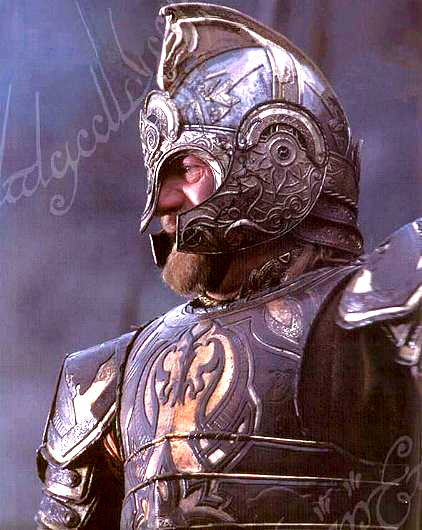 Sometimes I wonder if I think far too much about such details; but I’d rather think about it once too often and get it right than not. It might have seemed a tad extravagant for Weta Workshop to emboss the inside of King Théoden’s breastplate armour for the Lord of the Rings: The Two Towers, and Return of the King (in which the character appears), knowing it would never actually be seen in the films; but Bernard Hill, who played the king, said that such details helped him easily slip into the role, even feeling the nobility of a king, and it thus enhanced and influenced his performance. As visuals matter in epic films such as LoR, words matter in writing a novel, drawing the reader into the imaginary landscape of the world the author creates.
They also matter in script-writing: In Ever After, starring Drew Barrymore and Dougray Scott, some of the dialogue lines are just downright embarrassing – especially those of Anjelica Huston: They go to the trouble of being opulent and period-accurate in costumes, locations and scene dressings, and then throw in lines like Relax, child and I’m management! The editor in me cringes.
One man’s smile is another man’s smirk; one woman’s grin is another woman’s sneer. Now, on to the next item on my list of editing revisions!
Filed under Articles, Images, Musings, Nuts & Bolts, Research, Writing Exercise


Odd Jobs #13: Sommeliers to Video Game Testers
Here’s our next lineup of odd jobs. While each job is on the list for a reason, the most humorous is probably the traffic zebra of Bolivia – there are dozens of them, and they direct traffic, help people cross safely, and undoubtedly keep drivers more alert. The job most teenagers would kill for is that of the video game tester; imagine getting paid to play computer games all day! For me it would very much depend on the game – I love games like the Riven series, but games that have free-roaming views (smoothly following the mouse movements) give me a migraine after an hour…
Of all the jobs in this list, I think the one that captures my imagination the most is the Sommelier; not as a job, but because I like wine! Recently my husband and I drank a bottle together, and we decided that it wasn’t complete without watching one of our favourite films, “A Good Year” – it did make it taste better. I also like tea, but I would prefer to stick to Earl Grey, curl up in my favourite chair and read a good book – what I’ll be doing next. So enjoy the lineup, and then go and read a good book with your favourite cuppa!
- Sommelier (Wine Steward)
- Swan Uppers (England) This ceremony dates back to the 12th
- Tampon Tester: Check all sizes of tampons for absorbency and cord strength in accordance with FDA standards. Most testers check up to 125 pieces per day.
- Tea Taster
- Teddy Bear Repair Technician
- Traffic Zebras (Bolivia)
- Trend Hunter: Closely related to marketing, it’s a profession to find out what’s going to be cool next, and predicting it accurately for fashion and tech companies as well as manufacturing businesses.
- Veterinary Acupuncturist
- Vibration Consultant: Works with architects and engineers to advise and correct noise and vibration issues in construction projects and in the manufacturing of products.
- Video Game Tester: For eight hours a day, five days a week, a group of males and females of all ages play video games. They repeat levels, games and characters, looking for any bugs and/or glitches in the software.





 Stephanie Huesler