Category Archives: Articles

History Undusted: The CB Radio

You know how your brain fires off random thoughts as you fall to sleep, or combines odds-bods into dreams forgotten as soon as you wake up? For some reason, 10-4 popped into my head in those moments last night. It sent me down the rabbit hole I now present: The history of the CB radio.

The often-forgotten or overlooked inventor of the Citizen’s Band (CB) radio system, along with inventions such as a patented version of the walkie-talkie (originally invented by the Englishman Donald Hings), the telephone pager, and the cordless telephone – all precursors to today’s cell phones, was Al Gross (1918-2000): Born in Toronto, Canada, he grew up in Cleveland, Ohio. The son of Romanian-Jewish immigrants, his love for electronics was sparked when, at the age of nine, he was travelling by steamboat on Lake Erie; he explored the ship and ended up in the radio transmissions room, where the operator let him listen in. Eventually, he turned the family’s basement into a radio station built from scraps. During his higher studies, he experimented with ways to use radio frequencies.

During World War 2, he had some involvement with developing a two-way VHF air-to-ground communications system for the U.S. Office of Strategic Services, known as the Joan-Eleanor system, and after the war, the Federal Communications Commission (FCC) allocated a few frequencies for the Citizens’ Radio Service Frequency Band, in 1946. Gross saw the potential and founded the Gross Electronics Co. to produce two-way communications systems to make use of these frequencies; his firm was the first to receive FCC approval in 1948. For more about his other inventions, just follow the link on his name above. For now, let’s focus on the CB:

The CB radio became an international hit back before cell phones and computers became a thing (despite the prevalence of cell phones, CBs are still around; truckers still communicate about road conditions, etc. Its usage was also revived by the Covid lockdown, when people began reaching out to meet and talk to others outside of their own four walls). It was, and is, a way to communicate with others long-distance from home or on the go.

My dad was always interested in the latest technological gadgets; in the mid-70s, we got a laserdisc player, the precursor of CDs, and DVD/Blu-Ray players. I remember watching films like Logan’s Run and Heaven Can Wait on that format. Laserdiscs never really took off, and only about 2% of US households had one (it became more popular in Japan at the time). Around that time, we also got a CB radio in our VW van. My dad had a chart with all of the CB slang words and codes, and I memorised it, fascinated by the lingo. On long road trips, I would get on the CB and chat with truck drivers. My handle (nickname) was Spider-Fingers, as I liked spiders and had long fingers (long fingers has the connotation of thief, so I didn’t want to use that!). Here is just the tip of the iceberg, a smattering of the codes and slangs used by CB radio enthusiasts, truckers and handymen:

There were dozens of slang terms for law enforcement officers: Bear (police officer); bear trap (speed trap, radar trap) taking pictures, also called a Kojak With A Kodak; bear bait (an erratic or speeding driver); bear with ears (listening to CB traffic); bear in the air/flying doughnut/Spy in the sky (helicopter radar traps), baby bear (rookie), fox in the henhouse/Smokey in a plain wrapper (policemen in unmarked vehicles); honey bear, mamma bear or Miss Piggy (slangs for female police officers); Brush Your Teeth And Comb Your Hair (a law enforcement vehicle is radaring vehicles – as if preparing for an official photo). A Driving Award was a speeding ticket. To wish someone Shiny side up meant that you wished them safe travels (keeping the vehicle upright).

There were slang terms for objects or events, such as Bambi, meaning that there was wildlife near the road and to take precautions; a crotch rocket was a fast motorcycle; double-nickels was a 55-mph speed limit area; a fighter pilot was an erratic driver who switched lanes frequently, while a gear jammer was someone who sped up and slowed down frequently; Alabama chrome was duct tape; an alligator/gator was a piece of blown tire on the highway, as it looked in the distance like a gator sunbathing. Convoys had front doors and back doors – the front or back truck in the group that would keep an eye open for bear traps. Motion lotion was fuel; the hammer lane was the fast lane (hammer was the gas pedal, and to hammer down was to drive full-speed). Break/breaker: Informing other CB users that one wanted to start transmission on a channel; a handle might be introduced, or requested if someone was looking for a CB friend. “Breaker, this is Spider-Fingers, over.” Asking for a comeback meant that you couldn’t hear the last transmission or wanted the other driver to talk. Break check meant traffic congestion ahead, slow down. A Bumper Sticker/hitchhiker is a vehicle that is tailgating another vehicle.

Aside from hundreds of slang terms, there was a whole list of codes (I guess you could say that the codes were the precursors of emojis!):

10-4: Agreed, understood, acknowledged

4-10: The opposite – asking for agreement or if a transmission was received.

10-6: Busy, stand by

10-7: Signing off

10-10: Transmission completed, standing by (you’ll be listening)

10-20: Location – What’s your (10-)20? Home-20 was asking for a driver’s home location/base.

10-33: Emergency traffic, clear the channel. CB code for Mayday for trucks and police cars.

10-42: Accident on the road

3s and 8s: Well wishes to a fellow driver. Borrowed from amateur ham radio codes “73” (best regards) and “88” (hugs and kisses).

The lists go on and on! I love the dry sense of humour reflected in the slang, and I think our everyday language could be a bit livelier if we included a few phrases that looked at things from a different perspective. Everyone could do with more 3s and 8s, 4-10?
1 Comment

Filed under Articles, Etymology, Family History, History, History Undusted, Humanity Highlights, Humor, Liguistics, Linguistics, Links to External Articles, Military History, Science & Technology

History Undusted: Canning Jars

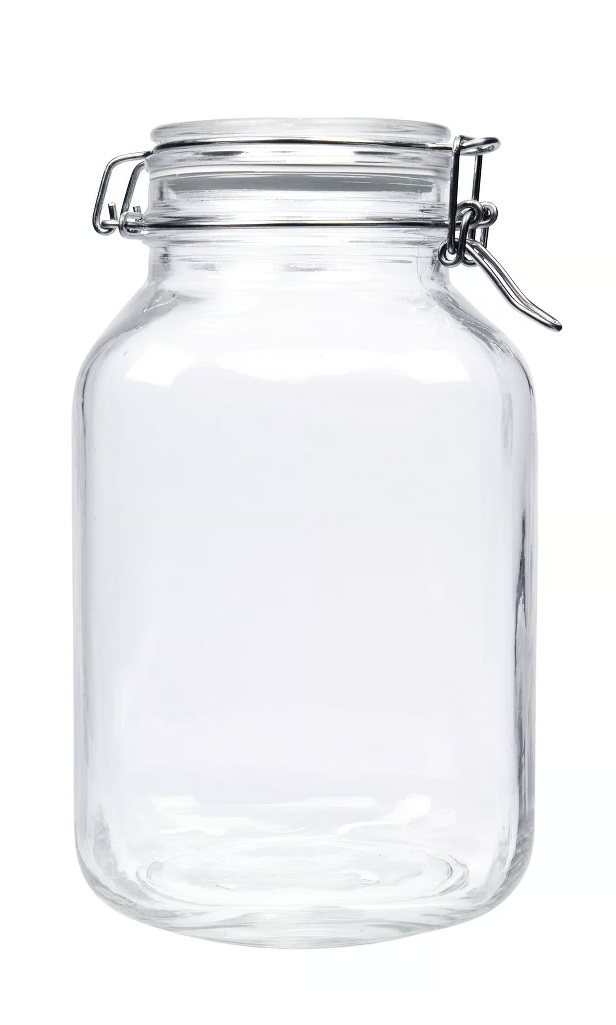
My quirky brain went down a rabbit hole last week; as I was putting away groceries into glass jars (for that explanation, please click here), I wondered who had been the genius behind the thread around canning jar lids, or, as most of my jars use, the bail closure.

Just to clarify terminology: Here is a threaded jar, a type of screw-on lid that is either one part or two:

Here is a jar with a bail closure, aka flip-tops, lightning jars, known also by their various brand names, e.g. Fido, Le Parfait, Kilner:

A third type of jar, German-made, is the Weck jar, with metal clips and a glass lid. I don’t like using these, so you won’t find them in our house.

5000-Year-Old Pharaonic wine jars found intact at Abydos – Egypt Museum

Closures have been an issue for thousands of years; ancient amphoras, which were used to transport wines and oils, were sealed with wood, cork, or a ceramic or pottery lid sealed with a type of mortar. Archaeology has many examples of clay or pottery pots with lids, Norse ornate metal containers with lids, and even ancient Egypt’s canopic jars, with their ornate lids. Another variety of closure is found on wooden barrels, which have side holes called bungholes, plugged with a cork or other wood.

The threaded jar lid was invented by the tinsmith John Landis Mason in 1858. Prior to his invention, a glass lid was laid atop an un-threaded canning jar and sealed with hot wax. It was messy, and if it wasn’t done right every time, it could allow dangerous bacteria into foods. Before refrigeration, the only way to preserve garden produce was basically to can with a wax seal and take your life into your hands. There were other preservation methods, such as drying, salting, smoking or pickling, but the new way of preserving offered a convenient, faster alternative; Mason’s threaded lids, combined with a rubber ring and a threaded glass jar, revolutionised canning. Unfortunately, he was not a savvy businessman, and though he filed a patent for the threaded screw-top jars, he failed to patent the rest of the invention, such as the rubber gaskets. He let the patent expire in 1879, and manufacturers took the idea and ran with it. Mason never made a fortune; in fact, he died in poverty in 1902. But his name lives on in the common term, “Mason Jars”. The concept is now used with countless products, from drinks to shampoos to household cleaners.

The invention of the bail closure design is a bit murkier: In the early 1840s, the Yorkshireman John Kilner invented the Kilner jar, using the rubber seal and wire bail closure.

In 1893, beverage bottles began using the Hutter stopper – a porcelain plug with a rubber gasket held in place with a metal strap.

In the 1930s, the La Parfait jars began production in Reims, France, by Verreries Mécaniques Champenoises, a historic French glassmaker.

The Bormioli family is an Italian name associated with glass-blowing since the Middle Ages; among their many brands is the Fido airtight jar, using the bail closure, which began production in 1968.

I personally have Kilner, La Parfait and Fido bail-closure jars, as well as many screw-top jars similar to Mason from these companies.

Do you use any such jars for storage in your home? Do you use them for canning or storing dried goods, or both? Please comment below!

5 Comments

Filed under Articles, Food History, History Undusted, Links to External Articles, Science & Technology

Life and All that Jazz: Advent

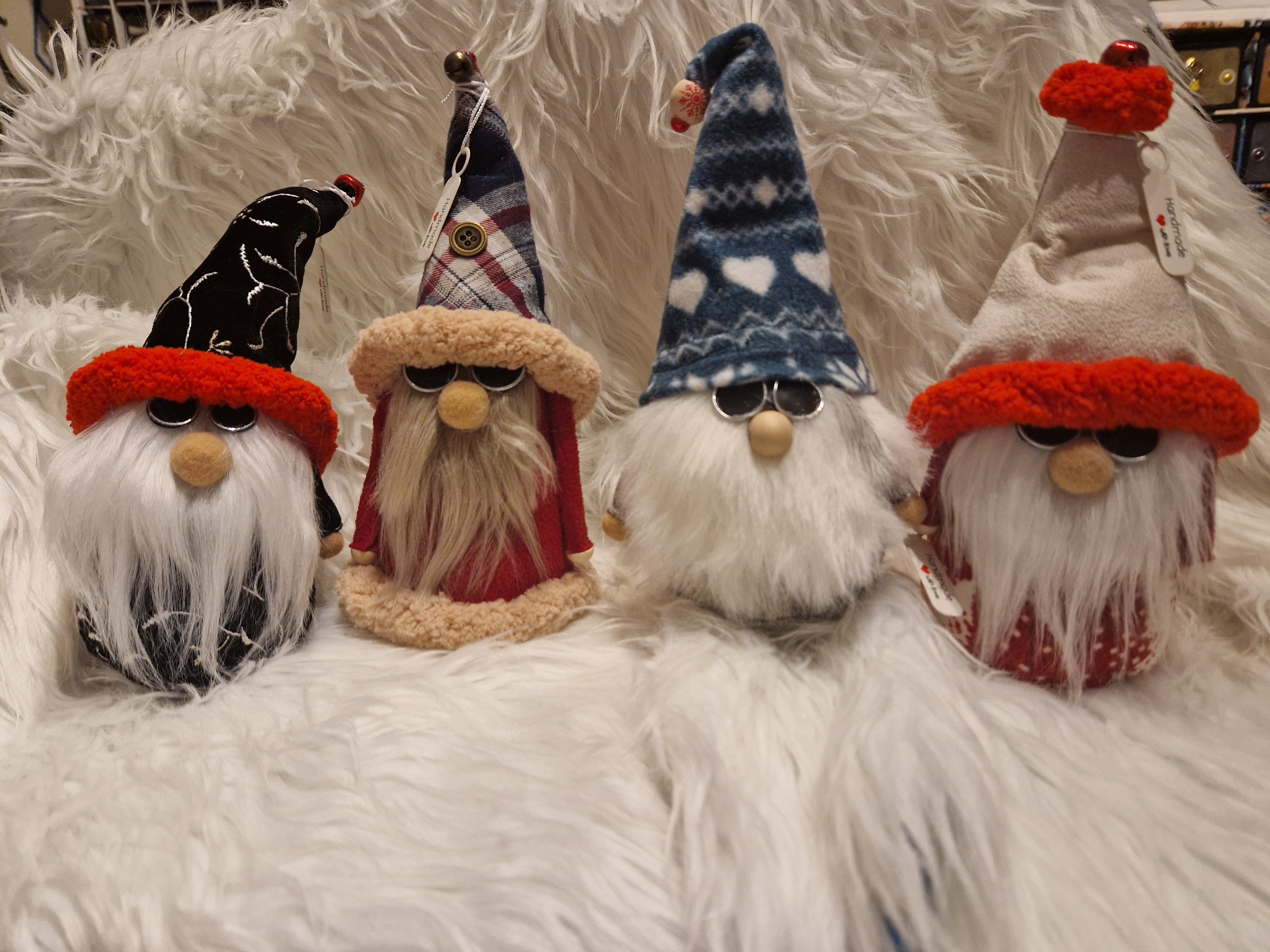
Ready or not, here it comes! In a week, our annual Advent market begins. Every year, I have a large selection of crafts; what I bring changes from year to year, but some things have become regulars due to popularity. A few months ago, people started asking me if I was going to bring this or that. One thing I introduced a couple of years ago was a huge hit: Gnomes with attitudes and sunglasses. By this morning, I’d made 29; then someone asked if they could buy 10 (!) – so I spent the afternoon making gnomes – and sold 3 in advance today, so I guess I’ll be making them until the market (and likely beyond, because last year I pre-sold special orders to deliver before Christmas). But this is only one of the items I’ll be selling. (And, of course, they’ll all get a nice hair styling when they finally come out of the transport box!)

Another hit is “Spitzbuben” – a two-layered cookie filled with jelly and dusted with powdered sugar. A friend and I spent the morning making hundreds of these cookies; I’ll need to fill, dust, bag, and tag them next week.

Other popular items include notebooks – I make them in every size from a few centimetres to A5, with sewn signatures, spiral bindings and more. Mixed media gift cards, bookmarks of every description, decorative folders, and cloth shopping bags – all handmade. There are a dozen more items, but you get the idea!

As you can imagine, it’s a lot of work to prepare – not just making the items, but putting together price lists, printing price tags and/or signage, packing up display racks/cloths/pieces, packing a toolbox with markers, tags, scissors, screwdrivers, pens, cash, et al. So far, our hall is already lined with boxes ready to transport – because my craft room is like Tetris right now… I need to move out what is ready to go so that I can get other things made! The working space on my craft table has shrunk as boxes of various projects demand my last-minute attention, plus space for the sewing machine for last-minute gnome “kits”.

I enjoy the market, the contact with other crafters and customers, and I enjoy making other people happy while moving my stock to free up room for more creativity afterwards!

Please comment below if you take part in craft fairs, or if you go to one or more in your local area! If you participate or if you go, what kinds of things do you sell/look for?

4 Comments

Filed under Articles

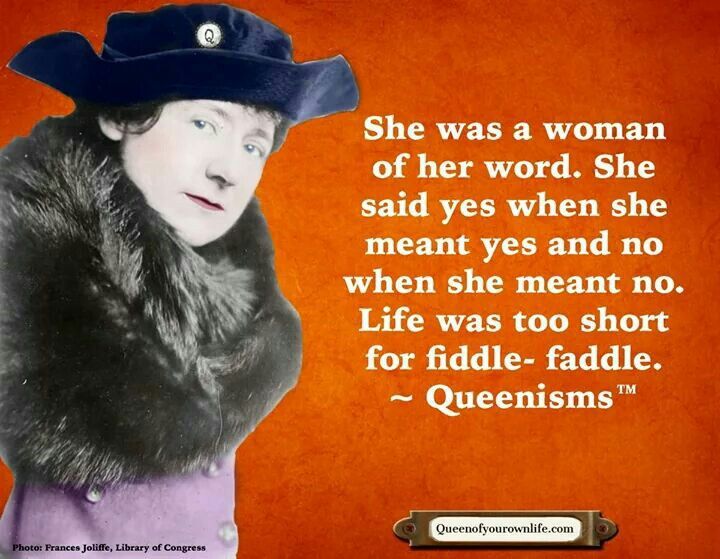
Etymology Undusted: Fiddle-Faddle

Sometimes, my husband and I discuss history, and an odd topic here or there pops up; I’ll often delve into the history or etymology of a phrase, word, or idiom and share my findings here. So, no more fiddling about; let’s get to it.

A reduplication in English is a word or sound that’s doubled or altered the second time for effect; there are a few kinds of reduplications: Exact repeats, like bye-bye or night-night; rhyming, like okey-dokey, easy-peasy, or higgledy-piggledy; ablauts, like chit-chat, criss-cross, splish-splash, or wishy-washy; there is even a series of -shm reduplications, like fancy-shmancy, laborday-shmaborday, or work-shmerk. Some reduplications emphasise the first term to focus on the prototypical or normal form of something, e.g. ‘I just was a salad-salad (not bean salad or tuna salad)’. Many such words have become standard in English, such as flip-flops, wingdings, or zig-zag. Every language probably has such words; German has krimskrams, schnikschnak, mischmasch, larifari, Wirrwarr and more. Italian has a few that have slipped into use in other languages, such as piano piano (very slowly), Mamma mia (literally, my mother, but used as an expression of surprise, frustration, or even delight, similar to ‘Oh my goodness‘), or bric-a-brac (knick-knack).

Have you ever said (or heard someone else say) Fiddle-faddle? It first appeared in English in the 1570s, meaning trifles, or to talk nonsense or speak of something not worth serious attention. Fiddle is another word for violin and is the more colloquial/casual of the two; as such, it has long been associated with less important things. Georgette Heyer uses fiddle without faddle to mean trivial or nonsense; the reduplication would merely emphasise the meaning of the first word, so she chose to drop the second.

John Milton Edwards (the pen-name of William Wallace Cook, 1867-1933) wrote, “There’s a lot of fiddle-faddle wrapped up in that word ‘inspiration.’ It is the last resort of the lazy writer, of the man who would rather sit and dream than be up and doing...”

It was also used as an adjective to describe a troublesome person, such as a nit-picky, ceremonious old woman. As a verb, to fiddle-faddle means to dally, which leads us to another reduplication: dilly-dally, which means to loiter, delay, or trifle! A fiddle-faddler is a person who trifles or dallies.

No dilly-dallying, let’s get to the point: Which reduplications have you used? Have you ever known a fiddle-faddler or a dilly-dallier? If you know of more such words, please put them in the comments below!

10 Comments

Filed under Articles, Etymology, History Undusted, Liguistics, Linguistics

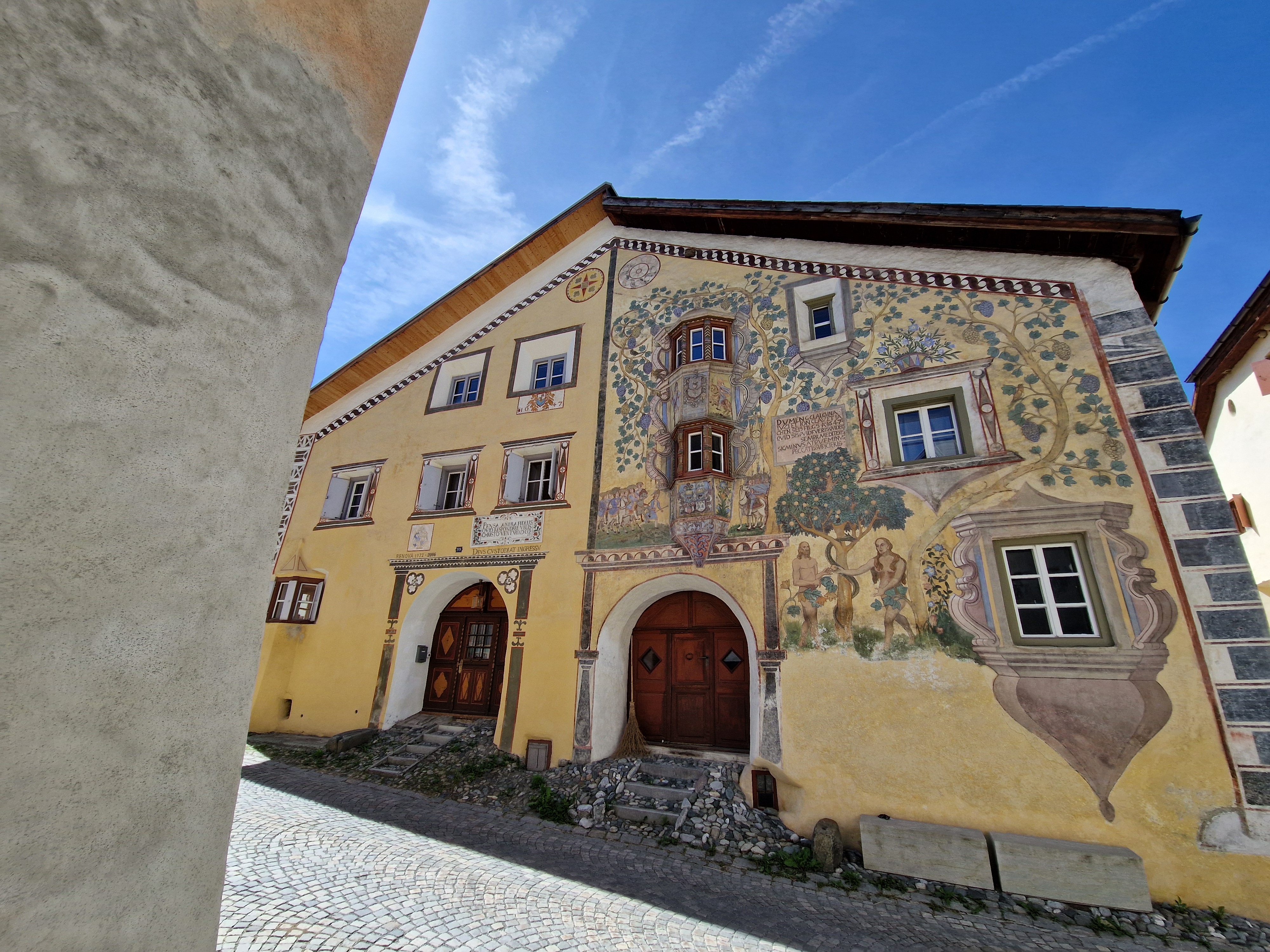
History Undusted: Engadin Sgraffito

I know that, for most of you, neither Engadin nor Sgraffito have made you any wiser as to what this blog is about, so first, I’ll start off by explaining where and what they are, respectively.

Engadin (pronounced En-Ga-Deen) is a long, towering Alpine valley in the Romansh-speaking canton of Graubünden in southeast Switzerland. The first mention of this valley was in Latin as vallis Eniatina in AD 930; in the Romansh language (one of the four national languages of Switzerland), it is Engiadina. The river running through the valley is called the En or Inn, and it is the only river in Switzerland that runs (via Austria) into the Black Sea. The region is usually divided into lower and upper Engadin, and it is connected to the surrounding regions by several mountain passes.

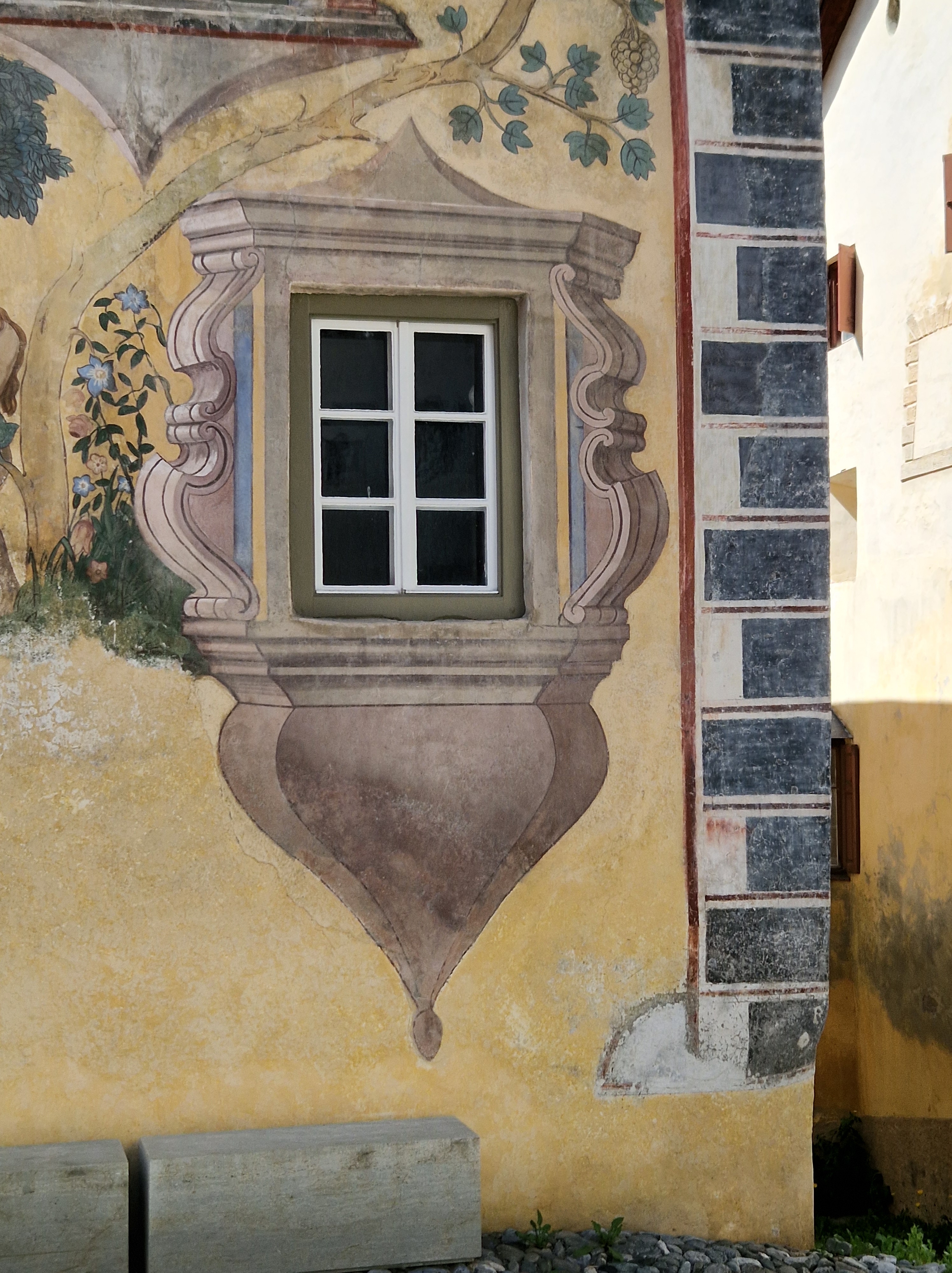
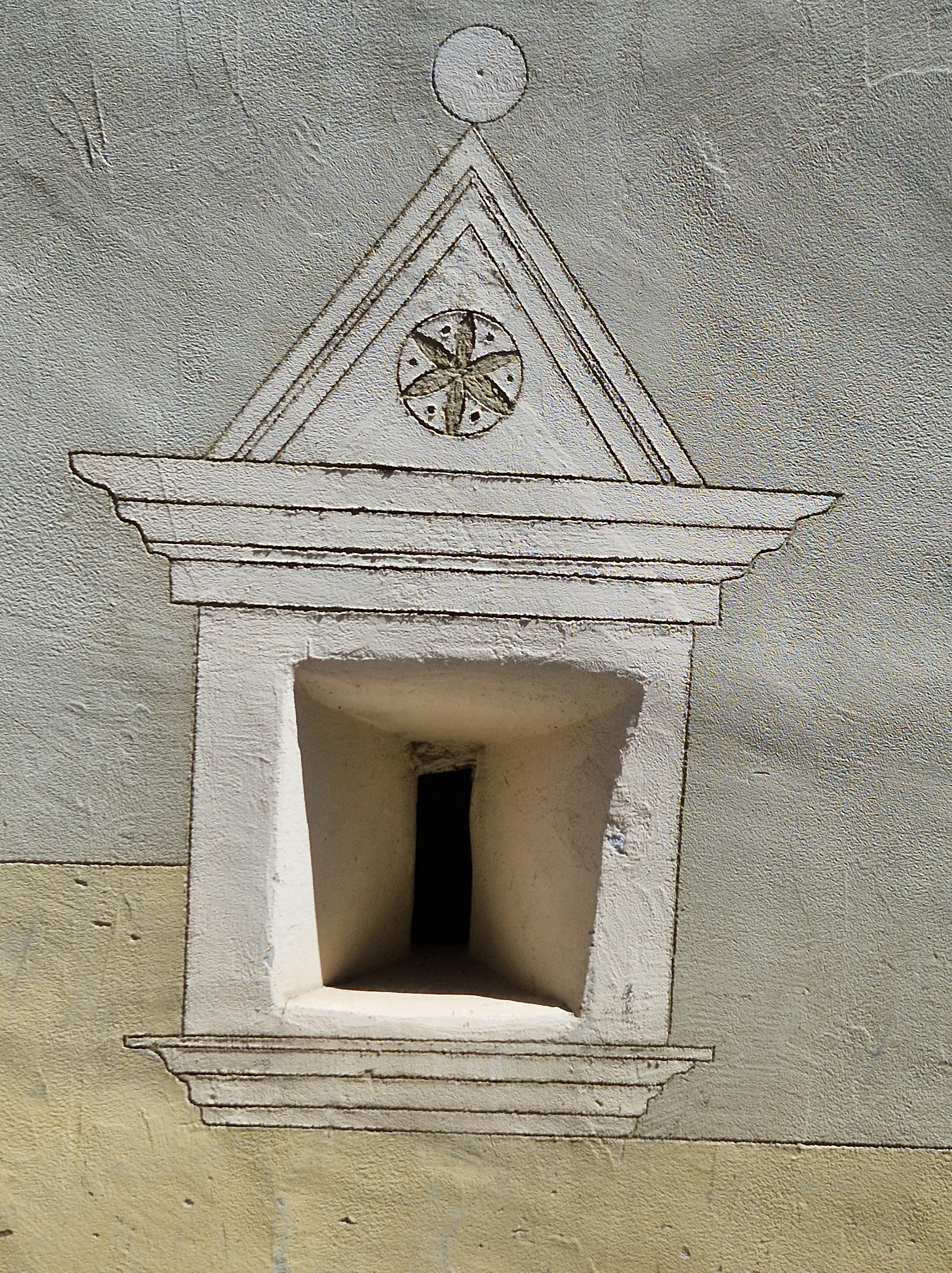
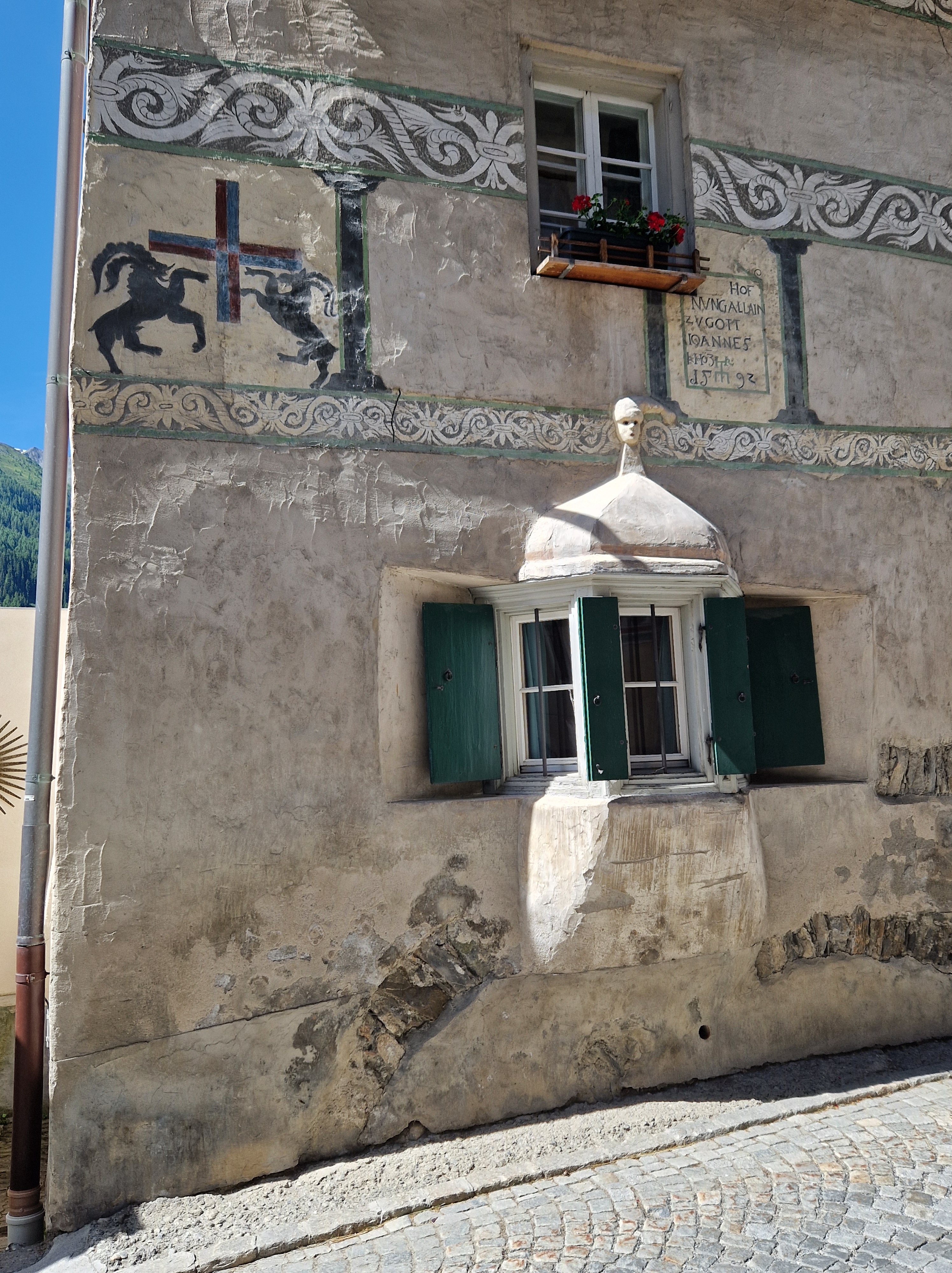
The second word, Sgraffito, describes a plaster technique that is traditional throughout Engadin: Layers of plaster of contrasting colours are scratched through, creating intricate designs on the facades of buildings (many of the buildings in Engadin towns were built (or rebuilt) in the late 1500s to early 1600s). The word comes from the Italian graffiare, which means to scratch; it can be traced back to the Greek word graphein, meaning to write (from which we also get any words containing the prefix, suffix, or derivative of graph (graphite, typography, graptolite, parallelogram, holograph, etc.). Sgraffito is not only used on buildings to make them look decorative, but it also serves the purpose of making a small feature look larger; on one building, the same floor had different-sized windows, likely installed over generations; the sgraffito was used to give a more uniform look to the façade. The decorations also make a plain building look grander, giving a more opulent impression. One building, pictured below, obviously had two occupants with very different characters back when they were originally decorated…

The basic technique for architectural features is to plaster the façade with the base colour; once that has set, it is then plastered with a contrasting colour; once that has set just enough, the scratching, or carving, begins. This is also a technique used in pottery and in creating stained glass effects (just click on the links if you’d like to see how these crafts are made).

One thing to note is that many old buildings here in Switzerland have dates listed on them: Of when they were originally built, and when they’ve been renovated. Part of the history of such renovations may include fires that swept through villages, or avalanches that buried a layer, or wars, such as the Swabian War and war against the Habsburgs, and the subsequent renovation or rebuilding of the towns or individual homes. Sometimes, along with the dates, a list of past and present occupants will also be displayed, preserving their names and memories within the history and changes of the building itself.

Below are a few pictures taken in Engadin during our recent summer holidays. Enjoy! Feel free to zoom in on the pictures to see the details.

5 Comments

Filed under Articles, Etymology, History, History Undusted, How It's Made, Liguistics, Links to External Articles, Military History, Snapshots in History, YouTube Link

The Fascinating History Behind the Fraktur Typeface

Last Sunday at church, a friend filled an entire room with her late father’s books, setting up an impromptu book shop. I chose several books, most of which are in Fraktur typeface, known to some people as “Gothic” or “Old German”. I enjoy reading such books because they offer a snapshot of a cultural way of thinking. The books I chose were printed between 1877 and 1940. The latter date is significant, as you’ll soon see.

First of all, let’s clarify a few terms: Though many people think of font and typeface as interchangeable, in fact, they refer to two different aspects of a writing style. Typeface refers to a particular style of lettering (e.g. Times New Roman), while font refers to the variations within that style, such as size and weight (CAPS, bold, italic, etc.). Another term we know but may not fully understand is Serif: This refers to the small stroke or line attached to the larger stroke of a letter; an example would be an A with “feet” at the bottom of each down-stroke. Sans Serif simply means “without Serif”.

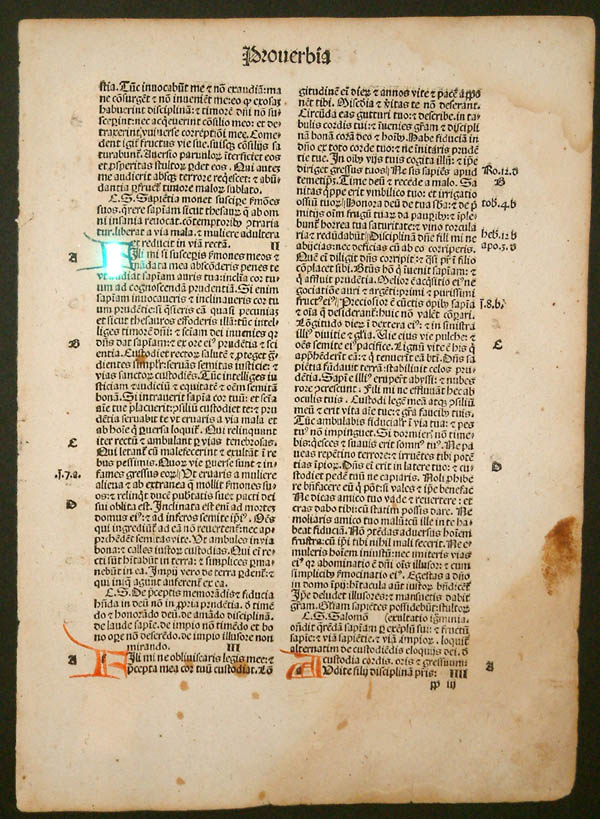
The first moveable-type printing press, designed by Johannes Gutenberg in Germany around 1440, was based on the ancient Roman design of a screw press used to press wine or oil, which in turn went on to be used to press designs into cloths. He was likely familiar with intaglio printing and may have done some work himself in copper engraving.  These designs and uses likely fermented in his inventor’s mind into what became the revolutionary turning point of literacy. Gutenberg’s original typeface was called Donatus-Kalender; the metal type design was itself a form of Textura (more on that in a moment).

Donatus Kalender
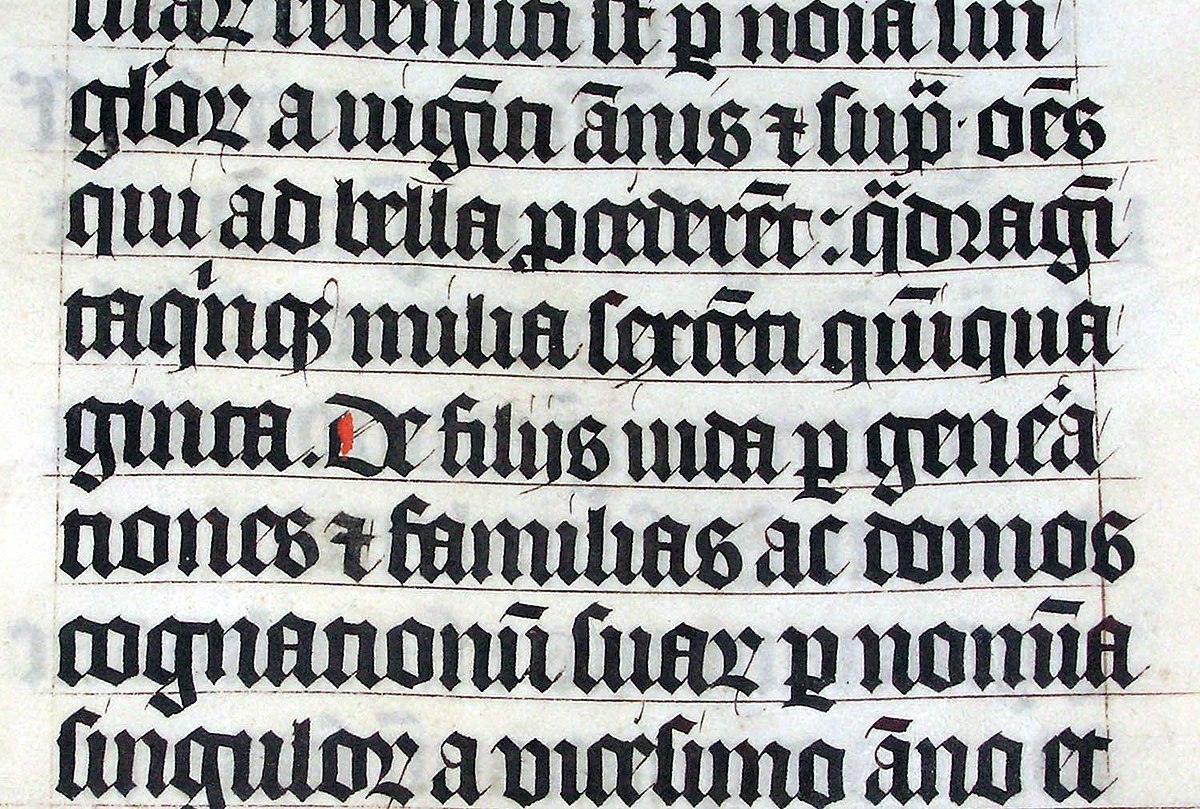
Example of Blackletter (Source: Wikipedia)

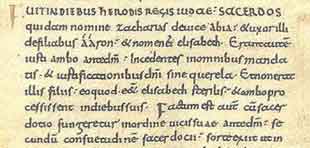
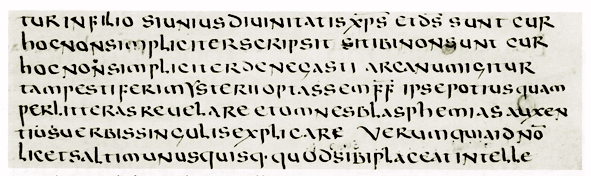
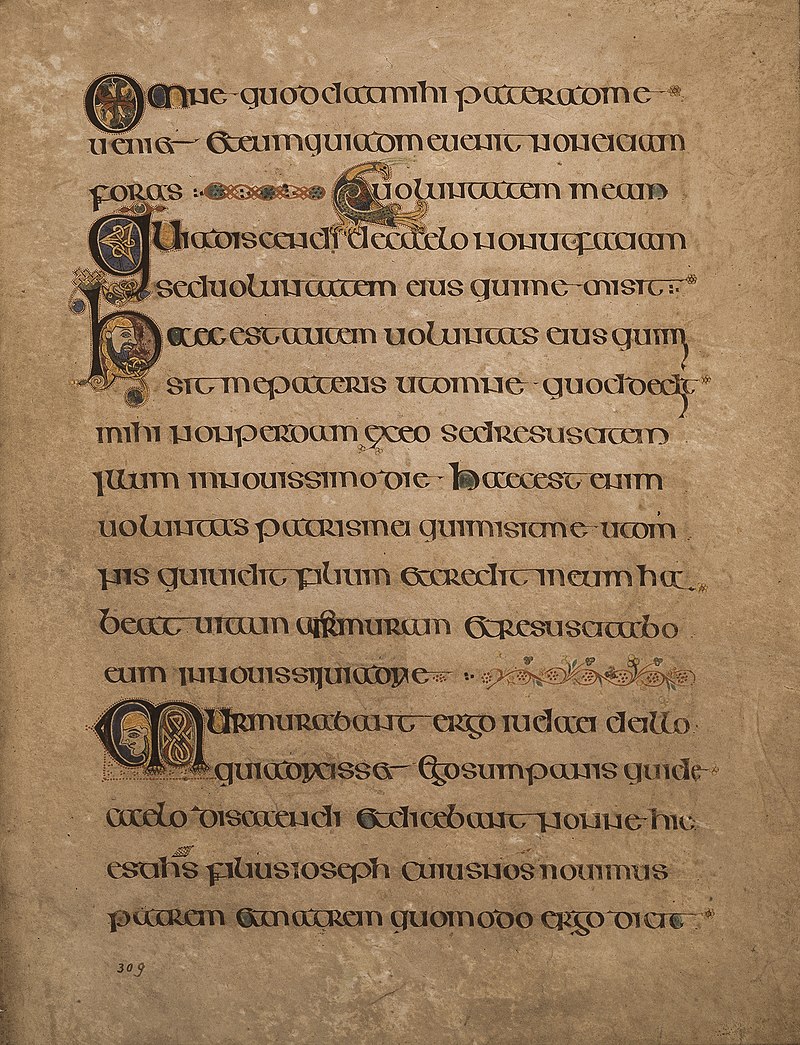
This original family of typefaces was known as “Blackletter”, aka “Gothic scripts”, with the height of popularity peaking around the 14th to 15th centuries. The ancestor of the Blackletter was called the Carolingian minuscule, a calligraphic standard of handwriting widely used in the medieval period, when literacy began increasing and a need for books in a wide range of subjects began to be in demand. It is thought to have been developed in the mid-770s by Benedictine monks north of Paris in the Corbie Abbey, famous for its scriptorium and library. The minuscule itself was derived from Roman Uncial as well as Irish Insular script, which was developed in Irish monasteries and spread throughout Europe.

Carolingian Minuscule
Roman Uncial
From the Book of Kells, an example of the Irish Insular script

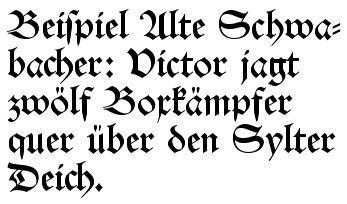
The family of Blackletter typefaces included Early Gothic, which was a transitional script between the Carolingian miniscule and Textura (the most calligraphic form of Blackletter); Schwabacher was a form popular in early German print typefaces (it became widely known with the spread of Luther Bibles from 1522), in use from the 15th century until it was eventually replaced by Fraktur around 1530, though it was still used alongside Fraktur for emphasis, much like we use bold or italic today.

Schwabacher Typeface
Textura Typeface

Another blackletter typeface developed between 1470 and 1600: Antiqua. This typeface’s letters were designed to look like the handwriting of ancient Roman documents, with the letters flowing together, strokes connecting them in a continuous line, whereas Fraktur was distinguished by having letters “fractured” – separate from one another. The Antiqua-Fraktur Dispute deserves its own article, so stay tuned!

Antiqua Typeface (Source: Wikipedia)
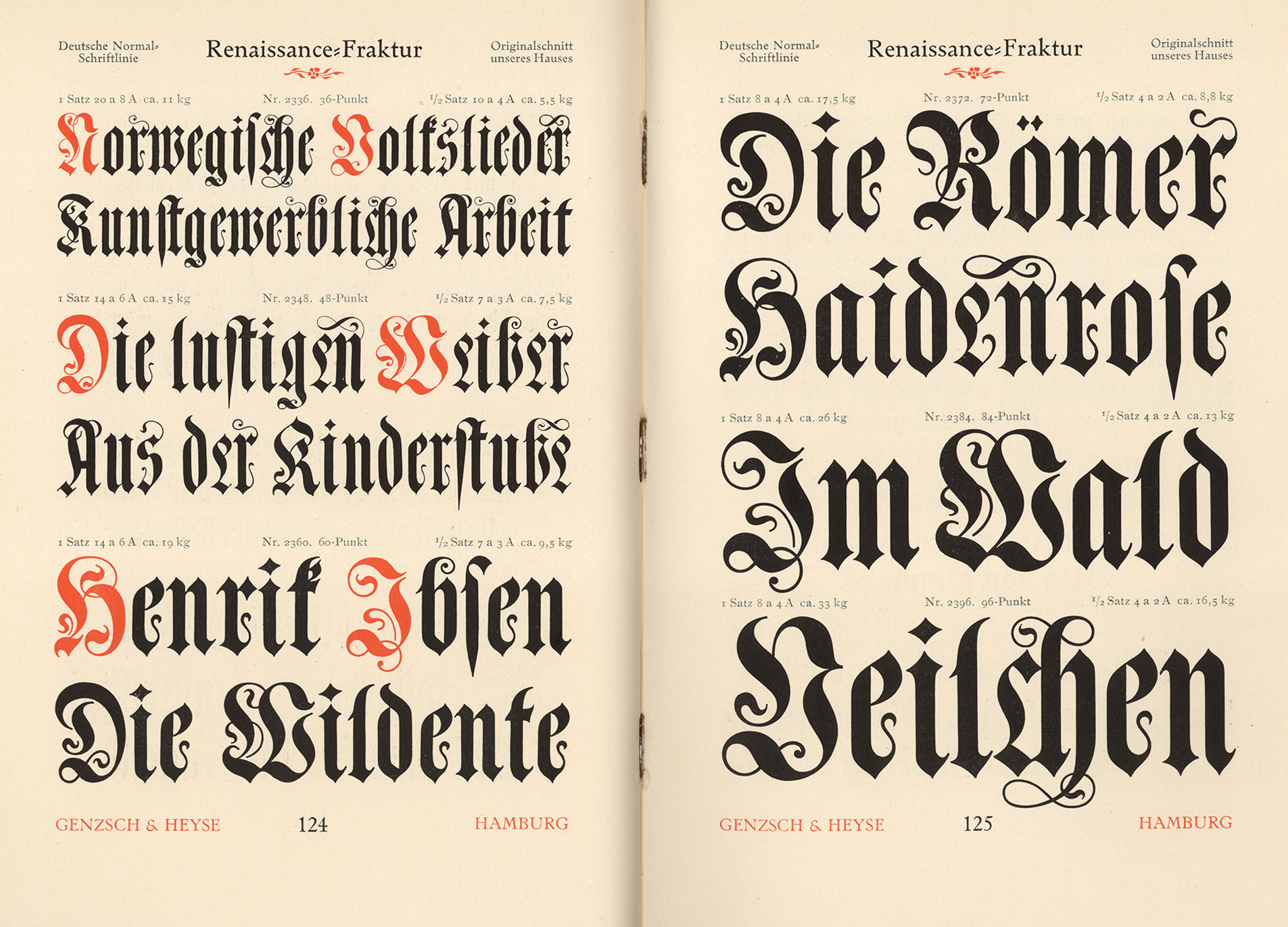
Fraktur Typeface (Source: Fonts in Use)

The Habsburg Emperor Maximillian I (1459-1519) was King of the Romans* from 1486 to 1519 [the title of king was used by the kings of East Francia, the territory later referred to as the Kingdom of Germany, from the time of Henry II (1002) to Joseph II (1764)]. The king commissioned the artist Albrecht Dürer to create a series of woodcut engravings of the Triumphal Arch [Though many are familiar with the Arc de Triomphe in Paris, it is only one example of this ancient Roman architectural feature used as a free-standing structure (rather than the Greek version, which was used within a structure such as a temple).]. These engravings would be used to create what we would recognize today as essentially wallpaper, though its purpose was more of a statement of power or propaganda (read personal marketing) commemorating his nobility, generosity, and military conquests – an incongruous combination, if you ask those conquered… The final composite of printed papers stood nearly 3 metres (12 feet) high and was only one part of a series of three enormous prints commissioned by the king.

Albrecht Dürer’s The Triumphal Arch, for Maximilian I

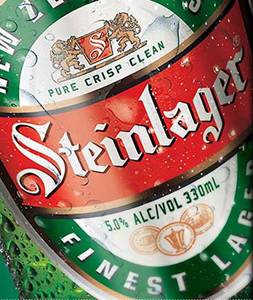
 The Fraktur typeface was designed in the 1530s by Hieronymus Andreae, a German woodblock cutter, printer, publisher, and typographer closely connected to Albrecht Dürer. The typeface was made to decorate the arch, telling the stories of the figures depicted throughout. The typeface became popular in Europe and was in use in the German-speaking world, as well as areas under its influence (Scandinavia, Central Europe, and some eastern European regions), into the 20th century. Specifically, Fraktur was in use in German until 1941, when it was actually banned (which places one of the books I purchased on Sunday within one year of the end of the era of Fraktur!). The atmosphere that led to that ban arose from the dispute mentioned above. Once the Nazis were defeated, the ban was lifted, but Fraktur never regained its widespread popularity after that, though you can still see it occasionally in pub signs or various forms of ads, like beer brands.

I just pulled two books from my library shelves: One is an English book originally printed in 1895, with my book being printed in 1915; the other is a German book printed in 1892. The typefaces are widely different: The English text likely used the French Oldstyle, while the German book uses Renaissance Fraktur for the text body, while the end pages act as indexes and use a variety of blackletter typefaces, such as Muenchner Fraktur, Antike Kanzlei, and Enge verzierte Altdeutsch. To see examples of the typefaces mentioned here, please click on the link for Fonts In Use.

I hope you enjoyed this jaunt through history! Nearly every name mentioned, every typeface, and every event deserves its own undusting. Next time, we’ll deep-dive into the dispute that lasted well over a century!

3 Comments

Filed under Articles, Etymology, History, History Undusted, Humanity Highlights, Images, Liguistics, Linguistics, Links to External Articles, Military History, Signs, Snapshots in History

What Rubber Ducks Tell Us about the World

Before we dive into today’s topic, let’s talk about two of my favourite words: Flotsam and Jetsam. I just love the way they sound! The way I understand them, the difference between the two is intention: Flotsam are things unintentionally donated to the sea – things washed overboard from a ship, or things blown off land by a storm. Jetsam is rather something intentionally jettisoned – if a ship needs to lighten its load to avoid sinking, for instance; in the case of the great garbage patches, it is a mixture of both: Without proper disposal systems in place, such as municipal garbage disposal, or education in ecological footprints, social debris is simply tossed and forgotten. But it ends up somewhere, often finding its way to the ocean through rivers and streams. And this leads us to the topic of ocean currents.

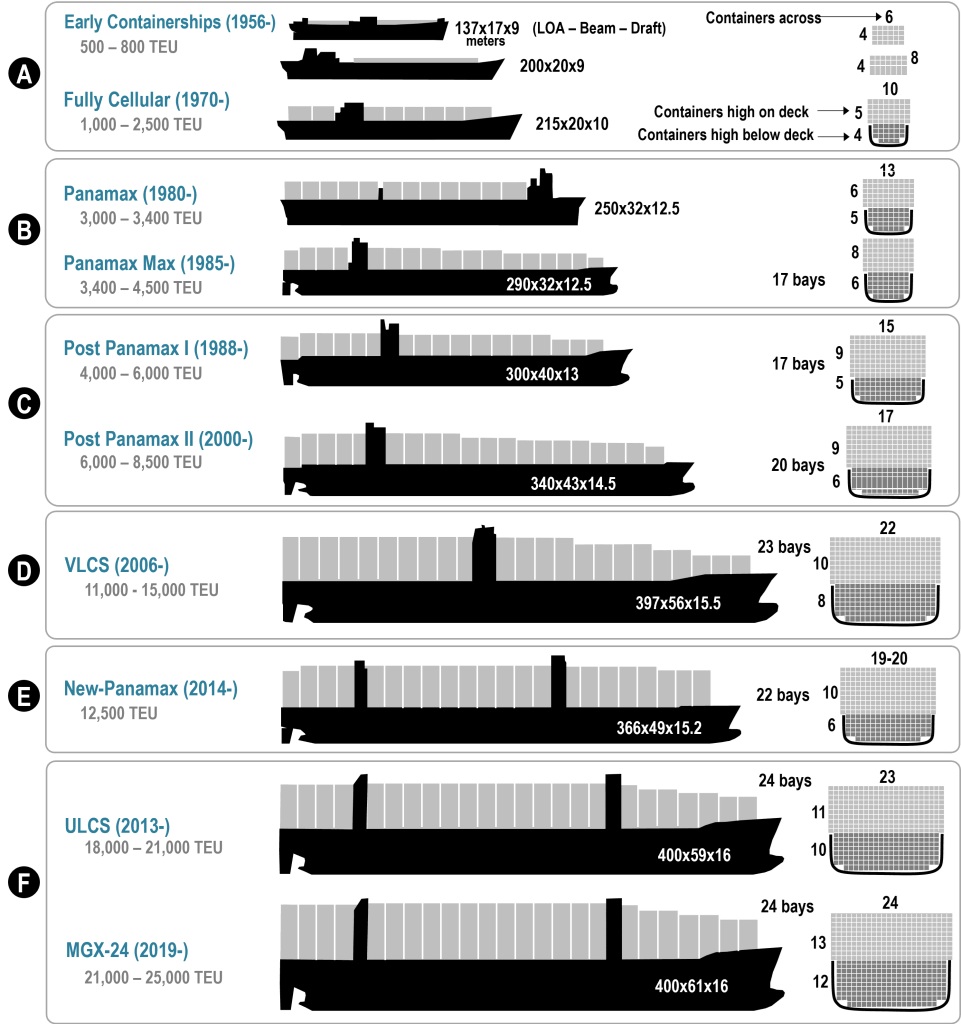
Today’s topic is a fascinating dive into a world of global trade; research has shown that around 90% of international trade is carried by shipping containers, and the World Bank statistics show that in 2019, nearly 800 million were shipped annually; given the increase over the past few years in online shopping, I can imagine that figure is by now significantly higher. The unit used for measuring how much a ship can carry is TEU (Twenty-foot Equivalent Unit); the chart below shows the adaptation of ship sizes over the years, driven by global trade:

Now, imagine a shipping container stacked at the top of a pile that’s the height of the actual ship; add to that ocean swells and waves. I’ve been on ships in the Atlantic facing waves so high, I could count fish through my window. I’ve been on ships in the “Sailor’s Nightmare” – the Pentland Firth passage between Scotland and the Orkney Islands – which is characterised by rough bathymetry (the underwater equivalent to topography) and extremely high currents (which also ricochet and collide off of the coasts of the islands and Scottish cliffs), tossing anything on the surface like a leaf in the wind. The World Shipping Council estimates that, over the past 16 years, an average of 1,500 containers have been lost at sea annually. Every year, the contents of those containers are carried along until the container is breached by either corrosion or impact. Then the contents are carried by ocean currents; where they finally make landfall depends on where they entered the ocean. If you were marooned on an island and tossed out an SOS in a bottle, it could make landfall anywhere between two and one hundred years – or never, if it’s caught in a gyre (more on that later). A message in a bottle was found on a beach in Norway that had been sent off 101 years earlier.

So what does that have to do with rubber ducks? In 1992, a shipping container with a consignment of what has been dubbed Friendly Floatees – 28,800 yellow rubber ducks, red beavers, blue turtles and green frogs – was washed overboard (along with 11 other containers) into the Atlantic. Because they are designed to float on water, they have survived at sea for an amazingly long time. Seattle oceanographers Curtis Ebbesmeyer and James Ingraham, who were working on an ocean current model, OSCUR (Ocean Surface Currents Simulation), began to track their progress; and those wee toys went on all kinds of adventures: Ten months after they broke free, some began showing up along the Alaskan coast; some showed up in Hawaii; some went to see the site of the Titanic sinking before getting frozen into ice, eventually emerging again and travelling to the US eastern coast, Britain and Ireland, making landfall around 2007. The researchers contacted coastal regions, asking beachcombers to report their finds; they recorded findings and began to accurately predict where landfall would occur. Over the years, the ducks and beavers had faded to white, but the blues and greens had retained their colours.

Flotsam and Jetsam have played key roles in helping researchers understand not only how ocean currents travel, but also how the areas known as garbage patches, oceanic gyres, are formed and retained by the swirl of ocean currents. Currently, five patches are known; many of the rubber ducks are likely caught in such currents, so we may hear about more white ducks finding their way to beaches in the coming years.

So the next time you see a rubber duck, think of all the adventures its siblings have been on!

If you’d like to see for yourself how ocean currents work, click here for an interactive map; just click on any area of the map to see how and where the currents carry debris from that point.

6 Comments

Filed under Articles, Etymology, History Undusted, Images, Nature, Research, Science & Technology, Snapshots in History

Warning to all Kindle Ebook Customers

I don’t know if you’ve yet heard about the sneaky change coming into effect, without warning, on 26 February for your Kindle account, but as of that date, if you haven’t downloaded your books to your computer or to your tab, phone, or other device besides a Kindle e-book reader, you will no longer be able to do so! They are taking away that right in order to get customers more dependent on their services; but they are in effect simply ticking people off. You’d think they could have learned something from Canada’s, Denmark’s and Gaza’s responses to POTUS’s hammer-fisted tactics, but they will likely spark a rebellion against their services. Another great reason to get your ebooks at Smashwords, or anywhere else but Amazon!

For more information, please click here for a 6-minute video, telling you about the changes coming and how you can save your books from being inaccessible to you in the future.

2 Comments

Filed under Articles, Sales, Promotions, YouTube Link

Upcoming E-Book Sale!

Hello, Readers!

We are fast approaching Read an Ebook Week, a week that encourages readers to pick up the digital device of their choice and download a new book to read.

I’m excited to announce that all of my books will be available as part of a promotion on Smashwords to celebrate 2025 Read an Ebook Week! This is a chance to snag a book at a discount so you can get down to reading!

You will find the promo here, starting on March 2 – so save the link:
https://www.smashwords.com/ebookweek

If you wouldn’t mind taking part in promoting this celebration of Ebooks and reading, please feel free to share this promo with your friends and family! Thank you for your help and support!

To find a specific book of mine otherwise, you can also click on the book covers here on my blog to the right; they’ll take you to Books2Read.com, where you’ll see various formats and vendors to choose from.

Happy reading!

Leave a comment

Filed under Articles, Publications, Sales, Promotions

History Undusted: Shop Signage

I’m fascinated by a few aspects of architecture in particular, such as doorways, knockers, unusual features such as sundials on the sides of buildings, mural paintings (here in Switzerland, these are sometimes hundreds of years old), and shop signage – you’ll see the latter even in the smallest town here.

This past summer, my husband and I rented a motorhome and travelled mostly in eastern Switzerland. I would say that 90% of my photos were of shop signs! I find that if you focus in on one topic, you’ll begin to see that thing everywhere.

Known as commercial signage or trade signs, such symbols of a shop’s products have been used as far back as ancient Egypt. As many people were illiterate, the pictorial shop sign not only advertised what was for sale in a shop but also distinguished the shops with similar items. By the mid-15th century, English laws even required shops that sold ale to hang a shop sign out; it made inspections of the quality of the ale easier. Some signs were temporary; for instance, if a woman made more ale or bread than her family could consume, she would put out a sign to sell the surplus and thus earn a bit of money. In the narrow streets of medieval towns, signs might be so large as to nearly touch the building on the other side of the lane, and they could become a hazard to passing horsemen or coachmen. By the mid-16th century, regulations were passed to limit the size of signage, and the securing of the sign to the building to avoid it endangering passersby. In Britain, hanging signs were eventually phased out in favour of what were are most familiar with – a flat sign denoting the store along the space above the front windows. But here in Switzerland, shop signage is everywhere – not just old, but also newer additions.

The development of the signs, including elements of guilds or heraldry symbols, led to competition between blacksmiths to create the most elaborate ironwork. The signs evolved from simple displays of ware to symbolic representations of a shop owner’s name or a heraldic connection or patronage of royalty (e.g. a crown). Examples might include shoemakers displaying a shoe or gilt boot, bakeries displaying bread, and haberdasheries displaying a needle and thread or a coat.

Here is just a fraction of the signs I photographed during our holidays, with brief explanations:

The building from which this sign hangs was built originally in 1664, and renovated to the current form in 1830. It was originally an inn/tavern on one side, and a forge (blacksmith) on the other. The Raven, as a tavern, took its symbol from the legend of St. Meinrad (797-861 AD); he was a hermit who rescued two young ravens from a sparrowhawk and raised them in his hut in the Finstern Wald (dark forest). In 861, he was murdered by two robbers; when they realized what they’d done, they fled to Zürich, but the crows followed them into a tavern and attacked them; the others present thought it unusual, so they took the men captive; they confessed, and were executed. The raven became a symbol of inns along a pilgrimage road; it was sometimes combined with a wine jug and bread.

The Hotel Santis sign has a few symbols: The wine is an obvious reference to a tavern, pub or inn; the pine cone is an interesting addition: It was the symbol of the field sign of the Roman legion stationed in Rhaetia in 15 BC, and hence it is used as a heraldic charge (an emblem on a shield). It may have been included in this sign to proclaim a good place for soldiers to eat or sleep, or as an advertisement that it was protected under a legion or unit of the military at a time when such protection would have been welcome. The bell symbolized a pilgrimage or an invocation of guardian angels over a premises.

I think this is fairly clear – it’s a bakery!

This building is a pharmacy; the front of the building is a beautiful example of the mural painting I mentioned earlier; these panels represent the herbs and flowers used medicinally. The saying painted toward the right side reads: Vielerlei Kraut gegen Leibesnot, aber kein einzigs wider den Tod (Many herbs against bodily pain, but none against death).

This symbol denotes a carpenter’s shop.

This café sign would be clear from any stagecoach stopping for a break and horse change what could be expected inside. The figures are dressed in traditional Appenzeller clothing.

And lastly, here’s a traditional sign with a modern addition: It’s a hunting lodge, or inn that serves wild game meat. Next to it, peeking around the corner, is a figure from a toy shop.

 I hope you enjoyed this little excursion!

10 Comments

Filed under Articles, Etymology, History, History Undusted, Linguistics, Military History, Signs, Snapshots in History, Translations, Virtual Tours