For the past year or so, my blogs have been posted (mostly) every two weeks on a Wednesday. In the past few months, Wednesdays have been booked, and I realised that it’s not the best day either for me to upload a blog or for most people to read it. So I’ve decided to move my posting day to Saturdays. The weekends are usually when I personally have time to read blogs or catch up on YouTube channels that I follow, so I can imagine that others have the same time priorities through the week of work, commitments or activities, and have more time on weekends.
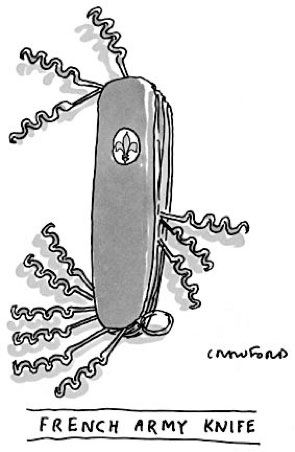
So from now on, look for my posts on the weekends! In the meantime, I’ll leave you with this fun wink to my last post:
Back in 2020, I wrote an article about preparedness in connection with lockdown, viruses, and being shut in over longer periods of time. Then life went back to normal, people came out of their caves and learned to socialise again… carefully. At a distance. Introverts mourned the passing of a perfect excuse to avoid people, and extroverts went right back to hugging everyone in sight. We may not have lockdown anymore, but we now have a more looming threat: Climate Change.
Depending on where you live in the world, you may feel different effects of the climate change and its consequences: Whether that’s increased storm violence of hurricanes, tornadoes, flooding or drought (these last two are related, as the jet stream has been disrupted; it dumps too much water in one place and leaves another place dry because it has become lethargic), or increased earthquakes and/or volcanic activity (ice melt has been linked to the destabilization of the Earth’s crust, leading to seismic and tectonic shifts; this is known as glacially-induced faulting, or bookshelf faulting).
Whatever your focus, preparation will become increasingly important (other factors may include political or social unrest). Some things are out of our control, but we can be prepared in case evacuation or hunkering down (“bug-in”) becomes necessary. Think of this as a mental exercise in preparedness; it is by no means a comprehensive list, because as I mentioned, everyone has a different focus: Those living in Tornado Alley will not have the same needs as those living along tectonic faultlines; those living in tropical cyclone basins will have a different focus than those living in places like Niscemi, Italy, or in the rumbling caldera around Naples. But whatever your individual needs are, there are some things we can all prepare. I’m sure it doesn’t need to be said, but I am no expert in emergency preparedness; everyone needs to gauge their own needs. The following points are suggestions and things to think about as you get ready to face your region’s challenges.
Bug-Out Bags (BOBs) are bags that should be ready to go and cover your needs for around 4 days; it might be a sports bag or backpack, or a water-tight, lidded bucket – something transportable and quick to grab as you head out, up, or down.
One rule for preparedness is the “Rule of 3s”: You can survive 3 minutes without air; 3 hours in a harsh environment without shelter; 3 days without water; 3 weeks without food.
Air: keep air-filtering masks on hand to mitigate smoke inhalation or chemical fumes. If you don’t have access to such masks in an emergency, a damp* shirt over nose and mouth may help reduce harmful inhalation. A damp cloth over an animal’s carrier case will help them, too. [*Damp, not soaking, which can inhibit breathing. Dampness traps particulates better than a dry cloth.]
Shelter: Clothing would fall under the rule of shelter. Keep an extra set of clothing (think seasonal/layers) in your car, as well as blankets (fire-resistant blankets if forest fires are a threat), or have a list of what to grab if you need to evacuate. In the chaos of such moments, you might not have time to think, so knowing what, where and how to pack quickly is an important skill to cultivate. If a disaster forces you out into the elements, you’ll need warm, dry clothing on hand. Other shelter items to think about might be a tent (e.g. Mylar tents are lightweight, retain heat and repel water), or a space blanket (they look like foil), which could be used as a make-shift shelter. While thinking of shelter, think of what your pets/animals might need: A carrying case ready to grab; a litter box for cats if you’re evacuating.
Water: The recommended amount is about 4 litres (1 gallon) per person per day. Think about other things that might require water in your situation, such as pets or other animals, and even flushing toilets, cleaning, etc. and plan accordingly. Another thing to think about is accessing clean water after the event; water filter straws such as HydraMate or LifeStraw are widely available online and can be kept in your BOB.
Medicines, First Aid kits: Ensure you have sufficient (more than minimal) medicine at home, especially if not having it could be life-threatening. Have a well-stocked First Aid box, preferably in an airtight, watertight container, with medicines, bandages, disinfectants, pain killers, burn gel, sunscreen, medical gloves, and basic first-aid instructions (CPR, using a tourniquet, how to stop bleeding, etc.).
Foods: Keep a ready stock of food and water in your home*; if you live in areas where your home may become flooded, keep those supplies on the upper floor; if you face forest fires, take supplies like water and canned foods (with opener if needed) to your car. Think also of your pets – stock enough food for them. When a storm is coming, it’s too late to go shopping, as there are often panic-shoppers and empty shelves in such moments. [*Stock up on foods you eat, and make those choices healthy and nutrient-rich, not high-caloric, low-nutrient, or high-sodium, which will increase thirst. Rotate eating those foods and replenishing them in non-emergency times, so that what you take when you need it is fresh.]
Vehicle: If you need to evacuate by car, think of having an extra can of petrol/gasoline either at home to take with you, or keeping one in your car. Traffic jams consume fuel.
Power: If you can, get a portable power station. These can be kept charged and ready to go, to charge your phones, to power lights, fans or tools you may need in the aftermath of a storm. Our power station has come in handy on many occasions; due to local construction, our power line was once knocked out for several hours, and we could plug our refrigerator into the power station, preserving the food until it was restored. It’s also practical for daily things, such as charging cell phones quickly or powering our telescope on the balcony. Another “power” source is a lighter or fire-starters; these might be needed if you are without shelter, especially in colder weather. Remember your cell phone: The light could be used to signal for help. In the fires that hit Texas a few years ago, a man got turned around in the smoke. He used his phone’s light to flash SOS for help; a science drone spotted him, and he was guided to safety. If battery power on your phone needs to be conserved, a good ol’ fashioned flashlight is an essential BOB item – hand-cranked versions are available.
Portable radio:This might be vital to keeping up with a storm’s trajectory or hearing meteorological reports. The best kind to get, if you want to be independent of battery charge levels or electricity, is a hand-cranked version (some of these have additional solar options).
Tools: Keep a few tools in your BOB; a Swiss Army knife that has scissors, etc., will come in handy. A playing card or piece of plastic wrapped with layers of duct tape will save space in your BOB, but give you the option if you need it. A small sewing kit can be used to repair clothing or tent rips, or even for emergency medical stitches.
Papers: Think about keeping a copy of vital information in your BOB: Insurance, bank, medical, ID… anything you might need if your home is lost. Keep it in a double-Ziplock bag-in-a-bag. Also, make a list of all addresses and phone numbers of your closest friends and family – most people don’t even know their spouse’s cell phone numbers by heart. If your cell phone dies, is lost, or is damaged, and you need to use another phone, you’ll need those numbers. And don’t forget to keep a bit of emergency cash on hand; in a wider disaster such as flood or fire, infrastructure will be knocked out – no ATMs, no credit card-reading machines…
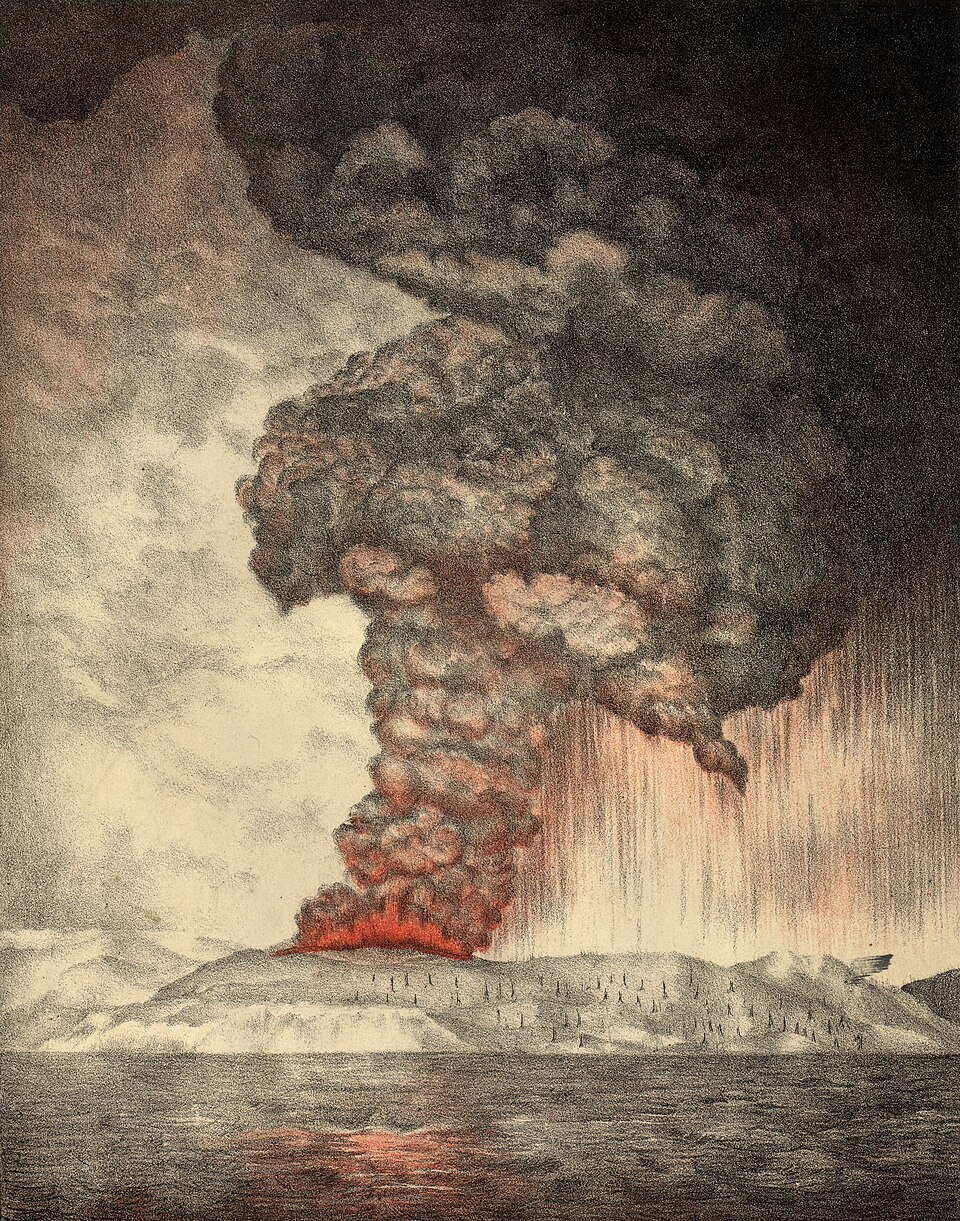
These are just a few things to think about for your BOB preparation. I live in a stable, peaceful country with good governance and solid, maintained infrastructure, but these are blessings, and were not a “given” even a generation ago. I live in Central Europe; there are a lot of bat-ship crazy folk not all that far from our borders, and even if they do nothing, all it takes is a Krakatoa. Personally, I’m grateful that if all else fails, I can still trust Jesus – that gives me a peace that passes understanding (Philippians 4:7)!
I hope this list helps you and sparks ideas for your own BOB!
An 1888 lithograph of the 1883 eruption of Krakatoa, Wikipedia
From cave paintings to stone tablets to modern paper forms, people have been expressing themselves and capturing moments in time for millennia, driven by an innate desire to record their lives. My personal belief is that our creativity is an expression of our Creator’s own character, whether we know Him personally or not; it’s what drives us to share our lives with others, to relate our experiences and preserve them for posterity.
With the dawn of the internet, interconnectivity has become something we often take for granted, but it is amazing nevertheless. No other generation before us has literally had the world at its fingertips. We can not only learn about a country on the other side of the planet, but we can also learn something from someone on the other side, too. Seeing things from others’ perspectives and allowing their ways of seeing the world to teach us new skills is a privilege.
In modern times, journalling has never been easier and has never had as many possibilities; they come in all shapes, sizes and varieties:
The first that comes to mind is the daily journal: That may be something as simple as recording what you did in the day or making a note if you bought something like a new laptop or a household electronic gadget; it may also be a place to record deeper ideas, or to form thoughts that help us work through an issue we’re facing. I’ve been keeping a daily journal since I was around 8 years old, and with few exceptions, I still have all of those journals on our library shelves! One, from my time in Hawaii, was lost somewhere along the way, and another was in a suitcase stolen back in 1992 when I was living in Scotland. We may not think that recording such mundane, daily things has any significance, but in a hundred years, scholars will be clambering to find out how much things cost back then, or what common people did daily. There are many museums which collect journals for that very reason.
Sometimes people need a boost of focus with what’s known as a productivity journal: This might be used to record specific goals and timelines, or measurable progress toward a project or health goal such as weight loss (this could be called a food journal if your sole focus is dietary). It can be used to track steps toward a goal, a hobby or a target. Closely related to this journal is what’s known as a bullet journal: This includes things like to-do lists, checklists and trackers. I use this method when I’m in the proof-reading phase of a book; the more experience I have in writing, the shorter those checklists and watch-out-for lists get, but it’s still a useful method for staying focused. Related to these is a planner journal, also known as an agenda, used to plan appointments and events and to remember activities and birthdays. Some people like these as physical paper, while others have phone or computer apps with the same functions.
A gratitude/happiness journal is another type of motivating diary. In it, you record things you’re grateful for; you practice mindfulness and focus on the positive. In this batship crazy world we live in, such a journal is almost a necessity!
A reading journal is a way of tracking what you’ve read, impressions or side notes while reading, and a to-be-read list.
Travel journals are another popular form of recording holiday memories. Whenever we have travel holidays, e.g. renting a motorhome, I take along a homemade notebook. I keep track of mileage, expenses, and where we stop or visit along the way. I will also put things like postcards, ferry tickets, or tourist brochures in the notebook. We have a growing collection from holidays in Scotland, Norway, New Zealand, and across Switzerland.
The journals above are primarily text-centric; but another variety focuses on the aesthetic and visual, a way of expressing creativity while practising mindfulness through colours and textures.
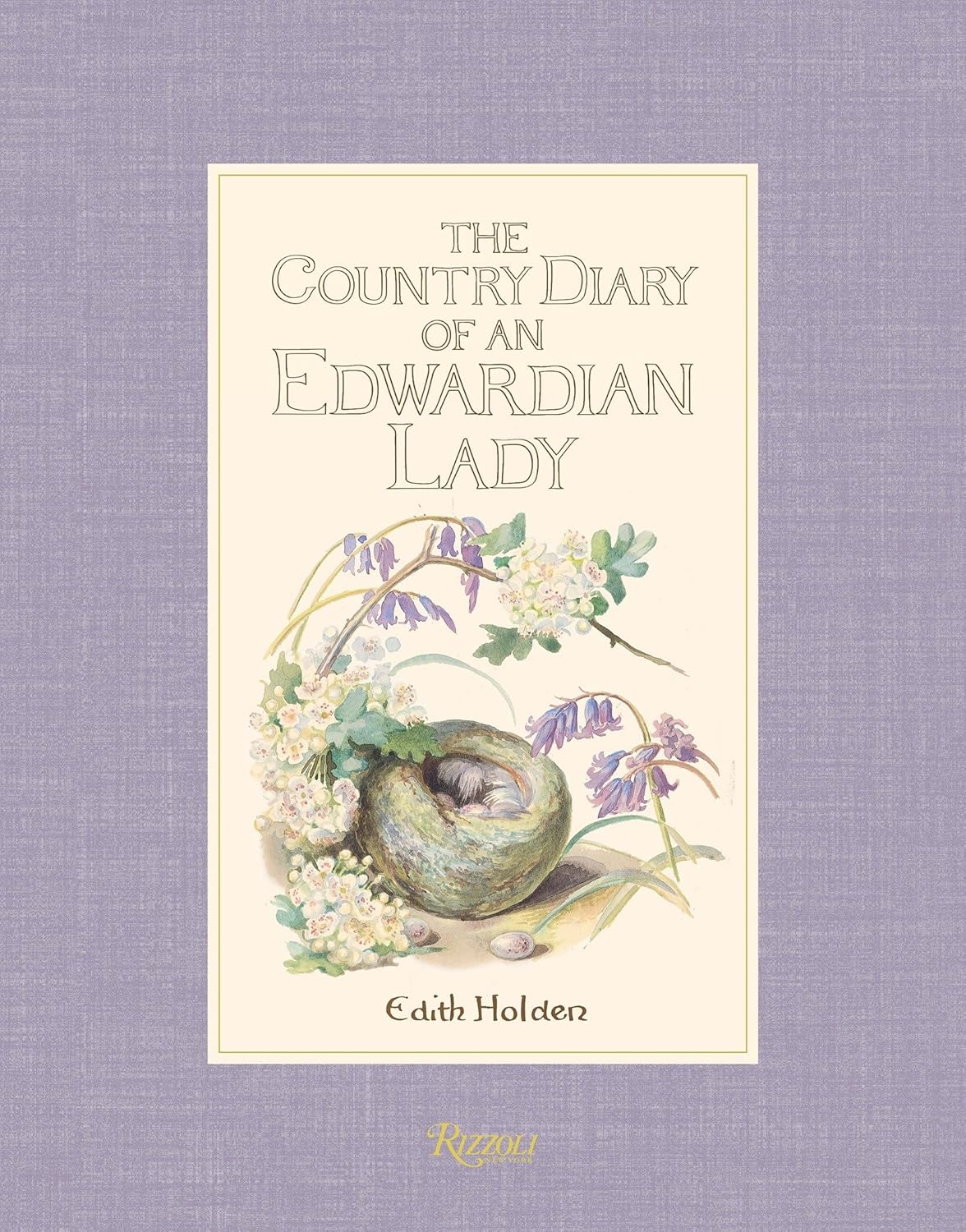
One visual form is a nature journal; among the most famous of this kind is The Country Diary of an Edwardian Lady (1906), by Edith Holden. It’s still in print, and her drawings, as well as her handwriting, are exquisite!
Another visual form is commonly known as a junk journal; I would say it is the modern iteration of scrapbooking, though there are differences: Scrapbooking is focused on preserving memories of certain events or phases of life through photos and/or memorabilia like theatre tickets. Junk journalling began as a freeform way of journalling using (as the name implies) junk – packaging, recycled materials or papers, and things that might usually be thrown away otherwise. Nowadays, many junk journalists use craft papers, digital graphic kits, and many make their own digital visuals and use their social media to promote and sell their products by showing how to use them in “junk” journals. The camps are divided on the issue – can it still be called a “junk journal” when it’s mainly comprised of printed materials specifically for that purpose? I personally don’t junk journal, per se – I appreciate many of the techniques developed to fill such a journal, but I tend to be more of a practical crafter – if it can be aesthetically pleasing and practical, I’m all in; but I have neither time nor space to fill a journal with random tags and stuffers just to make it thick and interesting. One journal I have made is a book of writing prompts; it’s of practical use, with interesting pages drawn from junk journalling techniques. Nothing is in the book just for show; everything is there to inspire toward creative writing.
Other types of visual journals are art journals: These can take the form of painted pages, mixed media, or hand-drawn artwork. I have three types of art journals: One is a book I take with me on holidays, in which I mainly draw calligrams – impressions, nature, street art, or museum exhibits drawn from words. I usually do a sketch first, then research the topic, then fill in a condensed version of that research to fit the drawing, replacing the shape and contours with words. Another art journal I maintain is a mixed media journal; I add to this one as inspiration and time collide. The third art journal is what I call my inspiration book: When I come across an idea that I want to remember, such as a way to make a journalling pocket or insert, I will make a sample and put it in this book. I have things in the book that I have sold in our annual Advent market – samples of popular items with measurements and details to remember.
Another type of art journal, perhaps closely related to the food journal above, is a recipe journal: It’s an artistic expression with the purpose of creating an heirloom book of favourite or family recipes. They might be made as a bridal gift, birthday gift, or retirement gift.
There are a dozen other ways to journal: Bible journalling, therapeutic, morning brain dumps, dream journalling, mood tracking, and the list goes on.
Question:
Do you journal? If so, which form does it take? Do you use several journal expressions, and if so, are they used in combination or separately?
Unless you’ve been living under a rock, I’m guessing you know that the world is batship crazy right now: Wars and rumours of wars (Matthew 24:6); earthquakes setting off chain-reactions of town-swallowing landslides and a cluster of volcanoes taking deep breaths to blast anytime soon; massive storms and flooding in places unprepared for such weather. And those topics are just the tips of melting icebergs.
We could focus on such things and despair; it’s no wonder that depression soars, in some places as high as 1 in 6 people globally. Positive news is elusive – not because it isn’t there, but because it doesn’t grab our emotions like negative or shocking news does; this is why it’s dominant in news reports, newspapers or YouTube thumbnails. Drama sells. But it’s also selling anti-depressants.
But I have good news: Focus is what it’s all about.
If we focus on something, that’s what we’ll begin to see everywhere. Take the example of a puzzle: When you’re working on a particular section and looking for blue, you’ll begin to see blue on pieces you hadn’t noticed before. If we focus on the negative and the bad things happening in the world, we’ll begin to see only that, and it’s no wonder we feel blue.
The Bible has a lot of wisdom, even if you don’t yet believe in God. Philippians 4:8 encourages us to focus on good things: “…whatever is true, whatever is noble, whatever is right, whatever is pure, whatever is lovely, whatever is admirable – if anything is excellent or praiseworthy – think about such things.” The message of Jesus is called the Good News for many reasons; I encourage you to explore the Bible. If you prefer to watch rather than read, I highly recommend The Chosen series – all free online, in any language! All you need to do is sign up, and you’ll have access to the series and all the extras that have already been released – five seasons so far, with two to come.
My husband and I read a devotional every evening, and one of the elements is this: “As I end this day in God’s safe keeping, I count three blessings before my sleeping.” It causes us to focus on the good things of the day; sometimes it can be as simple as, “I was able to get up without assistance, dress myself, and walk and breathe on my own.” All things that most people take for granted… until they’re gone. They are tremendous blessings and not inevitable or unimportant! It’s a good way to end the day… focusing on upsies, not downsies.
There is a lot of good news happening around the world, but as I said, it can be elusive. Thankfully, there are people out there focused on finding it for us and reporting about it! Here’s a link to the appropriately named Good News YouTube channel that brings a dose of good reports from around the world, from ecology to breakthroughs in science and medicine. Another channel worth watching is called Planet Wild, which focuses on restoration and conservation, putting people’s money to immediate use in projects focused on the environment and ecology. They show the progress and report on positive changes.
When you hear about or watch something that’s good news, please let me know in the comments below which story captures your imagination or encourages you!
Take a few minutes every day to focus on what is true, noble, right, pure, lovely, admirable, excellent and praiseworthy.
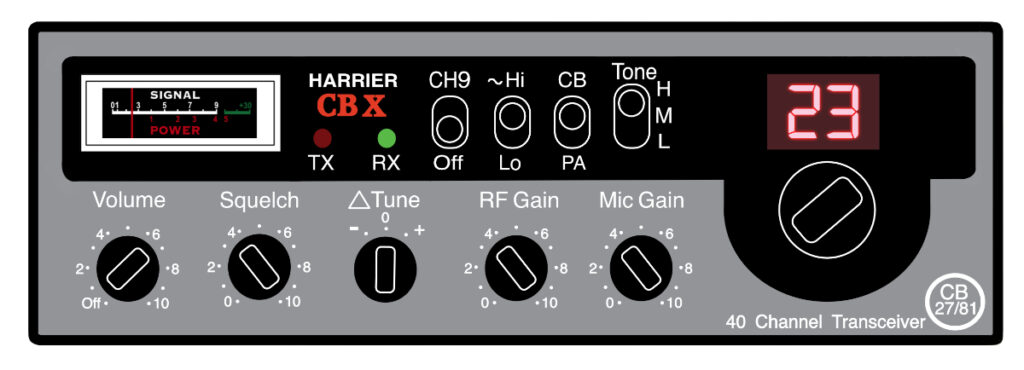
You know how your brain fires off random thoughts as you fall to sleep, or combines odds-bods into dreams forgotten as soon as you wake up? For some reason, 10-4 popped into my head in those moments last night. It sent me down the rabbit hole I now present: The history of the CB radio.
The often-forgotten or overlooked inventor of the Citizen’s Band (CB) radio system, along with inventions such as a patented version of the walkie-talkie (originally invented by the Englishman Donald Hings), the telephone pager, and the cordless telephone – all precursors to today’s cell phones, was Al Gross (1918-2000): Born in Toronto, Canada, he grew up in Cleveland, Ohio. The son of Romanian-Jewish immigrants, his love for electronics was sparked when, at the age of nine, he was travelling by steamboat on Lake Erie; he explored the ship and ended up in the radio transmissions room, where the operator let him listen in. Eventually, he turned the family’s basement into a radio station built from scraps. During his higher studies, he experimented with ways to use radio frequencies.
During World War 2, he had some involvement with developing a two-way VHF air-to-ground communications system for the U.S. Office of Strategic Services, known as the Joan-Eleanor system, and after the war, the Federal Communications Commission (FCC) allocated a few frequencies for the Citizens’ Radio Service Frequency Band, in 1946. Gross saw the potential and founded the Gross Electronics Co. to produce two-way communications systems to make use of these frequencies; his firm was the first to receive FCC approval in 1948. For more about his other inventions, just follow the link on his name above. For now, let’s focus on the CB:
The CB radio became an international hit back before cell phones and computers became a thing (despite the prevalence of cell phones, CBs are still around; truckers still communicate about road conditions, etc. Its usage was also revived by the Covid lockdown, when people began reaching out to meet and talk to others outside of their own four walls). It was, and is, a way to communicate with others long-distance from home or on the go.
My dad was always interested in the latest technological gadgets; in the mid-70s, we got a laserdisc player, the precursor of CDs, and DVD/Blu-Ray players. I remember watching films like Logan’s Run and Heaven Can Wait on that format. Laserdiscs never really took off, and only about 2% of US households had one (it became more popular in Japan at the time). Around that time, we also got a CB radio in our VW van. My dad had a chart with all of the CB slang words and codes, and I memorised it, fascinated by the lingo. On long road trips, I would get on the CB and chat with truck drivers. My handle (nickname) was Spider-Fingers, as I liked spiders and had long fingers (long fingers has the connotation of thief, so I didn’t want to use that!). Here is just the tip of the iceberg, a smattering of the codes and slangs used by CB radio enthusiasts, truckers and handymen:
There were dozens of slang terms for law enforcement officers: Bear (police officer); bear trap (speed trap, radar trap) taking pictures, also called a Kojak With A Kodak; bear bait (an erratic or speeding driver); bear with ears (listening to CB traffic); bear in the air/flying doughnut/Spy in the sky (helicopter radar traps), baby bear (rookie), fox in the henhouse/Smokey in a plain wrapper (policemen in unmarked vehicles); honey bear, mamma bear or Miss Piggy (slangs for female police officers); Brush Your Teeth And Comb Your Hair (a law enforcement vehicle is radaring vehicles – as if preparing for an official photo). A Driving Award was a speeding ticket. To wish someone Shiny side up meant that you wished them safe travels (keeping the vehicle upright).
There were slang terms for objects or events, such as Bambi, meaning that there was wildlife near the road and to take precautions; a crotch rocket was a fast motorcycle; double-nickels was a 55-mph speed limit area; a fighter pilot was an erratic driver who switched lanes frequently, while a gear jammer was someone who sped up and slowed down frequently; Alabama chrome was duct tape; an alligator/gator was a piece of blown tire on the highway, as it looked in the distance like a gator sunbathing. Convoys had front doors and back doors – the front or back truck in the group that would keep an eye open for bear traps. Motion lotion was fuel; the hammer lane was the fast lane (hammer was the gas pedal, and to hammer down was to drive full-speed). Break/breaker: Informing other CB users that one wanted to start transmission on a channel; a handle might be introduced, or requested if someone was looking for a CB friend. “Breaker, this is Spider-Fingers, over.” Asking for a comeback meant that you couldn’t hear the last transmission or wanted the other driver to talk. Break check meant traffic congestion ahead, slow down. A Bumper Sticker/hitchhiker is a vehicle that is tailgating another vehicle.
Aside from hundreds of slang terms, there was a whole list of codes (I guess you could say that the codes were the precursors of emojis!):
10-4: Agreed, understood, acknowledged
4-10: The opposite – asking for agreement or if a transmission was received.
10-6: Busy, stand by
10-7: Signing off
10-10: Transmission completed, standing by (you’ll be listening)
10-20: Location – What’s your (10-)20? Home-20 was asking for a driver’s home location/base.
10-33: Emergency traffic, clear the channel. CB code for Mayday for trucks and police cars.
10-42: Accident on the road
3s and 8s: Well wishes to a fellow driver. Borrowed from amateur ham radio codes “73” (best regards) and “88” (hugs and kisses).
The lists go on and on! I love the dry sense of humour reflected in the slang, and I think our everyday language could be a bit livelier if we included a few phrases that looked at things from a different perspective. Everyone could do with more 3s and 8s, 4-10?
My quirky brain went down a rabbit hole last week; as I was putting away groceries into glass jars (for that explanation, please click here), I wondered who had been the genius behind the thread around canning jar lids, or, as most of my jars use, the bail closure.
Just to clarify terminology: Here is a threaded jar, a type of screw-on lid that is either one part or two:
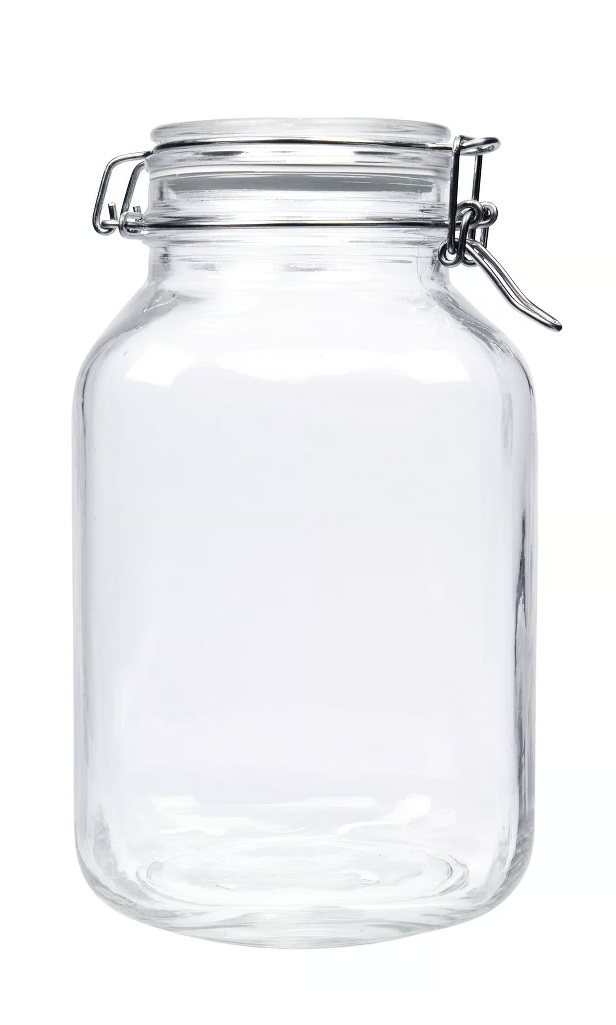
Here is a jar with a bail closure, aka flip-tops, lightning jars, known also by their various brand names, e.g. Fido, Le Parfait, Kilner:
A third type of jar, German-made, is the Weck jar, with metal clips and a glass lid. I don’t like using these, so you won’t find them in our house.
5000-Year-Old Pharaonic wine jars found intact at Abydos – Egypt Museum
Closures have been an issue for thousands of years; ancient amphoras, which were used to transport wines and oils, were sealed with wood, cork, or a ceramic or pottery lid sealed with a type of mortar. Archaeology has many examples of clay or pottery pots with lids, Norse ornate metal containers with lids, and even ancient Egypt’s canopic jars, with their ornate lids. Another variety of closure is found on wooden barrels, which have side holes called bungholes, plugged with a cork or other wood.
The threaded jar lid was invented by the tinsmith John Landis Mason in 1858. Prior to his invention, a glass lid was laid atop an un-threaded canning jar and sealed with hot wax. It was messy, and if it wasn’t done right every time, it could allow dangerous bacteria into foods. Before refrigeration, the only way to preserve garden produce was basically to can with a wax seal and take your life into your hands. There were other preservation methods, such as drying, salting, smoking or pickling, but the new way of preserving offered a convenient, faster alternative; Mason’s threaded lids, combined with a rubber ring and a threaded glass jar, revolutionised canning. Unfortunately, he was not a savvy businessman, and though he filed a patent for the threaded screw-top jars, he failed to patent the rest of the invention, such as the rubber gaskets. He let the patent expire in 1879, and manufacturers took the idea and ran with it. Mason never made a fortune; in fact, he died in poverty in 1902. But his name lives on in the common term, “Mason Jars”. The concept is now used with countless products, from drinks to shampoos to household cleaners.
The invention of the bail closure design is a bit murkier: In the early 1840s, the Yorkshireman John Kilner invented the Kilner jar, using the rubber seal and wire bail closure.
In 1893, beverage bottles began using the Hutter stopper – a porcelain plug with a rubber gasket held in place with a metal strap.
In the 1930s, the La Parfait jars began production in Reims, France, by Verreries Mécaniques Champenoises, a historic French glassmaker.
The Bormioli family is an Italian name associated with glass-blowing since the Middle Ages; among their many brands is the Fido airtight jar, using the bail closure, which began production in 1968.
I personally have Kilner, La Parfait and Fido bail-closure jars, as well as many screw-top jars similar to Mason from these companies.
Do you use any such jars for storage in your home? Do you use them for canning or storing dried goods, or both? Please comment below!
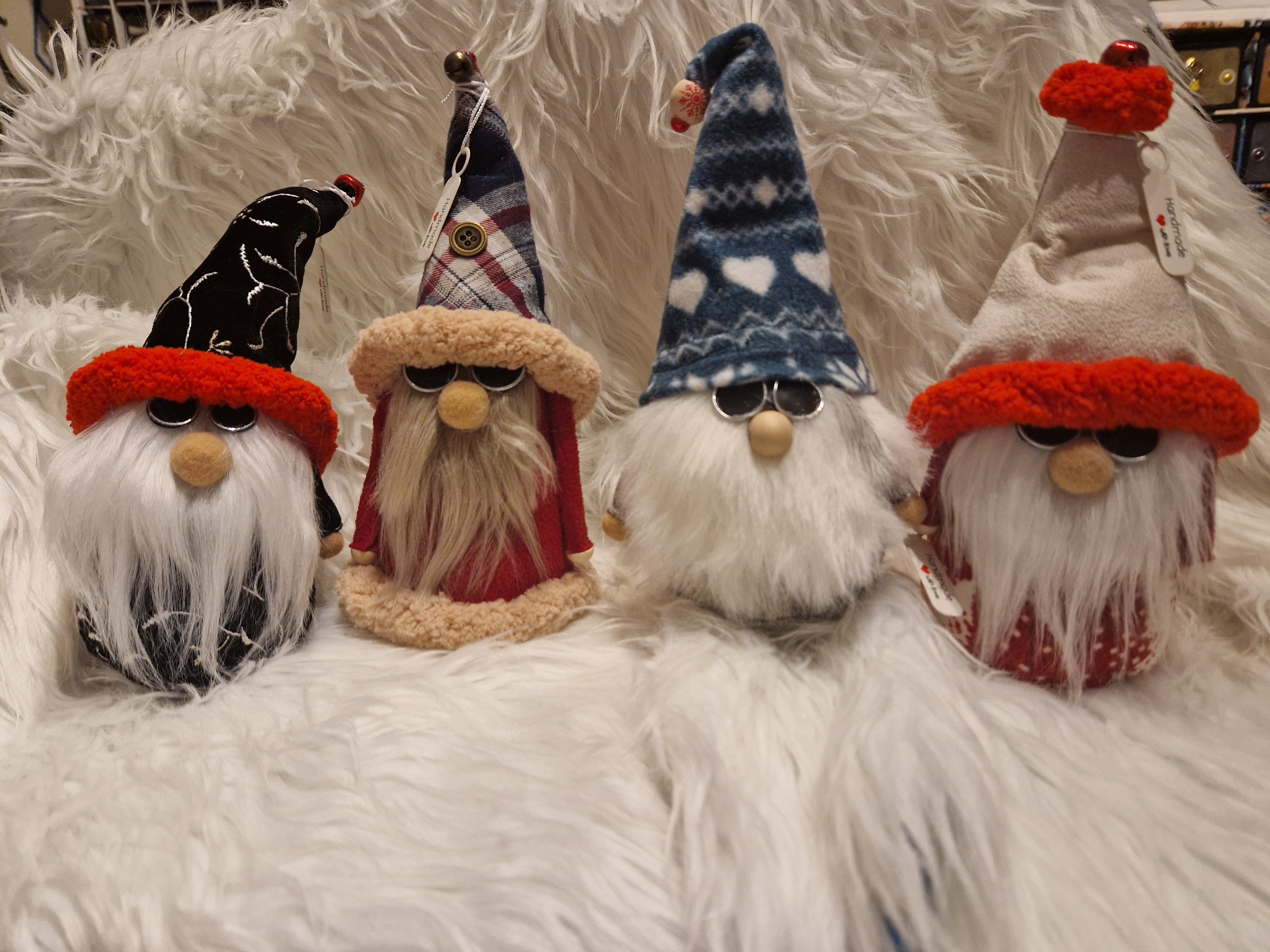
Ready or not, here it comes! In a week, our annual Advent market begins. Every year, I have a large selection of crafts; what I bring changes from year to year, but some things have become regulars due to popularity. A few months ago, people started asking me if I was going to bring this or that. One thing I introduced a couple of years ago was a huge hit: Gnomes with attitudes and sunglasses. By this morning, I’d made 29; then someone asked if they could buy 10 (!) – so I spent the afternoon making gnomes – and sold 3 in advance today, so I guess I’ll be making them until the market (and likely beyond, because last year I pre-sold special orders to deliver before Christmas). But this is only one of the items I’ll be selling. (And, of course, they’ll all get a nice hair styling when they finally come out of the transport box!)
Another hit is “Spitzbuben” – a two-layered cookie filled with jelly and dusted with powdered sugar. A friend and I spent the morning making hundreds of these cookies; I’ll need to fill, dust, bag, and tag them next week.
Other popular items include notebooks – I make them in every size from a few centimetres to A5, with sewn signatures, spiral bindings and more. Mixed media gift cards, bookmarks of every description, decorative folders, and cloth shopping bags – all handmade. There are a dozen more items, but you get the idea!
As you can imagine, it’s a lot of work to prepare – not just making the items, but putting together price lists, printing price tags and/or signage, packing up display racks/cloths/pieces, packing a toolbox with markers, tags, scissors, screwdrivers, pens, cash, et al. So far, our hall is already lined with boxes ready to transport – because my craft room is like Tetris right now… I need to move out what is ready to go so that I can get other things made! The working space on my craft table has shrunk as boxes of various projects demand my last-minute attention, plus space for the sewing machine for last-minute gnome “kits”.
I enjoy the market, the contact with other crafters and customers, and I enjoy making other people happy while moving my stock to free up room for more creativity afterwards!
Please comment below if you take part in craft fairs, or if you go to one or more in your local area! If you participate or if you go, what kinds of things do you sell/look for?
Sometimes, my husband and I discuss history, and an odd topic here or there pops up; I’ll often delve into the history or etymology of a phrase, word, or idiom and share my findings here. So, no more fiddling about; let’s get to it.
A reduplication in English is a word or sound that’s doubled or altered the second time for effect; there are a few kinds of reduplications: Exact repeats, like bye-bye or night-night; rhyming, like okey-dokey, easy-peasy, or higgledy-piggledy; ablauts, like chit-chat, criss-cross, splish-splash, or wishy-washy; there is even a series of -shm reduplications, like fancy-shmancy, laborday-shmaborday, or work-shmerk. Some reduplications emphasise the first term to focus on the prototypical or normal form of something, e.g. ‘I just was a salad-salad (not bean salad or tuna salad)’. Many such words have become standard in English, such as flip-flops, wingdings, or zig-zag. Every language probably has such words; German has krimskrams, schnikschnak, mischmasch, larifari, Wirrwarr and more. Italian has a few that have slipped into use in other languages, such as piano piano (very slowly), Mamma mia (literally, my mother, but used as an expression of surprise, frustration, or even delight, similar to ‘Oh my goodness‘), or bric-a-brac (knick-knack).
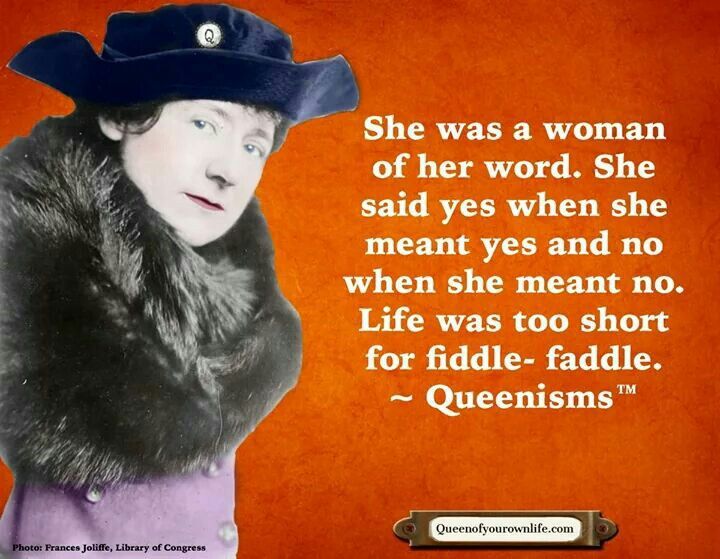
Have you ever said (or heard someone else say) Fiddle-faddle? It first appeared in English in the 1570s, meaning trifles, or to talk nonsense or speak of something not worth serious attention. Fiddle is another word for violin and is the more colloquial/casual of the two; as such, it has long been associated with less important things. Georgette Heyer uses fiddle without faddle to mean trivial or nonsense; the reduplication would merely emphasise the meaning of the first word, so she chose to drop the second.
John Milton Edwards (the pen-name of William Wallace Cook, 1867-1933) wrote, “There’s a lot of fiddle-faddle wrapped up in that word ‘inspiration.’ It is the last resort of the lazy writer, of the man who would rather sit and dream than be up and doing...”
It was also used as an adjective to describe a troublesome person, such as a nit-picky, ceremonious old woman. As a verb, to fiddle-faddle means to dally, which leads us to another reduplication: dilly-dally, which means to loiter, delay, or trifle! A fiddle-faddler is a person who trifles or dallies.
No dilly-dallying, let’s get to the point: Which reduplications have you used? Have you ever known a fiddle-faddler or a dilly-dallier? If you know of more such words, please put them in the comments below!
I know that, for most of you, neither Engadin nor Sgraffito have made you any wiser as to what this blog is about, so first, I’ll start off by explaining where and what they are, respectively.
Engadin (pronounced En-Ga-Deen) is a long, towering Alpine valley in the Romansh-speaking canton of Graubünden in southeast Switzerland. The first mention of this valley was in Latin as vallis Eniatina in AD 930; in the Romansh language (one of the four national languages of Switzerland), it is Engiadina. The river running through the valley is called the En or Inn, and it is the only river in Switzerland that runs (via Austria) into the Black Sea. The region is usually divided into lower and upper Engadin, and it is connected to the surrounding regions by several mountain passes.
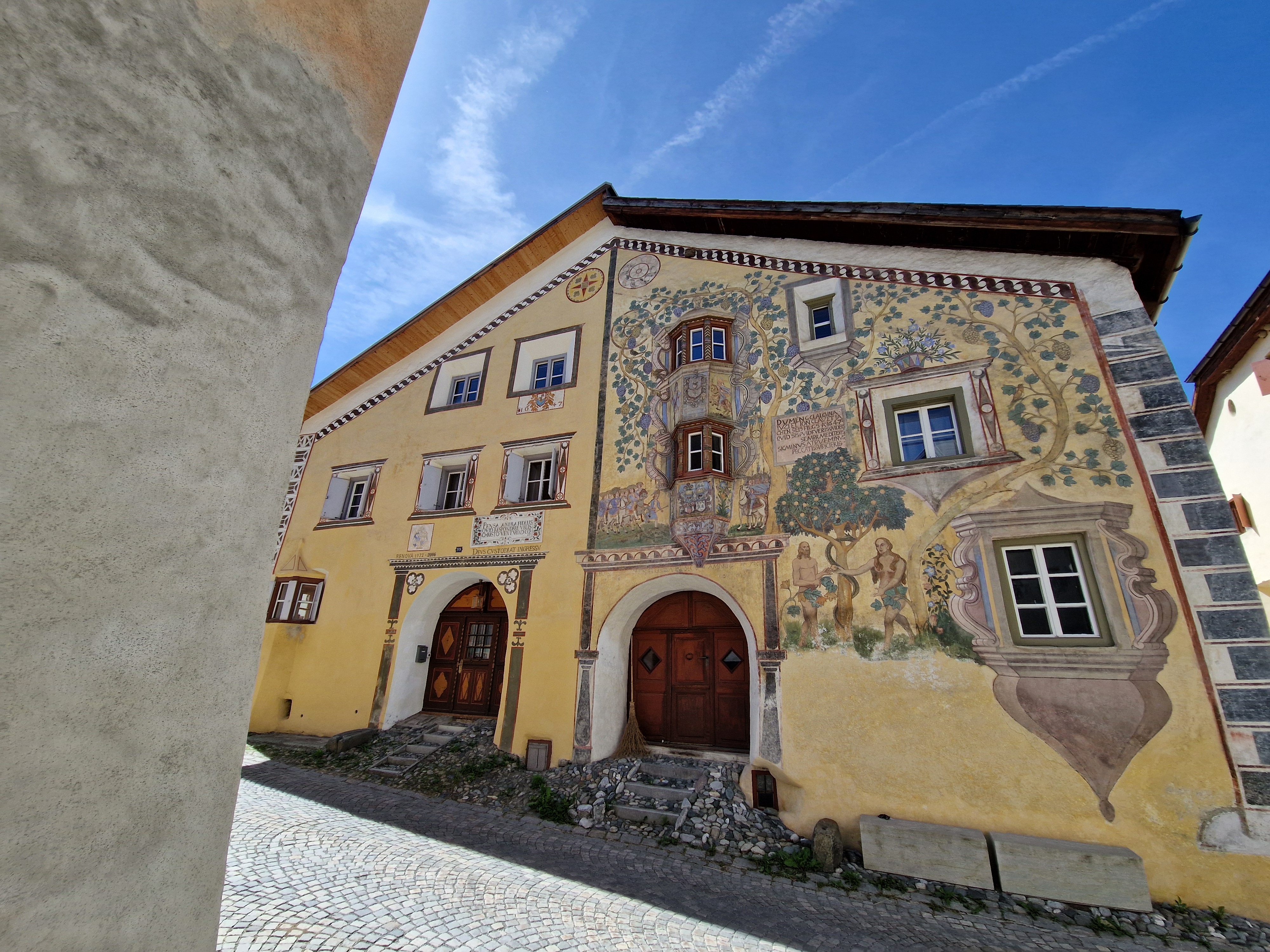
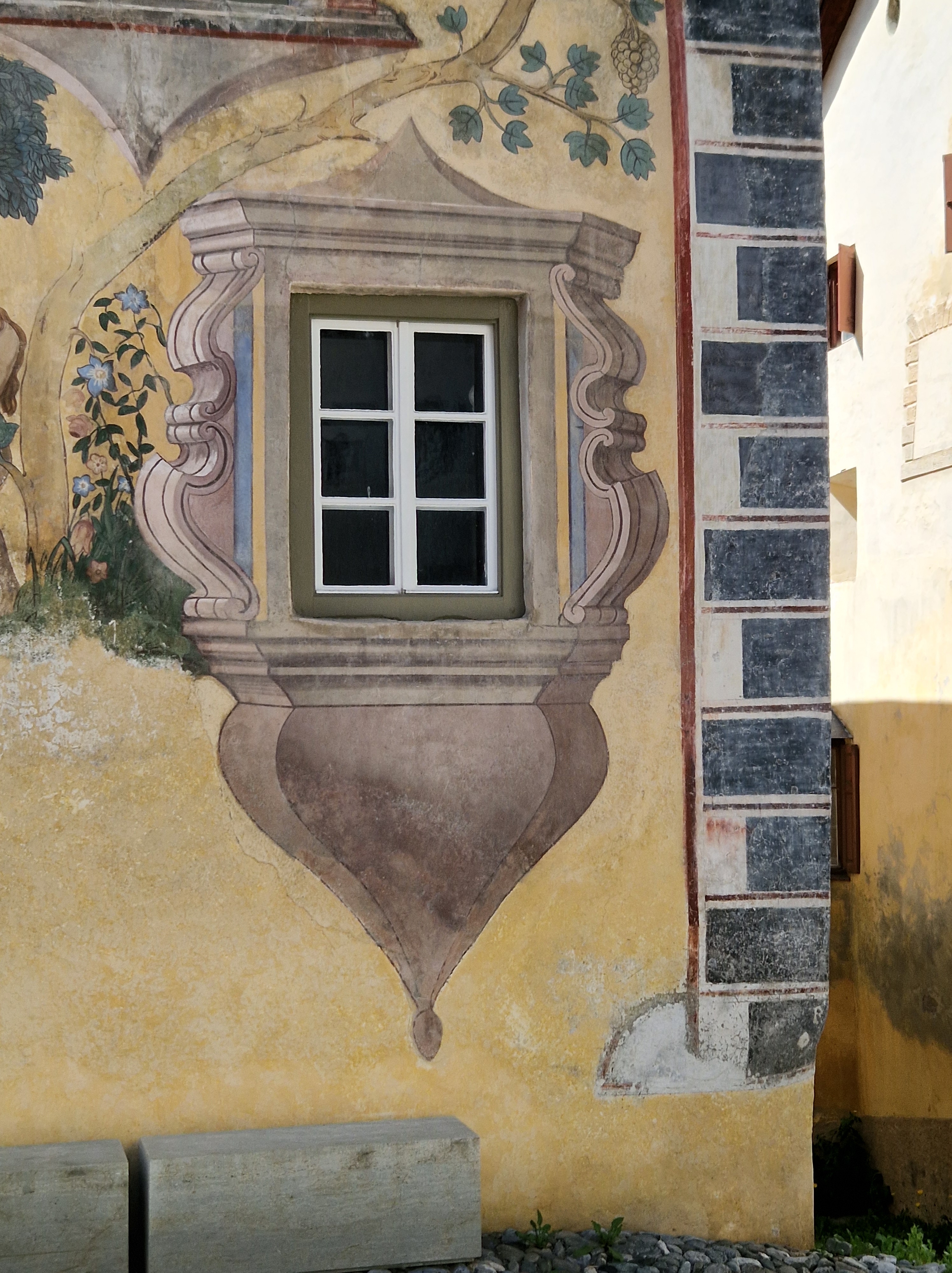
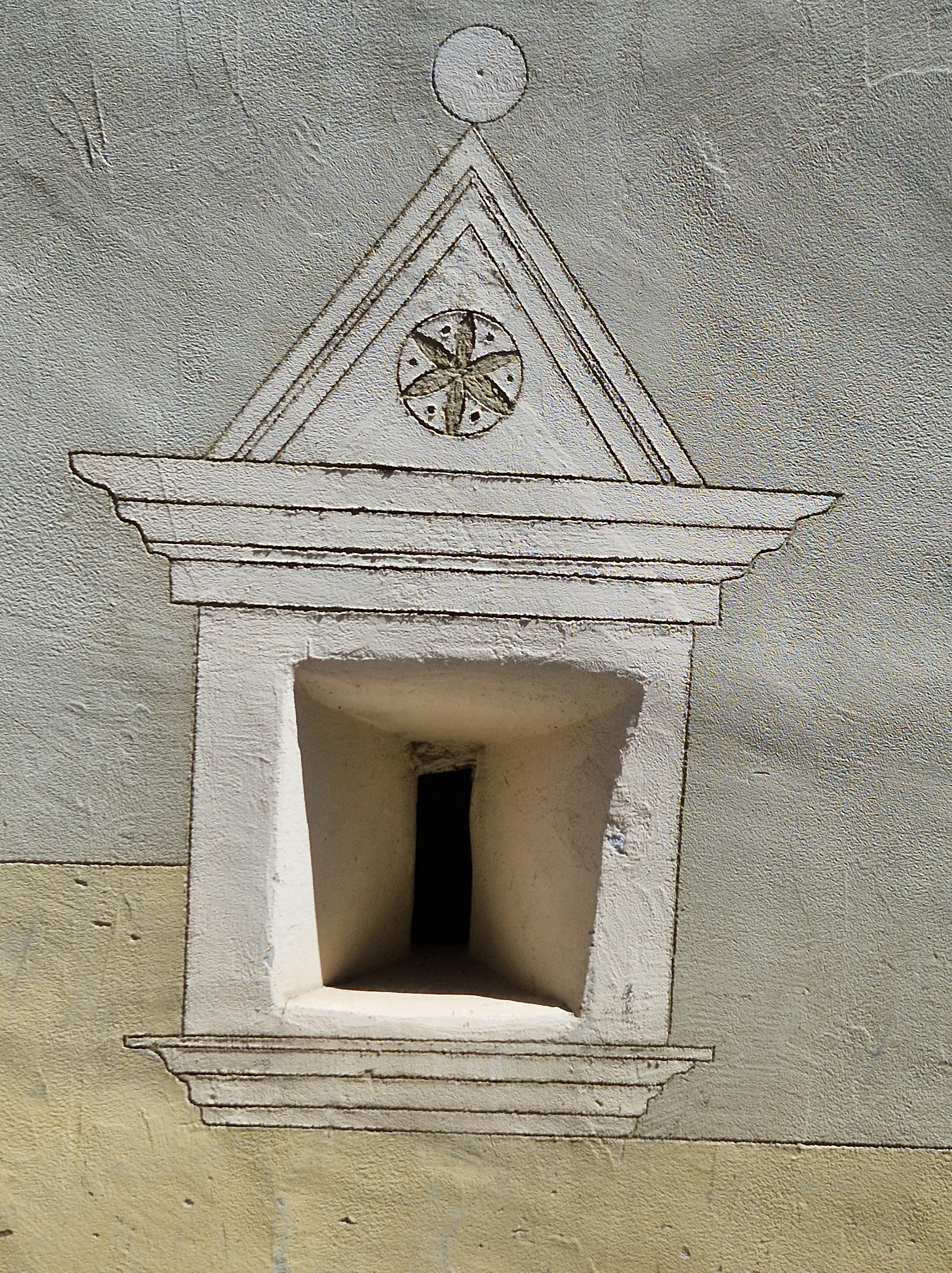
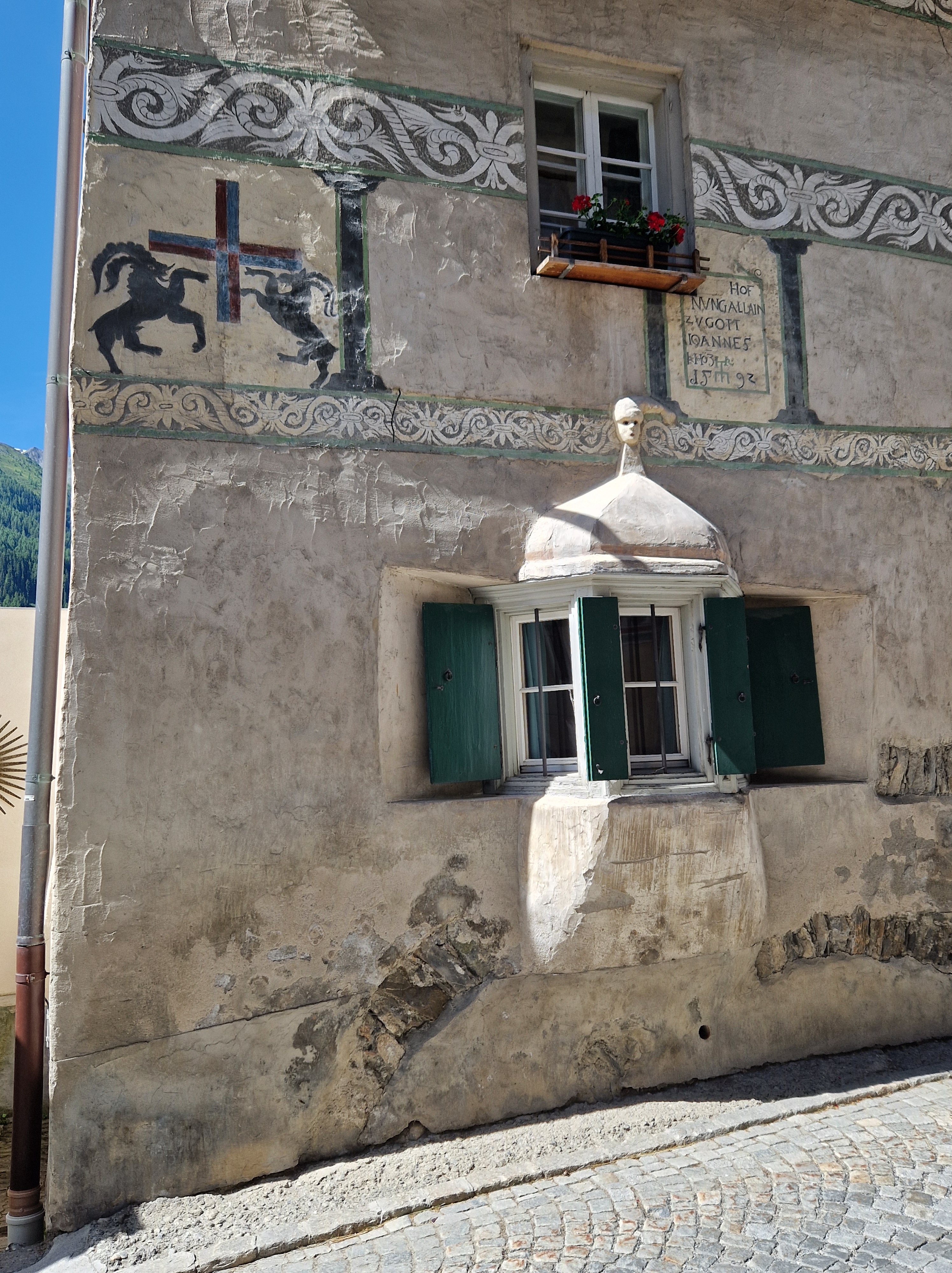
The second word, Sgraffito, describes a plaster technique that is traditional throughout Engadin: Layers of plaster of contrasting colours are scratched through, creating intricate designs on the facades of buildings (many of the buildings in Engadin towns were built (or rebuilt) in the late 1500s to early 1600s). The word comes from the Italian graffiare, which means to scratch; it can be traced back to the Greek word graphein, meaning to write (from which we also get any words containing the prefix, suffix, or derivative of graph (graphite, typography, graptolite, parallelogram, holograph, etc.). Sgraffito is not only used on buildings to make them look decorative, but it also serves the purpose of making a small feature look larger; on one building, the same floor had different-sized windows, likely installed over generations; the sgraffito was used to give a more uniform look to the façade. The decorations also make a plain building look grander, giving a more opulent impression. One building, pictured below, obviously had two occupants with very different characters back when they were originally decorated…
The basic technique for architectural features is to plaster the façade with the base colour; once that has set, it is then plastered with a contrasting colour; once that has set just enough, the scratching, or carving, begins. This is also a technique used in pottery and in creating stained glass effects (just click on the links if you’d like to see how these crafts are made).
One thing to note is that many old buildings here in Switzerland have dates listed on them: Of when they were originally built, and when they’ve been renovated. Part of the history of such renovations may include fires that swept through villages, or avalanches that buried a layer, or wars, such as the Swabian War and war against the Habsburgs, and the subsequent renovation or rebuilding of the towns or individual homes. Sometimes, along with the dates, a list of past and present occupants will also be displayed, preserving their names and memories within the history and changes of the building itself.
Below are a few pictures taken in Engadin during our recent summer holidays. Enjoy! Feel free to zoom in on the pictures to see the details.
Last Sunday at church, a friend filled an entire room with her late father’s books, setting up an impromptu book shop. I chose several books, most of which are in Fraktur typeface, known to some people as “Gothic” or “Old German”. I enjoy reading such books because they offer a snapshot of a cultural way of thinking. The books I chose were printed between 1877 and 1940. The latter date is significant, as you’ll soon see.
First of all, let’s clarify a few terms: Though many people think of font and typeface as interchangeable, in fact, they refer to two different aspects of a writing style. Typeface refers to a particular style of lettering (e.g. Times New Roman), while font refers to the variations within that style, such as size and weight (CAPS, bold, italic, etc.). Another term we know but may not fully understand is Serif: This refers to the small stroke or line attached to the larger stroke of a letter; an example would be an A with “feet” at the bottom of each down-stroke. Sans Serif simply means “without Serif”.
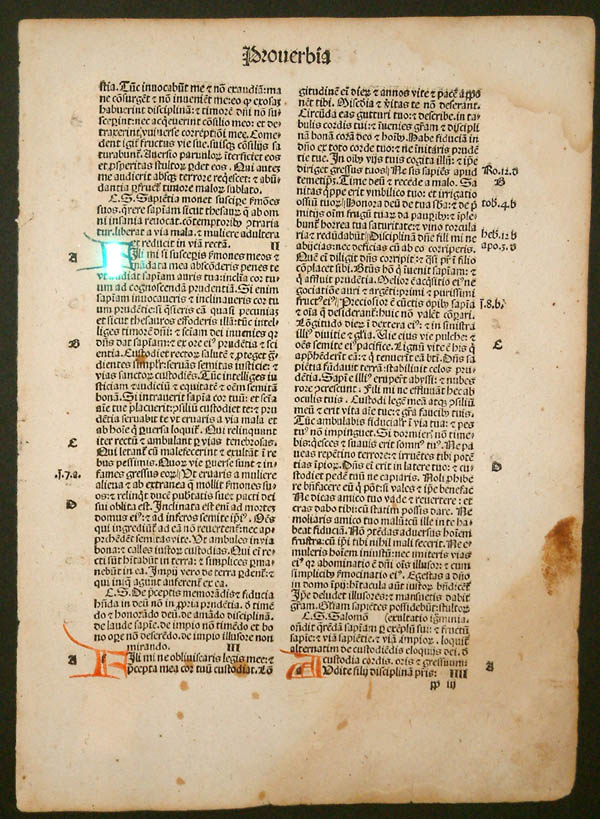
The first moveable-type printing press, designed by Johannes Gutenberg in Germany around 1440, was based on the ancient Roman design of a screw press used to press wine or oil, which in turn went on to be used to press designs into cloths. He was likely familiar with intaglio printing and may have done some work himself in copper engraving. These designs and uses likely fermented in his inventor’s mind into what became the revolutionary turning point of literacy. Gutenberg’s original typeface was called Donatus-Kalender; the metal type design was itself a form of Textura (more on that in a moment).
Donatus Kalender
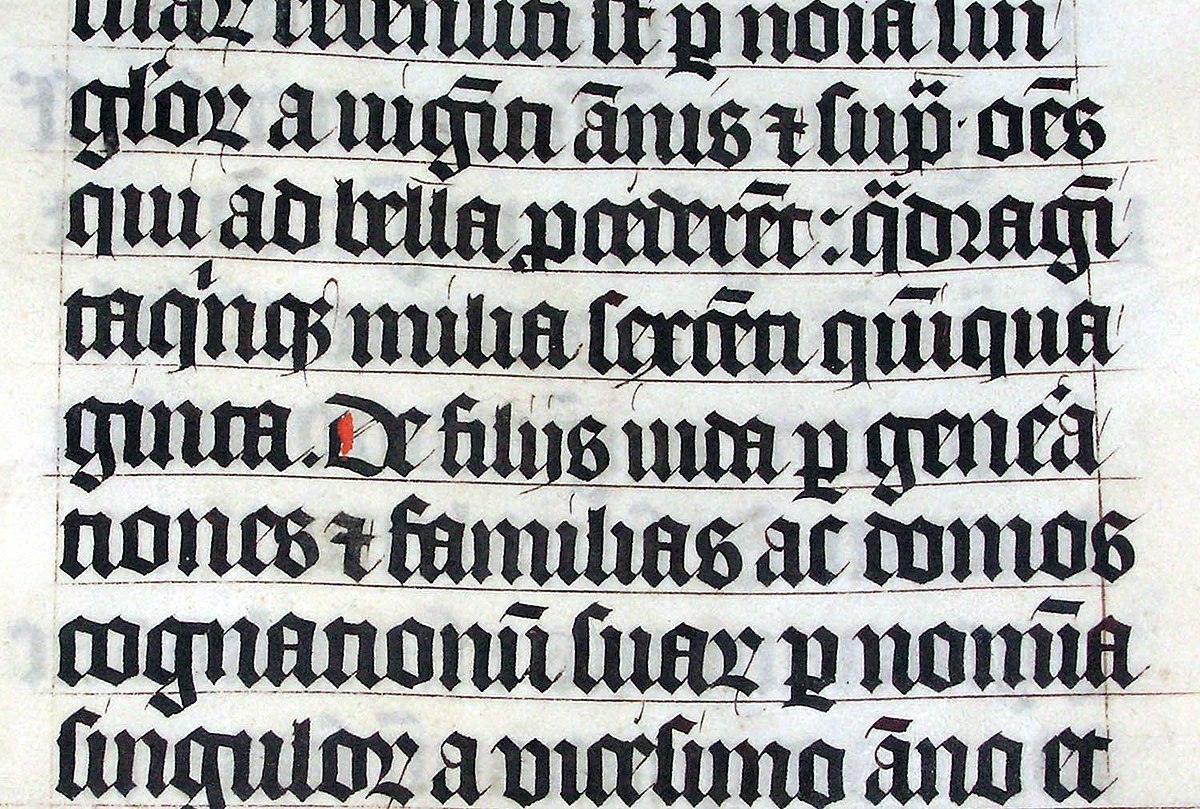
Example of Blackletter (Source: Wikipedia)
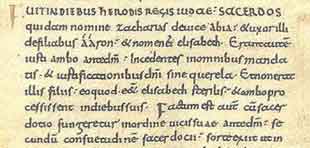
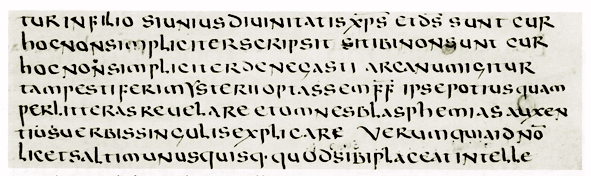
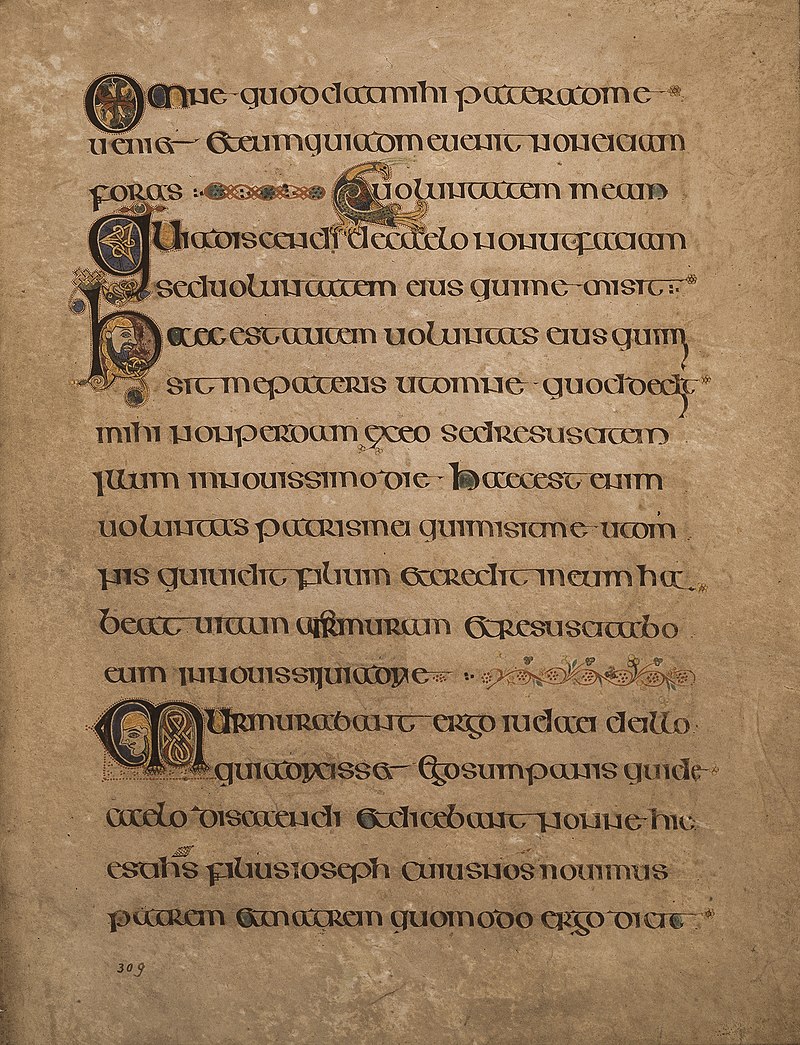
This original family of typefaces was known as “Blackletter”, aka “Gothic scripts”, with the height of popularity peaking around the 14th to 15th centuries. The ancestor of the Blackletter was called the Carolingian minuscule, a calligraphic standard of handwriting widely used in the medieval period, when literacy began increasing and a need for books in a wide range of subjects began to be in demand. It is thought to have been developed in the mid-770s by Benedictine monks north of Paris in the Corbie Abbey, famous for its scriptorium and library. The minuscule itself was derived from Roman Uncial as well as Irish Insular script, which was developed in Irish monasteries and spread throughout Europe.
Carolingian Minuscule
Roman Uncial
From the Book of Kells, an example of the Irish Insular script
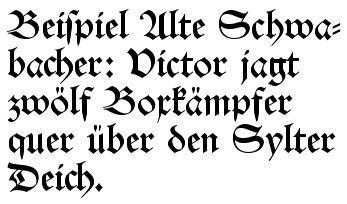
The family of Blackletter typefaces included Early Gothic, which was a transitional script between the Carolingian miniscule and Textura (the most calligraphic form of Blackletter); Schwabacher was a form popular in early German print typefaces (it became widely known with the spread of Luther Bibles from 1522), in use from the 15th century until it was eventually replaced by Fraktur around 1530, though it was still used alongside Fraktur for emphasis, much like we use bold or italic today.
Schwabacher Typeface
Textura Typeface
Another blackletter typeface developed between 1470 and 1600: Antiqua. This typeface’s letters were designed to look like the handwriting of ancient Roman documents, with the letters flowing together, strokes connecting them in a continuous line, whereas Fraktur was distinguished by having letters “fractured” – separate from one another. The Antiqua-Fraktur Dispute deserves its own article, so stay tuned!
Antiqua Typeface (Source: Wikipedia)
Fraktur Typeface (Source: Fonts in Use)
The Habsburg Emperor Maximillian I (1459-1519) was King of the Romans* from 1486 to 1519 [the title of king was used by the kings of East Francia, the territory later referred to as the Kingdom of Germany, from the time of Henry II (1002) to Joseph II (1764)]. The king commissioned the artist Albrecht Dürer to create a series of woodcut engravings of the Triumphal Arch [Though many are familiar with the Arc de Triomphe in Paris, it is only one example of this ancient Roman architectural feature used as a free-standing structure (rather than the Greek version, which was used within a structure such as a temple).]. These engravings would be used to create what we would recognize today as essentially wallpaper, though its purpose was more of a statement of power or propaganda (read personal marketing) commemorating his nobility, generosity, and military conquests – an incongruous combination, if you ask those conquered… The final composite of printed papers stood nearly 3 metres (12 feet) high and was only one part of a series of three enormous prints commissioned by the king.
Albrecht Dürer’s The Triumphal Arch, for Maximilian I
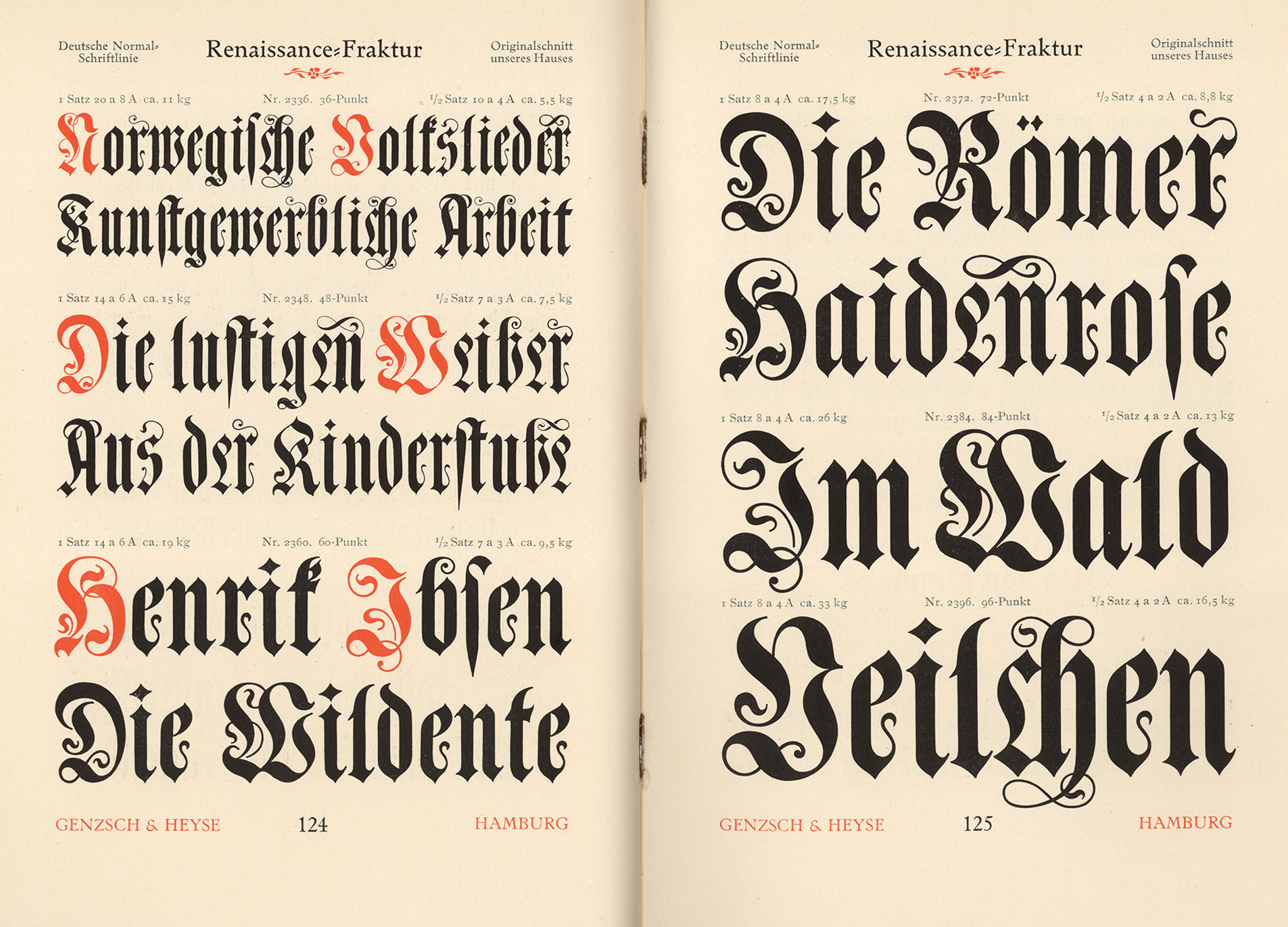
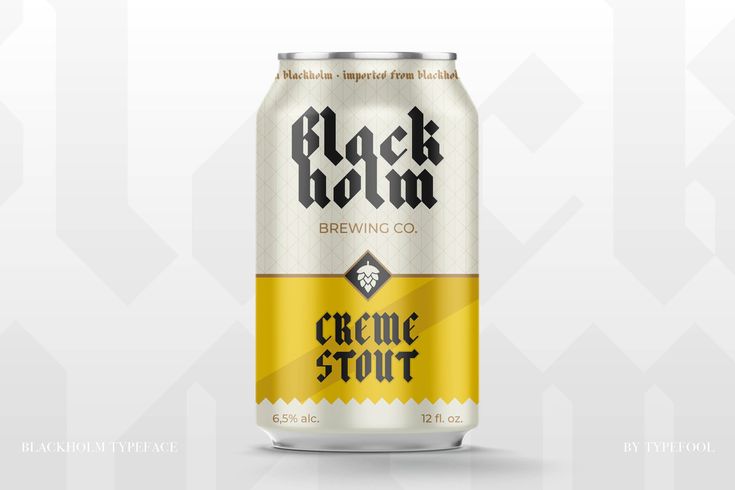
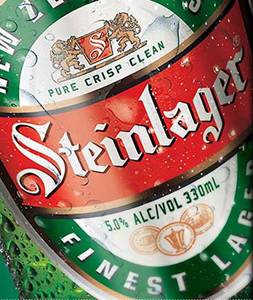
The Fraktur typeface was designed in the 1530s by Hieronymus Andreae, a German woodblock cutter, printer, publisher, and typographer closely connected to Albrecht Dürer. The typeface was made to decorate the arch, telling the stories of the figures depicted throughout. The typeface became popular in Europe and was in use in the German-speaking world, as well as areas under its influence (Scandinavia, Central Europe, and some eastern European regions), into the 20th century. Specifically, Fraktur was in use in German until 1941, when it was actually banned (which places one of the books I purchased on Sunday within one year of the end of the era of Fraktur!). The atmosphere that led to that ban arose from the dispute mentioned above. Once the Nazis were defeated, the ban was lifted, but Fraktur never regained its widespread popularity after that, though you can still see it occasionally in pub signs or various forms of ads, like beer brands.
I just pulled two books from my library shelves: One is an English book originally printed in 1895, with my book being printed in 1915; the other is a German book printed in 1892. The typefaces are widely different: The English text likely used the French Oldstyle, while the German book uses Renaissance Fraktur for the text body, while the end pages act as indexes and use a variety of blackletter typefaces, such as Muenchner Fraktur, Antike Kanzlei, and Enge verzierte Altdeutsch. To see examples of the typefaces mentioned here, please click on the link for Fonts In Use.
I hope you enjoyed this jaunt through history! Nearly every name mentioned, every typeface, and every event deserves its own undusting. Next time, we’ll deep-dive into the dispute that lasted well over a century!