

Category Archives: Images

History Undusted: Human Alarm Clocks
If you were living in the 19th century, before the age of reliable and affordable mechanical alarm clocks, how could you be ensured of getting up on time to get to work? Hire a knocker-up, of course. That’s if you lived in Britain or Ireland. Knockers-up were employed from the time of the Industrial Revolution; the last one retired in Bolton (a former mill town in Greater Manchester) in 1973. Also known as “human alarm clocks” they would use sticks, clubs, pebbles or pea shooters to knock on clients’ door and windows; some would move on after a few taps, while others wouldn’t move on until they were sure the client was up. I wonder who woke them up?
According to the Lancashire Mining Museum, there was a conundrum from the times that went like this:
We had a knocker-up, and our knocker-up had a knocker-up
And our knocker-up’s knocker-up didn’t knock our knocker up, up
So our knocker-up didn’t knock us up ‘Cos he’s not up.
The original problem employed knockers-up faced was how not to wake up their paying clients and several of their neighbours on either side for free; they hit upon (no pun intended) the idea of long poles or pea shooters to tap on the upper windows; clients obviously couldn’t sleep in a back room, or they’d never hear the knock. The fees charged depended on how far the knocker had to travel to reach the house and how early said knock needed to be.
In 1878, a Canadian reporter was told by Mrs Waters, of northern England, that she charged eighteenpence a week for those who needed waking before 4 a.m., and for those after 4 a.m., it was a shilling (twelvepence) a week. Those who had to be aroused from five to six o’clock paid from sixpence to threepence.
The miners of County Durham, Ireland, refined the requirements a bit: Built into the outer wall of their houses was a slate board, on which they would write their shift times in the mine; the company-hired knockers-up would then know when and when not to wake them up. These boards were known as wake-up slates or (far better, in my opinion), knocky-up boards.
Here are a few rare photographs of knockers-up knocking up:
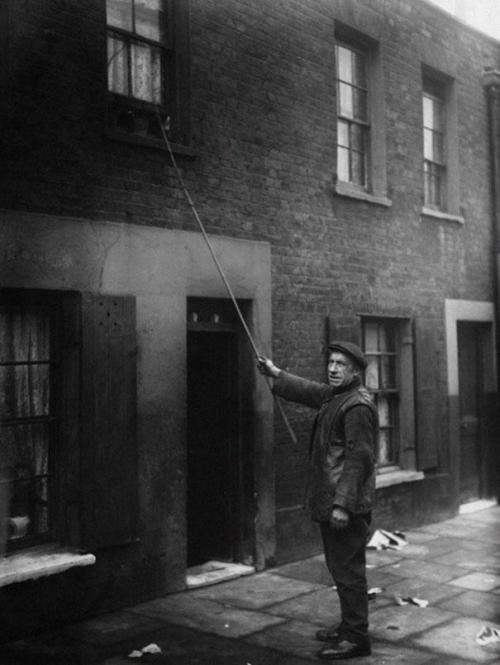


And just so we’re clear, the American English phrase “to be knocked up” (pregnant) has nothing to do etymologically with the British occupation or the sundry adjectives that derived from it. The knockers-up were usually elderly men or women, or even policemen who supplemented their incomes by taking on the task of waking their clients. In fact, one policeman (as told during the inquest) saw no reason to abandon his post as a knocker-up when a man found him on his route and told him that he’d found a dead woman; she turned out to be Mary Nichols, the first victim of Jack the Ripper.
Original post, September 2015

How to be Eco-Friendlier in 2020
First of all, Happy New Year! If you’ve made resolutions, take steps to keep them. One of my resolves this year is to be more eco-friendly in our household than we already are. One step I plan to take is making unpaper towels – if you don’t know what that is, read on!
We Swiss are very environmentally conscious; there’s a caricature, not far off the mark, that goes like this: When a Swiss has a tea, they then put the tea leaves in the compost, the string in the cloth collection, the tag in the cardboard collection, the staple in the metal collection, and the bag in the paper collection. We’re not that extreme – we drink tea without bags! [On a side note to tea bags: A news article recently highlighted a shocking find: One tea bag in a cup of hot water can produce BILLIONS of microparticles of plastic. No joke. I’ve started taking the teas we have and making my own loose-tea mix… I’ll buy loose tea from now on.]
But seriously, the amount of waste one produces in a year is horrendous. How each country deals with their own waste would probably shock you, too; many don’t burn it, or even bury it; they export it… to Asia, to Africa – whoever has the best price. How they deal with your rubbish is then out of your government’s hands – they’ve just flipped the problem onto someone else. How much of that rubbish ends up blown or dumped into the ocean. I don’t want to know, honestly – it would probably sicken me. Switzerland, as far as I have been able to find out, doesn’t practice export; we have incinerators that turn the rubbish into steam energy.
So the best solution is to begin solving the problem at home. Any movement that is successful starts with the individual – starts with changing the mindset of a culture one person at a time. I keep my eyes open for innovative ways to be more eco-friendly; I do a LOT of upcycling crafts, using most plastic (including magazine wraps, product packaging, plastic rings, produce nets, etc.), and everything else; my Pinterest boards will give you inspiration if you’re looking for ways to upcycle creatively. But if you’re not into crafts, there are still a lot of ways to become more environmentally friendly, and here are a few:
- Plastic wrap replacements: Beeswax-infused cloth
- Unpaper-Towels: Cloth towels in the kitchen – reusable, washable, no waste!
- Drinking Straws: Purchase metal straws; they usually come with a small scrub brush, and are easy to clean. I keep a microfiber cloth on my drying rack to set smaller things on to dry. If you google metal drinking straws, you can either find a shop near you that sells them, or you can buy them online; just keep in mind shipping waste if online-shopping.
- Cloth Napkins / Serviettes instead of paper napkins.
- Water Conservation: Take shorter showers, turning off the water stream when you’re soaping or shampooing; turn off the sink water in between actually using it. If washing a lot of dishes, either fill your dishwasher space-efficiently and to capacity, or use a larger bowl, etc. to reuse soapy water in the sink; when it’s dirty, dump it and allow the bowl to refill as you wash more dishes. Fill your clothes washing machine to capacity – never wash only a few items at a time! I have a machine that tells me if a load is too heavy for a particular setting; I can choose anywhere between 3 and 9 kilos, and it will conserve water by the settings I choose.
- Cleaning Chemicals: Either purchase refillable, natural cleaning liquids (remember, it all goes into the water canals) or make your own from vinegar and water and baking soda, adding lemon juice or a few drops of lemon essential oils for that clean aroma.
- Room-to-Room Guide to a Zero Waste Home
- Junk Mail: If you get unwanted mail, mark it “cancel” and “return to sender”. Just recycling it doesn’t solve the main issue, which is the flood of destroyed trees… Send the message to the perpetrators that it is unwanted.
Here are a few visuals to add food for thought; as with all things reduced to a j-peg, some of these make sense, while others don’t. Take them with a grain of salt, and be inspired to try helpful ideas out in your own home:


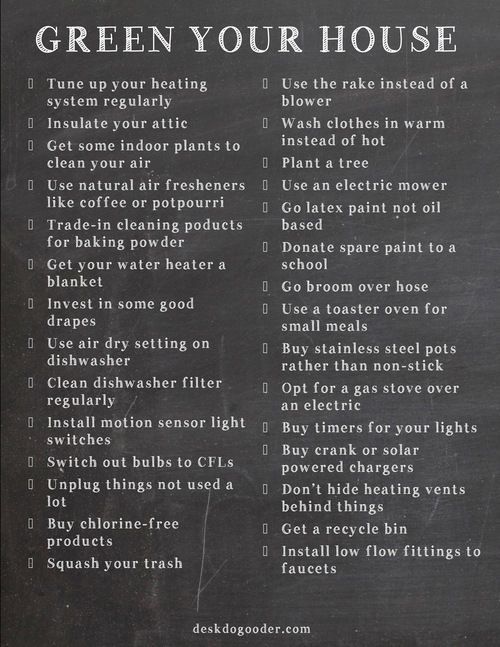


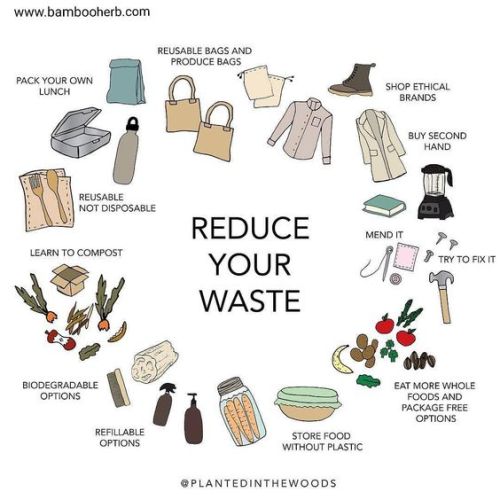
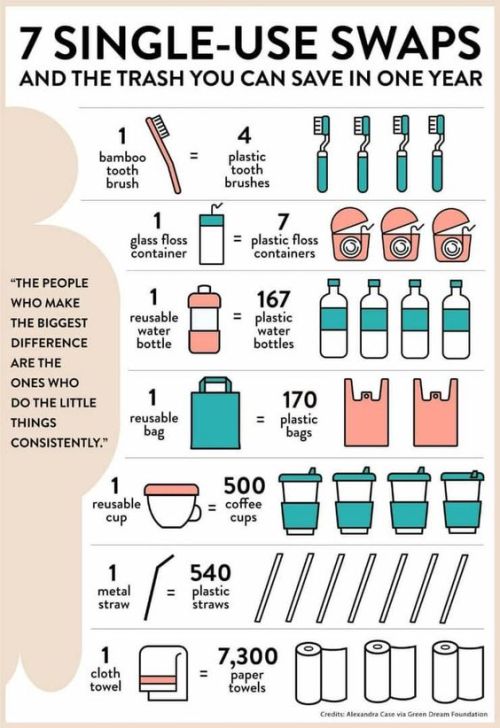

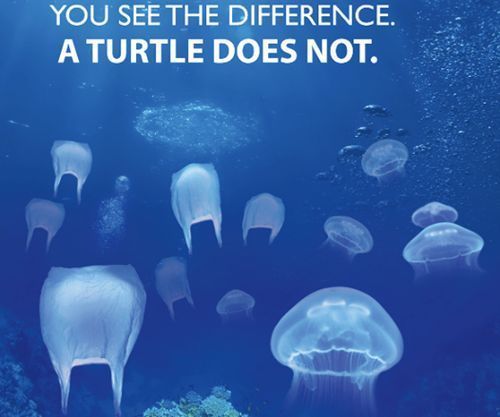
Please let me know in the comments below what you do to be more eco-friendly and conserve the environment! Have a great 2020 – and let’s make it one step closer to caring for the planet and the animals we share it with!
Filed under Articles, Images, Links to External Articles, Lists, Musings

History Undusted: Santa & the Traditions of Christmas
Known as Sinterklaas, Father Christmas, Kris Kringle, Saint Nick / Nicholas, Père Noel, Papa Noel, Babbo Natale, Weihnachtsmann, Christkind, and many other names, Santa has been around in various versions and various cultures for roughly 1,300 years, as a character associated with Christmas and gift-giving. As such, it would be impossible to pinpoint exactly when and where the original basis for the legends began. Saint Nicholas was a 4th-century Greek Christian bishop of Myra (in modern-day Turkey). He became the patron saint of sailors, and so it is quite possible that his kindness to the poor inspired sea-faring men to spread the ideals of his charitable acts to other places. As time passed, facts gave way to tall tales and legends, and the rest, as they say, is history.
Christmas stockings have been around for centuries as well; the story goes that a widower with three daughters was worried about them being unable to marry as he had no money for their dowries. Nicholas heard of their plight and, knowing that the father would never accept charity, tossed three bags of gold in through an open window one night; the girls had hung their stockings by the fireplace to dry, and one of the bags landed in a stocking. How much of that is based on historical facts and how much is legend is a balance lost to time.
The modern-day image of Santa, with his rotund belly and his red coat, was popularized by Thomas Nast, an American illustrator for the Harper Weekly, in the 1860s. Nast, being a German immigrant, based his images on the German Weihnachtsmann and Sankt Nicholaus. Before his illustration, Father Christmas was portrayed as wearing any colour coat, from tan and fur-lined, to pink or purple, brown, grey, white, green or blue, and sometimes even red. [It is a myth that a 1933 Coca-Cola advertising campaign is to thank for a red-cloaked Santa.]
I could go on and on about the traditions associated with Christmas – the tree, the ornaments, the yule log, Santa’s helpers, reindeer (or was it a motorcycle, blimp or plane?) and other practices that are spread wherever Christmas is celebrated. It’s a holiday that’s been adopted in countries that have no Christian roots, such as Asian countries; there, it could be seen as an excuse for a holiday, or as a marketing ploy. And maybe that’s what it’s become for many people even in the West; but all of these traditions put people in a contemplative, forgiving, generous spirit, which is perhaps the most important aspect of the holiday.
Just as the nativity scene [please click on the link to read about Christmas from a Christian aspect] was a simplified version of the Gospel, created by St. Francis of Assissi to explain events to a largely illiterate population and to counter what he felt was a growing commercialism associated with the holiday (and that, back in 1223!), so it is that many traditions arise over the centuries, often a grain of truth with things then tacked on over the years and through cultural adaptations. Santa’s legend has grown into what we know today, likely not by leaps and bounds, but by a progressive adaptation to cultural times.
However you celebrate Christmas, whether you’re alone or with too many people for your liking, remember that all of us have the capacity to bless others; as the adage goes, it is more blessed to give than to receive. If you don’t have anyone in your life presently to give gifts to, remember, like Saint Nicholas, the poor and the needy. We can all make a difference, and who knows – maybe in a thousand years, your name will be mentioned alongside his.
Merry Christmas!

Filed under Articles, History, History Undusted, Images, Snapshots in History







 Stephanie Huesler