Category Archives: Images

History Undusted: Santa & the Traditions of Christmas

Known as Sinterklaas, Father Christmas, Kris Kringle, Saint Nick / Nicholas, Père Noel, Papa Noel, Babbo Natale, Weihnachtsmann, Christkind, and many other names, Santa has been around in various versions and various cultures for roughly 1,300 years, as a character associated with Christmas and gift-giving. As such, it would be impossible to pinpoint exactly when and where the original basis for the legends began. Saint Nicholas was a 4th-century Greek Christian bishop of Myra (in modern-day Turkey). He became the patron saint of sailors, and so it is quite possible that his kindness to the poor inspired sea-faring men to spread the ideals of his charitable acts to other places. As time passed, facts gave way to tall tales and legends, and the rest, as they say, is history.

Christmas stockings have been around for centuries as well; the story goes that a widower with three daughters was worried about them being unable to marry as he had no money for their dowries. Nicholas heard of their plight and, knowing that the father would never accept charity, tossed three bags of gold in through an open window one night; the girls had hung their stockings by the fireplace to dry, and one of the bags landed in a stocking. How much of that is based on historical facts and how much is legend is a balance lost to time.

The modern-day image of Santa, with his rotund belly and his red coat, was  popularized by Thomas Nast, an American illustrator for the Harper Weekly, in the 1860s. Nast, being a German immigrant, based his images on the German Weihnachtsmann and Sankt Nicholaus. Before his illustration, Father Christmas was portrayed as wearing any colour coat, from tan and fur-lined, to pink or purple, brown, grey, white, green or blue, and sometimes even red. [It is a myth that a 1933 Coca-Cola advertising campaign is to thank for a red-cloaked Santa.]

This slideshow requires JavaScript.

I could go on and on about the traditions associated with Christmas – the tree, the ornaments, the yule log, Santa’s helpers, reindeer (or was it a motorcycle, blimp or plane?) and other practices that are spread wherever Christmas is celebrated. It’s a holiday that’s been adopted in countries that have no Christian roots, such as Asian countries; there, it could be seen as an excuse for a holiday, or as a marketing ploy. And maybe that’s what it’s become for many people even in the West; but all of these traditions put people in a contemplative, forgiving, generous spirit, which is perhaps the most important aspect of the holiday.

Just as the nativity scene [please click on the link to read about Christmas from a Christian aspect] was a simplified version of the Gospel, created by St. Francis of Assissi to explain events to a largely illiterate population and to counter what he felt was a growing commercialism associated with the holiday (and that, back in 1223!), so it is that many traditions arise over the centuries, often a grain of truth with things then tacked on over the years and through cultural adaptations.  Santa’s legend has grown into what we know today, likely not by leaps and bounds, but by a progressive adaptation to cultural times.

However you celebrate Christmas, whether you’re alone or with too many people for your liking, remember that all of us have the capacity to bless others; as the adage goes, it is more blessed to give than to receive. If you don’t have anyone in your life presently to give gifts to, remember, like Saint Nicholas, the poor and the needy. We can all make a difference, and who knows – maybe in a thousand years, your name will be mentioned alongside his.

Merry Christmas!

Christmas GIF 2

10 Comments

Filed under Articles, History, History Undusted, Images, Snapshots in History

Wordless Wednesday #66: Modernity

Antidepressants

3 Comments

Filed under Cartoon, Humor, Images, Wordless Wednesday

Wordless Wednesday #65: Cats & Commas

Cat & Grammar

10 Comments

August 14, 2019 · 6:32 PM

Wordless Wednesday #64: Close the Gate

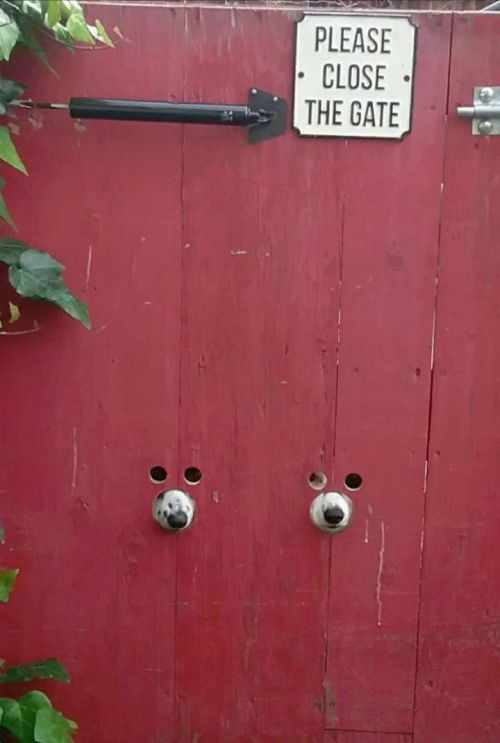
Please Close the Gate

5 Comments

August 7, 2019 · 4:50 AM

Calligram #2: Ammonite

When in Lugano on holidays, we’ve gone occasionally to the Meride Fossil Museum, which houses fossils found in the Monte San Giorgio geological layers. High in the mountains, sea creatures’ fossils are found, which is an amazing fact when you realize that the nearest ocean is hundreds of kilometers away today, and the deposits are 480 metres above modern sea level. To visualize the information, I made a calligram of an ammonite; see if you can spot my name and date of creation in the image. Click on the picture to enlarge. Enjoy!


DSCN0866

[As always, if you are interested in using this elsewhere, please ask my permission, and give credit where credit is due (i.e. link to my blog and all that…) Thank you!]

5 Comments

Filed under Calligram, History, Images, Research, Science & Technology

Calligram # 1: Ticino

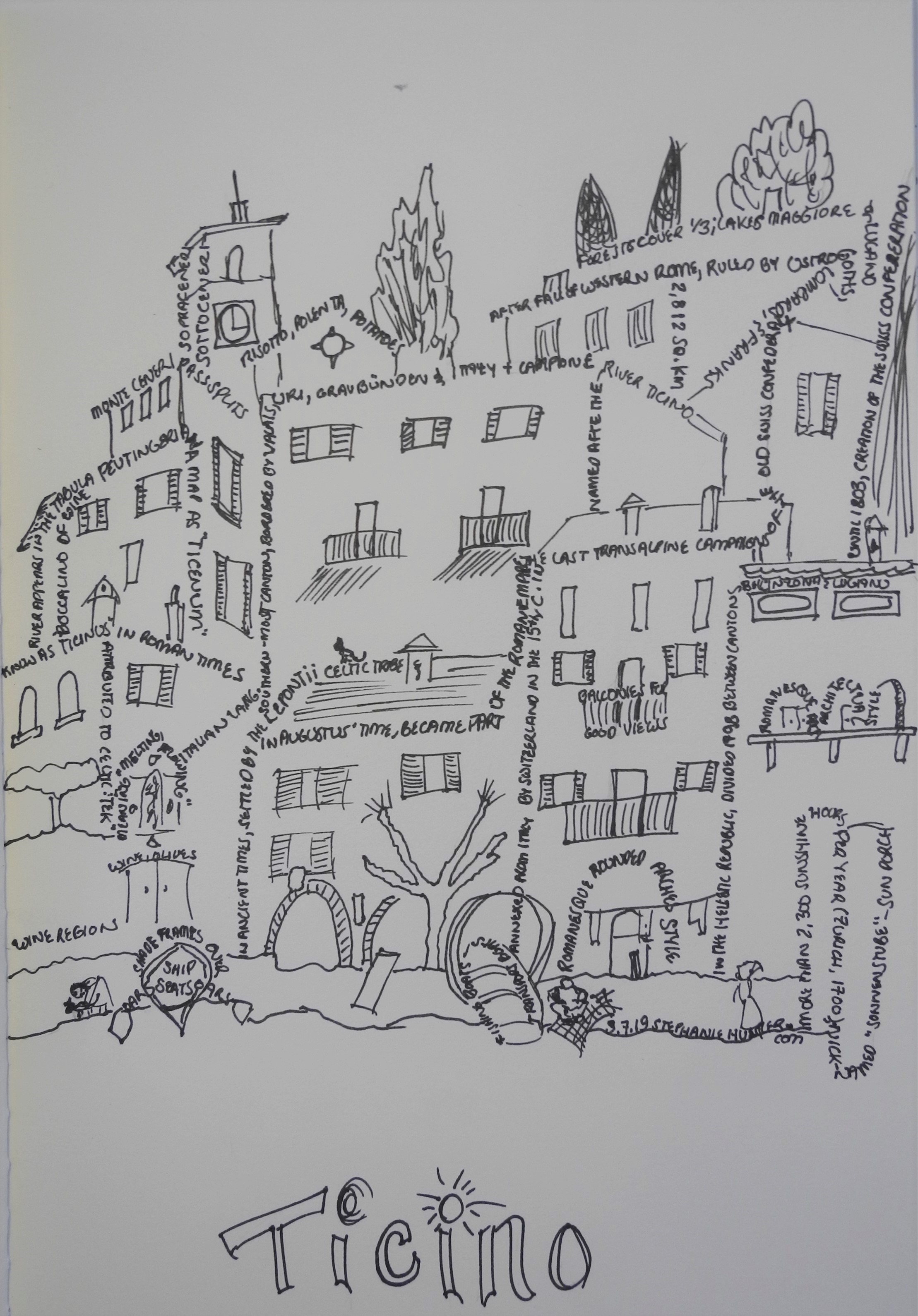
For those of you unfamiliar with calligrams, they are images created out of spatially-arranged text, usually related to the image they create.

I began doing calligrams several years ago, and enjoy the “bite-sized” research involved in gathering facts, history and general information about a subject. The first one I made was probably a Viking ship or the wassail tree; the latter, I accidentally found being used as the back cover design of an art magazine online out of Romania; I asked them to attach my web address and credit the image to me, and they did so, but it taught me a valuable lesson: embed my name into the calligram!

Below is one that I did recently while on holiday in Lugano. You’ll hear more about that soon, but in the meantime, enjoy this calligram!  Just click on it to enlarge it. The image itself is based on a vintage postcard collage.

If anyone would like to use this in any way, please contact me through the comments below; whenever using any image, please give credit – whenever possible – where credit is due!

Ticino Brighter

8 Comments

Filed under Articles, Calligram, History, History Undusted, Images, Publications, Research, Writing Exercise

Wordless Wednesday #63: DIY Book

IKEA Book

2 Comments

July 10, 2019 · 12:13 AM

Wordless Wednesday #61: Room Service

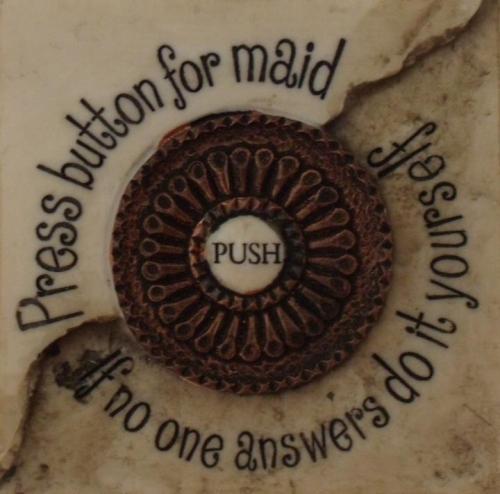
maid

Leave a comment

June 26, 2019 · 12:14 PM

Wordless Wednesday #60: Book Club

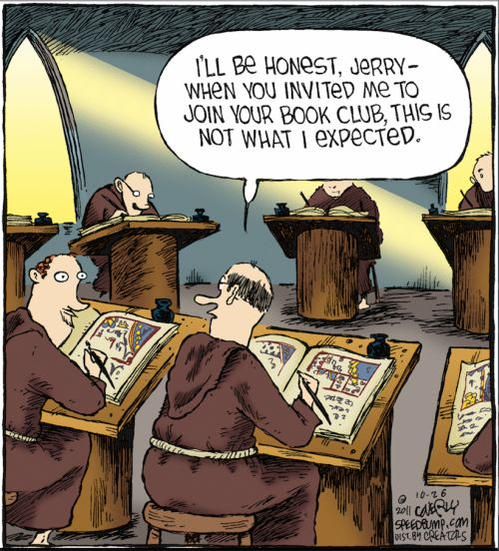
Book Club

Leave a comment

June 19, 2019 · 2:42 PM

History Undusted: Earrings in the 18th Century

I recently watched the film “Emma”, with Gwyneth Paltrow and Jeremy Northam; as the proposal scene was playing, I noticed her earring and wondered if that was historically accurate – did they have pierced earrings in England at that time (the early 1800s)? I’m not into fashion (that’s an understatement – I’m very pragmatic when it comes to clothes!), but the historical aspect fascinated me enough to look into the matter.

While we have probably all heard of “Girl with a Pearl Earring”, painted ~1665 by Johannes Vermeer (doubts have been raised as to whether it is actually pearl or rather polished tin or coque de perle, given the reflective qualities and size, but that’s another issue), it is a Dutch painting from the 17th century and thus doesn’t answer my question. My interest lies more in the 1700s (18th Century) of Britain, and so I began researching 18th C. English portraits.

I discovered that, while there are many portraits with earrings displayed, there are far more without. So it would have been possible, but was by no means as common as it is today. Also, sometimes the current hairstyle hid the ears, such as that of the 1770s and 1780s, or perhaps their ears were hidden by the custom of married women wearing mob caps, even beneath other “public” hats.


Mid-to-late 1780s

Typical 1780s hairstyle; such a style would have either hidden earrings or made them obsolete.


Mrs. Lewis Thomas Watson (Mary Elizabeth Milles, 1767–1818) by Sir Joshua Reynolds, 1789

A married woman wearing a mob cap under her bonnet (though from the black cape and hat combined with a white dress, she may be at the end of a period of mourning, wearing “half weeds”). Mrs Lewis Thomas Watson (Mary Elizabeth Milles, 1767–1818) by Sir Joshua Reynolds, 1789


The portraits do not reveal whether or not they were merely clip-on earrings or studs, though ear piercing has been around for centuries, varying in intensity and use from culture to culture (some for religious purposes, some for ownership such as slave earrings, and others were status symbols for royalty or nobility). I’ve found many portraits from Europe as a whole, between the 16th and 19th centuries which portray women wearing earrings; here are a few, with their details:

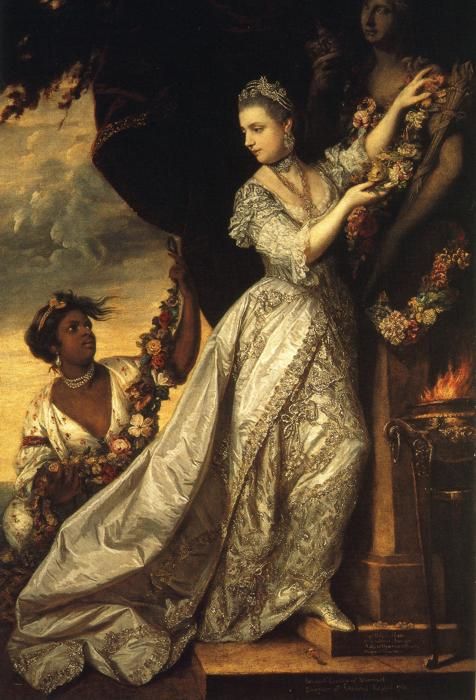
1761 Joshua Reynolds. Lady Elizabeth Keppel

1761, by Joshua Reynolds: Lady Elizabeth Keppel. Note that the Indian woman is also wearing an earring(s), and a rope of pearls; I don’t know whether she is portrayed as a servant or merely inferior in rank, due to her placement in the portrait…


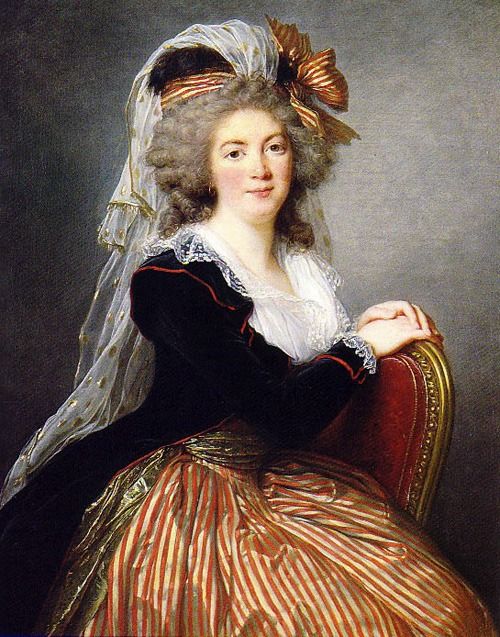
Genevieve-Sophie le Coulteux du Molay, 1788 by Elisabeth Louise Vigee Le Brun

Genevieve-Sophie le Coulteux du Molay, 1788 by Elisabeth Louise Vigee Le Brun. Though this is a French portrait by subject & painter, it is from the period in question and displays a hoop earring, as well as the hairstyle common in this period in England as well.


Turkish Dress c1776 Portrait of a Woman, possibly Miss Hill

Turkish Dress, c1776 Portrait of a Woman, possibly Miss Hill


Young Woman in Powder Blue, ca. 1777

A young woman in powder blue, ca. 1777


Thomas Gainsborough, 1727-1788 London, Portrait of Lady Anne Furye, née Greenly - born 1738

Thomas Gainsborough, 1727-1788 London, Portrait of Lady Anne Furye, née Greenly


Based on History Undusted Original Post, June 2015


4 Comments

Filed under Articles, History, History Undusted, Images, Links to External Articles, Research