It’s time for another tour! Today’s tour takes us on a sweet-tooth trip: Maple syrup, and how it’s made.
Usually made from the sap of sugar-, red-, or black maple trees, this sap is stored during the cold seasons in the trunks and roots of trees before winter to keep the tree conserved and primed for the warmer season; when the temperatures rise, the tree is ready to go – it begins moving sugar from its roots to the twigs, supplying the energy needed to grow new shoots and leaves. At this point, if the tree is “tapped” by drilling holes into the trunks and attaching a collection container, the sap flows, and can be processed into maple syrup; when done properly, the tree won’t be substantially hindered in its spring production.
But why is sap from the maple tree so dominant? What about other hardwood trees? There are at least 20 tree species that can be tapped for sap, including hickory, pecan, birch, sycamore and walnut; but while the maple trees can be tapped from January to March, as long as the nights are below freezing and the days are warmer, and they produce about 40 litres sap for 1 litre of syrup, some trees, such as the birch, can only be tapped for 2-3 weeks, and because the sugar content is much lower in this tree, it would take about 60 litres sap to make 1 litre of syrup. Walnut trees can be tapped from autumn through spring, but its syrup tends to have a bitter and astringent taste, and so it’s not a popular flavour.
When you consider that tapping a tree produces drops at a time, harvesting is a slow process; it explains why some trees are less preferred by producers, as their volume-to-production values are lower. A major factor in maple syrup production is that, before the colonization of North America, sugar maple trees were the most abundant trees in their areas; as the most dominant biomass, it was natural that they were the most experimented with, and early Native American tribes recognized their potential – they used the sap for everything from sweet snacks to medicines and poultices, and passed on their knowledge to early European settlers.
A cheap alternative is a “maple-flavoured” syrup, which is nothing more than corn syrup with flavouring and colouring added; but corn syrup (also known as glucose syrup), which is made from the starch of corn and is a common sweetener in many pre-packaged foods, can lead to insulin resistance, high blood pressure, obesity and diabetes. It increases your appetite, promoting a vicious cycle, while the real deal, maple syrup, provides at least 24 antioxidants (according the healthline.com); these can neutralize free radicals, which are believed to be among the causes of ageing and many diseases. As with anything containing sugar, however, it should be enjoyed within reason!
So, now that we’re all on the same page as to what maple syrup actually is, let’s go on our tour!
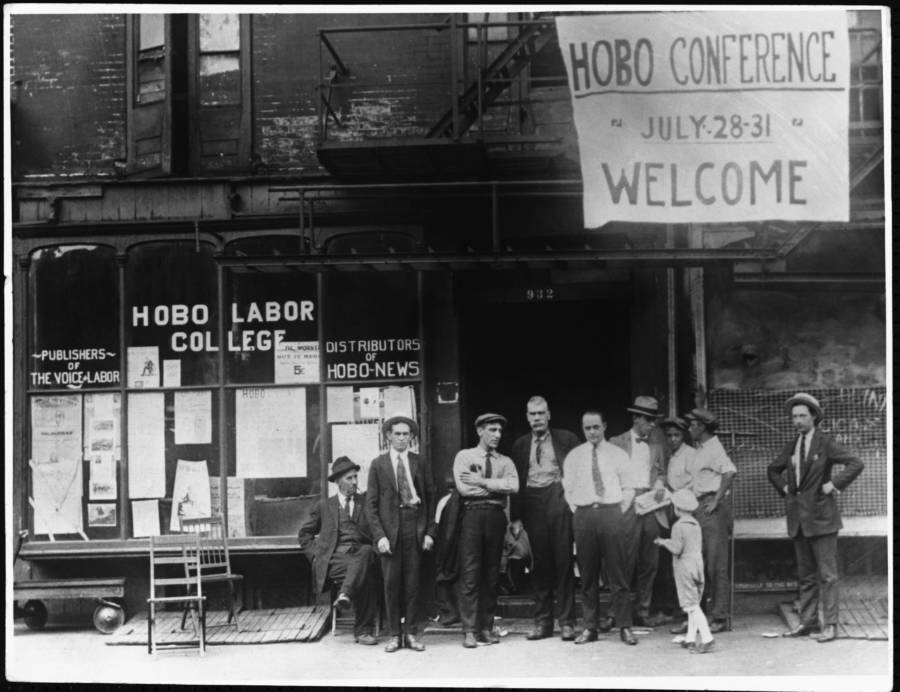
Today’s tour isn’t of a place, but of a group of people: Hobos. Come along with me as we explore their origins, their ethics, their slang, and even their secret language of symbols.
Hobos were migratory workers that began as displaced soldiers after the American Civil War, fought between 1861 and 1865. The conflict laid waste to large swaths of land, and many men returning found that they had no home to return to, or found families so economically devastated by the war that they couldn’t afford another mouth to feed – so those men took to the railways to take them cross-country looking for work. Before the advent of the train, these men tramped – walked – around the countryside in search of work. While railroads began in the US around 1830, they were not really nationwide until after 1910. Another group of people who took to life on the road were young men from large families; removing a hungry mouth or two could greatly benefit the family; some left with tearful goodbyes and promises to send wages when they could; others slipped out in the night and left on their adventure into the wider world.
The story goes that in the distant past, boys were often hired on temporarily to help with agricultural harvests; they were referred to as simply “boys”; but to distinguish them from other groups of workers, they were named after one of their tools, the hoe; gradually the term drifted from hoe-boy to the word we know today, “Hobo”. There is, in fact, no etymology of the word that I could find. It might also come from a railroad worker’s call on late 19th century railroads, “Ho, boy”, ho being a variation of “whoa”, used to either call attention from a distance, or as a command to stop. Perhaps the true origin of the word lies somewhere in between.
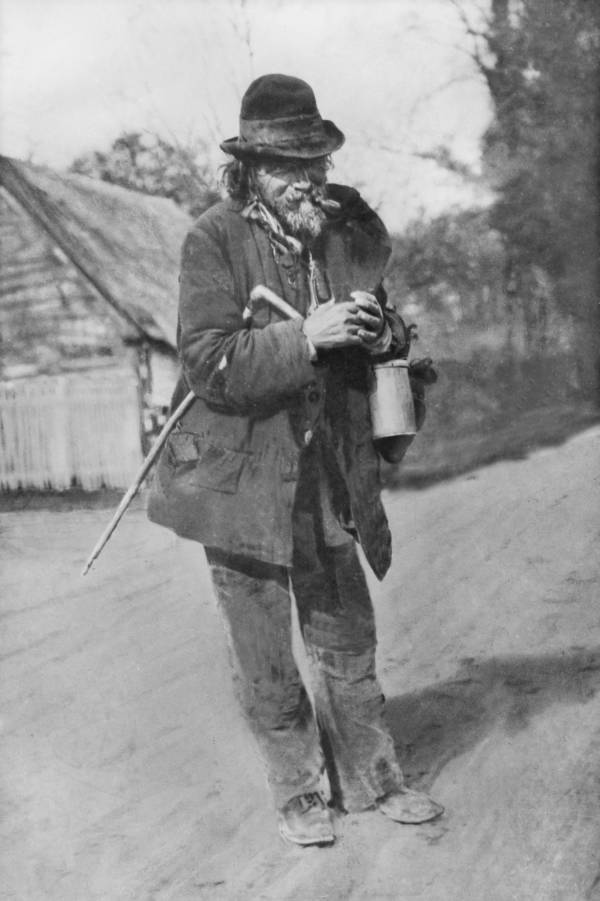
Both tramp and bum come from German, trampeln and bummeln, both referring to trekking, walking, ambling or wandering. But because both tramps and bums were associated with being lazy and opportunistic thieves, hobos carried the same stigma. Hobos, however, were honest and free; they had a strict moral code, were hard-working, and some even chose that lifestyle above their own personal wealth or position, such as James Eads Howe, founder of the International Brotherhood Welfare Association, an aid society for hobos; he was born into a wealthy family in St. Louis, Missouri, but he chose instead to live as a hobo. Some simply wanted to live with no strings attached, no address to be found by state or federal government; today, we might call it living off-grid, though our contemporary version is far more luxurious than those early migrants could have ever aspired to.
James Eads Howe, founder of the International Brotherhood Welfare Association, an aid society for hobos. 1922. Source: Library of Congress
Up through the 1920s, hobos defined themselves in terms of being free-spirited; but when the subculture exploded during the late 1920s and early 1930s as the Great Depression forced men, women and children onto the highways and byways looking for work to survive, the hobo popular image shifted to a symbol of poverty wracking the nation. As factories closed across the country, many had no choice but to migrate. The most famous image from that time is by Dorothea Lange, taken of Florence Owen Thompson, a mother of seven starving children, living in a shanty during a pea harvest in Nipomo, California in 1936. The photographer captured the plight of the migrant workers, prompting the government to send food to the camp; the images did not gain popularity until the 1950s, however; it was probably too painfully familiar to people to garner much contemporary appreciation. After the Great Depression had passed, and World War 2 was over, the number of hobos decreased drastically, but has never died out completely.
Dorothea Lange’s famous Migrant Mother, age 32, Nipomo, California Source: Library of Congress
Today, the hobo culture continues; whether they’re called hobos, or trainhoppers, or drifters, or solo ramblers, strays, or vagabonds, it is a worldwide movement. In South America, it is estimated that 400-500,000 migrants hop trains annually in an attempt to reach the United States. As Corona lockdowns affect companies, leading to layoffs and bankruptcies, I think we’ll see a surge in the number of hobos. Every year in Britt, Iowa, a hobo convention is held, where they celebrate the positive aspects of living free, and likely discuss how to do it honourably and well. It’s a chance to connect, and to feel part of a community while still being independent. Click here to see a few images from their 2013 convention.
Hobos didn’t just try to work hard; they had a moral code of conduct that included these tenets:
Decide your own life; don’t let another person rule you or run you.
When in towns, always respect the local law and officials – be a gentleman at all times.
Always try to find work, even if temporary, and look for jobs nobody wants. You’ll be helping a business along, but you’ll also ensure good will if you return to that town again.
Don’t take advantage of the vulnerable – either locals or other hobos.
When no work is available, make your own work – use your talents.
Don’t set a bad example for locals’ treatment of other hobos by becoming a stupid drunk.
Always respect nature – do not leave garbage where you are jungling.
If in a community jungle, pitch in and help. Help others whenever needed – you may need their help one day.
When jungling in town, respect handouts and don’t wear them out – other hobos will be coming along who may need them more than you.
Don’t cause trouble in rail yards or in towns – other hobos will be coming, and they need the goodwill.
Try to stay clean – bathe whenever possible.
When travelling, ride your train respectfully – take no personal chances, cause no problems with the train crew, and act like an extra crew member – help where you can.
Do not allow other hobos to molest children – expose them to the law – they are the worst garbage to infest a society.
Help all runaway children, and try to talk them into returning home.
I’d say that these rules are good for everyone to live by, no matter what their status or situation. Besides a code of ethics, they had a separate language. Here’s some of their colourful slang:
Accommodation Car = Caboose of a train
Bad road = a train line made unusable by some hobo’s bad action or crime
Banjo = a small portable frying pan, sometime a “D” handled shovel
Barnacle = a person who sticks to one job for a year or more
Beachcomber = a hobo who hangs around seaports or dockyards
Bindle Stick = a collection of belongings wrapped in cloth and tie at the end of a stick
Blowed-in-the-grass = a trustworthy, genuine person
Bone Polisher = a mean dog
Bone Orchard = graveyard
C, H & D = a person is Cold, Hungry and Dry (thirsty)
California Blankets = bedding made of newspaper
Calling in = using someone else’s campfire to warm up or cook
Catch the Westbound = to die
Chuck a Dummy = pretend to faint
Cover with the Moon = Sleep out in the open
Docandoberry = anything growing along a river that’s edible
Easy Mark = place where one can get food and a place to stay overnight
Elevated = under the influence of drugs or alcohol
Flip = to board a moving train
Flop = a place to sleep, “Flophouse”, a cheap hotel
Glad rags = one’s best clothes
Graybacks, Crumbs = lice
Gump = a chicken
Honey Dipping = working with a shovel in a sewer
Hot = 1) a fugitive hobo; 2) a decent meal (“I could use three hots and a flop”)
Hot Shot = fast freight train, stops rarely
Jungle = an area off a railroad where hobos camp and congregate. Jungle Buzzard = a hobo or tramp who preys on his own
Knowledge Bus = a school bus used for shelter
Maeve = a young hobo, usually a girl; similar to Angelina (a young, inexperienced child)
Mulligan = a type of community stew, created by several hobos combining their ingredients
On the Fly = jumping a moving train
Padding the Hoof = travel by foot
Possum Belly = ride on the roof of a passenger car (one must lie flat)
Rum Dum = a drunkard
Sky Pilot = a preacher or minister
Spare Biscuits = looking for food in garbage cans
Stemming = panhandling or begging
Source: New Braunfels Railroad Museum, Texas
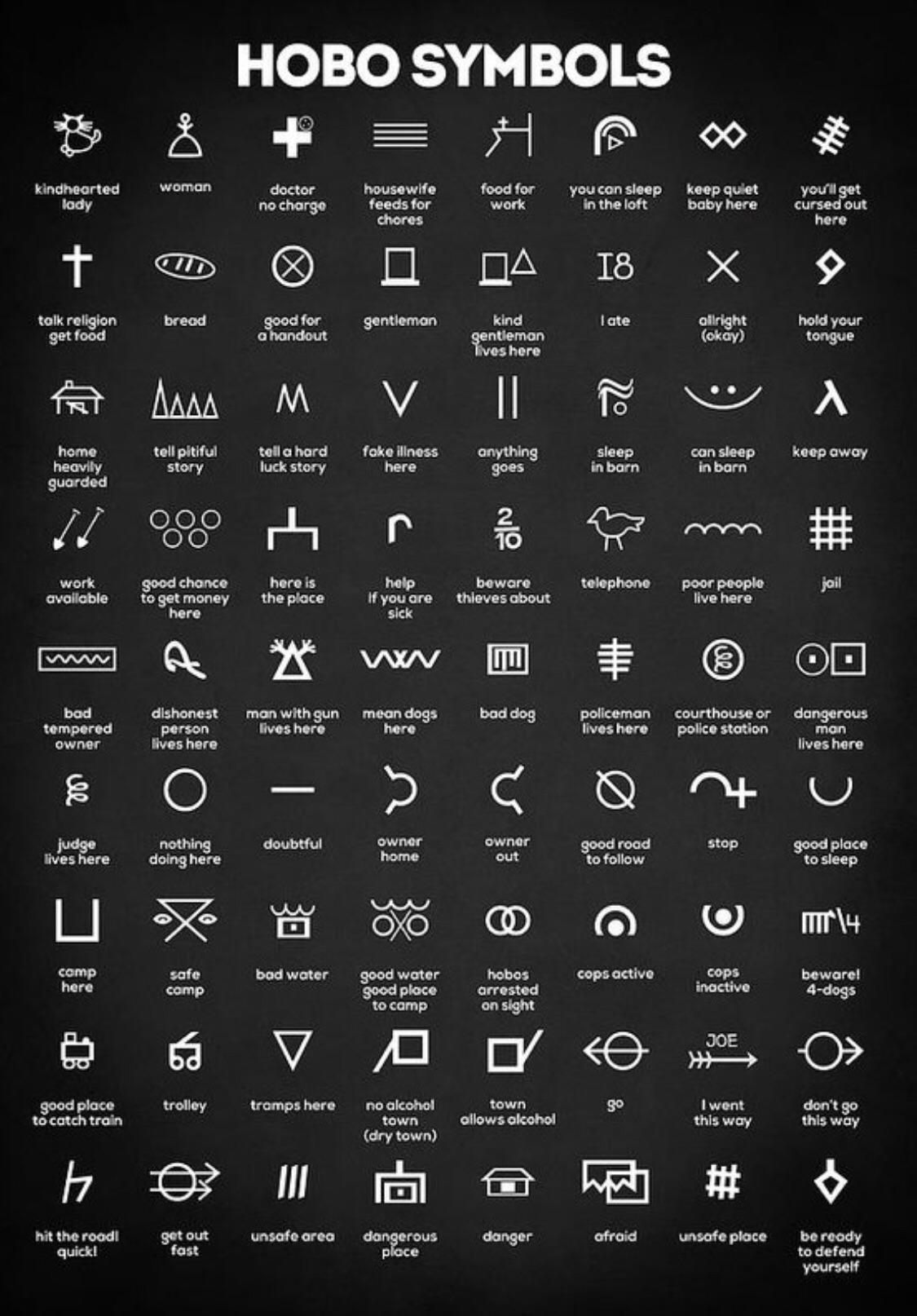
When hobos travelled from town to town, they never knew what to expect – would they be welcomed, or arrested? Out of the necessity to be prepared, a language of symbols grew: A hobo could give those who came after him a good idea of what to expect – was there work available? Would the police arrest a hobo on sight? Could you get a good meal at this house or that? The hobo would leave these symbols nearby – etched in the dirt road near a house, or marked on a stone or tree or a wall or a railcar. Here is an example of the symbols, though there are many more! Reading through them gives you a glimpse of some of the things they were up against.
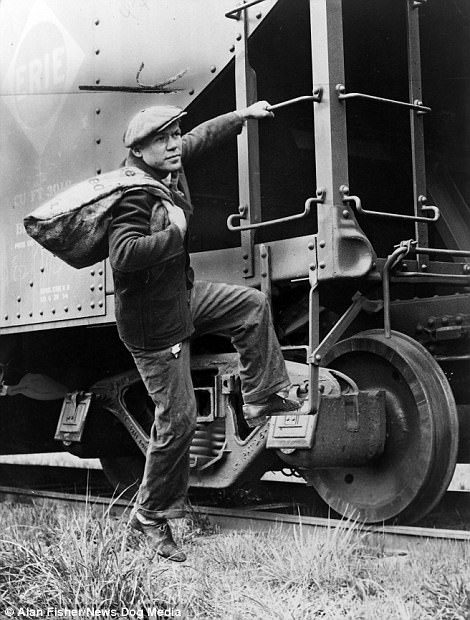
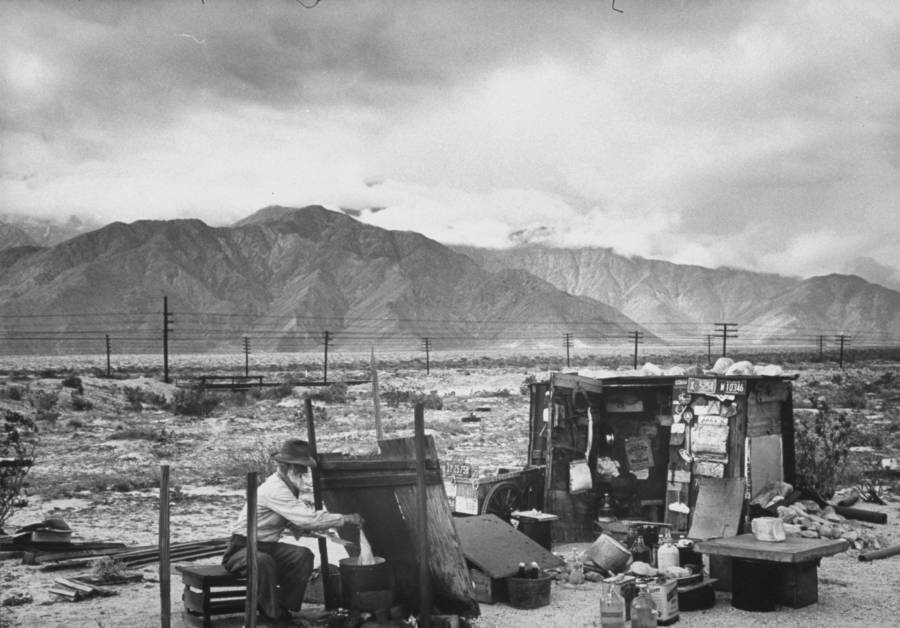
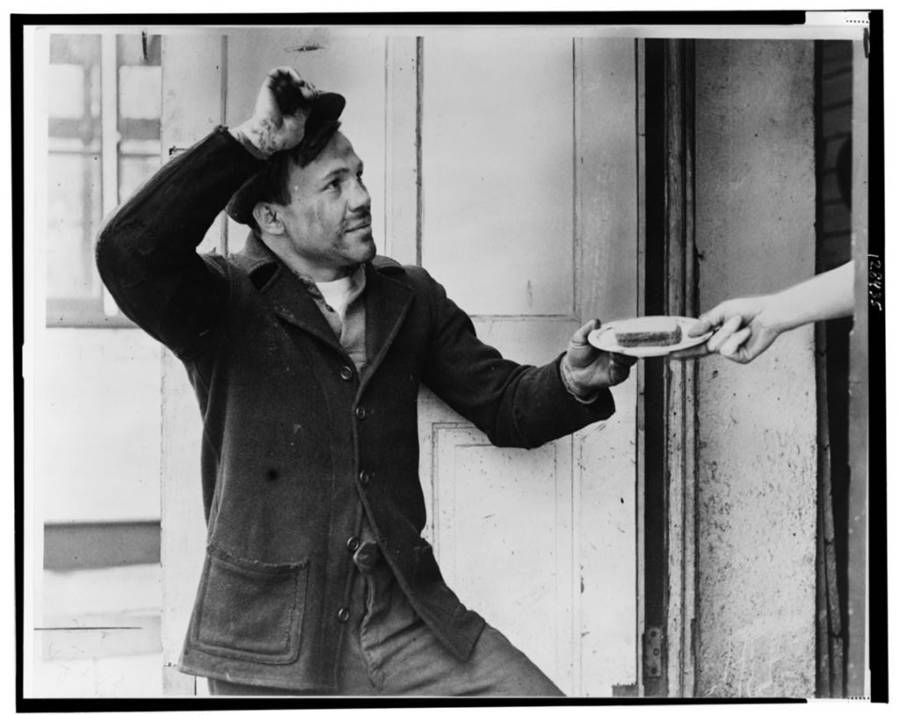
In the images below, the young man getting on the train and the one cooking over a fire with a can on a stick are one and the same man – World lightweight boxing champion Lou Ambers, who travelled across the US to compete in Bootleg Bouts to earn money for his widowed mother.
I hope you enjoyed this tour of the world of hobos – without the dangers of train hopping!
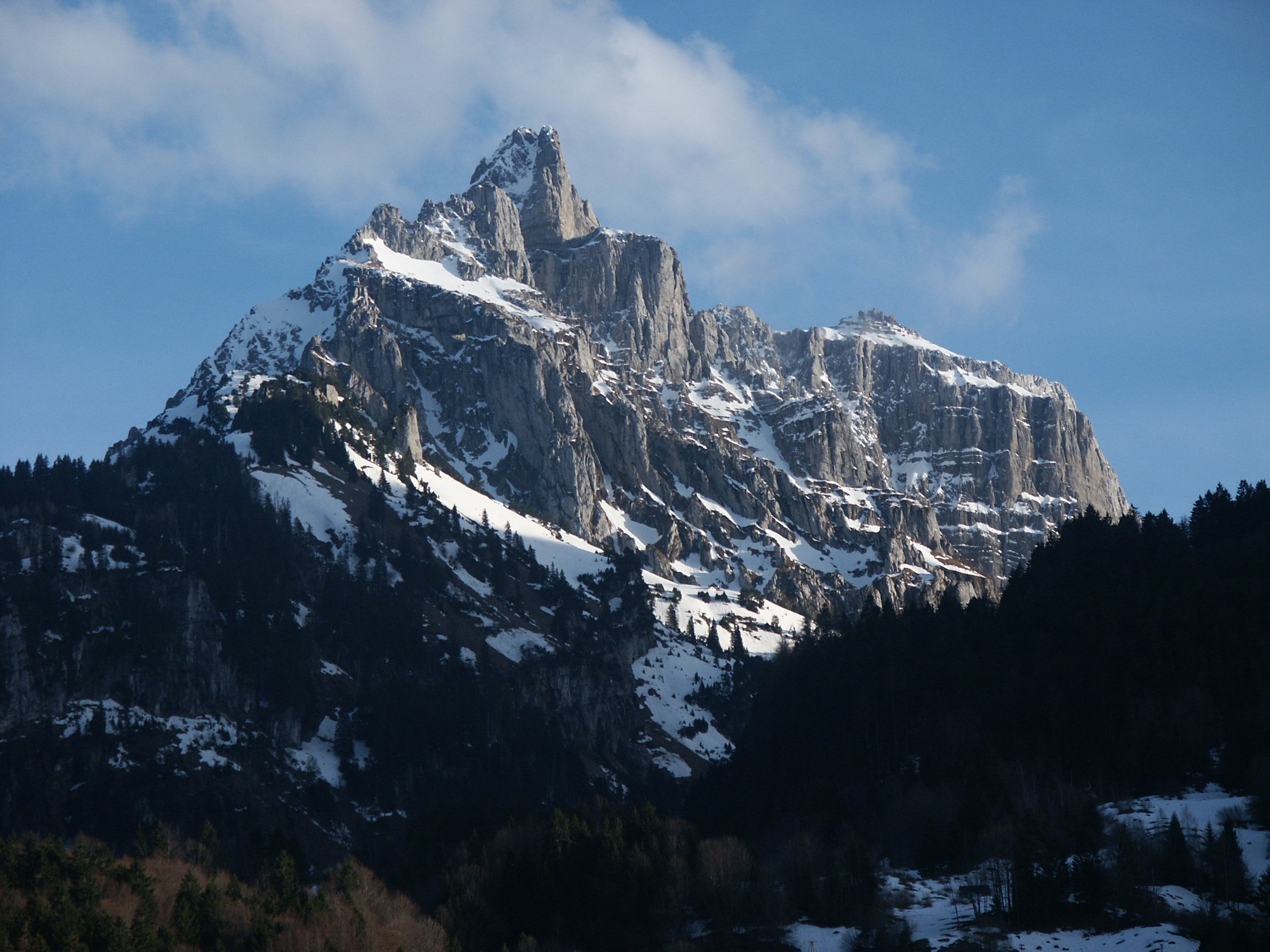
View from Lihn, Switzerland. Taken by Stefan Huesler in March 2005
Today’s tour brings you to my neck of the woods, so to speak: Switzerland. How many mountains we have here depends on who you ask; whatever the exact number, I can say that it’s hundreds. Even the Swiss Plateau, while technically lying between the Jura Mountains and the Alps, is mostly hilly. But perhaps what Swiss would consider a hill, others would view as a mountain. So what’s the actual difference between the two? That’s a grey area, at best: A hill is a landform that rises above the surrounding terrain and does not usually have a defined summit (peak); a mountain has a limited or defined summit area, and rises 300 metres or more above the surrounding landscape. While hills may be a result of glacial flow, erosion of surrounding regions, or faulting, mountains are formed through volcanic activity or faulting. But notice – both hills and mountains can be formed by faulting (the shifting of tectonic plates).
Whatever you call them, Switzerland is full of the beauties. They influence weather, sometimes dramatically, from one side to the other; while Lugano usually has Mediterranean weather, the northern side of the mountains has a cooler climate. Once, as we came over the Gotthard mountain pass from Lugano toward home on a warm, sunny day, we saw a wall of white cloud ahead, clearly defined on the road; when we drove into it, it was absolutely white, and we were unable to see much ahead. Not fog. A cloud. Where we live, our wet weather usually comes from the local mountain range; if the wind shifts from that direction during a grill dinner on our balcony, grab your plates and get inside before it hits.
Did you know that the term homesickness comes from the Swiss German word Heimweh (= home + ache)? It was exported in the 17th century by Swiss merchants and mercenaries working abroad, and refers not to family or house, but to the mountains and their longing for the sights of the Alps.
Below are a few links:
With the first, you can choose various panoramic starting points, exploring visually and/or with information about each point of interest.
The second link takes you to live webcams in Switzerland, where you can see what’s going on. Keep in mind that if you’re looking at these webcams at the time of my uploading this blog (February 2021), we are currently in lockdown due to the second wave of COVID-19, so activity is far less than when shops are open (if you’re looking at town centres or skiing zones), though in town centres you’ll see kids riding bikes home from school in the afternoons, around 16:00 Swiss time (e.g. the town centre Appenzell webcam). Come back in a few weeks, and activity will have picked up once again. Hopefully!
The third link takes you to a YouTube live webcam feed that switches locations occasionally, giving you an overview of several sites. The music they play over this live feed is a bit monotonous, so I’d suggest turning on your favourite musical alternative and muting the actual video.
Our next virtual tour takes us to the capital of Norway, the city of Oslo. There are many amazing places to visit in the city, from the Armed Forces Museum to the Viking Ship Museum. But by far, the largest is the Vigeland Park and museum.
The park is the life work of sculptor Gustav Vigeland, the result of over 40 years’ work. There are over 200 sculptures in granite, bronze and wrought iron, from the gates, across a bridge, past a large fountain and to the Monolith mound. The museum itself was his studio, and includes many of his sketches, mock-ups, and smaller works.
Vigeland’s motivation for the sculptures was to portray the breadth and depth of universal humanity, from birth to death, in as many stages of emotions and ages as he could capture. He intentionally left the titles of his works vague, allowing viewers to interpret through their own experiences. The reason that most of the statues are naked is for that same reason – he didn’t want a style of clothing to detract from the timelessness of the collective experience of humans, regardless of culture or era, age or gender.
I have been there twice, and it will always be on our list of things to do in Oslo when we are able to go; Oslo is one of my favourite cities, which is saying a lot as my husband and I tend to avoid cities on holidays, preferring nature and out-of-the-way spots instead. But like London, Oslo is packed with history and museums. Below are two of my own pictures, taken in August 2013.
The fountain, as the water was shut off
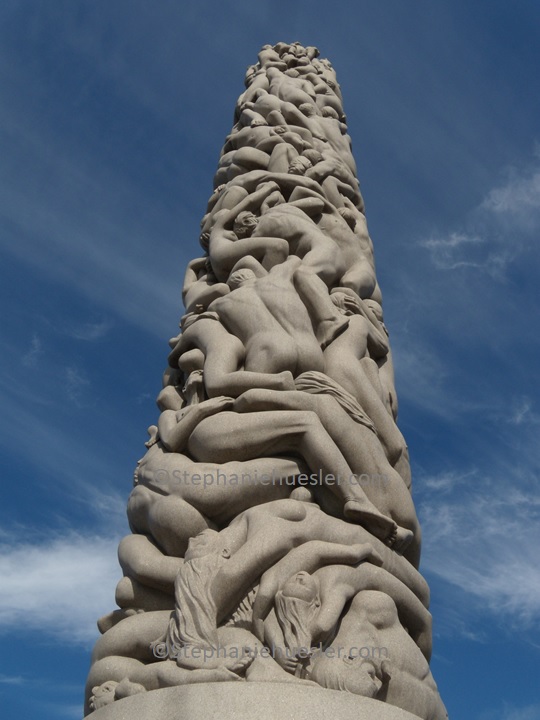
The Monolith: 45 feet tall, with over 400 individual figures
So, who was Gustav Vigeland (1869–1943)? Born as Adolf Gustav Thorsen, he became one of the most famous Norwegian sculptors, and also has the distinction of being the designer of the Nobel Peace Prize medal. His father was a cabinetmaker, and one of his brothers, Emanuel Vigeland, became a noted artist. Gustav learned wood carving at school, but the sudden death of his father forced him to leave school to help support his family. The name Vigeland comes from the area where his grandparents lived, and where he lived with them for a time. He came to the attention of Brynjulf Bergslien, a sculptor, who took Gustav under his wing. His first personal exhibitions in Norway were in 1894 and 1896.
The Nobel Peace Prize, as designed by Gustav Vigeland
In 1902, he was involved in the restoration of the Nidaros Cathedral in Trondheim, which influenced his art by the inclusion of dragons as the symbols of sin and as a force of nature fighting against man. Shortly thereafter, the city of Oslo gave him a studio in which to work, and the location of his growing exhibition became Frogner Park, now known to many as simply Vigeland Park.
The exhibition can sometimes evoke strong feelings; I’ve heard one person call it demonic because it portrays nudity; at the end of World War 2, one critic thought it “reeked of Nazi mentality”. But I have been there, and can honestly say that both of those sentiments are unfounded. If people are uncomfortable with the human form in its simplicity, they will have difficulty understanding the thoughtfulness that went into each sculpture. As to the second critique, some of the characters are posed as wrestling with various symbols – as everyone wrestles with things in various stages of their lives. Coming from the mindset of someone still stinging with the Nazi’s rule during World War 2, it is easy to understand how they could have interpreted any struggle in that light.
Below are a few links to take during your virtual tour:
Come along with me on this next tour, as we explore the world of florescence. Today’s featured museum is the only one of its kind in the world: The Electric Ladyland Fluorescent Museum, in Amsterdam, Netherlands, is an interactive “participatory art” museum; visitors can get creatively involved in the artwork, see fluorescent minerals light up, and can have their eyes opened to just how many common objects around us fluoresce. When was the last time you looked through your vegetable drawer with a UV light? Tomatoes, lettuce, cucumbers, bell peppers, coconuts… they all emit UV light waves.
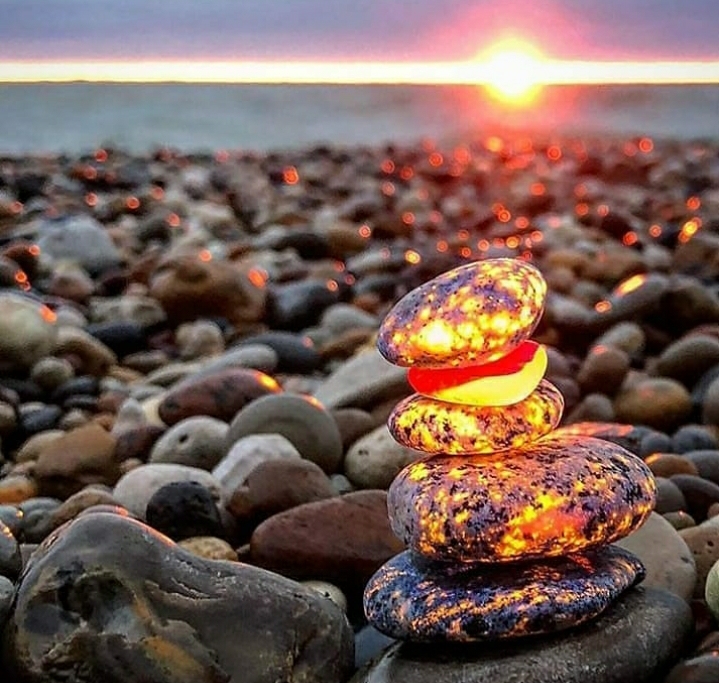
First, what is fluorescence? It is also known as “black-light” glow; in other words, it shows up under UV (ultraviolet) wavelengths. Man-made fluorescence differs from nature’s spectacles of bioluminescence in that the latter doesn’t require external light – it is generated by an internal chemical energy in the organism. There are also examples of fluorescence occurring in nature: Syenite, also known as yooperlite or sodalite-syenite, is not a common rock, but does appear all over the world in pockets; in fact, about 15% of all minerals fluoresce. Check out this link to see where syenite can be found near you. Take a UV torch (flash light), and hunt for them at night. They look like plain rocks under normal lighting conditions, but glow under UV. There are also animals that don’t have bioluminescence, but do glow under UV lights, such as scorpions. To watch a short video about hunting along Lake Michigan for yooperlites (these start at 8:00), and see a glowing spider (19:23), click here. At 18:43, you can also see an example of phosphorescence.
Yooperlite – Credit: Reddit, uRyunysus
Phosphorescence is what we also know as “glow-in-the-dark” when it comes in a paint form. The emission of visible light persists after this substance has been exposed to a light source; it fades over time, but the light “charges” the phosphorescent material, such as stars on a child’s ceiling, and glows for a time. This is the paint you also see marking airplane’s escape routes (I hope you never need them!).
Radioluminescence is, as its ominous name implies, a result of the decaying of radioactive isotopes; when mixed with a radioluminescent phosphorous chemical, the decaying radiation particles agitate the phosphor into emitting visible light. Believe it or not, Radium paint was used for over 40 years on the faces of watches, compasses, and aircraft instruments; if you are in possession of your great-grandfather’s or grandfather’s glowing watch, you might want to reconsider that. Radium emits gamma rays… think “Incredible Hulk”. Joking aside, the reality was far grimmer: The episode of history that became known as the “Radium Girls” and the impact it had on industrial safety standards deserves an article all of its own. Shockingly, radioluminescent paint may still be used in specialised applications, such as diving watches.
Radium clock. Credit: Wikimedia Commons
I hope you enjoyed this short tour through all things glowing. What do you have around your house that either glows in the dark, or emits light under a UV light? If you don’t already have a UV torch (flash light), you can buy one fairly easily online. If you’re brave enough, take a tour of your home in the dark – UV is known to show up things that have perhaps been missed in your cleaning routine; they will show you what foods you eat that fluoresce; and you’ll most likely learn a few things along the way! Have fun!
With everything that hit the fan last year worldwide, I know that many of us have been missing the opportunities to go out and get some stimulation: Restaurants in many places are closed or reduced to take-away; concerts and theatre productions are cancelled until further notice; museums are closed; if shops are open, they may be closing earlier. For many of us, our “third place” has had to close its doors to us.
So I thought I’d take you along on virtual tours: Tours of factories to see how things are made, of museums, of beautiful places around the globe, of interesting architecture, of historical moments, or of quirky bits and bobs that make this world a colourful and interesting place.
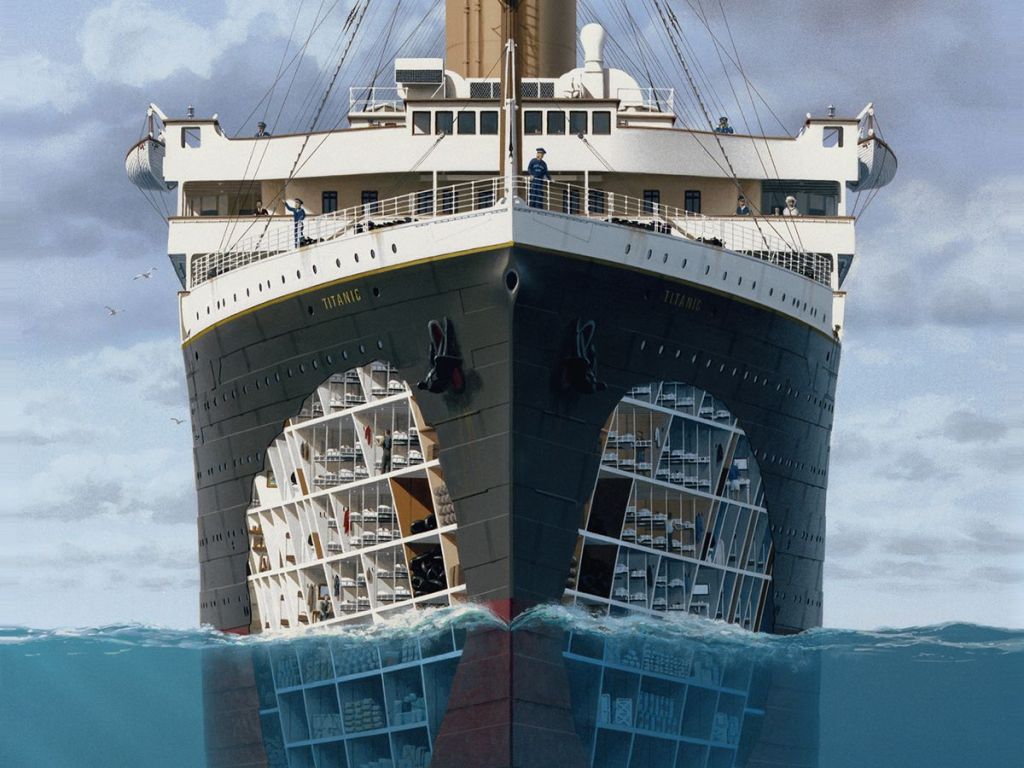
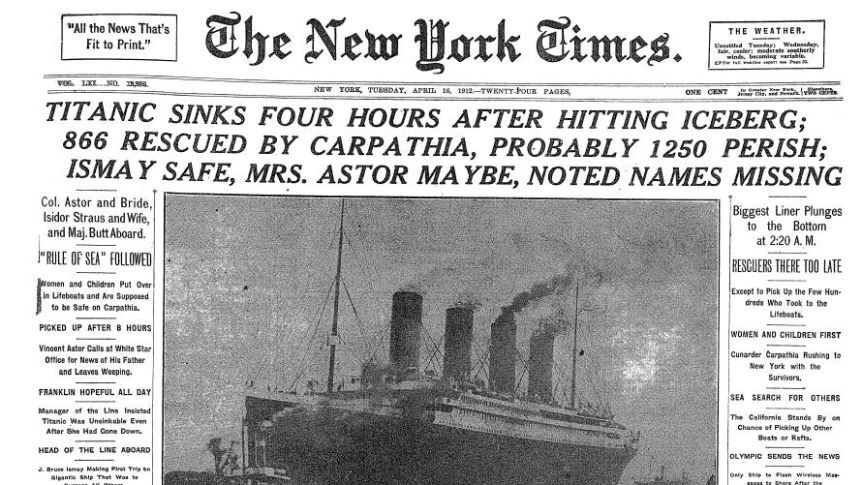
To start off our tours, let’s take a walk-through on the Titanic, as it was before it let in the passengers for its maiden voyage. It embarked on that voyage on 10 April 1912, hit an iceberg on 14 April at 23:40, and 2 hours and 40 minutes later, on 15 April, finally sank forever. The final survivor of the sinking, Millvina Dean, aged two months at the time, died in 2009 at the age of 97. What I find interesting about her story is that her parents, from Branscombe, England, were planning to settle in Wichita, Kansas – where I was born and raised. Her father had relatives there, whom they were planning to join. They weren’t supposed to be aboard the Titanic, but due to a coal strike, they were transferred to the ill-fated ship. To read more of her story, please follow her link.
If Covid’s limitations were lifted right now, and if you had a spare £86,000 ($ 105, 030) burning a hole in your pocket, you could take a real tour of the Titanic and take part in diving expeditions. But barring those two factors, I’ve found a few simpler (and FREE!) alternatives (Just click on the images below each description):
This first link is a 22-minute tour; if you are easily seasick, I’d recommend pausing it occasionally.
This second link is for a slower and smoother version, at 116 minutes (1:56).
This third link is a fascinating documentary following the lives of some of the passengers aboard the Titanic, focusing on 14 from the same Irish village. Three survived to tell the tale.
I hope you enjoyed it as much as I did; I don’t know if “enjoy” is the right word in such a situation, but I hope it was at least a satisfying, intriguing glimpse into history. I’ve got slews more tours on the agenda, so buckle up!
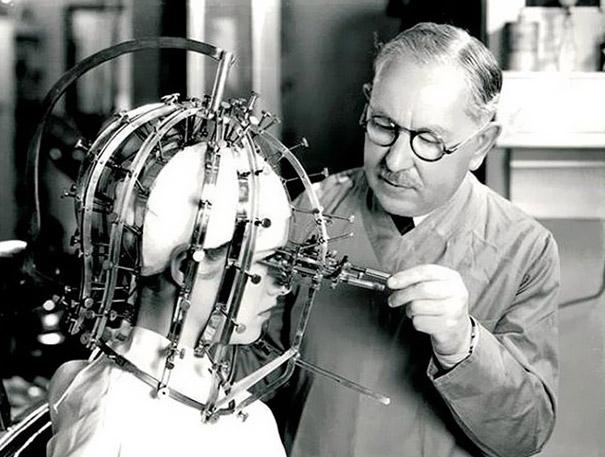
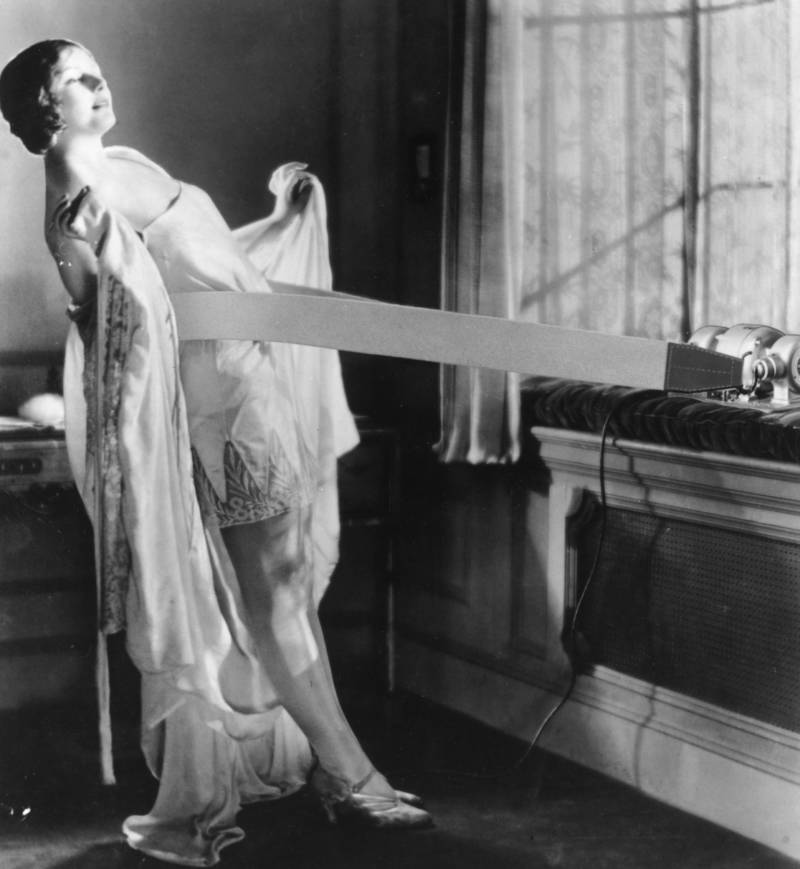
This device from 1930, invented by Max Factor (pictured), helps correct the application of makeup. Note: It’s only this complicated when a MAN does it…
Limbo-life goes on, but I thought I’d do a bit of dusting… of history, that is. I love historical images – they have a story that may have gotten lost over the years, or may document a significant achievement, such as the moon landings. Then there are those lovely photographs of bygone inventions: Some have succeeded into the modern era, while others were dumped somewhere along the wayside (and rightly so). Fortunately, the photo above falls into the latter category! As far as this topic goes, this is just a light dusting; there have been entire books and documentaries addressing this vast issue; if you’re interested in viewing a few documentaries on the topic, click here.
Makeup, as a topic of history, goes back thousands of years. Ancient Egypt is famous for their eyeliners and other cosmetic enhancements; lipstick may have been invented as far back as 5,000 years ago, by ancient Sumerians. The word “cosmetic” comes from Greek, and originally meant “technique of dress and ornament” or “skilled in ordering or arranging”. Natural ingredients used included charcoal, beeswax, crushed gemstones, castor oil, olive oil, milk (Cleopatra’s famous milk bath), rosewater, seaweed, fish scales (still used today), and seashells. In past ages, there were dubious forays into using tinctures of white lead, mercury, arsenic, quicklime, Belladonna, and even mouse fur eyebrows (for when the woman’s hair fell out due to using any of the above in combination…). A common insect still used in blushes and lipsticks is the cochineal, the Dactylopius coccus, a scale insect.
Probably as far back as the dawn of the Industrial Revolution in Europe, there has been a fascination with mechanics, even in the beauty industry (as illustrated by the image above). Though I have yet to find images that document the attempts at enhancing a man’s handsomeness, there are dozens, if not hundreds, of such inventions for women’s beauty. I think that fact simply reveals something about a deep-set, double-standard mindset that women need cosmetic improvement while men don’t *; that notion has been inescapably engrained into women for thousands of years (with the exception of the Egyptian culture, in which men used eyeliner just as much as the women). [*The two exceptions that I can find to this general trend is that men were berated in the mid-war years for being too scrawny, and they were encouraged to develop their physique; they were also ridiculed for baldness and were offered hair growth concoctions to counter the natural process.] While many of these gadgets and products have thankfully gone the way of the Dodo, some are still lurking around – and to them, I say, Shame on them for shaming natural features!
Here are a few other bygone mechanical attempts at enhancing the beauty of women:
1928 – A woman uses a vibrating weight loss tool. Credit: Getty Images
1940s: Slenderising salons devised all sorts of weight-loss treatments; this chair massaged clients’ legs with metal rollers. Credit: Getty Images
1958 – Invented by a South African doctor, this machine was supposed to massage away any unwanted bits using electric currents. Credit: Getty Images
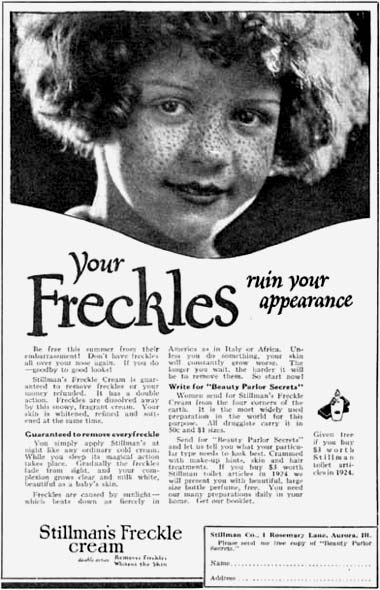
Stillman’s Freckle Cream, originally from Illinois, has been sold for over 120 years, and is still touted in cultures desiring paler skin, such as in Asian countries.
1960s – ice masks were used by Hollywood actresses to freshen their faces between takes without spoiling their makeup. Credit: Getty Images
1875 – A flexible mask intended to bleach the skin, removing blemishes.
How many of you have ever heard something like, “We interrupt this broadcast to bring you the following important information”? This is a phrase used by radio and television channels in some English-speaking countries to announce emergency conditions. When you hear that, you expect the message to be important enough to warrant the disruption. But most of us grew up (if we had any kind of guidance from parents) knowing that it was rude to interrupt; we learned to wait for an appropriate moment to introduce an opinion or a change in topic.
How many of us like having our concentration or focus ripped apart by someone or something breaking into our reveries or a conversation with a friend? If you’re deeply focused, it is jarring to be interrupted. Once is okay; a dozen times is beyond irritating.
Unfortunately, this bad habit has become a trending behaviour online: You’re watching a video on YouTube, and mid-sentence of the documentary or instructional video, or mid-action of whatever you’re watching, you are suddenly expected to switch focus to an annoying commercial (are they intentionally made abrasive to grab your attention?). Now don’t misunderstand me: I realize that the material on YouTube is free of charge, and someone needs to generate revenue to pay for it all; but does it need to be mid-sentence? Why not wait until an appropriate break in the video? It’s too much work to be digitally polite, apparently. [I just hit Alt + delete at the beginning of every video; it will skip ads with only a hiccup.] For me, this isn’t just an interruption; it’s a rude, deliberate attempt to distract me from my original focus. I don’t know about you, but such ads don’t leave me any desire to hear their message or give them my business; if anything, I’ll avoid their products.
Another digital interruption I’ve noticed on the rise on sites such as Pinterest is the bombarding of my home feed with inane pins: Last week it was Asian teeny bands, or today surfing ads, Cambodian royalty, gossip magazines and paparazzi pins – none of which have anything to do with either my interests or my recent activities. On Pinterest at the moment, my feed is stuffed with useless fluff. I wrote a complaint, and they cleared away the Asian bands, only to have them replaced with the above-mentioned idiocy. To actually find what I’m searching for, my focus is wrenched back and forth. Every. Other. Pin. Guess what? I won’t be on Pinterest as much any more. Facebook did the same thing; I’m not there, and have no intention of going back all that often (the only reason I keep my FB account is to keep in contact with international friends and family).
So what can we do? Do we have to accept this behaviour? No; but raising other people’s children costs time and energy. But it does work: Write a complaint; give feedback when requested or not; block such pins or links as spam (= “misleading and/or repetitive”). This same principle applies to content farms online (e.g. So Yummy, Troom Troom or 5-Minute Crafts): If you come across their videos and watch them, and notice something faked, dangerous, or repetitive (every one of their videos contain one or all of the above), don’t “dislike” or comment – that just tells the algorithm that someone saw it and that it elicited a response; click on the three dots near the video and report it. If you’d like to go farther down this particular rabbit hole, a good place to start is Ann Reardon’s informative videos about debunking fake videos; her husband is a journalist and writer, and puts his investigative skills to good use (if you want to skip her food testing and get straight to the investigation, click to 12:05 in the video).
The internet can be a wonderful place to learn, to do research, and to be entertained; but be aware of the growing trend of subtle manoeuvres by algorithms, digital echo chambers and flashy ads to manipulate your perceptions, opinions, and habits. Take time to act and move around wisely, even if it’s in cyberspace. Discernment may be an old-fashioned concept to some, but it’s a lifeline in the sea of churnalism in today’s world.
Because the days of Sail are mostly long gone except for re-enactment vessels and small private vessels such as yachts, a great tradition is being lost to the winds of time: The Sea Shanty. Shanties were songs sung by sailors; they were sung not only for the entertainment factor, but the rhythms kept the crews in time as they hauled in anchors, drew up sails, tightened ropes, scrubbed the deck, and any number of other duties aboard their ship. Specific shanties were used for the short haul, the Halyard, Windlass, Capstan, or the Foresheet, because those shanties had the best rhythm to get a particular job done. Musicians try to keep the songs alive today, but they are a ghost of what they once were, and what they once meant and represented; they were the life blood of any Ship of the Line.
For an interesting article on shanties, including various video clips with live performances to hear the rhythms and flavour of the shanties, please click here. Take a few moments to enjoy the songs! Some of the videos are the songs sung to a series of historical images to do with sailing, so they’re a two fer!
Originally posted on History Undusted, 20 September 2015
When I’m working on the computer, sometimes I like to have music playing in the background; YouTube has a good selection of long-play pieces. Recently, I was listening to Lindsey Stirling, one of our favourite artists, and she did a video with members of the Landfill Harmonic (you can watch that video by clicking here).
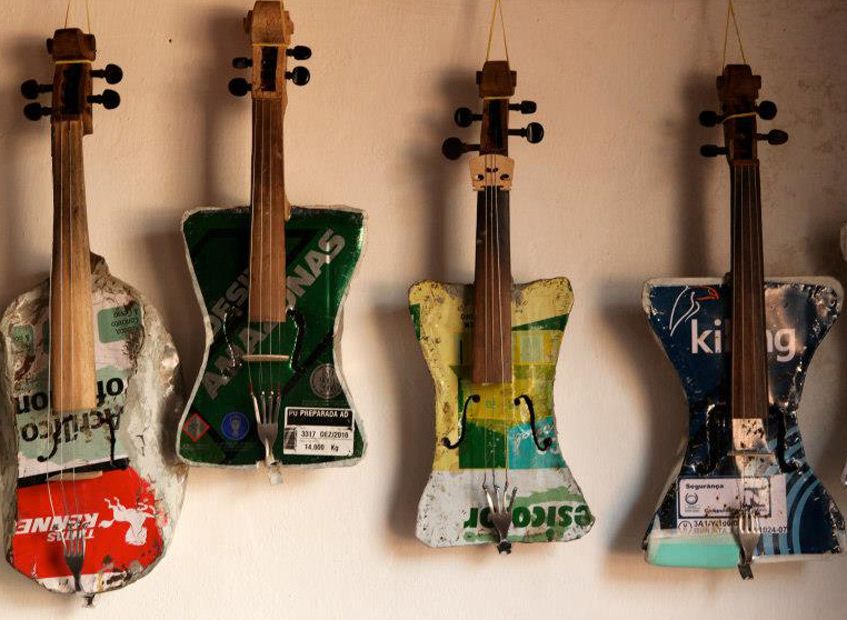
If you haven’t heard of the Landfill Harmonic, it is a group of teenagers living on a rubbish dump in Paraguay; they have been formed into an orchestra – but in a place where a violin would be more expensive than a house and would likely be stolen, their instruments are trash. Literally. Not only have they found new skills through mastering the quirks of their individual instruments, but the project has given them a purpose – a voice that they would otherwise never have had. It keeps them out of gangs, and transports them, even if for only a little while, to another place in their hearts. It has the potential to turn the tide for the rising generation in their area, and that should be enough to inspire all of us to find the hidden treasures in the things and in the people around us. Most of all, it encourages me to never underestimate the power of vision and purpose in and on the human spirit!
Just click on the image below to see a short but inspiring clip about the orchestra:




















 Stephanie Huesler