I’ve been trying to blog the last few weeks, but to do so, it helps to be logged in to WordPress – and it kept logging me out every time I switched to my site. I finally found the solution this morning, so here I am!
One thing I’ve been ruminating about is the etymology of everyday words; words come from somewhere, and I’ve always wondered what word(s) were used before a word came along. There are famous examples of invented words that never stuck, such as Lewis Carol’s “Jabberwocky“, but what I’m referring to are common words. What did they use before the word “egg” came along? The word itself comes from Old Norse, eggys, eggja, or egge, but before the common spelling was decided on, every English dialect in Britain had at least a couple of different spellings of the word!
William Shakespeare (1564-1616) is sometimes credited with having created upwards of 1,700 words, but many of those were likely already in circulation – he simply wrote them down in his plays. Some words accredited to him are: dishearten; dislocate; auspicious; obscene; monumental; majestic; accommodation; amazement; dwindle; exposure; bloody; countless; courtship; impartial; gnarled; gloomy; generous; reliance; pious; inauspicious; bump; frugal; submerge; critic; lapse; laughable; lonely, suspicious, and many, many more.
But long before William Shakespeare drew breath, there was another William who influenced English in profound ways, and yet his name is little known today: William Caxton. Born around 1420, he was a merchant, printer and the first English retailer of books; he introduced the printing press to England, set up in Westminster, 1476. Though he published many books, the first book he is known to have published is The Canterbury Tales, by Geoffrey Chaucer (1340s – 1400); that work alone is credited with influencing both the English language and literature, as it shows a clear correspondence between the rhythm of written English poetry and the cadence of spoken English. Chaucer is also known for having looted the French language, bringing into English such words as governance, paramour, difficult, dishonest, edifice, and ignorant, to name a few. Chaucer was aware of the wide variety of English dialects, which we would never recognize as English today, and he was anxious about the confusion of languages in Britain and that his work would be able to be comprehended in the future. In his poem, Troilus and Criseyde, he bids it a poignant but troubled farewell: “Go, litel bok . . . And for ther is so gret diversite In Englissh and in writyng of oure tonge, So prey I God that non miswryte the [thee]. . . . That thow be understonde, God I biseche!”
However, because William Caxton chose to publish Chaucer’s work, we still have it to this day. Caxton was also the first to translate Aesop’s Fablesinto English (1484). Although he was not a great translator and sometimes simply used the French word “Englishified”, his translations were popular; because of that, he inadvertently helped promote Chancery* English as the standard English dialect throughout England. (*Chancery refers to the dialect used by the officials of Henry V’s government). Thanks to men like William Caxton and those who followed, refining and shaping the language we know today, we are able to enjoy a standard English spelling and grammar structure that is understood around the world; there are still regional and national dialect differences, but we can be understood wherever in the world English is used.
If you’d like to learn more about this topic, one book I can highly recommend is Melvyn Bragg’s The Adventure of English (The Biography of a Language); it’s available in physical form, e-book, and audiobook.
These past few weeks have flown by so quickly, I’ve hardly had time to look up from my keyboard! Except when I went to the optometrist for new glasses (there might have been a slight connection between the two). I’ve been editing my final sci-fi draft. When I need a break from editing, I’ve been reading into articles by the new ebook company I’ll be working with, Draft2Digital, which has recently merged with Smashwords (my current and former platform). And in the context of editing, I’ve been down several rabbit holes:
Dashes
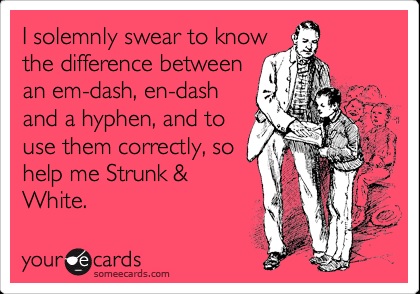
Back when I learned English, we had the good ol’ hyphen and the dash. Somewhere along the way the en-dash and the em-dash moved in, and they turned out to be worthy additions to the conversation. Now to make things confusing, 2em-dashes and 3em-dashes have elbowed their way into the punctuation party. I’m not sure how I feel about them yet, but their definitions seem to have squeezed the others so close that they often overlap or exchange places on the definition and usage dance floor. Until I need them to fix me a drink, I’ll probably ignore the party crashers.
Strunk and White’s The Element of Style is a cornerstone of grammar and writing style and is widely considered timeless; in fact, it was listed by TIME in 2011 as one of the 100 best and most influential books written in English since 1923. The irony of this cartoon is that when I recently pulled out my copy to find out the nitty-gritty of using en- and em-dashes in dialogue, I found not a jot or tittle about them in the entire book. It covers hyphens and dashes, both briefly, but nary a word beyond. Every website that I looked at had contradictory definitions and usages of all types of dashes; so until an authoritative source comes up with a defined set of rules, I will continue to use them the way I’ve learned them, and just be consistent in my punctuation within my current manuscript.
Dialogue Tags vs. Action Tags
Another rabbit hole I went down was a learning curve on the two types of tags. On one hand, I’d never honestly thought about the fact that there could a difference in punctuation between the two; on the other hand, for the most part, I’ve intuitively done it right, though not always, which is why I’ve added it to my checklist of edits – and something I will keep a closer eye on in the future. Here’s an example:
He said, “Oh, the irony of ignorance!” – This is a dialogue tag with its attending punctuation. Dialogue tags are any verb that can be spoken – said, cheered, whispered, etc.
He nodded. “I hadn’t thought about it, but that makes sense.” – Nodding is something done, and this is, therefore, an action tag. Notice that its attending punctuation is a period separating the action tag from the dialogue.
Two things make less logical sense to me; if you have insight on them or experience using them or reading them in novels, please comment! [Keep in mind that these are American English rules; I am writing my current novel in American English, though until now, I’ve written in Commonwealth English (I use that term rather than British English because it is used beyond Britain).]
How often have you spoken and laughed, chuckled, or smiled simultaneously? These are, for me, nuances in spoken vocabulary, and not action tags. Would you rather write: He smiled, “I thought you might say that.” or He smiled. “I thought you might say that.” ? In this particular instance both would work, but there are times when it has the potential to break up the rhythm of a sentence or scene too much. Which do you prefer?
When an action interrupts dialogue, it needs to be separated with (IMHO) rather odd punctuation, for example: “From what I’ve read about these dwellings” –he looked at the woman kindly– “they’re far from mud huts.” My years as an English teacher mean that missing commas and attached en-dashes hurt my eyes; maybe that’s why I needed new glasses!
Euphemisms
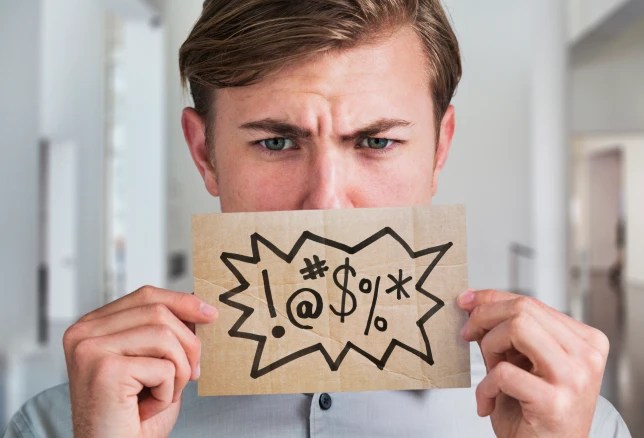
Another tangent this week has been looking for creative swear words. Nothing irritates me more, when reading a book, for the author to fall back on standard F-bombs. That just says too lazy to be creative to me. It’s unimaginative. It doesn’t make a character stand out from the rest of the lazy crowd. There are so many fun alternatives, there really is no excuse! Here are a few I’ve come across and found myself smiling:
People cussing in a foreign language; it sounds better to them.
Fart knocker (e.g. “you little fart knocker”)
Sun of a nutcracker! Sun of a biscuit!
Cheese n’ crackers!
Shoot a monkey!
Shiitake mushrooms!
Well, butter my bum!
Clusterfluff!
In a type of Chinese Whispers, “Hells bells” became “hells bells, conker shells”, misunderstood by kids as “hells bells, taco shells” – now that family just yells, “Taco shells!” when they’re upset!
Names as swear words might backfire if you happen to meet someone by that name; here are a few: Christopher Columbus; Gordan Bennett (in Scotland); Gottfried Stutz (here in Switzerland – I actually taught English in a company that had an employee with that name!)
Sugar Honey Ice Tea!
Sunny Beaches
Fudgenuts
Someone I used to know would say things like “bug knuckles” or “dog feathers” or “ants pants” when she was upset.
Credit: Getty Images
These are just a few of the areas I’ve delved into in the past few weeks; I’m still deep in the editing/proofreading process; once that’s complete, the “behind the scenes” checklists begin – those are the things readers will never see: The number of hours put into finding the right images and designing the best cover art possible; choosing the right fonts; formatting for the various mediums online and print; writing blurbs, preparing marketing bits and bobs, and setting up all the dominoes in a row for the final push of publishing!
This topic is a bit of a rabbit hole, and longer than my usual article, but I feel that it’s an important issue to address.
Image Credit: Spark.ac.in
On one hand, living in a digital age is a blessing: It allows us to reach out and stay in contact with distant friends, family and, in these months of lockdowns and home offices, our co-workers. It allows us to learn anything, with a world of libraries and teachers and experts at our fingertips, but on the other hand, this age has also brought with it a phenomenon known as Digital Dysmorphia, Zoom-, Instagram-, Snapchat-, Facebook-, or simply Body Dysmorphia.
When lockdowns started in 2020, it wasn’t only a personal challenge for many, but also a huge challenge for businesses of every branch. Suddenly their personnel could no longer travel to international, or even national, meetings; they couldn’t meet their co-workers face to face, or even go into the office. Home office became, for many that still had work, a dream come true: Businesses that for years had claimed that home office would be too impractical suddenly found ways to carry on using tools like Zoom and Skype to gather virtual groups together for meetings. It became a common joke that many would be dressed for success on the top half, while the unseen half was PJs or boxer shorts or tutus, like John Krasinski’s “Some Good News” YouTube channel.
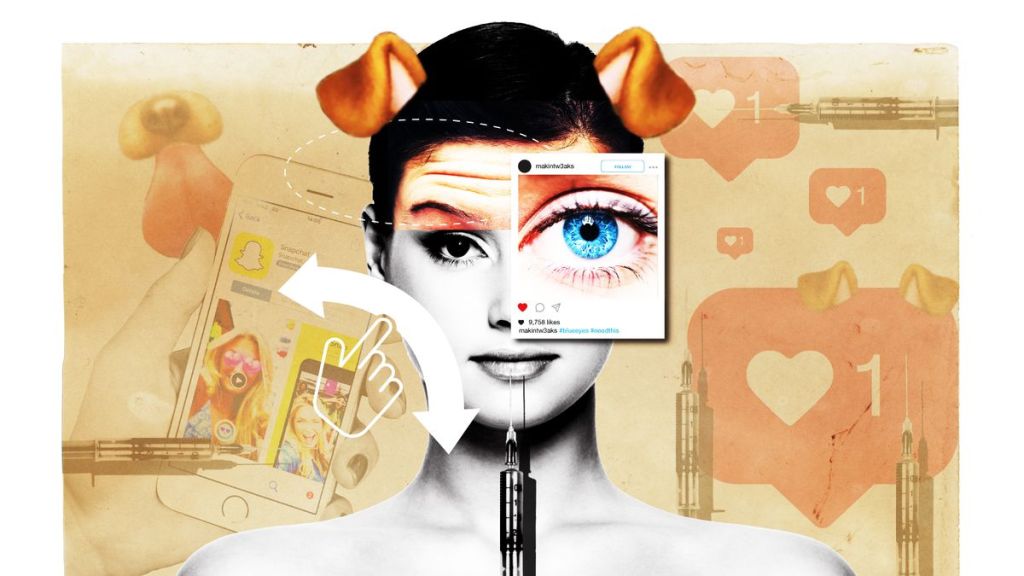
So what is Digital Dysmorphia? It’s the separating of oneself from one’s own real image by the distortion brought about through filters, enhancers and additions of body parts (e.g. large eyes, or bunny ears), using apps such as Snapchat; it’s the altering of reality, modifying self-perceived flaws, and presenting an altered reality of not only one’s physical appearance, but even one’s lifestyle (Instagram). Its danger is the destruction of self-esteem, fear of getting “caught in the lie” by being seen face-to-face by someone who only knows your digitalized self-image, and therefore fear of seeing people in person. It’s a different phenomenon than, say, knowing you need to update your online profile picture that was taken a decade ago. This dysmorphia, also known as BDD (Body Dysmorphic Disorder), is an active destruction of self-esteem through choosing distortions over reality. When someone has BDD, they are focused on their supposed physical flaws for hours a day, and they may take drastic measures to hide or fix them. BDD is sometimes diagnostically confused with OCD, social anxiety disorders, social phobia or depression. BDD was first described around the turn of the 20th century, but has only been taken seriously as an illness in the past few decades. To find out more, here is an interesting YouTube video (~8 min.)
The reason visual apps such as Zoom have made a negative impact on people is because we often see the image of ourselves onscreen as unflattering, perhaps because the camera sits too low, but also because we are looking at our own face for an hour or more at a time (it’s natural to be curious about how others see us, and our eyes are drawn to our own image because of it); while you might not be a teenager glued to your phone, if you’ve used Zoom or Skype, you’ve seen yourself through digital eyes.
Women especially, but not exclusively, have an added challenge: Every magazine image, and many social media images, are all air-brushed, photo-shopped and tweaked beyond humanly-attainable standards. We can never live up to the standard of beauty that marketing companies press on us, and that can wear on someone’s self-esteem.
Another danger in the digital age is the addiction to selfies: Trying to capture the perfect shot, the perfect moment, keeps people so focused on themselves that they completely miss the actual moment they’re trying to capture themselves in. Once in Scotland, my husband and I were enjoying a window-side lunch in a small road-side restaurant on the Isle of Skye; a bus-load of Asian tourists pulled up, and they faced the restaurant to take selfies of themselves with the background (which was the majestic Cuillin mountain range); they did not once turn around to see the actual scenery, but took dozens of photos of themselves before loading back up into the bus and leaving. They could have just saved themselves the trip, stayed at home, and put up a green screen with an image in the background.
Although we may tend to think of girls when we think of selfie addiction, the first British documented case was in 2014, then-19-year-old Danny Bowman. To read a fascinating article, click here: “Faking it: How Selfie Dysmorphia is Driving People to Seek Surgery”. Danny got to the point that he tried to commit suicide but was found in time by his parents and rehabilitated. He now raises awareness about mental health issues.
Image Credit: Bored Panda, Byron Denton
A few years ago, plastic surgeons were being asked to make a person look like this or that celebrity. Then lockdowns came into our collective lives, and Zoom became a household name; but with the sudden increase in digital contact, another, darker phenomena also increased, dubbed by cosmetic surgeons as the “Zoom Boom” to describe the increase. Now to be fair, Zoom is by no means solely responsible; every social media platform has the same dangers. Today, cosmetic surgeons are getting requests to make a person look like their digitalized self; but the requests are often not only impossible (e.g. Anime eyes or removing skin pores to give a porcelain complexion), but would also damage the person’s self-image further. A psychological anorexia, of sorts, it’s addictive and destructive. Plastic surgeons that place the patient’s mental health above their dollar signs must draw moral lines of age limits (younger and younger people are trying to get “preventative Botox” or “corrective” surgeries) and psychological screening.
For more in-depth articles on the topic, just click on the images in this article.
So, how can we avoid falling into the BDD traps? There are a few things you can do:
TURN OFF THE CAMERA: Just because you have the ability to have a visual call does not mean you must. If the caller complains that they can’t see you, just tell them to use their imagination, but leave the camera off. This can also apply to phone cameras – if you’re tempted to take selfies, put a sticker over the camera [this is something I do anyway, over front and back cameras – not because I take selfies, but because apps such as Google can and do hijack your camera to see you and your environment, and listen in… so keep your cell phone on flight-mode whenever possible, and “blindfold” them!].
LEARN TO IDENTIFY NEGATIVE THOUGHT PATTERNS: Everyone has something about their physical appearance that they don’t like; but if you catch yourself dwelling on a particular feature, try to change your perspective about it – try to compliment yourself, and then move on… positively focus on someone or something else besides yourself.
APPRECIATE YOURSELF: Taking care of yourself, getting enough rest, eating wisely, and exercising will all go a long way to restoring your self-esteem. Set small goals for yourself each day, and celebrate those times your reach those goals, giving yourself a big dose of grace when you’ve not been able to reach them. Taking this attitude will alleviate stress, which goes a long way toward supporting mental health.
GIVE COMPLIMENTS: This not only takes the focus off of ourselves, but it may be that the other person is struggling in this area, and a timely compliment may be the thing that saves their lives, literally. It’s never wrong to compliment someone, friend or stranger.
I hope that this “undusts” this topic a bit for you; if you know anyone who’s struggling with their self-image, let them know that they’re not alone, and that they’re beautiful.
Most people collect something as a hobby; I’ve collected various things over the years: Stamps, postcards, arrow heads, fossils and minerals or gemstones, and coins. All of those are fairly common. The oddest thing I used to collect, in middle school, was spiders: I had about 500 different species in test tubes, and I would use them with my science fair presentations that was, for several years in a row, a growing display of all things arachnid, including my pet tarantulas. But there are folks out there who make that last collection of mine look normal: People who collect thousands of toothbrushes, or back scratchers, or “Do Not Disturb” signs, or erasers, or milk bottles. Where most of us have a collection that fits into a storage box, others have them the size of an entire room or two. OCD is probably also on the top of their profile descriptives, but then maybe they’re just passionate or fascinated about something most people would never think about collecting.
To have a look at 43 odd collections, just click HERE. Some of these are only odd in their amount collected, while others are just downright gross (think world’s largest chewed gum ball, or navel lint…). Perhaps “enjoy” is the wrong sentiment in those cases, but nevertheless, have a fascinating time vicariously checking out the odd quirks of others!
Euphemisms… we use them daily, whether we realize it or not. They abound in English, multiplying like rabbits in every dark corner of life. In fact, they hardly ever multiply in the sunny spots, because we don’t require them there. The very definition of the word confirms that notion: “The use of a word or phrase to replace another with one that is considered less offensive, blunt or vulgar than the word or phrase which it replaces.”
Every generation creates new ones, because a parent’s euphemism becomes the general term which is then too close to the original meaning, and so the children get creative with words, and so on. There are a few euphemisms that have remained unchanged over centuries, such as passed away, which came into English from the French “passer” (to pass) in the 10th century; others shift gradually, such as the word “nice”: When it first entered English from the French in the 13th century, it meant foolish, ignorant, frivolous or senseless. It graduated to mean precise or careful [in Jane Austen’s “Persuasion”, Anne Elliot is speaking with her cousin about good society; Mr Elliot reponds, “Good company requires only birth, education, and manners, and with regard to education is not very nice.” Austen also reflects the next semantic change in meaning (which began to develop in the late 1760s): Within “Persuasion”, there are several instances of “nice” also meaning agreeable or delightful (as in the nice pavement of Bath).]. As with nice, the side-stepping manoeuvres of polite society’s language shift over time, giving us a wide variety of colourful options to choose from.
Recently, my husband and I were talking about the topic, and the specifics of the word stupid came up; so without further ado, here’s a round-up of ways of getting around describing someone as stupid, dumb, or, well, an ass:
Thick as a post
Doesn’t have both oars in the water
Two sandwiches shy of a picnic
A beer short of a six-pack
A brick short of a load
A pickle short of a barrel
Has delusions of adequacy
Has a leak in their think-tank
Not the sharpest knife in the drawer
Not the sharpest tack in the box
Not the sharpest pencil in the box
Not the sharpest tool in the shed
His belt doesn’t go through all the loops
His cheese has slipped off his cracker
The light’s on but nobody’s home
If you stand close enough to them, you’d hear the ocean
Mind like a rubber bear trap
Would be out of their depth in a mud puddle
Their elevator is stuck between two floors
They’re not tied to the pier
One prop short of a plane
Off his rocker
Not the brightest light in the harbour
Not the brightest bulb in the pack
Has a few loose screws
So dense, light bends around them
Their elevator/lift doesn’t reach the top floor
Dumber than a bag of rocks
Dumber than a hammer
Fell out of the family tree
Doesn’t have all the dots on his dice
As slow as molasses in winter
As smart as bait
Has an intellect only rivalled by garden tools
A few clowns short of a circus
Silly as a goose
Addlepated
Dunderheaded
A few peas short of a casserole
Isn’t playing with a full deck of cards
Has lost his marbles / isn’t playing with all his marbles
Has bats in his belfry
A dim bulb
He’s got cobwebs in his attic
Couldn’t think his way out of a paper bag
Fell out of the Stupid Tree and hit every branch on the way down
If brains were dynamite, he couldn’t blow his nose
I’m sure there are dozens more! If you know of any that haven’t made this list, please put them in a comment below!
First of all, Happy New Year! If you’ve made resolutions, take steps to keep them. One of my resolves this year is to be more eco-friendly in our household than we already are. One step I plan to take is making unpaper towels – if you don’t know what that is, read on!
We Swiss are very environmentally conscious; there’s a caricature, not far off the mark, that goes like this: When a Swiss has a tea, they then put the tea leaves in the compost, the string in the cloth collection, the tag in the cardboard collection, the staple in the metal collection, and the bag in the paper collection. We’re not that extreme – we drink tea without bags! [On a side note to tea bags: A news article recently highlighted a shocking find: One tea bag in a cup of hot water can produce BILLIONS of microparticles of plastic. No joke. I’ve started taking the teas we have and making my own loose-tea mix… I’ll buy loose tea from now on.]
But seriously, the amount of waste one produces in a year is horrendous. How each country deals with their own waste would probably shock you, too; many don’t burn it, or even bury it; they export it… to Asia, to Africa – whoever has the best price. How they deal with your rubbish is then out of your government’s hands – they’ve just flipped the problem onto someone else. How much of that rubbish ends up blown or dumped into the ocean. I don’t want to know, honestly – it would probably sicken me. Switzerland, as far as I have been able to find out, doesn’t practice export; we have incinerators that turn the rubbish into steam energy.
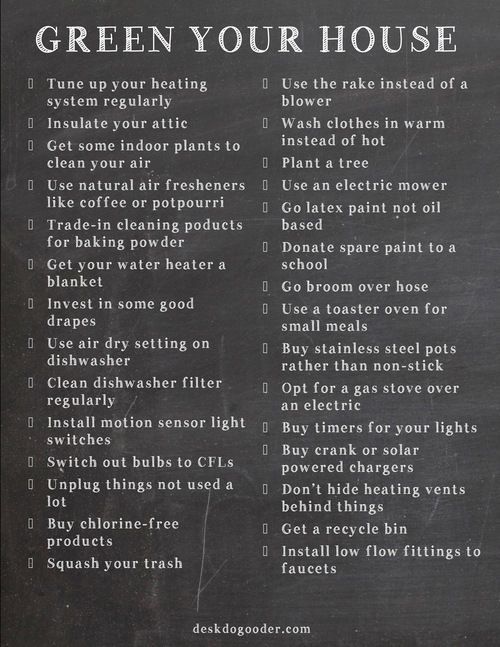
So the best solution is to begin solving the problem at home. Any movement that is successful starts with the individual – starts with changing the mindset of a culture one person at a time. I keep my eyes open for innovative ways to be more eco-friendly; I do a LOT of upcycling crafts, using most plastic (including magazine wraps, product packaging, plastic rings, produce nets, etc.), and everything else; my Pinterest boards will give you inspiration if you’re looking for ways to upcycle creatively. But if you’re not into crafts, there are still a lot of ways to become more environmentally friendly, and here are a few:
Unpaper-Towels: Cloth towels in the kitchen – reusable, washable, no waste!
Drinking Straws: Purchase metal straws; they usually come with a small scrub brush, and are easy to clean. I keep a microfiber cloth on my drying rack to set smaller things on to dry. If you google metal drinking straws, you can either find a shop near you that sells them, or you can buy them online; just keep in mind shipping waste if online-shopping.
Water Conservation: Take shorter showers, turning off the water stream when you’re soaping or shampooing; turn off the sink water in between actually using it. If washing a lot of dishes, either fill your dishwasher space-efficiently and to capacity, or use a larger bowl, etc. to reuse soapy water in the sink; when it’s dirty, dump it and allow the bowl to refill as you wash more dishes. Fill your clothes washing machine to capacity – never wash only a few items at a time! I have a machine that tells me if a load is too heavy for a particular setting; I can choose anywhere between 3 and 9 kilos, and it will conserve water by the settings I choose.
Cleaning Chemicals: Either purchase refillable, natural cleaning liquids (remember, it all goes into the water canals) or make your own from vinegar and water and baking soda, adding lemon juice or a few drops of lemon essential oils for that clean aroma.
Junk Mail: If you get unwanted mail, mark it “cancel” and “return to sender”. Just recycling it doesn’t solve the main issue, which is the flood of destroyed trees… Send the message to the perpetrators that it is unwanted.
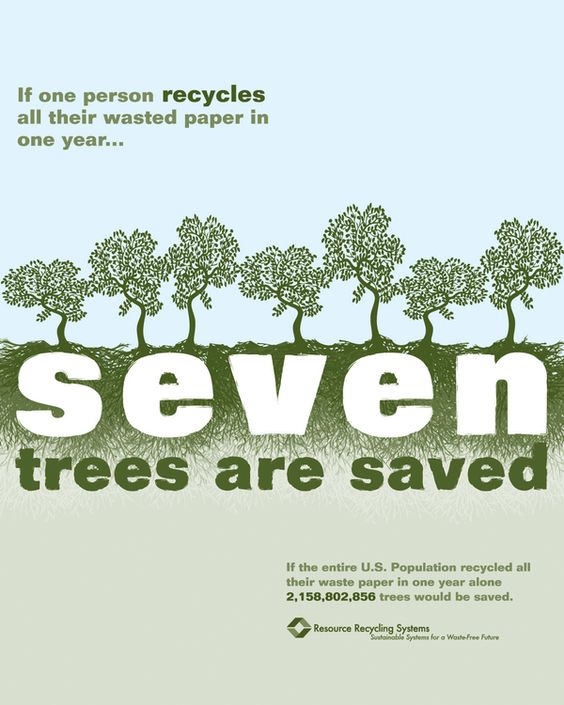
Here are a few visuals to add food for thought; as with all things reduced to a j-peg, some of these make sense, while others don’t. Take them with a grain of salt, and be inspired to try helpful ideas out in your own home:
Please let me know in the comments below what you do to be more eco-friendly and conserve the environment! Have a great 2020 – and let’s make it one step closer to caring for the planet and the animals we share it with!
Whenever I have a few minutes in my schedule, I like to fill it with something interesting; if I’m eating lunch, I’m probably watching a documentary or a video about a particular topic. So I thought I’d toss together a shortlist of natural phenomena that are out there somewhere on our unique and diverse planet. Just click on the links below to learn more – the links will lead you to either a YouTube video or an article. So, here ‘goes!
The Sahara Eye: Also known as the Richat Structure, it is a fascinating geological structure that’s best seen from lower orbit (located at 21.1269° N, 11.4016° W). Because of its concentric circular formations, there have been many claims that it was the fictional Atlantis of Plato’s writings. While the reasoning the supporters of that theory are interesting to me as a novelist, the scientific explanation is fairly straight forward.
Spotted Lake, Canada: This lake has no run-off, which means that water flowing into the lake only leaves through evaporation. Divots in the lake have grown into spotted pools which attract various minerals as snow melt-water enters the lake. The Native tribes used these pools as therapy for physical ailments in a time before modern medicine, just like people in 18th century England went to Bath to drink and bathe in the mineral waters there. On Google Earth, its coordinates are 49°04’40.86″N 119°34’03.01″W; if you use the historical toggle, you’ll see the individual pools more clearly.
Floating Eye Island, Argentina: This is a relatively new discovery from 2016, located at 34°15’07.8″S 58°49’47.4″W. It was discovered by Argentinian film director Sergio Neuspillerm, who was looking for a location to film a horror film and came across the Google map image of this unusual lake; because of his bent toward the purpose of this place, most “reports” have leaned toward the paranormal, and it was difficult to find a serious scientific report on the phenomenon. The actual interpretation is probably simply a combination of geology, botany and hydrodynamics: The lake produces methane gas, and if the floating island of debris and grasses growing atop the fertile strata get pushed around by methane bubbles rising, it will naturally knock off the rough edges of the floating patch and the land it bumps into, creating a circular “island”.
Ice Discs: Similar to the Eye, these rotating discs of ice form in freezing water which is moving slowly; they usually form in eddy currents, where the accelerating water creates the effect called “rotation shear”, breaking off a chunk of ice and twisting it around; the process grinds off the rough edges, leaving a round disc of rotating ice. This disc grows as it cools the water around it and attracts more ice into its vortex.
Sailing Stones, Death Valley, California: For years, people have observed the evidence of large boulders sliding across the surface of Racetrack Playa in Death Valley National Park. The explanation may be relatively simple, but sometimes people just like a mystery.
Fairy Rings/Pixie Rings: These are caused by the processes of the mycelium of fungi, as it spreads outward in a circle while looking for nutrients. Before scientific understanding came along, of course, these were thought to be portals to the magical realms of pixies or fairies and were convenient scapegoats for anything bad happening in a nearby town or village.
Since we’re on the topic of circles, what about the Namibian Fairy Circles? There are conflicting hypotheses about their origins, but the most recent study has discovered that beneath the bare circular patches of earth, distributed evenly over some 1100 miles of the Namib Desert, are colonies of termites. They eat the roots of the plants growing above their territory, removing the competition for the limited rainfall and allowing the water to go directly into the soil above their colony. It’s a complex ecosystem, but scientists are slowly beginning to understand it. In the meantime, the locals just call them the “footprints of the gods”.
Blood Falls, Antarctica: A waterfall in Antarctica flows blood red, caused by the iron-rich waters hitting oxygen and turning to rust. The symbiosis of microbes living in that subterranean water source is the stuff good science fiction is made of.
The Everlasting Storm: Catatumbo Lightning Storm, Venezuela: This lightning storm occurs during 140-160 nights per year, and lightning flashes up to 280 times per hour. Located over the mouth of the Catatumbo River as it empties into Lake Maracaibo, it has become so famous and so persistent that it is even featured in the flag and coat of arms of Zulia, the state which contains the lake, and is mentioned in the national anthem of Venezuela.
Red Crab Migration, Christmas Island: Christmas Island is an Australian external territory in the Indian Ocean, and on this 135 sq km (52 sq mi) patch live literally millions of red land crabs, found only on this island. To spawn, the females make their way down to the beach at high tide to release their eggs into the ocean – at the risk of drowning, as they are not aquatic. The eggs will hatch, and the tiny crabs will eventually return to the island. During this mass migration, the island slows down and makes way for the red river flowing over its streets, stairs, and anything else between the crabs and their goal.
Did you know that a group of vultures has a sense of humour? Or at least the people who decided to name them did (likely back in the 16th century, when a slew of collective nouns emerged): While hanging out and doing nothing, vultures are called a committee. When feeding, they’re called a wake. There’s irony in them thar’ varmints.
Some collective nouns are common sense, and others simply common, such as packs of wolves, flocks of birds or herds of cattle; but did you know that lice flock, and sea urchins form herds, too? If I say swarm, you might think of flies or gnats or even minnows; but you could use the same word to describe a group of eels.
Worms bed, dotterels trip, cheetahs form a coalition, and Hippopotami bloat. Rhinoceroses either crash or form a stubbornness, while skunks stench and squirrels scurry. Jellyfish smack, brood or fluther, while oysters bed and goldfish glint or create a troubling. Butterflies flutter, swarm or kaleidoscope; caterpillars army, while grasshoppers cloud.
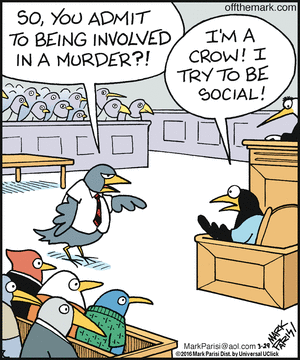
There are some fun combinations: Crows murder (they also gather as a storytelling or a parcel), Flamingos flamboyance, guillemots bazaar, gulls screech (don’t they, though?), and hawks kettle (flying in large numbers) and boil (two or more spiralling on an updraft). Hummingbirds charm, as do Magpies (unless they murder), and owls and rooks hold a parliament – I’d trust them to do so more than most politicians. Peacocks muster, ostentation and pride, while penguins tuxedo or huddle (I kid you not). Young penguins gather in a Créche, just like human toddlers, and seagulls squabble.
Starlings form beautiful murmurations and chatterings, while swifts scream and tigers ambush. I’d love to see a zeal of zebras, but not so much a prickle of porcupines. Whales pod while trout hover and stingrays fever; snails walk, frogs knot and, believe it or not, rattlesnakes rhumba! Elephants gather as a memory, while deer gang and bucks clash, and gnus form an implausibility. Running into a mob of kangaroos might be quite pleasant, but not an intrusion of cockroaches!
There are hundreds more such collective nouns; English is an ever-changing language, but some things are just too good to allow them to go the way of the Dodo, so add a few more colourful expressions to your language, and enjoy the idiosyncrasies of English!
I’ll just add that, by now, my grammar-checking program is having a nervous breakdown.
Lately, I’ve been thinking about time; how much we have in a day, how fast it passes, and that days never seem to be long enough. In dwelling on time, is it a waste of time? Is productivity only what our hands produce, or does it include, in our perception, what our minds ruminate on? Obviously, the trail led me to idioms about time.
What idioms or phrases do you use to describe your day? I use one phrase about four times a week, as I write it in my journal to describe my day in a nutshell before I go into details: “Hit the Ground Running” (I just write HTGR). I’m grateful for the days I don’t use it… those days are like a secret stash of chocolate to be enjoyed (if you knew my husband, you’d know that’s a matter of self-preservation – but don’t tell him. Hoi, Schätzli). The phrase, etymologically speaking, came into use in the late 19th century, but really, well, hit the ground running during World War 2: It became a popular way of describing deployment from ships or parachuting into combat. Later it moved to a figurative sense; some days, I use it both literally and figuratively.
Here is a collection of idioms about using one’s time. Let me know if you use any of them regularly. If you know of any others, please share it in the comments below!
A day late and a dollar short
Against the clock
A good time
A hard time
A laugh a minute
A matter of time
A mile a minute
A month of Sundays
Around the clock
As honest as the day is long
A whale of a time
Beat the clock
Behind the times
Better late than never
Bide one’s time
By degrees
Call it a day/night
Call time (on something)
Carry the day
Catch someone at a bad time
Clock in, clock out
Crack of dawn
Crunch time
Day in the sun
Day to day
Dog Days
Donkey’s years
Don’t know whether to wind a watch or bark at the moon
Do time
Dwell on the past
Eleventh hour
Feast today, famine tomorrow
Five o’clock shadow
For the time being
From now on
From time to time
Have one’s moments
Have time on one’s side
Here today, gone tomorrow
High time
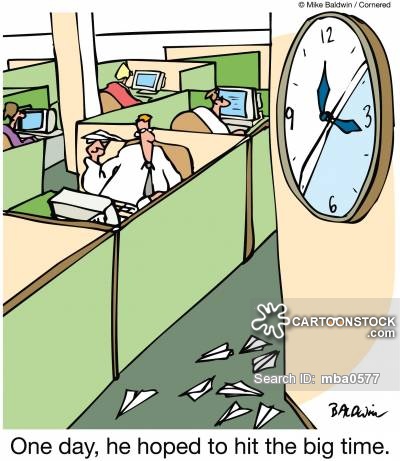
Hit the big time
Hour of need
In an instant / In the blink of an eye
In the interim
In the long run
In the right (wrong) place at the right (wrong) time
A zipper is something one rarely thinks about until it breaks. It’s something we use every day, from trousers to jackets to purses to zip-lock bags. Yet the actual modern zipper has only been around 101 years! The idea began forming as a practical design in 1851 in the mind of Elias Howe, who patented an “Automatic Continuous Clothing Closure” (no wonder that name never caught on). He was not a marketing whiz, and the idea petered out. At the 1893 Chicago World’s Fair, a device designed by Whitcomb Judson was launched but wasn’t very practical, and again, it failed to take off commercially. In 1906, a Swedish-American electrical engineer by the name of Gideon Sundback was hired by (and married into) the Fastener Manufacturing and Machine Company (Meadville, PA), and became the head designer. By December 1913, he’d improved the fastener into what we would recognize as the modern zipper, and the patent for the “Separable Fastener” was issued in 1917. In March of that year, a Swiss inventor, Mathieu Burri, improved the design with a lock-in system added to the end of the row of teeth, but because of patent conflicts, his version never made it to production.
The name “zipper” was coined by the B.F. Goodrich Company in 1923, when they used Sundback’s fastener on a new type of rubber boot. When they first came into production, zippers were mainly used on boots and tobacco pouches, only making it onto leather jackets in 1925 (produced by Schott NYC), trousers in 1937 (beating out the traditional button method for men’s trousers). The next time you use a zipper, stop and think about what you would have had to use 100 years ago!
And in the meantime, here are a couple idioms that have arisen using “zip” or “zipper” or which refer directly to that imagery:
Zip it (up) – close your mouth
Zip your lip/mouth
Euphemisms about undone zippers are numerous; here are a few of the better ones (IMHO):
Barn/stable door’s open
It’s six-thirty
Bombay’s open
Fly time
What do birds/airplanes do?
You’re advertising
Flag’s at half-mast
Front/trap door’s open
Your horse/colt’s gonna bolt
Mind the gap
Zip code
XYZ (PDQ) – “Examine Your Zipper (pretty darn quick)” – Your zipper is open
Originally posted on History Undusted, 25 April 2015, by Stephanie Huesler




 Every generation creates new ones, because a parent’s euphemism becomes the general term which is then too close to the original meaning, and so the children get creative with words, and so on. There are a few euphemisms that have remained unchanged over centuries, such as passed away, which came into English from the French “passer” (to pass) in the 10th century; others shift gradually, such as the word “nice”: When it first entered English from the French in the 13th century, it meant foolish, ignorant, frivolous or senseless. It graduated to mean precise or careful [in Jane Austen’s “Persuasion”, Anne Elliot is speaking with her cousin about good society; Mr Elliot reponds, “Good company requires only birth, education, and manners, and with regard to education is not very nice.” Austen also reflects the next semantic change in meaning (which began to develop in the late 1760s): Within “Persuasion”, there are several instances of “nice” also meaning agreeable or delightful (as in the nice pavement of Bath).]. As with nice, the side-stepping manoeuvres of polite society’s language shift over time, giving us a wide variety of colourful options to choose from.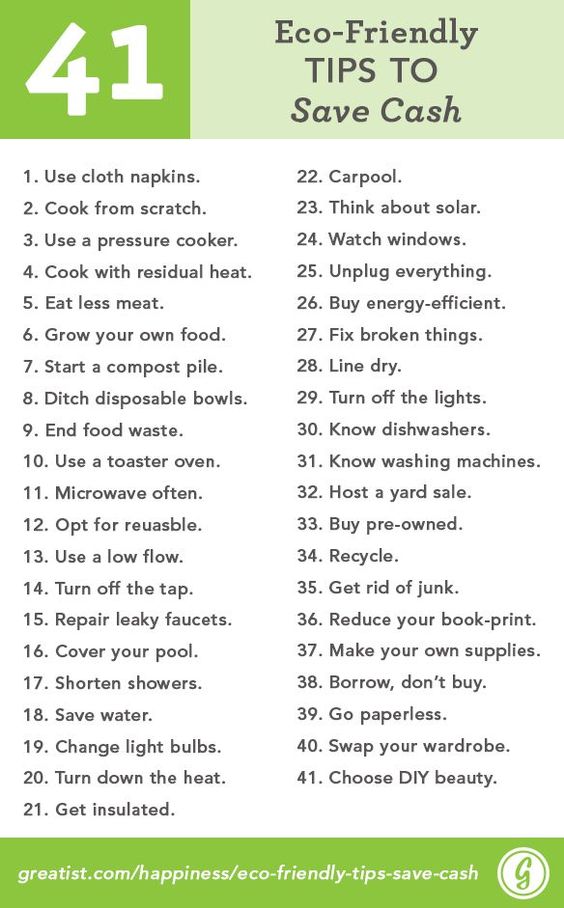






 A zipper is something one rarely thinks about until it breaks. It’s something we use every day, from trousers to jackets to purses to zip-lock bags. Yet the actual modern zipper has only been around 101 years! The idea began forming as a practical design in 1851 in the mind of Elias Howe, who patented an “Automatic Continuous Clothing Closure” (no wonder that name never caught on). He was not a marketing whiz, and the idea petered out. At the 1893 Chicago World’s Fair, a device designed by Whitcomb Judson was launched but wasn’t very practical, and again, it failed to take off commercially. In 1906, a Swedish-American electrical engineer by the name of Gideon Sundback was hired by (and married into) the Fastener Manufacturing and Machine Company (Meadville, PA), and became the head designer. By December 1913, he’d improved the fastener into what we would recognize as the modern zipper, and the patent for the “Separable Fastener” was issued in 1917. In March of that year, a Swiss inventor, Mathieu Burri, improved the design with a lock-in system added to the end of the row of teeth, but because of patent conflicts, his version never made it to production.




 Stephanie Huesler