
I love it when signs or notices are translated by non-mother tongue English speakers;it can be anything from cute to funny, misleading or just downright embarrassing. I especially love Asian translations! Here are a few examples.



I love it when signs or notices are translated by non-mother tongue English speakers;it can be anything from cute to funny, misleading or just downright embarrassing. I especially love Asian translations! Here are a few examples.
Filed under Images, Mistranslations, Nuts & Bolts, Quotes
 “The vast majority of human beings dislike and even dread all notions with which they are not familiar. Hence it comes about, that at their first appearance, innovators have always been divided as fools and madmen. ”
Aldous Leonard Huxley, 1894-1963, British writer

Nautical Jargon
In the course of writing novels, I do a lot – I mean a LOT – of research. And in the course of doing that LOT of research I come across interesting bits and bobs that I glean, putting into files on my computer for reference and rainy days. So it was that I came across a digitalized version of the 1867 “The Sailor’s Word-Book: An Alphabetical Digest of Nautical Terms, including some more especially military and scientific, but useful to seamen; as well as archaisms of early voyagers, etc. by the late ADMIRAL W. H. SMYTH, K.S.F., D.C.L., &c.” I love the fact that antique books had entire blurbs built into their titles! The document itself translates into no less than 586 pages in a word document; obviously I won’t force that upon you. But I will give you a snippet of words from A to Z that have an Anglo-Saxon origin or influence. If you’re interested in even more such lists broken down from the book, check out my “History Undusted” blog here. But first, here’s a snatch from the preface, written by the late Admiral W.H.Smyth:
“This predilection for sea idiom is assuredly proper in a maritime people, especially as many of the phrases are at once graphic, terse, and perspicuous. How could the whereabouts of an aching tooth be better pointed out to an operative dentist than Jack’s “‘Tis the aftermost grinder aloft, on the starboard quarter.” The ship expressions preserve many British and Anglo-Saxon words, with their quaint old preterites and telling colloquialisms; and such may require explanation, as well for the youthful aspirant as for the cocoa-nut-headed prelector in nautic lore. It is indeed remarkable how largely that foundation of the English language has been preserved by means of our sailors.
“This phraseology has necessarily been added to from time to time, and consequently bears the stamp of our successive ages of sea-life. In the “ancient and fishlike” terms that brave Raleigh derived from his predecessors, many epithets must have resulted from ardent recollections of home and those at home, for in a ship we find: Apeak, Apron, A-stay, Bonnet, Braces, Bridle, Cap, Catharpins, Cat-heads, Cat’s-paw, Cot, Cradle, Crib, Crow-foot, Crow’s nest, Crown, Diamond, Dog, Driver, Earrings, Eyes, Fox, Garnet, Goose-neck, Goose-wing, Horse, Hose, Hound, Jewel, Lacings, Martingale, Mouse, Nettle, Pins, Puddings, Rabbit, Ribband, Saddle, Sheaves, Sheets, Sheepshank, Shoe, Sister, Stays, Stirrup, Tiller, Truck, Truss, Watch, Whip, Yard.”
Now, on with the show!
A. The highest class of the excellence of merchant ships on Lloyd’s books, subdivided into A 1 and A 2, after which they descend by the vowels: A 1 being the very best of the first class. Formerly a river-built (Thames) ship took the first rate for 12 years, a Bristol one for 11, and those of the northern ports 10. Some of the out-port built ships keep their rating 6 to 8 years, and inferior ones only 4. But improvements in ship-building, and the large introduction of iron, are now claiming longer life. “A” is an Anglo-Saxonism for in or on; as a‘board, a‘going, &c.
ABORD. An Anglo-Saxon term, meaning across, from shore to shore, of a port or river.
ACUMBA. Oakum. The Anglo-Saxon term for the hards, or the coarse part, of flax or unplucked wool.
ADOWN. The bawl of privateersmen for the crew of a captured vessel to go below. Saxon, adoun.
ÆWUL. An Anglo-Saxon term for a twig basket for catching fish.
AFORE. A Saxon word opposed to abaft, and signifying that part of the ship which lies forward or near the stem. It also means farther forward; as, the galley is afore the bitts.—Afore, the same as before the mast.—Afore the beam, all the field of view from amidship in a right angle to the ship’s keel to the horizon forward.
AFT—a Saxon word contradistinctive of fore, and an abbreviation of abaft—the hinder part of the ship, or that nearest the stern.—Right aft is in a direct line with the keel from the stern.—To haul aft a sheet is to pull on the rope which brings the clue or corner of the sails more in the direction of the stern.—The mast rakes aft when it inclines towards the stern.
AHOO, or All Ahoo, as our Saxon forefathers had it; awry, aslant, lop-sided.
ALLAN. A word from the Saxon, still used in the north to denote a piece of land nearly surrounded by a stream.
ALOFT [Anglo-Saxon, alofte, on high]. Above; overhead; on high. Synonymous with up above the tops, at the mast-head, or anywhere about the higher yards, masts, and rigging of ships.—Aloft there! the hailing of people in the tops.—Away aloft! the command to the people in the rigging to climb to their stations. Also, heaven: “Poor Tom is gone aloft.”
ALONG [Saxon]. Lengthwise.—Alongside, by the side of a ship; side by side.—Lying along, when the wind, being on the beam, presses the ship over to leeward with the press of sail; or, lying along the land.
AMAIN [Saxon a, and mægn, force, strength]. This was the old word to an enemy for “yield,” and was written amayne and almayne. Its literal signification is, with force or vigour, all at once, suddenly; and it is generally used to anything which is moved by a tackle-fall, as “lower amain!” let run at once. When we used to demand the salute in the narrow seas, the lowering of the top-sail was called striking amain, and it was demanded by the wave amain, or brandishing a bright sword to and fro.
ANGIL. An old term for a fishing-hook [from the Anglo-Saxon ongul, for the same]. It means also a red worm used for a bait in angling or fishing.
ATEGAR. The old English hand-dart, named from the Saxon aeton, to fling, and gar, a weapon.
AXE. A large flat edge-tool, for trimming and reducing timber. Also an Anglo-Saxon word for ask, which seamen still adhere to, and it is difficult to say why a word should be thought improper which has descended from our earliest poets; it may have become obsolete, but without absolutely being vulgar or incorrect.
BAT, or Sea-bat. An Anglo-Saxon term for boat or vessel. Also a broad-bodied thoracic fish, with a small head, and distinguished by its large triangular dorsal and anal fins, which exceed the length of the body. It is the Chætodon vespertilio of naturalists.
BAT-SWAIN. An Anglo-Saxon expression for boatswain.
BEACON. [Anglo-Saxon, béacn.] A post or stake erected over a shoal or sand-bank, as a warning to seamen to keep at a distance; also a signal-mark placed on the top of hills, eminences, or buildings near the shore for the safe guidance of shipping.
BECK [the Anglo-Saxon becca]. A small mountain-brook or rivulet, common to all northern dialects. A Gaelic or Manx term for a thwart or bench in the boat.
BLEAK. The Leuciscus alburnus of naturalists, and the fresh-water sprat of Isaak Walton. The name of this fish is from the Anglo-Saxon blican, owing to its shining whiteness—its lustrous scales having long been used in the manufacture of false pearls.
BRAND. The Anglo-Saxon for a burnished sword. A burned device or character, especially that of the broad arrow on government stores, to deface or erase which is felony.
BROKER. Originally a broken tradesman, from the Anglo-Saxon broc, a misfortune; but, in later times, a person who usually transacts the business of negotiating between the merchants and ship-owners respecting cargoes and clearances: he also effects insurances with the underwriters; and while on the one hand he is looked to as to the regularity of the contract, on the other he is expected to make a candid disclosure of all the circumstances which may affect the risk.
BURG [the Anglo-Saxon burh]. A word connected with fortification in German, as in almost all the Teutonic languages of Europe. In Arabic the same term, with the alteration of a letter, burj, signifies primarily a bastion, and by extension any fortified place on a rising ground. This meaning has been retained by all northern nations who have borrowed the word; and we, with the rest, name our towns, once fortified, burghs or boroughs.
BURN, or Bourne. The Anglo-Saxon term for a small stream or brook, originating from springs, and winding through meadows, thus differing from a beck. Shakespeare makes Edgar say in “King Lear”—
CAPTAIN. This title is said to be derived from the eastern military magistrate katapan, meaning “over everything;” but the term capitano was in use among the Italians nearly 200 years before Basilius II. appointed his katapan of Apulia and Calabria, A.D. 984. Hence, the corruption of the Apulian province into capitanata. Among the Anglo-Saxons the captain was schipp-hláford, or ship’s lord. The captain, strictly speaking, is the officer commanding a line-of-battle ship, or a frigate carrying twenty or more cannon. A captain in the royal navy is answerable for any bad conduct in the military government, navigation, and equipment of his ship; also for any neglect of duty in his inferior officers, whose several charges he is appointed to regulate. It is also a title, though incorrectly, given to the masters of all vessels whatever, they having no commissions. It is also applied in the navy itself to the chief sailor of particular gangs of men; in rank, captain of the forecastle, admiral’s coxswain, captain’s coxswain, captain of the hold, captain of main-top, captain of fore-top, &c.
CHESIL. From the Anglo-Saxon word ceosl, still used for a bank or shingle, as that remarkable one connecting the Isle of Portland with the mainland, called the Chesil Beach.
CHIMBE [Anglo-Saxon]. The prominent part or end of the staves, where they project beyond the head of a cask.
CHIULES. The Saxon ships so called.
CLIFF [from the Anglo-Saxon cleof]. A precipitous termination of the land, whatever be the soil.
COGGE. An Anglo-Saxon word for a cock-boat or light yawl, being thus mentioned in Morte Arthure— “Then he covers his cogge, and caches one ankere.” But coggo, as enumerated in an ordinance of parliament (temp. Rich. II.), seems to have been a vessel of burden used to carry troops.
COLMOW. An old word for the sea-mew, derived from the Anglo-Saxon.
CONN, Con, or Cun, as pronounced by seamen. This word is derived from the Anglo-Saxon conne, connan, to know, or be skilful. The pilot of old was skillful, and later the master was selected to conn the ship in action, that is, direct the helmsman. The quarter-master during ordinary watches conns the ship, and stands beside the wheel at the conn, unless close-hauled, when his station is at the weather-side, where he can see the weather-leeches of the sails.
COOMB. The Anglo-Saxon comb; a low place inclosed with hills; a valley. (CWM: CWM, or Comb. A British word signifying an inlet, valley, or low place, where the hilly sides round together in a concave form; the sides of a glyn being, on the contrary, convex.)
CORN, To. A remainder of the Anglo-Saxon ge-cyrned, salted. To preserve meat for a time by salting it slightly.
CRAFT [from the Anglo-Saxon word cræft, a trading vessel]. It is now a general name for lighters, hoys, barges, &c., employed to load or land any goods or stores.—Small craft. The small vessels of war attendant on a fleet, such as cutters, schooners, gunboats, &c., generally commanded by lieutenants. Craft is also a term in sea-phraseology for every kind of vessel, especially for a favourite ship. Also, all manner of nets, lines, hooks, &c., used in fishing.
CROCK [Anglo-Saxon, croca]. An earthen mess-vessel, and the usual vegetables were called crock-herbs. In the Faerie Queene Spenser cites the utensil:— “Therefore the vulgar did aboute him flocke,
Like foolish flies about an honey-crocke.”
CULVER. A Saxon word for pigeon, whence Culver-cliff, Reculvers, &c., from being resorted to by those birds. [Latin, columba; b and v are often interchanged.]
CUTE. Sharp, crafty, apparently from acute; but some insist that it is the Anglo-Saxon word cuth, rather meaning certain, known, or familiar.
DEL. Saxon for part.—Del a bit, not a bit, a phrase much altered for the worse by those not aware of its antiquity.
DENE. The Anglo-Saxon dæne; implying a kind of hollow or ravine through which a rivulet runs, the banks on either side being studded with trees.
DIGHT [from the Anglo-Saxon diht, arranging or disposing]. Now applied to dressing or preparing for muster; setting things in order.
DREINT. The old word used for drowned, from the Anglo-Saxon.
DRIVE, To [from the Anglo-Saxon dryfan]. A ship drives when her anchor trips or will not hold. She drives to leeward when beyond control of sails or rudder; and if under bare poles, may drive before the wind. Also, to strike home bolts, tree-nails, &c.
DUNES. An Anglo-Saxon word still in use, signifying mounds or ridges of drifted sands.
DYKE. From the Anglo-Saxon dic, a mound or bank; yet in some parts of England the word means a ditch.
EAGRE, or Hygre. The reciprocation of the freshes of various rivers, as for instance the Severn, with the flowing tide, sometimes presenting a formidable surge. The name seems to be from the Anglo-Saxon eágor, water, or Ægir, the Scandinavian god of the sea.
EAST. From the Anglo-Saxon, y’st. One of the cardinal points of the compass. Where the sun rises due east, it makes equal days and nights, as on the equator.
EASTINTUS. From the Saxon, east-tyn, an easterly coast or country. Leg. Edward I.
EBB. The lineal descendant of the Anglo-Saxon ep-flod, meaning the falling reflux of the tide, or its return back from the highest of the flood, full sea, or high water. Also termed sæ-æbbung, sea-ebbing, by our progenitors.
EBBER, or Ebber-shore. From the Anglo-Saxon signifying shallow.
EGG, To. To instigate, incite, provoke, to urge on: from the Anglo-Saxon eggion.
EKE, To. [Anglo-Saxon eácan, to prolong.] To make anything go far by reduction and moderation, as in shortening the allowance of provisions on a voyage unexpectedly tedious.
ENSIGN. [From the Anglo-Saxon segn.] A large flag or banner, hoisted on a long pole erected over the stern, and called the ensign-staff. It is used to distinguish the ships of different nations from each other, as also to characterize the different squadrons of the navy; it was formerly written ancient. Ensign is in the army the title of the junior rank of subaltern officers of infantry; from amongst them are detailed the officers who carry the colours.
ERNE. From the Anglo-Saxon earne, a vulture, a bird of the eagle kind. Now used to denote the sea-eagle.
FARE [Anglo-Saxon, fara]. A voyage or passage by water, or the money paid for such passage. Also, a fishing season for cod; and likewise the cargo of the fishing vessel.
FATHOM [Anglo-Saxon, fædm]. The space of both arms extended. A measure of 6 feet, used in the length of cables, rigging, &c., and to divide the lead (or sounding) lines, for showing the depth of water.—To fathom, is to ascertain the depth of water by sounding. To conjecture an intention.
FELL, To. To cut down timber. To knock down by a heavy blow. Fell is the Anglo-Saxon for a skin or hide.
FIN [Anglo-Saxon, Finn]. A native of Finland; those are Fins who live by fishing. We use the whole for a part, and thus lose the clue which the Fin affords of a race of fishermen.
FIRE-BARE. An old term from the Anglo-Saxon for beacon.
FLOAT [Anglo-Saxon fleot or fleet]. A place where vessels float, as at Northfleet. Also, the inner part of a ship-canal. In wet-docks ships are kept afloat while loading and discharging cargo. Two double gates, having a lock between them, allow the entry and departure of vessels without disturbing the inner level. Also, a raft or quantity of timber fastened together, to be floated along a river by a tide or current.
FOAM [Anglo-Saxon, feám]. The white froth produced by the collision of the waves, or by the bow of a ship when acted on by the wind; and also by their striking against rocks, vessels, or other bodies.
FORE-FINGER, or Index-finger. The pointing finger, which was called shoot-finger by the Anglo-Saxons, from its use in archery, and is now the trigger-finger from its duty in gunnery.
FOTHER [Anglo-Saxon foder]. A burden; a weight of lead equal to 191⁄2 cwts. Leaden pigs for ballast.
FYRDUNG [the Anglo-Saxon fyrd ung, military service]. This appears on our statutes for inflicting a penalty on those who evaded going to war at the king’s command.
GARE. The Anglo-Saxon for ready.
GAR-FISH. The Belone vulgaris, or bill-fish, the bones of which are green. Also called the guard-fish, but it is from the Anglo-Saxon gar, a weapon.
GEAR [the Anglo-Saxon geara, clothing]. A general name for the rigging of any particular spar or sail; and in or out of gear implies anything being fit or unfit for use.
GLEN. An Anglo-Saxon term denoting a dale or deep valley; still in use for a ravine.
GOD. We retain the Anglo-Saxon word to designate the Almighty; signifying good, to do good, doing good, and to benefit; terms such as our classic borrowings cannot pretend to.
GRIP. The Anglo-Saxon grep. The handle of a sword; also a small ditch or drain. To hold, as “the anchor grips.” Also, a peculiar groove in rifled ordnance.
GUTTER [Anglo-Saxon géotan, to pour out or shed]. A ditch, sluice, or gote.
HACOT. From the Anglo-Saxon hacod, a large sort of pike.
HAVEN [Anglo-Saxon, hæfen]. A safe refuge from the violence of wind and sea; much the same as harbour, though of less importance. A good anchorage rather than place of perfect shelter. Milford Haven is an exception.
HAVEN-SCREAMER. The sea-gull, called hæfen by the Anglo-Saxons.
HEFT. The Anglo-Saxon hæft; the handle of a dirk, knife, or any edge-tool; also, the handle of an oar.
HELMY. Rainy [from an Anglo-Saxon phrase for rainy weather].
HERE-FARE [Anglo-Saxon]. An expedition; going to warfare.
HERRING. A common fish—the Clupea harengus; Anglo-Saxon hæring and hering.
HILL. In use with the Anglo-Saxons. An insulated rise of the ground, usually applied to heights below 1000 feet, yet higher than a hillock or hummock.
HOLD. The whole interior cavity of a ship, or all that part comprehended between the floor and the lower deck throughout her length.—The after-hold lies abaft the main-mast, and is usually set apart for the provisions in ships of war.—The fore-hold is situated about the fore-hatchway, in continuation with the main-hold, and serves the same purposes.—The main-hold is just before the main-mast, and generally contains the fresh water and beer for the use of the ship’s company.—To rummage the hold is to examine its contents.—To stow the hold is to arrange its contents in the most secure and commodious manner possible.—To trim the hold. Also, an Anglo-Saxon term for a fort, castle, or stronghold.—Hold is also generally understood of a ship with regard to the land or to another ship; hence we say, “Keep a good hold of the land,” or “Keep the land well aboard,” which are synonymous phrases, implying to keep near the land; when applied to a ship, we say, “She holds her own;” i.e. goes as fast as the other ship; holds her wind, or way.—To hold. To assemble for public business; as, to hold a court-martial, a survey, &c.—Hold! An authoritative way of separating combatants, according to the old military laws at tournaments, &c.; stand fast!
HOLT [from the Anglo-Saxon]. A peaked hill covered with a wood.
HORN-FISC. Anglo-Saxon for the sword-fish.
HOUND-FISH. The old Anglo-Saxon term for dog-fish—húnd-fisc.
HURST. Anglo-Saxon to express a wood.
HYTHE. A pier or wharf to lade or unlade wares at [from the Anglo-Saxon hyd, coast or haven].
ILAND. The Saxon ealand (See Island.)
KEEL. The lowest and principal timber of a ship, running fore and aft its whole length, and supporting the frame like the backbone in quadrupeds; it is usually first laid on the blocks in building, being the base of the superstructure. Accordingly, the stem and stern-posts are, in some measure, a continuation of the keel, and serve to connect the extremities of the sides by transoms, as the keel forms and unites the bottom by timbers. The keel is generally composed of several thick pieces placed lengthways, which, after being scarphed together, are bolted and clinched upon the upper side. In iron vessels the keel is formed of one or more plates of iron, having a concave curve, or limber channel, along its upper surface.—To give the keel, is to careen.—Keel formerly meant a vessel; so many “keels struck the sands.” Also, a low flat-bottomed vessel used on the Tyne to carry coals (21 tons 4 cwt.) down from Newcastle for loading the colliers; hence the latter are said to carry so many keels of coals. [Anglo-Saxon ceol, a small bark.]—False keel. A fir keel-piece bolted to the bottom of the keel, to assist stability and make a ship hold a better wind. It is temporary, being pinned by stake-bolts with spear-points; so when a vessel grounds, this frequently, being of fir or Canada elm, floats and comes up alongside.—Rabbets of the keel. The furrow, which is continued up stem and stern-post, into which the garboard and other streaks fay. The butts take into the gripe ahead, or after-deadwood and stern-post abaft.—Rank keel. A very deep keel, one calculated to keep the ship from rolling heavily.—Upon an even keel. The position of a ship when her keel is parallel to the plane of the horizon, so that she is equally deep in the water at both ends.
KEELS. An old British name for long vessels—formerly written ceol and cyulis. Verstegan informs us that the Saxons came over in three large ships, styled by themselves keeles.
KERS. An Anglo-Saxon word for water-cresses.
KNAP [from the Anglo-Saxon cnæp, a protuberance]. The top of a hill. Also, a blow or correction, as “you’ll knap it,” for some misdeed.
LADE. Anglo-Saxon lædan, to pour out. The mouth of a channel or drain. To lade a boat, is to throw water out.
LAGAN, or Lagam. Anglo-Saxon liggan. A term in derelict law for goods which are sunk, with a buoy attached, that they may be recovered. Also, things found at the bottom of the sea. Ponderous articles which sink with the ship in wreck.
LEAK [Anglo-Saxon leccinc]. A chink in the deck, sides, or bottom of a ship, through which the water gets into her hull. When a leak begins, a vessel is said to have sprung a leak.
LEWTH [from the Anglo-Saxon lywd]. A place of shelter from the wind.
LEX, or Leax. The Anglo-Saxon term for salmon.
LODESMEN. An Anglo-Saxon word for pilots.
MARSH [Anglo-Saxon mersc, a fen]. Low land often under water, and producing aquatic vegetation. Those levels near the sea coast are usually saturated with salt water.
MAST [Anglo-Saxon mæst, also meant chief or greatest]. A long cylindrical piece of timber elevated perpendicularly upon the keel of a ship, to which are attached the yards, the rigging, and the sails. It is either formed of one piece, and called a pole-mast, or composed of several pieces joined together and termed a made mast. A lower mast is fixed in the ship by sheers, and the foot or keel of it rests in a block of timber called the step, which is fixed upon the keelson.—Expending a mast, or carrying it away, is said, when it is broken by foul weather.—Fore-mast. That which stands near the stem, and is next in size to the main-mast.—Jury-mast.—Main-mast. The largest mast in a ship.—Mizen-mast. The smallest mast, standing between the main-mast and the stern.—Over-masted, or taunt-masted. The state of a ship whose masts are too tall or too heavy.—Rough-mast, or rough-tree. A spar fit for making a mast.—Springing a mast. When it is cracked horizontally in any place.—Top-mast. A top-mast is raised at the head or top of the lower-mast through a cap, and supported by the trestle-trees.—Topgallant-mast. A mast smaller than the preceding, raised and secured to its head in the same manner.—Royal-mast. A yet smaller mast, elevated through irons at the head of the topgallant-mast; but more generally the two are formed of one spar.—Under-masted or low-masted ships. Vessels whose masts are small and short for their size.—To mast a ship. The act of placing a ship’s masts.
MAST-ROPE [Anglo-Saxon mæst-ràp]. That which is used for sending masts up or down.
MERE. An Anglo-Saxon word still in use, sometimes meaning a lake, and generally the sea itself.
MEW [Anglo-Saxon mæw]. A name for the sea-gull.
MIST [Anglo-Saxon]. A thin vapour, between a fog and haze, and is generally wet.
MOUNT, or Mountain. An Anglo-Saxon term still in use, usually held to mean eminences above 1000 feet in height. In a fort it means the cavalier.
MOUTH [the Anglo-Saxon muda]. The embouchure opening of a port or outlet of a river, as Yarmouth, Tynemouth, Exmouth, &c.
NAME-BOOK. The Anglo-Saxon nom-bóc, a mustering list.
NORTH. From the Anglo-Saxon nord.
OAKUM [from the Anglo-Saxon æcumbe]. The state into which old ropes are reduced when they are untwisted and picked to pieces. It is principally used in caulking the seams, for stopping leaks, and for making into twice-laid ropes. Very well known in workhouses.—White Oakum. That which is formed from untarred ropes.
OVERWHELM. A comprehensive word derived from the Ang.-Saxon wylm, a wave. Thus the old song—
PORT. An old Anglo-Saxon word still in full use. It strictly means a place of resort for vessels, adjacent to an emporium of commerce, where cargoes are bought and sold, or laid up in warehouses, and where there are docks for shipping. It is not quite a synonym of harbour, since the latter does not imply traffic. Vessels hail from the port they have quitted, but they are compelled to have the name of the vessel and of the port to which they belong painted on the bow or stern.—Port is also in a legal sense a refuge more or less protected by points and headlands, marked out by limits, and may be resorted to as a place of safety, though there are many ports but rarely entered. The left side of the ship is called port, by admiralty order, in preference to larboard, as less mistakeable in sound for starboard.—To port the helm. So to move the tiller as to carry the rudder to the starboard side of the stern-post.—Bar-port. One which can only be entered when the tide rises sufficiently to afford depth over a bar; this in many cases only occurs at spring-tides.—Close-port. One within the body of a city, as that of Rhodes, Venice, Amsterdam, &c.—Free-port. One open and free of all duties for merchants of all nations to load and unload their vessels, as the ports of Genoa and Leghorn. Also, a term used for a total exemption of duties which any set of merchants enjoy, for goods imported into a state, or those exported of the growth of the country. Such was the privilege the English enjoyed for several years after their discovery of the port of Archangel, and which was taken from them on account of the regicide in 1648.
PUNT. An Anglo-Saxon term still in use for a flat-bottomed boat, used by fishermen, or for ballast lumps, &c.
ROPE. Is composed of hemp, hide, wire, or other stuff, spun into yarns and strands, which twisted together forms the desired cordage. The word is very old, being the actual representative of the Anglo-Saxon ráp.—To rope a sail. To sew the bolt-rope round its edges, to strengthen it and prevent it from rending.
ROTHER. This lineal descendant of the Anglo-Saxon róter is still in use for rudder.
ROVING COMMISSION. An authority granted by the Admiralty to a select officer in command of a vessel, to cruise wherever he may see fit. [From the Anglo-Saxon ròwen.]
RUDDER. The appendage attached by pintles and braces to the stern-post of a vessel, by which its course through the water is governed. It is formed of several pieces of timber, of which the main one is generally of oak, extending the whole length. Tiphys is said to have been its inventor. The Anglo-Saxon name was steor-roper.
RYNE. An Anglo-Saxon word still in use for a water-course, or streamlet which rises high with floods.
SACK, To [from the Anglo-Saxon sæc]. To pillage a place which has been taken by storm.
SCONCE. A petty fort. Also, the head; whence Shakespeare’s pun in making Dromio talk of having his sconce ensconced. Also, the Anglo-Saxon for a dangerous candle-holder, made to let into the sides or posts in a ship’s hold. Also, sconce of the magazine, a close safe lantern.
SCOT, or Shot. Anglo-Saxon sceat. A share of anything; a contribution in fair proportion.
SCRAPER [from the Anglo-Saxon screope]. A small triangular iron instrument, having two or three sharp edges. It is used to scrape the ship’s side or decks after caulking, or to clean the top-masts, &c. This is usually followed by a varnish of turpentine, or a mixture of tar and oil, to protect the wood from the weather. Also, metaphorically, a cocked hat, whether shipped fore-and-aft or worn athwart-ships.
SCURRY. Perhaps from the Anglo-Saxon scur, a heavy shower, a sudden squall. It now means a hurried movement; it is more especially applied to seals or penguins taking to the water in fright.
SEAL [from the Anglo-Saxon seolh]. The well-known marine piscivorous animal.
SEAM. The sewing together of two edges of canvas, which should have about 110 stitches in every yard of length. Also, the identical Anglo-Saxon word for a horse-load of 8 bushels, and much looked to in carrying fresh fish from the coast. Also, the opening between the edges of the planks in the decks and sides of a ship; these are filled with a quantity of oakum and pitch, to prevent the entrance of water.
SETTLE. Now termed the stern-sheets [derived from the Anglo-Saxon settl, a seat].—To settle. To lower; also to sink, as “the deck has settled;” “we settled the land.” “Settle the main top-sail halliards,” i.e. ease them off a little, so as to lower the yard, as on shaking out a reef.
SHACKLE [from the Anglo-Saxon sceacul]. A span with two eyes and a bolt, attached to open links in a chain-cable, at every 15 fathoms; they are fitted with a movable bolt, so that the chain can there be separated or coupled, as circumstances require. Also, an iron loop-hooked bolt moving on a pin, used for fastening the lower-deck port-bars.
SHIFT. In ship-building, when one butt of a piece of timber or plank overlaunches the butt of another, without either being reduced in length, for the purpose of strength and stability.—To shift [thought to be from the Anglo-Saxon scyftan, to divide]. To change or alter the position of; as, to shift a sail, top-mast, or spar; to shift the helm, &c. Also, to change one’s clothes.
SHIP [from the Anglo-Saxon scip]. Any craft intended for the purposes of navigation; but in a nautical sense it is a general term for all large square-rigged vessels carrying three masts and a bowsprit—the masts being composed of a lower-mast, top-mast, and topgallant-mast, each of these being provided with tops and yards.—Flag-ship. The ship in which the admiral hoists his flag; whatever the rank of the commander be; all the lieutenants take rank before their class in other ships.—Line-of-battle ship. Carrying upwards of 74 guns.—Ship of war. One which, being duly commissioned under a commissioned officer by the admiralty, wears a pendant. The authority of a gunboat, no superior being present, is equal to that of an admiral.—Receiving ship. The port, guard, or admiral’s flag-ship, stationed at any place to receive volunteers, and bear them pro. tem. in readiness to join any ship of war which may want hands.—Store-ship. A vessel employed to carry stores, artillery, and provisions, for the use of a fleet, fortress, or Garrison.—Troop-ship. One appointed to carry troops, formerly called a transport.—Hospital-ship. A vessel fitted up to attend a fleet, and receive the sick and wounded. Scuttles are cut in the sides for ventilation. The sick are under the charge of an experienced surgeon, aided by a staff of assistant-surgeons, a proportional number of assistants, cook, baker, and nurses.—Merchant ship.—A vessel employed in commerce to carry commodities of various sorts from one port to another.—Private ship of war. —Slaver, or slave-ship. A vessel employed in carrying negro slaves.—To ship. To embark men or merchandise. It also implies to fix anything in its place, as “Ship the oars,” i.e. place them in their rowlocks; “Ship capstan-bars.” Also, to enter on board, or engage to join a ship.—To ship a sea. A wave breaking over all in a gale. Hence the old saying— “Sometimes we ship a sea,
Sometimes we see a ship.” To ship a swab. A colloquialism for mounting an epaulette, or receiving a commission.
SHIP-CRAFT. Nearly the same as the Anglo-Saxon scyp-cræft, an early word for navigation.
SHIPMAN [Anglo-Saxon scyp-mann]. The master of a barge, who in the days of Chaucer had but “litel Latin in his mawe,” and who, though “of nice conscience toke he no kepe,” was certainly a good fellow.
SHIP-STAR. The Anglo-Saxon scyp-steora, an early name for the pole-star, once of the utmost importance in navigation.
SHOOT-FINGER. This was a term in use with the Anglo-Saxons from its necessity in archery, and is now called the trigger-finger from its equal importance in modern fire-arms. The mutilation of this member was always a most punishable offence; for which the laws of King Alfred inflicted a penalty of fifteen shillings, which at that time probably was a sum beyond the bowman’s means.
SLADE [the Anglo-Saxon slæd]. A valley or open tract of country.
SMELT [Anglo-Saxon, smylt]. The fry of salmon, samlet, or Salmo eperlanus.
SNOOD [Anglo-Saxon, snod]. A short hair-line or wire to which hooks are fastened below the lead in angling. Or the link of hair uniting the hook and fishing-line.
SOUND [Anglo-Saxon, sund]. An arm of the sea over the whole extent of which soundings may be obtained, as on the coasts of Norway and America. Also, any deep bay formed and connected by reefs and sand-banks. On the shores of Scotland it means a narrow channel or strait. Also, the air-bladder of the cod, and generally the swimming-bladder or “soundes of any fysshes.” Also, a cuttle-fish.
SOUNDING-LINE. This line, with a plummet, is mentioned by Lucilius; and was the sund-gyrd of the Anglo-Saxons.
SPARTHE. An Anglo-Saxon term for a halbert or battle-axe.
SPELL. The period wherein one or more sailors are employed in particular duties demanding continuous exertion. Such are the spells to the hand-lead in sounding, to working the pumps, to look out on the mast-head, &c., and to steer the ship, which last is generally called the “trick at the wheel.” Spel-ian, Anglo-Saxon, “to supply another’s room.” Thus, Spell ho! is the call for relief.
SPRIT [Anglo-Saxon, spreotas]. A small boom which crosses the sail of a boat diagonally from the mast to the upper aftmost corner: the lower end of the sprit rests in a sort of becket called the snotter, which encircles the mast at that place. These sails are accordingly called sprit-sails. Also, in a sheer-hulk, a spur or spar for keeping the sheers out to the required distance, so that their head should plumb with the centre of the ship when taking out or putting in masts.
STADE. The Anglo-Saxon stæde, still in use. A station for ships. From stade is derived staith.
STAITH [Anglo-Saxon stæde]. An embankment on the river bank whence to load vessels. Also, a large wooden wharf, with a timber frame of either shoots or drops, according to circumstances.
STARBOARD. The opposite of larboard or port; the distinguishing term for the right side of a ship when looking forward [from the Anglo-Saxon stéora-bórd].
STEEP-TO. [Anglo-Saxon stéap.] Said of a bold shore, admitting of the largest vessels coming very close to the cliffs without touching the bottom.
STEERING [Anglo-Saxon stéoran]. The perfection of steering consists in a vigilant attention to the motion of the ship’s head, so as to check every deviation from the line of her course in the first instant of its commencement, and in applying as little of the power of the helm as possible, for the action of the rudder checks a ship’s speed.
STERE’S-MAN. A pilot or steerer, from the Anglo-Saxon stéora.
STORMS [from the Anglo-Saxon steorm]. Tempests, or gales of wind in nautic language, are of various kinds, and will be found under their respective designations. But that is a storm which reduces a ship to her storm staysails, or to her bare poles.
STRAND. A number of rope-yarns twisted together; one of the twists or divisions of which a rope is composed. The part which passes through to form the eye of a splice. Also, a sea-margin; the portion alternately left and covered by tides. Synonymous with beach. It is not altered from the original Anglo-Saxon.
STREAM. Anglo-Saxon for flowing water, meaning especially the middle or most rapid part of a tide or current.
STRING [Anglo-Saxon stræng]. In ship-building, a strake within side, constituting the highest range of planks in a ship’s ceiling, and it answers to the sheer-strake outside, to the scarphs of which it gives strength.
SWIM, To [from the Anglo-Saxon swymm]. To move along the surface of the water by means of the simultaneous movement of the hands and feet. With the Romans this useful art was an essential part of education.
SYKE [from the Anglo-Saxon sych]. A streamlet of water that flows in winter and dries up in summer.
TAKEL [Anglo-Saxon]. The arrows which used to be supplied to the fleet; the takill of Chaucer.
TALE [from Anglo-Saxon tael, number]. Taylor thus expressed it in 1630—
TAR [Anglo-Saxon tare]. A kind of turpentine which is drained from pines and fir-trees, and is used to preserve standing rigging, canvas, &c., from the effects of weather, by rendering them water-proof. Also, a perfect sailor; one who knows his duty thoroughly. (See Jack Tar.)—Coal or gas tar. A fluid extracted from coal during the operation of making gas, &c.; chiefly used on wood and iron, in the place of paint.
TARGET [Anglo-Saxon targe]. A leathern shield. A mark to aim at.
TAUT [from the Anglo-Saxon tought]. Tight.
THOLE, Thole-pin, or Thowel [from the Anglo-Saxon thol]. Certain pins in the gunwale of a boat, instead of the rowlock-poppets, and serving to retain the oars in position when pulling; generally there is only one pin to each oar, which is retained upon the pin by a grommet, or a cleat with a hole through it, nailed on the side of the oar. The principal use is to allow the oar, in case of action, suddenly to lie fore-and-aft over the side, and take care of itself. This was superseded by the swinging thowel, or metal crutch, in 1819, and by admiralty order at Portsmouth Yard in 1830.
TIMBER [Anglo-Saxon]. All large pieces of wood used in ship-building, as floor-timbers, cross-pieces, futtocks, frames, and the like (all which see).
TON, or Tun [from the Anglo-Saxon tunne]. In commerce, 20 cwt., or 2240 lbs., but in the cubical contents of a ship it is the weight of water equal to 2000 lbs., by the general standard for liquids. A tun of wine or oil contains 4 hogsheads. A ton or load of timber is a measure of 40 cubic feet in the rough, and of 50 when sawn: 42 cubic feet of articles equal one ton in shipment.
TONGUE [Anglo-Saxon tunga]. The long tapered end of one piece of timber made to fay into a scarph at the end of another piece, to gain length. Also, a low salient point of land. Also, a dangerous mass of ice projecting under water from an iceberg or floe, nearly horizontally; it was on one of these shelves that the Guardian frigate struck.
TOR. A high rock or peak: also a tower, thus retaining the same meaning it had, as torr, with the Anglo-Saxons.
TOTTY-LAND. Certain heights on the side of a hill [probably derived from the Anglo-Saxon totian, to elevate].
TOW-LINE [Anglo-Saxon toh-line]. A small hawser or warp used to move a ship from one part of a harbour or road to another by means of boats, steamers, kedges, &c.
TROUGH [from the Anglo-Saxon troh]. A small boat broad at both ends. Also, the hollow or interval between two waves, which resembles a broad and deep trench perpetually fluctuating. As the set of the sea is produced by the wind, the waves and the trough are at right angles with it; hence a ship rolls heaviest when she is in the trough of the sea.
TUG, To [from the Anglo-Saxon teogan, to pull]. It now signifies to hang on the oars, and get but little or nothing ahead.
WADE, To. An Anglo-Saxon word, meaning to pass through water without swimming. In the north, the sun was said to wade when covered by a dense atmosphere.
WAFT [said to be from the Anglo-Saxon weft], more correctly written wheft. It is any flag or ensign, stopped together at the head and middle portions, slightly rolled up lengthwise, and hoisted at different positions at the after-part of a ship. Thus, at the ensign-staff, it signifies that a man has fallen overboard; if no ensign-staff exists, then half-way up the peak. At the peak, it signifies a wish to speak; at the mast-head, recalls boats; or as the commander-in-chief or particular captain may direct.
WAR-SCOT.
A contribution for the supply of arms and armour, in the time of the Saxons.
WAVE [from the Anglo-Saxon wæg]. A volume of water rising in surges above the general level, and elevated in proportion to the wind.
WEATHER [from the Anglo-Saxon wæder, the temperature of the air]. The state of the atmosphere with regard to the degree of wind, to heat and cold, or to dryness and moisture, but particularly to the first. It is a word also applied to everything lying to windward of a particular situation, hence a ship is said to have the weather-gage of another when further to windward. Thus also, when a ship under sail presents either of her sides to the wind, it is then called the weather-side, and all the rigging situated thereon is distinguished by the same epithet. It is the opposite of lee. To weather anything is to go to windward of it. The land to windward, is a weather shore.
WEDGE [from the Anglo-Saxon wege]. A simple but effective mechanical force; a triangular solid on which a ship rests previous to launching. Many of the wedges used in the building and repairing of vessels are called sett-wedges.
WEEVIL [from the Anglo-Saxon wefl]. Curculio, a coleopterous insect which perforates and destroys biscuit, wood, &c.
WEIGH, To [from the Anglo-Saxon woeg]. To move or carry. Applied to heaving up the anchor of a ship about to sail, but also to the raising any great weight, as a sunken ship, &c.
WELKIN [from, the Anglo-Saxon, weal can]. The visible firmament. “One cheer more to make the welkin ring.”
WELL [from the Anglo-Saxon wyll]. A bulk-headed inclosure in the middle of a ship’s hold, defending the pumps from the bottom up to the lower deck from damage, by preventing the entrance of ballast or other obstructions, which would choke the boxes or valves in a short time, and render the pumps useless. By means of this inclosure the artificers may likewise more readily descend into the hold, to examine or repair the pumps, as occasion requires.
WESTWARD [Anglo-Saxon weste-wearde].—Westward-hoe. To the west! It was one of the cries of the Thames watermen.
WHITTLE [from the Anglo-Saxon hwytel]. A knife; also used for a sword, but contemptuously.—To whittle. To cut sticks.
WICK [Anglo-Saxon wyc]. A creek, bay, or village, by the side of a river.
WINCH [from the Anglo-Saxon wince]. A purchase formed by a shaft whose extremities rest in two channels placed horizontally or perpendicularly, and furnished with cranks, or clicks, and pauls. It is employed as a purchase by which a rope or tackle-fall may be more powerfully applied than when used singly. A small one with a fly-wheel is used for making ropes and spun-yarn. Also, a support to the windlass ends. Also, the name of long iron handles by which the chain-pumps are worked. Also, a small cylindrical machine attached to masts or bitts in vessels, for the purpose of hoisting anything out of the hold, warping, &c.
WIND [precisely the Anglo-Saxon word]. A stream or current of air which may be felt. The horizon being divided into 32 points, the wind which blows from any of them has an assignable name.
YARD [Anglo-Saxon gyrde]. A long cylindrical timber suspended upon the mast of a vessel to spread a sail. They are termed square, lateen, or lug: the first are suspended across the masts at right angles, and the two latter obliquely. The square yards taper from the middle, which is called the slings, towards the extremities, which are termed the yard-arms; and the distance between is divided by the artificers into quarters, called the first, second, third quarters, and yard-arms. The middle quarters are formed into eight sides, and each of the end parts is figured like the frustum of a cone: on the alternate sides of the octagon, in large spars, oak battens are brought on and hooped, so as to strengthen, and yet not greatly increase, the weight.—To brace the yards. To traverse them about the masts, so as to form greater or lesser angles with the ship’s length.—To square the yards.
YESTY [from the Anglo-Saxon gist]. A foaming breaking sea. Shakespeare in Macbeth gives great power to this state of the waters:— “Though the yesty waves
Confound, and swallow navigation up.”
YOUNGSTER, or Younker [an old term; from the Anglo-Saxon junker]. A volunteer of the first-class, and a general epithet for a stripling in the service.

Household Inventions
“The real voyage of discovery consists not in seeking new landscapes, but in having new eyes.”
Marcel Proust
Most inventions are the results of exploration, experimentation, blood, sweat and tears, and lots of sleepless nights. But there are some moments of serendipity, those “Hmm. That’s strange…” discoveries that are not lightly tossed aside but seen for their potential. It’s taking the lemons life has thrown their way, tossing in a wet rag and a few copper and zinc coins, and coming up with a battery.
Here’s a line-up of a few of those wet rag-tossers of household products:
Who: Roy Plunkett, young chemist for DuPont.
When: 1938
Why: He was trying to make a new kind of chlorofluorocarbons (CFCs), the hot new thing in refrigeration science. He filled a pressurized gas can with a concoction of TFE gas and hydrochloric acid (don’t try this at home, kids); he cooled it and put it away until he was ready to use it. When he opened the canister, it was empty except for strange, slippery white flakes at the bottom; it turned out to be resistant to extreme heat, and chemicals. It was first used by the military in the Manhattan Project, and then the automotive industry. Nearly 30 years later it had finally come home, literally: Non-stick cookware.
Who: Percy Spencer, American Engineer on a snack break.
When: 1945
Why: His snack break put him in the wrong place at the right time. He was a leading scientist during World War II, and at work in the Raytheon company labs, he was inspecting a magnetron and noticed that the chocolate bar in his pocket melted. I’m sure his wife appreciated that more fully when she next did laundry. Others had noticed that phenomenon but hadn’t investigated any further; but it got Percy thinking, and after a few more experiments (and yes, popcorn and exploding eggs were involved), the first microwave oven was born. But like early computers, it was big and impractical for home use. By 1967 more compact versions began invading American homes, and the rest is history.
Who: Georges de Mestral, Swiss Engineer on a hike.
When: 1948
Why: Out with his dog on a hiking trip in 1941, he noticed burrs clinging to his trousers and his dog’s fur; on closer inspection he saw that the burr’s hooks clung to anything loop-shaped. But even after he’d perfected his invention (named Velcro as a combination of the French terms velours, “velvet,” and “crochet”), it took years for it to… well, stick. It was not fashionable-looking enough for the fashion industry to take seriously; its first big break was for the aerospace program for spacesuits, and then eventually skiers saw a similarity in potential on skiing outfits, and it stuck from then on out. And now kids don’t know what to do with shoe laces.
Who: James Wright, General Electric Scientist
When: 1943
Why: For the war effort, he was working on a cheaper alternative to rubber when he mixed boric acid and silicon oil (which one does, obviously). It didn’t work as rubber, but they had a blast stretching and bouncing it, and the silly idea for putty was discovered. And lucrative.
Who: Richard James, Naval Engineer
When: 1943; on shelves since November 1945.
Why: During World War II, Richard James was working on the development of fine springs to keep ships’ sensitive instruments from bouncing around on rough seas. He accidentally knocked one off of the desk, and watched as it “stepped” over a few obstacles and ended by righting and recoiling itself on the floor. By experimenting to find the right steel, he set up a company, along with his wife; it only hit success after setting up a demonstration on an inclined plane in the Gimbles Department Store in Philadelphia; they sold their entire stock of 400 within 90 minutes, and the rest is history.
Who: Noah McVicker’s nephew, Joe McViker
When: 1930s as its original purpose; reinvented as a modelling clay in the late 1940s.
Why: Originally invented by Noah McViker as a wallpaper cleaner at a time when most homes burned coal, making it necessary to clean regularly; but after the war America switched to natural gas heating, and the company faced bankruptcy. Joe McViker discovered that children were using the substance to make Christmas ornaments, and he got the bright idea to re-market it as modelling clay.
Who: Dr. Spencer Silver, working in the 3M research laboratories.
When: 1968
Why: Trying to invent a super-strong adhesive, he failed, but tried unsuccessfully for five years to promote it within the company as “low-tack,” reusable pressure-sensitive adhesive. In 1974 Art Fry, his colleague, got the idea to use it in his hymnbook, and then began developing the concept, releasing it in 1977-78. The original yellow colour was simply because the lab next door to the Post-It team only had yellow scrap paper to try it on.
Who: Jacques Brandenberger, Swiss Textile Engineer.
When: Inspiration – 1900; Product release – 1908
Why: Seated in a restaurant, he noticed a customer spill a bottle of wine onto the tablecloth. Convinced he could discover a way to apply a clear, waterproofing film to such a tablecloth, he began to experiment, eventually applying liquid viscose to the cloth. But the cloth became too stiff and brittle, and the experiment failed. Or did it? He noticed that the coating peeled off in a transparent film that might actually have other uses. By 1908 he’d developed a machine to produce sheets of the stuff, and marketed it as Cellophane.
Who: Earle Dickson, American cotton buyer for the Johnson & Johnson company.
When: 1921
Why: His wife Josephine was always cutting herself in the kitchen while preparing food. He noticed that the present solution, gauze wrapped until adhesive tape, soon fell off her active fingers; he decided to invent something that would stay in place and protect minor wounds better. He took a piece of gauze, stuck it in the centre of a piece of tape, and then covered it with crinoline to keep it sterile. His boss James Johnson saw the invention and, to his credit, not only manufactured the product for the public but made Earle Dickson Vice-President.
Who: Harry Coover, a chemist at Eastman Kodak during World War II.
When: 1942
Why: Head of a team trying to find a clear plastic to use to make transparent gun sights, one of their unsuccessful attempts stuck to everything it touched; the chemical compound of cyanoacrylate was discovered, and promptly disregarded as a failure. In 1951 he rediscovered it and this time recognized the commercial value of it, and it went to market in 1958.
Who: John Walker, British pharmacist.
When: 1826
Why: While stirring a mix of chemicals with a stick, he noticed a dried lump on the end of the stick, and tried to scrape it off. Spark and flame. He recognized the significance, and marketed the first matches as “Friction Lights,” selling them at his pharmacy, making the first sticks out of cardboard but soon replacing them with 3-inch long, hand-cut wooden splints, packaged in a box with a piece of sandpaper for striking. Unwisely, he decided not to patent his invention because he considered it a benefit to mankind; thus it didn’t take long for others to rip off his idea and take over the market, leading him to stop his own production.
Who: Édouard Bénédictus, French artist and chemist.
When: 1909
Why: In his lab he once dropped a glass flask; it broke but didn’t shatter, and he realized that the interior was coated with plastic cellulose nitrate, holding the broken pieces together. Shattering glass was, until that moment, one of the biggest dangers in a car accident. And it remained a danger, as manufacturers rejected his idea to keep their own costs down. But his glass coating became standard issue for gas mask lenses in World War 1; with its success on the battlefield, the automobile industry finally caved in to the demand for safety and by the 1930s most cars were fitted with glass that didn’t shatter upon impact.
Who: Robert Chesebrough, oilfield worker.
When: 1859
Why: Working on an oilfield in Pennsylvania, he noticed that the oil workers complained about something they called “Rod wax” forming on and gumming up their drilling equipment; the only redeeming factor as far as they were concerned was that it seemed to speed up the healing of small cuts and burns. Interested, he took a sample back to his lab in Brooklyn. Eventually he was able to isolate the substance from ordinary petroleum, and began wounding himself to test it; it worked wonders. The name Vaseline comes from “Wasser” (German for water) and Elaion (Greek for oil).
Who: Jacob Davis (-Youphes)
When: ca. 1869
Why: In 1868, Latvian immigrant Jacob Youphes moved his tailor shop from New York City and Maine to Reno, Nevada, and began making, among other things, tents and horse blankets from sturdy cotton fabric, with rivets for added strength. In the late 1870s a woman asked him for a pair of cheap trousers for a large husband who had the habit of going through trousers rather quickly. He decided to try his hand at trousers made from the material (which he’d been buying through a dry goods salesman, Levi Strauss, in San Francisco); when they were a success, he wrote to Strauss and suggested they partner on a patent. Since Davis’ name did not appear on the actual product, his connection is little-known, Levi Strauss more often than not being credited with the innovation.
The cloths we know as denim and jeans has a long pedigree: Jeans material was first created in Genoa, Italy; their sailors used it to protect their goods from the weather, and the cloth was exported throughout Europe. In the French city of Nimes they attempted to reproduce the fabric they got from Gênes (the French name for Genoa), but instead discovered a different twill, which became known as Denim (literally, “de Nimes”, of Nimes).
Who: Wallace Carothers, Julian Hill, and other researchers for the DuPont Company
When: 1930
Why: They were studying chains of molecules called polymers in an attempt to find a substitute for silk; pulling a heated rod from a beaker containing alcohol- and carbon-based molecules, the mixture stretched and, at room temperature, had a silky texture. This work culminated in the production of nylon marking the beginning of a new era in synthetic fibres.
Who: Jean-Baptiste Jolly
When: Mid-19th century
Why: From ancient times, Romans used ammonia (obtained from urine) with Fuller’s earth to clean their clothes; so glad times have changed. Early modern dry-cleaning was discovered by the French dye-works owner, Jean-Baptiste Jolly in the mid-19th century, when his maid spilled kerosene onto a tablecloth. The next day it was clean, and from this idea was born the idea for cleaning people’s clothes as a business.
Who: Norm Larsen, founder of the Rocket Chemical Company, in San Diego, California.
When: 1953; commercially available in 1958.
Why: Mr. Larsen set out to find a formula to prevent corrosion on nuclear missiles; the 40th attempt at Water Displacement, primarily composed of hydrocarbons, was successful. Since then fans of the product have found over 2,000 uses for it, which can be viewed here. The product is not patented to avoid revealing the exact contents, so no one knows exactly what it is made of.

Accidental Discoveries
“I have not failed. I’ve just found 10,000 ways that won’t work.” (On inventing the light bulb)
Thomas A. Edison
Most inventions are the results of exploration, experimentation, blood, sweat and tears, and lots of sleepless nights. But there are some moments of serendipity, those “Hmm. That’s strange…” discoveries that are not lightly tossed aside but seen for their potential. It’s taking the lemons life has thrown their way, tossing in a wet rag and a few copper and zinc coins, and coming up with a battery.
Here’s a line-up of a few of those wet rag-tossers of science and technological discoveries:
Who: Henri Becquerel, French physicist and Nobel laureate.
When: 1896
Why: A bad spate of cloudy days. He’d been working with naturally fluorescent minerals (in this case a uranium rock), to see if they’d produce x-rays if left out in the sun. It was winter, and when a week of clouds moved in he wrapped up his equipment and stuck it in a drawer to wait for a sunny day. You really don’t want to hear, “Oops” and “radioactive” in the same sentence, but that’s what he eventually realised he’d discovered: When he came back to his bundle, he found that the rock had imprinted itself onto the x-ray plate without having been exposed to sunlight. Marie & Pierre Curie eventually put a name to the “oops.”
Who: Leo Hendrik Baekeland, Belgian chemist with more than 50 patents to his name.
When: 1907
Why: He was actually looking for a substitute for shellac, which was expensive and made from Asian beetles. His experiments produced a mouldable material that could withstand high temperatures without distorting, and he called it “Bakelite.” It soon became clear that it had countless uses, and now we wonder what on earth some things were made out of before he came along.
Who: Charles Goodyear
When: 1839
Why: He’d spend years trying to find ways to make rubber easier to work with, while still being resistant to heat and cold. One day he accidentally spilled a mixture of rubber, sulphur and lead onto a hot stove (I hate it when that happens). In this case charred on the stove turned out to be a good thing, because it wasn’t ruined – it was vulcanized rubber. Unfortunately, like many inventors, he wasn’t very good with money; he died $200,000 in debt. He didn’t even live to see the famous company named after him, as it took his name nearly 40 years after his death.
Who: Jamie Link, Chemistry graduate working on her doctorate at the University of Californian, San Diego.
When: 2003
Why: One of the silicon chips she was working on burst; but she discovered that the tiny bits still functions as sensors. Among other things, they can be used to monitor the purity in water, detect airborne biological hazards, and even locate tumour cells in the human body. In this case, homework blowing up in her face wasn’t a bad thing.
Who: Robert Wilson and Arno Penzias, radio astronomers
When: 1964
Why: While working with the Holmdel antenna in New Jersey, they noticed a confusing background noise. After eliminating the obvious and the not-so obvious, they realized that it must be cosmic microwave radiation leftovers from a universe-forming explosion (that’s just what I thought). Oddly enough, just 37 miles up the road, Robert Dicke and his team had also been working on the theory (which had been around for decades, by the way) and searching for that background noise; when he heard of their discovery his comment was, “Well boys, we’ve been scooped.” He wasn’t the one that won the Nobel Prize. Incidentally, the term “Big Bang” was coined during a 1949 radio broadcast to highlight the difference between the two scientific models of “steady state” and “expanding state” cosmology.
Who: Alfred Nobel, Swedish Chemist and Engineer. Yes, the same one the Nobel Peace Prize is named after.
When: 1867
Why: Trying (and failing several times) to stabilize Nitro-glycerine, an explosive liquid. In 1864 his own brother and several others were killed in an explosion in Stockholm, and some think it pushed him even more to find a way to transport it safely. Once while transporting the substance, he noticed that one of the cans leaked into the packing material, a sedimentary rock called Kieselguhr. He explored the possibility of the mixture as a stabilizer, and patented his discovery as Dynamite. It revolutionized building and mining, saving untold lives from accidental explosions.
Who: Developed in the Franco-German GSM cooperation in 1984 by Friedhelm Hillebrand and Bernard Ghillebaert.
When: 1984
Why: Originally written into technical standard specs for mobile phones across Europe, the script enabled telecom engineers testing the system to send short messages back and forth between themselves to help manage the networks; but consumers got wind of that “Short Message Service” (SMS), and have been digressing in spelling and syntax ever since.
Who: Harry Brearly, English metallurgist for an arms manufacturer.
When: 1912
Why: Given the task to develop a non-rusty gun barrel, Harry began testing his creation with various corrosives, including lemon juice; he realized that it would be great for cutlery (not to mention thousands of other uses that have since been discovered). But really, he owes credit to a Frenchman from 1821, who first recognized the iron chromium alloys’ resistance to corrosion; at the time however, the manufacturing of it was not within their technical grasp.
Who: Researchers at the US Army Criminal Investigation Laboratory in Japan.
When: 1982
Why: They had cracked a fish tank, and patched it together again with superglue (cyanoacrylate). They noticed that the fumes from the glue had condensed on oils in fingerprints on the glass, making them clearly visible. It is now an important tool in forensic science.
Who: A Chinese cook, according to legend
When: 2,000 years ago.
Why: They were accidentally invented by a cook who mixed together charcoal, sulfur, and saltpeter — all items commonly found in kitchens in those days apparently. The mixture burned and when compressed in a bamboo tube, exploded. I wonder if he survived to tell the tale.
Who: Thomas Edison, credited with the first successful phonograph that both recorded and reproduced sound.
When: 1877
Why: There were several men in the throes of developing devices similar to a phonograph, but had either not been successful, had limited success, or had not even made it past the basic concept phase. In the summer of 1877 Thomas Edison was tinkering with a paper cylinder and a piece of tinfoil that would record telegraph signals; his was not an accidental invention as much as it was an educated – very educated – guess of trial and error. He knew the principles of various concepts, and put them together like puzzle pieces until he got the results he felt could be possible – recording and playing back the human voice. Think how amazed he would be to know we don’t even need such devices anymore, it a completely digital age… we use satellites in space to chat half way around the world, real-time.
Who: Ichiro Endo, Engineer at Canon.
When: August 1957
Why: The Canon engineer discovered the principle, as the story goes, when he set a hot soldering iron next to his pen; it reacted by spitting out ink just moments later, and the principle behind the ink jet printer was born.
Who: Chinese alchemists
When: 9th century
Why: Ironically, they were trying to create an elixir of immortality; we can only assume that the discoverers failed; let us hope their first attempt didn’t turn out to be their last. Ingredients are saltpetre (potassium nitrate), sulphur, realgar (arsenic sulphide). The first use of gunpowder was in Chinese fireworks; but typically human, it didn’t take long for a good thing to be abused and shortly thereafter it was being used in crude cannons and exploding weapons. ‘Fire rockets’ were made by capping bamboo reeds, filling them with gunpowder and bits of metal, and then lit and shot from a bow; you could say that they were the first solid-fuel rockets.
Who: Henning Brand, German scientist
When: 1669
Why: For some odd reason, Brand decided to store 50 buckets of his urine in his cellar for a few months in the hopes that they might turn into buckets of gold. It may seem odd to us; but urine has long been used in manufacturing; it was used to wash hair before shampoos were invented, and was used in various products, including clothing dyes, during the Industrial Revolution. Strangely it didn’t work; but after letting the urine stand until it was purified, he then boiled down the liquid until he was left with a paste. He then heated this paste to very high temperatures and ended up with phosphorus. Of course. That’s what you do with that much urine, apparently.
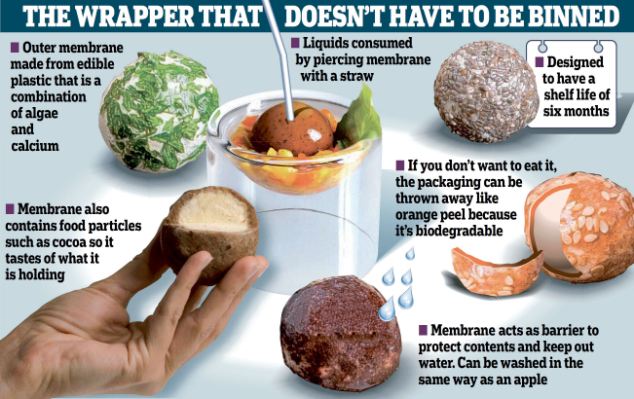
WikiCells – Edible wrapping coming soon!
“What this power is I cannot say; all I know is that it exists and it becomes available only when a man is in that state of mind in which he knows exactly what he wants and is fully determined not to quit until he finds it.”
Alexander Graham Bell
Most inventions are the results of exploration, experimentation, blood, sweat and tears, and lots of sleepless nights. But there are some moments of serendipity, those “Hmm. That’s strange…” discoveries that are not lightly tossed aside but seen for their potential. It’s taking the lemons life has thrown their way, tossing in a wet rag and a few copper and zinc coins, and coming up with a battery.
Here’s a line-up of a few of those wet rag-tossers of edible discoveries:
Who: John Pemberton, pharmacist, Colonel of the Confederate Army wounded in the Battle of Columbus, Georgia.
When: 1886
Why: Like so many wounded war veterans of his time, he had become addicted to morphine to handle the pain. Being a pharmacist, he wanted to find a cure for the addiction. Inadvertently, he ended up inventing what has became another addiction for untold millions: Coca-Cola. And like many elixirs of the time, his was touted as “a valuable brain tonic” that would relieve exhaustion, calm nerves and cure headaches. But sadly, Pemberton died two years later and never saw his medicinal mixture give birth to the soft drink empire.
Who: Constantin Fahlberg, unhygienic chemist.
When: 1879
Why: He’d been trying to find ways to use coal tar; he went home for dinner, and noticed that his wife’s bread rolls were unusually sweet; no, she hadn’t changed her recipe – he just hadn’t washed his hands before eating. He went back to his lab and taste-tested until he found the sweet source. That’s just gross.
Who: William Keith Kellogg, assisting his brother, Dr. John Harvey Kellogg, the superintendent of The Battle Creek Sanatarium in Michigan.
When: 1895
Why: One day while making bread dough with boiled wheat, he left it sitting while he helped his brother and when he returned to roll out the dough, it came out flaky. He decided to bake it anyway, creating a crunchy and flaky snack. It was a huge hit with the patients, and so he set out to manufacture it on a larger, and more intentional, scale. He switched to using corn and launched the “Battle Creek Toasted Corn Flakes Company” in 1906; eventually he realized that his name was more catchy.
Who: An intrepid soul.
When: Around the 12th Century
Why: Concentrated alcoholic beverages have been around probably as long as alcohol has been transported; by evaporating the water from wine, it was more stable for transportation, and then reconstituted at the other end. At some point someone decided to skip the rehydration phase and just go for it, and brandy (“burnt wine” – in the distillation process, a portion was lit to test the purity) was born.
Who: George Crum, Chef in Saratoga Springs, New York.
When: 1853
Why: The usual story says that he was trying to please an unhappy, picky customer; after several complaints that the potato was not thin enough or cooked enough, he sliced them paper-thin and fried them to a crisp. The customer loved them, and the name “Saratoga Chips” persisted until the mid-20th century.
Who: Mrs. Ruth Graves Wakefield, owner of the Toll House Inn, in Whitman, Massachusetts.
When: 1930
Why: While making cookies one day, she ran out of regular baker’s chocolate and substituted broken pieces of semi-sweet chocolate, thinking they would melt into the batter. They didn’t, and chocolate chips were born. She sold the recipe to Nestle in exchange for a lifetime supply of chocolate chips (rather than patenting it and making millions!). Every bag of Nestle chocolate chips in America has a variation of her original recipe printed on the packaging.
Who: Frank Epperson, 11 years old at the time, of Oakland, California.
When: 1905
Why: He left a mixture of powdered soda and water out on the porch, which happened to have a stir stick in it; that night the temperatures reached a record low, and the next morning he discovered his frozen fruit-flavoured drink; the “Epsicle” was born. 18 years later he patented that little Eureka moment, and the Popsicle became intentional.
Who: Thomas Adams
When: 1870
Why: Chewing gum has actually been around for over 5,000 years; Neolithic tribes used various tree saps, and the Aztecs used chicle as a basis for a gum-like substance. But they didn’t patent it and market it. So along came Thomas Adams: Given a supply of chicle from Mexico, his original intention was to use it as a rubber substitute; it failed in that capacity, but instead he cut it into strips and marketed it as “Adams New York Chewing Gum” in 1871, becoming the first mass-produced chewing gum in the world.
Who: The modern, mechanized version: Frederick Bruckman, 1912
When: 1912
Why: Edible cones, made from little waffles rolled, were mentioned in French cooking books as early as 1825. Several Americans vie for the title of “Creator of the modern ice cream cone,” but all seem to appear around the same time, the 1904 World’s Fair and shortly thereafter, which tells me someone got the idea from someone, tried to patent it (unsuccessfully) and everyone else jumped on the idea claiming first dibs. But as far as history goes, it’s no new idea – just necessity being the mother of invention. Frederick Bruckman is credited with the modern ice cream cone, as he invented a machine for rolling them.
Who: Ah. Now that’s a simple question with a thorny answer. Not a French Benedictine Monk (Dom Pérignon); in reality, he did everything he could to make the wine less sparkly because it kept exploding in his winery. In actual fact it was the English who recognized the added value of bubbly wine, exploding bottles and all. The first to recognize the process, document it, and enjoy it, was Christopher Merret, English scientist.
When: 1662
Why: Merret “was born in Gloucestershire in either 1614 or 1615 (the Champagne seems to have clouded his memory), studied at Oxford (a notorious training ground for heavy drinkers), and in 1661 translated and expanded an Italian treatise on bottle manufacture. It seems to be this that drew his attention to the question of exploding Champagne, because the following year he published a paper entitled ‘Some Observations Concerning the Ordering of Wines’. In this, he tried to explain why wine became bubbly, and identified the second fermentation in the bottle as the main cause. He also described adding sugar or molasses to wine to bring on this second fermentation deliberately. Sparkliness was a positive thing, Merret said, and could be produced in any wine, particularly now that England was making bottles that were capable of holding in the bubbles. Thus, while Dom Pérignon was trying to do away with the fizz, the Brits wanted more.” [1000 Years of Annoying the French (pp. 179-180). Random House UK. Kindle Edition.]
Who: Just about everyone except John Montagu, 4th Earl of Sandwich, an 18th-century English aristocrat.
When: from the 18th century known as a “sandwich;” from antiquity and various cultures from before history began to be recorded.
Why: In the 1700s, the Earl of Sandwich was often too busy to sit down for a proper meal, so he had his servants bring his meat placed between slices of bread to avoid greasy fingers from handling the meat directly. People began asking for “the same as Sandwich.” Throughout Asia, Africa, and South America, flatbread has long been used to scoop food from plate to mouth (as cutlery had not yet been invented, or was not widespread). Those aristocrats could have very easily asked for “the same as savages,” and we would thus be eating savages today. Cannibalistic, if you ask me…
Who: Charlie Thompson, a sales representative of Geo. Bassett & Co.
When: 1899
Why: Charlie supposedly dropped a tray of samples he was showing a client in Leicester, mixing up the various sweets. He scrambled to re-arrange them, and the client loved the bright mix of colours and shapes, and Allsorts hit the shelves soon after.
Who: Disputed; reputed to be fourteen year-old assistant waiter Henri Charpentier, at the Maitre at Monte Carlo’s Café de Paris.
When: 1895
Why: Preparing desert for the English Prince of Wales (future King Edward VII), Henri accidentally caught the cordial of the crepe on fire. Rather than start over he tasted it and thought it delicious, so he served it; the Prince asked for the dish to be named for one of his companions, Suzette (as Crepe in French is feminine, rather than masculine).
Who: John Wheeley Lea and William Henry Perrins, British chemists.
When: 1837
Why: The story goes that someone asked them to attempt a recipe for curry powder; they tried, and made it liquid; it was far too strong to be palatable, so they put it in a cellar barrel for a few years. Looking to make space, they were going to dispense with the offensive product, but tried it again and found that it had fermented and become milder, and actually quite good thank you. They began to market it, and it became a success.
Who: Edwin Perkins, innovator and entrepreneur, Hastings, Nebraska.
When: 1927
Why: Perkins’ father opened a general store in town where the boy was introduced to new and exciting food products such as Jell-O. One of the company’s offerings that proved most popular was a concentrated drink mix called Fruit Smack, which came in six flavours. A four-ounce bottle made enough for an entire family to enjoy at an affordable price. But shipping the bottles of syrup was costly and breakage was becoming a problem. In 1927 this prompted him to develop a method of removing the liquid from Fruit Smack so the residual powder could be re-packaged in envelopes; consumers would then only have to add water to enjoy the drink at home. Perkins designed and printed envelopes with a new name —Kool Ade —to package the powder with (later this spelling would change to “Kool-Aid”). Because the packets were lightweight, shipping costs dropped; Perkins sold each Kool-Aid packet for a dime, wholesale by mail at first, to grocery, candy and other stores. By 1929, Kool-Aid was a nation-wide product.
Who: Clarence Crane (Cleveland, Ohio), chocolate manufacturer
When: 1912
Why: During the summer of 1912, Mr. Crane invented a “summer candy” that could withstand heat better than chocolate. Since the mints looked like miniature life preservers, he called them Life Savers. After registering the trademark, Crane sold the rights to the peppermint candy to Edward Noble for $2,900. Noble created tin-foil wrappers to keep the mints fresh, instead of cardboard rolls. Pep-O-Mint was the first Life Saver flavour. Since then, many different flavours of Life Savers have been produced. The five-flavour roll first appeared in 1935.
 Those individuals who have “Eureka” moments are those who are prepared for that moment of discovery: They begin with an inquisitive mind, which nurtures creative thinking, which is supported by collecting background information, educating themselves; to that they add the right tools, and an open mind that looks at the possibilities in what others might see as “mistakes.” Most inventions are the results of exploration, experimentation, blood, sweat and tears, and lots of sleepless nights. But there are some moments of serendipity, those “Hmm. That’s strange…” discoveries that are not lightly tossed aside but seen for their potential. It’s taking the lemons life has thrown their way, tossing in a wet rag and a few copper and zinc coins, and coming up with a battery.
Here’s a line-up of a few of those wet rag-tossers of health and medical discoveries, with others to follow over the next few posts:
“Our greatest weakness lies in giving up. The most certain way to succeed is always to try just one more time.”
Thomas A. Edison
Who: Alexander Fleming, Scottish scientist and Nobel laureate.
When: 1928
Why: He didn’t clean up his work station before leaving one day in 1928. When he returned he noticed a strange fungus on some of his cultures, but it wasn’t growing near certain cultures. His “bad science” mistake led to the discovery of the first, most important, and still-widely used antibiotic.
Who: Wilson Greatbatch, American Engineer and absent-minded professor.
When: 1960
Why: In 1958 he was trying to make a circuit to help record heartbeat sounds. When he reached into a box of resistors he accidentally pulled out a 1-megaohm resistor instead of a 10,000 ohm resistor. It pulsed to a familiar rhythm – a perfect heartbeat. Actually, the first pacemakers go back as far as 1899; but Greatbatch’s invention was the first successfully implanted cardiac pacemaker.
Who: William Perkin, 18-year-old English chemist, eventually Sir William Perkin.
When: 1856
Why: He was trying to cure malaria, attempting to produce artificial quinine; his experiment produced a murky blob; but the more he looked at it, he realised the beautiful possibilities… he’d instead made the first-ever synthetic dye. He’d inadvertently become the poster boy for money-generating science, making it interesting for the curious-minded; he’s known as the founder of science-based industry. One of those curious minds just happened to be a German bacteriologist named Paul Ehrlich, who used that murky blog, now known as mauveine, to pioneer chemotherapy and immunology.
Who: Nicholas Terrett and Peter Ellis (the names on the patent); more generally, a group of pharmaceutical chemists working at Pfizer’s Sandwich, Kent, research facility in England.
When: 1996
Why: Originally attempting to develop a drug to treat Angina Pectoris – chest pains – they failed in their primary aim, but its side effects were startling, and now famous.
Who: Good question. It seems to have developed independently on several occasions, from the 12th century onwards. Laughing gas was discovered in 1772 by Joseph Priestly, English scientist.
When: Good Question.
Why: In the 1800s, inhaling either nitrous oxide (laughing gas) or ether was considered a form of recreation; “ether frolics”, or “laughing parties” were popular, and several scientists, doctors and dentists noticed that people in such an affected state didn’t feel any pain, even when they injured themselves in the process. Crawford Long, William Morton, Charles Jackson and Horace Wells observed such events (and probably took part in them too), and they began using the compounds during their dental and medical procedures.
Who: Wilhelm Röntgen, German physicist
When: 1895
Why: In a series of coincidental observations while experimenting with what Röntgen temporarily called “X-rays”, using the mathematical designation for an unknown factor, he began to discover materials that both stopped, and allowed penetration of, these rays. At one point the material was a piece of lead, and the first radiographic image was made; but at that point he decided to continue his experiments in secret in case he was wrong; he didn’t want to risk his professional reputation on reports of skeleton photography. Even though the term X-ray is used in English, in German they are called “Röntgenbilder”, or Röntgen-images.
Who: Dr. Albert Hofmann, Swiss Chemist, at the Sandoz Laboratories in Basel, Switzerland
When: 1938 (first synthesized); 1943 (discovered for its hallucination-inducing properties)
Why: As part of a large research project for finding useful ergot alkaloid derivatives. Hofmann was re-synthesizing LSD-25 for a study, and took 0.25 milligrams, but became dizzy and had to stop working. He asked his lab assistant to escort him home; they had to go by bike, and when he got home he lay down, sinking into a pleasant “intoxicated like condition” with an extremely vivid dreamlike stream of images (after an attack of paranoid anxiety that left him thinking he was going insane). It lasted about 2 hours, and then faded. 19 April, 1943, is now known as Bicycle Day, celebrated as the birthday of LSD.
Who: Dr. Alan Scott, and Edward Schantz
When: late 1960s
Why: Using small doses of the most acutely toxic substance known, Botulinum toxin (as one does), they applied it to treat “crossed eyes” eyelid spasms and other eye-muscle disorders; a noticeable side-effect was that wrinkles disappeared, as the muscles beneath the skin were paralyzed. Canadian husband and wife ophthalmologist and dermatologist physicians, JD and JA Carruthers, were the first to publish a study on BTX-A for the treatment of frown lines in 1992. The result? Expressionless faces that become distorted and deformed with time, thanks to Botox addiction. I think the inventors of this “treatment” should be locked away in padded cells, personally.
Who: Edward Jenner, a British scientist and surgeon
When: 1796
Why: Jenner had a brainstorm that ultimately led to the development of the first vaccine: A young milkmaid had told him how people who contracted cowpox, a harmless disease easily picked up during contact with cows, never got smallpox, a deadly scourge. With this in mind Jenner took samples from the open cowpox sores on the hands of a young dairymaid named Sarah Nelmes and inoculated eight-year-old James Phipps with the secretion he had extracted from Nelmes’ sores. The boy developed a slight fever and a few sores but remained for the most part unscathed. A few months later Jenner gave the boy another injection, this one containing smallpox. James failed to develop the disease and the idea behind the modern vaccine was born.
Who: Canadian doctor Frederick Banting and Professor John MacLeod of the University of Toronto; Nobel Prize winners of 1923.
When: 1923
Why: In 1889 two German
physicians, Joseph von Mering and Oscar Minkowski, removed the pancreas from a healthy dog in order to study the role of the pancreas in digestion. Several days after the dog’s pancreas was removed, the doctors happened to notice a swarm of flies feeding on a puddle of the dog’s urine. On testing the urine, the doctors realized that the dog was secreting sugar in its urine, a sign of diabetes. Because the dog had been healthy prior to the surgery, the doctors knew that they had created its diabetic condition by removing its pancreas and thus understood for the first time the relationship between the pancreas and diabetes. After further testing they concluded that a healthy pancreas must secrete a substance that controls the metabolism of sugar in the body. Though other scientists attempted to identify the substance released by the pancreas, it was Banting and MacLeod who discovered that the mysterious substance was insulin.
Who: Dr. George Nicholas Papanicolaou
When: 1923
Why: In 1923 he was studying the vaginal fluid in women to observe cellular changes over the course of a menstrual cycle; one of his subjects just happened to have uterine cancer, and when he discovered the abnormal cells, plainly seen under the microscope, he quickly realized that doctors could administer a simple test to gather a sample of vaginal fluid and test it for early signs of uterine and other cancers.
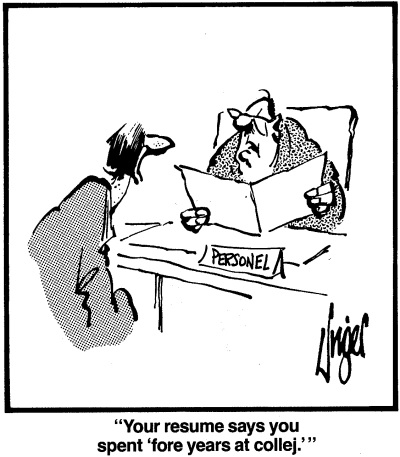 “Intellectual laziness and the hurry of the age have produced a craving for literary nips. The torpid brain… has grown too weak for sustained thought. There never was an age in which so many people were able to write badly.”
Israel Zangwill, the Bachelor’s Club, 1891
“Impartiality is a pompous name for Indifference, which is an elegant name for Ignorance.”
G.K. Chesterton, 19th C. English writer
“When I dare to be powerful – to use my strength in the service of my vision – it becomes less & less important whether I am afraid.”
 Audre Lorde, 20th C. Caribbean-American writer




 Stephanie Huesler