Category Archives: Research

Musings about Advent

For those of you in highly commercialized countries (I won’t name names, but the initials are USA, for one…), before Thanksgiving is past, Christmas decorations have hit the shop shelves.  Before Christmas is really digested, Valentine’s ads appear.  I hope that you’ll bear with me, as I contemplate a holiday between your Thanksgiving, and Christmas:  Advent.

In today’s global village, people around the world are aware of holidays such as Christmas and Easter, though it might not be a part of their indigenous culture or religion; they may even celebrate them, though that be more of a marketing incentive rather than a religious one.  I grew up in Kansas, and though we were aware of Advent as an event leading up to Christmas, we never celebrated it – we rarely, if ever, had an advent calendar, or advent wreath of candles.  Here in Switzerland, Advent is like an extended Christmas; our personal advent calendar contains small gifts, and of course chocolate; this year, with a teenager in the house, I also included gag gifts. Our particular form is the Tischibo bags, hung from a rustic red metal heart frame with hooks.

What is the history behind Advent?  What is its true meaning?  Advent, which comes from the Latin Adventus (which is actually a translation from the Greek word parousia), had two meanings:   In relation to Christmas, it is the inner preparation for remembering the first coming of Jesus as a babe into the world as a human, so that he could fulfil God’s plan for salvation for all.  For Christians, the second meaning is a time to reflect on, and prepare for, the Second Coming of Christ, which will be the end of time for Earth (no one knows the day or hour, and so the Bible tells us to be prepared – like someone on call needs to be ready to go when the call comes).  As an event, it begins on the fourth Sunday prior to Christmas; this year that would be the 27th of November, as Christmas itself falls on a Sunday.

There are several expressions of celebrating Advent:  The calendar, the wreath, and  devotions.

The calendar was first used by German Lutherans in the 19th century, and usually begins on the 1st of December.  They can take on any form imaginable, from a simple paper calendar, to gift boxes, or gift bags labelled 1 – 24.  Consecutive numbers are opened one per day from the 1st to Christmas Eve.  Sometimes the calendar includes a Bible verse and a prayer or Christian devotion for that day of the Advent.  There are even some towns that become living Advent calendars; this tradition began in Stockholm, Sweden.

The wreath, usually a horizontal decoration placed on a table, is made of evergreen boughs (real or synthetic) with four or five candles, representing the four Sundays prior, and Christmas day.  The four are usually red, with the white Christmas candle centred.  One candle is lit on the first Advent Sunday, with an additional candle lit each week.  The concept originated with German Lutherans in the 16th century, though the modern form didn’t catch on until the 19th century, likely in conjunction with the calendar.  For a detailed history of the wreath, click here.

The devotions are readings from the Bible accompanied by a prayer, to prepare the heart and mind for the Reason for the Season – the coming of Jesus as a man to Earth.

If you’ve never made an Advent calendar or wreath before (there is still time to prepare one!), or you want to try something new, below are a few examples I’ve collected from Pinterest.  Please share in the comments below what kind you use, or what your traditions around this time of the year are!

This slideshow requires JavaScript.

This slideshow requires JavaScript.

9 Comments

Filed under Articles, History, Images, Musings, Research

Rock, Snake or Spock?

Almost everyone in the world has at one time or other played “Rock, Paper, Scissors”, or a variation of the game.  My husband and I use it to decide who goes first whenever we play a dice or card game together, which is nearly every evening.  If you scratch beneath the surface, you’ll find that there are a lot of variations; some make sense intuitively, some need to be explained to make sense, and others, you just need to accept as the way the game works.  In looking into this topic online, I came across several forums that discussed in length whether the rock sharpened the scissors, thus making them allies against paper, or why the paper wouldn’t be defeated by the rock because it holds it down; but the fact is that in this widespread variation, the rock is wrapped (defeated) by the paper, the scissors cut the paper, and the rock smashes (or dulls) the scissors.  Sometimes the game is accompanied by a preparatory chant, such as, “eeny, meeny, miny, moe”, “one, two, three” (in whichever language it’s being played in), or something like “ickety, ackerty, ock”.

Other Variations of the Game:

Rock, Scissors, Paper, Dynamite:  Dynamite (palm out, fingers spread wide like an explosion) blows up the rock and paper, but the scissors can cut the fuse.

Rock, Scissors, Paper, Fire,Water:  Fire (waving fingers, pointing upward) destroys paper and scissors but is put out by the rock and water; the water (hand held horizontally, palm down) drowns the scissors and puts out the fire but is moved by the rock and floated on by the paper.

Earwig, Elephant, Man:  The elephant is tamed by man; the man is bitten by the earwig; the earwig is stepped on by the elephant.

Hoof, Bandage, Knife:  The bandage wraps the hoof, the knife cuts the bandage, and the hoof breaks the knife (presumably by stepping on it).

In the Idaho panhandle:  Hunter, Bear, Woman:  Players stand with their backs to each other to prepare, jump and turn, landing in the stance of their choice. The hunter mimes a rifle, the bear displays claws, and the woman symbolizes breasts with cupped hands.  The hunter defeats the bear, the bear defeats the woman (unarmed), the woman defeats the hunter (putty in her hands).

rock-paper-scissor-lizard-spockRock, Paper, Scissors, Lizard, Spock:  Scissors (first and second fingers extended) cut paper (open palm) and decapitate lizard (hand held with thumb against fingers, as for finger puppet); paper covers rock (fist) and disproves Spock (Spock’s gesture of peace – palm out, fingers divided into V between middle and ring fingers); rock crushes lizard and scissors; lizard poisons Spock and eats paper; Spock smashes scissors and vaporizes rock.
Variations Around the World

Whether you call it “rock, paper, scissors”, Janken (the Japanese word for the original game), Kai bai bo (Korean), or Janjii (Thailand), the goals are the same – to win over an opponent, or to make an arbitrary decision, such as who goes first in a game.  Here are a few variations from around the world:

KoreaKai bai boKai is scissors, Bai is rock, and Bo is cloth or paper.  China has a similar version, except that it is sometimes hammer (guu) and bomb (paa).

Malaysia and parts of ThailandWan Shi Zan –Pistol, Water, Bird, Stone, Plank:  The pistol defeats everything except water, and the bird loses to everything except water. The stone defeats the bird and the plank, but loses to the pistol and the water. The plank defeats the bird and the water, but loses to the stone and the pistol. The water defeats the stone and the pistol. The bird loses to the plank.

India and Indonesia, and on Bali:  Elephant, Human Ant:  The elephant beats the human, the human beats the ant, and the ant beats (scares) the elephant.

Myanmar:  General, Soldier, Tiger:  The general defeats the soldier, the soldier (with a gun) defeats the tiger, and the tiger kills the general (unarmed).

Vietnam:  Hammer, Paper, Scissors:  The same hierarchy as Stone, Paper, Scissors.

Laos:  Hammer, Nail, Cloth:  The hammer defeats the nail; the nail pierces the cloth; the cloth wraps the hammer.

Russia:  Rock, Scissors, Paper, Well:  The rock smashes the scissors; the scissors cut the paper; the paper floats on the well and wraps the rock; the well swallows the rock and scissors.

France:  Rock, Scissors, Leaf, Well:  Same principle as the Russian variation.

ChinaGosukumi [i.e., 5 choices instead of 3]:  Idol, Chicken, Gun, Fox, Termite:  The idol is the thumb, chicken the index finger, gun the middle finger, fox the ring finger, and termite the little finger. The chicken is sacrificed to the idol; the gun introduces people to the idol (the idol wins); the termite eats the idol; both the gun and the fox defeat the chicken; the chicken defeats the termite; the gun defeats the fox. The idol and the fox are good friends, as are the gun and termite, and the fox and termite ignore each other, so these symbols tie with each other. According to these rules, the god and gun are strongest, and the chicken weakest.

Japan:  There are many variations of the game throughout Japan, where it is very popular; one is called “Mushiken” with a snake, slug and frog:  The snake (thumb) fears the slug (ring finger); the slug is eaten by the frog (index finger); the frog is eaten by the snake.

Shouyaken” is played by gestures made with the whole body. The symbols were the village-headman, musket, and fox. The village-headman sits in a dignified manner, as if in the seat of honour. The musket was mimed as if carrying a gun in both hands. The fox was indicated by holding up both fists at an angle.  The rules were that the headman beat the gun, the gun beat the fox, and the fox beat the headman.

Do you know of any other variations?  Please put it in the comments below, explaining how your version is played!

Some information gleaned from the following sites:
http://www.democraticunderground.com
https://en.wikipedia.org/wiki/Rock%E2%80%93paper%E2%80%93scissors
http://archive.ec/Rjp5v

Save

8 Comments

Filed under Articles, History, Nuts & Bolts, Research

Odd Jobs #14: Virtual Assistants to Worm Farmers

This is the last of my series of odd jobs; along the way, there have been some amazing, some disgusting, and some downright puzzling ones.  Somewhere out there, beneath the deep blue sky, there’s someone thinking, “Why did I take this job, again?”  Having said that, every job has some kind of perk; it’s just that with some jobs, you have to dig into the muck to find it.

martin-luthers-haus-postille

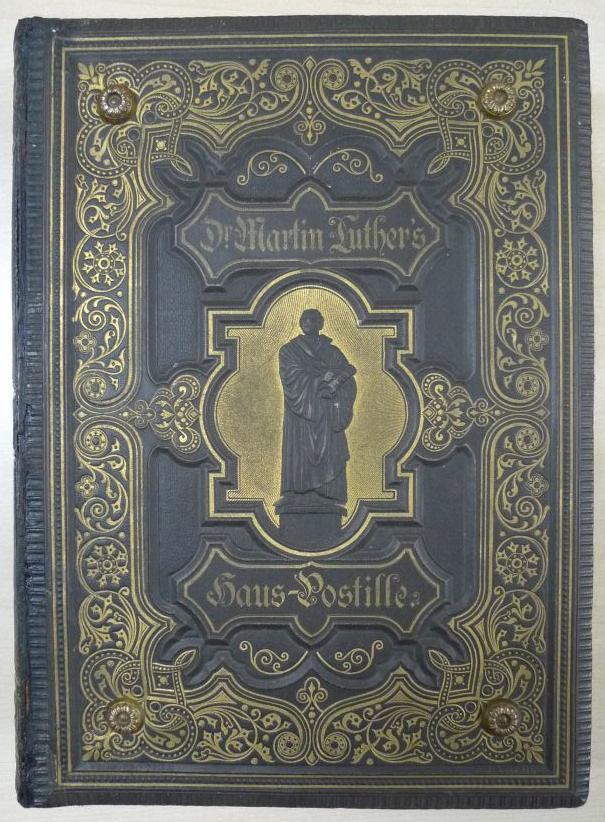
A friend of mine had a grandfather who was a rubbish collector back in the 1950s here in Switzerland; times were slim for the family, and he used to bring home things he thought were interesting, useful, or perhaps valuable that he’d found in the rubbish.  One of those things he’d brought home was a large tome, with gilt embossing and brass knobs on the pictorial cover board (these “feet” are at the four corners, and were used to support the book cover and protect it from wearing on the gold leaf when it sat on the wooden pulpit), and deep, plain embossing on the back board.  That someone would throw it away rather than giving it to a charity is beyond me.  Be that as it may, it was discovered to be Dr. Martin Luther’s Haus-Postille (sermons), with illustrated lithograph engravings throughout, by W. Walther, from Dresden, dated from 1890.  It was passed down through the family to my friend, and she had no use for it; she knows I collect books (including antique books) and have a library, and thus it has now come to me.  It is in excellent condition, and is being well looked after now, despite its close call in the rubbish!  [The image does not do justice to the brilliant golden gilt that still shines clearly on my copy, even after all these years…]

So, on with the final lineup of odd jobs!  The first and last links take you to another list of odd jobs, which includes the two here.  A couple of the jobs seem a bit dangerous to me – either flying off the side of a water slide that doesn’t quite meet safety standards yet, or dangling by a rope off of a glass building… if I had to choose I’d take the water rather than London pavement as a place to land.  Safer, but not necessarily easier, is the job of a voice-over artist; dubbing languages for films, or filling in the voices for rough tracks in animated films, or even – and I find this particularly unethical, as a singer myself – to be paid to replace a recording artist’s voice, such as the scandal involving Milli Vanilli, which destroyed their careers.  Enjoy browsing the final list; perhaps in the future at some point I’ll bring along another addition or two.

  • Virtual Assistant
  • Virtual Head Hunter
  • Voice-Over Artists
  • Water Slide Tester
  • Wax Figure Sculptor: Mold wax to create figures, often for, but not limited to, the human form. Figures are often made in the likeness of people who have achieved historical or celebrity recognition.
  • Wig Maker: Put simply, they make wigs, but the process is anything but simple. First, wig makers create a plastic model of the wearer’s head and hairline, and then they transfer the mold onto a padded canvas similar to the client’s general head size, covering it with wig lace. Using a needle, they knot and pull thousands of hairs, one by one, through the mesh cap. Once all the hairs are in place, the wig is styled to the wearer’s preference.
  • Window cleaner for the Gherkin (London): It takes a team of 9 cleaners 10 days to complete the task, as the building stands 180 metres tall and consists of 7,429 panes of glass.
  • Worm Farmer

14 Comments

Filed under Articles, Images, Lists, Musings, Research

Just Smile

smileHave you ever stared at a word for days on end?  I have, and coming to the end of the tunnel is bliss.  When writing, I tend to use “place-markers” – anywhere from a single word to a rough-sketch of a scene that I know will need to be fleshed out, moved, replaced or “cannibalized” for a concept.  Some people like to use special writing programs, and I’ve tried a few over the years, but I tend to do all of my writing in Word; it’s got review “post-its” I can type into the side margins, and I’m usually more organized than programs like Scrivener anyway.  When I go back over such sections, I take off my writer’s hat and put on my editor’s cap, and dive in.
I’ve been editing a manuscript, and at the moment I’m focusing on repetitions; the most recent word was smile.  Each time I came across the word, I needed to read the context, think about whether it should be removed, replaced, the sentence reworded, or left as-is.  I’ve discovered that there are not actually that many synonyms for “smile” in the English language; smirk, sneer, grimace, simper, scowl, grin… they each have their own connotations, and are not simply interchangeable – each choice will effect the overall meaning in distinct ways.   as William Blake once said, “There is a smile of Love, And there is a smile of Deceit, And there is a smile of smiles In which these two smiles meet.”  Sometimes it can simply be left out – the context informs the reader about which emotions are being displayed by the characters.  Characters in love have a different smile for each other than for frenemies, or antagonists, or superiors, or subordinates, and each situation in which various characters are combined might result in a different word for smile.  And does one smile warmly, or coldly?  Broadly or tight-lipped?

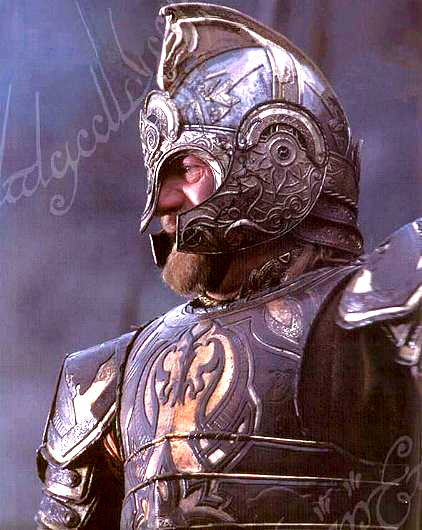
theoden-king-of-rohan-lord-of-the-ringsSometimes I wonder if I think far too much about such details; but I’d rather think about it once too often and get it right than not.  It might have seemed a tad extravagant for Weta Workshop to emboss the inside of King Théoden’s breastplate armour for the Lord of the Rings: The Two Towers, and Return of the King (in which the character appears), knowing it would never actually be seen in the films; but Bernard Hill, who played the king, said that such details helped him easily slip into the role, even feeling the nobility of a king, and it thus enhanced and influenced his performance.  As visuals matter in epic films such as LoR, words matter in writing a novel, drawing the reader into the imaginary landscape of the world the author creates. ever-after

They also matter in script-writing:  In Ever After, starring Drew Barrymore and Dougray Scott, some of the dialogue lines are just downright embarrassing – especially those of Anjelica Huston:  They go to the trouble of being opulent and period-accurate in costumes, locations and scene dressings, and then throw in lines like Relax, child and I’m management!  The editor in me cringes.

One man’s smile is another man’s smirk; one woman’s grin is another woman’s sneer.  Now, on to the next item on my list of editing revisions!

Save

Save

18 Comments

Filed under Articles, Images, Musings, Nuts & Bolts, Research, Writing Exercise

Odd Jobs #13: Sommeliers to Video Game Testers

Here’s our next lineup of odd jobs. While each job is on the list for a reason, the most humorous is probably the traffic zebra of Bolivia – there are dozens of them, and they direct traffic, help people cross safely, and undoubtedly keep drivers more alert.  The job most teenagers would kill for is that of the video game tester; imagine getting paid to play computer games all day!  For me it would very much depend on the game – I love games like the Riven series, but games that have free-roaming views (smoothly following the mouse movements) give me a migraine after an hour…

Of all the jobs in this list, I think the one that captures my imagination the most is the Sommelier; not as a job, but because I like wine!  Recently my husband and I drank a bottle together, and we decided that it wasn’t complete without watching one of our favourite films, “A Good Year” – it did make it taste better.  I also like tea, but I would prefer to stick to Earl Grey, curl up in my favourite chair and read a good book – what I’ll be doing next.  So enjoy the lineup, and then go and read a good book with your favourite cuppa!

  • Sommelier (Wine Steward)
  • Swan Uppers (England) This ceremony dates back to the 12th
  • Tampon Tester: Check all sizes of tampons for absorbency and cord strength in accordance with FDA standards. Most testers check up to 125 pieces per day.
  • Tea Taster
  • Teddy Bear Repair Technician
  • Traffic Zebras (Bolivia)
  • Trend Hunter: Closely related to marketing, it’s a profession to find out what’s going to be cool next, and predicting it accurately for fashion and tech companies as well as manufacturing businesses.
  • Veterinary Acupuncturist
  • Vibration Consultant: Works with architects and engineers to advise and correct noise and vibration issues in construction projects and in the manufacturing of products.
  • Video Game Tester: For eight hours a day, five days a week, a group of males and females of all ages play video games. They repeat levels, games and characters, looking for any bugs and/or glitches in the software.

odd-job-traffic-zebra-bolivia

18 Comments

Filed under Articles, Lists, Research

Wordless Wednesday no. 4


5 Comments

Filed under History, Images, Nuts & Bolts, Research, Wordless Wednesday

Say It Well

Let’s face it:  When writing dialogues between characters, repetition can tend to sneak up on us:  He said, she said, he whispered, she whispered, and so on.  There are a few tricks I’d like to share with you that I’ve learned along the way; one is regarding grammar, and the other is my own twist on dealing with the issue.

Regarding grammar, action verbs can often take the place of the more passive verbs (such as said):  “He said, ‘I’d like that.’” can be spiced up by giving him an action to do (“He picked up the travel brochure and flipped through it:  ‘I’d like that.’”)  The second sentence gives more context, and is more visually engaging for the reader.  Keep in mind that every word should count; don’t pad out the sentence just for word count, or make each exchange in the conversation a prop advertisement; but punctuating a dialogue with such moments can bring it to life.

My own twist is a literal one – a CD:  I took an old one, covered both sides with blank CD labels, and wrote all of the synonyms (listed below) for say and said in a spiral, starting in the centre, changing colours for each new letter of the alphabet.  To use it, I just put it on my finger and spin it around as I read through the spiral until I find the word that best fits my sentence.  I have several such CDs within reach of my computer (another CD, for instance, is for walk synonyms, and another for lie/lay); if you make enough of them, you could keep them in a CD pouch.  Here’s my list of the words around Say (click on the image to enlarge):

say-list

A word of advice to those of you for whom English is not mother-tongue:  Depending on the word, the sentence structure may need to be adapted.  If you’re unsure how to use a word, I would recommend looking it up on Wordnik, and reading the examples on the right-hand side of the page; then choose the sentence structure, prepositions, etc. that are more frequent than not.

I hope that this list helps you say what you want with the variety and precision you’re aiming for!  Feel free to reblog!  Feel free to print this list out and use it; if you pass it on online please put a hyperlink back to this blog, or recommend my blog if you pass it on by word of mouth… thank you!

If you can think of any words or phrases to replace say or said that I missed in the list above, please put them in the comments below!  Keep writing!

Save

Save

Save

4 Comments

Filed under Articles, Lists, Nuts & Bolts, Research, Writing Exercise

Odd Jobs #12: Rodeo Clowns to Soil Conservationists

Hi everyone!  I’m back with this week’s lineup of weird and wonderful jobs.  While each of these jobs is here for its own reasons, seamstress may seem like the least odd job – at least it’s one that we all know (if we are in the habit of wearing clothes) must exist out there in the world somewhere.  The last job on this list, soil conservationist, is actually quite important here in Switzerland; there are many villages in the Alps that owe their continued existence to being able to use the steep alpine pastures wisely.  Planting trees is integral to avoiding soil erosion, which helps prevent landslides, mudslides, and avalanches; another key component is placing barriers such as snow guards to help keep the soil, snow and debris where it should be.

Once again, I have personal experience with one of the jobs:  Silk tree designer.  If I had to find another job, that would be one I’d love to do again.  Enjoy perusing the list!

odd-job-silk-tree-designer

  • Rodeo Clown
  • Rubbish Detective
  • Safe Cracker: When combinations are lost or forgotten, safe crackers use their ears and fingers to open the safe.
  • Seamstress
  • Sewer Inspector
  • Silk Tree Designer: This is one I can give you the low-down on personally:  I was a tree designer back in the 80’s, making everything from bonsai trees for private homes to 30-foot trees for shopping malls.  Our storage warehouse had a few permanent silk trees, as birds had built nests in them, coming and going as if they owned the place… they’d found a sweet gig, with a weather-proof forest.  Tools of my trade were drill guns, glue guns, moss, paint, unformed branches of plastic-coated wire and silk leaves (which I had to shape into realistic branches), and the base:  A thick branch of a tree which had been treated and planted into a plaster-filled base pot.  I found out the hard way that Manzanita leaves can give off a narcotic-like aroma when heated, as with the friction caused by stripping off the leaves from a branch:  I was straddled atop a ladder working on stripping the leaves from a tall branch-base, when I got so dizzy that I had to grab hold of the ceiling’s piping and call for help.  My mother looked it up in her medical journals, and the result was that the leaves were in future removed by the plastering department.  It was one of my all-time favourite creative jobs, next to being a Pizza Hut lab assistant.
  • Snake Milkers: Extract venom from some of the world’s most dangerous snakes, like rattlesnakes and cobras. The extracted venom is often used to create anti-venom for hospital or laboratory use, and can be sold for up to $1,000 per gram.
  • Snowmaker
  • Snowmobile Guide
  • Soil Conservationist: Their main job is to come up with plans to prevent erosion and develop practices for sustainable land use, mostly by performing land-use surveys.

Save

Save

6 Comments

Filed under Articles, Lists, Research

Odd Jobs #11: Ethical Hackers to Candy Pullers

odd-job-raven-master-tower-of-london-spitalfieldslife-com

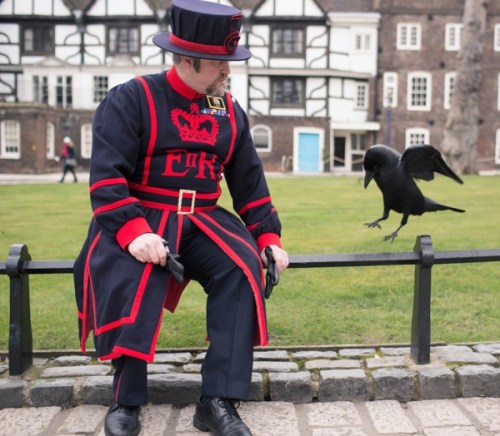
One of London’s Raven Masters.  Image Credit: Spitalfieldslife.com

This weekend’s lineup of weird jobs starts off with a bit of an oxymoron; how is hacking ethical?  Wearing a white hat only means they’re getting paid by someone to learn how to beat the system… I’m sure there’s more to it, but it’s a fine “ethical” line, isn’t it? The second job, hitchhiking, reminds me of James Corden’s car karaoke videos, though I doubt the Indonesian drivers are singing along with their passengers.

The job that captures my attention most in this list is that of the Raven Master; think about it:  Someone gets paid to pamper wild ravens to convince them to stay in the Tower of London because of a legend.  They’re not taking any chances with the future of England, are they?  That train of thought opens up all kinds of possibilities for a vivid imagination and science fiction, doesn’t it?

  • Professional Ethical Hacker
  • Professional Hitchhiker (Indonesia): The government has restricted some lanes of traffic to only cars with 3 or more people due to overcrowding. Poor people from the city outskirts take advantage of this by offering drivers to ride with them in the “fast lanes”.
  • Professional Line-Standers: Do one thing most of us have no patience for: waiting in line. These professionals are especially busy during big sales (think Black Friday) and product launches (new iPhone releases, for example). Rates vary, but one professional line-stander told Business Insider he earns up to $1,000 a week.
  • Professional Mourners (usually Asia and Africa):  Attend funerals and grieve for the deceased. A company in England called Rent A Mourner specializes in the industry, offering mourners for two hours for roughly $70.
  • Professional Sleeper
  • Professional Wingwalker: Those crazy people who walk on airplane wings for stunt shows.
  • Queen’s Piper
  • Raven Master (UK): Charged with caring for the ravens in the Tower of London; legend has it that if ravens abandon the site, the White Tower will crumble, and England will fall.
  • Ribbon Candy Puller

Save

Save

10 Comments

Filed under Articles, Lists, Research

The Thorny Issue of Horns

As an author and writer, I do a LOT of research.  I love history particularly, but then I could say the same thing about the topics of geology, astronomy, archaeology, science and technology, crafting, drawing, botany, and a dozen others.  As I apply my studies to my work, I am sometimes faced with the issue of horns – Viking helmet horns.

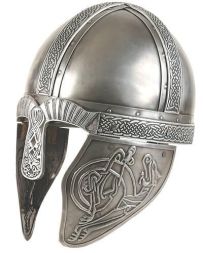
Real Viking Helmet


Accurate Viking helmet, reproduction.  Photo credit, Pinterest, unknown


While everyone seems to accept as a historically proven fact that Viking helmets had horns, the actual fact of the matter is that they didn’t.  While there were many horned helmets dating to before the rise of the Norse powers of Sweden, Norway and Denmark, most, if not all, were for religious or ceremonial purposes.  However, if I write a description of a Norse helmet and leave off the horns, someone will inevitably point it out.

Recently I spent a couple hours on Skype with one of my Beta readers for my current project, the third book in the Northing Trilogy (set in 18th century England).  Several of her comments were based on her knowledge of the 19th century as portrayed by Georgette Heyer, while others were based on her lack of historical knowledge that I, as the author, have amassed over time.  While some of that knowledge needs to seep into my writing to help the reader along, I have to continually remind myself (especially with this particular book in the trilogy, as it is centred around the Royal Navy) that I am not writing a history book but a novel, and anything I include needs to support the plot – the plot should never be forced to support a history lesson.  So it is that questions arose as to the behaviour and manners of the children of the time.

In any time period up until the mid-20th century, children in western societies matured far sooner than their modern counterparts, both out of necessity and out of cultural understanding of their roles in society.  Many families were dependent on the contribution made by the children in their household, whether it was housework, factory work, or working on the streets as beggars, shoe shiners, chimney sweeps, street sweepers, selling newspapers, or any other job they could earn money with (this is still true in many poorer countries of the world today).

If they came from a wealthy family, children were educated, but as to what extent and to which form it took very much depended on their particular circumstances:  They were educated either at home by tutors, or sent away to a boarding school.  Leaving school might be anywhere between ten and twenty; Jane Austen finished her formal education at the age of 10 or 11, whereas Charlotte Brontë’s character Jane Eyre left school at 18.  Boys who were second sons were often educated (after their basic education in either a college or at home) toward the military or toward a life as a minister (if their families held a high status in society, they might be trained toward politics; first-born sons, heirs, were rarely sent to the military due to the inherent dangers).

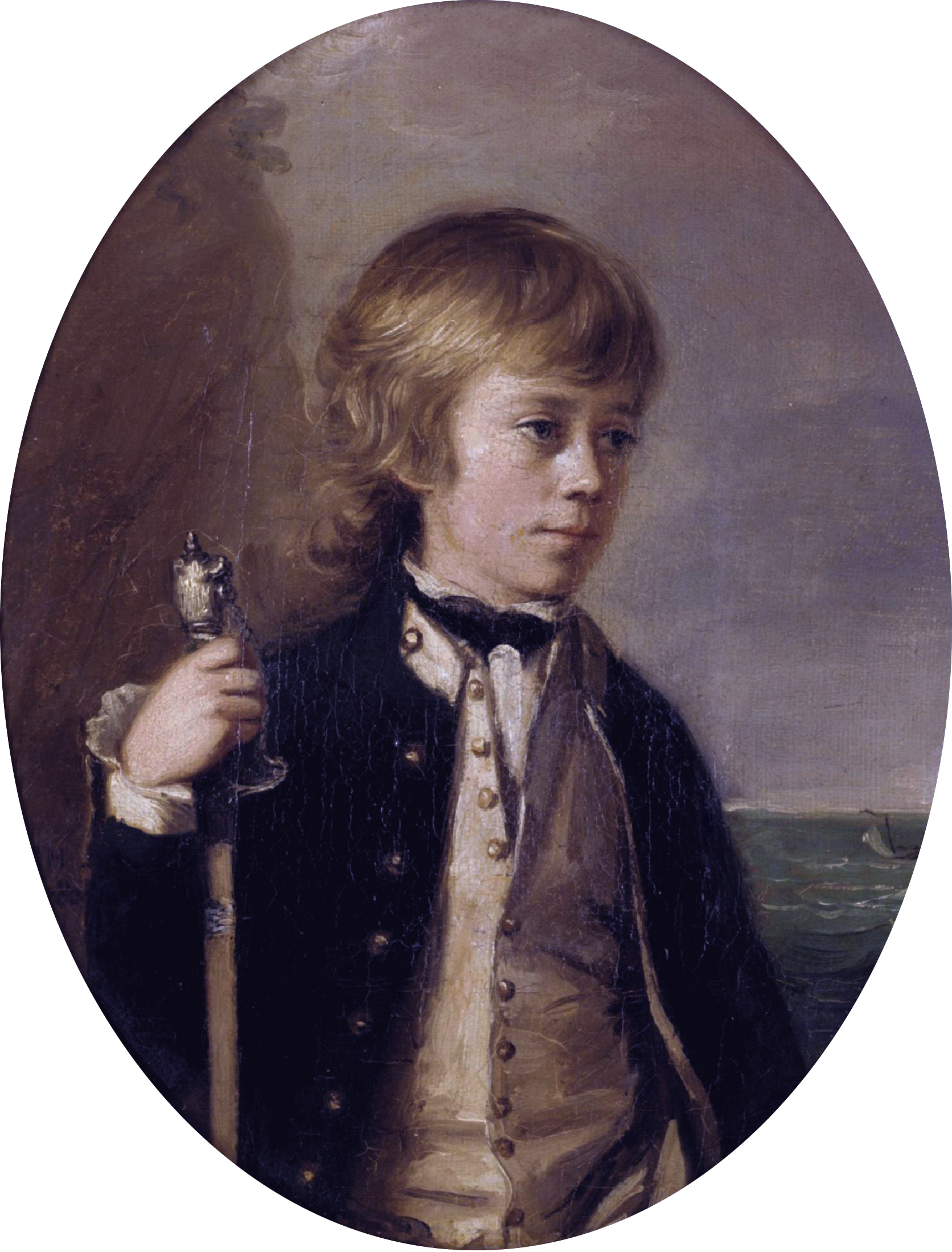
Midshipman Henry William Baynton, aged 13 -1780 - Wikipedia.jpg

Henry William Baynton, aged 13 years, 6 months, midshipman on the Cleopatra.  Photo Credit, Wikipedia.

If their fathers could afford to do so, these younger sons were often bought commissions in the military so that they would start off their career with some smidgen of position, such as a midshipman in the Royal Navy; the younger they entered, the sooner they could rise through the ranks, and thus it was not uncommon for lads of 7 or 8 to enter the navy.  Aboard ship they were trained in various skills, which included not only practical skills to do with the day-to-day running of the ship, but how to read navigational charts and how to use instruments such as sextants. How fast or slow they rose to higher ranks thereafter depended on their skills, intelligence, connections, and luck.

If poor children were either abandoned or given to workhouse orphanages because their families could not afford to keep them alive, they were also trained:  The girls were trained toward becoming servants (paying back society for the privilege of being alive), and the boys were trained for a life in the military (ditto).  They were taught to read using the Bible, and were expected to live by its principles.  Unfortunately, religion was often used as a guise for abuse and heavy-handed tyranny, but as the characters in Jane Eyre portrayed, some were true Christians in their behaviour toward her, such as her friend Helen, or the kind apothecary.  If the girls were going to become governesses, they would also be trained in more refined accomplishments such as French, drawing, needlework, history, etc.

All of this is to say that, were I to include all of this kind of information in a novel (and believe me, there’s a lot more where that came from!), it would get boring rather quickly.  And so I need to pick and choose what is used in the organic flow of the plot and character development that both serves those elements and also helps inform the reader; sometimes it’s a tricky balance.  So when the 11-year-old boy acts far more mature than a modern boy, unless the reader is aware of the historical context, I will inevitably get feedback to that effect.  Sometimes I can help their understanding by including e.g. the subjects he might be learning with his tutor, such as French, sciences, or elocution, but more than that might drag the story into the realm of a history lesson.

There are many modern myths, like the Viking horns, that people have accepted as historically accurate, when in fact they’re not.  One of my pet peeves is Christmas films that inevitably portray three kings showing up at the manger along with the shepherds in Bethlehem.  I won’t go into that here – if you’re interested in the historical details, read my article on History Undusted, here.  Other urban legends include:  We only use 10% of our brains; the full moon affects our behaviour; lightning never strikes the same place twice; cracking your knuckles gives you arthritis, and antibiotics kill viruses.  If I rankled any feathers there, or you said to yourself, “But that one is actually true,” then I would suggest you do your own research on the issue… I’ve got my plate full at the moment with the 18th century.

Save

7 Comments

Filed under Articles, History, Musings, Nuts & Bolts, Plot Thots & Profiles, Research